Homesick by Jennifer Croft

This stunning memoir with photos is a love letter from one sister to another, a celebration of language and a story of devotion and disaster.

Jennifer Croft’s Homesick is a startling memoir, stylistically as well as in its content and in the unusual mind it reveals.

Amy and Zoe are very close. This is the defining feature of their young childhood and arguably beyond. The sisters grow up in Tulsa, Okla., where their mother worries over all the possible disasters in the world and their father teaches college. Then the younger sister, Zoe, has her first seizure, and their lives become dominated by seizures, hospitals, surgeries; the girls are both home-schooled from then on. A tutor, Sasha, comes in the afternoons to teach Zoe Ukrainian and Amy Russian–the girls’ choices. Amy loves numbers and letters; she is entranced by the Cyrillic alphabet. Partly out of devotion to Sasha, she throws herself into this study with all her considerable will.

Zoe’s health continues up and down, while Amy’s academic achievements soar. She enters college at age 15, moving into the Honors House dorm, and this separation from her sister is both catastrophic and necessary. “Something new has begun to be erected between them, something like a wall, and on Zoe’s side it must stay safe, and on Amy’s side it can’t. Amy is responsible for repelling her sister as her sister tries to scale this wall.”

This memoir is told in a close third person from Amy’s perspective–that of Croft’s persona–and interspliced with photographs captioned by an ongoing direct address, apparently from Amy to Zoe in a later time. The snippets of text under these photographs offer meditations on words, clearly one of Amy’s passions: “For dozens of centuries, the word leave meant stay…. And a scruple was at first a pebble you couldn’t quite shake from your shoe.” The words accompanying the photos form a separate narrative thread, so that the book can be read cover to cover, or as two discrete stories. Amy is a photographer from a young age, and her younger sister is her chief subject, in ways that Amy does not yet understand.

Disjointed, sometimes heavy with foreshadowing, lush with a love for words and language, the dual narrative of Amy and Zoe’s intertwined lives and shared pain seems the right artistic choice for this twisting dual story. Among other threads or themes is the difficulty of translation, in its literal and more metaphoric meanings. “When you consider the plenitude of any word’s experience you might think all words are untranslatable.”

Homesick is astonishing in its emotional reach, its evocation of a child’s discovery and a young adult’s suffering and all the wonder of words. What is translatable is perfectly communicated here.


This review originally ran in the August 8, 2019 issue of Shelf Awareness for the Book Trade. To subscribe, click here.


Rating: 9 letters.

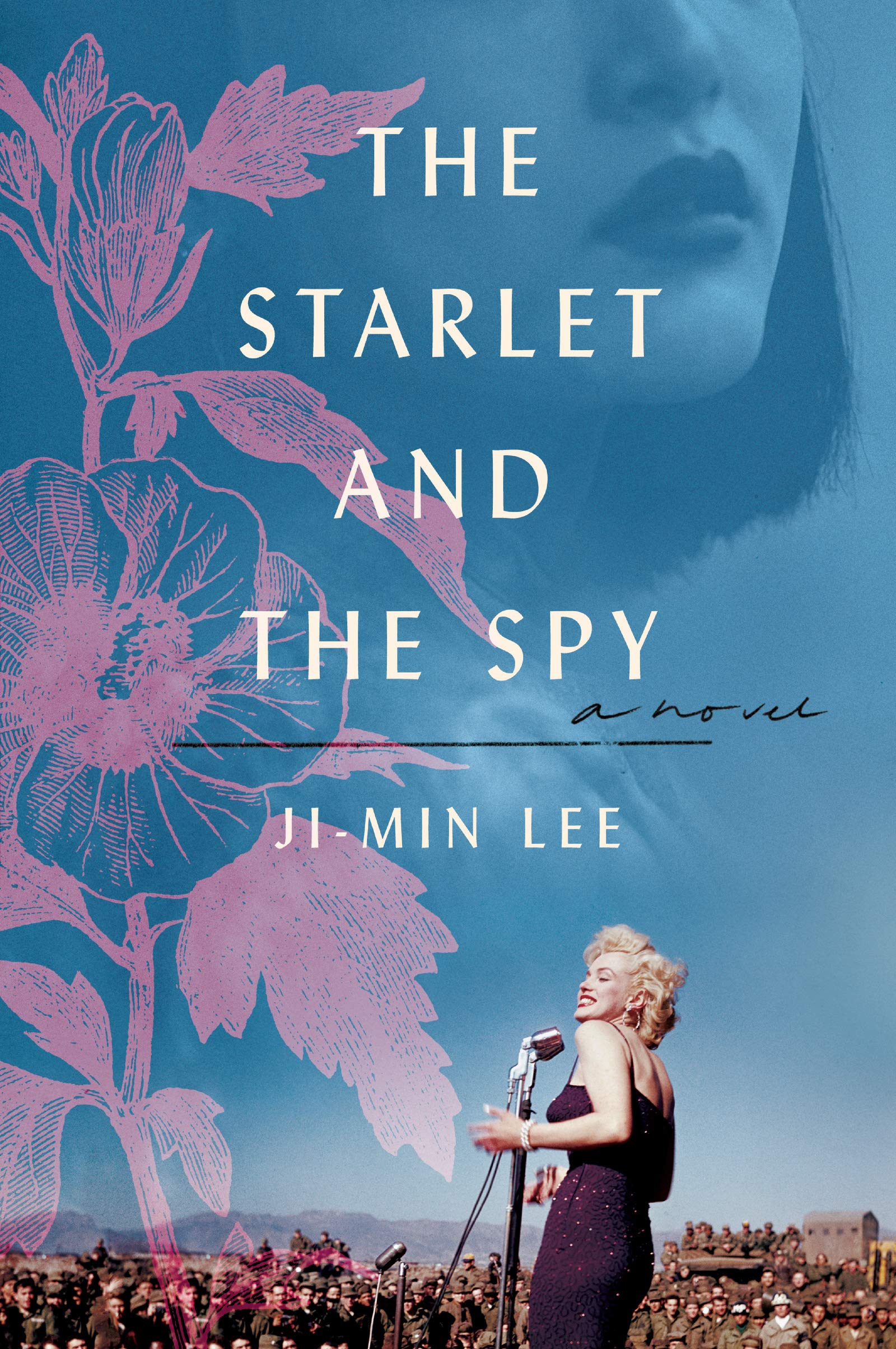
The Starlet and the Spy by Ji-Min Lee, trans. by Chi-Young Kim

In 1954 Seoul, a war-weary young Korean woman and Marilyn Monroe share a brief but crucial sojourn, and learn they have more in common than they thought.

“I go to work thinking of death. Hardly anyone in Seoul is happy during the morning commute, but I’m certain I’m one of the most miserable.”

At the opening of Ji-Min Lee’s The Starlet and the Spy, Alice J. Kim works as a translator for the American forces a year after the armistice and ceasefire. Her life and outlook are as dour as these introductory lines represent: the traumas of the war have left her hopeless and joyless, taking her day-to-day life as a series of tasks to be completed. When her boss tells her about an upcoming assignment, he expects she’ll feel excited and honored to serve as escort, interpreter and handler for Marilyn Monroe, on a tour to entertain American troops. Alice is unmoved–what does she care for an American movie star?

During the course of four days with the bombshell, however, Alice will be forced to broaden her perspective on her own life and options. Her two former lovers both reappear, shaking her understanding of what exactly happened during the war. There seems the hint of a chance that she will find someone she’s lost. As Alice struggles with her will to live, the American beauty surprises her. Stunning, sexy, charismatic, yes; but Monroe is also unexpectedly approachable. And she will make a small but essential difference in the life of the less famous woman.

Lee’s novel is rooted in historical fact and inspired by two photographs: one of Monroe performing for American troops, in a slinky dress, in the snow; the other of an unknown female Korean interpreter. It is the intersection of these two lives that interests her. Two women, one famous, the other a novelist’s blank slate. What if they had met?

The Starlet and the Spy is bleak but whimsical and, yes, hopeful. Seoul has been beaten down; food is scarce and orphanages overflow. Alice dyes her hair with beer and steals pornography from work to sell to her landlady. A former artist, she doesn’t draw anymore; being forced to create endless portraits of Stalin during the war has dulled her passion, another loss that it seems she will not recover from. But she may have more friends than she thinks she does. Chi-Young Kim’s translation is both spare and emotionally evocative, suiting a narrator who is simultaneously desolate and childishly yearning.

Born of a curiosity about human relationships in unusual times, The Starlet and the Spy asks the questions: What if we met across a divide? What if a despairing young Korean woman reached into Marilyn Monroe’s makeup bag for a lipstick, or a way out? In a decidedly optimistic turn, Lee leaves her ending open, and her reader free to wonder what might be next for Alice.


This review originally ran in the August 5, 2019 issue of Shelf Awareness for the Book Trade. To subscribe, click here.


Rating: 7 propaganda fliers.

Things We Didn’t Talk About When I Was a Girl by Jeannie Vanasco

Jeannie Vanasco’s reckoning with her rapist of 14 years earlier–once a close friend–is distressing, brave and crucial.

Mark was one of Jeannie’s best friends in high school and early college–until the night when she got drunk for the first time and he sexually assaulted her. By the definition of the times, that’s what it was called: sexual assault. Under the FBI’s legal definition as of 2013, it is called rape.

Words matter. And so Jeannie Vanasco (The Glass Eye) delivers Things We Didn’t Talk About When I Was a Girl, a thoughtful, conflicted, harrowing examination of what Mark did–with his words alongside her own.

From the outset, she worries about the fallout from her choice to include Mark: she feels she should hate him, and she doesn’t want to be a bad feminist. As a writing teacher, “I’d never tell a student that her personal essay about sexual assault would be more interesting with the perpetrator’s perspective.” But Mark was such a good friend; many of her memories of him remain positive ones. “I doubt I’m the only woman sexually assaulted by a friend and confused about her feelings.” Like her first book, Things We Didn’t Talk About When I Was a Girl is aware of itself, frequently commenting on process and prospective readership. This kind of self-regard is difficult to pull off, but it is clearly Vanasco’s natural style, and she wields it expertly.

The memoir alternates between transcriptions of recorded conversations between Jeannie and Mark, and Vanasco’s reactions to those recordings. She discusses everything with her partner, her therapist and her female friends, nearly all writers or academics. Their discussions involve craft (“As a reader, Nina says, I would want to know…”) and sociology (repeated “performance[s] of gender”) as well as emotional support. Vanasco is very alert to the times, feeling prompted by #MeToo, Trump’s presidency and her creative writing students’ disclosures of sexual assaults. She is very alert, in general–it seems a personality trait–and one of the most intriguing artistic qualities of this book is its vigilant self-awareness.

Clearly this is an important and timely book. Even in a world that can seem brimming with stories similar to Vanasco’s, hers stands out. She feels the need to write “because so many perpetrators of sexual assault are regular guys, and I want to show that.” That mission is well accomplished: Mark is nothing if not alarmingly regular. Perhaps the creepiest element of the whole story is the seemingly easy slide from good friend to rapist and back again. “He smiles, and I see where a friend once was.”

Some of Vanasco’s brave and difficult work here is to consider the line between good and bad people, and good and bad actions. Is it possible for a good person to do a very bad thing? What are our responsibilities to one another, especially after such bad things happen? This narrator is tough, vulnerable and meticulous; the resulting memoir is heartfelt, painful and essential.


This review originally ran in the August 2, 2019 issue of Shelf Awareness for the Book Trade. To subscribe, click here.


Rating: 8 apologies.

Savage Appetites: Four True Stories of Women, Crime, and Obsession by Rachel Monroe

A powerful, well-researched inquiry into why we find violent crime so fascinating, viewed through the stories of detective, victim, defender and killer.

Rachel Monroe has been “murder minded” since childhood, part of an overwhelmingly female demographic that consumes true-crime books, podcasts and television shows. It’s an obsession that makes her a little uncomfortable. She develops a theory: “Perhaps we liked creepy stories because something creepy was in us.” Monroe’s first book, Savage Appetites: Four True Stories of Women, Crime, and Obsession, explores these interests through four case studies: detective, victim, defender and killer.

Frances Glessner Lee chafed at the limits placed on her by 1890s high-society gender norms. Barred from attending college, she became an expert on early forensic studies and built the Nutshell Studies of Unexplained Death, miniature houses (fully functional, furnished and wired) portraying crime scenes. The Nutshells are still studied today: they are on display in Baltimore in the medical examiner’s office.

Twenty-one years after the Tate murders, Alisa Statman moved into the garage apartment at the former Tate-Polanski residence. She avidly studied the case and befriended Patti, Sharon Tate’s youngest sister. The two lived together and claimed domestic partnership. By the time of Patti’s death, Statman was telling a very public story of Tate family tragedy that included herself, but all but erased Debra, the middle Tate sister.

The West Memphis Three were teenaged boys wrongfully convicted of murder because they were social outcasts. Their story, and one of them in particular, caught the attention of Lorri Davis, who moved cross-country and devoted her life to freeing him from death row; they are now married.

As an awkward teenager, Lindsay Souvannarath nursed a growing interest in mass murder. At 22, she met her match in a young man with a plan. He got the guns and she chose her outfit, but by the time she arrived, the cops were on to them. “I had a skull mask I was going to wear, and he had his scream mask. We would’ve looked perfect.” Her accomplice killed himself, and Lindsay is currently serving life in prison for their plans.

These case studies, exploring the archetypes that structure our thinking about crime, are intercut with stories of Monroe’s own life, her own guilty obsessions and research. Each story receives intelligent context: the “tough on crime” crackdown in the wake of the Tate murders; the panic over imagined satanic sacrifices that drove the conviction of the West Memphis Three; the fangirls who call themselves Columbiners and swoon over school shooters. She references Harriet the Spy, Ayn Rand, the Oxygen true crime television channel and a multitude of serial killers.

Monroe attends CrimeCon and Souvannarath’s sentencing hearing, giving herself nightmares, and ultimately mines her personal experience of true-crime obsession to question the appeal of violent crime. Is it possible that within each of us resides detective, victim, defender and even some version of killer? Savage Appetites is a chilling, compelling examination of the darkness in us all. This is obviously a book for true-crime fans, as well as anyone interested in human nature.


This review originally ran in the July 18, 2019 issue of Shelf Awareness for the Book Trade. To subscribe, click here.


Rating: 8 Tumblr posts.

Amazing Racers: The Story of America’s Greatest Running Team and its Revolutionary Coach by Marc Bloom

When a little-known high school cross-country team inexplicably explodes into national domination, a journalist asks why, and uncovers a coach and kids both amazing and remarkably ordinary.

Marc Bloom (Run with the Champions) was as astounded as anyone when the boys’ cross-country team from Fayetteville-Manlius High School, in upstate Manlius, N.Y., demolished the competition, including the far-and-away favorites, at a major regional race in 2004. Bloom followed F-M for more than a decade as it continued to dominate their sport. Like coaches, runners and fans everywhere, Bloom wondered: What are they doing up there in Manlius? In Amazing Racers: The Story of America’s Greatest Running Team and Its Revolutionary Coach, he examines the student athletes and their coach, Bill Aris, offering an answer to that question, if not a prescription to follow in their very fast footsteps.

A dogged marathoner and cross-country coach, Aris studied the methods of New Zealand coach Arthur Lydiard, as well as philosophies from the ancient Greeks and classic rock-and-roll. But it was iconoclastic Australian coach Percy Cerutty who gave Aris his guiding philosophy: a lifestyle Cerutty dubbed Stotan, from a blending of stoic and Spartan. Stotan training is the surprisingly straightforward key to F-M’s astonishing success: clean eating, good sleep, hard work; an emphasis on teamwork, humility, harmony with nature and mind-body connection. F-M’s prodigies are “regular” kids, their accomplishments born not of technology or special talent but hard training, inspired by and devoted to their coach. In pep talks, Aris might make references to Jim Morrison or Churchill alongside Aristotle, Cerutty or the brilliant Australian miler Herb Elliott. His athletes sometimes tease him, sometimes compare him with God. And, indeed, Aris’s coaching style and super-close-knit team can feel a little cultish at times–at least to those of us on the outside.

Also exceptional is Aris’s approach to gender in sport: he ignores it. F-M’s girls undergo the exact same training, lifestyle expectations, radical honesty and tough love: “We’re not boys or girls. We’re athletes.” In 13 appearances at the Nike Cross Nationals (NXN), F-M’s girls won 11 championships, rounded out by second- and fourth-place finishes. The boys won eight top-five finishes in the same 13 years. F-M is the only team in the country to qualify for NXN every year since the race began. Beyond their athletic performances, these high school students exude calm and maturity when discussing selfless race tactics and the importance of clean living.

Amazing Racers is an inspiring illumination of a sensational team. Bloom’s consistent and sincerely awestruck tone drives home just how special this story is, celebrating both the dedicated young athletes and their leader. His close reading of races, often called in heart-racing play-by-plays, is supplemented by research in sports physiology and psychology, and the history of cross-country racing. This book is thorough in its studies as well as its praise. While readers looking for the secret to victory may be disappointed–the prescription is, basically, just hard work–there is much to inspire everyone from the armchair racer to the elite athlete in this heartfelt biography of running royalty.


This review originally ran in the July 15, 2019 issue of Shelf Awareness for the Book Trade. To subscribe, click here.


Rating: 7 peanut-butter sandwiches on whole wheat.

I Heart Oklahoma! by Roy Scranton

Legendary teenaged serial killers, the era of Trump and three dysfunctional artists combine in a phantasmagoric road trip across the United States in this strange, lively novel.

Roy Scranton (Learning to Die in the Anthropocene) flings an exceptionally odd, of-the-moment novel at Trump’s America with I Heart Oklahoma!, a fever-dream road trip featuring three shapeshifting central characters. Jim is a nonconformist bad-boy filmmaker out to record contemporary Americana with the help of his regular cameraperson, Remy. He hires Suzie to write his script, two pages a day as they drive the country in a lime-green 1971 Plymouth: “You could cram a Girl Scout troop in that trunk,” Jim brags, and only a few pages into his story, the reader believes he just might. Suzie is skeptical of the whole thing, and pretty repelled by Jim personally, but she needs the money, and wasn’t doing much else with her New York City apartment but feeding Steve the Cat. “She doesn’t take reality as it comes, but pumps it through a machine in her head that spits it out as stories she can control.” She sublets, and the eccentric threesome hits the road.

Early on, the novel reads as a coherent story: tensions hover at barely manageable levels between the prickly, offensive Jim, impatient Suzie and Remy, who aims to please and therefore displeases Suzie, who wants an ally against their shared boss, and maybe wants to sleep with Remy. Sex and violence are constant undercurrents in the Plymouth as in the country and culture they navigate, making fun and satirizing, for example in a memorable scene starring Suzie in a wedding dress moving in slow motion through the Oklahoma City bombing memorial. After one member of the team abandons the others, the narrative turns decidedly hallucinatory. The main characters morph into simulacra named Jack, Jane and Jesse (and eventually Jesse II), with Remy/Jesse’s pronouns turning gender-neutral. They are joined by Taylor Swift, Kanye West, Caitlyn Jenner, Mark Zuckerberg, Donald Trump and others. Among the book’s recurring cultural reference points are Caril Ann Fugate and Charlie Starkweather (who inspired Natural Born Killers).

Under the influence of Jean-Luc Godard, Tom Waits, Walt Whitman and others (according to his acknowledgements), Scranton loops and wheels through states of varying lucidity, sometimes employing a stream-of-consciousness prose style and sometimes more straightforward storytelling. “Bleach sun shuddering humid over endless yellow-sprouting cornfields, low green rows of soy, off-white box architecture, strip malls and highways, highways and parking lots, parking lots brilliant with the shine of two hundred sixty million gas-powered combustion-engine personal-transit devices….” This novel of sex, violence, apathy, despair and art offers a bizarre, lightning-paced excursion through the present. For those readers on board with its wild, winding style, I Heart Oklahoma! incisively parodies a weird time to be alive.


This review originally ran in the July 12, 2019 issue of Shelf Awareness for the Book Trade. To subscribe, click here.


Rating: 4 seemingly drug-addled meanderings.

(Not for me personally.)

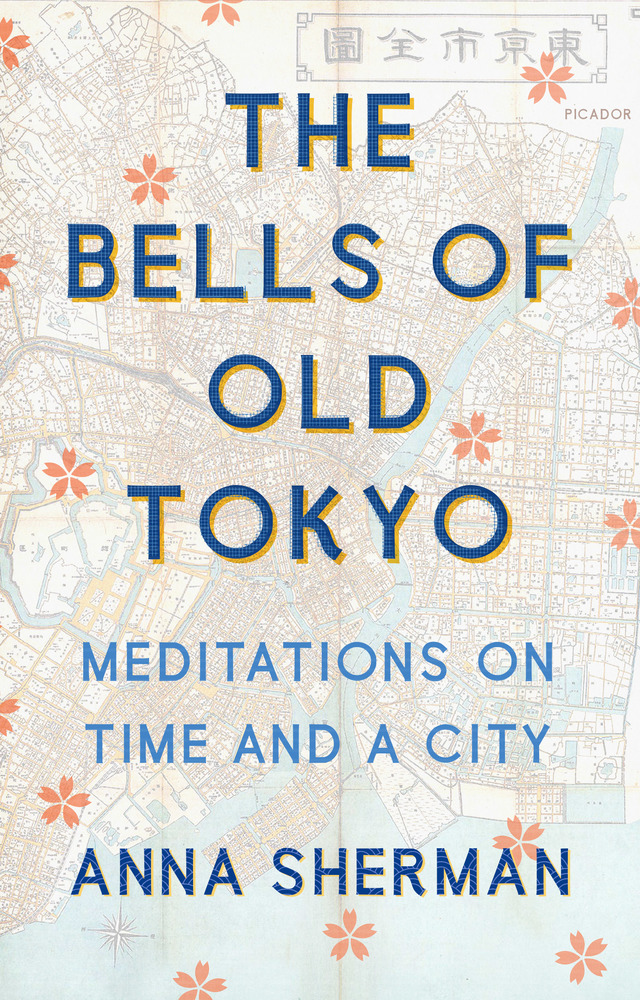
The Bells of Old Tokyo: Meditations on Time and a City by Anna Sherman

These lovely, understated ruminations on time and Tokyo will please those interested in Japanese culture, language or history–or lovers of any city, anywhere.

The Bells of Old Tokyo: Meditations on Time and a City is Anna Sherman’s exploration of a city that is not originally her own, but her perspective is perhaps all the more closely attentive, thoughtful and serious. Through Tokyo’s Bells of Time, which rang out the hours for hundreds of years, Sherman examines many aspects of both city and time. Her prose is careful, contemplative, even solemn. The result is philosophy, travel writing, elegy and love letter.

“Tokyo is one vast timepiece,” begins Sherman. “Time is counted out in incense sticks; in LEDs; and in atomic lattice clocks,” and in so many other ways she will consider. Time is ignored, too, in this city where residents “have their eyes fixed on the future, and are impatient when a word is said of their past.” Sherman never states the reasons for her preoccupation with time, clocks and Tokyo’s past, but her book thrums with it. She views the first Bell of Time, at a former prison at Nihonbashi, and the smallest, in Akasaka; seeks the lost bell of Mejiro; meets the man who rings the bell at Ueno; and visits a widow surrounded by “an island of old clocks” in Nezu. She also consults with numerous sources, modern and ancient, and studies the Japanese language and its translations. This is a narrator deeply immersed and committed to her subject; Sherman’s bibliography and notes are extensive for such a slim book.

A point of stillness at the center is a special coffee shop where Sherman makes a friend. “Tokyo is a restless city, where everything changes and shifts, but not Daibo Coffee.” Daibo is the one character she returns to, and his influence is felt in her love for the city and in her questions.

“[Author and composer] Yoshimura believed that a temple bell’s sound was as much about silence as about its ringing.” Sherman’s writing similarly respects white space as much as it does words: her approach is lyric and minimalist, and respectful of the culture she studies. An American living in Japan, she is sensitive to her outsider status, as when writing about the 1945 firebombing of Tokyo: “Growing up, I was part of the old soldiers’ we. I had never thought about what we had done to them.” She is present for the 2011 earthquake and Fukushima reactor explosions that followed, and her writing about these events is spare: “I bought tickets… I wanted to see Daibo… I said nothing.” At times, Sherman slides into prose poetry. “Mirrors and clocks in love hotels and the time they tell, the translucent sheeting over building sites, the streetlamps, the slopes, the signs I can read and the ones I can’t.”

The Bells of Old Tokyo is an elegant series of musings, a beautifully written evocation of a place and a philosophical inquiry into the nature of time itself. Sherman has given the world, and one city in particular, an astonishing gift.


This review originally ran in the July 9, 2019 issue of Shelf Awareness for the Book Trade. To subscribe, click here.


Rating: 7 bowls of green tea.

White Flights: Race, Fiction, and the American Imaginationby Jess Row

This tough, serious essay collection considers whiteness in American fiction and culture, and the inextricableness of the two, with exhortations for change.

Jess Row (Your Face in Mine) takes on ambitious material with White Flights: Race, Fiction, and the American Imagination. He points out a societal need for reparative writing, examining the role of imagination in real lives, both in “straight” fiction (novels, stories, films, plays) and, in a larger sense, “in which our collective life is a series of overlapping fictions, fantasies, dream states.” The first kind “reflects and sustains” the second, so that novels are never “just” novels, but rather serve to uphold institutions and ways of thinking that have consistently and systematically hurt nonwhite Americans. The title refers both to the real estate pattern of movement known as “white flight,” and also to flights of fancy, such as imagining that ignoring race and racism means they’ve gone away.

In seven essays, this book argues that imagination is as much part of the problem as real-world actions and prejudice. Its main concern is whiteness, in and out of fiction; when it examines specific marginalized groups, they tend to be African Americans and Native Americans. Row undertakes close readings of Marilynne Robinson, Don DeLillo, David Foster Wallace, Cormac McCarthy, Annie Dillard, Richard Ford and more: these white writers may be among his own past literary heroes, but they nonetheless come under scrutiny for the whiteness, or sheer emptiness, of the spaces they create. On the other hand, he examines James Baldwin, Toni Morrison, Chang-rae Lee, Colson Whitehead, Amiri Baraka and Ta-Nehisi Coates for the examples they offer of more inclusive fictional spaces. Row consults music and films, as well.

In challenging ways of writing–even, for white writers, the choice to write at all–Row is careful to acknowledge that, as a white man, he can merely ask questions and grope for progress, rather than offer a solution. He also mines personal material, including his childhood in the Black Hills of South Dakota, land that by treaty belongs to the Lakota and is illegally occupied by white people (like Row’s own family).

This intelligent collection is often deeply engaged in realms of philosophy and literary theory; it approaches an academic writing style. Its subject matter may be discomfiting for white readers and writers, and readers less familiar with Wittgenstein, Derrida or Edward T. Hall’s theory of proxemics will likely find this book challenging. There is something for every reader, however, in the message that fiction not only reflects but acts upon real life, and that each of us is obliged to act for justice, in reading and writing as in life.


This review originally ran in the July 2, 2019 issue of Shelf Awareness for the Book Trade. To subscribe, click here.


Rating: 6 references.

author interview: Tim Mason

Following my review of The Darwin Affair, here’s Tim Mason: You Have to Bring the Stage to Them.


Tim Mason‘s plays have been produced in New York City and around the world. He has received the Kennedy Center Award, the Hollywood Drama-Logue Award, a fellowship from the National Endowment for the Arts and a Rockefeller Foundation grant. In addition to his dramatic plays, he wrote the book for Dr. Seuss’s How the Grinch Stole Christmas! The Musical, which ran for two seasons on Broadway and tours nationally every year. He is the author of the young adult novel The Last Synapsid (2009). The Darwin Affair, out now from Algonquin Books, is his first adult novel.

photo credit: David Kelley


What about this history captured your imagination?

It began with Dickens, really: my love of Dickens, perhaps his best novel, Bleak House, and the character, the Detective Inspector named Bucket. I always thought, wouldn’t it be fun to write something with Bucket as the lead character instead of just a member of the supporting cast? And when I found that Dickens quite likely based Inspector Bucket on a real London policeman, Charles Field, I felt at liberty to use that fellow, or my version of him, as my lead character. It began with Dickens, and with my father’s love of the works of Charles Darwin.

How important, to you, is historical accuracy in fiction?

I worked very hard to be as accurate as possible, given that it’s a work of fiction. I tried to insert my fiction in the interstices between one historical event and the next. I had some good luck: when I first began work on the notion of the novel back in 2009, I was having dinner with a friend, a British expatriate in New York. And she said, well, if you’re doing anything Victorian, you should be in touch with my friend in London, Jane Hill. I e-mailed this perfect stranger and she, within days, was looking over my first 80 pages and correcting my Victorian. She was a great help throughout. At one point she turned over her house in north London to me while she was traveling abroad, and I used that as a base for research. I had an old friend in Oxford, an archeologist, and he and his wife were able to unlock a door for me at the University Museum, where the famous Wilberforce-Huxley debate on evolution took place. It is no longer open to the public, but I got to scope it out for myself and try to duplicate it in my book.

Also, in 2012, I think that was the year, the diaries of Queen Victoria, which had been transcribed and digitized, were briefly put online and open to the public. That was just a godsend; it was incredible. I had Queen Victoria’s own day-to-day accounting of her time, and the trip with her husband, Albert, to his homeland of Coburg in Germany, including the very real, very serious carriage accident that Albert suffered where he was thrown from a carriage and injured. I saw that as a green light to my fiction. It really happened; my version of it didn’t, but I squeezed my fiction onto historical fact.

Did you enjoy the research process?

I enjoyed it very much. Discovering sources like those I’ve mentioned, and a couple of others–I had a lot of good luck. At a certain point I feel you can’t write until you shut the history book. Otherwise you’ll go on forever researching and, you know, this is not a documentary; this is a work of fiction. I have to be willing to get some things wrong. I do my best to study up on the area I’m pursuing, and then I metaphorically shut the book and don’t look at it while I’m writing. That’s my process. Otherwise I find I’m paralyzed; I couldn’t actually begin the fiction until I looked away from the history.

What do you love so much about Bucket?

For me the Charles Field that I made was attractive. Dickens’s Bucket is also very attractive. He’s probably one of the first-ever police detectives in fiction. Very adept, very sagacious. He’s able to spot character on sight and come to snap judgments that prove to be accurate. I felt he also had quite a lot of moral ambiguity. He does a terrible trick to the poor character of Tom–Tom who’s all alone, a miserable poverty-stricken street boy. So he’s very warm and engaging, and you love him, and then he’s also capable of underhanded dealing. I thought he was very human.

When I came to write my version of Inspector Field, I realized he’s only superficially like Dickens’s Bucket. He has certain patterns of speech that are like Bucket, and he’s sort of a burly middle-aged man and he loves his wife, as Dickens’s Bucket did; but he’s a nicer guy. He has a terrible temper–that’s his biggest failing. But I could embrace him wholeheartedly, even with his temper and his sense of his own limitations. I think that’s very attractive to me. He’s not the omniscient detective. He’s not anything like Hercule Poirot. He’s just groping in the dark and so frustrated because he feels he makes one mistake after another. That feels more like my life.

How was writing a novel for adults different from your past writing experience?

I began experimenting in prose fiction some years ago, around 2000, when a story occurred to me that simply couldn’t be told on the stage. A play can span time, and travel in time theatrically, but this story wanted something different. That’s how my middle school novel, The Last Synapsid, began, and that was just such a slog. I just had to write and write and overwrite. My first draft was over 450 pages long! It took me a long time. I eventually cut 100 pages before Random House bought it and published it, but it was a great education. I could do things in novel form that I can’t do on the stage.

The literature of the stage is pure economy. Action is dialogue. Action isn’t, he goes to the bar and makes a cocktail and returns to the dinner table. Action is what happens from one line of dialogue to the next between one character and another, constant shifting of the balance of power. That makes the dynamic of a play. Well, in a novel, you’ve got the reader, who isn’t looking at the stage but looking into his or her own imagination, and you have to bring the stage to them. And it’s a lot of work, a lot of wonderful work.

What are you working on next?

What I’m working on involves Inspector Field five years before the events of The Darwin Affair, and seven years after. Both a prequel and a sequel. But this one I don’t want to take four years to write!


This interview originally ran in the June 21, 2019 issue of Shelf Awareness for Readers. To subscribe, click here, and you’ll receive two issues per week of book reviews and other bookish news.

The Darwin Affair by Tim Mason

Playwright Tim Mason’s first adult novel, a rousing mystery set in Victorian England, has it all: thrills, engrossing characters, taut pacing and historical interest.


Playwright Tim Mason’s first adult novel, The Darwin Affair, is a rousing mystery set in Victorian England. In 1859, the publication of Charles Darwin’s On the Origin of Species poses a menace to the powers that be, and some of society’s upper echelon want him squelched. Amid the conspiracy lurks a tall, shadowy man with deep-set eyes; death seems to follow wherever he goes. The dogged Chief Detective Inspector Charles Field is on the case, although his findings are not necessarily welcomed by all. Field tracks his suspect from meat market to tavern to the royal court, from England to Germany, and even to the high-profile Wilberforce-Huxley debate on evolution at Oxford. Scenes of crashing action and adventure include a racing carriage on a collision course with a speeding train. With cameos by Charles Darwin, Charles Dickens, Karl Marx and a variation on Typhoid Mary rounding out the peripheral cast, this is a wild tale that engulfs the reader from start to finish.

Satisfyingly plot-driven, then, The Darwin Affair also offers very engaging characters: approachable Albert, Prince Consort; Queen Victoria, haughty but not humorless; a comic Marx; and a gracious, gentle Darwin.

But Mason’s less famous hero definitely steals the show. Field has difficulties with authority that will be familiar to fans of contemporary fictional detectives like Harry Bosch and Dave Robicheaux. Mason’s playwriting skills are evident in realistic dialogue and well-constructed, easily envisioned scenes. Readers of historical fiction, murder mysteries, action/adventure and thrillers will be equally entertained and perhaps edified: beneath the excitement lie thought-provoking questions about class and order, the interplay of science and religion and intellectual curiosity. The Darwin Affair has it all: thrills, engrossing characters, taut pacing and historical interest.


This review originally ran in the June 21, 2019 issue of Shelf Awareness for Readers. To subscribe, click here, and you’ll receive two issues per week of book reviews and other bookish news.


Rating: 7 monkeys.