author interview: Tim Mason

Following my review of The Darwin Affair, here’s Tim Mason: You Have to Bring the Stage to Them.


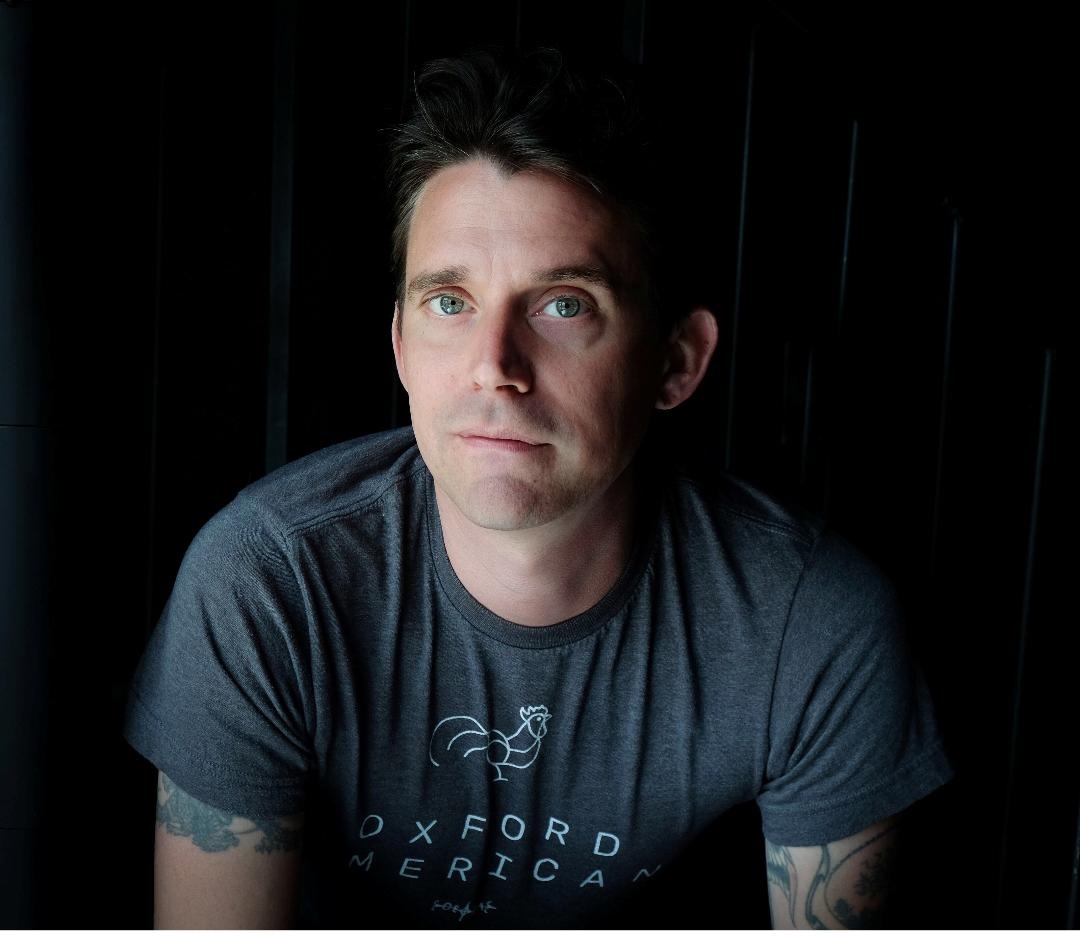
Tim Mason‘s plays have been produced in New York City and around the world. He has received the Kennedy Center Award, the Hollywood Drama-Logue Award, a fellowship from the National Endowment for the Arts and a Rockefeller Foundation grant. In addition to his dramatic plays, he wrote the book for Dr. Seuss’s How the Grinch Stole Christmas! The Musical, which ran for two seasons on Broadway and tours nationally every year. He is the author of the young adult novel The Last Synapsid (2009). The Darwin Affair, out now from Algonquin Books, is his first adult novel.

photo credit: David Kelley


What about this history captured your imagination?

It began with Dickens, really: my love of Dickens, perhaps his best novel, Bleak House, and the character, the Detective Inspector named Bucket. I always thought, wouldn’t it be fun to write something with Bucket as the lead character instead of just a member of the supporting cast? And when I found that Dickens quite likely based Inspector Bucket on a real London policeman, Charles Field, I felt at liberty to use that fellow, or my version of him, as my lead character. It began with Dickens, and with my father’s love of the works of Charles Darwin.

How important, to you, is historical accuracy in fiction?

I worked very hard to be as accurate as possible, given that it’s a work of fiction. I tried to insert my fiction in the interstices between one historical event and the next. I had some good luck: when I first began work on the notion of the novel back in 2009, I was having dinner with a friend, a British expatriate in New York. And she said, well, if you’re doing anything Victorian, you should be in touch with my friend in London, Jane Hill. I e-mailed this perfect stranger and she, within days, was looking over my first 80 pages and correcting my Victorian. She was a great help throughout. At one point she turned over her house in north London to me while she was traveling abroad, and I used that as a base for research. I had an old friend in Oxford, an archeologist, and he and his wife were able to unlock a door for me at the University Museum, where the famous Wilberforce-Huxley debate on evolution took place. It is no longer open to the public, but I got to scope it out for myself and try to duplicate it in my book.

Also, in 2012, I think that was the year, the diaries of Queen Victoria, which had been transcribed and digitized, were briefly put online and open to the public. That was just a godsend; it was incredible. I had Queen Victoria’s own day-to-day accounting of her time, and the trip with her husband, Albert, to his homeland of Coburg in Germany, including the very real, very serious carriage accident that Albert suffered where he was thrown from a carriage and injured. I saw that as a green light to my fiction. It really happened; my version of it didn’t, but I squeezed my fiction onto historical fact.

Did you enjoy the research process?

I enjoyed it very much. Discovering sources like those I’ve mentioned, and a couple of others–I had a lot of good luck. At a certain point I feel you can’t write until you shut the history book. Otherwise you’ll go on forever researching and, you know, this is not a documentary; this is a work of fiction. I have to be willing to get some things wrong. I do my best to study up on the area I’m pursuing, and then I metaphorically shut the book and don’t look at it while I’m writing. That’s my process. Otherwise I find I’m paralyzed; I couldn’t actually begin the fiction until I looked away from the history.

What do you love so much about Bucket?

For me the Charles Field that I made was attractive. Dickens’s Bucket is also very attractive. He’s probably one of the first-ever police detectives in fiction. Very adept, very sagacious. He’s able to spot character on sight and come to snap judgments that prove to be accurate. I felt he also had quite a lot of moral ambiguity. He does a terrible trick to the poor character of Tom–Tom who’s all alone, a miserable poverty-stricken street boy. So he’s very warm and engaging, and you love him, and then he’s also capable of underhanded dealing. I thought he was very human.

When I came to write my version of Inspector Field, I realized he’s only superficially like Dickens’s Bucket. He has certain patterns of speech that are like Bucket, and he’s sort of a burly middle-aged man and he loves his wife, as Dickens’s Bucket did; but he’s a nicer guy. He has a terrible temper–that’s his biggest failing. But I could embrace him wholeheartedly, even with his temper and his sense of his own limitations. I think that’s very attractive to me. He’s not the omniscient detective. He’s not anything like Hercule Poirot. He’s just groping in the dark and so frustrated because he feels he makes one mistake after another. That feels more like my life.

How was writing a novel for adults different from your past writing experience?

I began experimenting in prose fiction some years ago, around 2000, when a story occurred to me that simply couldn’t be told on the stage. A play can span time, and travel in time theatrically, but this story wanted something different. That’s how my middle school novel, The Last Synapsid, began, and that was just such a slog. I just had to write and write and overwrite. My first draft was over 450 pages long! It took me a long time. I eventually cut 100 pages before Random House bought it and published it, but it was a great education. I could do things in novel form that I can’t do on the stage.

The literature of the stage is pure economy. Action is dialogue. Action isn’t, he goes to the bar and makes a cocktail and returns to the dinner table. Action is what happens from one line of dialogue to the next between one character and another, constant shifting of the balance of power. That makes the dynamic of a play. Well, in a novel, you’ve got the reader, who isn’t looking at the stage but looking into his or her own imagination, and you have to bring the stage to them. And it’s a lot of work, a lot of wonderful work.

What are you working on next?

What I’m working on involves Inspector Field five years before the events of The Darwin Affair, and seven years after. Both a prequel and a sequel. But this one I don’t want to take four years to write!


This interview originally ran in the June 21, 2019 issue of Shelf Awareness for Readers. To subscribe, click here, and you’ll receive two issues per week of book reviews and other bookish news.

The Darwin Affair by Tim Mason

Playwright Tim Mason’s first adult novel, a rousing mystery set in Victorian England, has it all: thrills, engrossing characters, taut pacing and historical interest.


Playwright Tim Mason’s first adult novel, The Darwin Affair, is a rousing mystery set in Victorian England. In 1859, the publication of Charles Darwin’s On the Origin of Species poses a menace to the powers that be, and some of society’s upper echelon want him squelched. Amid the conspiracy lurks a tall, shadowy man with deep-set eyes; death seems to follow wherever he goes. The dogged Chief Detective Inspector Charles Field is on the case, although his findings are not necessarily welcomed by all. Field tracks his suspect from meat market to tavern to the royal court, from England to Germany, and even to the high-profile Wilberforce-Huxley debate on evolution at Oxford. Scenes of crashing action and adventure include a racing carriage on a collision course with a speeding train. With cameos by Charles Darwin, Charles Dickens, Karl Marx and a variation on Typhoid Mary rounding out the peripheral cast, this is a wild tale that engulfs the reader from start to finish.

Satisfyingly plot-driven, then, The Darwin Affair also offers very engaging characters: approachable Albert, Prince Consort; Queen Victoria, haughty but not humorless; a comic Marx; and a gracious, gentle Darwin.

But Mason’s less famous hero definitely steals the show. Field has difficulties with authority that will be familiar to fans of contemporary fictional detectives like Harry Bosch and Dave Robicheaux. Mason’s playwriting skills are evident in realistic dialogue and well-constructed, easily envisioned scenes. Readers of historical fiction, murder mysteries, action/adventure and thrillers will be equally entertained and perhaps edified: beneath the excitement lie thought-provoking questions about class and order, the interplay of science and religion and intellectual curiosity. The Darwin Affair has it all: thrills, engrossing characters, taut pacing and historical interest.


This review originally ran in the June 21, 2019 issue of Shelf Awareness for Readers. To subscribe, click here, and you’ll receive two issues per week of book reviews and other bookish news.


Rating: 7 monkeys.

Late Migrations: A Natural History of Love and Loss by Margaret Renkl

This subtle, searing essay collection examines the griefs of family and of the natural world as one.

Margaret Renkl’s Late Migrations: A Natural History of Love and Loss is a quiet but stunning collection of essays merging the natural landscapes of Alabama and Tennessee with generations of family history, grief and renewal. Renkl’s voice sounds very close to the reader’s ear: intimate, confiding, candid and alert.

Renkl grew up in “lower Alabama,” the adored child of parents, grandparents and great-grandparents: in an old picture, “my people are looking at me as if I were the sun.” Her childhood was lived close to the red dirt, pine needles and blue jays of that space. As an adult, she lives in Nashville with a husband and three sons, and carefully cultivates a backyard garden with bird nests, baths and feeders. These are the backdrops to her observations of nature. “The cycle of life might as well be called the cycle of death: everything that lives will die, and everything that dies will be eaten.”

Sections are headed with simple, natural-world titles (Tomato, River, Thunderstorm) and adorned with illustrations by the author’s brother, Billy Renkl. Within these sections, the essays are brief–often just two or three pages–and can stand alone, but accrue to form a truly lovely larger picture. “Safe, Trapped” handles the duality of protective spaces: that shelter is also captivity. An echo, several chapters later: the realization that her childhood was never the sanctuary she thought it was at the time. Alongside the concern of how to keep loved ones safe, she writes about the natural cruelty of rat snakes, crows and snow.

Late Migrations studies family and loss: the deaths of great-grandparents, grandparents and parents; Renkl becoming a parent herself and worrying over her children. Spending a night in a prewar infirmary on the grounds of an orphanage, dreaming of babies in cages, Renkl goes to the window to view cardinals at a feeder and “watched until I knew I could keep them with me, until I believed I would dream that night of wings.” At about the midpoint of her book, this feels like a point of synthesis. Dreaming of babies in cages and trading them for wings, to “keep them with me,” represents a neat joining of her themes, which are of course not nearly so separate as they initially appear.

This is a book about the labors of bluebirds, red-tailed hawks and cottontails, and about grief: the loss of loved ones, the risks to her own children and the everyday struggles of backyard nests. A book of subtlety and sadness, yes, but also a tough, persistent joy in the present and the future. “Human beings are creatures made for joy,” Renkl writes. “Against all evidence, we tell ourselves that grief and loneliness and despair are tragedies…. In the fairy tale we tell ourselves, darkness holds nothing resembling a gift.” Part of her work in this book is to find and recognize the gift in the darkness, “to reveal it in its deepest hiding place.” Late Migrations is itself that gorgeous, thought-provoking gift.


This review originally ran in the June 11, 2019 issue of Shelf Awareness for the Book Trade. To subscribe, click here.


Rating: 8 bluebirds.

I sat reading, in Renkl’s chapter “Bluebird” at a state park in North Carolina, about bluebirds nesting in bluebird boxes. And I looked up to see a male bluebird, brightly feathered, ducking into a bluebird box, his anxious, drabber mate sitting on top and watching me and my little dog with concern. I couldn’t believe it: I looked down at the page, up at the bluebirds. We were a dozen feet apart. I kept reading and watching as the couple kept up their cycling through the box – she got a little more comfortable with me over time, but stayed watchful. A rare experience.

The Ghost Clause by Howard Norman

This smart, literary novel of human relationships–and a ghost–in a small town in Vermont is heart-wrenching, heart-warming and life-sustaining.

Muriel and Zachary are newlyweds living in their newly purchased old farmhouse in small-town Vermont. She has just defended her dissertation on translations of Mukei Korin’s erotic Japanese poems; that she brings this work home is a boon for their marriage. He is a private detective investigating the disappearance of a local girl who’s been missing for months now. They bought the farmhouse from semi-famous painter Lorca, a recent widow whose husband, Simon, had a heart attack and tipped overboard on a ferry en route to Nova Scotia.

The first surprise of Howard Norman’s (The Northern Lights, What Is Left the Daughter) riveting novel The Ghost Clause is that their stories are told in the voice of Simon’s ghost. The title refers to a section in Vermont real estate contracts that allows a buyer to return a house to its seller if there turns out to be a ghost in residence.

Simon still occupies the farmhouse, and feels very involved in the lives taking place there now. He appreciates that Lorca still visits, too. He observes Muriel and Zachary in their daily activities (often including their prodigious lovemaking), reads Muriel’s academic work and Zachary’s case notes, and sits in on their conversations around the clock; this gives him a near-omniscient perspective. He causes few problems, except that he keeps setting off the MOTION IN LIBRARY alarm on the home security system, which might drive his cohabitants nuts. He spends a lot of time reading Thomas Hardy; Muriel owns plenty.

Supremely enjoyable, The Ghost Clause is about the intersections of lives. At its center are two marriages–one new, one a bit older and recently rent by death–but it features many other town residents as well, and is ultimately about human relationships and families, and how we try to make it all work. Beyond this rich daily-life material lie extra layers: Korin, the poet Muriel studies, is fictional, so the erotic poems in the novel (and the difficulties of their translations, and the modernist issue of their parentheticals) are Norman’s invention. The missing-child investigation that threatens to consume Zachary for more than half the book is a thorough, often disturbing diversion. Finely detailed in its particulars and simultaneously revealing of grand-scale humanity, The Ghost Clause is both poignant and frequently gut-laugh-funny.

Norman’s prose is inspired; Simon’s narration is adorned with lyric moments (remember, he was a novelist in life): “A hammock of moon was traveling pale in hazy light,” Norman (or Simon) writes of an evening at home with Lorca when they were still alive together; there is more poetry here than Korin’s. Simon observes, “Scholarship as a form of courtship, it seemed to me.” The charm of local culture is part of the appeal, too. Muriel notes after a party that “People stayed kind of late, for Vermont.”

The Ghost Clause is one of the best kind of novels, excelling in every way: it’s delightful at line level, humorous, absorbing in individual stories and wise on a higher plane. A book for any reader who cares about people.


This review originally ran in the June 7, 2019 issue of Shelf Awareness for the Book Trade. To subscribe, click here.


Rating: 9 crabapple trees.

The Wild Boy by Paolo Cognetti

Best book of the year to date.


A city dweller returns to the mountains of his youth, and his gorgeous, reflective memoir is full of nature and humanity.

Having just turned 30, Paolo Cognetti (The Eight Mountains) felt restless and unfulfilled in the city of Milan. He missed his childhood summers–the first 20 years of his life–spent in the Italian Alps. Inspired by Thoreau’s Walden and the principled quest of Chris McCandless (subject of Jon Krakauer’s Into the Wild), he rented a renovated but rustic cabin alone in a village of ruins in a high alpine valley and undertook to learn what the mountains had to teach, to “live deep and suck out all the marrow of life.” After years of frustration, he hoped to write again.

The Wild Boy is a memoir of three seasons spent in that cabin, or, more accurately, spent hiking and exploring the mountains he remembered from when he was a boy–that wild boy he hopes to find again. The account opens briefly in winter, for background, as Cognetti makes his decision and locates his mountain home. Spring, summer and fall form the bulk of the story, which ends when he heads back down the mountain again: “I already knew all the dreams that I would have that winter.”

In the interim, Cognetti gets to know the local flora and fauna; briefly attempts a vegetable garden; studies other writers’ words; travels far and wide on foot; and makes new friends, human and otherwise. Thoreau writes of the pleasures of solitude, but this narrator finds he desires companionship–if they are the right companions. Two men in particular make strong impressions. His landlord, Remigio, is a creature of the mountains, with whom Cognetti literally makes hay. They share few life experiences, but quickly become fast friends, and Remigio turns out to suffer from writer’s block as well: “This was the story I had strayed into, hoping to find how to write again.” The other is an alpine shepherd named Gabriele, with whom Cognetti shares meals and wine. Gabriele will give him a gift at the end of their season together that Cognetti didn’t know he needed.

The Wild Boy has a lovely and profound story to tell about connections to land and history and one another. In seeking simplicity and a new start in his life, Cognetti rediscovers timeless truths about the human condition. In addition to the strength of its contents, this is a stunningly beautiful book. It is a slim volume whose simply titled chapters (Snow, Hay, Vegetable Garden, Neighbors) carry significant wisdom and weight. Cognetti’s prose is incandescent when writing about nature, about human history, about friendship and, perhaps most of all, about words: “That was why he had become such a voracious reader. He was looking for the words that would allow him to speak about himself.” For any reader who has wondered about the next step, loved a mountain or a book, struggled with writer’s block or stared in wonder into a forest, this astonishing memoir is necessary.


This review originally ran in the June 6, 2019 issue of Shelf Awareness for the Book Trade. To subscribe, click here.


Rating: 10 words.

Galley Love of the Week: Things We Didn’t Talk About When I Was a Girl by Jeannie Vanasco

Be among the first to read Things We Didn’t Talk About When I Was a Girl by Jeannie Vanasco, a Shelf Awareness Galley Love of the Week. Presented on Mondays, GLOW selects books that have not yet been discovered by booksellers and librarians, identifying the ones that will be important hand-selling titles in a future season.

Fourteen years after her friend Mark raped her, Jeannie Vanasco (The Glass Eye) asks him if he’ll talk to her about it. The result is Things We Didn’t Talk About When I Was a Girl, a nuanced effort to come to terms with Vanasco’s own trauma; her decision to include Mark’s voice in her memoir is only one of its surprising elements. Editor Masie Cochran says, “To me, the idea was devastating and captivating. Why are we not talking about these things? Jeannie destroys simplistic, binary ways of thinking about victimhood and perpetrators. She invites–demands, really–all of us all to be more rigorous in our cultural investigation and self-excavation.” This book is self-aware, scrupulously questioning every assumption at every turn. Courageous, smart and painstaking, it’s some of the most compelling writing you’ll encounter.

Galley Love of the Week, or GLOW, is a feature from Shelf Awareness. View this edition here.

Girls Like Us by Cristina Alger

Heart-racing action and a twisty-turny plot star in this thriller of multigenerational cops and murders.

Cristina Alger (The Banker’s Wife, This Was Not the Plan) crafts a gripping story of suspense with Girls Like Us. Fans of murder mysteries packed with action and plot twists will be satisfied by this edge-of-the-seat adventure into seedy Suffolk County.

FBI Agent Nell Flynn has returned home to the unbeautiful end of Long Island to sprinkle her father’s ashes, close up his house and move on. It’s her first time back in 10 years. She’s on leave from the Bureau following a traumatic on-the-job shooting, recovering from injuries both physical and emotional. Her father, homicide detective Marty Flynn, had some good buddies on the force, and it’s nice to see them again, but Suffolk County doesn’t hold many pleasant memories. Then Marty’s last partner, Lee Davis, with whom Nell went to high school, asks for her help on one last case. Two young women have been murdered: “working girls,” the cops call them; one of them was undocumented. These are the kinds of lives the department doesn’t really value. In their details, though, these murders take Nell back to the murder of her mother when Nell was seven years old.

Is there a serial killer at work in Suffolk County? Is there a link to Nell’s past? What exactly was her father’s involvement? Was his death really an accident–and was she wrong to alibi him on the night of her mother’s death? As clues mount up and point in different directions, Nell is less and less sure of who she can trust. Her wounds are not at all well healed, but she may be the only one who can prevent more deaths.

Girls Like Us is a little weak on certain details–the way a deadbolt works, the difference between prostitution and pandering charges, how a field agent might tell a suspect was dead. But its plot drives with such momentum that these details may be overlooked. With violent action and split-second turns, this is not a book to put down easily: plan accordingly. Alger’s thriller is emphatically plot-driven, but her characters hold their own, from Lee, who doesn’t quite fit in on the force, to the guys Marty Flynn was closest to in the department and the retired cop who runs the local bar.

As an added complication, the new murders and that of Nell’s mother may be class-based, as the rich summer people of the Hamptons meet the working-class section of Long Island, where Nell and the Suffolk County Police Department guys are from. Nell is a quintessential damaged cop, even if she is FBI: ignoring her own injuries, pushing too hard, taking foolhardy risks, with a strong sense of right and wrong (as her father seemed to have). Her personality serves as backbone to the electric plot of Girls Like Us, and the reader trusts that she will follow through to the truth, no matter how much it hurts.


This review originally ran in the June 3, 2019 issue of Shelf Awareness for the Book Trade. To subscribe, click here.


Rating: 6 deadbolts.

Cygnet by Season Butler

An island of elderly separatists and one teenaged girl face essential human angst in this remarkable debut novel.

Cygnet is a powerful, poignant, smart debut novel by Season Butler. Her protagonist, known only as Kid, lives on an island otherwise populated entirely by elderly separatists. Ten miles off the coast of New Hampshire, Swan Island’s inhabitants call themselves Swans, and they want nothing to do with the rest of the world, which they call the Bad Place. Seventeen-year-old Kid has no business there, but her parents abandoned her with her grandmother, who has since died. Now she works part time for one of the residents, digitizing and editing photographs, home videos and the woman’s children’s diaries: “I’ve given her real breasts, grateful children, a husband whose eyes never wandered…. I’ll be up here forever, fixing Mrs. Tyburn’s memory.” She spends her lunch breaks with an Alzheimer’s patient, who has no memories to fix.

Swan Island is slowly crumbling into the sea, with Kid’s grandmother’s house set to go first: her backyard shrinks by the day, and Kid hates and fears the ocean, its relentless “waves that never tire of the same old dance moves. The cliff and the ocean, a mosh pit of two.” The Swans are always going on about how you can view the sea from anywhere on their island; she doesn’t see the appeal. With few exceptions, the Swans are cruelly frank about their displeasure at her presence, her very existence. She is desperate for her parents to return for her, but over the course of the story, the reader understands how unlikely this is. Memories and flashbacks touch briefly on their drug addiction and neglect, and hint at past traumas.

Cygnet covers a brief period of time on Swan, in Kid’s first-person voice. Her thoughts are true to those of an unhappy teenager: “I’m such an idiot” is a refrain; she disparages her own strange stream of consciousness. The prose style ranges widely from this (realistic) awkwardness to inspired lyricism. For such a young person, Kid has a surprisingly clear and sympathetic view of the Swans, appreciates their beauty and their choice to segregate from the Bad Place. She wishes her choices were so clear. On her 18th birthday, she bakes herself a birthday cake, using her mother’s remembered instructions; it comes out with a “perfect crumb” but she finds she’s no longer hungry: “I… take it outside, plate and all, and throw it off the stupid cliff.”

At the intersection of teen angst and sobering end-of-life realities, Cygnet contains some powerfully depressing material. But Kid’s disarming voice and unlikely will to push forward save this novel from doom and gloom. Kid and the Swans have more in common than they think–age and youth being more alike than either perhaps accepts–and Butler’s conception of this particular world-within-a-world is easy to lose oneself in. With the house literally falling out from under her, Kid will have to face her own future, create it for herself. By the end, this feels like a situation we all have in common.


This review originally ran in the May 23, 2019 issue of Shelf Awareness for the Book Trade. To subscribe, click here.


Rating: 8 nickels.

No Visible Bruises: What We Don’t Know About Domestic Violence Can Kill Us by Rachel Louise Snyder

This thoroughly researched examination of the domestic violence epidemic is chilling but deeply important and surprisingly accessible.


Journalist Rachel Louise Snyder used to think of domestic violence as “an unfortunate fate for the unlucky few,” a hardwiring gone wrong. But then an acquaintance offered a new perspective: that this is a social epidemic, one it is possible to prevent. No Visible Bruises: What We Don’t Know About Domestic Violence Can Kill Us is the product of copious, immersive research, an investigation into a universal and insidious violence and what can be done about it.

Snyder presents her findings in three parts, ordered as “The End,” “The Beginning” and finally “The Middle.” That is, she first studies what intimate partner violence looks like at its conclusion: homicide and regrets that various systems (judicial, law enforcement, advocacy, etc.) couldn’t do more. Next, she investigates the beginning of such violence. Abusers often come from abusive home environments and, along with their victims, grow up in a society that values stoicism, control and violence in men, submissiveness and emotional labor in women. “The Middle” examines how services are provided to victims of domestic violence, and what changes should be considered.

No Visible Bruises sounds like an appallingly dark read, and it’s true that the content is deeply disturbing. But by focusing on case studies–individuals’ stories–Snyder returns humanity to the horrifying larger issue. These cases (including familicides, or murders of entire families, as well as homicides, private terrorism and abuse of all stripes) are indeed awful stories, but told with such compassion and curiosity, they turn out remarkably accessible.

In repeatedly facing the stereotypes and assumptions she brought to her research topic, Snyder gains credibility with her reader. She applies extra attention to breaking down those myths she once believed: for example, that “if things were bad enough, victims would just leave.” Her years of research and immersion in the subject–riding along with law enforcement, shadowing advocates and interviewing survivors, families and abusers alike–lend her further authority. Snyder holds concern for abusers as well as their victims. She spends time with men involved in prevention campaigns, former abusers working to reset patterns and forge new ways to relate. She comes to see that shelters are not the answer, even while noting how much good they’ve done since the early days of recognizing domestic violence.

Perhaps most importantly, she gives context to the apparently senseless horror, placing domestic violence in relationship to issues of economics, education, employment, the criminal justice system and other, more “public” types of violence. The result is an impressive body of knowledge about domestic violence in the United State: what it looks like, its terrifying prevalence, what works and what doesn’t in trying to stem the tide. No Visible Bruises speaks with urgency about solving a problem that, however invisible, affects us all.


This review originally ran in the April 15, 2019 issue of Shelf Awareness for the Book Trade. To subscribe, click here.


Rating: 7 calls.

Vanlife Diaries: Finding Freedom on the Open Road by Kathleen Morton, Jonny Dustow and Jared Melrose

Beautiful photos, enthusiastic essays and handy tips portray vanlife as desirable and attainable.

Kathleen Morton, Jonny Dustow and Jared Melrose are partners at the blog Vanlife Diaries, a community of and for nomadic types, where they promote relevant nonprofit organizations and meetups and other events, and vanlifers share their stories. A few years and a few hundred thousand followers later, Vanlife Diaries: Finding Freedom on the Open Road is available as a beautiful collection of photographs and essays, tips and tricks, celebrating this way of life and offering inspiration to those setting out.

Contents are organized by motivation to travel: for family, for love, for art, for nature and so on. Each section includes an essay by a featured vandweller, with helpful how-to pieces slotted throughout: guides to cooking in small spaces, traveling with pets, finding wifi and other finer points of life on the road. More than 200 accompanying photographs feature van set-ups and their human, canine and other inhabitants in breathtaking natural settings around the world. Even readers who thought they were immune to wanderlust can’t help but be swept away by such stunning images. And the more serious consumer of vanlife literature will be impressed by the balance of these impressive images with the kind of gritty, realistic details that rarely accompany Instagram versions of the trending lifestyle.

Vanlife Diaries is for anyone who’s ever considered nomadism as a means to reduce their carbon footprint, pursue nontraditional work or simply live more slowly and simply. With practical advice and inspirational full-color photos, this book has something to offer readers at every stage of the journey.


This review originally ran in the April 9, 2019 issue of Shelf Awareness for Readers. To subscribe, click here, and you’ll receive two issues per week of book reviews and other bookish news.


Rating: 6 cast-iron skillets.