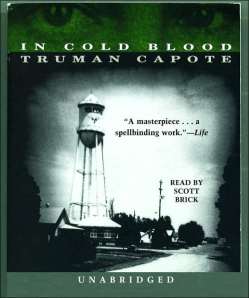
In Cold Blood by Truman Capote (audio)

Truman Capote captured my undivided attention with this medium-largeish* book in remarkable fashion. My first issue for this review: is this fiction, or non? It is most commonly referred to as a “nonfiction novel,” a term I have a lot of trouble with. The story is either based very closely on, or is, the true story of the quadruple murder of the Clutter family in small-town Kansas, and the investigation, arrest, and eventual execution of the two perpetrators. (My library’s OCLC listing calls it “postmodern fiction.”) Capote himself said, “I wanted to produce a journalistic novel, something on a large scale that would have the credibility of fact, the immediacy of film, the depth and freedom of prose, and the precision of poetry.” So, fiction or non? I’m going with fiction, but clearly this is one of those areas where the line blurs. More on that in a bit.**

I came across this book recently in several blogs, which is curious because it’s not new; it was first published serially in Life magazine in 1965, and in book form in 1966. I already had the book on my radar, but these fine fellow bloggers definitely solidified my interest. In telling you about the story, and the book constructed about the story, I’m going to be fairly spoilery, because this is history. If you want to read it yourself and be surprised, I’m not your top-choice review.

So. The subtitle reads, “A True Account of a Multiple Murder.” On the night of November 15, 1959, the Clutter family was bedding down on their farm in Kansas, just outside the small town of Holcomb, itself a suburb of Garden City. Herbert Clutter, the patriarch, was a respected member of the community and devout Methodist; his wife Bonnie had been suffering from depression and had been in and out of hospital, but at this time was home. Sixteen-year-old Nancy, the belle of local society, sweet, talented, generous, and universally beloved, had just sent her boyfriend Bobby home and was getting ready for bed. Fifteen-year-old Kenyon was slightly socially awkward but friendly and respected as a member of a well-liked and important family. The two older Clutter daughters were living on their own outside the home – one married, one about to be.

Meanwhile, two paroled convicts of the Kansas state prison system were on the road. Perry Edward Smith and Richard Eugene “Dick” Hickock had been cellmates and although very different in temperament, had teamed up for an endeavor that Dick described as being the perfect crime. As you’ve already guessed (or already knew), these six characters converge when Dick and Perry kill the Clutters in the night and make off almost as perfectly as Dick imagined. They spend months traveling, living briefly in Mexico where Perry hoped to become a successful treasure hunter, and then roaming the US again until they were apprehended in Las Vegas. They were tried in Kansas, convicted, and finally hanged in April of 1965.

Capote follows both groups of characters – the Clutters, and Perry & Dick – alternately in the days leading up to the night of the murder. Then he follows Perry and Dick in their roaming, and then through their imprisonment and trial, and right up to the hangings. His voice is omnipotent third person, and he quotes extensively from letters, documents, and trial proceedings, as well as from his interviews with various players and especially Dick and Perry themselves. Capote was on the case (so to speak) well before they became suspects, and published after they were killed, so his perspective and the timeline of his coverage is pretty extensive.

But, perhaps not entirely objective. The Clutters are painted in admirable detail, in lovely little vignettes. But their role is minor and short-lived (ouch, pun not intended). And of the two killers, Perry Smith is treated far more sympathetically and examined more deeply. I was pondering this as I listened to the book, wondering if this was all Capote’s apparent subjectivity, or if Perry was inherently more sympathetic; in other words, would I have found him so if I had been researching this case myself? There are a few fairly easy markers for this, at least for me: for one, Dick liked to rape little girls. Perry apparently stopped him from raping Nancy (by both their accounts). Dick ran over stray dogs with his car for fun, which Perry found revolting (as do I, obviously). Perry’s childhood was patently rough, while Dick’s is characterized as fairly normal. Perry seems to more clearly have a mental illness or defect that “causes” his criminal and violent tendencies. But, I’m not sure we get all of Dick’s story; Capote looks much more closely into Perry’s past. So what I’m trying to say is, I think there may be a bias in favor of poor Perry the murderer, having been manipulated by evil Dick. Apparently, it was alleged that Capote in fact had a sexual relationship with Perry while he was imprisoned, although obviously I can’t speak to that. This is not a criticism. I just want to point out that perhaps Capote is not entirely impartial with regards to his two main characters.

I found this book incredibly powerful. Capote has a fine sense of drama and of timing. Scenes and people are sketched artfully, sometimes quickly and with broad strokes that paint a pretty complete picture just briefly, and sometimes in painstaking detail. The stories of the Clutters’ deaths and Dick and Perry’s adventure and executions are fascinating and engrossing, yes. But it’s Capote’s rendering that makes this book, more than his subject matter. (I guess this is always the case.) I was blown away by the emotional effect of this story. I couldn’t get enough; I wanted more of the inside of Perry’s head, of Dick’s (ew, how creepy), of the small-town life of Holcomb and Garden City. This is my first experience with Truman Capote, and I’m a fan.


Also, as Marie said at The Boston Bibliophile, Scott Brick’s narration is excellent. I recommend this book on audio if you’re so inclined. (I also picked up a paperback, though, to have on hand. I never did reference it while listening but I think I’d like to have it for future use.)


*My audio version is 12 cd and 14.5 hours; my paperback edition is just under 400 pages.

**Back to the fact vs. fiction question. It does seem that Capote behaved like a journalist in putting this book together: gathering facts, interviewing key players, confirming dates. It could pass as “true crime,” a genre which itself may have trouble with fact vs. fiction. The biggest place where Capote appears to leave the realm of nonfiction behind is in dialogue; he has recreated a great many pieces of dialogue, mostly between Perry and Dick, that were unrecorded. He has relied upon Perry and Dick themselves in this recreation, I think, but memory being what it is, some creativity definitely come into play. I did note that on the night of the Clutters’ deaths, Capote has not tried to recreate their experience or any dialogue, except in the accounts shared by Perry and Dick in their confessions. This seems to show a reluctance to just “make things up,” and a respect for the question that (I think) still remains: did Perry kill the two male Clutters and Dick the two women, as Perry originally claimed? Or did he Perry kill all four, as he amended his story to say, and as Dick claimed all along? Capote doesn’t answer this question for us – presumably because he respects the fact that he can’t answer it authoritatively. (I do wonder what he thought, though, considering that he apparently was very close to Perry in particular.)

hemingWay of the Day: with love


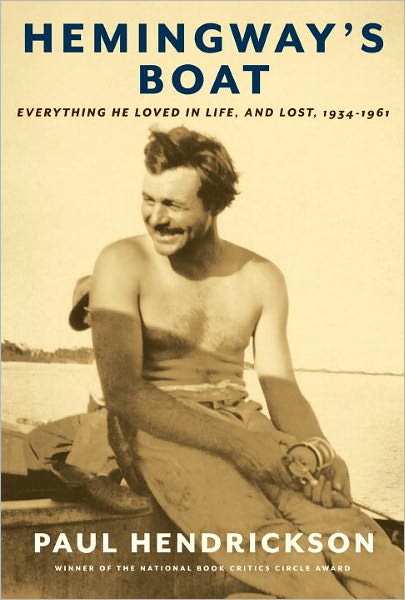
According to Paul Hendrickson in his meticulously researched Hemingway’s Boat which I respect and admire very much, Hemingway wrote to Sara Murphy (an old friend from the Paris days) in December of 1935 of his concerns on aging… his work habits… and a recent hunting trip with his son Patrick. The part I like the best (and which strangely echoes Gertrude Stein) is his closing,

with very much love much love and love also with love.

I love you too, Papa.

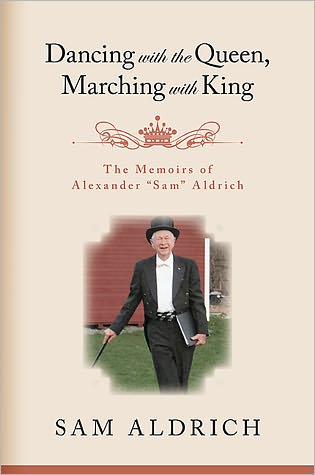
did not finish: Dancing with the Queen, Marching with King by Sam Aldrich

I was sent a galley copy of this book for review, but was not able to stomach it.

Alexander “Sam” Aldrich was born a blue-blood in New York state, silver spoon and all. He received a good classy upbringing, but pursued more philanthropic goals than just earning money as I believe was expected of him. He worked as a lawyer, then in city and state government. His book begins with an explanation of the title: first, a brief account of having danced with the Queen of England at age 25, and then a several-chapters-long narrative of his experience marching with Martin Luther King, Jr. from Selma to Montgomery, in his thirties. In telling of the march on Montgomery, Aldrich is at his strongest; his passion and indignation at injustice comes through. And although I looked carefully, he never claimed to have fully grasped what it was like to be a poor black man in Alabama in the 1960’s.

Throughout, Aldrich’s writing is very poor. He’s clearly writing as he talks; it’s conversational; but it’s also full of grammar mistakes, run-on sentences and the like. A conversational style can be endearing and casual, but this came across as amateurish; surely the State University of New York Press wants to keep its name clearer than this. Yes this is a galley copy, but I’m not talking about a few typographical errors that will be corrected in copy editing; I’m talking about a writing style that made my skin crawl.

Aldrich’s story fell short for me quickly. I made it about halfway through the 270ish pages and felt bored. I fear that the Selma to Montgomery march may have been his greatest moment, and if so, he may have done better to not let it go in the first few chapters. I think his claim to fame is his refusal to be a standard rich guy, but what he did instead did not strike me as so remarkable as to keep this book afloat.

The final straw was reference to the outing, blacklisting, and harassment of communists in the 1950’s, which I thought we were done being proud of; but this 2011 publication toes the McCarthyist party line perfectly. I had been peering suspiciously sideways at Aldrich’s semi-concealed conservative agenda, and coming across this ugliness was the end for me.

Final verdict? I can’t entirely judge, of course, having been unable to even finish the dern thing; but my impression is: a poorly written memoir of a semi-remarkable life, with a partially-concealed political agenda that I personally find abhorrent. Not for me.

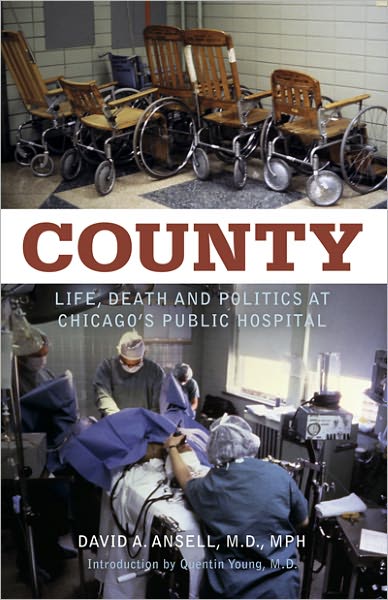
County: Life, Death and Politics at Chicago’s Public Hospital by David A. Ansell

I read ~150 of County‘s ~200 pages in one night, and forced myself off to bed. Finished the next day. Ansell is no professional writer; I itched to get out my red pen here and there. But his story is powerful and evocative, and his passion for the injustices he describes absolutely screams off the page.

I found myself swept away in the story of “County,” as Ansell refers to the Cook County Hospital in Chicago where he spent the bulk of his career. As a med student, he and his friends suspected they wanted to go to County, famous for its overcrowding, underfunding, racial disparity, and incredible challenge. His group was concerned about social injustice. Fresh off antiwar protests and sensitive to racism, these idealistic young med students drove down from New York to Chicago to visit the hospital and interview with Quentin Young, then Chairman of the Department of Internal Medicine, famous pioneer of desegregation and human rights in health care. They were shocked at the squalor and disorganization, even having come in with some impressions. Ansell & friends, eventually known as the “Syracuse Group,” conspired to become residents at County, precisely because of the challenges it presented.

Ansell is strongest when telling his personal story. Residents at County in his day (he started in 1978) had little to no supervision or assistance from their attending physicians; he describes an environment in which the residents all muddle through together, cooperatively, learning as they went. This was a great education but often resulted in less-than-optimal care for the poverty-stricken patients. From resident, he goes on to a position as an attending physician at County, although his original plan had been to head back east after completing his residency. He was immediately hooked, though, by the neediness of County, the organization, and his patients. He was also involved in politics and activism from his first moment on campus – literally. He attended a meeting on the day of his scheduled interview for residency.

Over the years, Dr. Ansell would serve in various positions in the ER and in the outpatient clinic, and be part of the birth of the Breast Cancer Screening Program and County’s AIDS Clinic. His patients, and their problems, made deep impressions on him. He was active in trying to right the wrongs of the health care system and of County’s management and underfunding in particular. When the politics really get going, Ansell can get a little bit soap-boxy. I have mixed feelings about this aspect of the book. While unquestionably passionate, righteous, and well-informed, he can tend to come on a little strong. Preachy, even. My concern here is the one my old buddy Gerber expressed about Barbara Ehrenreich’s Nickled and Dimed: On Not Getting By in America, years ago: the author’s personal political starting point is so overtly obvious that the (actually very strong) point of the book may be dismissed because of the author’s prejudice. Speaking as someone who DOES share Ansell’s politics, and who still feels that he can get a little preachy, I have concerns about the book achieving its goal of education and perhaps even changing minds.

But the stories about Ansell’s experience learning and working as a professional doctor, the stories about his patients and their troubles, and the stories about the challenges of County… its politics, the underfunding, the horrific and inhumane conditions… these are where Ansell shines. It’s a powerful, emotional, evocative book. It makes good points: it argues that access to health care is a human right, and should not be dependent upon health insurance or employment status. It is definitely a political book. I recommend it, just with a few reservations. Because it is short and engrossing, you can almost read this book in one sitting or two. And I think it is absolutely worth your time.

Teaser Tuesdays: Hemingway’s Boat: Everything He Loved in Life, and Lost, 1934-1961 by Paul Hendrickson

Teaser Tuesdays is a weekly bookish meme, hosted by MizB of Should Be Reading. Anyone can play along! Just open your current read to a random page and share a few sentences. Be careful not to include spoilers!

Ohhh you guys, I almost tear up just thinking about this guy. I’m a big fan of Hemingway’s work, and an amateur scholar of his life; he was such a fascinating, complex, difficult, sad man. I adore him and I love to read what he wrote, and what others have written about him. And Hendrickson is doing it for me! This is a great book, aside from my personal obsession with the subject. More to come (I’ve gushed too much already). Now for your teaser, from page 287 of my galley copy.

To me, the mentions suggest that even or especially up in Michigan, even for an exuberant boy who’s not yet seventeen, getting your sleep is crucial, and not only for physical reasons. Without it, darkness is already visible, if just barely.

I like how he evokes the darkness here. As Hendrickson notes (and every Hem scholar knows!), not only Ernest himself would die by suicide, but also his father, two (or maybe three) of his siblings, and his granddaughter.

This quotation comes from an uncorrected advance proof and is subject to change.

book beginnings on Friday: Dancing with the Queen, Marching with King by Sam Aldrich

Thanks to Katy at A Few More Pages for hosting this meme. To participate, share the first line or two of the book you are currently reading and, if you feel so moved, let us know what your first impressions were based on that first line.
Here’s an interesting memoir that has just crossed my desk.

The two most exciting public events of my life occurred before I turned forty.

In the spring of 1953, when I was only twenty-five, I was invited to attend the opening of the new American Embassy residence in London.

This is your standard, matter-of-fact (auto)biography/memoir beginning. Not much flare, and that does seem to be Aldrich’s style. But! I think he has an interesting enough story to make up for it. We shall see.

This quotation comes from an uncorrected advance proof and is subject to change.

Teaser Tuesdays: County: Life, Death and Politics at Chicago’s Public Hospital by David A. Ansell

Teaser Tuesdays is a weekly bookish meme, hosted by MizB of Should Be Reading. Anyone can play along! Just open your current read to a random page and share a few sentences. Be careful not to include spoilers!

From page 127,

The high-pitched beeping of my pager pierced the still of the early morning air. My heart-rate increased in a Pavlovian response that harkened back to my days as a resident when the beeping often presaged a patient in trouble.

I am not quite through and thus not writing my review yet, but I can say for now: OMG. This book is powerful and outstanding, and rivaling Fire Season for my Best of 2011 honors. This is not just the story of our nation’s health care system and all its woes, nor a story of racism, poverty, politics and injustice – although it is these things, it is first Dr. Ansell’s personal story, and I find it powerful. Stay tuned.

book beginnings on Friday: On Bicycles: 50 Ways the New Bike Culture Can Change Your Life by Amy Walker (ed.)

Thanks to Katy at A Few More Pages for hosting this meme. To participate, share the first line or two of the book you are currently reading and, if you feel so moved, let us know what your first impressions were based on that first line.

On Bicycles is sort of a book of advice, not necessarily to be read cover to cover. But I’m finding myself doing just that, which should be taken as a compliment, especially as, in all humility, I don’t need this kind of advice, being rather an experienced cyclist.

Amy Walker edits, and writes a number of chapters, but by no means the majority of the book. Her chapter one, entitled “Bicycling is Contagious,” begins:

Warning! Cycling can be addictive. Before you grab onto those handlebars, before you throw a leg over the saddle and start pumping away at those pedals, be aware: once you start, you may never want to stop.

Well, she’s off to a good start for me! I couldn’t agree more.

This quotation comes from an uncorrected advance proof and is subject to change.

What are YOU reading?

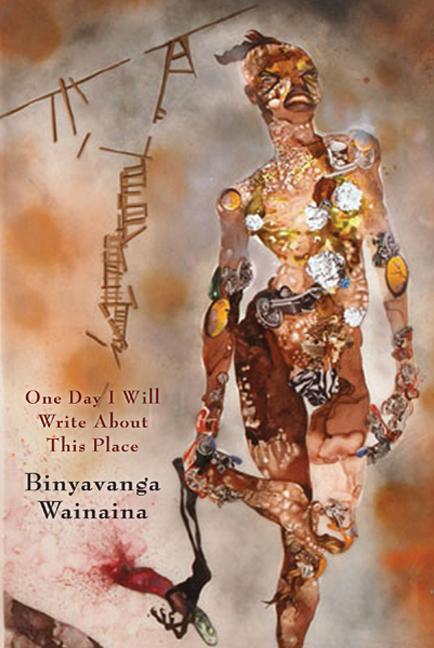
One Day I Will Write About This Place by Binyavanga Wainaina

Binyavanga Wainaina’s memoir, with details of various African backgrounds and his sensitive artist’s perspective, paints a poignant and lively picture.

Wainaina’s memoir of his life in Africa begins with his childhood in Kenya, follows him through university in South Africa, to a family reunion in Uganda, and on to his travels throughout Kenya, to land him finally in New York State as a writer and professor. His tale, however, is far from simply a recounting of one man’s life. At its heart, the book is the story of an artist, his struggles as a child to adjust to his view of the world and his discovery of writing as an outlet. His perspective as a child verges on the fantastical as he confuses colors with shapes and objects with sounds. The lyrical, imaginative writing throughout the book reflects this unusual vision. Wainaina paints pictures with words; his writing is reflective and playful and worth lingering over. Music, too, plays a role–almost as another character–as he describes his intense reactions to the music of Kenya, of Africa and of the world.

Another worthwhile aspect of this book is its intelligent and informed study of the politics of the African continent and the diversity of Kenyan perceptions. Wainaina tells of the battle between tribalism and a united Kenya, and the richness of linguistic and cultural perspectives there. Politics, however, is never the main subject; it is merely a background to his personal story. The Africa evoked is captivating and will be exotic and new to many readers.

Wainaina’s memoir is by turns funny, sad, hopeful and occasionally cynical, but always engaging. Fanciful abstractions of his environment and instructive tales of African politics combine to give us a fascinating vision of his world.


This review originally ran in the July 22, 2011 issue of Shelf Awareness for Readers. To subscribe, click here, and you’ll receive two issues per week of book reviews and other bookish fun!

Teaser Tuesdays: Newspaper Titan by Amanda Smith


Teaser Tuesdays is a weekly bookish meme, hosted by MizB of Should Be Reading. Anyone can play along! Just open your current read to a random page and share a few sentences. Be careful not to include spoilers!


Newpaper Titan: The Infamous Life and Monumental Times of Cissy Patterson is a hefty biography of the heiress to the Chicago Tribune dynasty, and formidable newspaperwoman in her own right. Smith covers the family history beginning well before Cissy’s birth in 1881, through her death in 1948. I’m just beginning the book, and actually had never heard of Cissy before, but so far she is proving to be a most interesting subject – meaning, as is usually the case with the most interesting subjects, that she is a controversial and difficult-to-like figure. My teaser comes from page 347:

Although Cissy was the first and only woman editor of any newspaper in the Hearst chain, she was by no means the Chief’s sole female employee. The son of a formidable mother, William Randolph Hearst himself did not share the low estimate of feminine competence that his Washington Herald staff had betrayed when Cissy invaded their city room.

This quotation comes from an uncorrected advance proof and is subject to change.