The Devil in the White City by Erik Larson

THIS is how I like my nonfiction! See, Castaneda? Like this! I can’t exactly explain the difference. There’s just something very narrative, conversational, interesting about this. Similarly, Dethroning the King, Janet Malcolm, Annie Londonderry, etc. It’s not sensationalist; it’s just exciting. Written like a thriller or like a work of fiction, but no less serious a work of nonfiction for it. How to explain? Let me quote a very average paragraph for you, from page 27:

Each man recognized and respected the other’s skills. The resultant harmony was reflected in the operation of their office, which, according to one historian, functioned with the mechanical precision of a “slaughterhouse,” an apt allusion, given Burnham’s close professional and personal association with the stockyards. But Burham also created an office culture that anticipated that of businesses that would not appear for another century. He installed a gym. During lunch hour employees played handball. Burnham gave fencing lessons. Root played impromptu recitals on a rented piano. “The office was full of a rush of work,” Starrett said, “but the spirit of the place was delightfully free and easy and human in comparison with other offices I had worked in.”

See, that second sentence is long and convoluted and uses biggish words, but it flows and communicates; it doesn’t impede communication, and what it certainly doesn’t do is brag.

All right, rant aside, this is an excellent book! I started it Friday night and finished it Sunday afternoon. Not to repeat the back-of-the-book blurbs, but this work of nonfiction absolutely reads like a thriller; it’s difficult to put down. Very enjoyable. After years (literally) on my TBR shelves, I picked it up because I had such a groove going, after Annie Londonderry and Clara and Mr. Tiffany, two books set in the same era with overlapping locations – Annie in New York, Boston, and Chicago as well as all around the world, and Clara in New York, with the Chicago World Fair playing a role as well. I enjoyed both of these books so much, and especially the extra immersion in time-and-place I got by reading them back-to-back, that I wanted to go straight into The Devil and the White City next. And I’m so glad I did.

The story is this: Daniel H. Burnham, along with a huge cast of other talents and characters and against all odds, pulled together the World’s Columbian Exposition of 1893, better known to us as the Chicago World Fair. Concurrently, a man named Herman Webster Mudgett but known by his most-used alias, Dr. H.H. Holmes, murdered an unknown number of people, at least 27 but estimated as high as 200, in Chicago on the very edge of the fair grounds. Larson tells the story of the fair, of the serial murders, and of a larger time-and-place from the points of view of these two men, mostly, with side journeys into several other lives.

The World’s Fair is a character unto itself, as is the city of Chicago. Larson gives us the styles and morals of the time, and helps us to understand how it was that dozens of people, mostly young women experiencing a freedom unknown to their parents’ generation, could disappear into Holmes’ grasp. We see the wonder and beauty and ambition and angst of those who worked to produce the landmark event that was the White City, as the fair was known. We see the everyday struggles that allowed Holmes to methodically go about his evil pleasures.

Larson walks a fine line in trying to enter the heads of historical figures, especially the elusive Holmes, and still call his book nonfiction; but he’s got me convinced. He points out that everything in quotation marks is attributable, and defends the two murder scenes he chooses to portray with the evidence available to him in his research. In fact, as an aside, I enjoyed his “Notes and Sources,” and the brief story of his research there. He even mentions, in some cases, in which library or rare book room he found a particular elusive source. Further, also from Notes and Sources, page 395-6:

I do not employ researchers, nor did I conduct any primary research using the Internet. I need physical contact with my sources, and there’s only one way to get it. To me every trip to a library or archive is like a small detective story.

I know all of us booklovers (and librarians) enjoy that.

This is an engaging, riveting read. The historical value is vast. I’m always amazed by how the pieces of our history fit together. Am I the only one? I feel like there are so many names, personalities, and events in our history, but we learn them as individual bits; it’s always a little thrill when they come together in ways I don’t expect. For example, reading that Elias Disney worked as a carpenter and furniture-maker in the building of the fair, and went home to tell his sons, including little Walt, stories of the “magical realm beside the lake.” Isn’t that a charming little anecdote? Several of these connections are left in suspense, too; if your history is a bit weak in the right places, as mine was, you get these happy little surprises. I like that.

I found this book captivating, and I recommend it as a pleasurable read that may sneak some learning in on you. I invite readers of thrillers and evocative nonfiction to enter this fantastic, glittering, magical, and deadly – and true – world.

did not finish: Mañana Forever? Mexico and the Mexicans by Jorge G. Castaneda

I couldn’t do it. I wanted to like this book so much! In fact, I think I should just send you over to Raych’s review of Popular Crime, because I’m about to repeat everything she said, but about a different book. It’s funny how that works.

Mañana Forever? had a great pull for me. I was excited about getting to know “Mexico and the Mexicans” better; I like Mexico and the Mexicans, and I think they’re as apt as any country-and-its-people to make good book-fodder. The first bad sign was the preface, which dragged on and on in academic-speak, which rather goes against the impression I got (from product descriptions) that this books was written for Regular People. It also purported to outline the book’s goal, but instead went round in circles, as if still deciding what that goal might be. It listed and outlined the chapters, then told an anecdote involving H1N1 (the “swine flu”), and then GO chapter one. I began the book frustrated by the preface but ready to move on into the good stuff.

The first chapter nearly killed me. I like the idea of Nancy Pearl’s Rule of 50, but I couldn’t do it. I was too frustrated by chapter 1, which ends on page 33. (Ah, but the preface was 15. Do I get to claim 48 pages? That should be close enough. Really, two pages weren’t going to convince me. I promise.) Castaneda is Mexican-American himself, but just as I don’t belong to the camp that feels it’s okay for black people to call each other the n-word, I didn’t take to the negative lean of this chapter. It’s entitled “Why Mexicans Are Lousy at Soccer and Don’t Like Skyscrapers,” and the answer is, because they’re staunch individualists, always, no exception. Thus, no teamwork (soccer) and no sharing (apartment buildings – which aren’t necessarily synonymous with skyscrapers in my head, but whatever). He’s a bit critical, but more outrageously, he’s pretty vague in his justifications for his argument. When he completely lost me, though, was with math. Excuse me for holding an author of nonfiction (and an established academic, professor, PhD, and former foreign minister, in his third book) to this kind of standard, but. I offer you this sentence.

Out of a total of roughly 1 million homes delivered between 2004 and 2008, 800,000, or 97%, included one or two dwellings per plot, whereas only 32,000, or 3%, were vertical, multifamily homes, or in plain English, apartment buildings or ‘projects.’

1 million = 1,000,000. 800,000 is very easily divided into this number. I see 8 out of 10, is what I see. I’m no math major, but I’m pretty sure that 800,000 out of 1,000,000 is NOT 97%. I’m pretty sure that’s 80%. He lost me there, and lost me more in the next sentence, in which he says x over y “takes up much more space and thus more square feet.” After this, it was all I could do to not take out a red pen and start circling things. (This is a library book.) Rugged individualism is “often nearly always” self-sacrificial and self-destructive, and the chapter closes with this:

The individualism we have rapidly portrayed and criticized is just one of the multiple traits, though perhaps the most important one, that has become no longer just an obstacle, but an insurmountable hurdle to the country’s progress, as well as the heart of its past glory and unending fascination for the foreign regard.

No longer just an obstacle, but a hurdle! Gasp! No, Castaneda, you did not “rapidly” portray. These were the most difficult 33 pages I’ve read in recent memory. Sentences like this one required that I reread; I kept losing my place. This is the kind of writing I’m willing to be pretty forgiving of in galley copies (you know, pre-publication, don’t-quote-from-this-copy, still to be edited), but this isn’t a galley. I’m not sure if you should fire your editor, or if s/he should fire you. You have failed to grasp a reader who was eager to be grasped. The End.

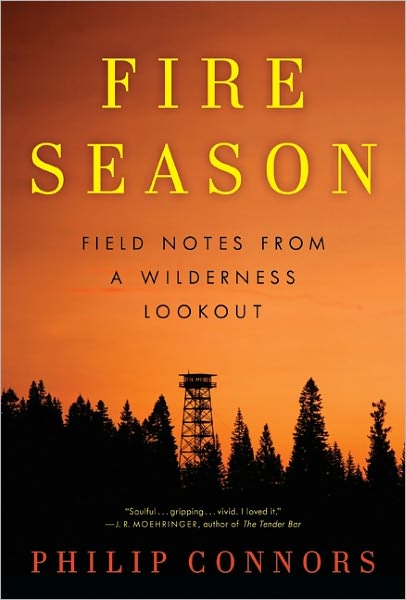
guest review: Fire Season by Philip Connors, from Pops

Today we’re visiting my father again, who’s traveling this summer. I put the screws on to compel him to buy a copy of Fire Season for himself to read on the road because I loved it so much (see here). I promised to buy it off him if he regretted the purchase; and I may, anyway, because I want to own a copy. Actually, though, I don’t know if it’s for sale. He did like it. I’m compiling some of his thoughts via email to share with you; they’re mostly in response to my original post (see link above) but I thought his slightly different perspective was worth sharing. Here’s Pops.

I finished Fire Season yesterday while I was camping in the finest of the rain forest valleys in Olympic NP, the Hoh river. I found it as exceptional as you said. The timing was impeccable; e.g. I was reading his passages about the magical meditative element of long walks… (or, I would say, endurance activities – you could read Bill McKibben’s Long Distance for a bit of the same; I found it wonderful, and you should know who McKibben is anyway for his potential to be one of the great environmental soothsayers of our time) …and it helped me decide a plan for my Monday walk: a full 10 hour day of wandering up and down the valley in rain and mist marveling at the magical forest – when I wasn’t daydreaming. I loved how he wove in stories of Kerouac, Edward Abbey, Chief Victorio, Alice the dog, Aldo Leopold, Cormac McCarthy, Gary Snyder (new to me) – and others. And we certainly learn about wildfires. Thanks for the tip.

So glad you liked it!! [And, incidentally, what safety precautions are you taking on 10-hour walks? Do you call Mom to let her know you’re going off on such things, and then call in when you return?]

And have you made the connection with current events? – with a massive fire burning for weeks now in eastern Arizona (the western borders of Fire Season) and today all around the Carlsbad Caverns area in NM (within the eastern horizon view of Fire Season).

Maybe not specifically those fires; but West Texas has been ravaged for months and it made my reading of the book a touch more personal. This spring race series, we raced two races in a row only to hear that the race course saw a wildfire start as we were leaving. (We promise we didn’t start these fires.) One was in Arksansas, one in central Texas. And we have a friend/teammate who tried to race in Ft. Davis, but the event was canceled due to one of the bigger fires we’ve seen; it swept across a considerable part of the state we’re used to driving and riding through. Close to home.

Did you also make the connection that we all went camping in the Gila Wilderness twice when you were 3 and 4 yrs old? (and that, because we had been there before you were born)

No, of course I don’t remember that, but very cool!

I really endorse what you said about his eclectic voice, and the many priceless vignettes he blends into his story. (I really wish I had read it with a highlighter!)

I also found him to be an endless stream of contradictions (perhaps we all are?) – he could be a sedentary slug for hours/days on end, but was also often driven to minimalist walks & overnights (an evening walk from a summit inevitably involves a serious down & UP!); he obviously functioned well in cities & bars, as well as wilderness; he became well versed in much wilderness language, yet succumbed to the elementary, pitiful, dreadful trap of the young fawn.

I cried over the fawn.

And, re: your comment about the contradictions. I am reminded of David Guterson’s The Other as well as Jon Krakauer’s Into the Wild (the first, fiction, the latter non) – both books about young men going into the wilderness, thinking they wanted to get away from it all, but also strangely and paradoxically clinging to certain odd elements of society. As the protagonists of both books came to unpleasant ends, I think perhaps Connors has found the perfectly balanced way to do it! In fact, I think I mentioned balance in my initial review. The writing in his book is balanced; and his interactions with his world are balanced. His saintly wife helps him be balanced. I daresay we all aspire to a lifestyle like this; I know I do, and I think, Pops, that you do. But then, you’re closer than most of us right now!

Based on your and my reactions, I’m guessing that readers will appreciate many different aspects of this book. You particularly noted the lessons about wildfire & forest policy, which I knew much of already. I loved the many references and new details about Kerouac, Snyder and the various personalities of the Beat generation who so influenced my 60s & 70s, and subsequent characters like Edward Abbey and Dave Foreman.

You barely mention Alice! I thought she was an elusive minor character, disappearing for times but playing a key role at many turns. Moments were familiar to Barley’s world; like her unilateral retreat to accompany Martha home from the lookout summit, and her personality change from city to wilds. Most poignant – Alice evoked my most secret lonely moments, far up a mountain trail without Barley’s companion spirit, spunk and relentless energy. “Alice is the only living being I know who will take a forty-mile walk in the woods without any need of cajoling, planning, or consulting a calendar.”

My apologies to Alice; you’re entirely right… she was a special creature and character, and a neat side-story proving (yet again) that dogs are our best friends and offer relationships unlike what we humans can offer one another. Here, I’ll treat our readers to a picture:

Hops (brown) & Ritchey (short white hair) who live with Husband and I, and my parents' Barley (scruffy white hair)

Finally: “…the movements of my limbs help my mind move too, out of its loops and grooves and onto a plane of equipoise… If I weren’t a walker I suppose I would be a television addict, a dope fiend, a social butterfly.”

Because I had to look it up, I’ll share. Equipoise: an equal distribution of weight; even balance; equilibrium.

Thank you for your musings, Pops. I hope we’re (still) encouraging folks to find this book! I think I’m ready to call this my best read of 2011 to date.

Teaser Tuesdays: Mañana Forever? by Jorge G. Castaneda


Teaser Tuesdays is a weekly bookish meme, hosted by MizB of Should Be Reading. Anyone can play along! Just open your current read to a random page and share a few sentences. Be careful not to include spoilers!

Mañana Forever? Mexico and the Mexicans is a book about the Mexican national character, more or less. To tell you more fully what this book is about, I could refer you to the preface; but really, no. The preface was painful. As I’ve said before, I like my nonfiction narrative, friendly, readable, and interesting. I have high hopes for this book, as it got infinitely more accessible in the bulk of the book. But the preface, in which Castaneda (an academic, and a former foreign minister) explains the goal of his book and outlines it, is difficult. Full of references to academic and political theory, big words, and lengthy sentences, I’m sure it indicates his intellect, but it required some effort from me to wade through.

But! The book itself, it gets better. First of all, the first chapter is titled Why Mexicans are Lousy at Soccer and Don’t Like Skyscrapers. I see whimsy! There is hope!

Your teaser comes from page 120 (although I have not read this far yet):

As The New York Times put it in an article in 2009, “If Guinness World Records ever creates a category for the country most obsessed with being in the Guinness Book of World Records, Mexico will surely be in the running.” It goes on to list the strange records Mexico has sought to break: largest number of people dancing simultaneously to Michael Jackson’s Thriller; most mariachi musicians gathered in one place; the longest catwalk and St. Valentine’s Day kiss; the largest meatball, cheesecake, and, of course, the biggest taco and tamale.

I hope Castaneda can find an attractive writing style, because the subject matter interests me immensely. As a neighbor to Mexico all my life and a traveler there repeatedly, I have something between a strong interest and a mild obsession with the place, the language, the scenery, the culture, and the cuisine. I love Mexico. I got engaged there, and we would have been happy to have gotten married there, except that we chose to share our day with our friends and family without asking them to travel. I would like to know more about the country; I should really study its history as I’m woefully undereducated. But my greatest interest has got to be in that cultural identity or “national character” as Castaneda seems to want to talk about. I hope this book satisfies. I need it to read more like something I read out of interest, though, than something I’m being forced to read for class! I’ll let you know.

the Guardian’s list: 100 greatest non-fiction books

More lists! Great fun! I found this list of the 100 greatest nonfiction-books according to the Guardian, thanks to Shelf Awareness, who had this to say in yesterday’s daily email newsletter:

Let the debate begin: The 100 greatest nonfiction books of all time were chosen by the Guardian’s book desk writers, who observed: “The list we’ve come up with rewards readability alongside originality, heaps praise on perfect prose and rounds it all off with a dash of cultural significance. It’s clearly a mug’s game to make any kind of claim for definitiveness but, whatever you make of our list and its (doubtless many) omissions and imperfections, there’s no question that it features a whole heap of truly great books.”

I was immediately interested, of course. Don’t we all love lists? The usual game is how-many-have-I-read, and I didn’t do all that well. It’s interesting to see what they chose, though, and to think about what I maybe *should* have read, or should read. I haven’t reproduced the entire list here – you can go read it at the above list, and you should! But I have reproduced some of the entries, recategorized. (Blurbs following titles are the Guardian’s, not mine.)

Books Already on my TBR shelf:
The Autobiography of Alice B Toklas by Gertrude Stein (1933)
Stein’s groundbreaking biography, written in the guise of an autobiography, of her lover
-has been on my list for years; actually just brought home a copy a few weeks ago
Bury My Heart at Wounded Knee by Dee Brown (1970)
A moving account of the treatment of Native Americans by the US government
-has always been on my shelf. still haven’t gotten around to it
Dispatches by Michael Herr (1977)
A vivid account of Herr’s experiences of the Vietnam war
-not on my shelf, but I’ve seen it on my parents’ shelves all my life
A Vindication of the Rights of Woman by Mary Wollstonecraft (1792)
Wollstonecraft argues that women should be afforded an education in order that they might contribute to society
The Souls of Black Folk by WEB DuBois (1903)
A series of essays makes the case for equality in the American south

Books I have read:
Silent Spring by Rachel Carson (1962)
This account of the effects of pesticides on the environment launched the environmental movement in the US
– read as a kid, maybe grade school
The Electric Kool-Aid Acid Test by Tom Wolfe (1968)
The man in the white suit follows Ken Kesey and his band of Merry Pranksters as they drive across the US in a haze of LSD
-one of my all-time favorites
The Diary of a Young Girl by Anne Frank (1947)
Published by her father after the war, this account of the family’s hidden life helped to shape the post-war narrative of the Holocaust
-of course. this is a staple. everyone has read this. right?

Read as part of my undergrad education in political science
Narrative of the Life of Frederick Douglass, an American Slave by Frederick Douglass (1845)
This vivid first person account was one of the first times the voice of the slave was heard in mainstream society
On Liberty by John Stuart Mill (1859)
Mill argues that “the only purpose for which power can be rightfully exercised over any member of a civilised community, against his will, is to prevent harm to others”
The Prince by Niccolò Machiavelli (1532)
Machiavelli injects realism into the study of power, arguing that rulers should be prepared to abandon virtue to defend stability
-my prof thought I’d be a JS Mill fan; but I reacted with far greater fascination (if not far greater sympathy) to Machiavelli. Go figure.
Leviathan by Thomas Hobbes (1651)
Hobbes makes the case for absolute power, to prevent life from being “nasty, brutish and short”
The Rights of Man by Thomas Paine (1791)
A hugely influential defence of the French revolution, which points out the illegitimacy of governments that do not defend the rights of citizens
Manufacturing Consent by Noam Chomsky and Edward Herman (1988)
Chomsky argues that corporate media present a distorted picture of the world, so as to maximise their profits

I also noted The Journalist and the Murderer by Janet Malcolm (1990): An examination of the moral dilemmas at the heart of the journalist’s trade. Not specifically on my TBR list, but Janet Malcolm in general is; maybe I should move this one up the list. My TBR reads from her, already, are The Silent Woman: Sylvia Plath and Ted Hughes and (I already have my copy of this one) Two Lives: Gertrude and Alice.

I also just wanted to note the range of dates covered by this list: pretty wide! From
The Art of War by Sun Tzu (c500 BC)
A study of warfare that stresses the importance of positioning and the ability to react to changing circumstances
to
Here Comes Everybody by Clay Shirky (2008)
A vibrant first history of the ongoing social media revolution

Something else I really appreciated about the Guardian’s list is that they have invited debate. No list will ever be final or uncontroversial, as we know! I’m not going to be so ambitious as to start my own list of 100 nonfiction books; I’m overwhelmed enough by my own list of 100, which is of course still incomplete. (Hey, my life is incomplete. As are all of ours.) But I’m sure it is and will be a fascinating debate. Are there any you think really shouldn’t be on this list? And I’m sure there are lots that we could think of that should be… Just looking back at my aforementioned list of 100 for nonfiction, I find quite a few. Here comes more list-making: I’ve reproduced them for you here, with a few words about each. I’m not sure they all belong on the all-time list, for various reasons…

The Immortal Life of Henrietta Lacks by Rebecca Skloot: I think this is an awfully important book. The only argument for is exclusion is its recent publication. I always wonder if a book’s importance will last the test of time. Although in this case I’m rather sure it will, I wouldn’t be against a sort of mandatory waiting period, if you follow.

My Stroke of Insight by Jill Bolte Taylor: This one might be extra important to me personally, because of the insight it allowed me into my own recovery from a brain injury. Maybe not so universally applicable; but still, I’d say, worth consideration.

Pretty Good for a Girl by Leslie Heywood: The author’s story of being a young female athlete and battling the problems common to that demographic, including eating & exercise disorders and an unhealthy relationship with an older coach. Another important book. Although it sounds like a niche subject, I think the issues are large ones: the struggles of being female in a male world.

Ten Points by Bill Strickland: Okay, this is a little more niche; it’s a cycling book. But really, it’s the author’s story about being a bike racer, struggling to win, as metaphor for trying to overcome the abuse he was victim to as a child, and trying to not repeat the cycle.

The Autobiography of Malcolm X as told to Alex Haley: How is this not one of the greatest and most important nonfiction books of all time? Really.

The Immortal Class: Bike Messengers and the Cult of Human Power by Travis Hugh Culley: Totally niche. Artistic little vignettes of life as a bike messenger in Chicago, enchanting to me as a (now former) bike messenger.

Nickel and Dimed: On (Not) Getting By in America by Barbara Ehrenreich: I recognize that the political leaning of this one may make it less universally appealing, but I thought there were some important points made. I fear its acceptance is harmed by the author’s obvious slant, which is a shame because I think her conclusions are true regardless of politics.

The Courage of Their Convictions: Sixteen Americans Who Fought Their Way to the Supreme Court by Peter Irons: I read this in college and found it instructive. It is, as the title says, 16 stories about regular people making history. A very readable way to learn judicial history.

Desert Solitaire by Edward Abbey: Nature, solitude, beauty. Poetic.

Travels with Charley by John Steinbeck: Steinbeck’s travels in Americana with his dog. Maybe a bit too concentrated on US culture for the Guardian’s list? But there are others on their list that focus on certain countries or cultures.

Dethroning the King by Julie Macintosh: Again, a recent publication, so there’s that. But wow – an international tale of business, culture, hubris, and beer. C’mon.

Fire Season by Philip Connors: 2011 publication. However! This might be my favorite book of 2011 so far, and it tells so many important and poignant stories of history, public policy, nature, beauty, solitude, relationships… and does it so beautifully. I’m still raving about this book.

Okay, well. I don’t have any major arguments with the Guardian’s list, but I do submit Malcolm X’s Autobiography, and really Henrietta Lacks as well. What do YOU think they left off?

Around the World on Two Wheels: Annie Londonderry’s Extraordinary Ride by Peter Zheutlin

I ate up the story of Annie Cohen Kopchovsky, better known as Annie Londonderry, like the tale of adventure it is. As I said earlier, this story combines sports marketing, women doing outrageous things, bicycles, travel, and history. Nowhere to go wrong there, unless in writing badly or boringly – which Zheutlin thankfully does not.

Annie was a working-class young mother of three living in the tenements of Boston in the 1890’s, when she decided, out of the blue, to take on the challenge of riding a bicycle around the world in under 15 months. She had never ridden a bicycle before, and her decision to set off on this journey is rather mysterious. The origins of the idea are rather unclear: she claimed that two wealthy Boston businessmen had made a wager that a women couldn’t do such a thing (following the around-the-world ride just recently accomplished by a man), and that they were offering a substantial purse upon her successful completion, but it does not appear that there were any such businessmen or any such wager. At any rate, Annie acquired a hefty women’s bicycle, a new name (the Londonderry Lithia Spring Water Company became her first sponsor), and set off.

Annie doesn’t appear to have planned very well. She set off first for New York, from Boston, then Chicago, then back to New York, then across the ocean to France. If your knowledge of geography suggests that this is not the most efficient route for circumnavigating the globe, you are correct.

In Chicago, Annie abandoned the attire that was appropriate at the time for ladies: high collars, long sleeves, full skirts with copious undergarments and petticoats and corsets and… lots of things I’m not familiar with. She first went to bloomers or split skirts, and eventually (I believe on her second visit to New York) gave up on even the bloomers and went to a “men’s riding suit”, meaning pants that more or less fit her – ack, shocking! She also picked up (in Chicago) a “diamond-frame” men’s bicycle – meaning, with a horizontal top tube, making skirts impractical or impossible. Her bike lost some 20lbs in this transition, and her wardrobe change lost a lot of weight, too.

The most fascinating parts of Annie’s story are the inconsistencies, erm, not to say lies she told throughout. She changed the terms of the wager repeatedly; she gave a plethora of personal biographies to different newspapers, ever-changing and not once (at least not that is documented) telling the truth. She never mentioned, for example, that she was a married mother of three; this would have made her leaving home unacceptable in her society. Annie told outrageous stories of violence, adventure, and near-death experiences during her journey, many or most of which appear to be false. And most egregiously, perhaps, she did not ride a bicycle for the majority of her trip at all. She rode, as stated above, around the northeast United States, and then across France, and from there took trains and ships almost exclusively (with a series of short, recreational or social rides for exhibition or touring purposes) from France to the Far East. She then shipped to San Francisco, where the riding began in earnest again; she rode south to El Paso and back up to Chicago, Boston, and New York, most likely with some miles by rail interspersed, but overwhelmingly by bike.

Annie claims to have won the wager, making it back to Boston under the 15-month deadline, and to have secured the $10,000 purse; but who paid it? Never mind the details, she would have told us. Although she didn’t ride anywhere near all the miles, she did a lot of riding, and appears to have finished in awfully good shape, even for a man of her time (and goodness knows, unheard of for a woman). She was a colorful character, and while not above criticism, what she did do was a remarkable accomplishment. If she cheated and rode “only” 10,000 miles, I would still give her a high-five and my respect. By today’s standards it’s easy to disparage the ethics of her, um, liberties with the truth, and the journalistic ethics of the many papers who covered her story credulously (and her own later career in sensationalist journalism). But Zheutlin does a fine job of setting the stage for the reader, reminding us that these were the journalist standards of the times.

Interspersed into this story of Annie’s wild ride and her telling of tall tales, Zheutlin gives us snippets of the history of the women’s suffrage movement, the history of the bicycle in American culture, and the revolution in women’s clothing reform that was deeply intertwined with bicycle riding (I wasn’t aware of the close relationship there). I found the author’s Afterword, in which he discusses his research process and his relationship with Annie’s memory (she is his great-grandaunt, although he only learned of her existence after her death), especially moving and interesting, and I wish this aspect would have played into the body of the book. As I’ve said of several nonfiction books I’ve read before, I enjoy the author’s voice, and her/his experience in research and writing. To me, this is part of the story, and leaving it out can be a disservice, leaving the story incomplete, or at worst, even dishonest. I don’t accuse Zheutlin of dishonesty of course; I’m just saying his role in Annie’s story being told is an important chapter, in my opinion.

I really enjoyed this story for its crossover elements into so many chapters of history: women’s rights and clothing standards, bicycles, travel, journalistic trends, even tidbits of various world cultures. I also appreciated Annie as an outlandish and wild woman, cyclist, and teller of tales. And I took pleasure in Zheutlin’s quiet comments on his research processes. If you’re a stickler for honesty, don’t expect to find Annie entirely likeable; but I think you’ll still be impressed by her story, and learn a few little-known details of our history as women, cyclists, and Americans. Check it out.

Thanks again, Fil!

another book beginning: Around the World on Two Wheels: Annie Londonderry’s Extraordinary Ride by Peter Zheutlin

There is a book beginning coming up. Bear with me.


This beautiful book was a gift to me from my old friend Fil. Fil has bought me a number of bicycle-related books over the years:


Six Days of Madness tells all about the golden era of six-day bicycle racing in the United States in the 1900’s and 1910’s. It’s got a bunch of racer profiles and stories from specific races. I found it fascinating.


Bicycle Racing in the Modern Era is a VeloNews publication, recapping 25 years of the magazine’s coverage of cycling – road, mountain, track, and cyclocross. (Which 25 years I’m not precisely sure, but it was published in 1997 if that helps.) It was great to read about all the hot new stuff, after it was no longer hot and new. It was also great to read a summing-up of what’s greatest in bike racing WITHOUT being inundated with the greatness of Lance Armstrong. I believe, from memory, that he rated one article in the whole book! That was refreshing. (Yes, Lance Armstrong has done amazing things, but this Texan, for one, is sick of hearing about him.)


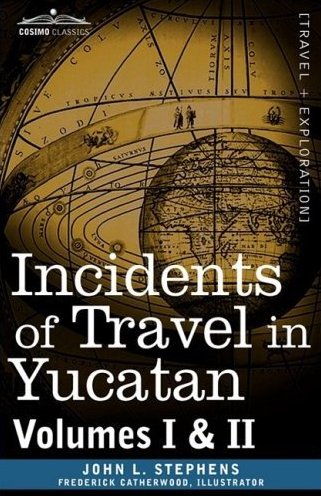
Along with Annie Londonderry, this time, Fil gave me both volumes of Incidents of Travel in the Yucatan. The former book references our shared interest in cycle touring; the latter references our shared interest in Mexico, and my (limited, hopefully to be increased upon) travel in the Yucatan peninsula.

Fil gives good gifts! Thank you, Fil! But this is supposed to be a post about a book.

Around the World on Two Wheels: Annie Londonderry’s Extraordinary Ride tells the story of Annie Kopchovsky, a Jewish immigrant living in Boston, who took on the, ahem, extraordinary challenge to become the first woman to ride around the world on her bicycle, as Thomas Stevens had done a few years before. Aside from being a feat of athleticism, adventure, and international travel, and aside from being an outlandishly independent-woman sort of thing to do in 1894, it was most likely the first time a woman had undertaken product endorsement and sports marketing. She became Annie Londonderry when her first sponsor appeared: the Londonderry Lithia Spring Water Company.

Sports marketing, women doing outlandish things, bicycles, travel, and history! All in one story! I am excited.

The prologue opens with a quotation.

The maiden with her wheel of old
Sat by the fire to spin,
While lightly through her careful hold
The flax slid out and in
Today her distaff, rock and reel
Far out of sight are hurled
And now the maiden with her wheel
Goes spinning round the world

–Madelyne Bridges, Outing magazine, September 1893

This is, of course, not properly the beginning of the *book*, but I’m hoping you’ll allow me to take liberties, because this quotation struck me.

I have a good feeling about this one.

Fire Season by Philip Connors


EDIT: You might also want to check out my father’s review, and friend Tassava’s, of same.


This is an amazing book. The first sentences immediately grabbed me. Connors works summers in a teeny, tiny tower room way up in the sky in the Gila National Forest in New Mexico, as a fire lookout. His job is to spot smoke and call it in for control or “management” of the fires. But his “field notes” tell so much more than the story of his career as a lookout. This is the story of his time alone in the Gila, and of the visitors he receives and the visits he pays back to town; it’s the story of his and his dog Alice’s interactions with nature. It’s the story of fire and smoke and the Forest Service’s management of fire. It’s a history of fire, of the Forest Service, of the Gila, of so very many aspects of our nation’s history, and the natural history of the southwest. Connors discusses the varied reactions the government has had to fire: the policy of fire suppression, consistently and in every case, versus the concept of “controlled” or “prescribed” burns, and the ongoing debates. He contemplates society, its benefits and our occasional desire to escape it. He discusses his unique model of marriage, in which he spends some five months a year living alone and mostly out of touch. He also relates ecological issues like fire as a natural control mechanism, erosion, and the preferences of flora and fauna. And more.

I found Fire Season astounding and important. There’s a zen-like balance in it. Connors is a rather balanced man, in that he still craves human contact; he’s not an entirely back-to-the-wild isolationist, nor does he fail to appreciate cold beer and a variety of media. But he achieves a special and rare state of commune with nature, too. His writing, for me, parallels this balance. He can wax philosophical, crafting lyrical, beautiful odes and hymns of reverence to nature, fire, and life; but he never gets overly wordy, tempering the poetry with (still beautifully written) narrative history.

Connors tells so many little stories I would love to pull out of this book and share as vignettes. For example, the story of Apache Chief Victorio’s last stand (that lasted over a year) in the vicinity of the lookout tower where Connors is stationed:

That September day in 1879, on the headwaters of Ghost Creek, marks a peculiar moment in America’s westward march: black soldiers, most of them former slaves or the sons of slaves, commanded by white officers, guided by Navajo scouts, hunting down Apaches to make the region safe for Anglo and Hispanic miners and ranchers. The melting pot set to boil.

Or the history of the smokejumpers, which I didn’t know before – the parachuting firefighters who pre-date paratroopers and taught them their trade. Or the tale of the Electric Cowboy. Or the story of the little fawn. I cried, mostly because I empathized. Really, it could be read as a series of anecdotes; but the whole is greater than the sum of its parts. The larger story is important, too. I even glimpsed traces of the training I’ve received in trail-building and (more broadly) land management.

The history, the lore, the anecdotes, the author’s relationship with nature, his relationship with his wife, the landscape of the Gila, the details about local species of bird, fish, and game… there are so many gems in this thoughtful, loving, lovely book. I am not doing it justice. It’s a very special book and I strongly recommend this to everyone, no matter who you are. But I especially recommend it if you are… a nature lover, a hiker, a dog lover, a government bureaucrat, a pyromaniac, an environmentalist, a city dweller, a romantic, a firefighter, a skydiver, a cribbage player, a whiskey drinker, a writer, a loner, a philosopher, a historian, a student, or a teacher. This book goes on The List.

Teaser Tuesdays: Fire Season by Philip Connors


Teaser Tuesdays is a weekly bookish meme, hosted by MizB of Should Be Reading. Anyone can play along! Just do the following:

* Grab your current read
* Open to a random page
* Share two (2) “teaser” sentences from somewhere on that page
* BE CAREFUL NOT TO INCLUDE SPOILERS! (make sure that what you share doesn’t give too much away! You don’t want to ruin the book for others!)
* Share the title & author, too, so that other TT participants can add the book to their TBR Lists if they like your teasers!


In a tiny room in a tower 10,000 feet above sea level, Connors keeps watch for fire over New Mexico’s Gila National Forest. This contemplation of solitude and the power of nature sounds like Edward Abbey’s Desert Solitaire which I enjoyed so much. I’m looking forward to it. From page 75:

No matter the length or sweetness of a reprieve, the wind always returns, gales to test the endurance of anyone exposed in a high place. Trees that elsewhere grow a hundred feet tall here hug the ground like shrubs, shrunken, gnarled, and twisted, as if cowering from an invisible foe.

Lovely. I anticipate beautiful writing and a study of nature and natural places. I’ll let you know!

How to Write About Africa

I just wanted to share a little nugget with you here. I’m currently reading a book called One Day I Will Write About This Place by Binyavanga Wainaina. It’s a memoir of the author’s life as a young person in Africa and his experience in becoming a writer. It’s most interesting. I’m reading an advanced proof copy to review this book for Shelf Awareness, and I’ll be sure to post that review if-and-when it gets published.

Included with my advanced proof came a print-out of an article Wainaina had published in Granta magazine in 2005. I found it hilarious, and I want to share it with you. Here is How to Write About Africa.

I confess I’m looking for the same voice in the memoir now. It’s sort of adding a level to my reading. This can be good and bad; but I think in this case it’s just adding to my appreciation of Wainaina’s sense of humor.