Teaser Tuesdays: Houston Beer by Ronnie Crocker

Teaser Tuesdays is a weekly bookish meme, hosted by MizB of Should Be Reading. Anyone can play along! Just open your current read to a random page and share a few sentences. Be careful not to include spoilers!

What? A book about beer in Houston? I’m sold. Here’s a teaser for you that provides a quick sketch of my hometown:

By 1838, a deputy constable could count forty-seven establishments selling alcoholic drinks in a city of probably fewer than two thousand residents; the first church wasn’t built until two years later. Despite the city’s first Abstinence Society meetings in February 1839 and what has been described as a “wave of temperance” activity three years later, Houstonians never lost their thirst for strong drink.

Yep, that’s us. I’m excited about the subject of this one.

book beginnings on Friday: Bossypants by Tina Fey

Thanks to Rose City Reader for hosting this meme. To participate, share the first line or two of the book you are currently reading and, if you feel so moved, let us know what your first impressions were based on that first line.

I am coloring outside of the standard and accepted “book beginnings” lines here, because just beyond the first two sentences Tina Fey gives us our first giggle, and I thought that was worthwhile.

Welcome, friend! Congratulations on your purchase of this American made, genuine audio book. Each component of this audio book was selected to provide you with maximum audio performance, whatever your listening needs may be. If you’re a woman and you bought this audio book for practical tips on how to make it in a male-dominated workplace, here they are. No pigtails. No tube tops. Cry sparingly. Some people say, never let them see you cry. I say, if you’re so mad you could just cry, then cry. It terrifies everyone. When choosing sexual partners, remember, talent is not sexually transmittable. Also, don’t eat diet foods in meetings.

And that, friends, is a great sample of what this book is: punchy, pithy, and containing some good advice, actually, amid the giggles. I heard it far and wide – good book, excellently narrated by the lovely talented Ms. Fey – and I think I’m going to add my voice to the chorus. Check it out, kids! Happy Friday!

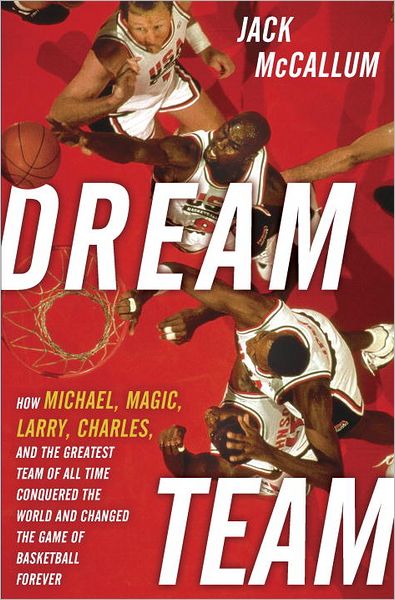
Teaser Tuesdays: Dream Team by Jack McCallum

Teaser Tuesdays is a weekly bookish meme, hosted by MizB of Should Be Reading. Anyone can play along! Just open your current read to a random page and share a few sentences. Be careful not to include spoilers!


I have a fabulous basketball book to tease you with today. Dream Team: How Michael, Magic, Larry, Charles and the Greatest Team of All Time Conquered the World and Changed the Game of Basketball Forever comes out in mid-July. I had trouble choosing a teaser for you because I enjoyed so much of this book! But I picked a (hopefully appropriate) quotation about the skills involved in the game itself.

“You’d be ready to win, and all of a sudden – I’m not making this up – Larry would throw up a shot that would not only knock your ball away from the basket but would also go in itself,” says [Quinn] Buckner [former teammate of Larry Bird]. “The man could play pool and basketball at the same time.”

[Brackets mine.] This quotation describes a shooting game called Knockout, in which everybody gets to shoot at once, if that makes things any clearer. It’s an exciting, funny book about some major personalities. Stay tuned for my review to come.

This quotation comes from an uncorrected advance proof and is subject to change.

Teaser Tuesdays: City of Ravens by Boria Sax

Teaser Tuesdays is a weekly bookish meme, hosted by MizB of Should Be Reading. Anyone can play along! Just open your current read to a random page and share a few sentences. Be careful not to include spoilers!


I am currently reading City of Ravens: London, the Tower and Its Famous Birds. Part history, part deconstruction of myth, part bird study, this is a whimsical and highly readable little book. I have picked you out especially a beer-related teaser for today:

Since the seventeenth century, breweries in England had occasionally kept ravens as mascots out of a belief that ‘Where there are ravens there will be good beer.’ If we interpret this saying a little broadly, as one generally does with proverbs, the ‘good beer’ could mean ‘good fortune.’

This makes me want a raven for our garage brewery.

This quotation comes from an uncorrected advance proof and is subject to change.

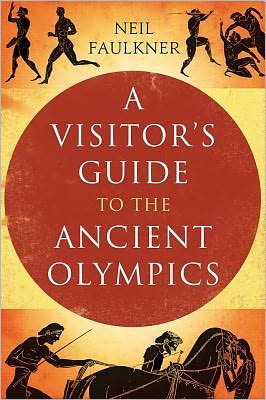
A Visitor’s Guide to the Ancient Olympics by Neil Faulkner

What an odd mix of genres this book is. It sets itself up as a travel guide: eat here, sleep here, don’t forget to pack this – but to a destination that would require time travel. As Faulkner says in his introduction, this is necessarily (by its fantastical nature!) not an entirely academic book; but he does have an academic background, and rather than wildly making things up, he does follow history & research. He just uses his imagination where it makes sense to do so, and in a way that makes sense: he makes educated guesses. (As he points out in the intro, again, he has to pick a day for each event; it is unrealistic that a guide to an Olympic festival would be unable to say when the footraces would be held.) So, note my tags for this post: travel guide; sports; historical fiction; nonfiction. It is a puzzle. A uniquely styled book.

And an enjoyable one, too. At just under 250 pages, it’s an easy read. The sections are short. There is an emphasis for most of the book on ancient Greek culture in general, and on what the Olympic Games represent in that culture (in a nutshell: this is a religious festival; sport is merely a form of religious ritual). The sport itself comes in only late in the book, and I confess that this was a slight disappointment to me: that section of the book that describes the athletic contests was very interesting to me and I wanted more of the same. But the detail on ancient Greece was intriguing, too; I have an interest in ancient Greek mythology & literature, and there were plenty of references that I was pleased to connect.

This book is probably most successful as a travel guide, which is a little awkward since as much as one might wish to, it is in fact impossible to attend the Olympic Games of 388 BC. Faulkner does a good job of elucidating the issues a person would face in attending these Games if she could. Again in a nutshell: there is no lodging, transport is difficult to arrange and expensive, food is odd and limited, and the Olympic Village would be teeming with refuse, stink, and insect activity. It would be hard to see the events on display as there are no stands; spectators 100,000 strong merely shove each other around for a view. In other words, he might have talked me out of the trip if I were planning on it. As a view into the life of ancient Greeks and especially the role of professional athletes in their society, this book was informative and fascinating. Its unique format, too, added special interest. I am bemused and intrigued. Recommended, but probably for a fairly distinct audience. I was well entertained, with my intersecting interests in sport and ancient Greece, and my tolerance for an odd format.


I read an uncorrected advance proof.

Rating: 6 events.

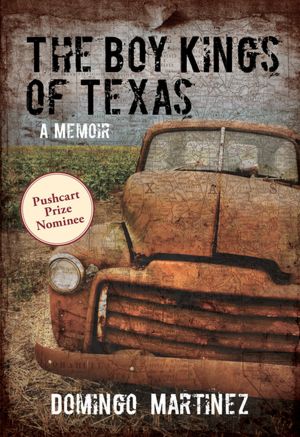
book beginnings on Friday: The Boy Kings of Texas by Domingo Martinez

Thanks to Rose City Reader for hosting this meme. To participate, share the first line or two of the book you are currently reading and, if you feel so moved, let us know what your first impressions were based on that first line.


The Boy Kings of Texas is a memoir by a man who grew up in the barrios of the Texas-Mexico border. It begins:

They were children themselves, my mother and father, when they started having children in 1967 on the border of South Texas. Dad had just graduated from high school and in a panic asked my mother to marry him because he wanted to avoid the Vietnam War draft. Mom had eagerly agreed, in order to escape something even worse.

And so we get right into it. While not necessarily a comfortable book, it feels authentic to me, and I’m enjoying it.

This quotation comes from an uncorrected advance proof and is subject to change.

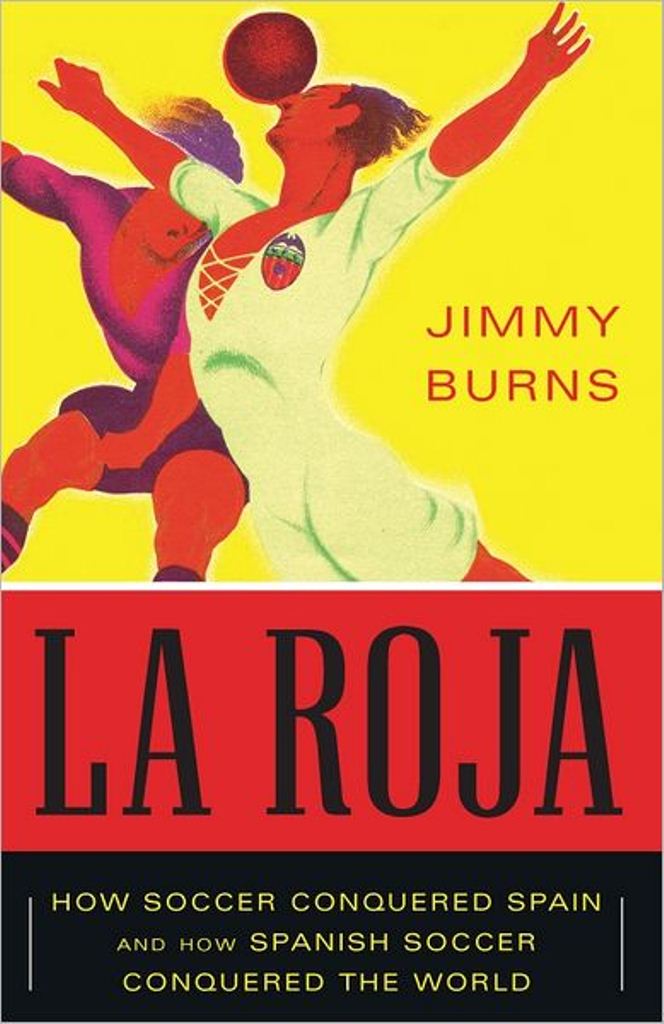
La Roja: How Soccer Conquered Spain and How Spanish Soccer Conquered the World by Jimmy Burns

An examination of Spanish history through the filter of a beautiful game.

Jimmy Burns has an emotional relationship to the soccer teams and the legacy of his native Spain. He’s written several books on the sport, culminating in La Roja, which sets out to tell the story of Spanish soccer, from the moment when the British introduced the nation to the sport in the 1880s to the present day, when the sport has become ubiquitous. Soccer acted as a major propaganda tool in the Spanish Civil War; Franco used it to maintain control of local populations, installing loyal political figures as club presidents and managers. During his rule, Spanish club teams fought fiercely amongst themselves, with regional politics playing a heavy role; in international play, Franco’s politics were at the forefront of every interaction. These were underachieving, frustrating years for Spanish soccer. Only in the late 20th century did Spain begin to come into its own, winning Olympic gold in 1992 and, finally, the pinnacle of a World Cup championship in 2010.

Burns relates nearly 150 years of Spanish soccer history, capturing its roots, the regionalism, the racism, the politics, the bullfighting connections and even a cultural reminiscence of Don Quixote. He portrays personalities, rivalries, strong emotions–including his own–and moments of shining success for a much-beset nation. Often heavier on history than on sport, La Roja is a window into Spain and its component cultures, regions and histories as well as a celebration of soccer and its most recent champions.


This review originally ran in the June 1, 2012 issue of Shelf Awareness for Readers. To subscribe, click here, and you’ll receive two issues per week of book reviews and other bookish fun!


Rating: 5 soccer balls.

Teaser Tuesdays: Racing Through the Dark by David Millar

Teaser Tuesdays is a weekly bookish meme, hosted by MizB of Should Be Reading. Anyone can play along! Just open your current read to a random page and share a few sentences. Be careful not to include spoilers!

David Millar is a veteran professional bike racer who has raced in all the biggest events – the Vuelta, the Giro, the Olympics, and the Tour de France where he’s worn the yellow leader’s jersey. This memoir tells the story of his childhood discovery of the sport he loves, his journey upwards through the professional ranks, and his eventual bust for doping – and then his comeback to the sport, as a “clean” racer. It’s an emotional and unfortunately relevant topic for any fan of professional road racing. Here’s a teaser for you.

After winning Denmark, it would have been reasonable for me to think that I didn’t have to go to Italy, that if I worked hard and put my head down and believed in myself, I could win the Vuelta prologue – clean.

Perhaps if I’d had people – somebody – around me whom I could have talked to about it, then that might have been the conclusion I’d have come to and I’d have canceled the trip to Tuscany.

This is an example of the problem Millar describes as a lack of support for those racers trying to stay clean. He stops short of blaming his decision to dope on pressure from the sport or his team; in fact, he receives very little direct pressure. But the culture surrounding him, so nonchalantly accepting of doping, as he portrays it, makes it difficult for him to resist at a certain point, and no one supports his attempt to stay clean. There is definitely a discussion point here about the meaning and power of peer pressure, alongside the ever-looming question of “clean” competition vs. doping in sports and cycling in particular… I will say for now that Millar never struck me as making excuses. Review to come after this book’s US publication date. [Note: this book has been out in the UK for almost a year. US pub is this June.]

This quotation comes from an uncorrected advance proof and is subject to change.

The Great Psychedelic Armadillo Picnic by Kinky Friedman (audio)

This is an odd book, that somewhat defies definition. If you don’t know Kinky Friedman, I should definitely start there. He’s a country music singer/songwriter, mystery author, politician (he ran for Governor of Texas a few years ago, didn’t win), Jewish cowboy, and general personality. Last I heard, my mother was a fan of his. He has a reputation for being politically incorrect. This was my introduction to his work. The Great Psychedelic Armadillo Picnic is a whimsical musing on Austin, Texas, Friedman’s adopted hometown. It is part travel guide, part history lesson, and large part tongue-in-cheek, self-aggrandizing, stereotyped Texas-style humor.

My reaction was mixed. I should share that we down here in Texas have something of a Houston-Austin… not rivalry, necessarily… maybe it is a rivalry. The cities are quite different and trade blows, each claiming superiority. I live in Houston; it’s my hometown; and while I think Austin has many charms, I have a somewhat typical Houstonian response to Austin’s shameless self-promotion: I get a little defensive. Austin’s pretty cool, but Houston has its advantages, too – in fact I prefer my hometown to the so-hip Central Texas college town – and I get quickly tired of the typical Austinian eye-rolling and patronization, so. I have a dog in this fight, is what I’m saying. Full disclosure.

So, when Kinky brags on Austin, I have to suppress an knee-jerk impulse to say “but!” – which is a good thing to suppress, because there is some funny stuff in this book, and some history lessons that I truly appreciated, not being as familiar with my iconic state’s history as I should be. Snippets of history and Texas trivia I can appreciate. There is a fair amount of Kinky’s own personal musings on the state of our culture today, which are a mixed bag, in my opinion, varying in value. I think maybe he thinks of this book as more strictly travel guidebook than I found it. I double-checked and yes, my edition is unabridged, so. There are travel-guide-like sections on restaurants, famous residents (and their grave sites), and places of interest. Perhaps it was just the audio format; who listens to travel guides on audio?? (No one, I’m fairly sure.) But this is not strictly a travel guide. It’s a glimpse into Kinky’s personality and oddities – and let me tell you, eccentricity is part of the Kinky brand, and a part he’s playing up. So, will you like this book? Answer: as much as you like Kinky Friedman himself. Me, I’m on the fence. I think Austin does all right without his “everything is bigger here,” chauvinistic (he thinks it’s funny), bombastic help.


Rating: 3 bars on 6th St.

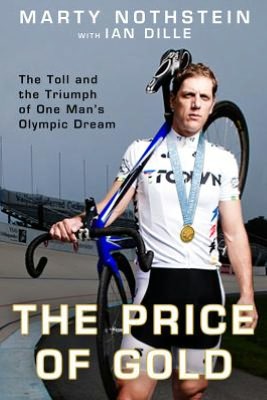
Teaser Tuesdays: The Price of Gold by Marty Nothstein and Ian Dille

Teaser Tuesdays is a weekly bookish meme, hosted by MizB of Should Be Reading. Anyone can play along! Just open your current read to a random page and share a few sentences. Be careful not to include spoilers!

In The Price of Gold, Marty Nothstein, generally accepted to be the most accomplished American track (cycling) sprinter of the modern era, joins Ian Dille, Austin(TX)-based cyclist and journalist, to tell the story of his journey to greatness and Olympic gold, and what it cost him. I am enjoying this immensely: it kept my heart rate raised just about the entire time! Here’s a teaser for you:

“Never wear sandals to a bike race,” Whitehead chastises Gil one time. “You always bring sneakers. You never know when we’ll need to fight our way out of here.” These are the bike racers I aim to emulate.

I like this one because it’s a characteristic portrayal of what makes Nothstein, and really all track sprinters, sort of controversial: the aggression. I find it fascinating stuff. Look for my review a little closer to this book’s June publication date.

This quotation comes from an uncorrected advance proof and is subject to change.