Bike Snob: Systematically & Mercilessly Realigning the World of Cycling by BikeSnobNYC

The Bike Snob book! As noted in a previous post, Bike Snob has authored a blog by the same name for many a year. I have been a fan for four years or so; his pithy observations and opinions about cycling and cyclists in all their forms – pro racing, amateur racing, commuters, messengers, hipsters, and more – are wise and hilarious. I admire his writing, both its style and its profusion. I have wondered, does this guy have a full time job? Because he sure does blog furiously! And I thank him.

So it’s rather strange that it’s taken me this long to get a hold of his first book. (There is already a second out there somewhere.) And it’s well worth it! Like his blog, the book is filled with observations and judgments, always irreverent, tongue-in-cheek, and usually laugh-out-loud funny. Yes, I laughed out loud all the way through this short book. It includes chapters like “Velo-Taxonomy” (the various subsets of cyclists, along with their compatibility with other cyclists – funny gold, here) and “A Brief Guide to Etiquette for Non-Cyclists” (which I appreciated very much, and which begins with a request to “let bikes inside”). Bike Snob is an actual, helpful education for newer cyclists, non-cyclists or regular citizens, and yes, for the experienced cyclist as well.

The Snob imparts astute wisdom. Even though I believe firmly in helmets for everybody at all times, I can respect his recommendation that, if you’re only going to use a helmet or brakes, that you should use brakes, because a helmet will only protect you from some injuries. But perhaps the most awesome feature of this book is the laughs. Anybody with a little bit of cycling experience will recognize the truth and humor in his statements about triathletes (“why other cyclists don’t like them: they’re the turduckens of the cycling world. Compatibility with other cyclists: can occasionally mix with Roadies, like when you see a couple of pigeons hanging out with a bunch of seagulls.”) or how bike messengers’ functional gear has become ubercool even where it’s not functional. I appreciate that many of his philosophies of cycling expand to life in general (further proof that cycling is life!). For example: bikes are great, but they’re for riding, not polishing to a high shine and storing with an aura of reverence at the expense of getting out there and experiencing the world. And bikes get stolen. So enjoy them while you can, and know that possessions are ephemeral, while experiences linger. Don’t let your possessions own you.

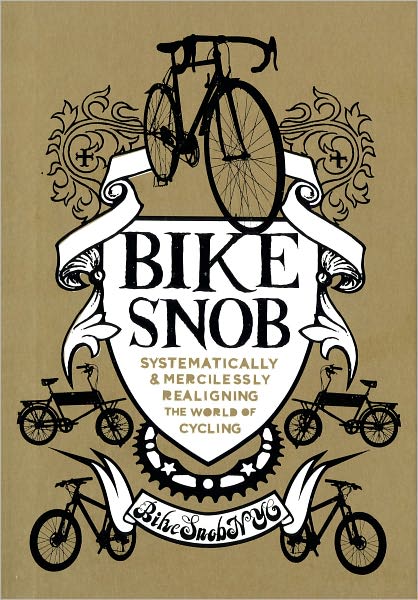
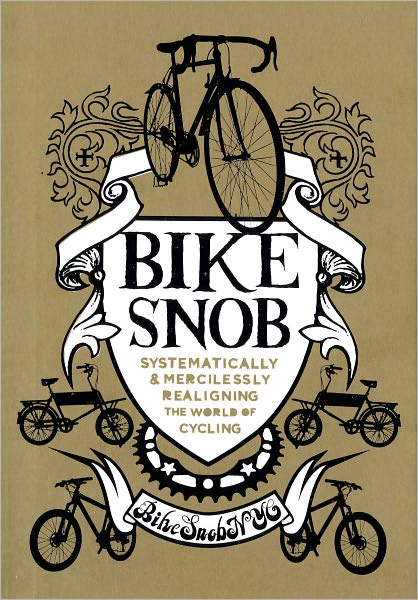
It is worth noting the visual design of this book. I don’t usually get very interested in physical features of books (I am a reader of print books. but if it’s print, that’s good enough; I don’t go for gilded pages or whatnot), but this one was remarkable. The end and fly pages are decorated with a variety of bicycles and chain rings; there are little design details throughout, including tire treads and whatnot, that draw the eye. I dug the gold color theme, strangely. And as a final bonus, the book came with four Bike Snob stickers! I am the second owner of my copy, presumably, because one sticker was missing and I took a second; there are two left, possibly for the next two owners, but I don’t intend to get rid of it any time soon. Good job with your marketing, Bike Snob, you are now represented on the beer fridge in the garage.

I recommend this book highly. Although, I should point out that one of my cycling friends quit just a few pages in, feeling the Snob was full of himself and unfunny. It takes all kinds, and everybody’s tastes vary; bring an appreciation for the absurd and an expectation that the Snob won’t take himself at all seriously, and hopefully you’ll love his sense of humor as much as I did.


A note on the author: the Bike Snob remained anonymous for years of fame, being photographed (for example) for the very mainstream Bicycling magazine with his face covered, etc. When this, his first book, was released, he knew he’d have to come out of the closet of anonymity to promote it, and that was an event of some newsworthiness (the Wall Street Journal cared). We now know his name is Eben Weiss. I’ve kept “Bike Snob” as the name of the author for this review, because that’s how the book was originally listed.


Rating: 7 bicycle wheels (of varying sizes).

book beginnings on Friday: Almost Somewhere by Suzanne Roberts

Thanks to Rose City Reader for hosting this meme. To participate, share the first line or two of the book you are currently reading and, if you feel so moved, let us know what your first impressions were based on that first line.

Two beginnings for you here. From the Preface:

After college I set off on a hike that I imagined would be a diversion from thinking about my future. The year was 1993, the United States was in a recession, and most college graduates were finding it difficult to secure jobs.

And from the start of the book, Day 1 in diary format:

Going on twenty-three, I fancied myself a self-stylized naturalist, thought I knew about the wilderness, about wildness, because I had been an avid reader of John Muir and Henry David Thoreau.

Suzanne Roberts herself has given you a good idea of what this book is about in those two short selections, but here’s the final element: she did this hike one of three women, which remains unique today but was especially unusual in the early 1990’s, and the relationship between these women is an important part of her story, as well. I’ve only just started but am enjoying this book very much! Happy reading weekend, friends.

These quotations come from an uncorrected advance proof and are subject to change.

Racing Through the Dark by David Millar

The unexpectedly inspirational story of a pro cyclist’s “clean” return to the sport after doping.


David Millar was an avid bicycle road racer in his teens, and after he turned pro at age 22, he raced in all the big European events, including the Tour de France, where he wore the yellow leader’s jersey. He resisted doping for years, but not forever; he was eventually busted for the illegal use of performance-enhancing drugs. His story was, perhaps, not highly remarkable in a sport already ridden with doping scandals, but it became noteworthy when he spoke out about his experiences, took a strong anti-doping stand and returned to the sport as a high-profile–and still highly accomplished–“clean” racer. Racing Through the Dark is his story.

Millar’s memoir begins in childhood and follows through rocky years on the pro circuit, the painful decision to dope after abstaining for years, the details of his bust and the raging alcoholic haze of his ban before returning to the sport. It includes anecdotes featuring many of pro cycling’s biggest names, including Mark Cavendish, Stuart O’Grady and Lance Armstrong. Millar’s voice is appealingly open and artless. He takes full responsibility for his poor decisions even as he criticizes pro cycling’s traditional code of silence that overlooks or condones widespread use of illegal drugs. While Millar excoriates the culture of doping, he doesn’t use it as an excuse. He comes across in the end as a surprisingly honorable figure, whose continuing professional career offers a final theme of redemption.


This review originally ran in the July 3, 2012 issue of Shelf Awareness for Readers. To subscribe, click here, and you’ll receive two issues per week of book reviews and other bookish fun!


Rating: 5 skinny tires.

Teaser Tuesdays: Bike Snob: Systematically & Mercilessly Realigning the World of Cycling by BikeSnobNYC

Teaser Tuesdays is a weekly bookish meme, hosted by MizB of Should Be Reading. Anyone can play along! Just open your current read to a random page and share a few sentences. Be careful not to include spoilers!

The Bike Snob has for years written a wildly successful blog of which I am a fan. This is his first book. There has since been a second; I am behind. Here’s your teaser for the day, randomly selected:

Cyclocross is a strange, painful, and addictive form of racing involving dismounting and carrying your bike over obstacles on courses consisting of both dirt and pavement. In a way racing cyclocross is like freebasing cycling, since the races are short but incredibly intense, and they manage to distill pretty much every element of cycling into forty-five minutes. Consequently, like crack in the eighties, it becomes more and more popular in this country every year.

There’s your cyclocross lesson for the day. He gives a good description; it is indeed intense, painful, and addictive! This is also a pretty representative sample of Bike Snob’s irreverent approach. I like it.

What are you reading today?

The Boy Kings of Texas by Domingo Martinez

A starkly honest memoir of growing up on the Texas-Mexican border in the 1970s and ’80s, with a wry twist.


Domingo Martinez was born in the early 1970s in Brownsville, Texas, on the Mexican border. His youth was marked by violence and family drama; he grew up wanting only to escape, but unsure how to do so. The Boy Kings of Texas introduces readers to Martinez’s embarrassing, philandering father; his terrifying, work-obsessed grandmother; his older sisters (two of whom successfully pose for a short time as rich white girls); his generally forgotten mother; and centrally, his older brother, Dan. (There’s also the passed-down story of his grandfather, who died young–a Mexican criminal celebrity recalled as the Brer Rabbit, the Billy the Kid, the Rhett Butler of his day.) Martinez describes in glaring, painful detail his drug-dealing friends and family–one time, he bought pot from two local thugs who turned out to be his uncles but who didn’t recognize him through their drug-induced haze–and his gradual, excruciating withdrawal from Texas and the life he’d always known.

The Boy Kings of Texas eventually follows Martinez to Seattle and his agonizing attempts at starting fresh there, handicapped by a misguided childhood whose dominant lesson was machismo at the expense of all else. While a final, happier ending is hinted at (“but that is another book”), this memoir is concerned with the deep distress of a bordertown kid unclear on his place in the world. Martinez’s story is heartrending and uncomfortable, but he maintains a surprising sense of humor that keeps his reader cringing and rooting for him.


This review originally ran as a *starred review* in the July 3, 2012 issue of Shelf Awareness for Readers. To subscribe, click here, and you’ll receive two issues per week of book reviews and other bookish fun!


Rating: 5 tortillas.

book beginnings on Friday: Before the Rain by Luisita Lopez Torregrosa

Thanks to Rose City Reader for hosting this meme. To participate, share the first line or two of the book you are currently reading and, if you feel so moved, let us know what your first impressions were based on that first line.

Before the Rain: A Memoir of Love and Revolution has one of the more impressive opening lines I’ve come across lately. I’m very glad to be able to share it with you!

In the years since that first letter came, postmarked NEW DELHI and written on pale lavender Claridge’s Hotel stationary, I have begun this story a hundred times, and each time I was afraid.

I find that lovely in that it says a great deal, piques the curiosity, and introduces the narrator, all at once; it also has a certain lyricism to it. I don’t know about you, but I now want very much to know what was in the letter and why it is a frightening story to tell. She next increases the suspense by taking two steps back in time and detailing scenes and characters unrelated to the lavender letter. I’m enjoying this one so far.

What are you reading this weekend?

This quotation comes from an uncorrected advance proof and is subject to change.

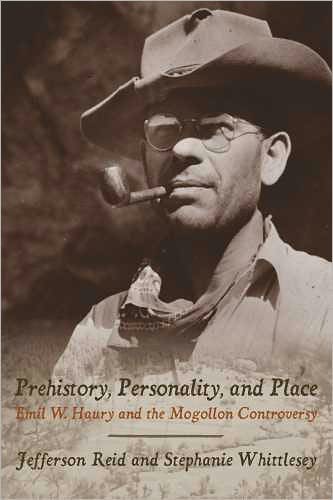
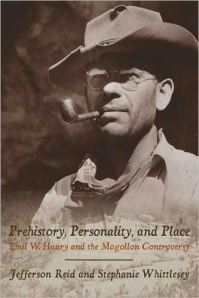
Prehistory, Personality, and Place by Jefferson Reid and Stephanie Whittlesey

I picked this book up on a recent trip to the Gila National Forest in New Mexico. We stopped by the visitor’s center for the Gila Cliff Dwellings, and it just caught my eye; what can I say? I think it was the subtitle, Emil W. Haury and the Mogollon Controversy. I casually find archaeology as intriguing as the next person does, although it’s never been a serious interest; but the idea (as expressed on the back cover) of a controversy over whether a people deserve to be recognized as unto themselves, with their own accomplishments and culture, definitely appealed to me.

First of all, I appreciated the Preface, wherein the authors explain their personal connection to Haury (a teacher and mentor), their interest in the Mongollon question, and what they intend with this book. This is not to be a biography of Haury, but his story coincides heavily with the one they will be telling. I like to hear from authors (of nonfiction, anyway) what they’re up to like this.

Reid & Whittlesey do a fine job of completing their stated task. After reading this short (~150 pages) but dense book, I feel fairly well-versed (you know, for an amateur) in the Mogollon controversy and the players involved. In a nutshell, Emil Haury was a young and gifted archeologist who, in the 1930’s, discovered artifacts in the southwest United States (Arizona and New Mexico) that did not fit into the contemporary understanding of the two cultures then known to have inhabited those parts: Anasazi and Hohokam. He postulated that he had discovered evidence of a distinct culture which he named after the mountains where he was working: Mogollon. The archeological community was immediately up in arms over a few key issues, namely, whether the Mogollon were indeed a distinct and different group, and whether they were as ancient as Haury believed. There was also some question of their eventual fate: were they assimilated into the Anasazi culture, or did they continue to exist as a morphed but still individual culture, past 1000 AD?

Haury would spend the rest of his life and career working to validate the existence, antiquity, and distinctiveness of the Mogollon, while also investigating other cultures (there is tangential reference to the apparently significant-in-its-own-right Hohokam controversy), establishing field schools, and teaching. He seems to have been a remarkable man. By the mid-1960’s, the controversy was all but entirely resolved, more or less in favor of Haury’s initial theories. There were other important players as well, of course, and we meet many of them on both sides of the controversy; but Reid & Whittlesey make an excellent argument for the strength of Haury’s personality and his academic authority playing a key role in the decades-long discussion. Which brings me back to the title of the book. This book is about the Mogollon controversy, yes, but it is also about the relationship between personality, place, and the study of archeology (or prehistory, or anthropology, or – I venture to extend the concept – the study of most social disciplines). Reid & Whittlesey demonstrate how Haury’s personality was a key player, and also how the places that formed and influenced him – his birthplace in the wide-open Kansas plains to the striking vistas of the southwest – played their own roles in the drama.

I found their arguments about personality and place convincing and appealing. The archeology, and the questions (and relatively few answers) about prehistoric peoples, were mildly interesting to me; but I was definitely more engrossed by the drama of academic minds in debate. That was the more accessible human-interest story, if you follow. I continue to have questions about that debate, in particular its partisan nature. it seemed to me that there were really two “schools” of thought, and they follow the lines of literal schools of study so remarkably that I felt sure this was not a coincidence. In other words, it struck me not as a difference of intellectual interpretations of data, but of two groups of people pitted against each other. The archeologists who had helped establish our understanding of the Anasazi were invested in keeping that culture supreme in prehistory; they resisted the idea that there may have been other players in the same (or earlier) time, like they were rooting for their own dog in the fight. It’s a shame to think that these men (they were mostly men) were inserting personal feelings and alliances into the study of science. But that’s humanity for you, I suppose. For the record, this understanding, of the personal rather than scientific nature of the controversy, is mine, and not the authors’.

I thought this was a well-executed and informative book, and I recommend it, but be aware: it’s a little dense and academic for the general audience. I understand that it was intended for the general public, and I do think it works (I had no prior expertise, certainly) but it took a little extra effort, so bear that in mind.

I’m glad I picked up a total unknown, and I enjoyed it.


For another general-audience book on antiquity & archeology, you might be interested in my review of Tutankhamen: The Search for an Egyptian King by Joyce Tyldesley.


Rating: 5 academic papers.

Bossypants by Tina Fey (audio)

This book has been out for a little over a year. What took me so long? Thank you, fellow bloggers who raved about this book, for finally getting it into my ears. As others have said before, get the audiobook! It does make it slightly cumbersome to go find your pdf file to see the pictures she refers to; but it’s so worth it to hear her make her jokes herself.

Tina Fey is a funny lady. This I knew, and I looked forward to the laughs, which are there in abundance. But what I hadn’t entirely expected was the more serious handling of issues like a woman’s place in male-dominated industries – which was silly of me, because Tina Fey does address issues. She tells stories about her own upbringing, her youth, her discovery of acting and comedy, her time spent at SNL, the creation of 30 Rock, her honeymoon, motherhood, and more. She is always classy in her discussion of other celebrities or folks from the industry: any criticisms are well packaged in understanding and explanation, while she mostly praises her colleagues in glowing and meaningful terms. She doesn’t just call everyone talented and charming – she gives thought-out, complex, positive evaluations. And any time she has dirt on someone, she leaves that someone entirely cloaked in anonymity (“the letters from their names are sprinkled randomly through this chapter”). I never got the impression she was being less than honest, because she still made her criticisms, but she was always respectful of the people she has worked with, and that impressed me.

Tina analyzes the challenges that face a woman in a position like hers, breaking into a field that (in her early days especially) was thought to be men’s work, and she does so fairly. For example, she writes (narrates) a funny and wise anecdote about the moment that she realized that she was experiencing, not institutional sexism, but a sheer male ignorance of menstruation and “feminine hygiene.” And she gives good advice.

She is also hilarious, and wise, about women’s fashion and body image, and the culture of Hollywood, modeling, and television. In the chapter entitled “Amazing, Gorgeous, Not Like That,” she describes a “typical” magazine photo shoot in great detail. I found the scenes regarding hair and makeup especially exotic, weird and different. I’m pretty far from a fashion photo shoot, myself.

This book was great fun and very funny, as you might expect; but as you might not have guessed right off (I didn’t), it also makes some good, serious points. There’s some well-stated feminism to be found here amid the good times. Highly recommended, and as many others have said before me, do get the audio version.


Rating: 7 pairs of Tina Fey glasses.

Teaser Tuesdays: Prehistory, Personality and Place: Emil W. Haury and the Mogollon Controversy by Jefferson Reid and Stephanie Whittlesey

Teaser Tuesdays is a weekly bookish meme, hosted by MizB of Should Be Reading. Anyone can play along! Just open your current read to a random page and share a few sentences. Be careful not to include spoilers!

I picked up this slim book on a whim, blind to its contents, but it seems to be going well! Here’s a quick what’s-it-about teaser for you:

The discoverer was Haury, surely the preeminent archaeologist of his day. The controversy was whether the Mogollon culture was a valid, distinctive cultural entity or simply a backwoods variant of the better-known Ancestral Pueblo, or Anasazi, culture.

So far, I like that the authors seem to be telling the story of the controversy (and Haury), without taking part in the debate themselves. This may change, of course.

What are you enjoying on this balmy Tuesday?

The Price of Gold by Marty Nothstein and Ian Dille

A story of competition and commitment that will raise readers’ heart rates as it brings the antagonistic world of velodrome racing to life.

Marty Nothstein’s athletic accomplishments include dozens of national championships and several world championships. His event is the relatively obscure match sprint in track cycling, and he is the most accomplished American sprinter of the modern era. The Price of Gold details his journey from childhood to Olympic gold and silver, with serious injuries, deep disappointments and unimaginable intense training along the way.

The story begins with Nothstein’s silver medal at the 1996 Atlanta Olympics, then backtracks to a sleepy Pennsylvania town where a bored teenager seeks an outlet for his aggression. Nothstein’s natural talent, powerful physique and hostile, hyper-competitive spirit perfectly suit him for track sprinting. This sport combines cunning tactics with raw power, and Nothstein would become an exemplar of its reputation for ruthlessness. Relationships are built and sometimes broken, but the intense drama is blunted by a surprisingly sweet note, as Nothstein’s wife, Christi (herself an elite junior racer), provides constant and complete support.

Cycling fans familiar with Nothstein’s reputation for belligerence may be surprised at the thoughtful tale he has to tell here and will be tickled to recognize many cycling greats threading through his story. The Price of Gold focuses on hard work, competition and achievement, pulling no punches in conveying the rough edges, but also communicating great emotion.


This review originally ran in the June 12, 2012 issue of Shelf Awareness for Readers. To subscribe, click here, and you’ll receive two issues per week of book reviews and other bookish fun!


Rating: 7 laps.