MFA readings: a selection

Perhaps predictably, my rate of reading & writing for school threatens to outpace my work on this blog; and school is my priority, of course. Here I thought I’d just offer a quick rundown of what I’ve been reading lately and how it struck me. (Titles are bolded.) There may be more selection or digest-style posts to come.

My program director, Jessie Van Eerden (a most impressive woman & writer), put together a packet of portrait essays for a seminar she’s taught in the past, and shared this packet & her notes with me. I had a variety of reactions to these essays, which is totally okay: some will be more useful to my studies than others, and these reactions are all subjective.

I was most intrigued by

  • “Tracks and Ties” by Andre Dubus III;
  • “A Mickey Mantle Koan” by David James Duncan;
  • “Interstellar” by Rebecca McClanahan;
  • “The Passions of Lalla” by Michael Ondaatje; and
  • “A Good Day” by Jessie van Eerden,

and did some close readings especially of “A Good Day” and “Interstellar,” two profiles of the authors’ mother and sister respectively that include some autobiographical detail as well, and take certain organizing principles to help them tell the story of a whole person or a whole life in just a few pages: what a skill. I feel like maybe I’ve read “A Mickey Mantle Koan” before. It examines a beloved brother through a single object, one he never held in his hands, and integrates the language of both baseball and Buddhism, and lets the author do some more existential musing as well: ambitious, but executed. “Tracks and Ties” is another hyper-compressed profile, and “The Passions of Lalla” is especially interesting because it tells the life story of a person the author (apparently) never knew, through research, family mythologies and speculation. I hope to find time to go back to that one.

Of “Bessie Harvey’s Visions” by Will Woolfitt, Jessie writes, “Technically, this is a poem, but Woolfitt first wrote it as a lyric essay (same material sans line breaks).” I enjoyed reading it, and found the imagery and atmosphere involving, but I couldn’t see so clearly how to make this experience useful to my own writing.

Similarly, I was engaged by three longer profile essays –

  • “Present Waking Life: Becoming John Ashbery” by Larissa MacFarquhar;
  • “Notes on Pierre Bonnard and My Mother’s Ninetieth Birthday” by Mary Gordon; and
  • “Fuller” by Albert Goldbarth,

at least two of which have in common that they conflate or compare/contrast two very different subjects: Gordon swims between the art of Pierre Bonnard and her mother, as Goldbarth floats between Marie Curie and the dancer Loie Fuller. MacFarquhar more subtly lets her own character (herself) enter her examination of the poet John Ashbery. These again are worthy of study but didn’t feel right for my uses at this time.

By contrast, there were two essays in this packet that I just failed to enter at all. “The Shape of a Pocket” by John Berger and “Decreation: How Women Like Sappho, Marguerite Porete and Simone Weil Tell God” by Anne Carson felt too cerebral, too much work to wade through. This is not where I’m interested in going. In the latter case, the problem may be that I’m not drawn to the question of how these women “tell God”: and is Carson’s failure to bring me in despite my feelings about the subject matter her shortcoming, or a simple, blameless lack of connection? I may not be the right person to answer that last one.


up-in-the-old-hotelAs a separate project, I read essays from Joseph Mitchell’s Up in the Old Hotel, a big fat book I’ve had on my shelf for years. Saint Mazie and Joe Gould’s Teeth both refer to Mitchell’s work. He is famous for his decades of work for The New Yorker, and his portrait essays in particular.

I enjoyed every word I read–including the Mazie portrait, which I recognized from its reflection in Attenberg’s novel–but I settled on the title essay, “Up in the Old Hotel,” for my craft annotation. All of the essays I read showcased a seemingly neutral and nearly invisible narrator, and let the subjects portray themselves by use of dialog and speech, as well as physical descriptions, anecdotes and settings. The “Old Hotel” was remarkable because it told a lot more story than some of the straight portraits did; and its subject is not a person (although the central character Louie is very central) but a building, the old hotel. I focused in particular on the middle 12 pages of the piece, which offer a nearly uninterrupted monologue given by Louie, with minimal paragraph breaks and a wildly digressive style. Writers are warned against such techniques; but they work beautifully here. I think that’s because Louie’s voice is so strong and engaging; his style is so conversational that the reader buys into the delivery method completely; and because of Mitchell’s few but very strategic interruptions (Louie stops to make change, answer a customer’s question).

I recommend reading Mitchell if you get a chance.


the-situation-and-the-story
Finally, for craft, I read Vivian Gornick’s The Situation and the Story: The Art of Personal Narrative. This one didn’t work for me: in a word I’d say her succinct introduction and conclusion do the work her book wants to do, while the fatty middle part (two sections, on the essay and the memoir) read to me like wandering lit crit, and had little to offer me in thinking about my own work. Gornick has received plenty of positive response for this book, but my reaction was tepid. Her analysis of a number of essays and memoirs would have been more interesting to me if we had more reading in common, of course. But I am reminded of Christopher Bram’s The Art of History, which spent a lot of time giving negative or positive reviews that I did not always agree with, and which seemed so subjective that I was a little turned off. Yes, I see the irony as I give this negative, subjective review. But note that I am not here to sell you writing advice. By this point in the lifetime of pagesofjulia, I figure my readers know what we’re doing here together. (Thanks for sticking around.) If you loved The Situation and the Story or found it very useful for your writing, I’d love to hear your explanation of that experience. Not to argue, but to learn.

That’s my long post for today–now back to the program!

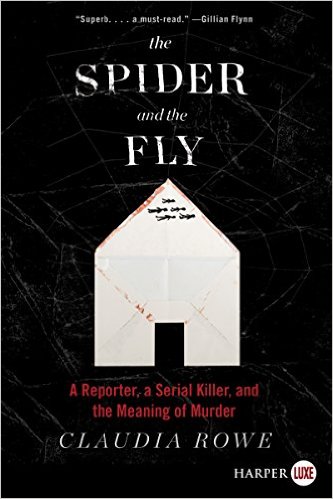
The Spider and the Fly: A Reporter, a Serial Killer, and the Meaning of Murder by Claudia Rowe

A journalist with trauma of her own exchanges a torrent of letters with a serial killer in this absorbing, suspenseful memoir.

the-spider-and-the-fly

Claudia Rowe is a careworn reporter in Poughkeepsie, N.Y., when a local man confesses to the rape and murder of a series of missing women. The case has journalistic potential, but there is more to the story. As Rowe and killer Kendall Francois communicate in letters and phone calls and during prison visits, the journalist’s life goes into a tailspin. Her boyfriend leaves, taking their dog; she moves to the woods and lives in a barn like a hermit. As her obsession with Francois grows, Rowe delves into her own past, a troubled childhood and damaged relationships leading to what she sees as a lifelong fascination with brutality.

Chasing violence and fear has led her to a serial killer who can seem like a big teddy bear as well as a disturbed predator. Rowe yearns to understand where a man like this comes from, how a murderer is made, and the intricacies of race and class in Poughkeepsie and beyond. She puzzles over Francois’s family home, so stuffed with rot and detritus and denial that decomposing bodies went unnoticed. What she learns is that Francois may not be a riddle she can solve.

The Spider and the Fly is a work of personal exploration, as much about Rowe’s growth as an individual as it is about Francois’s crimes. The reflective tone and dogged probing into the ugliest of human behaviors enrich this blend of true crime, memoir and suspense. Looking into darkness, Rowe gains some understanding and some release.


This review originally ran in the February 7, 2017 issue of Shelf Awareness for Readers. To subscribe, click here, and you’ll receive two issues per week of book reviews and other bookish news.


Rating: 7 cans of grapefruit juice.

notes on podcasts & a DNF

I’ve started a new job, part-time on the weekends, serving beer in the taproom of a craft brewery a few towns over. It’s great! but I have a good bit of a commute again now. I haven’t listened to an audiobook since school started in January, because I haven’t wanted to crowd my brain any more than it already is (or get my stories crossed). So Liz has recommended a few podcasts for me. She is super into the podcasts, so I know she restrained herself, by starting me off with just six. On my last few drives to and from the brewery, I have really enjoyed listening. I’m going to try to stick to just a few sentences per story here…

Another Round, Episode 85: The Same Stuff as Stars (with Amanda Nguyen).

Heben Nigatu and Tracy Clayton discuss rape culture and outer space with Amanda Nguyen, a college student who has founded an advocacy organization for rape survivors, written new legislation and gotten it passed in Massachusetts, and is studying to be an astronaut (wow). All three women have engaging voices & personalities here, and the story is obviously layered and impactful.

Criminal, Episode 63: Rochester, 1991.

Kim Dadou served 17 years for the murder of her boyfriend, who beat her within an inch of her life, which life she was defending when he died; now she’s an advocate for domestic assault victims. Excellent intimate tone and a narrative that is horrific but compelling. Listener is left rooting for Kim, naturally.

Death, Sex & Money, I Was Your Father, Until I Wasn’t.

When a woman he’d slept with called to say she was pregnant, Tony became a father to a little girl he loved deeply–until he found out she wasn’t his after all. He and the biological father discuss their experiences. They are disarming, honest, vulnerable.

Embedded, Police Videos: Flagstaff.

A 2014 video shot from a police officer’s eyeglasses shows his death by shooting, perhaps the first of its kind and a major internet sensation. Kelly McEvers delves into this video and its meaning to various viewers, in particular the families of the officer and the shooter. I appreciate Kelly’s personal approach–sharing her own reactions–and the variety of perspectives she finds.

Death, Sex & Money, Live from the Internet: Jason Isbell, Amanda Shires & You.

(This is the podcast that got Liz & I started on this exchange, because I’m an Isbell fan. I remember listening to the first Death, Sex and Money show with Isbell back in 2014.) Live-recorded call-in show with Anna Sales taking questions for Jason & Amanda about addiction, relationships, and their art. These are two wise, thoughtful, compassionate and smart individuals, and I could listen to them all day (and have).

Other Liz-recommended podcasts I’ve got queued up include Revisionist History, Planet Money, and Radiolab, so stay tuned. And, this one did not come from Liz, but about a year ago I really enjoyed Love + Radio‘s Choir Boy, an interview with a bike-racer-turned-bank-robber. What a weird story, truly stranger than fiction.

In other news, briefly: I had a strong negative reaction to Donald Revell’s The Art of Attention (from Graywolf’s The Art of series). I guess the good news is this book seems to be aimed exclusively at poets, and I am not one. Revell seems to me to be more interested in showing off his vocabulary and convoluted constructions than communicating; I found him deliberately opaque; and a central thesis seems to be that the “craft” of writing is neither teachable nor worthy of teaching—so why this book? Anyway, moving on.

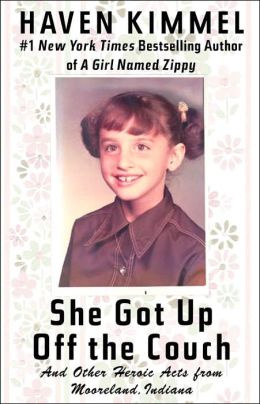
reread: She Got Up Off the Couch by Havel Kimmel

You’ll recall that I really loved this book when I read it in 2013. (First review here.) I reread it recently as part of my first semester reading list (see new tag here, many entries to come!). Students’ reading lists are individual, created by the student and faculty advisor together, so Katie Fallon and I came up with my list as a team.

couchI loved this book again. Havel Kimmel’s mother is far from perfect; she struggles to hold herself together and care for her children and family in a way that her society deems correct; she appears ill-kempt. But in the course of this book, in Kimmel’s youth, she also learns how to drive a car (and buys herself one), enrolls in college and goes on to graduate school, gets a job as a teacher, and goes through a divorce. She struggles, but she keeps it together, accomplishes these large goals, and as this book’s existence shows, her youngest daughter loves her very much through it all. In other words, she’s our favorite kind of hero: challenged, imperfect, but eventually victorious against long odds.

So, a great story. But more than a great story, because Kimmel also presents it cleverly, with enormous humor (even when terrible things happen, like fifth-grade Kimmel’s double compound fracture with shattered bone extruding through the skin) and the kind of detail that makes the whole thing alive to her readers without ever feeling overloaded with descriptions. How does she do it? This is what I’m here to learn on this read. Because my stories are only as great as they are – I can’t control that part – but I can control how I tell them.

I’m still learning this kind of reading, how to read for the craft, to take it apart and see how it works. But here are some things I see:

  • Kimmel’s book is about her mother. The title and Preface make that clear. But many chapters hardly mention her, or don’t mention her at all. Much of Kimmel’s story characterizes mom Delonda without even touching on her. Who she married, what her children and family do when she’s not around, where she isn’t – all these things serve the development of Delonda, which I think is really cool.
  • Kimmel is hilarious. (Here, I don’t have much hope for myself; I’m afraid I’m missing that funny bone…) In the incident I mentioned above, the double compound fracture etc., she uses a totally hilarious doctor to add much of the humor in that scene. Was her doctor really that hilarious? I don’t know. Maybe she was gifted a comic doctor; or maybe she knew how to write his dialog to play that up.
  • Her POV rarely departs from that of the child she was in each scene. She stays in the past tense, but her conclusions, what she sees and what it means to her, stay in character. This often yields humor, because her audience knows more than her narrator does. It can yield poignancy in a way that is just honest without being precious. And it plays up the few moments when adult Kimmel comments on her past: these are rare enough that we pay extra attention.
  • A few chapters take unusual formats. There are lists; a transcript of an audio recording; rules of a game she plays with her friends. This kind of formal play (that is, playing with form) can be dangerous – it can distract, or call attention to itself, as in ‘look how clever I am’ – but I think it serves her well here. For one thing, it’s used sparingly. For another, the formats really do feel like they contribute to the narrative she wants to tell. I think a transcript of an audio recording is a great idea, because it’s in the moment. It’s real.
  • I spent some time focusing on the short chapter “Brother” that biographies her much older, and therefore mostly absent brother Dan. It’s a little bit of a departure from the rest of the book, in tone as well as subject, and I found it a charming encapsulated profile.

This is just the beginning of what I have to learn from Kimmel. Exciting, right? If you haven’t read her work yet, you obviously have my recommendation. I love everything she’s written, in fact, as you can see here.

Stay tuned for more reading-list musings to come.


Rating: still 9 lines to be close-read.

Safekeeping by Abigail Thomas

safekeepingThis book has been recommended to me several times, and now I can see why. It’s a memoir, covering most of Thomas’s life and emphasizing her three marriages and children, especially her second husband who died years after their divorce. But it’s a memoir in fragments. It doesn’t try to be comprehensive, which is a wise choice, since we can never tell all of a life, perhaps least of all our own (hmm). Instead, she gives us a number of crystalline scenes or anecdotes, which together paint a picture, necessarily incomplete but rich.

Thomas’s language is rich, too, lyrical and tangible in its sensory detail, but also rooted in the dirty and the everyday. These details can be sublime, but often aren’t the ones we’d think of when seeking the sublime: “Watermelon rind. Styrofoam. Broken clocks and chair legs.” Mattress shopping, table settings, sawdust on a rug. Chapters shift perspective, using first, second and third person POVs. In the second person, Thomas directly addresses her late second husband. I found it interesting to examine her choice of POV throughout the book and its effect: that second-person addressed to a specific person feels the most intimate, especially since the reader knows that that specific person is absent. Third person feels most remote, and she often uses it when (I interpret) she needs distance from her subject.

Safekeeping is a slim book, easy to read in one sense: you could flash right through it and walk away with a sense of Thomas’s personal history. There is plenty to sink into, though, too, and those may be the best kind.


Rating: 8 apple cakes.

Bonus: here’s a look at my semester’s reading, now that I have it all compiled. Hints of what’s to come!

click to enlarge

click to enlarge

Talking Back, Talking Black: Truths About America’s Lingua Franca by John McWhorter

A linguist argues for the legitimate and complicated contributions of the language he calls Black English.

talking-back

Linguistics professor John McWhorter (Words on the Move) has a message in Talking Back, Talking Black: Truths About America’s Lingua Franca: he exhorts his readers and the general public to recognize Black English (a term he prefers to African American Vernacular English or to Ebonics) as a language unto itself, not merely a mess of grammatical mistakes and slang: “a development that happens alongside the standard variety, not in opposition to it.”

McWhorter worries that academic linguists have relied too long on scholarly arguments in making this point. He does review some of those arguments–for example, Black English’s systematicity, meaning it has a grammar of its own–but then turns to global language patterns. Many cultures and language groups speak both a formal and a casual language in different settings, e.g., Standard Arabic and the local colloquial form (Egyptian Arabic, Syrian, etc.). While he acknowledges that racism partly underlies a general resistance to Black English as a legitimate language, he quickly moves on to what he sees as the larger problem: a misunderstanding of the value of diglossia, or speaking two languages. Along the way, McWhorter cites the relationship between modern Black English and the lingo of minstrel shows, makes the case for a recognizably black way of speaking (or “blaccent”) and examines usages such as “baby mama,” “who dat?” and what he perceives as two versions of the N-word.

Linguistics fans will be enthralled by McWhorter’s fascinating and logically presented study of two forms of English spoken in the United States.


This review originally ran in the January 24, 2017 issue of Shelf Awareness for Readers. To subscribe, click here, and you’ll receive two issues per week of book reviews and other bookish news.


Rating: 6 vowels.

Cerulean Blues: A Personal Search for a Vanishing Songbird by Katie Fallon

Disclosure: Katie Fallon is my faculty advisor this semester, meaning we’ll be working closely together. I read this book just before meeting her.


Mid-April in our southern mountains is a gentle time; blooming forsythia lights up yards like bursts of yellow fireworks, magnolia trees sport gaudy white and pink blossoms, and median strips swell with lilacs and tulips.

cerulean-bluesCerulean Blues is a book about the cerulean warbler, a migratory songbird in danger but not listed as endangered (yet); it is also a book about the author’s becoming a fan and ally of the little bird, a year in her life.

It is organized by seasons: spring, summer and fall. In spring, Fallon discovers the bird and its possibilities for her, and the danger it’s in. This just happens to be as well the spring of 2007, and she is teaching at Virginia Tech when a school shooting takes place there that kills 33. The trauma of these events will shadow everything that follows for her. But she continues on through summer, when she travels to visit the cerulean in its northern habitats near her own Appalachian home, and fall, when she goes further afield to its migratory home in Colombia.

While Fallon is reflective and personal throughout, and the reader gets to know her husband and their rescue dog Mr. Bones as well as the narrator’s own insecurities and grief, this is very much a book about a bird species and its plight. While also showcasing some lovely language (see quotation above), she teaches us a great deal about cerulean warblers and the research (and personalities) that have taught her about them. It’s ultimately a work of science reporting by a non-scientist, as well as a memoir. I found her emotions and minor human flaws easily accessible, and the bird facts equally so. I felt that I got to know her by reading this–which turns out to be particularly applicable to my own studies, but will be rewarding for any reader. The Katie Fallon of these pages is an easy-to-like, easy-to-read instructor, and I think the cerulean warbler will gain more than a few more allies in its readers. (Quick hint: be sure to buy shade-grown and/or bird-friendly coffee!) Nice to meet you, Katie.


Rating: 7 colored bands.

Keep your eyes out for Katie’s next work of nonfiction, available in March of this year. I am especially looking forward to this one, titled Vulture: The Private Life of an Unloved Bird. Vultures are among my favorite birds, as they were Ed Abbey’s.

Take Me to Paris, Johnny by John Foster

This beautifully written memoir of a lover’s life and death will impress readers with its lyricism and emotion.

take-me-to-paris-johnny

Originally published in Australia in 1993, John Foster’s Take Me to Paris, Johnny recounts the life of his lover Juan Céspedes, who died of AIDS in 1987. This Text Classics edition–the first in the United States–includes an introduction by critic Peter Craven and an afterword by Foster’s close friend John Rickard. While these supplementary materials provide context and develop Foster’s character, the original work gleams abundantly without their help.

Juan was a Cuban refugee studying dance in New York City when he met Foster, an Australian history professor, in 1981. A one-night stand became a summer-long affair and then a long-term, long-distance relationship, to Foster’s surprise. As the couple wrangled with the Australian immigration authorities to gain Juan’s permanent residence there, his illness became undeniably serious. He died in a hospital in Melbourne with Foster by his side.

This sensitive, perceptive memoir keeps Juan at its center, outlining his boyhood and escape to the United States before focusing on the love affair and Juan’s death; the final event receives due gravity without defining his life or the book. In a mere 200 pages, Take Me to Paris, Johnny achieves a full emotional range, sketches Juan’s rare and changeable personality and imbues a tragedy with poetry. Foster’s writing is exquisite: thoughtful, lyrical and with an eye for detail. While this is undeniably a sad story, Foster resists wallowing, choosing instead to celebrate Juan and even to laugh at their troubles. Take Me to Paris, Johnny is incisive, wry, loving and deeply lovable.


This review originally ran in the January 10, 2017 issue of Shelf Awareness for Readers. To subscribe, click here, and you’ll receive two issues per week of book reviews and other bookish news.


Rating: 8 red gladiolas.

Modern Death: How Medicine Changed the End of Life by Haider Warraich

This interdisciplinary study of death and how we can improve–not avoid–it is highly readable and timely.

modern-death

In Modern Death: How Medicine Changed the End of Life, Haider Warraich explores how human death has evolved over the course of history and offers recommendations for its future. A medical doctor, Warraich supplements his research with anecdotes from his personal experience, and draws on literature, theology, statistics and legal theory as well as the hard sciences. The resulting expert opinion is heartfelt, convincing and well informed.

Warraich begins with the mechanics of how cells die and the opportunities for analogy they offer: cells choose to die to promote the good of the organism; not dying on time is as bad as dying too soon. He recounts the medical advances that have increased human life spans astronomically in the last two centuries. Chiefly, people now die far less frequently from infection and simple injuries, instead living long enough to die of cancer and heart disease. Because of both medical and cultural shifts, more people die in hospitals or nursing homes than at home.

This is the story of how medicine learned to save and expand lives–especially through procedures like cardiopulmonary resuscitation–and then how medicine learned not to resuscitate. Warraich shows what modern death looks like, how it works, its achievements and shortcomings–and then investigates what a good death could look like, and how we can do better. Science has lengthened lives so successfully, delayed death so thoroughly, that our new problem often is not staying alive, but letting go.

In what comes to feel like the real heart of Modern Death, Warraich then studies the nuances of euthanasia, assisted suicides and the withdrawal of life support systems, and their legal histories in the United States and worldwide. He finds that these three categories of death are far less distinct than generally believed. Finally, he advocates strongly for patients’ control over their own ends of life and exhorts his readers–patients and physicians alike–to discuss death openly.

These conclusions form the book’s central purpose. Along the way, Warraich explores different cultures’ and religions’ approaches to death. He also discusses the philosophical and legal difficulties in defining death and life. Warraich’s chief goal is a better end-of-life experience for everyone.

If Modern Death occasionally uses a few more words than necessary, the inclusion of Warraich’s anecdotal experiences enliven what could have been a dry academic text. For readers interested in its thesis–that death is an important part of life, and medicine and society could do a better job of delivering this experience–it is a sincere and thorough examination of an often overlooked subject. Well served by Warraich’s professional expertise and earnest emphasis, this is an indispensable entry into the conversation about death.


This review originally ran in the January 6, 2017 issue of Shelf Awareness for the Book Trade. To subscribe, click here.


Rating: 7 cells.

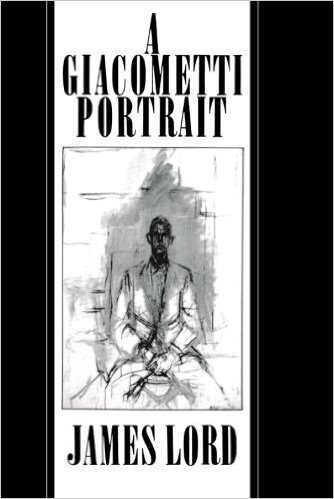
A Giacometti Portrait by James Lord

giacometti-portraitFor school, again: this book informs an upcoming seminar entitled “Process, Image, Form: What Writers Can Learn From Visual Artists,” taught by Richard Schmitt. A Giacometti Portrait is a record of the creation of a work of art. James Lord sits as a model for his friend Alberto Giacometti, a well-known and successful painter living in Paris. Lord flew over from New York to sit for an afternoon; he ends up sitting for 18 days, during which he takes notes and pictures to document the process. The portrait is not finished at the end of this time – it is central to Giacometti’s theory of life and art that such a thing could never be finished – but they agree to stop.

It is an odd but intriguing book. Giacometti is a real character, and the friends become very close while sitting and talking together through Giacometti’s dramatic crises of artistic frustration, and many other threads of life. While Giacometti’s passionate, pessimistic, but oddly magnetic personality is a feature, the portrait itself is at the center of this book, to the exclusion of characterization of Lord himself, outside events and characters, and all else. The book itself, of course, is also a portrait. The title acknowledges this with its syntactic ambiguity.

The material here for a discussion about art, different art forms, techniques and mutual reflections upon one another is obvious, especially as Giacometti writhes and moans, undoing and redoing his work, experiencing one revelation after another, and every one (to him at least) failing. I am most interested to see where our seminar takes us. It’s not a book I’m necessarily prepared to love on my own; it’s too thin, somehow, too occupied with the one thing. But I suspect there’s more here than meets my immediate eye, so I’m very glad to be studying this with help. An unusual, but strangely compelling portrait.


Rating: 7 hard-boiled eggs.