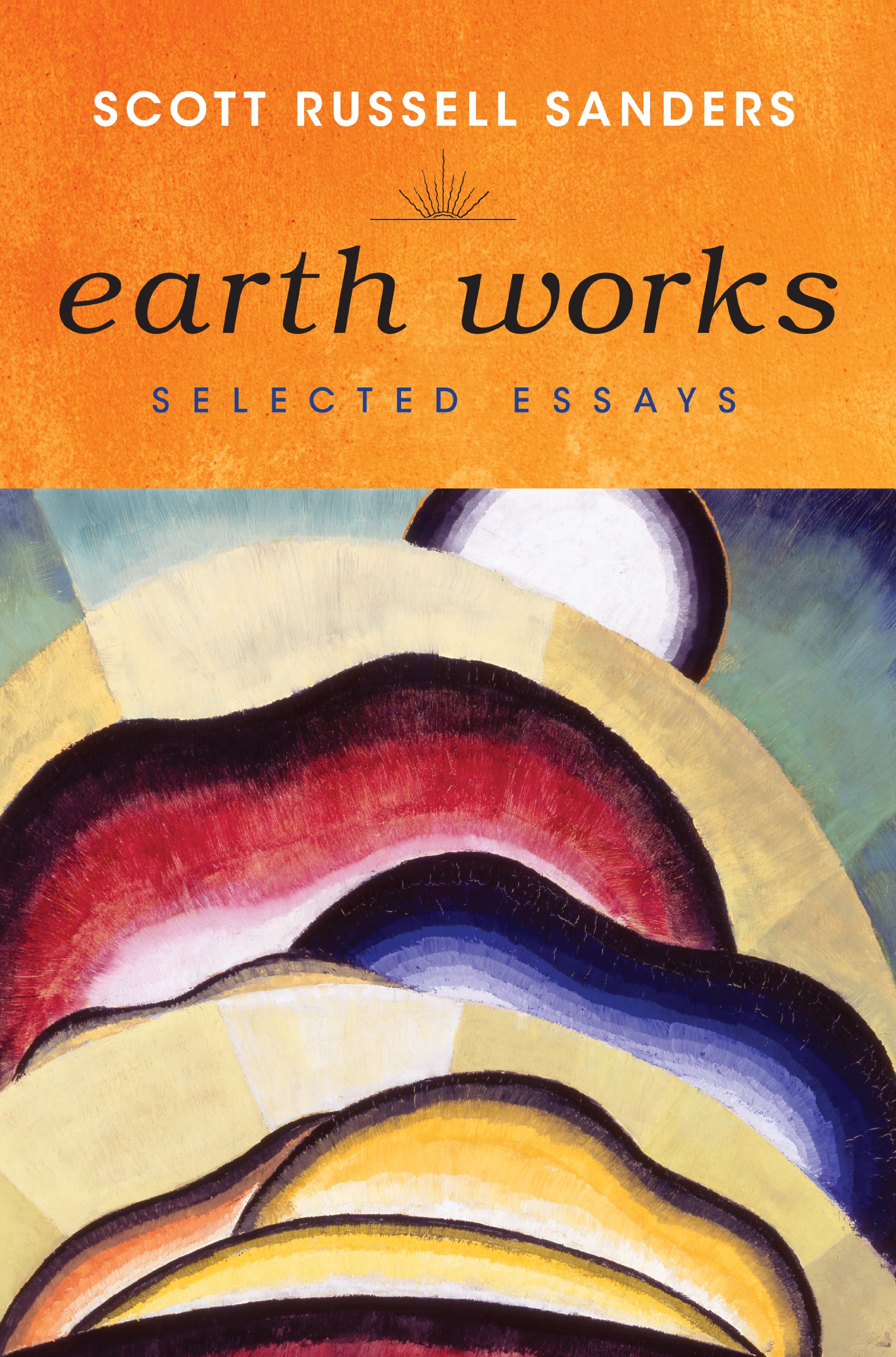
guest review: Earth Works by Scott Russell Sanders, from Pops

I originally reviewed Scott Russell Sanders’s Earth Works in two parts. I also sent a copy to my Pops, because I felt he needed it. I’m glad to have heard back from him now.

Thanks for the book! A few weeks ago I finally dabbled my way through the whole thing. At first I expected to read only those essays that were new to me; but I found the continuous approach irresistible.

As did I, on both counts, actually. A well-organized collection, then!

I blame summer rather than Sanders for taking this long, but Sanders deserves some credit for all the time I took in contemplation and consideration. This collection is indeed challenging in its range and subject matter, but mostly for Sanders’ unguarded candor and intimacy. He is quite simply baring his soul; whether we choose to appreciate what he has to say is up to us. In other words, I had to remember ‘how’ to read him, accepting the variety of both subject matter, and the responses he may arouse for the reader. The wide range of those things is central to the attraction, I think. He is boldly and humbly naked in his writing.

Which is why I wanted to respond to your ‘part one’ blog comments here, because I got as far as “The Men we Carry…” and wish to rise, not to defend him, but explain my reading of it.

Actually, there is no defending, and you did an excellent job of explicating that. And we still don’t know if he has reconsidered his words here. But as I read the essay, his Preface words were fresh in my mind; you quoted those briefly, but here a bit more complete, with my emphasis: “I have refrained from making significant revisions, allowing the essays to remain, for better or worse, essentially as they were when they appeared in print.”

As I suggested earlier, this candor, with all its risk and embarrassment so well exposed, is part of the masala, the potpourri – and the challenge – of reading Sanders essays. In some others earlier, he has already disappointed, frustrated and angered me; I am now unsurprised. I have resolved to consider time and place and context, accept it as material helping me understand this complicated and flawed person (as are we all), whose thoughts I am now invested in.

It’s the difference, if you will, between reading to examine what’s inside an author’s head, versus critique or enjoyment of content only. Increasingly, as my reading has become more intentional, it seems to lean towards the former, while I still enjoy the latter.

Mostly, I appreciate how such dissonance inspires me to better understand my own thoughts and values – for better or worse. Your own thoughtful response to his mansplaining is perhaps an example, with your values now in print with such clarity.

Pleasantly, with Sanders his best are still very rewarding.

FYI: By the numbers:
There are 30 essays here, covering 3 decades;
21 were published in other collections, the others only in periodicals;
I marked 12 favorites out of the lot, including 7 that I had already read elsewhere (including 3 of the 4 from Staying Put.)
But I read every single one, for a complete journey. Favorites tended to be most personal about family and father; nature and its human impacts; existential questioning. Interestingly, the ‘others’ tended to be similar ground but pursued in excess, taking me a bit over the edge, and often simply too personal and intimate – or dissonant.
I love a good numbers round-up, so thanks for that last section!

Glad that my comments made sense to you (I’m not the least bit surprised). From a distance now of nine or ten months, I remember this collection as a whole and as a reading experience, rather than in its particulars, and that overall impression is positive: I would say I like Sanders very much. But I do remember the essay that upset me, too.

The point you make in quoting the Preface is well taken, and I’m glad he made that statement. But I guess the distress and anger I felt in reading that essay was strong enough that I think it should have warranted a response from him – maybe let the essay stand as originally published but write an addendum, letting us know how wrong he got it and how much he’s grown and learned. If Sanders were reading this, that would be my request of him: republish; but now respond to your own writing, too. Well, I won’t hold my breath, but as you said, I’m glad I have gotten my own response out there, however small my platform.

I think there is an ongoing question of how to handle writings that seem wise in many ways but require of us that we make allowances for attitudes like racism, sexism, colonialism, classism, etc. and on and on. To what extent do we accept that something is “dated” and still find a way to enjoy it or to find value? I keep reminding myself that in every era somebody has been enlightened enough to see past the values of the time. It’s something I’m still doing battle with, myself. (Stay tuned, one of these days, for my troubles with Wendell Berry.)

Thanks for yet another thoughtful guest review, Pops.

follow-up to The Twenty-Seventh Letter of the Alphabet by Kim Adrian

This Wednesday I posted my review of Kim Adrian’s new memoir; but I have more to say.

The Twenty-Seventh Letter of the Alphabet came to me as one of a series of happy accidents, or coincidences – or synchronicity. At this point, I’m not sure I can call it coincidence; this is more like the result of a cultivated reading life, for which I’m grateful. Recall how I loved and raved about Adrian’s Sock. That review posted just as I headed off to residency, and I heard almost immediately from her publicist, offering me this memoir for review. Well, I say no to these offers 99% of the time, plus I was at residency (spread extra thin), and entering thesis semester. But I was intrigued. I looked up the book. I knew I liked the author; it was the right length. I pitched the review to Shelf Awareness, who accepted, making it worth my time in that (monetary) sense. So I said yes, send me that book.

And it was not only a wonderful book, as I’ve written, but turned out to be uncannily well-suited to my studies this semester – in other words, it serves all these functions for me: a review for the blog (as requested by a pleasant, not pushy, publicist), a review for the Shelf, and a nice tie into my schoolwork.

Adrian’s memoir features photographs – described, not included – which is also something I’m doing in my thesis. (My dear friend Delaney used photographs in her thesis last semester – included them, as in Dorothy Allison’s Two or Three Things I Know For Sure – and taught on “art and artifacts” for her graduate seminar.) She studies a difficult-to-pin-down mother figure, which was the original plan for my thesis – I’ve given up on that for now, but it’s still in the back of my head. Finally and best of all, she uses that strange but quite successful structure, the glossary, an alphabetically organized series of fragments. These entries rarely strike me as “narrative” on their own, but they definitely combine to tell the story, and in chronological order. My lightbulb realization, which seems so obvious in hindsight: these entries were not titled and then sorted; they were titled for their place, to serve the alphabetical structure.

I found this fruitful reading in several senses – and not least, it was gripping. I stayed up until 1am to finish it, which is something I’ve not done, I think, in several years. So it merited this second post and my firm endorsement.

Thank you, Kim Adrian, and thanks to her fine publicist, Carrie Adams, for doing the work of connecting the right reader with the right book.

The Twenty-Seventh Letter of the Alphabet by Kim Adrian

A remarkable memoir, organized as a glossary of terms, that is part detective story, investigating a mother’s mental illness.


The Twenty-Seventh Letter of the Alphabet is a memoir with an unusual structure to match its ever-shifting reality. “I’ve wanted to tell this story for as long as I can remember wanting anything at all,” writes Kim Adrian (Sock): the story of her mentally ill mother, how she got this way and what Adrian can or should do about it.

Linda, Adrian’s mother, has been diagnosed with a long list of ailments: borderline and narcissistic personality disorders, bipolar, psychosis, paranoia and more. Adrian’s father is an alcoholic; his memories, his assertions that Linda wasn’t always this crazy, “not like she is now,” can’t be trusted, because “he’d been drunk the whole time.” Adrian’s sister has few memories from their childhood. In constructing this narrative, then, she relies entirely on her own memory. But the trouble with remembering the truth of what happened is that Linda’s lies, manipulations and her own troubles with reality created a wildly shifting experience for her oldest daughter. If Linda retold a story, the very truth of it changed for Adrian. Reconstructing the past now is therefore a fraught undertaking.

This troubled and troubling attempt to reorganize a life is organized alphabetically, beginning with an anecdote titled “Abecedarian” about an unexplained event in grade school, and ending not with “Zigzag” (Linda weaving down a city sidewalk), but with the entries under “&.” “Until the mid-nineteenth century, the ampersand was considered the twenty-seventh letter of the alphabet,” and for Adrian it offers inclusivity, “a verbal umbrella” under which she is both mother and daughter, both happy and sad.

This structure, the glossary, would feel contrived or awkward in less capable hands. The narrative of Adrian’s childhood through her own motherhood and healthy, loving family life is told more-or-less chronologically, but in fragments, whose alphabetized titles emphasize the narrator’s reliance on words, on the power of storytelling to restructure her experiences, perhaps to fix something. The glossary’s entries are anecdotes, descriptions of family photographs or simple definitions. “Domesticity: A kind of faith, in my experience.” Deceptively simple fragments add up to more than the sum of their parts.

Adrian’s story is often horrifying. Both of her parents were violent; her mother’s emotional and verbal abuse is ongoing and perhaps more shocking still. The older woman’s circumstances, bouts of homelessness and hospitalization, and the younger woman’s inability to extricate herself from the cycle of abuse, can be difficult to read. But, see “Hope: The ‘only way of knowing a person,’ said Walter Benjamin, is to love them without it.”

The Twenty-Seventh Letter of the Alphabet is a feat on many levels. Adrian tells a harrowing story, surprisingly redeemed by her own sweet family, but in many ways also continuing. She gives it meaning without having answers to all the questions she still asks herself. Her work as glossator is astonishing and inventive. Her glossary is strangely gripping, with a momentum pulling the reader in and through. The result is whimsical, even darkly funny at times, brimming with compassion, terribly sad and deeply loving. Memoir readers should not miss this singular offering.


This review originally ran in the September 7, 2018 issue of Shelf Awareness for the Book Trade. To subscribe, click here.


Rating: 8 nutcrackers.

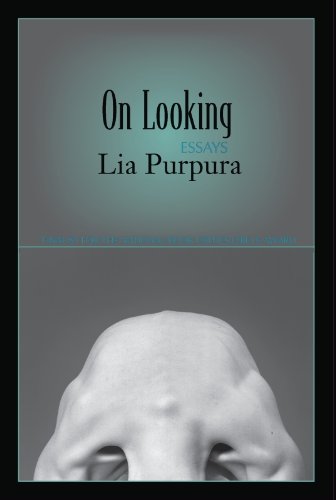
On Looking: Essays by Lia Purpura

I felt I might be tested on the things I saw.

Lia Purpura’s On Looking is an collection of essays that are unrelated, but for their preoccupation with looking and seeing. It’s an interesting look at collecting essays: some of these do not make obvious their obsession, except by proximity with the others. It’s an effect that builds. I like it.

Purpura’s language is lyric, which is often difficult to make clear meaning of – words go together that we don’t expect, which slows down this literal-minded reader. There is undeniable music and rhythm to the language, but also meaning available, if one slows down.

The opening essay, “Autopsy Report,” I’ve read before. It’s beautiful. It is absolutely about looking – a fine way to begin this collection – about really seeing when so many would turn away. (Some readers may wish to turn away. It gives the fine details of bodies literally split open.) This is definitely one of my favorites of the book, and a representative sample, although I suppose it is also clearer in its language than some that follow, and therefore a bit more accessible.

Another favorite was “Sugar Eggs: A Reverie,” which identifies itself as a list essay.

(A list, after all, is an incantation. In a list of likenesses, each element, each peculiarity gathers, leans into and flicks on the light in the room of the next one. The elements loop and knot forth like a net, band as a colony of frost or coral reaching, suggesting not so much a progression as a collective tendency toward. And taken together, the elements offer the assurance of a stance: here is a way to speak of this lightest, barely perceptible–in this case–space. From here I can count and collect that which stirs, and has always stirred me.)

A list inches one closer. Hints along.

Recognize my lists-and-things obsession here, which is of course related to a looking-and-seeing obsession. What follows is a series of spaces and things considered for whether they can count or cannot count as sugar eggs. Sugar eggs for the narrator are sacred spaces… “a space that makes a place for thought, an air considerably pure in which objects–say, sugar bushes, sugar trees–grown precise in their stilled distance.” The specialness of sugar eggs is hard to pin down: Purpura has spent a beautiful essay working on it, and I’m not sure I can sum it up. I’m not even sure I entirely understand it; but I had a lovely time following her parsing of what does and does not qualify.

Another favorite essay was “Coming to See,” which turns out to be a memorial. It’s a series of fragments, about looking through a window and wanting a better, clearer frame for the view (subjects I have played with too); only on the essay’s third page do we learn that the narrator has a friend who is dying. This friend is scarcely mentioned throughout, but it becomes clear that she is what the narrator’s anxiety of seeing is all about. Again, the memorial is something I’ve attempted, but it’s hard to get it right. This is an unusual, touching take on it. By almost entirely eliding the true subject, Purpura gets at the emotional heart without predictable sentimentality or cliché.

There is more, much more; it is so dense. From here I will give you a few favorite lines.

The epigraph, by Goethe:

Every object, well contemplated, creates an organ for its perception.

From “The Pin”:

But while we stayed, we stayed because we were protected by a curiosity so certain of its task, that things–boots, mail, pots, our bodies–offered themselves, first tentatively and then with urgency, as if for us alone, solicitous as all objects of adoration, as all objects in stories lure us, irresistible and catalytic.

All objects in stories lure us. My thesis, if you will.

And finally, from “On Looking Away: A Panoramic,”

I believe in the circle.

It’s funny the things that resonate with us. Another reader would have read this book and marked entirely different lines, I’m sure.

Perhaps this book should be read alongside Mark Doty’s Still Life with Oysters and Lemon, for its attention to attention. And in fact perhaps that comparison is useful: I had to read Doty’s book twice (and repeatedly after that) to begin to get it. These are dense, rich texts, about abstract things even while they’re about very literal, physical things as well.

Worth your time.


Rating: 8 ships in bottles.

The Art of Mystery: The Search for Questions by Maud Casey

In Chekhov’s famous letter to a friend, he wrote, “You are right to demand that an author take conscious stock of what he is doing, but you are confusing two concepts: answering the questions and formulating them correctly. Only the latter is required of an author.”

I have been looking forward to Maud Casey’s The Art of Mystery, because it sounds like it addresses something I like in the writing I admire, and something I hope to do myself. I have thought of it more as ambiguity, or subtlety, than mystery; but I think we’re talking about the same thing. As in that perfect Chekhov quotation above, it’s about posing interesting questions and exploring them, not about having all the answers. If we provide too many details, we take away the reader’s chance to use her own imagination or her own experiences to fill out the story, to make it her own. It is questions, not answers, that are a part of the universal experience, and that’s what makes really good literature so rewarding.

Casey’s focus is on fiction writing, but I didn’t find that it mattered much. She studies a number of novels and short stories (relatively few of which I’d read, but it was fine) for their mystery. She praises Paul Yoon’s Snow Hunters, for example, for its offstage gestures: the protagonist makes reference to a castle, forests, high canopies, a river, none of which are explained. “The gesture toward everything that we don’t know about [that protagonist] doesn’t frustrate; rather, it intrigues.” And I found myself asking the question, why does this work when he does it? The rest of us would be scolded for the same: references to details nowhere in our own stories. But then comes the answer: “In every case… it’s useful to ask, What is the effect of the withholding? Does it yield something generative in relation to character? Or is it an effort to drum up surface-level suspense, whose effect may be experienced as exactly that, effortful, and cosmetic, rather than as true dramatic tension?” Twenty-six pages later, again: “It’s a question of effect. Is a bizarre character, and the mystery surrounding that character, being generated for look-at-me-Ma show, or is it doing something that leads to generative mystery?” (I confess I enjoyed “look-at-me-Ma show.”) See the repeated words: we are looking for effect; our goal is generative mystery. (That last is the phrase Jessie used in recommending this book.) The bulk of The Art of Mystery is devoted to explicating these concepts with lots of good examples (that make me want to read lots of books). For this review, I’m content to have named them.

Like so many significant lightbulb moments in studying the craft of writing, this one seems obvious in hindsight. The writer must know what she’s trying to do; she must work with intention; and she must consider the effect of the choices she makes. Mystery for its own sake is at best a cute trick, liable to frustrate the reader. Generative mystery has a job to do. Know which is which.


Rating: 7 cataracts.

The Prairie in Her Eyes by Ann Daum

This is an extraordinary book, one of the most enjoyable reads of the year so far. I took it slowly, out of pure pleasure. Thanks once more to Jessie.

Ann Daum is from a farm-and-ranch in South Dakota’s White River Valley. She left to go to college, but returned every harvest season, and came back after college. She grew up as a ranch hand; her father was the farmer, but her sister and she were ‘cattlemen’ and handlers of horses. As her parents age, and circumstances work against cattle ranching, that part of the family business shrinks and crumbles; they sell off much of their four thousand acres. But Ann’s horse breeding operation does well, and she continues on the family property.

Against this backdrop, The Prairie in Her Eyes is an essay collection and something of a memoir-in-essays. It begins with Ann listening to sandhill cranes passing over her family’s homeplace, in an essay titled “The Habit of Return,” and ends with “The Last Crane,” in which she watches the last sandhill of the season worry itself along. In between, essays consider the history of South Dakota and its farming and ranching cultures; the region’s wildlife; “Silence and Spaces” and “Predators and Prey,” and more. I admire Daum’s titles, which often cue me to follow her subtle braid, as in the essay “Fences,” which deals with boundaries of different sorts, and the variety of effects of literal fences in her region of South Dakota, for good and for ill, and the evolution within her own life of how she sees fences, which is a matter of both her own growth and of changes in the place itself.

Some of this content is hard to take. An account of a difficult foaling had me in tears; the animals (not people!) who hurt and died wrenched me. There is human trauma, as well, that can be difficult to read; interestingly, the human trauma is written about with some distance, less graphically, while the animals’ is more viscerally portrayed. But it’s shown with so much love and grace, and beautiful prose. I’d recommend this book 1,000 times.

These lines open “Silence and Spaces”:

Rain never falls in the South Dakota of my childhood. Wind blows down the valley with the force of locomotives, clouds pile on the horizon, thunder growls from the west. Once, sometimes twice, a summer, lightning sparks prairie fires that crackle and spit, swallow brown summer grasses without tasting. The flames cough embers up like glowing stars and the smoke hangs in cloud. But there is no rain.

This paragraph is about the weather. Fairly dramatic weather, sure. It’s about a lack: no rain. Weather, and an absence. It does not sound like a good recipe for gripping prose. But the fires swallow brown grasses without tasting? Amazing.

Obviously the themes and subject matter of this book spoke to me. It’s about home, what it means to be attached to a place, and how complicated, multifaceted, and imperfect our connections are. I love how deeply the flora, fauna, and history (natural and otherwise) of her region have contributed to making Daum who she is. At the pinnacle of this concept is the essay “Why We Return – The Prairie in Her Eyes,” in which an old woman comes to visit the Daum family property. This woman had never lived there; she’d never seen it before; but her parents had homesteaded there, and an older sibling had been born there. Just like the cranes in “The Habit of Return” (and, obviously, Daum herself), she felt the pull of the place, even though she’d never set foot. “Gertie grew up missing a place she never knew.”

I’m enchanted. I’ll be referring back to this one.


Readalikes: Gretel Ehrlich’s The Solace of Open Spaces and Evelyn Funda’s Weeds: A Farm Daughter’s Lament.


Rating: 9 fading trails.

A Field Guide to Getting Lost by Rebecca Solnit

Another book that came to me at just the right time thanks to Jessie van Eerden. I know of Rebecca Solnit, of course, but I think this is the first of her writing that I’ve read. I really enjoyed it in several aspects: its subject matter is very much in line with that of my thesis (that I’m currently writing); its structure is of interest and also has something to offer my own; the writing is lovely; the content it approaches is wide-ranging, and (as Jessie said early in this semester as we did a manuscript review), “I like to learn stuff.”

That said, it’s not an easy book to sum up. These collected essays are connected, but far from telling a narrative. Solnit is exploring the idea of getting lost and what it has to offer us; and that is ‘getting lost’ in several senses, geographic (I got off the trail and I was lost) and metaphoric (after my mother died I was lost, or I lost several years). Also the sense in which we lose both things and people: lose your keys, lose your mother (to death), lose a boyfriend (when you break up). She sees value in getting lost – sometimes it’s how we find ourselves – and notes that we don’t get lost much anymore. Late in the book, she looks at old maps with their ‘Terra Incognita,’ and observes that we don’t have terra incognita on our maps anymore. We know it all! Right? (Of course, we’ve thought we knew it all before, and been proven wrong.)

I’m using the sense of place tag here although it’s not quite right, which is perhaps a design flaw in my tag. By ‘sense of place,’ I have tended to mean a strong attachment to a certain place; so Jesse Donaldson’s writing about Kentucky, James Lee Burke’s New Iberia, Michael Connelly’s Los Angeles, or Mary Karr’s southeast Texas. That is not what I found with Solnit, so much as a strong feeling about the importance of wandering, losing and finding oneself, in place and in other senses. Place plays an important role here. This book feels like it fits that tag, even though it doesn’t fit the tag as I originally conceived it. (This blog will be eight years old next month. Expect some scope creep.)

Structure-wise: there is a chapter-title refrain, with the heading The Blue of Distance (italicized, where the others aren’t) taking every other place between differently-titled essays. These are not the same essay over and over, but they all meditate on blue and its role in our observation of distance, beginning with the literal meaning (that is, that the sky and deep water both look blue for scientifically observable reasons) and moving through less-literal ones. Distance, it seems, is an inextricable part of one’s ability to get lost. My 600-square-foot house would be much harder to get lost in (tell that to my geriatric dog) than a 20-something room mansion would be. I really appreciated this design, the repeated title for very different essays; it was a succinct cue to the way in which they’re linked.

Another item I found interesting to note was Solnit’s references, the other thinkers she turns to. Some were perhaps unsurprising, as writers cite other writers: Fitzgerald, Nabokov, Katherine Anne Porter, Virginia Woolf, Joseph Conrad. These are joined by Johnny Cash, Patsy Cline, Bobbie Gentry, Yves Klein, Plato, Álvar Núñez Cabeza de Vaca, and Alfred Hitchcock (among many others). A huge number of minds contributed to Solnit’s own thought processes here – which are of course her own – and I was fascinated by the twists and turns. Again (and again), this is something I need in my own writing and that appeals to me. I can’t wait to tell Jessie how right-on she was with assigning me this book.

Obviously this Field Guide‘s usefulness to me is just beginning. You will like it, too, if you like far-ranging considerations of the human condition and where each of us as an individual might be or should be headed, if we’re thinking about it. I found it an engaging and curiously winding path, and I recommend it.


Rating: 8 shades of blue.

On Homesickness: A Plea by Jesse Donaldson

Our temples are made of logs in Kentucky so be careful with the flame.

This is a book very much after my own heart, even though its narrator doesn’t care much for the city that has my heart; we both share a love for home, even though our homes are different.

On Homesickness is a collection of fragments, none longer than one page, and that’s an important design feature, because each spread follows a pattern. The left-hand page names a Kentucky country, its date of establishment, and a small representation of its shape on a map. The right-hand page offers a fragment, sometimes expressly referring to the corresponding county but more often not. It’s possible that fragments and counties match up better than I know, and a Kentuckian might know better, but I’m not really all that concerned. These super-short pieces of prose make a neatly paced, lyric form for what is essentially a wandering wanting. Donaldson yearns for his home and can’t figure out how to get there. Meanwhile we learn as well that he and his beloved partner have a pretty good life in Oregon, a place he finds beautiful but not quite home. His partner is uninclined to pick up and move to Kentucky. Donaldson flubs a job interview that might have moved his family home; his wife gets pregnant, and in a lovely piece near the end, “…I realize that for our daughter, this place will be home. And I want her to love it like I did mine.”

That is the narrative arc, such as it is (and it ends beautifully), but the narrative bones of this book are spare. Along the way, Donaldson also mines Kentucky history, myth, and cultural references (that Colonel’s sour mash), creating as much mood as story. Again, yearning is absolutely the dominant feeling, coming across loud and clear. Also very present is the unnamed partner, the wife in Oregon. This is a love story as much for a woman as for a place. “A place can’t love me. Not like you.”

I find this book interesting for its form, its bravery in sparsity and what it communicates so succinctly. Its themes are so much my own that it aches a little, and I recognized almost every line as I read. Even the references felt uncannily personal (Janus, Cleanth Brooks, Houston). Is that because I’m so truly the right reader for this book? Or because it’s designed to appeal to every reader in this personal way? Probably a little of both. Either way, a good study in minimalist, lyric prose; mood over plot; and a decent way to learn about Kentucky, not from an academic historian but from a lover. I liked it very much.


Rating: 8 love stumps.

Bonus material/synchronicity: I was originally sent this book in galley form for a Shelf Awareness review, but I didn’t get around to it. I kept the book, though, because I thought I might be interested someday. When I worked with Jeremy Jones last semester, I learned that his “In Place” series from WVU‘s Vandalia Press had debuted with this book as its first release. Meant to be. Part of me wishes I’d gotten to it sooner (and written that review for the Shelf!), but part of me thinks I found it at the right time.

movie: The Gleaners and I (2000)

Recommended by the fabulously talented Jessie van Eerden. Writing my thesis with her this semester is a dream.

However, first thoughts on this movie were “wow, this is weird, why am I watching this?” and then I got into the groove. For one thing, it’s an interesting work of narrative nonfiction. Ostensibly, director Agnès Varda is concerned with an external subject: the longstanding tradition of gleaning, or collecting the leftovers of a harvest. She enters this subject via art – the paintings of Millet and Breton – but among and in between this external material, Varda looks back at herself. The moments that become personal make the whole thing work, for me. Which is not to say that I wish the whole thing had been personal, or I spent the rest of the movie waiting to learn more about our narrator, you understand. I’m just voicing again my preference for a present narrator. I appreciate external material that is commented upon by a personal voice. In fact, I pretty much require it, as a personal preference. Perhaps this is on my mind now because I’m working on my thesis, that book-length project “of publishable quality”… and I am appreciating that Jessie shares my feeling of being an essayist, of commenting on outside material from a personal perspective, rather than simply airing all my own thoughts and feelings. Personal essay, not memoir, if you will.

And that is what I’m getting out of this movie: the narrative stance. As well as the subject matter: not gleaning in particular, but the entry through art into a larger subject (I am writing about the Drive-by Truckers, Jason Isbell, Guy Clark, and Dominique de Menil, among others), as well as its metaphoric possibility. I really lit up when Varda noted the new, metaphoric uses of ‘gleaning’:

On this type of gleaning, of images, impressions, there is no legislation, and gleaning is defined figuratively as a mental activity. To glean facts, acts and deeds, to glean information. And for forgetful me, it’s what I have gleaned that tells where I’ve been. From Japan, I brought back in my case souvenirs I had gleaned.

She does a lot of using one hand to film the other hand, which is an interesting statement about art, right? (All that commentary about the memoir as navel-gazing!)

The Gleaners and I is a piece of art, concerned in part with art – the original paintings as inspiration; the artists Varda meets who create out of the refuse they scavenge – as well as several meanings of gleaning. The people in the French countryside consider gleaning in its old sense, bending down to pick up leftover crops lying on the ground after a harvest. Some see a difference between this act and picking, which is picking fruit or nuts or whatever off of trees, vs. bending to take off the ground. Then there is urban scavenging, dumpster diving and combing through curb leavings. And finally that metaphoric sense, in which I watch this movie and take with me – figuratively – the parts that are of most value to me.

Varda interviews a “painter and retriever” who picks up other people’s discards from the curbs to make art, not unlike a dear friend of mine: he says, “what’s good about these objects is that they have a past, they’ve already had a life, and they’re still very much alive. All you have to do is give them a second chance.” (I also love that he points out that the city council puts out maps of where this not-junk is going to be, and Varda responds that really, aren’t the maps so that the people can put out their junk? And he sort of chuckles and says yes, well, I read the maps in my own way.)

I’m really fascinated though at the assumption throughout – never challenged! – that this food is all “wasted” if people don’t eat it. One guy did say about unharvested grapes that otherwise “the wild boars and the birds will get them.” So… how is that a waste? No human got it, but it didn’t go to waste. Even the fruit that rots on the ground contributes to a system. Even if we’re compelled to make it about us: dirt is necessary for people to live, for everything to live, and rotting grapes help make dirt. I wrote to my artist-scavenger friend about this movie, and he responded: “There is an edict in the Old Testament about leaving behind a percent of crops for the animals. Old wisdom makes sense sometimes.” This seemed like a gaping hole to me. After all, we didn’t invent grapes. They grew on their own, for their own purposes: the purpose of the grape, and the bird and the wild boar. Shades of Amy Leach here…

The film is in French, with subtitles, and it’s dated. (It was released in 2000, but the narrative voice is very much “what is this new millennium nonsense” – filmed in the 90s, of course.) It’s also arty, a little slow-paced and introspective, which could contribute to its being a little less than accessible – it worked that way for me, early on. It had a little bit of the tone of Sherman’s March, but not nearly so off-putting for this viewer!

All in all, I was a touch slow to get involved but Varda’s Gleaners ended up being fascinating, thought-provoking, and memorable. It’s been haunting my thoughts. There’s a lot going on here, and I do recommend it, if you’re at all interested in… trash, food, the end of the world, reuse, art, or narrative perspectives. So, good for all thinking souls.


Rating: 8 cages interesting like boats, like violins.

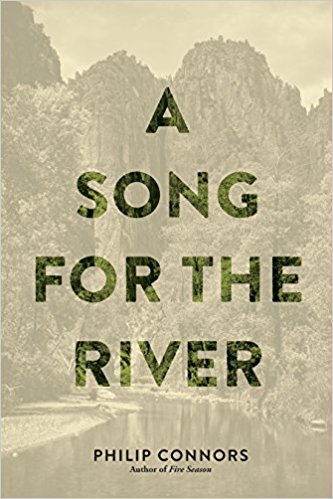
A Song for the River by Philip Connors

Today a simple repost of my review from back in June. Philip Connors’s A Song for the River was released yesterday, and you should get yourself a copy.

Connors writes,

On one quiet stretch of water I looked up at the tiered mesas above us and felt it might be true that my life was both a fire and a river, depending on the moment and the vantage from which it was viewed–and never more like a river than in moments like this.

My review, again, is here. Thank you.