The Tree and the Vine by Dola de Jong (trans. by Kristen Gehrman)

This sensitive novel illuminates women who love women in pre-World War II Holland.

Originally published in 1954, Dola de Jong’s The Tree and the Vine was a groundbreaking portrayal of lesbian lives in Holland just before the outbreak of World War II. This updated translation from the Dutch by Kristen Gehrman retains what is fresh, understated and moving in the original.

Bea, a shy office worker and the narrator of this story, keeps to herself and considers social activity a chore, until she meets Erica. Within weeks, they become roommates, and Bea is increasingly fascinated by her heedless new friend: Erica, a journalist, keeps strange hours and doesn’t seem to sleep. Her moods vacillate. Over many months, the pair becomes close, and Bea is simultaneously obsessed and resistant to her own feelings, telling herself that independence is paramount. “I could no longer live without her, and with her there was nothing but the strange existence that had been predetermined.”

As the threat of a German invasion grows, Erica gets involved with several female lovers, often in abusive relationships, while Bea plays the loyal friend always there to bail her out of trouble. On the brink of war, realizing that Erica is half Jewish and engaged in risky behaviors, Bea takes a half-step toward recognizing what they share. “She never spoke those few words again…. We’ve accepted it, each in our own way.”

The tone of The Tree and the Vine is often backward-looking and elegiac, told at a distance of years. But the immediate events of the women’s lives feel frantic: Erica rushes about, Bea panics. What is most important almost always goes unsaid.

The prose can occasionally feel a bit stilted, or involve a bit more telling than showing; but in fact what is shown, often, is not actions or expressions but Bea’s own deep feeling and anguish. The result is a love story on the brink of war in which the love never quite steps out in the open and the war remains off-stage. A sense of looming, momentous events pervades this slim novel.

In a thoughtful translator’s note, Gehrman notes linguistic peculiarities of de Jong’s original: anglicisms and words and expressions from the French, for example, which Gehrman has worked to maintain, and her delicate handling of Dutch idiom. She argues that The Tree and the Vine is not just a lesbian novel but “reflective of a broader female experience.” By turns emotional and restrained, this powerful story indeed offers valuable perspective on the human experience.


This review originally ran in the April 23, 2020 issue of Shelf Awareness for the Book Trade. To subscribe, click here.


Rating: 6 sandwiches.

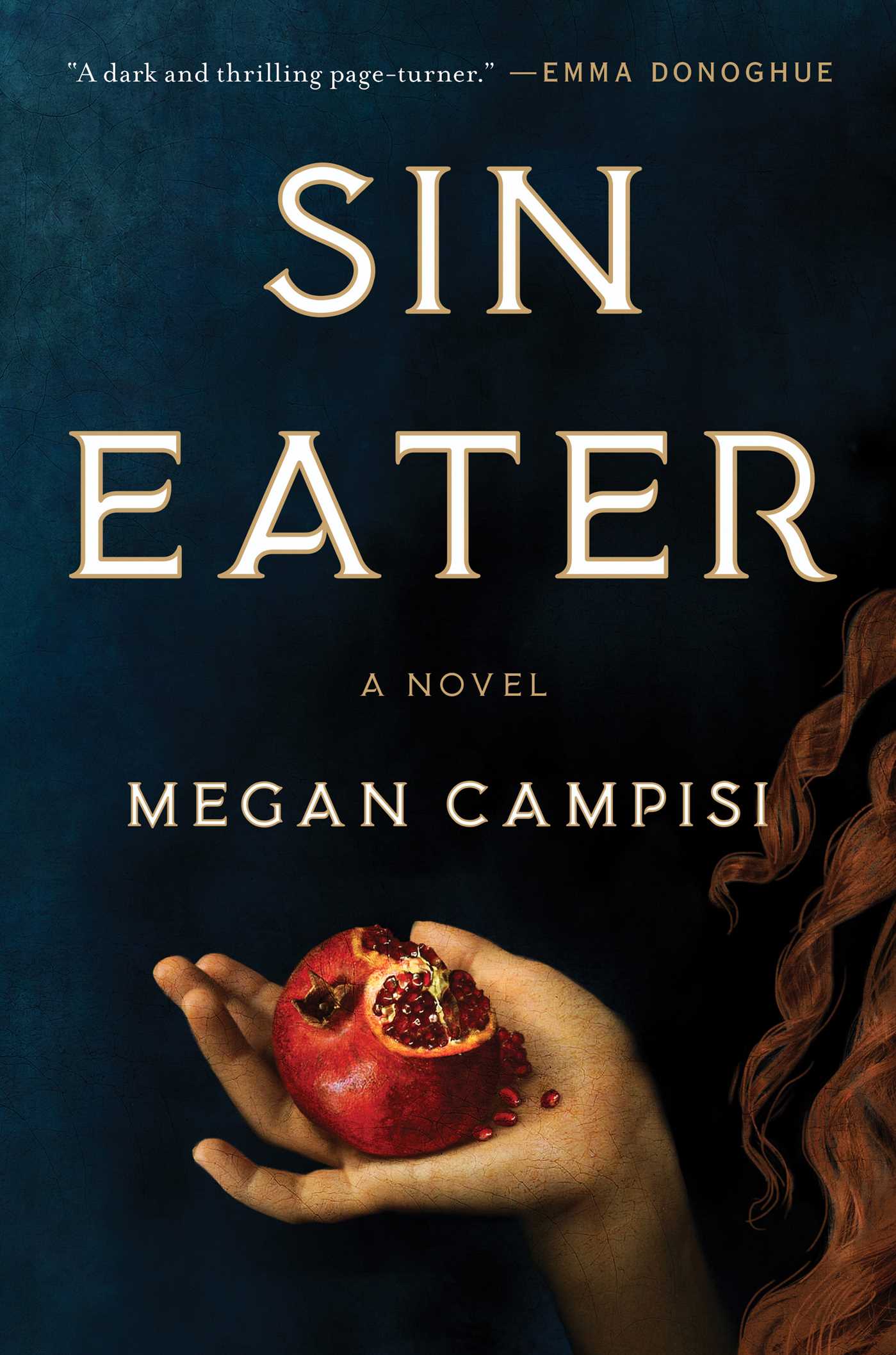
Sin Eater by Megan Campisi

In this enchanting alternate history, a Sin Eater consumes the misdeeds of others, and may have a chance to right some wrongs.

Megan Campisi’s Sin Eater opens with a 14-year-old girl named May being arrested for stealing a loaf of bread, in an alternate version of Elizabethan England. The royal family of Angland is entangled in court intrigue and murders, including of babes, to secure favored heirs to the throne, even considering marriage to the hated Northern lords. Common people work hard for a meager living; some starve unless given special permission from the queen to beg in the street. The penalties for petty crimes are high: vagrants have a hole “burned through the gristle of [the] ear with a hot iron as thick as a man’s thumb.” The penalty for a second offense is death.

In this cruel world, below even dung men and woad dyers in the social order, lies a cursed role: that of the Sin Eater. “It’s always women who eat sins, since it was Eve who first ate a sin: the Forbidden Fruit.” Marked by the iron collar locked around her neck and her tattooed tongue, she may be neither seen nor heard. She is called to deathbeds to hear the Recitation, a confession of sins; she translates these sins into foods, which the family will prepare for the Eating. By taking the sins of others into herself, the Sin Eater absolves the deceased. Every child in the street knows the basics. “Salt for pride. Mustard seed for lies. Barley for curses.” When a deer’s heart appears on a noblewoman’s coffin, the city’s older Sin Eater will not eat it, for the terrible sin it refers to was never confessed. She is tortured and killed, leaving May on her own to wrestle with a deadly royal plot.

Recently orphaned and terribly talkative, May is now forbidden to speak. Her apprenticeship as Sin Eater was both silent and short; she’s still learning which foods match the more esoteric crimes. In her favor, May discovers the strange power of the Sin Eater: afraid to touch her, people move out of her way, granting her access to prison cells and royal bedchambers. Chance introduces her to a group of fellow misfits, including a disfigured man, a leper and a roguish theater player. But she must solve the royal mystery alone and, just maybe, create a new fate for herself.

Sin Eater is a fully fleshed work of speculative fiction, abundant with the fine details of Elizabethan life and, of course, food. May is a damaged and sympathetic heroine, at once intelligent and innocent. This is an opulently imagined debut, horrific and weirdly beautiful, filled with earnest feeling as well as cruelty. Set aside time to read this engrossing novel in one go.


This review originally ran in the March 16, 2020 issue of Shelf Awareness for the Book Trade. To subscribe, click here.


Rating: 7 small loaves of bread.

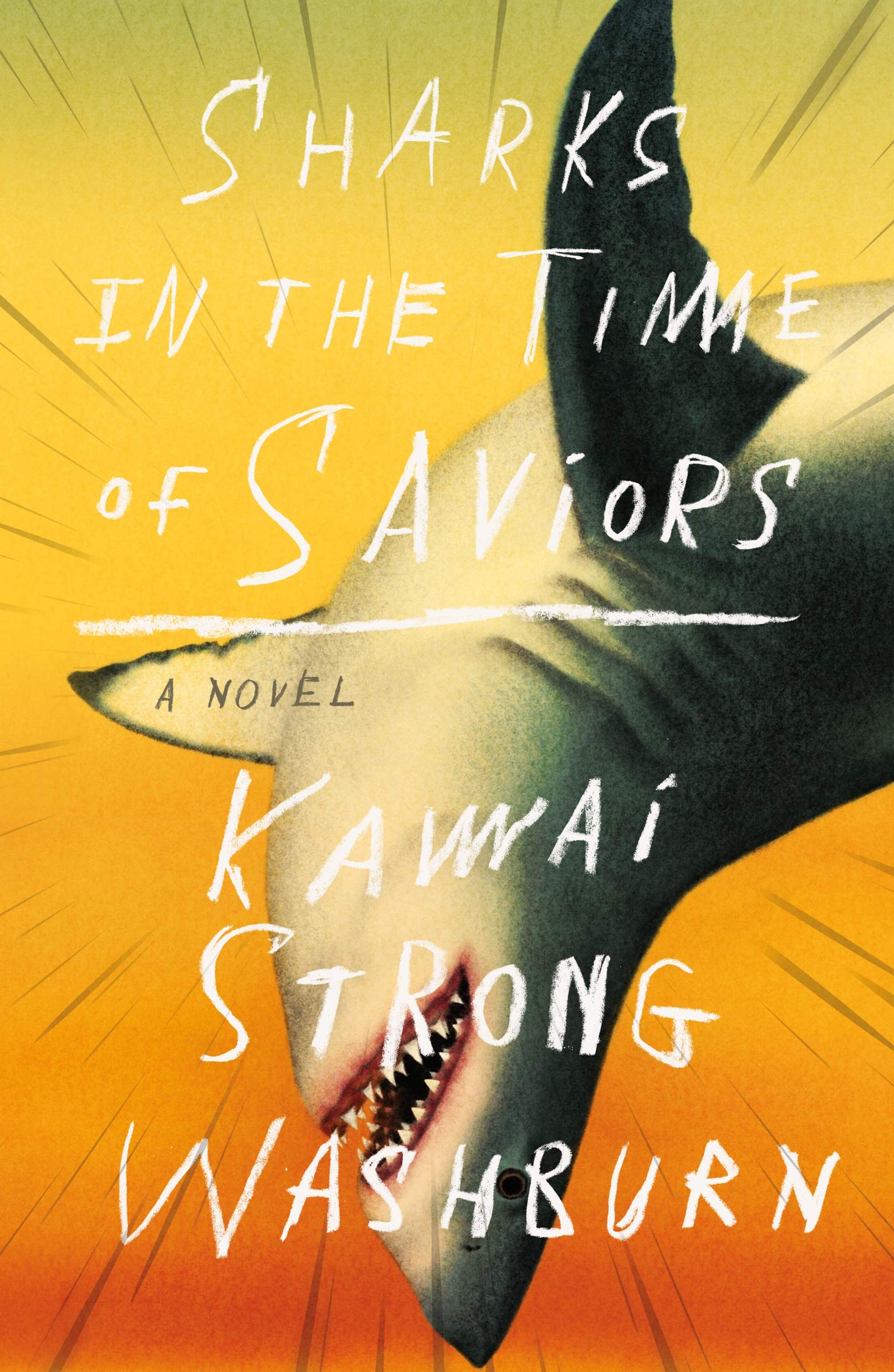
Maximum Shelf: Sharks in the Time of Saviors by Kawai Strong Washburn

Maximum Shelf is the weekly Shelf Awareness feature focusing on an upcoming title we love and believe will be a great handselling opportunity for booksellers everywhere. The features are written by our editors and reviewers and the publisher has helped support the issue.

This review was published by Shelf Awareness on March 4, 2020.


Kawai Strong Washburn’s entrancing first novel, Sharks in the Time of Saviors, spans years and crosses over to the mainland and back again, following the Flores family–Malia and her husband, Augie; their sons, Dean and Nainoa; their daughter, Kaui–and the myths and gods of Hawai’i.

In Honoka’a in 1995, Malia remembers, “The kingdom of Hawai’i had long been broken–the hot rain forests and breathing green reefs crushed under the haole commerce of beach resorts, skyscrapers–and that was when the land had begun calling.” She addresses one of her children: “When I close my eyes we’re all still alive…” and she thinks back to the night “when your father and I were naked in his pickup truck, Waipi’o Valley, and we witnessed the night marchers.”

The night marchers are the first sign of magic in a story that plays with the concept throughout. What is magic and what is imagination; what is myth and what truth; which are the forces for good? Where does modern medicine meet the inexplicable, and what alchemy results?

When middle child Nainoa (“Noa”) is seven years old, he falls overboard in the waters off Kona and is surrounded by sharks. But instead of attacking, they carry him carefully back to the boat unharmed. This event is hailed as legend, a miracle, mark of the gods; in the years that follow, Noa’s strangeness will help to bring his family partly out of the economic depression brought on by the fall of the sugarcane industry, but his gifts are dubious and unreliable. His siblings have talents of their own to offer, but are alienated by the obvious specialness of Noa, the chosen one.

The novel’s perspective shifts, chapter by chapter, from Malia’s to each of her children; Augie’s voice will be heard only at the very end of this astonishing debut. Noa’s chapters are precise and observant, Kaui’s and Dean’s variously disgruntled and colorful and more vernacular, Malia’s reveal a close attention to larger meanings. Washburn’s prose style shifts with these voices, but throughout he showcases lush description and stark contrasts. In Kaui’s voice, “We set our toes and fingertips on razored bits of stone and slipped ourselves into the veined cracks of sheer walls of limestone or granite or basalt, all of it ceilinged by a thunder-brained sky.”

All three children travel to the mainland in search of education and opportunity. In Spokane, basketball star Dean has earned a full scholarship but grapples with the pressures of school and sport. In San Diego, Kaui discovers drugs and free climbing and falls in love with a woman who does not want what Kaui wants. After Stanford, Noa moves to Portland, where he saves lives as an EMT. He has a good partner and loves her daughter, but still struggles with his gift. Perhaps his lifesaving ability is not what it seems. Despite the family’s constant focus on Noa, the chapters that cover their separate lives offer refreshing views of Kaui and Dean, who are intriguing, flawed, engaging characters unto themselves. Their parents may center on Noa, but the novel resists doing so.

Amid various crises, each adult child will cycle back to the islands they call home. Noa, as always, leads the way, but Dean and Kaui have roles to fulfill within the family and on the islands, too. Their parents’ needs are both burden and gift. Malia continues to question the apparent favor bestowed upon her middle child: “If you were more of the gods than of us–if you were something new, if you were supposed to remake the islands, if you were all the old kings moving through the body of one small boy–then of course I could not be the one to guide you to your full potential. My time as a mother was the same as those last gasping breaths of the owl.” Each character is torn by the need to belong to a place and a people, the need to rescue and be rescued, to persist.

Sharks in the Time of Saviors is a gorgeous, rich, multifaceted novel. As it shifts between the mindsets of Malia and her three children, it poses questions behind their stories, interrogates joy and love and faith and loss, rage and redemption, the price and reward of returning home. This is a story about a small number of central characters and their often sad and painful daily lives, and also about more universal struggles. It’s about past, present and future Hawai’i, including the racial tensions between native Hawai’ians and the haoles that have changed their world so much. It’s about family, hope and risk.

Memorable characters, richly evoked settings, heartbreaking realism and alluring myth combine in a magical, expertly plotted, completely absorbing novel. Washburn takes his readers into a world that is both known and entirely new.


Rating: 8 owl feathers.

Come back Monday for my interview with Kawai.

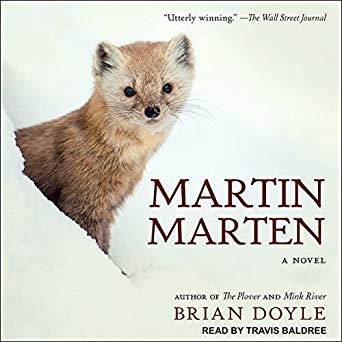
reread: Martin Marten by Brian Doyle (audio)

By coincidence, this book review was next in line when today’s date came up. But it feels perfectly appropriate for this gift-giving holiday, because Brian Doyle is a gift, and I think this novel is my favorite of his.

I have returned to my very first Brian Doyle experience with Martin Marten (originally reviewed here), because I miss him and love his work. Having enjoyed a few other audiobooks of his, I thought I’d try Travis Baldree’s narration.

It’s very good; I enjoyed the different voices for each character, from Maria to Dave to each of Dave’s parents, to Moon and Emma Jackson and Miss Moss and Mr. Douglas the trapper. I thought he preserved the sense of wonder and boundlessness that characterizes Doyle’s work. I found myself not thinking of the narration much, actually, and just living in the world of Martin Marten, and I think the disappearance of an art form’s container is often the highest compliment.

And the book is everything I remembered. As is said early in The Princess Bride, this book has everything it. “Fencing, fighting, torture, revenge, giants, monsters, chases, escapes, true love, miracles…” Well, there’s no fencing here, but there is death and birth and love and fighting and beginnings and endings and the easy connection of the two, and an un-wedding, and blizzards and springtimes and basketball and running and maps and trees and all the animals and plants and beings… Brian Doyle inspires lists like these; he writes in lists like these. He is all-encompassing, in the best and least pretentious way. For example, here is a paragraph that caught my eye this time around.

And deep mysteries too, things that no one could ever explain and in most cases no one ever knew or apprehended or discovered–a new species of snow flea mutating in a dark crevasse on Joel Palmer’s glacier; a blue bear born to two black ones but alive only for a day; a place where trees and bushes and ferns decided to intertwine and make a small green cottage complete with walls and a roof and a door; a cave with the bones of a creature eight feet tall inside; a pencil lost by Joel Palmer at nine thousand feet of elevation on the south side of the mountain, long ago encased in ice and now some twenty feet beneath the surface, waiting to be found in the year 2109 by a young woman named Yvon, who would be amazed that the pencil never wore out no matter how much she used it, as if it had patiently stored up words for two centuries; and much else, more than we could account even if this book never ended and its pages and pulses went on forever, and it was the longest book in the history of the world. Even then, it couldn’t catch more than scraps and shards of the uncountable stories on the mountain, of bird and beast, tree and thicket, fish and flea, biome and zygote. And this is not even to consider the ancient slow stories of the rocks and their long argument with the lava inside the mountain and the seething and roiling miles beneath the mountain, all the way to the innermost core of the sphere, which might be a story of metallic heat so intense that to perceive it would be your final act in this form; another mystery.

A dear friend of mine, nearing the end of her MFA study, read this book on my recommendation and sent me a message that said simply, “my prose is lifeless.” Well, it’s not, but I know what she meant: Doyle’s just jangles with life. I know he is not for everyone. The above paragraph includes a single sentence fragment that is 198 words long. He gushes. But for those of us it works for, I think it works very well.

I wish I could go to live in one of Brian Doyle’s fictional towns. Although it does snow a lot there.

If you love the natural world and are charmed by the idea of not privileging any one species (ahem, humans) over all the rest; if you are excited by the many possibilities for joy in the world, big and small; if you love life, words, all kinds of critters, and even humans; if knowledge for its own sake thrills you; if you are prone to being pleased by lists and wonder–do give the novels of Brian Doyle a try. He has made this world a far better place.


Rating: there is no reason to amend my original 10 tomatoes.

Wyoming by JP Gritton

This shadowy novel of desperate acts, brothers, friends and grudges pulls readers relentlessly down a complicated and uncertain road.


JP Gritton’s first novel, the dark and gritty Wyoming, explores themes of family, love and every kind of trouble. Luckless narrator Shelley Cooper opens his story: “I’ll tell you what happened and you can go ahead and decide.” His telling is jumbled, though, jumping through time and space, and sometimes readers may be a bit unsure of who’s responsible for his actions: Is it Shelley, or the nasty “second voice buzzing in [his] ear”?

In shards and pieces, a backdrop becomes clear. Shelley’s lost his construction job. His best friend Mike’s kid is really sick. Shelley’s wife left him some time back for the next-door neighbor and took their son with her when they moved away. Shelley has longings that he understands to be inappropriate. He hates his brother Clay with deep, visceral force, yet he must accept Clay’s offer to drive 50 pounds of marijuana down to Houston from where they live near Denver. The pay is measly–insulting, even, he decides as he drives–but Shelley needs the money. Mike needs his help.

In Houston, the exchange of drugs for money goes okay, but the rest goes south. Shelley can’t help but veer toward trouble even when he sees it for what it is. A few acts of self-sabotage later, he’s on a bus headed for Kansas City for an impromptu visit with his ex, her new husband and the son he doesn’t really know. Meanwhile, back in Montgrand, Colo., problems multiply. Shelley owes Clay a lot of money. As he turns west, he continues to do battle with “that same ugliness rising up and up inside of [him].” Readers must piece together from a fractured narrative how circumstances got this bad, and where the roots of Shelley’s love and hate begin and tangle.

Gritton writes Shelley’s voice in a vernacular readers can almost hear spoken aloud. He doesn’t talk much, but when he does, Shelley’s speech bites, and Gritton’s prose is curt but expressive. The title is a glancing reference point, since little of the novel’s action takes place in Wyoming, but it gestures toward the road map of Shelley’s undoing, which easily spans half a dozen states. It also points to the hopes, dreams and hazards on offer on the next stretch of road. The achievement of Gritton’s ill-fated protagonist lies in readers’ ambivalence: How should one feel about this man who simultaneously deserves revulsion, pity, compassion? Shelley is so determined to make an enemy of the whole world, of himself, of those he loves. Wyoming is a novel both sensitive and brutal, and impossible to turn away from.


This review originally ran in the October 28, 2019 issue of Shelf Awareness for the Book Trade. To subscribe, click here.


Rating: 7 broken televisions.

A Visit From the Goon Squad by Jennifer Egan

I was motivated to read A Visit From the Goon Squad because someone suggested it might be a good choice for the Short Fiction class I’m teaching next semester. Billed as a novel (and not particularly short at a little over 300 pages), it can however be read as a collection of linked stories, which is an interesting structure to consider.

Each chapter of this novel is told from a different point of view, so that we recognize again characters introduced glancingly several chapters earlier, and are given a different stage of the story from their eyes. There are never two perspectives given on the same events, but rather, as the character of focus shifts, so does the timeline. So we first see through the eyes of Sasha, who used to work as assistant to Bennie Salazar, founder of Sow’s Ear Records. Several chapters later, we will get Bennie’s view of the world, when Sasha is still his assistant. Later still, we ride along with Rhea, a teenaged girl whose friend group includes fellow teenager and budding musician Bennie.

These POVs are sometimes first-person but more frequently a close third person. Bennie and Sasha feel like the poles around which this story turns, although I think it could be argued in a couple of different configurations; that’s the beauty and mystery of this format, where the central character shifts. Sometimes we’re reintroduced to someone we met in a very different time of life and several chapters ago, so that we (or at least I) have to pause and think about who they hell they are. It’s disorienting, but in a pleasing way. I’m very interested in how it all works.

This shifting center is certainly the most unusual and intriguing facet of this book, I think – although it’s also the one I came looking for, so your mileage may vary. The content subject matter was interesting for me, too. The music industry is both stylish and sort of icky and corrupt; Bennie’s evolution from young punk rocker to record executive gives us plenty to think about. Couples hook up and split up, and often we see these things out of order, so that perhaps we are not as taken in by the romance as we might have been. Because of the ever-shifting character focus, it can be a little hard to connect with one character as deeply as might be satisfying – at least, that’s the experience we expect from novels, I think. I feel more like I’m peeking in here and there, as voyeur, and less like I’m getting to know someone. Amazon reviewers spoke of an intellectual rather than an emotional connection, and range from “aimless and meandering” to “best read in twenty years,” so there you go. Opinions. This book also won a Pulitzer, so it’s certainly working for some.

I am intrigued by the challenge of this format. It took me maybe two chapters before I was really hooked in, and then I didn’t want to stop reading. But what I feel is less I-love-this-book and more fascination with what is different about it.

I can’t miss mentioning the chapter that is told entirely in Powerpoint slides: “Great Rock and Roll Pauses,” by Alison Blake, Sasha’s teenage daughter. The title refers to, yes, pauses in classic rock songs – a topic that Alison’s brother Lincoln is obsessed with. Alison is trying to explain and characterize her whole family, with maximum exasperation for her mother, a certain sympathy for her father, and a special soft spot for her brother. There is an insinuation that he is on the autism spectrum; rock and roll pauses are his way of trying to communicate. It’s a good example of the strangeness and sweetness of the whole novel. For a little of that flavor, you can watch a video of the Powerpoint here (sound on, please).

“Time is a goon,” says one aging rocker, and perhaps that’s what this novel is most about: time. I tell my students not to ignore titles, that they can give us hints as to how to read a text. This one’s a bit circuitous and opaque; you have to read well into the book to find that brief mention of time as a goon. But that’s another job a title can perform: it can tell us where to pay attention. By page 127, our ears are perked for this explanation of the title. It returns at page 332, so that just these two mentions drive the title home for the attentive reader, which now serves as a key to the whole. Time. And where does time matter more than in a 3-minute song that hopes to make millions, or change lives? Where more than in the cruel entertainment industry, where last year’s star is this year’s wash-up?

I am on the fence about teaching this book next semester, but it sure would make an adventure, wouldn’t it?

A Visit From the Goon Squad is a smart, subtle, fascinating exploration of the ways in which stories work and the ways in which music affects us. I do recommend it.


Rating: 7 seconds.

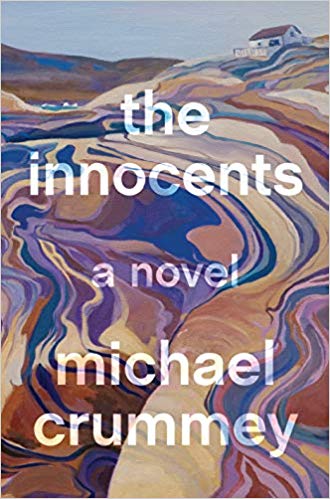
The Innocents by Michael Crummey

Inventive, dark, pathos-evoking, this sensitive novel of survival and discovery asks just how far innocence stretches in a remote cove of Newfoundland.

“They were left alone in the cove then…. A body must bear what can’t be helped.” Michael Crummey (Sweetland; Galore) rivets and flays his readers with The Innocents, a novel of innocence and hardship and what is intrinsically human.

“They were still youngsters that winter,” begins the story, in the season when siblings Evered and Ada lose their family: first their baby sister dies, then their mother and then their father. Baby Martha is buried. Their father takes their mother out to sea, bringing back her dress for young Ada: “You’ll have need of these,” he tells her, but she “held her hands behind her back and shook her head fiercely.” When their father dies, Evered takes him out to sea, as he had their mother. When Evered returns, spent, his hair has turned stark white: “As the driven snow, their mother would have said of it.”

Following these events of just the first five pages, the two children fumble through the tasks their parents had struggled to complete. Evered fishes in a small boat in the Newfoundland cove that is all they have ever known. Ada gardens, after both children haul seaweed and caplin (small fish), turning them stinking into the scant soil. They pick berries in the fall, collect caplin in the spring, fish for cod all summer and salt it throughout the season. Every winter, the weather forces them to rebuild the stage at which they clean and salt fish. Twice a year they expect a visit from The Hope, the schooner that rules their lives, which their father called The Abandon Hope All Ye. This vessel brings flour, peas, salt meat, tea, molasses and eventually rum, on credit against salt cod. The first time Evered must row out to meet the schooner alone is the first time he has seen a man not his father. Evered does not know his age, but the beadle aboard The Hope tells him he is 11. Ada is younger.

Against all odds, and to the continuing surprise of the crew of The Hope, the youngsters survive that first year, and another, and on. They learn best practices, and the few rare visitors teach them new skills: how to fire their father’s old flintlock, enabling Evered to shoot fowl; how to trap fox, otter, beaver for their pelts and precious meat. They muddle through their own changing bodies and desires, with disturbing if foreseeable results. They eventually hear that others now call the place they live Orphan Cove.

A gifted writer, Crummey shows imagination and compassion for his young protagonists, and a care for the oddities of language specific to time and place: the grieving children drink “bare-legged tea,” which in Newfoundland is tea without saucer, sugar or accompaniment. The Innocents is deeply pained and enchanting, full of small joys and victories as well as the pressing multitude of aches and challenges that mere living offers to two babes alone in this fierce environment. This searing novel will keep readers engrossed in its harsh world long after its hopeful conclusion.


This review originally ran in the October 18, 2019 issue of Shelf Awareness for the Book Trade. To subscribe, click here.


Rating: 8 wish rocks.

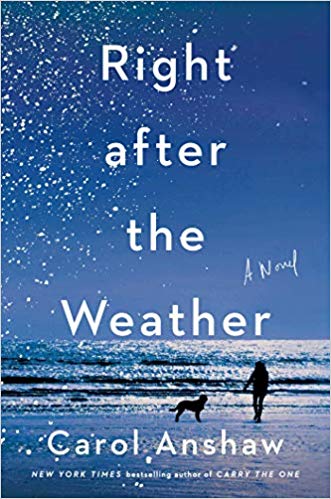
Right After the Weather by Carol Anshaw

This novel with style, momentum and delightfully odd characters hides a surprise emotional wallop in its middle.

Carol Anshaw (Carry the One) crafts a masterpiece of characterization and pacing with Right After the Weather, a novel of surprises. Cate, a set designer in Chicago, is a bit bumbling and hapless, but charming. A cast of similarly weird, struggling but lovable friends surrounds her. Her ex-husband, Graham, has moved in following his latest divorce, with a perfectly wonderful dog and with all his conspiracy theories, agoraphobia, fancy mail-order meals and “hemp and unbleached cotton, drawstring closures.” Her best friend Neale is a comfort, with her wholesome do-it-yourself skills and dear son. Cate’s new girlfriend, Maureen, appears to be just what she’s been looking for–financially secure, “encyclopedic in matters of fixing things”–but there’s something a bit off. Cate’s former lover Dana is the opposite: the wrong thing, but entirely, overwhelmingly magnetic. Cate’s and Neale’s parents are each complicated and intriguing on their own.

Anshaw weaves a delightful tapestry, often laugh-out-loud hilarious, as Cate and the rest fumble through their lives. Halfway through the story, however, the tone changes abruptly when trauma strikes, and Cate must learn to navigate a new version of herself. Right After the Weather is smart and filled with the sort of evocative details Cate infuses into the sets she designs. It is compelling: once invested, the reader is hard pressed to turn away (so schedule a free evening for this one!). And it is populated by charisma and natural stars.


This review originally ran in the October 4, 2019 issue of Shelf Awareness for Readers. To subscribe, click here, and you’ll receive two issues per week of book reviews and other bookish news.


Rating: 8 fun-sized Snickers.

in a surprising departure: television

This post is long overdue, I guess, but it occurred to me rather late in the game to tell you about television series. During the van trip, strangely, I got into watching TV series that I could get through Amazon Prime.

This blog began, back in 2011, as a way for me to keep track of my reading for my own sake. I’m deeply grateful that other people read it and appreciate it, too. But on some level it remains a record I keep for myself, and so here we are. I wanted to remember what shows I’ve watched, and which ones I’ve especially liked.

Bones

The one that got me completely hooked is Bones, a mystery-per-episode (or often several) crime-solving drama series based in the fictional Jeffersonian Institute and starring a world-famous forensic anthropologist. It’s fairly silly, and relies too heavily on the sexual tension of a certain couple that we wait way too many seasons to see actually hook up. But I was thoroughly, entirely taken in; I watched all 246 episodes with relish and and someday, if laid up for months with nothing to do, I may watch them again. It’s goofy but I love it. (Based on the Temperance Brennan series of novels by Kathy Reichs, which I have not read, so there’s another project.)

Mystery series based on book series: you will note a theme. Also, lots of Brits.

I was quite impressed by Bosch, based on Michael Connelly‘s novels starring LAPD Detective Hieronymus “Harry” Bosch, which I have loved since I was a teenager. They’ve done a good job of capturing the title character, and the soundtrack (based on Harry’s love of jazz) is quite good. I’ll be on the lookout for future seasons; well done, Amazon.

Jackson Brodie of Case Histories

Case Histories is based on the novels of Kate Atkinson which star Jackson Brodie. Set and filmed in Edinburgh, this series features an excellent soundtrack of female country singer-songwriters (seriously, I would follow this show just for the music); Edinburgh itself is compelling and beautiful, but it’s also easy to fall for Jackson himself, who is a runner as well as a detective whose life is filled with ill-conceived sexual liaisons, a delightfully salty assistant, and the cutest, most precocious, wittiest young daughter imaginable, as well as interesting cases. Give me more Case Histories! And these are books I’ll need to read, obviously. (It’s always nice to get a two-for-one like that.)

Unforgotten is a modern London-set series which I appreciate for its two lead detectives, DCI Cassie Stuart and DI Sunny Khan. They are a likeable pair whose lives feel realistically imperfect, something not always true of our stars. Not everyone on this show is supermodel-beautiful, which again, is nice for reality’s sake. The narrative structure of each episode is interesting and a bit unusual: we switch around between the lives of various characters, including Cassie and Sunny but also including a number of others who at first have no apparent connection to the case at hand – although, of course, they will. I’ll keep watching this one.

Seattle PD’s Sarah Linden and Stephen Holder of The Killing

The Killing is based on a Danish series; this one is set in Seattle. It may seem formulaic at this point that there our two lead detectives are a man and a woman with perhaps a hint of sexual tension? but it still feels original here; I like these two and would continue with them, given the chance.

DCI Banks is another British mystery series, set in the more-or-less present, and one that kept me occupied for a time, but my rating would be only so-so. I found the characters I was meant to identify with only mildly appealing; I was often frustrated with them, and (slight spoiler) killing off one of them only served to engage me less. Meh. (Maybe it was just the one guy’s voice as he plaintively cries “Annie!” over and over that got to me.)

The ABC Murders is based on Agatha Christie’s novel of the same name, and stars John Malkovich as Hercule Poirot. I’m sure he did a fine job, but I was raised on David Suchet’s Poirot and it is too late for me to convert to a new version. While I suspect I would still enjoy reading Christie (a theory I should test!), this onscreen version dragged on. It felt dated by unusually slow pacing, but was made in 2018. Another series that was okay but not one I’m wild about.

DC Endeavor Morse and DCI Fred Thursday of Endeavor

Set in 1960s Oxford, Endeavor has my heart. I’m just in the middle of this one now, and I’m devoted to the title character, DC Morse (first name Endeavor. Which is weird, but not as weird as Hieronymus Bosch). This serves as a prequel to the long-running 1980s-90s series Inspector Morse; I have not seen that one. DC Morse is a prodigy within the department, but his odd methods, failure to bow to authority, and general nerdiness don’t play well with his superintendent. He does have a good relationship with DI Fred Thursday, and that relationship’s development seems to be part of the arc of the series overall. I’m having a good time with this one.

A few outliers are not mysteries.

Catastrophe is a comedy about a several-night stand between a visiting American businessman and an Irish primary school teacher living in London which results in a pregnancy and, surprisingly, marriage. A second child follows the first as the couple turns out to quite like each other, but (yes) catastrophes follow one upon another. Silly but good fun.

My Mother and Other Strangers caught me with its name, and this Masterpiece Theatre production has a charming, evocative, specific setting in a small Irish village during World War II. American soldiers are stationed in a village that does not appreciate their presence. The series is narrated (minimally) by an old man, years after the fact; he is the small son of the mother in question, and this is the story of his family (mom, dad, two kids) firstly, and of the village. I love the details of time and place, the sense of a small specific setting and its place in much larger historic events. The backward-looking perspective has elements of elegy and of nostalgia, and that mystery of the mother–she is present, but enigmatic–is compelling.
The Durrells in Corfu

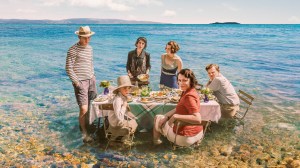
And then The Durrells in Corfu, an absolutely addictive series based on three memoirs by Gerald Durrell: My Family and Other Animals, Birds, Beasts, and Relatives, and The Garden of the Gods. (More books to read! If they’re half as loveable as this series, I’m in.) British widow Louisa Durrell decides all of a sudden to move her four children from Bournemouth to the Greek island of Corfu, where the financially strained family will have a better chance of scraping by. Antics ensue. Corfu has no electricity, there are animals everywhere, and the Greeks vary in their willingness to accept strangers. But delightful characters abound. The four Durrell kids (ranging from teens to early twenties) are a hoot; the youngest (Gerald himself) adopts every creature he can put his hands on. I would follow this series anywhere.

Old news, but in the interest of completeness: I am up to date on The Walking Dead which I have long loved, although yes, they frustrate me more every season. I think I’m in to the end, but the producers seem determined to test the bounds of my love. And I’ve seen all of Breaking Bad, but had mixed feelings. I found Walter White a little less ambiguous than I think he was intended to be – I didn’t like him enough (even within the bounds of ambivalence, and I do love ambivalence) to be entirely patient with the extended length of his torture of the more-loveable Jesse.

What excellent series am I missing that would fit into this list?

Galley Love of the Week: The Book of V. by Anna Solomon

Be among the first to read The Book of V. by Anna Solomon, a Shelf Awareness Galley Love of the Week. Presented on Mondays, GLOW selects books that have not yet been discovered by booksellers and librarians, identifying the ones that will be important hand-selling titles in a future season.

Anna Solomon (The Little Bride; Leaving Lucy Pear) offers a scalding, gripping story of three intertwined lives in The Book of V. The biblical Queen Esther, a 1970s Rhode Island senator’s wife and a former academic stay-at-home mom in 2000s Brooklyn have more in common than one might think. Holt editor-in-chief Serena Jones comments on “how similar–though they are actually separated by centuries–these characters’ stories feel, and how they converge and clash over the same themes. Agent Julie Barer observed how women’s lives have–and really more profoundly, have not–changed since biblical times.” Solomon’s storytelling is seamless and deeply engaging; readers will be living with Esther, Vee and Lily long after closing these pages.

Galley Love of the Week, or GLOW, is a feature from Shelf Awareness. View this edition here.