A Visit From the Goon Squad by Jennifer Egan

I was motivated to read A Visit From the Goon Squad because someone suggested it might be a good choice for the Short Fiction class I’m teaching next semester. Billed as a novel (and not particularly short at a little over 300 pages), it can however be read as a collection of linked stories, which is an interesting structure to consider.

Each chapter of this novel is told from a different point of view, so that we recognize again characters introduced glancingly several chapters earlier, and are given a different stage of the story from their eyes. There are never two perspectives given on the same events, but rather, as the character of focus shifts, so does the timeline. So we first see through the eyes of Sasha, who used to work as assistant to Bennie Salazar, founder of Sow’s Ear Records. Several chapters later, we will get Bennie’s view of the world, when Sasha is still his assistant. Later still, we ride along with Rhea, a teenaged girl whose friend group includes fellow teenager and budding musician Bennie.

These POVs are sometimes first-person but more frequently a close third person. Bennie and Sasha feel like the poles around which this story turns, although I think it could be argued in a couple of different configurations; that’s the beauty and mystery of this format, where the central character shifts. Sometimes we’re reintroduced to someone we met in a very different time of life and several chapters ago, so that we (or at least I) have to pause and think about who they hell they are. It’s disorienting, but in a pleasing way. I’m very interested in how it all works.

This shifting center is certainly the most unusual and intriguing facet of this book, I think – although it’s also the one I came looking for, so your mileage may vary. The content subject matter was interesting for me, too. The music industry is both stylish and sort of icky and corrupt; Bennie’s evolution from young punk rocker to record executive gives us plenty to think about. Couples hook up and split up, and often we see these things out of order, so that perhaps we are not as taken in by the romance as we might have been. Because of the ever-shifting character focus, it can be a little hard to connect with one character as deeply as might be satisfying – at least, that’s the experience we expect from novels, I think. I feel more like I’m peeking in here and there, as voyeur, and less like I’m getting to know someone. Amazon reviewers spoke of an intellectual rather than an emotional connection, and range from “aimless and meandering” to “best read in twenty years,” so there you go. Opinions. This book also won a Pulitzer, so it’s certainly working for some.

I am intrigued by the challenge of this format. It took me maybe two chapters before I was really hooked in, and then I didn’t want to stop reading. But what I feel is less I-love-this-book and more fascination with what is different about it.

I can’t miss mentioning the chapter that is told entirely in Powerpoint slides: “Great Rock and Roll Pauses,” by Alison Blake, Sasha’s teenage daughter. The title refers to, yes, pauses in classic rock songs – a topic that Alison’s brother Lincoln is obsessed with. Alison is trying to explain and characterize her whole family, with maximum exasperation for her mother, a certain sympathy for her father, and a special soft spot for her brother. There is an insinuation that he is on the autism spectrum; rock and roll pauses are his way of trying to communicate. It’s a good example of the strangeness and sweetness of the whole novel. For a little of that flavor, you can watch a video of the Powerpoint here (sound on, please).

“Time is a goon,” says one aging rocker, and perhaps that’s what this novel is most about: time. I tell my students not to ignore titles, that they can give us hints as to how to read a text. This one’s a bit circuitous and opaque; you have to read well into the book to find that brief mention of time as a goon. But that’s another job a title can perform: it can tell us where to pay attention. By page 127, our ears are perked for this explanation of the title. It returns at page 332, so that just these two mentions drive the title home for the attentive reader, which now serves as a key to the whole. Time. And where does time matter more than in a 3-minute song that hopes to make millions, or change lives? Where more than in the cruel entertainment industry, where last year’s star is this year’s wash-up?

I am on the fence about teaching this book next semester, but it sure would make an adventure, wouldn’t it?

A Visit From the Goon Squad is a smart, subtle, fascinating exploration of the ways in which stories work and the ways in which music affects us. I do recommend it.


Rating: 7 seconds.

The Innocents by Michael Crummey

Inventive, dark, pathos-evoking, this sensitive novel of survival and discovery asks just how far innocence stretches in a remote cove of Newfoundland.

“They were left alone in the cove then…. A body must bear what can’t be helped.” Michael Crummey (Sweetland; Galore) rivets and flays his readers with The Innocents, a novel of innocence and hardship and what is intrinsically human.

“They were still youngsters that winter,” begins the story, in the season when siblings Evered and Ada lose their family: first their baby sister dies, then their mother and then their father. Baby Martha is buried. Their father takes their mother out to sea, bringing back her dress for young Ada: “You’ll have need of these,” he tells her, but she “held her hands behind her back and shook her head fiercely.” When their father dies, Evered takes him out to sea, as he had their mother. When Evered returns, spent, his hair has turned stark white: “As the driven snow, their mother would have said of it.”

Following these events of just the first five pages, the two children fumble through the tasks their parents had struggled to complete. Evered fishes in a small boat in the Newfoundland cove that is all they have ever known. Ada gardens, after both children haul seaweed and caplin (small fish), turning them stinking into the scant soil. They pick berries in the fall, collect caplin in the spring, fish for cod all summer and salt it throughout the season. Every winter, the weather forces them to rebuild the stage at which they clean and salt fish. Twice a year they expect a visit from The Hope, the schooner that rules their lives, which their father called The Abandon Hope All Ye. This vessel brings flour, peas, salt meat, tea, molasses and eventually rum, on credit against salt cod. The first time Evered must row out to meet the schooner alone is the first time he has seen a man not his father. Evered does not know his age, but the beadle aboard The Hope tells him he is 11. Ada is younger.

Against all odds, and to the continuing surprise of the crew of The Hope, the youngsters survive that first year, and another, and on. They learn best practices, and the few rare visitors teach them new skills: how to fire their father’s old flintlock, enabling Evered to shoot fowl; how to trap fox, otter, beaver for their pelts and precious meat. They muddle through their own changing bodies and desires, with disturbing if foreseeable results. They eventually hear that others now call the place they live Orphan Cove.

A gifted writer, Crummey shows imagination and compassion for his young protagonists, and a care for the oddities of language specific to time and place: the grieving children drink “bare-legged tea,” which in Newfoundland is tea without saucer, sugar or accompaniment. The Innocents is deeply pained and enchanting, full of small joys and victories as well as the pressing multitude of aches and challenges that mere living offers to two babes alone in this fierce environment. This searing novel will keep readers engrossed in its harsh world long after its hopeful conclusion.


This review originally ran in the October 18, 2019 issue of Shelf Awareness for the Book Trade. To subscribe, click here.


Rating: 8 wish rocks.

Right After the Weather by Carol Anshaw

This novel with style, momentum and delightfully odd characters hides a surprise emotional wallop in its middle.

Carol Anshaw (Carry the One) crafts a masterpiece of characterization and pacing with Right After the Weather, a novel of surprises. Cate, a set designer in Chicago, is a bit bumbling and hapless, but charming. A cast of similarly weird, struggling but lovable friends surrounds her. Her ex-husband, Graham, has moved in following his latest divorce, with a perfectly wonderful dog and with all his conspiracy theories, agoraphobia, fancy mail-order meals and “hemp and unbleached cotton, drawstring closures.” Her best friend Neale is a comfort, with her wholesome do-it-yourself skills and dear son. Cate’s new girlfriend, Maureen, appears to be just what she’s been looking for–financially secure, “encyclopedic in matters of fixing things”–but there’s something a bit off. Cate’s former lover Dana is the opposite: the wrong thing, but entirely, overwhelmingly magnetic. Cate’s and Neale’s parents are each complicated and intriguing on their own.

Anshaw weaves a delightful tapestry, often laugh-out-loud hilarious, as Cate and the rest fumble through their lives. Halfway through the story, however, the tone changes abruptly when trauma strikes, and Cate must learn to navigate a new version of herself. Right After the Weather is smart and filled with the sort of evocative details Cate infuses into the sets she designs. It is compelling: once invested, the reader is hard pressed to turn away (so schedule a free evening for this one!). And it is populated by charisma and natural stars.


This review originally ran in the October 4, 2019 issue of Shelf Awareness for Readers. To subscribe, click here, and you’ll receive two issues per week of book reviews and other bookish news.


Rating: 8 fun-sized Snickers.

in a surprising departure: television

This post is long overdue, I guess, but it occurred to me rather late in the game to tell you about television series. During the van trip, strangely, I got into watching TV series that I could get through Amazon Prime.

This blog began, back in 2011, as a way for me to keep track of my reading for my own sake. I’m deeply grateful that other people read it and appreciate it, too. But on some level it remains a record I keep for myself, and so here we are. I wanted to remember what shows I’ve watched, and which ones I’ve especially liked.

Bones

The one that got me completely hooked is Bones, a mystery-per-episode (or often several) crime-solving drama series based in the fictional Jeffersonian Institute and starring a world-famous forensic anthropologist. It’s fairly silly, and relies too heavily on the sexual tension of a certain couple that we wait way too many seasons to see actually hook up. But I was thoroughly, entirely taken in; I watched all 246 episodes with relish and and someday, if laid up for months with nothing to do, I may watch them again. It’s goofy but I love it. (Based on the Temperance Brennan series of novels by Kathy Reichs, which I have not read, so there’s another project.)

Mystery series based on book series: you will note a theme. Also, lots of Brits.

I was quite impressed by Bosch, based on Michael Connelly‘s novels starring LAPD Detective Hieronymus “Harry” Bosch, which I have loved since I was a teenager. They’ve done a good job of capturing the title character, and the soundtrack (based on Harry’s love of jazz) is quite good. I’ll be on the lookout for future seasons; well done, Amazon.

Jackson Brodie of Case Histories

Case Histories is based on the novels of Kate Atkinson which star Jackson Brodie. Set and filmed in Edinburgh, this series features an excellent soundtrack of female country singer-songwriters (seriously, I would follow this show just for the music); Edinburgh itself is compelling and beautiful, but it’s also easy to fall for Jackson himself, who is a runner as well as a detective whose life is filled with ill-conceived sexual liaisons, a delightfully salty assistant, and the cutest, most precocious, wittiest young daughter imaginable, as well as interesting cases. Give me more Case Histories! And these are books I’ll need to read, obviously. (It’s always nice to get a two-for-one like that.)

Unforgotten is a modern London-set series which I appreciate for its two lead detectives, DCI Cassie Stuart and DI Sunny Khan. They are a likeable pair whose lives feel realistically imperfect, something not always true of our stars. Not everyone on this show is supermodel-beautiful, which again, is nice for reality’s sake. The narrative structure of each episode is interesting and a bit unusual: we switch around between the lives of various characters, including Cassie and Sunny but also including a number of others who at first have no apparent connection to the case at hand – although, of course, they will. I’ll keep watching this one.

Seattle PD’s Sarah Linden and Stephen Holder of The Killing

The Killing is based on a Danish series; this one is set in Seattle. It may seem formulaic at this point that there our two lead detectives are a man and a woman with perhaps a hint of sexual tension? but it still feels original here; I like these two and would continue with them, given the chance.

DCI Banks is another British mystery series, set in the more-or-less present, and one that kept me occupied for a time, but my rating would be only so-so. I found the characters I was meant to identify with only mildly appealing; I was often frustrated with them, and (slight spoiler) killing off one of them only served to engage me less. Meh. (Maybe it was just the one guy’s voice as he plaintively cries “Annie!” over and over that got to me.)

The ABC Murders is based on Agatha Christie’s novel of the same name, and stars John Malkovich as Hercule Poirot. I’m sure he did a fine job, but I was raised on David Suchet’s Poirot and it is too late for me to convert to a new version. While I suspect I would still enjoy reading Christie (a theory I should test!), this onscreen version dragged on. It felt dated by unusually slow pacing, but was made in 2018. Another series that was okay but not one I’m wild about.

DC Endeavor Morse and DCI Fred Thursday of Endeavor

Set in 1960s Oxford, Endeavor has my heart. I’m just in the middle of this one now, and I’m devoted to the title character, DC Morse (first name Endeavor. Which is weird, but not as weird as Hieronymus Bosch). This serves as a prequel to the long-running 1980s-90s series Inspector Morse; I have not seen that one. DC Morse is a prodigy within the department, but his odd methods, failure to bow to authority, and general nerdiness don’t play well with his superintendent. He does have a good relationship with DI Fred Thursday, and that relationship’s development seems to be part of the arc of the series overall. I’m having a good time with this one.

A few outliers are not mysteries.

Catastrophe is a comedy about a several-night stand between a visiting American businessman and an Irish primary school teacher living in London which results in a pregnancy and, surprisingly, marriage. A second child follows the first as the couple turns out to quite like each other, but (yes) catastrophes follow one upon another. Silly but good fun.

My Mother and Other Strangers caught me with its name, and this Masterpiece Theatre production has a charming, evocative, specific setting in a small Irish village during World War II. American soldiers are stationed in a village that does not appreciate their presence. The series is narrated (minimally) by an old man, years after the fact; he is the small son of the mother in question, and this is the story of his family (mom, dad, two kids) firstly, and of the village. I love the details of time and place, the sense of a small specific setting and its place in much larger historic events. The backward-looking perspective has elements of elegy and of nostalgia, and that mystery of the mother–she is present, but enigmatic–is compelling.

The Durrells in Corfu

And then The Durrells in Corfu, an absolutely addictive series based on three memoirs by Gerald Durrell: My Family and Other Animals, Birds, Beasts, and Relatives, and The Garden of the Gods. (More books to read! If they’re half as loveable as this series, I’m in.) British widow Louisa Durrell decides all of a sudden to move her four children from Bournemouth to the Greek island of Corfu, where the financially strained family will have a better chance of scraping by. Antics ensue. Corfu has no electricity, there are animals everywhere, and the Greeks vary in their willingness to accept strangers. But delightful characters abound. The four Durrell kids (ranging from teens to early twenties) are a hoot; the youngest (Gerald himself) adopts every creature he can put his hands on. I would follow this series anywhere.

Old news, but in the interest of completeness: I am up to date on The Walking Dead which I have long loved, although yes, they frustrate me more every season. I think I’m in to the end, but the producers seem determined to test the bounds of my love. And I’ve seen all of Breaking Bad, but had mixed feelings. I found Walter White a little less ambiguous than I think he was intended to be – I didn’t like him enough (even within the bounds of ambivalence, and I do love ambivalence) to be entirely patient with the extended length of his torture of the more-loveable Jesse.

What excellent series am I missing that would fit into this list?

Galley Love of the Week: The Book of V. by Anna Solomon

Be among the first to read The Book of V. by Anna Solomon, a Shelf Awareness Galley Love of the Week. Presented on Mondays, GLOW selects books that have not yet been discovered by booksellers and librarians, identifying the ones that will be important hand-selling titles in a future season.

Anna Solomon (The Little Bride; Leaving Lucy Pear) offers a scalding, gripping story of three intertwined lives in The Book of V. The biblical Queen Esther, a 1970s Rhode Island senator’s wife and a former academic stay-at-home mom in 2000s Brooklyn have more in common than one might think. Holt editor-in-chief Serena Jones comments on “how similar–though they are actually separated by centuries–these characters’ stories feel, and how they converge and clash over the same themes. Agent Julie Barer observed how women’s lives have–and really more profoundly, have not–changed since biblical times.” Solomon’s storytelling is seamless and deeply engaging; readers will be living with Esther, Vee and Lily long after closing these pages.

Galley Love of the Week, or GLOW, is a feature from Shelf Awareness. View this edition here.

Good News by Edward Abbey

It has been too long since I got into some Ed Abbey. Good News follows The Brave Cowboy, in that it spends a little more time with old Jack Burns. This novel takes place in and around Phoenix, in a near future when political, economic, and other social systems have collapsed, leaving bands of people and individuals to fend for themselves. In “the city,” that takes the form of an army run by a nasty fascist leader known as The Chief. Guess how Jack Burns and his friends feel about this.

In the opening pages, Burns is accompanied by a Harvard-educated Hopi shaman named Sam. They will join up with a young man named Art, angry over the murder of his family and theft of their land (a la Fire on the Mountain), and eventually a beautiful barmaid. In the city, a small band of guerrilla resistance fighters, apparently largely made up of liberals from the university in town, harasses The Chief’s forces. It’s a very good-versus-evil story, without much interest in nuance. In classic Abbey style, the good guys indulge in a little fun sex and lots of good-natured shit-talking.

Some have called this a science-fiction novel, but I don’t agree. It’s set in the future (call it a not-too-distant future when this book was published in 1980; it feels quite like near future now, to some of us), but that does not sci-fi make. There’s no made-up technology to speak of. No, I’d call this a wacky Abbey satirical Western, maybe a bit picaresque. It speaks in absolutes. I was especially captivated by a four-and-a-half-page monologue by a Captain in The Chief’s army, rhapsodizing the past world she calls “the golden age.” Electricity, cars, neon signs, travel, sports, traffic, food, wine, a pill for everything, gadgets and televisions everywhere you looked… “You could drive your car anywhere. Anywhere! We had drive-in movies, drive-in banks, drive-in liquor stores, drive-in eateries, yes, my dear, eateries, charming term, we had eateries galore, people were always eating, eating, eating, oh it was gorgeous… the quickie marriage and the quickie divorce… there was always another partner waiting, by the pool, back at the condominium.” I can just imagine what fun Abbey had writing these pages.

Critics and readers generally agree that this is one of Abbey’s lesser novels. Kirkus panned it, cutely calling it “very small beer.” And I do find it to be a little less thrilling than some of the other very fine work he’s done, but that’s not the same as saying this is not a good book. I was at every point entertained; the pages kept turning; and for those of us who love and laugh along with Abbey, this is classic stuff, easily appreciated. Maybe that reviewer’s feeling that “[Abbey]’s farcical skills show considerable signs of wear and tear” and “the 1960s-ish attitudes have become shufflingly automatic” were sentiments of the moment; and, more likely, that reviewer was not among Abbey’s audience, not a sympathizer. Fair enough. Everything is not for everyone. I did find one reviewer who calls this book his favorite of Abbey’s. To each her own.

For those of us grinning at Abbey’s strange and curmudgeonly values and sense of humor, Good News is a worthwhile piece of the corpus. I was reminded of The Stand, The Walking Dead, and the Dark Tower series (especially as The Chief operates from a Tower that dominates the landscape and serves as symbolic). There’s also a little Escape From New York in the fantastical zaniness. Again, if you’ve bought into Abbey’s world, I absolutely recommend this one – for one thing, don’t you want to know what becomes of Jack Burns?? If you haven’t, give this a try; just don’t take it too seriously. Or maybe take it deathly seriously as a glimpse at our future. Eye of the beholder…


Rating: 7 piano tunes.

reread: Mink River by Brian Doyle (audio)

My father was right to recommend this reread (re-listen) after finishing The Plover. I didn’t even necessarily remember Declan, hero of the latter novel, from Mink River. And while he was definitely present here, and a colorful character, and recognizable from his later role, I was struck by the knowledge that there were many such colorful characters, whose lives might have been pursued in a sequel. And I was struck with grief all over again that we have lost the brilliant, generous, loving, exuberant voice of Brian Doyle too soon from this world. I wanted him to write so many more books.

He was still living when I read (listened to) this book the first time. This time, I felt saddened at many turns, ironically, in appreciating the delightful high spirits and joy and wisdom in his every line. Gosh, but I’m devastated at this loss, all over again and over and over.

But the book itself: still a wonder and a joy to experience. I fell in again with the inhabitants of Neawanaka, particularly the families of Worried Man and Maplehead and Cedar, No Horses and Owen and Daniel; Declan and Grace, of course; and others: Nicholas, Michael and Sarah, and the budding romance (as I see it) between Stella and the doctor. I ached for Moses the crow and the nun, his rescuer and dear friend. I remember listening to this novel for the first time, working out at the YMCA in Bellingham, Washington. It’s funny how memory can transport us into the past. People talk about smell being such a powerful mnemonic, but for me it’s never been as strong as songs and stories, the listened-to. Hearing Worried Man and Cedar share a beer at lunch again took me back to the abductor and adductor machines and sweat, just like that.

As for writing about the book itself, I think I did a pretty good job the first time around, and will let that stand. I will say, about the audio version, it was outstanding a second time; but I wish I had the words in front of me to consult and quote from. So I’ll be finding myself a print copy as well. Consider that the highest of praise.

We miss you, Brian.


Rating: still those 8 bottles.

I Heart Oklahoma! by Roy Scranton

Legendary teenaged serial killers, the era of Trump and three dysfunctional artists combine in a phantasmagoric road trip across the United States in this strange, lively novel.

Roy Scranton (Learning to Die in the Anthropocene) flings an exceptionally odd, of-the-moment novel at Trump’s America with I Heart Oklahoma!, a fever-dream road trip featuring three shapeshifting central characters. Jim is a nonconformist bad-boy filmmaker out to record contemporary Americana with the help of his regular cameraperson, Remy. He hires Suzie to write his script, two pages a day as they drive the country in a lime-green 1971 Plymouth: “You could cram a Girl Scout troop in that trunk,” Jim brags, and only a few pages into his story, the reader believes he just might. Suzie is skeptical of the whole thing, and pretty repelled by Jim personally, but she needs the money, and wasn’t doing much else with her New York City apartment but feeding Steve the Cat. “She doesn’t take reality as it comes, but pumps it through a machine in her head that spits it out as stories she can control.” She sublets, and the eccentric threesome hits the road.

Early on, the novel reads as a coherent story: tensions hover at barely manageable levels between the prickly, offensive Jim, impatient Suzie and Remy, who aims to please and therefore displeases Suzie, who wants an ally against their shared boss, and maybe wants to sleep with Remy. Sex and violence are constant undercurrents in the Plymouth as in the country and culture they navigate, making fun and satirizing, for example in a memorable scene starring Suzie in a wedding dress moving in slow motion through the Oklahoma City bombing memorial. After one member of the team abandons the others, the narrative turns decidedly hallucinatory. The main characters morph into simulacra named Jack, Jane and Jesse (and eventually Jesse II), with Remy/Jesse’s pronouns turning gender-neutral. They are joined by Taylor Swift, Kanye West, Caitlyn Jenner, Mark Zuckerberg, Donald Trump and others. Among the book’s recurring cultural reference points are Caril Ann Fugate and Charlie Starkweather (who inspired Natural Born Killers).

Under the influence of Jean-Luc Godard, Tom Waits, Walt Whitman and others (according to his acknowledgements), Scranton loops and wheels through states of varying lucidity, sometimes employing a stream-of-consciousness prose style and sometimes more straightforward storytelling. “Bleach sun shuddering humid over endless yellow-sprouting cornfields, low green rows of soy, off-white box architecture, strip malls and highways, highways and parking lots, parking lots brilliant with the shine of two hundred sixty million gas-powered combustion-engine personal-transit devices….” This novel of sex, violence, apathy, despair and art offers a bizarre, lightning-paced excursion through the present. For those readers on board with its wild, winding style, I Heart Oklahoma! incisively parodies a weird time to be alive.


This review originally ran in the July 12, 2019 issue of Shelf Awareness for the Book Trade. To subscribe, click here.


Rating: 4 seemingly drug-addled meanderings.

(Not for me personally.)

residency readings

Again! I know! I’m graduated; but I’m still back. This summer I’m honored to be serving as residency assistant for the usual residency period. This gets me in to all the seminars, so I’m doing all the reading as usual. Also as usual, you can view seminar descriptions here. Note that not all seminars assign readings at all; there may be others there you find interesting even though they’re not mentioned here.

Also note that this post is written as if residency is in the future, even though it’s past by the time this publishes – such is my review backlog these days!

I thought I’d just cover what are, for me, the highlights.

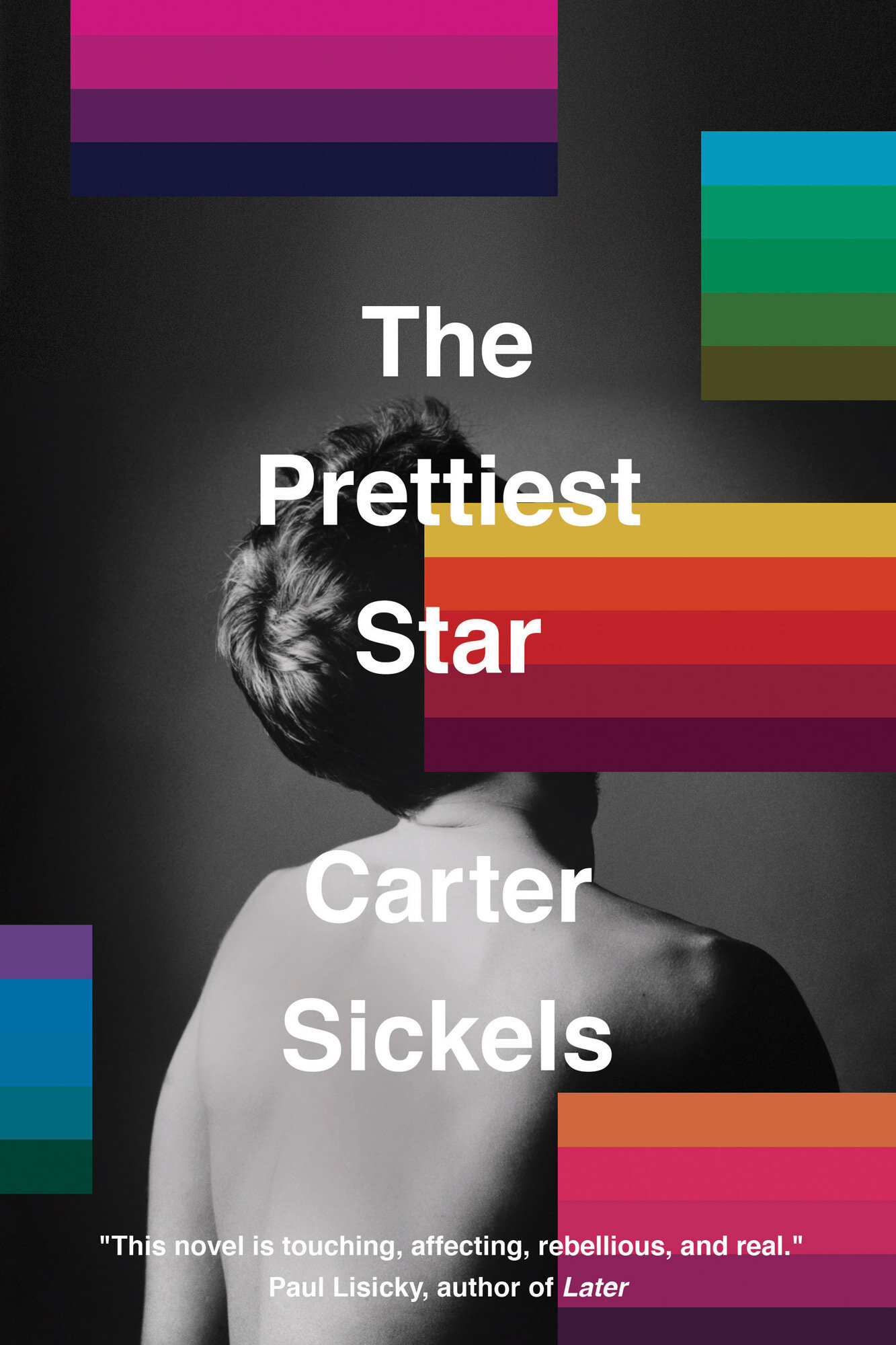
Savannah Sipple, who will teach on “Right to Discover: Conventions in Queer Writing in Appalachia and Beyond,” assigned three online pieces: “To Suffer or To Disappear,” “Who Cares What Straight People Think?,” and this essay by Carter Sickels. I appreciated hearing from Sickels again (he has also served as guest faculty at Wesleyan, but before my time), and his story was moving. The other two pieces both address the great success of Hanya Yanagihara’s novel A Little Life, which I have not read but which I know is much loved by my Shelf editor Dave, who is a serious reader and writer, and a gay man; these perspectives are complicating and therefore interesting. I’m certainly interested to hear from Sipple on this topic.

For Jon Corcoran’s seminar on “The Analytical Hybrid: Using Notes, Texts, and Poetry to Push Your Narrative Toward a Deeper Truth,” I read excerpts from Rachel Hadas’s Strange Relation, Joan Didion’s The Year of Magical Thinking, Francisco Goldman’s Say Her Name, and Jenny Offill’s Dept. of Speculation. I felt warmly toward Didion, pleased to recognize something I appreciated at the time. But the Hadas memoir and Goldman novel were the real winners here: I have added both of these books to my hopeful-someday list. I was sorry when each excerpt ended.

Devon McNamara’s assigned reading for “Utterly Present,” her cross-genre generative session, included an excerpt from Virginia Woolf’s Moments of Being, which I was not particularly happy to see again (mercifully it was short). But it also included a short story called “Foster” by Claire Keegan which blew me away. Read this one immediately: here. Of the two assigned poems there was also one standout: “The Same City” by Terrance Hayes. Whew.

Cynthia McCloud is graduating this residency, and for her graduate seminar, “Ordering Your Private World: Discovering the Structure That Fits Your Project,” she began with a couple of chapters assigned from John McPhee’s Draft No. 4. I need to thank Jeremy Jones again for that recommendation; the whole book was outstanding, and I’ve so enjoyed rereading these pages (but my favorite essay in the book, one of my favorite essays of all time, is still “Frame of Reference“). It was a real treat to see both “Progression” and “Structure” again. Thanks, Cynthia! She also asked us to read Jean-Dominique Bauby’s The Diving Bell and the Butterfly, which will come in its own review on Wednesday: in a nutshell, I was moved by this minimalist (and for good reasons) memoir. Finally, Cynthia had us listen to a podcast: “The Murder Ballad of Spade Cooley” from Cocaine and Rhinestones (found here). I like dark and gritty crime stories and I like country music, so I liked this podcast – that is, aside from the goriest of details. (I thought the warnings about how bad it was were slightly exaggerated. Only slightly.) She recommended reading Fun Home, but I don’t have a copy of that with me, and decided not to bother with the reread (though it’s a very good book). I’m very interested in the topic of Cynthia’s seminar, and pleased with all her readings, so I’m looking forward to this one.

Richard Schmitt always assigns enjoyable readings. This time he’s teaching “Stereotypes: An Aspect of Characterization,” which sounds like ‘stereotypes but in a good way’ in his description. Okay. Here he’s assigned a series of short stories and novel excerpts (one of which he totally assigned us to read very recently – okay, it was two years ago, summer 2017 – don’t ask how long I just spent tracking down that fact in my hard drive). It was a good packet, but some pieces stood out more than others. “Sunday in the Park” by Bel Kaufman was memorable, even accounting for the fact that it’s the repeat from ’17. Cheever’s “The Swimmer” is sort of a favorite of mine. The rest each had some sparkle, and I can see why they were included.

And finally, best for last (this is the order they came in!), Jessie’s seminar: “Valley of Dry Bones: Bringing Non-Narrative Prose to Life.” For one thing, I think this is a topic I’m going to love. For another, she assigned two of my all-time favorite books: a chapter from Amy Leach’s Things That Are, and the entirety of Mark Doty’s Still Life With Oysters and Lemon. Swoon. Finally, she gave us a short piece by Robert Vivian called “Hearing Trains” that was lovely but, for this reader, probably overshadowed by the other two stars.

I’m so very much looking forward to this residency. For a change, I have extra mental space: no deadlines pressing down (except for the odd book review!), no workshop to attend or prep for, no pressure to “do” school at all – but rather the privilege of attending seminars as I desire. And there is some richness here. I am lucky, lucky.

The Ghost Clause by Howard Norman

This smart, literary novel of human relationships–and a ghost–in a small town in Vermont is heart-wrenching, heart-warming and life-sustaining.

Muriel and Zachary are newlyweds living in their newly purchased old farmhouse in small-town Vermont. She has just defended her dissertation on translations of Mukei Korin’s erotic Japanese poems; that she brings this work home is a boon for their marriage. He is a private detective investigating the disappearance of a local girl who’s been missing for months now. They bought the farmhouse from semi-famous painter Lorca, a recent widow whose husband, Simon, had a heart attack and tipped overboard on a ferry en route to Nova Scotia.

The first surprise of Howard Norman’s (The Northern Lights, What Is Left the Daughter) riveting novel The Ghost Clause is that their stories are told in the voice of Simon’s ghost. The title refers to a section in Vermont real estate contracts that allows a buyer to return a house to its seller if there turns out to be a ghost in residence.

Simon still occupies the farmhouse, and feels very involved in the lives taking place there now. He appreciates that Lorca still visits, too. He observes Muriel and Zachary in their daily activities (often including their prodigious lovemaking), reads Muriel’s academic work and Zachary’s case notes, and sits in on their conversations around the clock; this gives him a near-omniscient perspective. He causes few problems, except that he keeps setting off the MOTION IN LIBRARY alarm on the home security system, which might drive his cohabitants nuts. He spends a lot of time reading Thomas Hardy; Muriel owns plenty.

Supremely enjoyable, The Ghost Clause is about the intersections of lives. At its center are two marriages–one new, one a bit older and recently rent by death–but it features many other town residents as well, and is ultimately about human relationships and families, and how we try to make it all work. Beyond this rich daily-life material lie extra layers: Korin, the poet Muriel studies, is fictional, so the erotic poems in the novel (and the difficulties of their translations, and the modernist issue of their parentheticals) are Norman’s invention. The missing-child investigation that threatens to consume Zachary for more than half the book is a thorough, often disturbing diversion. Finely detailed in its particulars and simultaneously revealing of grand-scale humanity, The Ghost Clause is both poignant and frequently gut-laugh-funny.

Norman’s prose is inspired; Simon’s narration is adorned with lyric moments (remember, he was a novelist in life): “A hammock of moon was traveling pale in hazy light,” Norman (or Simon) writes of an evening at home with Lorca when they were still alive together; there is more poetry here than Korin’s. Simon observes, “Scholarship as a form of courtship, it seemed to me.” The charm of local culture is part of the appeal, too. Muriel notes after a party that “People stayed kind of late, for Vermont.”

The Ghost Clause is one of the best kind of novels, excelling in every way: it’s delightful at line level, humorous, absorbing in individual stories and wise on a higher plane. A book for any reader who cares about people.


This review originally ran in the June 7, 2019 issue of Shelf Awareness for the Book Trade. To subscribe, click here.


Rating: 9 crabapple trees.