two-wheeled thoughts: Frances Willard

two-wheeled thoughts

I had made myself master of the most remarkable, ingenious, and inspiring motor ever yet devised upon this planet.
–Frances Willard on learning to ride a bicycle, as quoted in Around the World on Two Wheels

Lady Chatterley’s Lover by D. H. Lawrence


Lady Chatterley’s Lover by D. H. Lawrence
I went into this one largely blind. I knew it was a classic, and I knew that its contemporary public found it obscene, even pornographic. But I didn’t know what to expect in the way of style or plot content.

So I’ll begin as if you’re in that same boat. Lady Chatterley’s Lover is set in England, in the years immediately following World War I. (I have found myself reading quite a few books, fiction and non, set in interwar Britain this year; I’m becoming pretty comfortable with this setting.) Our protagonist is a girl named Constance, who has a love affair as a teen while touring in France, but is called home when the war begins. She marries a young man named Clifford Chatterley while he’s on leave; the marriage does not appear to be particularly well thought through. Thus Connie becomes Lady Chatterley. When Clifford returns from the war, he first has to convalesce, and then they move together into his family seat, called Wragby – with Clifford paralyzed from the waist down, impotent, and wheelchair-bound.

To begin with, Connie had a larger, stronger personality than his. Now especially she is tied down, and in the dismal, closed-in environment that is Wragby, bordered by coal mines and their socially inferior, dirty, mean inhabitants. Clifford was arguably never fit to satisfy her, sexually, intellectually, or emotionally; his handicap now finishes that question.

In her malaise and misery, Connie takes a lover, briefly: Michaelis is a playwright, not really socially acceptable but moneyed, and therefore made semi-welcome at Wragby. This affair is not entirely satisfying, though, and following a particular sexual faux pas, Connie cuts him off.

For some time, then, she drags around Wragby, at first caring for Clifford dutifully, but eventually tiring and beginning to like him less. The main action of the book I shall try not to spoil for you, if you have managed to not know for this long. (I didn’t know, and had the pleasure of learning as I read.) But I will tell you that Clifford encourages Connie to get pregnant if she can, and assures her that he’ll acknowledge her child.

I found this book engrossing, after I got used to the style. Lawrence uses colons in odd ways, and with gusto, sprinkling them liberally. It took me a little while to get used to, and I continued to note his colons with amusement. More than punctuation, though, there is a sort of rolling rhythm to the narrative that I had to adjust to; it was lovely once I got going, but just different enough from what I’ve been reading lately to cause a change in pace. I wish I knew better how to Talk Lit and explain what I mean; I’m assuming there’s a term for the style; all I can say is, many classics or older novels have a style and a rhythm that I recognized here and that is different from modern releases.

The voice is third-person but shifts perspectives so that we see out from inside the heads of Connie and of her eponymous lover. There is dialect! I do like dialects, if I can understand them at all, and what they reflect; here, the dialects of various characters reflect social class, which is an important element of the book. One of the ongoing conflicts that Connie and Clifford experience is over social class; Clifford is accustomed to being one of the ruling class and assumes that that is as it should be, while Connie is a little more open-minded. There is discussion of socialism.

The larger theme, however, is a body-vs-mind question. In her youth, Connie and her sister Hilda were stimulated by the intellect of the young men they loved, and Connie continues to share activities of the mind with Clifford at least through the first half of the book. He becomes a fairly successful author, and she assists him in writing stories that make money but are not “important.” Clifford has several old friends – “the cronies” – who come by and have discussions, occasionally including Connie. As the story goes on, though, she finds that stimulating her mind is not enough; she needs to live a physical life, too, and Clifford could never offer her that.

Lady Chatterley’s Lover reminded me very much of Rebecca Harding Davis’s Life in the Iron Mills and Upton Sinclair’s The Jungle. All three describe industry and its workings as if they are characters, animate. In this case, the local coal mines, which Clifford owns and becomes increasingly interested and involved in managing, are a force almost of nature. Their dirt and noise dominate Wragby and depress Connie; work in the coal mines defines several generations of men, and the threat that the mines will close is part of the terror and change of the new post-war England.

This was a beautiful book and I enjoyed it. Connie’s uncomfortable, unfulfilled position and struggle to find herself reminded me, in turn, of Katie Chopin’s The Awakening. It’s an important story to tell, and to read. It’s beautifully written.

But, you ask, what about the SEX?! Okay, I’ll tell you. First of all, the “obscene” and “pornographic” nature of this book is said to have diminished over time, but I still raised my eyebrows several times. There is very frank discussion of body parts, orgasms, and the various ways of achieving them; characters name their genitalia and call them by various terms not considered polite. Despite our new and jaded comfort with sex this is not a PG-rated book. But I thought it was well-done and fairly realistic, and I found several scenes of sexual frankness between lovers who really didn’t know each other very well, that suggest an openness we still haven’t entirely achieved.

Perhaps more shocking to me than the sex talk was the talk of affairs and illegitimate children. Not only Clifford, but Connie’s father, and various well-meaning bystanders comment on Connie not looking very healthy or happy, and recommend that she take a lover, even have a child by another man – they suggest this to her, even occasionally to him. It is taken fairly matter-of-factly. This, to me, was more outlandish than the sex. It’s not hard to see why the 1920’s world rejected this book as inappropriate; it’s still being challenged today all over the country. But as usual in dealing with banned books, I say let the individual decide. If you don’t like reading about body parts, steer clear. But this is a fine book, and you’d be missing something.

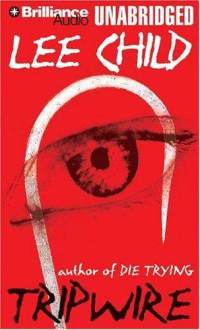
Teaser Tuesdays: Tripwire by Lee Child

Teaser Tuesdays is a weekly bookish meme, hosted by MizB of Should Be Reading. Anyone can play along! Just open your current read to a random page and share a few sentences. Be careful not to include spoilers!


Here’s my confession. Those of you who were paying close attention may have caught the *brief* posting of the teaser below a few weeks ago, incorrectly attributed to the book just before this one in the Reacher series, Die Trying. I’m trying again; it’s actually from Tripwire, which I’m adoring. I think it’s a great teaser and it wasn’t up very long on that day so once more…

Here is your teaser from page 432:

An hour later Reacher was drifting down Duval Street, thinking about new banking arrangements, choosing a place to eat an early dinner, and wondering why he had lied to Costello. His first conclusion was that he would cash up and use a roll of bills in his pants pockets.

It was fun that this teaser visited Key West, because Husband and I have just returned from that very island.

Gone with the Wind part 4 (ch. 31-47)


Gone with the Wind by Margaret Mitchell

Follow the Great Gone with the Wind Readalong at The Heroine’s Bookshelf. Today we discuss part 4. [Edit: tomorrow the discussion will continue at the HB blog. Please check back!]

Part 4 of Gone With the Wind brings more troubles Scarlett’s way. Good old Will – whom we couldn’t have lived without – brings her the latest bad news: the new powers of the South are trying to take Tara from the O’Haras by taxing them beyond their means. That is, former overseers, Yankees, carpetbaggers, and the social class that Scarlett used to turn her nose up at. Scarlett is visited by the Slattery girl who she feels killed her mother (Emmie Slattery had typhoid, and Ellen went to nurse her, caught it, and died); her new (former overseer) husband intends to buy Tara. This is one of the greater threats that Scarlett has encountered to date. As Gerald, her Irish father, predicted, Scarlett is finally learning to value the land as much he did.

In her distress, Scarlett runs to Ashley’s side, and begs him to run away with her. She again forces a confession of love from him, and a passionate kiss, but again he balks at leaving Melanie and baby Beau. He’s not brave enough to go with her, and/or, he’s too honorable. My personal reaction is impatience with the concept of honor and bravery over practicality; but this is not conceptual honor we’re talking about here. Ashley has a very real wife and baby who very truly need him, and his love for Scarlett is irrelevant. If he didn’t have the desire (or courage) to marry her in the first place, well, it’s too late now. I think he’s right about that, even though he is sort of pathetically spineless. Sorry, all of you who think Ashley is dreamy; I have trouble respecting his wishy-washiness. At least he knows it, though…

Scarlett’s next move, in desperation, is to dress herself up and throw herself at Rhett Butler’s feet. It’s a ploy that almost works, even though she has to play it in the jailhouse, as Rhett has been arrested for stealing the Confederate treasury. But he rejects her, and she grasps at a straw: her younger sister’s lifelong suitor, Frank Kennedy, is powerless under her charms and marries her when she bats an eye. He turns out to have less money than she expected, though (I’m reminded of Moll Flanders…), and she turns an entrepreneurial hand.

If you’ve been following along at all, it won’t surprise you that Scarlett turns out to be a damn fine businesswoman. She can be ruthless with her competition, dishonest, manipulative, and not shy to use her “charms” to attract business; she has a good head for numbers, and coldly acts in the best interests of those numbers. She’s cleaning up, but also struggling with labor issues. Freed slaves? Irishmen? Prison convicts? All the while, Frank is steaming at home over his wife’s headstrong behavior, which brings disrespect upon him in those oh-so-respectable circles Atlanta society is struggling to rebuild. Scarlett has another baby. Her father dies. She is sending money to Tara, now that she’s doing well, and she has succeeded in saving the farm… Will marries Suellen, even though it was Carreen that he loved, all to save the farm. But oh, the irony, that she’s saved Tara only to be kept away from it by her work in Atlanta.

After Gerald’s death, Scarlett connives to bring Ashley to Atlanta, to work for her. Melanie enters Scarlett’s social circle again, and they live in tense harmony in two houses back-to-back. Rhett Butler turns back up, and he and Scarlett play their usual game: Butler lent Scarlett money after he got out of jail (not even requiring that she prostitute herself, how generous) and now points out that she has broken the conditions of the loan by employing and therefore “helping” Ashley. There is some question about where Frank goes late at night.

And now comes the crescendo. Part 4 builds to one horrifying sequence of events. Scarlett has taken to traveling alone, at night, through the bad part of town, and one night is attacked by two men (one black, one white) who try to rape her. Big Sam (remember him? the head field hand from Tara) rescues her. The men back home, meaning Ashley and Frank, take off and leave Scarlett with Melanie, which she takes as an affront. But it turns out the truth is worse: they are secretly members of the Ku Klux Klan, and have set out to kill her attackers. The Yankee soldiers interrogate the women looking for the Klansmen, and Rhett is the hero of the day: he constructs an elaborate scene of fiction in which the men have been out at a whorehouse all night long. They have killed Scarlett’s attackers, and they get away with it (although at the price of publicly declaring the whoring, which is disrespectful to the wives, Melanie included). But Frank has been killed.

This is where I begin to be really conflicted. On the one hand: Scarlett has been attacked. Two men try to rape her. Her tribal menfolk set out to avenge this attack. I’m emotionally behind them at this point, even though it’s outside the realm of law-and-justice which I do believe in. This part doesn’t read as particularly racist; the two attackers represent both races and apparently receive an equal fate, based on being rapists, not being black or white. But, this is the KKK doing the work. Emotionally, as a reader who’s come to love and cheer for (even in my moments of exasperation) Melanie, Ashley, Scarlett, and Rhett, I’m pleased when they get away with murder, literally. But wait! The Ku Klux Klan killing people in the middle of the night, without benefit of trial, and getting away with it? This is most certainly NOT something that I stand behind.

I think I see what Mitchell is doing here. She has painted these upstanding, moral, white Southern gentlemen, who feel the need to go out and protect their women from rape and abuse. Again, this is easy to get behind. But then she sort of gently blurs these positive portrayals in with the Klan. And I know very different things about the Klan, and I don’t get behind them. This is some kind of propaganda. Shame on you, MM, for making me sympathize. Midnight lynchings = bad.

Here’s another difficult concept from the same passage: Scarlett blames herself, and the town mostly seems to blame Scarlett, for Frank’s death. She was out late at night, alone, in the bad part of town, and she was the victim of an attempted rape, thereby forcing him to go out shooting strangers in the dark, which not surprisingly got him killed. She killed him! She asked for it, and she got what she asked for! And then he died! Her fault!

UGH! The concept of a women ever “asking for” rape or attack is disgusting, and I hope no intelligent person subscribes to it (although I fear that some people still do). And no less, Atlanta’s theory supposes that not only did Scarlett bring rape upon herself, but that she left Frank no choice but to go out on midnight rides for justice, thereby putting himself in harm’s way. I don’t think this follows any better than the asking-for-it theory. Scarlett didn’t want Frank out running after rapists in the dark; we can see very clearly that what she wants most is for him to stay home and comfort her, and make her feel safe with his presence.

So, I had some difficulties with this sequence. I look forward to your responses, too.

But, okay, to get back to the story: the newly widowed Scarlett finally receives the proposition that I, for one, have been waiting for for oh, almost 800 pages. Rhett Butler is in the right position to catch her between husbands (as he says), and they come to an agreement: love is not necessarily present, but they can live happily together, and Scarlett will keep Tara and want for nothing. She will have as big a diamond ring as she pleases. All of this does come true; but, what’s this? Rhett seems to regret his ruling against love as part of the equation. I am holding out hope for some real honest-to-goodness romance at some point in this book…

But as part 4 closes, there’s another question hanging in the air, too. We’ve met Belle Watling a few times, and she’s a decidedly sympathetic character. The madam whose house cleared Ashley et al of murder, and who donated money anonymously to help the Confederate soldiers during the war, and who apparently is supported in part by Rhett Butler, has a child away at school somewhere: a son. And Rhett tells Scarlett he has a child away at school in New Orleans: his ward. Now, I see the foreshadowing. These two children are one, but who is the father of Rhett’s ward in New Orleans?

Part 4 ends with Rhett and Scarlett honeymooning in that very place, so I expect to find out soon. I hope for happiness, prosperity, a quiet settling down. I hope for love and romance, and an answer to my questions about the boy. I feel pretty certain I won’t get them all, though; this book is far too much about heartache and reality to give me all these happy endings. What’s next for Scarlett?

And how did YOU react to the Klan? And come on, y’all, a woman never “asks for” rape.

working my way through Reacher.

(Presumably you saw my Die Trying post yesterday.)

I am working my way through the entire Jack Reacher series by Lee Child, slowly but very surely. And I’m having to start taking notes on which one included which action, because there are so many and I was out of order. Here they are in the order Child recommends:

  1. Killing Floor: our introduction to ex-military cop Jack Reacher, on the roam, who is arrested in Margraves, Georgia for a murder he didn’t commit. When he finally finds out who the victim was, it becomes his case to solve.
  2. Die Trying: Reacher stops to help a woman struggling with her dry-cleaning on a Chicago sidewalk, and gets kidnapped along with her. She turns out to be a well-connected FBI agent, and they have to work together to escape a truly bizarre criminal scheme.
  3. Tripwire, which I’m listening to now. Begins in Key West but quickly moves to New York City, where Reacher reconnects with an old friend and works to solve a mystery that stretches back to the jungles of the Vietnam War.
  4. Running Blind (yes, in two posts): A series of career women with the U.S. Army are dying, and the authorities are sure Reacher is their killer. This makes it his case to solve.
  5. Echo Burning, my very first Reacher book! I fell in love, not only with Reacher himself, but with the setting: far West Texas, where the desert of my home state meets Mexico and lawlessness reigns. An attractive housewife in a horrible predicament needs Reacher’s help, professional killers are on their way, and the final showdown remains one of my favorites.
  6. Without Fail, up next
  7. Persuader: A ghost from Reacher’s past reappears on a busy city sidewalk. He’s supposed to be dead. Reacher undertakes to fix the problem.
  8. The Enemy
  9. One Shot: A sniper is killing wantonly in Indiana. With all the evidence pointing to one man, it’s an easy arrest. But he wants Reacher there, and won’t say why. The police can’t find him, but don’t have to, because he shows up on his own. He knows the sniper from his army days, and may have something to add to the case.
  10. The Hard Way: Reacher is drafted into a private security company to find the boss’s kidnapped wife and child. He’s back in the detective business suddenly, not sure who he can trust. The solution might surprise us all, Reacher included.
  11. Bad Luck and Trouble
  12. Nothing to Lose: Hope and Despair are two towns in Colorado that deserve their names. What’s going on in Despair, and why don’t they want Reacher around? Telling him to leave is a good way to get him to return, repeatedly, until he understands. Luckily there’s a cute cop in Hope who might be willing to help.
  13. Gone Tomorrow: Reacher spots a subway bomber with his expert eyes in the first pages, but it will take the whole book to find out what she really had in mind and why.
  14. 61 Hours: Winter in South Dakota would be nasty enough without a threatened prison riot and gosh-knows-what headed our way. Keep your eyes peeled for a heroic local librarian. 🙂
  15. Worth Dying For: A frightened town in Nebraska that wants Reacher to leave immediately obviously really needs him to stay and fight the bullies.
  16. The Affair comes out the day after tomorrow!! Hie thee to a bookstore! My library has it on order (hardback & on audio), but I’m going to wait til I’ve worked my way through them all before I get to the latest.

Also, The Second Son, a recent Reacher short story.

If you have been clicking these links, you may have noticed a few things. One: I didn’t read them in order. Or rather, I read a bunch of them out of order and then realized what a fan I had become, and went back and worked in order through the ones I’d missed, which may be a little silly but has been working for me. Two: I have polished my bloggingness: Some of those older posts exhibit qualities I have learned to avoid, like covering two books in one post (I only do this now in the rare digest-version post, like after a vacation), or NOT titling the post after the book. Sorry. I just have too many other interesting things to do, than go back and fix those old posts. From now on, polish.

Anybody else reading – or have you already read – all the Lee Child series of Jack Reacher novels? Any other fans out there? I know there are; he’s a popular guy… also know we’re not all fans. My Pops, for one, didn’t dig the 61 Hours audiobook I lent him. It sounds like it was the short-and-choppy writing style that did it for him (or, didn’t do it for him) as well as the significant suspension of disbelief required to get down with Reacher’s superheroness. He didn’t hate it, though. More so, Raych at books i done read appears to have hated Die Trying. Reading her review made me cringe (just a little) because I LOVE and she DIDN’T, but they can’t all please us all. How long the lines would be, if we all liked the same stuff! It’s okay, Raych, I forgive you. Everything she said of Reacher (or Child) was true; no arguments; just a different appeal to this different girl.

Have you read any? What’s your call?

Sunday Salon

Sunday Salon: Sept. 25, 2011

I’m riding: Today I’m headed up to Chappell Hill to ride the hilly road with my former coach and great old friend Carl. Yesterday I finally got back on some good trails at Huntsville State Park with Husband and two buddies. It was great to be back on the trail!

I’m reading: Inferno: The World at War, 1939-1945 by Max Hastings; and in the car is Without Fail by Lee Child on audio.

I’m thinking about: Losing some weight and getting faster again on the bike, now that I finally seem to have beat this knee injury! I’m thinking that the fall race season is out of the question (as is January’s half-marathon), but maybe I can do some marathon mountain bike races over the winter… some cyclocross… some spring racing… and our buddy Leach is starting to talk us into some off-road cycle-touring this spring.

And on another note, I’m thinking about reducing the number of books I read for review, at least for a month or two, sometime soon so that I can try to catch up on the Hemingway reading I’m building up and getting excited about. That’s a separate post, to come soon.

I’m listening to: Well, I’m listening to audiobooks mostly when I’m by myself, but every time I set my iPod loose I discover old favorites that I’m not paying enough attention to: Jewel, the Doors, the Descendents, Aretha Franklin, Daft Punk, Fishbone…

Lists I am making: What to do (and what not to do) to achieve my goal of weight loss and FASTness.

Around the house: Buying berries and doing laundry, mostly, nothing new. Well, that is, in addition to a little Hemingway project already alluded to, which will get that separate post.

From the kitchen: Curried Quinoa Salad with chickpeas, tomatoes, feta, green onions and zucchini. And berries.

The dogs are: Three, right now, since we have one that we’re dog-sitting. Ritchey, especially, loves his “dog beer” toy that we got him in Key West; we love it less when we’re trying to nap (Husband, yesterday) and he gets it squeaking really loudly.

Funny event: Getting excited about Doomsday Wrestling next weekend!!

Musical event: Have my eyes on an upcoming Gourds show just down the street from us here in Houston at Dan Electro’s Guitar Bar; couple of Drive-by Truckers shows that we’ll have to travel to in the coming months; and Husband is going to a Kyuss show with some guys. I think I shall sit that one out. Oh, and I’ve got the percussion concerts on my calendar over at Rice University’s Shepherd School of Music. I hope to see some marimba this fall.

What are YOU up to this Sunday?

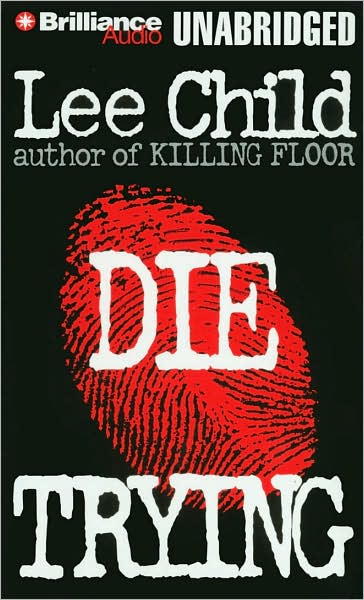
Die Trying by Lee Child (audio)

I fear that it’s beginning to test my powers of creativity to review these Reacher books. For one thing, yes, I admit it, they are rather alike. The general plotline is: Reacher is wandering aimlessly. He stumbles into a situation of danger (or it stumbles into him), generally danger to someone else, a relatively defenseless individual, possibly of the attractive and female persuasion. He becomes involved. There is intrigue, mystery, different bad guys than we originally thought; usually there is an attractive female; there is violence, fighting, skill and cleverness. Reacher wins at all the various contests; there’s a satisfactory ending for the good guys and he rides off into the sunset.

This is so SATISFYING though, I still like reading it. Reacher is such a big cute clever badass, I never tire. And it doesn’t hurt that Child keeps the intrigue intriguing, and suspenseful, and smart enough that the puzzle keeps me engaged right through to the final nailbiting moments. Keep ’em coming, Child, they’re still doing it for me even if there is a formula.

The other reason my creativity is being challenged is the already-evident fact that I just rave about them on and on. So now that I’ve admitted that, I’ll give you the plot and try to keep the raving to a minimum.

In Die Trying, the second book in the series, Reacher stops in the doorway of a Chicago drycleaners to help a young, attractive woman with a crutch who is mid-stumble and about to drop her drycleaning. In the moment of their contact, she is kidnapped at gunpoint by three goons, who see fit to just take Reacher along for the ride. The woman, Holly, turns out to be an FBI agent – quite a good one – with some lofty connections, and they are being driven cross-country for reasons unknown. There is attempted rape, and a crazy right-wing militia bent on establishing a new nation in the Montana wilderness. The FBI and the US military higher-ups are involved; it is unclear to various parties which side other various parties are on; as Raych noted, there’s dynamite. The above formula is followed, but as always, there will be some surprises.

I love it; it’s a very satisfying formula. And here’s the thing: I think I keep saying this, but I think it’s the best one yet! I can’t decide. Echo Burning was my very first Reacher experience, and holds a special place for me because of the South Texas setting. Strangely, I really liked One Shot for all the gun stuff. But The Hard Way has to be one of my top two or three, because of the high stakes and how much I got invested in the little family unit that was at risk, and especially the little girl and the horrible danger she was in… and I really liked Reacher with the lady-friend in that one, too. The small family he forms towards the end was the one I mourned the most, knowing he must move on as always. Worth Dying For also had very high stakes that upped the tension a notch for me. I guess those are my favorites…

So, I do have a problem with always liking “this one” the best. But Die Trying is a new favorite, too! The militia was an interesting twist for a bad guy. There was a psychological-thriller aspect to it. (I don’t want to give away too much.) And, what can I say, I never tire of Reacher’s ability to figure things out quicker than his peers.

If you’re interested, I mildly recommend to you that you start at the beginning of the series, with Killing Floor, but only mildly. If you start in the middle you may find yourself very satisfied – just look at me.

Hemingway’s Boat by Paul Hendrickson

A lyrical, textured, and meticulously researched meditation on Hemingway from a fresh new angle.

Paul Hendrickson, NBCC award-winning nonfiction author for Sons of Mississippi, pulls off the remarkable feat of finding a fresh, new angle from which to approach Ernest Hemingway: his boat Pilar. Purchased in 1934 with an advance from his longtime publisher Scribner, she saw him through three wives, great achievements and critical failures in his writing career, big fish and little ones, and the beginnings and the endings of many relationships. Hendrickson suggests that Pilar may have been the love of Hemingway’s life.

This is not a biography but a careful and compassionate rumination on the man through the lens of the boat. Hendrickson has brought to his readers a Hemingway who is neither object of worship nor monster, but a full and complex human who made serious mistakes in his relationships and fought pitched battles against his own demons, and finally lost.

The Hemingway fan will be enthralled with new details of his life, and the study of figures previously treated as minor but now revealing new facets of the man. The less familiar reader will be fascinated by this comprehensive account of the master and his complex spiderweb of varied effects on so many lives, large and small. Hendrickson presents his unusual and noteworthy story with beautifully quiet intensity and contemplation. Hemingway’s Boat achieves a terrific feat in reworking Hemingway’s story.


This review originally ran in the September 23, 2011 issue of Shelf Awareness for Readers. To subscribe, click here, and you’ll receive two issues per week of book reviews and other bookish fun!


Further notes… I can’t tell you how much this book moved me. Perhaps you have noticed that pagesofjulia is a raving fan of Hemingway. I’ve read several biographies, works of literary criticism, and other spinoffs (see The Hemingway Hoax and The Paris Wife); I’m a little obsessive. But Hemingway’s Boat holds a very special place for me. Hendrickson (PH) treats Papa (EH) sort of gently, but doesn’t spare EH in his moments of monstrosity… PH comes from several different angles, interviewing different people who knew EH more or less well, unearthing some new details. PH approaches EH with the relatively unique concept that he was just a man – a great artist, but also human, with flaws and moments of everyday beauty. This book was noteworthy in all my reading of EH and the surrounding literature. It made me laugh and cry; I treasure this galley copy, where I usually pass them on as soon as I’ve turned in my review. This book alone has made my recent career as Shelf Awareness book reviewer worthwhile. (PH also recently came around here to comment on a post, which I found very exciting. Hi Paul!) I wholeheartedly recommend this book for fans of Hemingway, or of literary biography, or of well-written nonfiction, or for those looking for vignettes in Key West or Havana history.

book beginnings on Friday: Black Mask Stories edited by Otto Penzler

Thanks to Katy at A Few More Pages for hosting this meme. To participate, share the first line or two of the book you are currently reading and, if you feel so moved, let us know what your first impressions were based on that first line.


Classic pulp fiction from one of the original pulp mags! On audio! Well performed! Great fun. I give you the beginning of the first book on this compilation: “Come and Get It” by Erle Stanley Gardner, read by Oliver Wyman.

Ed Jenkins was warned by a crook he had once befriended to be on his guard against a girl with a mole, that she would lead him into deadly peril. This crook was shot the instant he left Ed’s apartment, seemingly by accident.

I love the gritty tone of these stories – especially as performed here. It’s great stuff. Also, Husband really enjoyed this story in particular, because our name is Jenkins too. 🙂

Never Knowing by Chevy Stevens

An adrenaline-filled rush of a thriller about an adopted woman’s search for her true identity, and the consequences for her own family.

Sara Gallagher has always known she was adopted. It’s not until she has a much-beloved six-year-old daughter, Ally, and is about to get married that she decides to search out her birth mother. But she never dreamed of the repercussions: it’s her birth father’s identity that is the real shock, and the threat he poses to her and her happy family begins to rip their world apart. Sara and her fiance, Evan, struggle to maintain their relationship as the police tap their phone lines and begin to take over their personal lives. The horror only grows–and the pace ratchets up–as she finds herself unable to extricate her birth father, “John,” from her life.

Stevens uses the same unique format that was so successful in her bestselling debut novel, Still Missing: the novel is told in first-person, through Sara’s long one-sided conversation with her psychiatrist, whose voice we never hear. This lets us in to her inner conflict, as she struggles with her love for Evan and Ally (and her sisters and adoptive parents), and her need to protect them from the evil she fears she’s inherited.

Never Knowing addresses issues of adoption, family, and parenthood; it exhibits what a mother’s love can do, and what it means to be a parent. This thriller is relentlessly, heart-thumpingly fast-paced. The suspense will leave you breathless, as you learn to care for the conflicted but likeable characters, whose family ties make it all worthwhile.


I wrote this review for Shelf Awareness for Readers. To subscribe, click here, and you’ll receive two issues per week of book reviews and other bookish fun!