On Homesickness: A Plea by Jesse Donaldson

Our temples are made of logs in Kentucky so be careful with the flame.

This is a book very much after my own heart, even though its narrator doesn’t care much for the city that has my heart; we both share a love for home, even though our homes are different.

On Homesickness is a collection of fragments, none longer than one page, and that’s an important design feature, because each spread follows a pattern. The left-hand page names a Kentucky country, its date of establishment, and a small representation of its shape on a map. The right-hand page offers a fragment, sometimes expressly referring to the corresponding county but more often not. It’s possible that fragments and counties match up better than I know, and a Kentuckian might know better, but I’m not really all that concerned. These super-short pieces of prose make a neatly paced, lyric form for what is essentially a wandering wanting. Donaldson yearns for his home and can’t figure out how to get there. Meanwhile we learn as well that he and his beloved partner have a pretty good life in Oregon, a place he finds beautiful but not quite home. His partner is uninclined to pick up and move to Kentucky. Donaldson flubs a job interview that might have moved his family home; his wife gets pregnant, and in a lovely piece near the end, “…I realize that for our daughter, this place will be home. And I want her to love it like I did mine.”

That is the narrative arc, such as it is (and it ends beautifully), but the narrative bones of this book are spare. Along the way, Donaldson also mines Kentucky history, myth, and cultural references (that Colonel’s sour mash), creating as much mood as story. Again, yearning is absolutely the dominant feeling, coming across loud and clear. Also very present is the unnamed partner, the wife in Oregon. This is a love story as much for a woman as for a place. “A place can’t love me. Not like you.”

I find this book interesting for its form, its bravery in sparsity and what it communicates so succinctly. Its themes are so much my own that it aches a little, and I recognized almost every line as I read. Even the references felt uncannily personal (Janus, Cleanth Brooks, Houston). Is that because I’m so truly the right reader for this book? Or because it’s designed to appeal to every reader in this personal way? Probably a little of both. Either way, a good study in minimalist, lyric prose; mood over plot; and a decent way to learn about Kentucky, not from an academic historian but from a lover. I liked it very much.


Rating: 8 love stumps.

Bonus material/synchronicity: I was originally sent this book in galley form for a Shelf Awareness review, but I didn’t get around to it. I kept the book, though, because I thought I might be interested someday. When I worked with Jeremy Jones last semester, I learned that his “In Place” series from WVU‘s Vandalia Press had debuted with this book as its first release. Meant to be. Part of me wishes I’d gotten to it sooner (and written that review for the Shelf!), but part of me thinks I found it at the right time.

reread: Never Go Back by Lee Child (audio)

In my defense, it’s been more than four years since I listened to this audiobook for the first time (and reviewed it here): I had forgotten what happened, and got to find it new again. I seem to have reached the stage of forgetfulness in which I can enjoy a thriller/murder mystery novel a second time, with the same fresh eyes. Hooray! That always looked like one of the best features of aging. (Perhaps my brain’s just saturated.)

I recently took a road trip with a friend, and he wanted to listen to a book, and I figured Reacher would work for him, so here we are with an unplanned reread. I’ll keep this brief, because I think my earlier comments remain true. I was deeply concerned this time around with the erroneous use of the 50/50 coin toss idea. Reacher (and therefore Child) is usually so smart! But the many scenarios where the coin toss idea is used here are all binary choices, having two options; rarely do they hold even odds. Ugh.

On the other hand, I still love the sexiness, the cleverness, and the depth of the Susan Turner character (Reacher’s romantic alliance in this episode). I still love the formula, and formula it most certainly is; but having acknowledged that, what’s the problem? It works for me every time.

The extent to which I’d forgotten this plot excites me. It’s got me thinking about all the Martha Grimes books I enjoyed in my teens and early 20s: those should all be new to me now, too!

On that note, Happy Friday, y’all. I hope you have a weekend as awesome as a Lee Child novel (but with less violence).


Rating: I’ll stick with those 7 cars.

The Silence of the Girls by Pat Barker

This retelling of the Trojan War by one of the women on the side of defeat is essential, and essentially human.

The Iliad is the story of the Trojan War told by the victors, and by men. At long last, another perspective is offered, in Booker Prize-winner Pat Barker’s The Silence of the Girls. Briseis was queen of a city near Troy and, after it fell to the Greeks, she was given as prize of honor to Achilles. After Apollo compelled him to forfeit a concubine, Agamemnon took Briseis for his own. This indignity inspires Achilles’s famous sulk, which begins the Iliad.

In the tradition of Margaret Atwood’s Penelopiad, The Silence of the Girls is a much-needed retelling. Where men sing of honor and glory, women experience a different war. They are controlled by men: by their fathers and husbands, and then by their captors. Briseis is beautiful and royal; she hates her new status as concubine, but sees the far worse treatment of the “common women” who sleep under the Greeks’ huts, with their dogs, and are used by any man who pleases. She is clever and gives nuanced portraits of many characters in the Greek encampment below Troy’s walls. She is proud, angered by the indignities of slavery. One of the book’s themes is the question of authorship: she knows that it is Achilles’s story that the world will hear, but she searches for her own within narratives of men and war.

Strong, beautiful Achilles is cold, but stops short of cruelty. Gentle Patroclus eventually befriends Briseis. Ajax, Agamemnon, Odysseus and Nestor are profiled; but equally important are the other slave women. Briseis has friends, allies and antagonists among them, but always considers their struggles. For example, Ajax’s concubine is one of several women who recommend pregnancy above all other strategies. Briseis does not love her captors. But one of her revelations involves how the Trojans will survive, in the end: the sons of the Greeks will remember the Trojan lullabies their captive mothers sang to them.

The Silence of the Girls, like the classic it’s modeled on, is an epic. Briseis’s uncertain situation brings tension and momentum. At just 300 pages, this novel feels much bigger than it is, but is never heavy. Even with the atrocities, violence and loss it portrays, the protagonist’s thoughtful, compassionate point of view emphasizes humanity. It would be too much to say she weighs both sides of an issue evenly; she is loyal to her family and angry with her captors, but she also sees the tragedy in ranks of young Greek boys killed.

This mature, reflective narrative manages the cataloging of Homer’s telling (how many tripods offered, how many bowls of wine mixed), but with a grace and an interest in individual people that is fresh and novel. Barker uses metaphor and animal imagery deftly. Her prose flows easily, like storytelling between friends. It’s an absolute pleasure to read for any devoted fan of the Iliad, but equally accessible to those new to the Trojan story; indeed, The Silence of the Girls might make the perfect entry.


This review originally ran in the August 9, 2018 issue of Shelf Awareness for the Book Trade. To subscribe, click here.


Rating: 8 waves.

movie: The Gleaners and I (2000)

Recommended by the fabulously talented Jessie van Eerden. Writing my thesis with her this semester is a dream.

However, first thoughts on this movie were “wow, this is weird, why am I watching this?” and then I got into the groove. For one thing, it’s an interesting work of narrative nonfiction. Ostensibly, director Agnès Varda is concerned with an external subject: the longstanding tradition of gleaning, or collecting the leftovers of a harvest. She enters this subject via art – the paintings of Millet and Breton – but among and in between this external material, Varda looks back at herself. The moments that become personal make the whole thing work, for me. Which is not to say that I wish the whole thing had been personal, or I spent the rest of the movie waiting to learn more about our narrator, you understand. I’m just voicing again my preference for a present narrator. I appreciate external material that is commented upon by a personal voice. In fact, I pretty much require it, as a personal preference. Perhaps this is on my mind now because I’m working on my thesis, that book-length project “of publishable quality”… and I am appreciating that Jessie shares my feeling of being an essayist, of commenting on outside material from a personal perspective, rather than simply airing all my own thoughts and feelings. Personal essay, not memoir, if you will.

And that is what I’m getting out of this movie: the narrative stance. As well as the subject matter: not gleaning in particular, but the entry through art into a larger subject (I am writing about the Drive-by Truckers, Jason Isbell, Guy Clark, and Dominique de Menil, among others), as well as its metaphoric possibility. I really lit up when Varda noted the new, metaphoric uses of ‘gleaning’:

On this type of gleaning, of images, impressions, there is no legislation, and gleaning is defined figuratively as a mental activity. To glean facts, acts and deeds, to glean information. And for forgetful me, it’s what I have gleaned that tells where I’ve been. From Japan, I brought back in my case souvenirs I had gleaned.

She does a lot of using one hand to film the other hand, which is an interesting statement about art, right? (All that commentary about the memoir as navel-gazing!)

The Gleaners and I is a piece of art, concerned in part with art – the original paintings as inspiration; the artists Varda meets who create out of the refuse they scavenge – as well as several meanings of gleaning. The people in the French countryside consider gleaning in its old sense, bending down to pick up leftover crops lying on the ground after a harvest. Some see a difference between this act and picking, which is picking fruit or nuts or whatever off of trees, vs. bending to take off the ground. Then there is urban scavenging, dumpster diving and combing through curb leavings. And finally that metaphoric sense, in which I watch this movie and take with me – figuratively – the parts that are of most value to me.

Varda interviews a “painter and retriever” who picks up other people’s discards from the curbs to make art, not unlike a dear friend of mine: he says, “what’s good about these objects is that they have a past, they’ve already had a life, and they’re still very much alive. All you have to do is give them a second chance.” (I also love that he points out that the city council puts out maps of where this not-junk is going to be, and Varda responds that really, aren’t the maps so that the people can put out their junk? And he sort of chuckles and says yes, well, I read the maps in my own way.)

I’m really fascinated though at the assumption throughout – never challenged! – that this food is all “wasted” if people don’t eat it. One guy did say about unharvested grapes that otherwise “the wild boars and the birds will get them.” So… how is that a waste? No human got it, but it didn’t go to waste. Even the fruit that rots on the ground contributes to a system. Even if we’re compelled to make it about us: dirt is necessary for people to live, for everything to live, and rotting grapes help make dirt. I wrote to my artist-scavenger friend about this movie, and he responded: “There is an edict in the Old Testament about leaving behind a percent of crops for the animals. Old wisdom makes sense sometimes.” This seemed like a gaping hole to me. After all, we didn’t invent grapes. They grew on their own, for their own purposes: the purpose of the grape, and the bird and the wild boar. Shades of Amy Leach here…

The film is in French, with subtitles, and it’s dated. (It was released in 2000, but the narrative voice is very much “what is this new millennium nonsense” – filmed in the 90s, of course.) It’s also arty, a little slow-paced and introspective, which could contribute to its being a little less than accessible – it worked that way for me, early on. It had a little bit of the tone of Sherman’s March, but not nearly so off-putting for this viewer!

All in all, I was a touch slow to get involved but Varda’s Gleaners ended up being fascinating, thought-provoking, and memorable. It’s been haunting my thoughts. There’s a lot going on here, and I do recommend it, if you’re at all interested in… trash, food, the end of the world, reuse, art, or narrative perspectives. So, good for all thinking souls.


Rating: 8 cages interesting like boats, like violins.

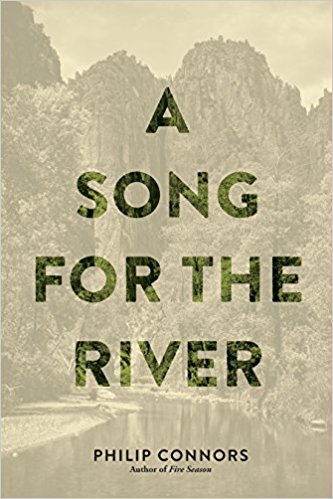
A Song for the River by Philip Connors

Today a simple repost of my review from back in June. Philip Connors’s A Song for the River was released yesterday, and you should get yourself a copy.

Connors writes,

On one quiet stretch of water I looked up at the tiered mesas above us and felt it might be true that my life was both a fire and a river, depending on the moment and the vantage from which it was viewed–and never more like a river than in moments like this.

My review, again, is here. Thank you.

Houston Shakespeare Festival presents Comedy of Errors

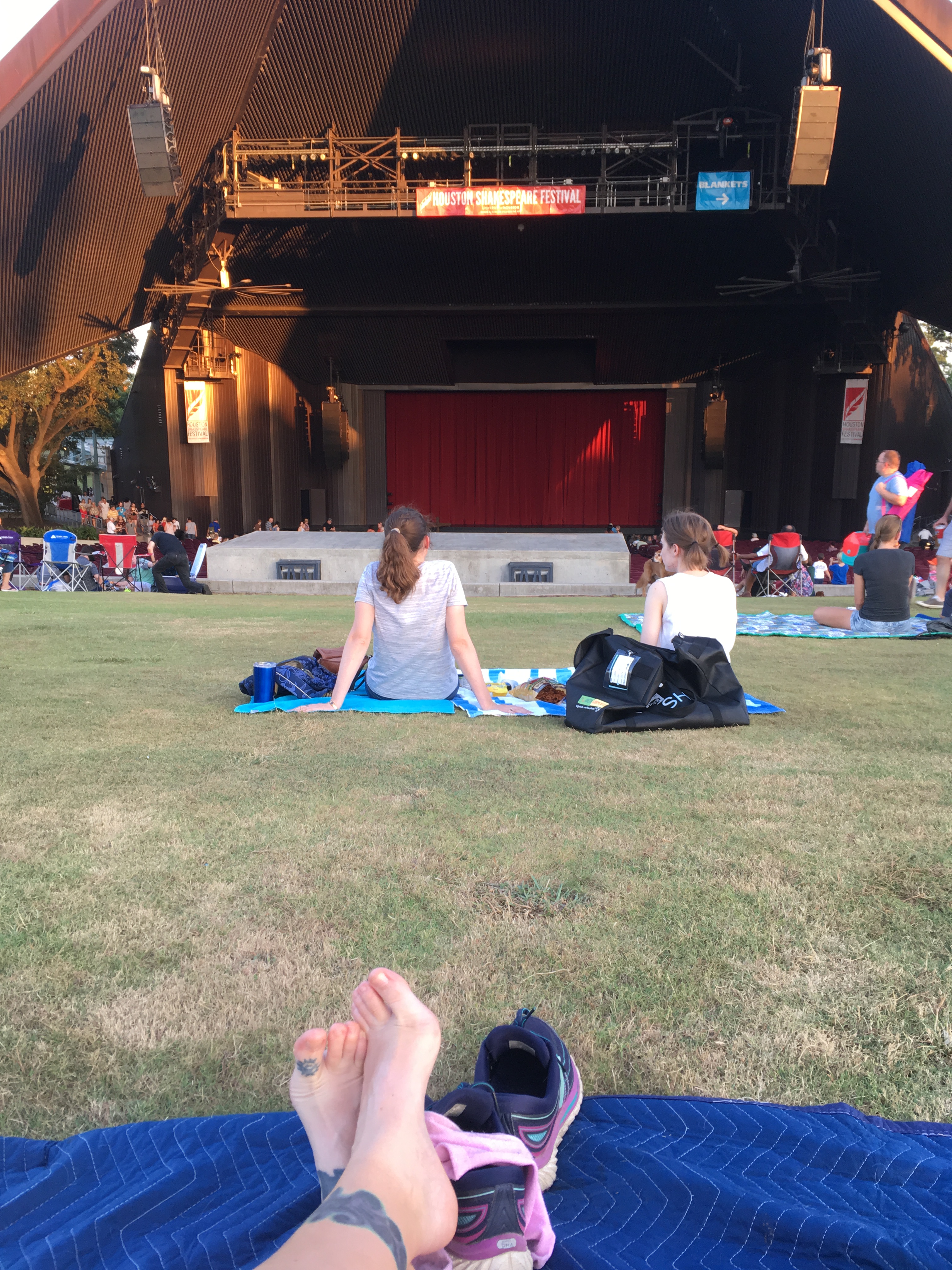
I went home a few weeks ago to see a favorite Shakespeare play as part of a favorite annual event. I’ve been attending the Houston Shakespeare Festival and other events at Miller Outdoor Theatre since I was a small child, and I’ve always loved seeing productions of Shakespeare, as I’ve written about before.

This year’s comedy was Comedy of Errors, a classic. This is Shakespeare’s first comedy, or among his first, and one that establishes several Shakespearean tropes: mistaken identities, twins separated at birth, love triangles (squares, hexagons…). Two sets of twins have been separated, forming two sets of master-and-servant in two rival cities. One set has a father; one set lives near their mother, but doesn’t know it. When the four younger men come into the same setting, hilarity ensues: wives mistake the wrong twins for husbands; goods are delivered to one twin, payment denied by the other. Classically, though, it all comes out right in the end.

my feet before the show

It was lovely being back on the hill at Miller in Hermann Park, with a blanket and a date and a bottle of wine. The setting was so much of it: with people all around me of all ages, skin tones, and configurations; families and couples and groups of friends and solos; picnics ranging from boxes of fast-food fried chicken through elaborate cheese-and-charcuterie spreads. I have to say, though, that this was not the best production I’ve seen the Festival put on. The Houston Press‘s review saw a show in which sound issues had been resolved, but the show I saw had some difficulties; the sound effects to match the slapstick comedic blows were often off, and there were some issues with the actors’ microphones. This was a shame, because the acting was overall very good. A few actors fumbled a few lines, giving a more amateur impression than I remember from years past. But I’m patient with artists doing their best. I was both puzzled and amused by the “exit, pursued by a bear” joke, which comes from The Winter’s Tale and not Comedy of Errors at all, but okay. There were some modernizations, including references to sports and the use of a group of (I’m guessing) elementary school-aged kids. I’m not sure what this contributed, other than to give young actors a chance at the stage, which is a thing I generally support and so I’m amiable about it, but again, puzzling as an inclusion here.

The thing that troubled me most was use of a stereotyped AAVE by the characters played by black actors. A prologue-style opening involved a rap performed by two actors, one black and one white, offering two rather different effects; this made me uncomfortable from the first moments, and every time a black actor stepped onstage, it continued. I don’t see how this contributed to any positive feature of the play. It seems to me that Shakespeare can be produced in two ways. First, it can be done “straight,” that is, played as Shakespeare wrote it, by actors of all races and appearances, without their race making any difference to the characters they play. Or, it can be modernized, and race (along with other constructs, social issues, identity politics) can be brought into the play. But this was neither. This was like straight Shakespeare but with black bodies played for laughs. Ouch. I’m quite surprised that other reviewers didn’t mention this aspect, because it bothered me considerably.

When I can look past this problem with the play–which is on the one hand a huge problem, but on the other hand present for rather few minutes of the evening overall, because the black actors were few–I’m glad to see Shakespeare in the park, for free and produced for the love of it. My date found this, his first Shakespeare play, funny and accessible and fun, for which I’m grateful. I’m glad to see the crowds gather to take in a classic comedy, and I’m looking forward to seeing further endeavors. But this one, not the finest effort of a long-lived institution. I hope they do better next year.


Rating: 5 chains.

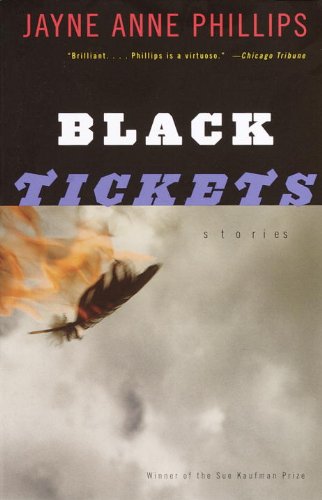
Black Tickets by Jayne Anne Phillips

I read this book for its structure: a short story collection with some longer pieces, of as many as 20 pages, but a number of shorter ones, just a page or two. With my advisor this semester, Jessie van Eerden, I am considering a similar structure for my thesis: interstitial pieces in among long ones. (I also read Jessie’s own thesis from her MFA program, which was awfully wonderful and I wish I could review it here for you! Also with the interstitial pieces, and so lovely. But as it’s not published, I guess I’ll leave it at that.) I was also glad to read Jayne Anne Phillips because she is important to West Virginia’s literary legacy. And she is from Buckhannon, where my own West Virginia Wesleyan College is located.

This is a beautiful and impressive collection in its effect. I found myself lost and involved in each story, one of those reading experiences where you forget where you are, look up baffled by the everyday world around you, thinking you were really in a dark bar in El Paso or walking the streets of an unnamed town decades ago. This effect makes it hard for me to analyze the craft of the book itself, but it is certainly to be admired. While these stories are, I think, unconnected, they share themes: the types of characters and the types of settings are all rough-hewn and struggling. Dwight Garner’s review in The New York Times calls these “lush, violent, elegiac and sexually charged worlds,” and he writes that this book “would help light the landscape of the so-called dirty realists (Raymond Carver, Bobbie Ann Mason, Richard Ford, Phillips and others), though the adhesive has pretty much come off that label.” I am turning to Garner’s words in part because this book so challenged me, and in part because I love that idea, the adhesive coming off the label.

Here is menace, violence, and sex, a good amount of it menacing and violent sex. It’s about loneliness and despair and the odd, quiet contentment. I’m not sure what to think, actually. And as to my original reason for reading Black Tickets – to examine its structure – I’m a bit lost, too. I would say the shorter stories contributed to the overall themes, tone, impression that make this book so strong. So did the longer ones.

How different is a story collection from an essay collection? What explains my difficulty here? If I find out, I’ll let you know.


Rating: 7 Ripple bottles.

Hood by Alison Kinney

This is the third that I’ve read in the Object Lessons series (Sock, Souvenir).

Kinney examines the hood’s sinister appearances in history: worn by executioners, torturers, and (not by choice) their victims; worn by the Ku Klux Klan; given as an excuse for the murder of Trayvon Martin. This last – the hoodie – was, for me, the most obvious application of ‘hood’ and the one I was most expecting (to what extent this was suggested by the cover, I can’t say), and none of these focal points surprised me. I was a little surprised to learn that the executioner and the torturer did not wear hoods til pretty modern times – our attribution of the hood to the medieval bad guys is a modern error (or, perhaps, a calculated strategy). But I was more surprised that Kinney’s hood is so consistently an image of violence. She mentions the hoods worn by professors, judges, and academics – the honorable hood – but only as a point of contrast.

In the opening pages, Kinney lists the hood’s uses: by “judges, athletes, rappers, torturers, politicians, and toddlers… to attend school, commute… go to war or protests, take a hike, walk the dog, ride the Maid of the Mist, or visit our grannies in the woods… coaches, firefighters, fishers, boxers, beekeepers, and Mark Zuckerberg… skaters, cosplayers, fetishests, presidents, and the entire Knowles-Carter family.” She apologizes: “Sorry, but you’ll have to wait for the sequel to get car hoods, stove hoods, and Mount Hood.” This promise of exhaustivity is not carried through, however. I recall Sock, wherein Kim Adrian reached back to the origins – the invention of the sock. That part of the hood’s story is missing here. I guess Sock and Souvenir had conditioned me to expect a really broad, start-to-finish, far-reaching treatment, and that’s not what Hood does. Hood focuses on injustice, violence, death, and abuses of power. It’s an important story; I’m not necessarily against Kinney’s approach, but it’s not what I’d been expecting.

The other way in which this book differs from the others I’ve read is that Kinney, as narrator, as researcher, and as holder of opinions, was lacking from her narrative. It has long been a reading preference of mine to find the author in her work; in nonfiction, I find it essentially dishonest to act like an impartial observer or researcher, because there’s no such thing. In this book, in particular, because Kinney takes decided political stances on a variety of issues, I really felt the hole left by her absence. Let it be said that I agree with her politics. But I regret that she didn’t reveal something of herself in stating them. I think it would have strengthened the book.

I’m interested to learn that the Object Lessons series takes more varied forms than those I’ve already encountered. I think I prefer the other model: the exhaustive, whimsical, present-narrator one. But Hood has much to offer, including a strong indictment of capital punishment, a chilling glimpse into Abu Ghraib, and a discussion of the black bloc of protesters at the Seattle WTO meeting and beyond.


Rating: 7 images.

Writing the Personal Essay

Hey folks, another quick digression here (and bonus Saturday post!). I didn’t want anyone to miss a great opportunity. Creative Nonfiction‘s online classes are about to get a great boost, when Matt Randal O’Wain teaches an upcoming section of “Writing the Personal Essay.” Matt is a visiting faculty member with my MFA program this semester, which means I got to study with him at this recent residency, and I was really pleased to get to know him. He’s a great guy, personable and thoughtful and considerate and we share some interests; more importantly for these purposes, he’s also a well-read, thoughtful, insightful teacher. Register here! This Monday is your last day to get discounted registration for this course, and I have a coupon code to share with you to get an additional $50 off! I’m not sure I should post that here, but drop me a line at julia@pagesofjulia.com and I will get you the code asap.

If you have any questions about CNF’s courses, or about Matt, also drop me a line or comment here and I’d be glad to share what I can.

Thanks for reading. Back to your weekend.

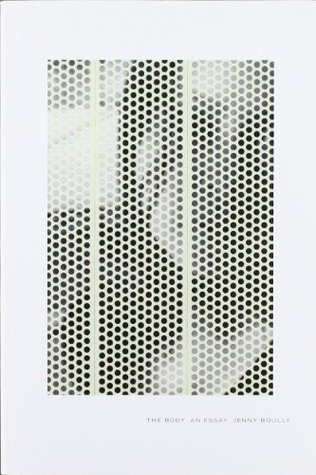
The Body: An Essay by Jenny Boully

The Body is an essay in footnotes. Footnotes to a body text which is absent. Just the footnotes.

Pages are often more blank than not, with a line demarcating the footnote section of the page, and then (in rather small font) the text below. Some footnotes are nothing more than Ibid., with a page number. Does this sound infuriating? Yes.

Some of the footnotes are long enough and weird enough to get lost in, themselves; when I consider them poetry and dwell in the moment, there is something to be enjoyed. But overall, not a concept that works for me. Other, better-known writers and readers than I have found much to value here. A meditation on the concept of absence, loss or disappearance, etc. But it was too weird for this reader. I was here for the body, if you will, and not its leavings.

For me a fail, but I’m certainly interested to know if you are differently minded. If any of my readers have enjoyed this book? Please explain.


Rating: 4 quotations.