comparative literature and lives, from Pops

The Living Mountain
Nan Shepherd (1945 / 1977)

Under the Sea Wind: A Naturalist’s Picture of Ocean Life
Rachel Carson (1941 / 1952)


I want to celebrate early – and timeless – work from two remarkable women naturalists of the 20th century. This is not really book reviewing; it is tribute to these two writers’ noteworthy similarities and differences, and appreciation of their early, largely disregarded success. The books came to me unintentionally, separately, and coincidentally; that’s always a fun thing.

As shown in these books, both authors were naturalists in the purist sense: keen observers of the more-than-human milieu around them, with a literary voice enabling them to describe what they saw, which appeared so differently to them than most people. Humans rarely feature; they appear only occasionally as natural background to the author’s higher interest in place, or other inhabitants.

While both show an informed ecological understanding of what they observe, such insight is rarely explicit; they ‘teach’ by example. Both prefer to rely on literal and figurative senses as a narrative lens, and the result on these pages, while different in style, is surprisingly similar in tone, feeling and impact. There is a sophistication to their form that impresses, especially for its time. Carson embraced the term ‘poetic prose’, which certainly applies to both.

They lived during the same era, against a backdrop of both constraint and change for women. They wrote the two works cited here within the same decade (1935-45); publication of each book was at least partially affected by the war. There is no suggestion they knew of each other.

While both traveled internationally, they lived on different continents. The focus of their attention in the natural world rarely overlapped, even while the results of their inspiration bore similar fruit on the page. Carson was a committed author and trained biologist; Shepherd, always ‘only’ a writer, and more introspective. Early writing success met Carson, followed later by greater success and international impact; Shepherd’s writing was only fully appreciated late in life, and even then mostly limited to her region.


Nan Shepherd was born (1893) and lived always within walking distance of the Cairngorm massif in Scotland’s central highlands – and walk she did, across every ridge and through every valley of her cherished place. Always a poet, sometimes an essayist, she had a brief burst of minor publication before she finished writing The Living Mountain in 1945 at age 52.

For various reasons – post-war disruption, intervention by a mentor, some factors perhaps inexplicable – the book was not published. Only in 1977 was the original manuscript revived by the author and publisher (4 years before her death); it immediately gained attention regionally. Largely due to ‘discovery’ and ardent promotion by Robert Macfarlane, it has belatedly become a classic. The Scottish five-pound note now displays her image, with a quotation.

Shepherd’s subject here is explicitly The Living Mountain, which she embraced passionately her entire life. Her brief Foreword in 1977 testifies to her continued attention to that place. While the narrative draws from her experience over decades, it is organized into 12 chapter categories of her choosing, from Water, to Plants, to Being.

Her focus never strays beyond its boundary of geography, shaped by water. But her meaning for ‘the living mountain’ encompasses everything about it: rocks and water; clouds and winds; plants and insects; large and small; above ground and below; its impact on the psyche. Implicitly, this is an ecological view. Her language is intimate, lyrical and dense – all, matching her perception of the subject. Yet her voice is calming & humble, conveying her affinity for Buddhism. There is likely nothing else in print resembling her work here.

Macfarlane’s introduction in the 2011 edition runs to 28 pages including three pages of footnotes. This is a superlative essay in itself (of course, one might say), partially because Macfarlane himself roamed these hills as a youth, and even today. But mostly this is his own tribute to Shepherd, as we hear her on these pages. As he says, this is “a formidably difficult book to describe.” I would agree, and say that about both books.


Rachel Carson was born more than a decade after Shepherd, in rural Pennsylvania. Even though she grew up land-locked her reading inspired an interest in the ocean. So it is unsurprising that the sea informed both her early interest in writing, and eventual degree in aquatic biology. Significantly, her early work in articles led to mentoring by a Dutch children’s author, who encouraged her simple, direct, descriptive writing style, which is so effective later.

Under the Sea Wind was her first book, published in 1941 at age 34. (Two subsequent books now comprise her ‘Sea Trilogy’: The Sea Around Us, and The Edge of the Sea.) While initial publication met with critical success, sales and popularity were dampened by the war. When The Sea Around Us became a bestseller in 1951, the earlier book was rediscovered and the next year also became a bestseller.

Under the Sea Wind is organized into 15 chapters, divided 5-7-3 into three sections, or ‘Books.’ Each Book is a theme that ties together its chapters in loose narrative; yet all three also naturally connect in a general sense, and comprise a generic year’s cycle.

Carson’s sightline in this book covers the broad western hemisphere, especially the western Atlantic, encompassing ocean and sea; shoreline and river; marine and freshwater; birds and fish; whales and sand fleas. Yet, on a given page, her attention is particular species, and even individuals of a species, which she sometimes assigns a proper noun. One can imagine children of a certain maturity devouring some passages; and adults of a certain proclivity cherishing its entirety.

The magic of her ecological view is how her ‘narrative’ seamlessly and endlessly follows one organism to the next, taking as a thread a trophic food chain, or an expansive migration path, or intricate inter-species symbiosis. But she rarely resorts to such jargon, any global perspective, or stated scientific facts. She simply knits together, piece by piece, story by story, an appreciation of this connected web of life.


The relaxed pace; the embracing language; the sense of peacefulness amidst natural turbulence; the reassurance in understanding how things work – both books display these things, and commend themselves to sympathetic readers.

guest review: The Marrow of Tradition by Charles Chesnutt, from Pops

Here’s how I ‘found’ this book. Your July 2019 post about various short-reads included Charles Chesnutt’s essay “The Banquet,” which I appreciated. You also linked to Wiley Cash’s fine essay recommending Chesnutt’s novel, and interpreting it in light of current events – which convinced me to eventually find a used copy. Along with the novel’s 1993 introduction, Cash’s explication of the book, its era and its implications is an excellent addition to a full understanding.


The Marrow of Tradition by Charles Chesnutt was published in 1901; I read the 1993 edition with introduction by professor Eric Sundquist. The novel was reportedly well-researched by the established black author, using the Wilmington, NC Massacre of only 3 years earlier as foundation for its story about a fictional ‘Wellington.’ Chesnutt had relatives who survived the event, and interviewed their neighbors as well; further, his personal history tied him emotionally to the wider narrative. In the book, the event itself is limited to the last ~100 pages (of 340), although that finish is given force by the involvement of fictional characters developed throughout the book. This is a fascinating, accessible look at an important historical event, through the unusual lens of informed and incisive literature of the same time.

Chesnutt’s main interest is in describing how much the post-Reconstruction period is reverting to the form of its racist legacy: white control and oppression are still functional; social relations serve to keep the town’s minority-white (~1/3) elites well-ensconced; mixed-race generations are in the shadows but ever-present (reflecting Chesnutt’s own family history). Indeed, this is a heritage of social complexity that Ta-Nehisi Coates is addressing even today in his new fiction. Chesnutt’s purpose is to give readers of the time a sense of “the complex psychology of white supremacy and black resistance” [Sundquist], for a close look at the social tensions stewing in this small town where a few white conspirators use the specter of rape to intentionally create conditions for a coup, for mobs to overthrow the elected Republican (white and black) leaders, and murder many citizens in the process. Chesnutt himself sent copies of the book to politicians of the time.

The narrative form is dated yet engaging, suggesting a period gothic novel of the antebellum south, often preoccupied with big-house romances, rivalries and closeted skeletons. Black characters too often appear mere background for that narrative. The melodramatic ending involves several fictional characters, apparently unrelated to real events. In effect, for a modern reader, Chesnutt generously ‘humanizes’ the white villains to a surprising extent, depicting their anxieties and self-justifying motives. It is curious that an involved black author, especially with historical purpose, chose this form and delivers so well; but it was an established form and likely effective – I am in no place to judge. To be fair, his description of the social mechanics of oppression are in spells direct and unvarnished. Still, I felt the limited narrative about black characters was glaring, and often served to trivialize them.

The essential 1993 Introduction (a detailed 37 pages) by white academic Sundquist addresses the author’s life and work, the country-wide factual context of reaction to Reconstruction, the factual basis of the event itself, the book’s references to real people; and convincingly analyzes the literary result. He tags the book as “One of the most significant historical novels in American literature.”

Prominent for Sundquist is this thesis: “The gender politics of the Wilmington revolution were of utmost importance to a national ethos of segregation.” This is not ‘gender politics’ in our contemporary sense. Rather, for me he refers to the broad historical morass of racism, gender and sexuality: the southern white male ego threatened by both black men and encroaching potent black culture; confusion arising from both sexual attraction and sexual assault amongst all manner of racial pairings; rape as both a weapon to dominate a people, and contrived as excuse to torture, mutilate and murder its men; biracial children as legacy complicating both the perpetuation and the extinction of white supremacy, for all parties; maybe more. His sweeping analysis defeats my capacity to summarize. Some threads of all this arguably appear in Chesnutt’s novel (e.g. the character of Chesnutt’s fictional Olivia Carteret); Sundquist provides further evidence in historical fact. His explication is compelling.

I am so thankful for this thorough review of a complicated book!

The Third Rainbow Girl by Emma Copley Eisenberg

A keen, thoughtful inquiry into relationships, place and the forces that contributed to a 1980 crime.

In The Third Rainbow Girl: The Long Life of a Double Murder in Appalachia, Emma Copley Eisenberg offers a true crime story as well as a painful look at misogyny and estrangement; a gorgeously rendered memoir of human relations; and a sensitive, perceptive profile of a misunderstood region.

In 1980, two young women were hitchhiking to a Rainbow Gathering (one of a series of events that attracted as many as 20,000 hippies) when they were killed and left in a remote clearing in southeast West Virginia’s Pocahontas County. A third young woman had parted ways with her hitchhiking companions just before they died. Eisenberg’s title points toward her fascination with this character: the one who, apparently by a stroke of luck, lived. Locals told conflicting stories about what had happened. More than a dozen years later, a local man was tried and convicted, then later won his freedom in a new trial. An imprisoned serial killer claimed responsibility, but was considered a less-than-reliable source and was never tried for these crimes.

The Third Rainbow Girl is an incisive, thoroughly researched work of true crime reporting. Eisenberg visits those close to these events–the accused, witnesses to the trial, lawyers, police investigators and local bystanders–and forms her own loose theories, while acknowledging how much will never be known. The book’s mastery, however, is in how much more it accomplishes. “If every woman is a nonconsensual researcher looking into the word ‘misogyny,’ then my most painful and powerful work was done in Pocahontas County. It could have been done in any other place, because misogyny is in the groundwater of every American city and every American town, but for me, it was done here.” Importantly in this region that is oft maligned, Eisenberg lived in Pocahontas County for a time, forging relationships and grappling with her place in the world; she begins to bridge the differences between Appalachian insider and outsider. Part of her work is indeed to study misogyny, the relationships between genders and the responsibilities and challenges of those, like herself, who wish to enter a troubled place and “do good.” This book is as much about gender and political and social relations as it is about a specific crime. In brief sections, it also contains an outstanding account of the historical forces that shape present national attitudes toward Appalachia.

Eisenberg’s gaze is unflinching, whether turned on a traumatized community, an unlikeable but probably innocent man or upon herself and her own tendencies. Her prose is incandescent, precise, descriptive and often lyrical: a medical examiner testifying at trial has “a face so pink it looked slapped” and her first time spent
working in West Virginia at a camp for girls is “dense and crackling.” The narratives of the murders, of the investigations and trials and of the author’s Appalachian life intertwine and comment on one another. The result is a subtle, steadfast examination of the sources of pain and trauma.


This review was written for Shelf Awareness for the Book Trade, but is published for the first time here.


Rating: 9 music nights.

One of the things I appreciated here is that Eisenberg was sensitive to the local perspective and her position as outsider (because even after months or years here, you go easy declaring yourself to be an insider). Unlike Ramp Hollow, this book cites sources from within the community (like Sugar Run!).

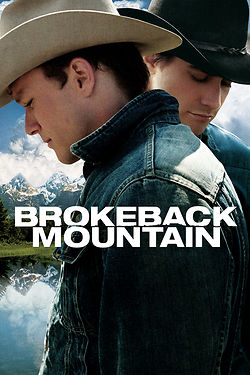
movie: Brokeback Mountain (2005)

I just recently rewatched this movie, which I saw when it first came out, and appreciated. I’m quite blown away. This is masterful understatement. Emotions run fast and deep; Jack Twist and Ennis Del Mar are men’s men in a classic sense, macho, physical, and (in Ennis’s case) of few words; they are also lovers. There is a rough physicality to their affection, as in the scene when Jack shows up at Ennis’s apartment after four years apart. It’s a deeply sexy, sensual movie, perhaps more movingly so because of how different this love and sex is from what we’re accustomed to seeing in romance movies.

And it’s a very romantic movie, in several senses. For one thing, there is the romantic relationship at its center; but there’s also the romanticism of ranching and rodeoing and the gorgeous scenery and harsh weather of the Montana mountains. (Heath Ledger and Jake Gyllenhaal are gorgeous, too.) I think the power of the film is in part in the overturning of expectations about romance (in both those meanings) and about who we expect Jack and Ennis to be. To put a point on it, we don’t expect cowboys to be gay, and we don’t expect gay men to be rough-and-tumble, macho-masculine cowboys. Those are stereotypes, and Brokeback Mountain is here to dispel them. But that makes it sound didactic when in fact it’s anything but that: it’s deeply beautiful, starkly painful, and at every point feels true.

I have dim memories of enjoying the Annie Proulx story this movie is based on, but perhaps because I saw the movie first, my standard remains this cinematic, visceral, visual version.

I could watch this movie over and over again.


Rating: 10 hats.

WVWC Dept. of Theatre and Dance presents Fool For Love (2019)

Written by Sam Shepard in the ’80s, this one-act play features just four actors/characters; this production was student-directed, and one of the lead roles was played by one of my students. (I was going to go anyway, but was extra excited when I heard that.) It was phenomenal; I’m so glad I went.

The whole thing takes place in a hotel room in a desert, where May is staying. She has just received an unexpected guest, Eddie, who appears to be a former lover. He wants to take her away to live in a trailer; she doesn’t want to go. They argue and argue and argue… she says she’s expecting a date, but Eddie isn’t sure he believes her. A strange man sits in one corner of the room, only occasionally interacting with the two main characters. Eventually Martin, the new date, does show up, and the three continue a confrontation of sorts. The story of Eddie and May, their past and their relationship, eventually becomes clear. The actual, present-tense action is fairly sparse; the plot is formed more by the backstory related in dialog than by the events within the play itself, although there are some small but significant developments there, too.

The strengths of the play as written are all about tone and atmosphere, black humor, and the kind of frustration and quiet desperation that marks Shepard’s work (and reminds me of Tennessee Williams too). It’s a hell of a play; but I’m perhaps even more impressed at how well these college kids knocked it out of the park. (I guess I expected more from Shepard than I did from them, I confess. I saw a play at the college earlier in the semester that was so bad I didn’t bother to write about it here.) That is, the two lead roles (Eddie and May) were both played by college kids–both freshmen, no less!–while the old man was played by a member of staff, and Martin was played by I think an alumnus. Still.

They knew their lines; they delivered them powerfully; I was able to lose myself in the play and forget that it was a play at all (and saw my student in a whole new light), which is the highest achievement, I think. I came home that night in a glow of appreciation. Thanks, young people. Keep up the excellent work. I look forward to seeing Steel Magnolias in the spring!


Rating: 9 glasses.

movie: We Have Always Lived in the Castle (2019)

There’s a movie version out of We Have Always Lived in the Castle! Boy, rereading that review was interesting. This blog was still pretty young back in 2011. I cringe a bit at the thought that I didn’t know the book yet, and didn’t make the Shirley Jackson connection; but that’s what life is, is a learning process. Everything you ever know, you at one time didn’t know yet! (Don’t make fun of beginners!) Also, it’s interesting to note that now the big Shirley Jackson reference is not “The Lottery” but The Haunting of Hill House, since it’s recently been made into a successful TV series. My students this coming semester will be reading “The Lottery,” of course.

First note: the movie is scarier than the book was. I recall (and it seems from my review) that the book was more spooky or creepy than outright frightening. Well, the movie is not straight horror, in the sense that there are no jump scares; but I was more upset by the things that lurk in the night. For one thing (spoiler follows here in white text, highlight to read): Cousin Charles reads as physically threatening, as in he assaults each sister in turn in what might be a sexual fashion, which I don’t recall happening in the book.

Reviews are mixed. Some reviewers found the tone of the movie off; others felt there wasn’t enough substance, or something like that. I found it to be quite a successful adaptation, and wonder if some of the criticisms aren’t missing the point, or if things I’m calling positive were what most bothered those reviewers. For example, it’s true that the aesthetic of the movie is bright and colorful – not at all matching its content. Constance is forcefully cheerful, with a bright Stepford smile; she almost seems drugged (and her pupils are dilated – how’d they do that? give her eye drops?). This contributes to a weirdly upbeat vibe, even though it’s patently faked, and often in extreme contrast to the conflicts taking places around Constance. It’s odd, but not I think by accident. Each character – weirdo Merrikat; forced-chipper, porcelain-beautiful Constance; increasingly angry Charles; and poor unbalanced Uncle Julian – delivers their own lines in varying forms of deadpan; each believes their own reality. It’s most disturbing, and that is absolutely the point.

There is a trailer here, which on the one hand gives a good impression of visuals and atmosphere, but on the other hand maybe you should go in without having seen so much of it? Maybe the latter; I’m glad I went in more or less blind.

It has been eight years since I read the book, which undoubtedly helps, but I’m inclined to say that as far as book-to-movie adaptations go, this one was quite good and less likely to frustrate the book’s fans than most. Full credit for capturing the feel of the original; great visuals and a hair-raising effect, even without your traditional horror movie’s jump scares. I’m looking forward to reading “The Lottery” with my undergrads now.


Rating: 7 pies.

guest review: The Living Mountain: A Celebration of the Cairngorm Mountains of Scotland by Nan Shepherd (introduction by Robert Macfarlane), from Pops

Months ago, back in August, my father came to visit me in my new home in West Virginia. One of our evenings was spent with my friends Doug and Melissa, down at the little brewery in their town, sharing stories and pints and a pizza. Among many other things, various author names were thrown about. Robert Macfarlane forms a meeting point for Pops and Doug. We finished up at their home, with a little casual live music from our host, and a book recommendation. My father returned home to Washington state and acted quickly. I received this email from him just a week or two later.

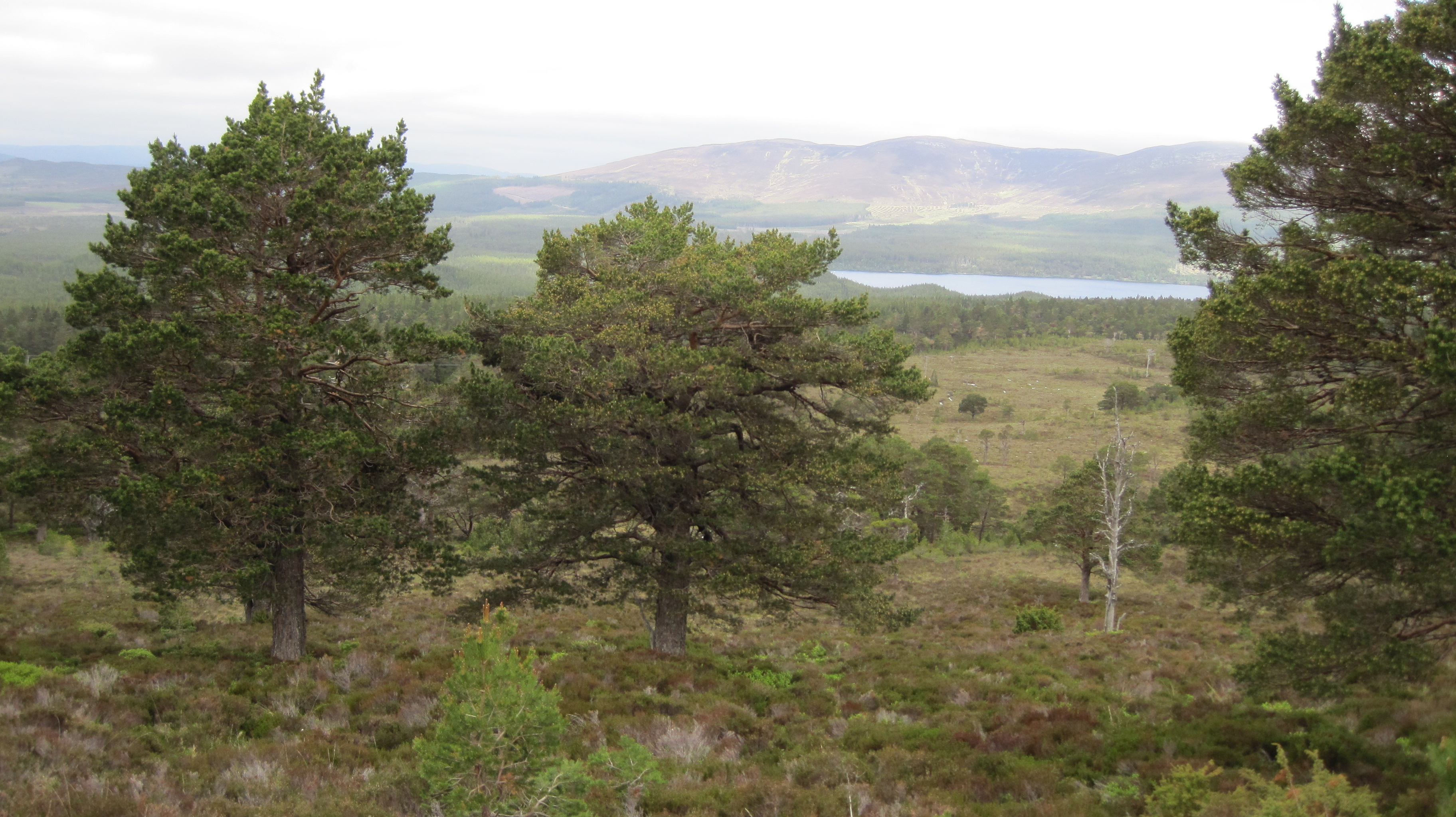
On Doug’s recommendation, I received this WWII-era book, lost and only first published in 1977: The Living Mountain, by a UK publisher, from Pacific Northwest provider ThriftBooks. This used copy is the 2011 edition with a 26-page introduction by Robert Macfarlane. Shepherd’s subject-homeland is the Cairngorm Mountains in Scotland, one of my favorite places from our visit, where we stayed a few days so I could take several mountain hikes, view Scots Pine recovery efforts and drink Cairngorm Brewery’s Black Gold Ale at the local pub with a view.

In 1977, The Guardian called it “the finest book ever written on nature and landscape in Britain.” Their 2011 review says “This is sublime, in the 18th-century sense, when landscapes like these were terrifying. And she achieves it in language that is almost incantatory, like a spell…” I can’t wait.

Scots pines. photo credit: Pops.

Black Gold. photo credit: Pops.

Some three months later, I received this review.

The introduction here is by Robert Macfarlane, who nearly singlehandedly has led a revival of her works of poetry, fiction and this book. And today the Scottish 5-pound note displays her image, with a quotation.

As Macfarlane says, this is “a formidably difficult book to describe.” Shepherd’s subject here is the Cairngorms: a massif, a group of peaks, a plateau – all those things, which she habitually refers to as the Mountain: an organism, an ecosystem, full of life, all its pieces intricately and inextricably linked. This place comprised her true life-long home, even as she traveled widely. She was obviously a committed and ambitious walker, in all weather; hers were no casual visits to the Mountain, and she often stayed overnight.

The Scottish author quietly lectured in English for Aberdeen College for most of her career. Eight years after writing four books in a burst, she wrote (and shelved) this one in 1945 at age 52. It was only published in 1977, inexplicably (although: Macfarlane notes the same year saw four other similar classics; again, a mystery). She died four years later.

Her language is simple, florid, passionate, and so unending it leaves one nearly breathless even if reading in silence, creating a sense of stream-of-consciousness in spite of typical narrative form. I was immediately deterred from any highlighting or marginalia; the prose is simply too dense with compelling description and notions. It is no surprise to learn she was a close reader of Buddhism; her sense of being one with the Mountain is complete: spiritually, physically, emotionally. Her ability to convey a deep and personal devotion to place challenges many others who embrace the same sense, and work hard at molding language to the task of saying so: Berry, Doyle, Sanders, Kingsnorth come to mind. Yet, reportedly, she never felt that task complete.

I was reassured all along knowing we have Macfarlane’s introduction to rely on; it’s an artful and meaningful essay in itself, and does justice to her work. He reports reading the book “perhaps a dozen times,” and his always capable language is informed by his own early-life passion for the same place, which I briefly visited as well. I only wish I had carried her slim, small volume with me when I was there, as both guide and inspiration.

What a lovely review, and strong endorsement! Thanks, Pops.

And for a postscript: Macfarlane’s 2013 Guardian article (with slideshow) about his recent visit to the Mountain, Shepherd always in mind, provides ample evidence of the magic.

The Magical Language of Others by E. J. Koh

Letters from mother to daughter shed glimmering light on reunions, reconciliation, immigration, heritage and familial love.

Poet and translator E.J. Koh grew up in California’s Bay Area, the daughter of Korean immigrants. Her parents moved back to Korea when she was 15, leaving her to live with her angry, taciturn 19-year-old brother. By the time her parents returned to the United States, Koh was off to graduate school in New York City. During those years of separation, a flurry of letters from mother to daughter sketched a yearning over distance.

The Magical Language of Others revolves around these letters, translated from occasionally English-spattered Korean. Koh read them as arrived, but it wasn’t until much later, in their rediscovery, that she came to understand what they offered. In a small box she has kept for years, Koh finds exactly 49 letters: “In Buddhist tradition, forty-nine is the number of days a soul wanders the earth for answers before the afterlife.”

As Koh studies Korean and Japanese, and eventually adds a graduate degree in Korean translation to her graduate poetry studies, she works as well to translate the love, longing and abandonment of generations of women. Her paternal grandmother’s memories of Jeju Island are first idyllic and then filled with trauma from the massacre in 1948. Koh’s privileged but heartbroken maternal grandmother, after several suicide attempts, left her cheating husband in Daejeon and took an apartment in Seoul. She loved it there, but eventually relented and moved back home to a family that begged for her return. “Coming to one home, she had abandoned another.”

Meanwhile, in Koh’s own lifetime, she deals with young adulthood with her antagonistic brother. She makes frequent trips to see their parents in Korea, where she shops and visits the bathhouse with her mother, formally studies languages and informally studies people. “He waved not a hand but a blank page, and I knew it was gestures like this one that meant nothing.” Such luminous prose is evidence of an unusual mind.

This slim book is a memoir–of the years Koh spent quasi-orphaned in California; her visits to Korea; finally sharing a continent and eventually a home with her parents again in adulthood. It is also a study of generations of women before her. Koh considers how people make poetry out of imperfect lives, and how they interpret and generate love. In startling, lyrical, imaginative prose, Koh wrestles with the meanings of devotion and duty, and with the challenges of language and translation. Her final lines are as heartbreakingly beautiful as the entire book deserves. The Magical Language of Others is a masterpiece, a love letter to mothers and daughters everywhere.


This review originally ran in the November 25, 2019 issue of Shelf Awareness for the Book Trade. To subscribe, click here.


Rating: 7 parentheses.

movie: Hellfighters (1968)

Well this was a fairly silly but also awesome film. Extra points for vintage Houston footage, and a most interesting look at how they (used to) put out oil well fires. A little family drama and a bunch of feel-good, handshakin’ male friendship make for an all around warm-and-fuzzy (although seriously dated) John Wayne movie about firefighting and love.

IMDB calls this “disaster/action/adventure,” but it’s at least as much soap opera as it is any of that. Chance Buckman (John Wayne) is the best in the world at what he does: puts out oil well fires, “around the clock, around the world,” as says the slogan of The Buckman Company. He split with his ex-wife Madelyn because she can’t take the stress of his highly dangerous work, but they still love each other. When Chance is badly injured on the job, his assistant Greg fetches his daughter Tish to visit him in the hospital (against Chance’s wishes). Lickety-split, Greg and Tish are married, and the new generation gets their own chance (no pun intended) to navigate matrimony against a fiery backdrop. The final action takes place at a five-well fire in Venezuela, choppers chopping and bullets whining overhead, as both Tish and Madelyn show up to spectate.

I’d like to give some credit for these women being treated less as delicate flowers in need of protecting than I’d expected from 1968. It’s not modern, but it’s better than I’d have thought. Also, these people have phones in their cars and on airplanes! I understand 1968 less well than I thought I did, all-around.

It’s silly – I wonder how seriously the filmmakers took themselves – but pretty fun, too. The brawl between the Americans and some Australian firefighters in a gambling parlor in Malaya was fine slapstick. It’s got a 14% rating on Rotten Tomatoes, and I fell asleep once. But I had good fun with it, in the end. Keep your expectations low and have a good time.


Rating: 7 delays with the nitro.

Short Fiction

I thought it would be fun to share with you some of the reading I’ll be doing this semester, for an other-than-usual reason: I am teaching the undergraduate lit course Short Fiction (ENGL 165) to a mix of freshmen, sophomores, juniors, and seniors, and I’m very excited about it. My students will read something like 50 stories this semester, and we’ll discuss elements of fiction (like plot, setting, character, point of view, style, and theme) in context of those stories. I cannot imagine that I’ll be writing about each one for you all here! (Although I suppose it’s possible that I’ll be moved to write about a few standouts. And some are already covered, of course.) But I thought at least you might appreciate a list of what stories I have in mind.

I’m using an anthology as a textbook: The Story and Its Writer, which also includes pretty good text on those elements of fiction, and supplementary materials such as analyses and author commentaries. I’ll also use Jon Corcoran’s The Rope Swing – we’ll discuss how it functions as a whole as well as in each individual story. And there will be a few “extra” stories that I’ll scan for my students. So, the list – in no particular order for now.

  • “I Stand Here Ironing,” Tillie Olsen
  • “Crazy They Call Me,” Zadie Smith
  • “A White Heron,” Sarah Orne Jewett
  • “Sonny’s Blues,” James Baldwin
  • “Interpreter of Maladies,” Jhumpa Lahiri
  • “Desiree’s Baby,” Kate Chopin
  • “Samuel,” Grace Paley
  • “The House on Mango Street,” Sandra Cisneros
  • “The Blood Bay,” Annie Proulx
  • “The Yellow Wallpaper,” Charlotte Perkins Gilman
  • “Everyday Use,” Alice Walker
  • “The Man Who Was Almost a Man,” Richard Wright
  • “Yellow Woman,” Leslie Marmon Silko
  • “Girl,” Jamaica Kincaid
  • “The Ones Who Walk Away from Omelas,” Ursula K. Le Guin
  • “A Brief Encounter with the Enemy,” Saïd Sayrafiezadeh
  • “Harrison Bergeron,” Kurt Vonnegut
  • “The Grasshopper and the Bell Cricket,” Yasunari Kawabata
  • “Journey to the Seed,” Alejo Carpentier
  • “Prisoner on the Hell Planet: A Case History,” Art Spiegelman
  • “The Shawl,” Cynthia Ozick
  • “A Continuity of Parks,” Julio Cortázar
  • “Looking for a Rain-God,” Bessie Head
  • “Cathedral,” Raymond Carver
  • excerpt from Persepolis: “The Veil,” Marjane Satrapi
  • “The Moths,” Helena María Viramontes
  • “Dimensions,” Alice Munro
  • “Brownies,” ZZ Packer
  • excerpt from Palestine: “Refugeeland,” Joe Sacco
  • “Vision Out of the Corner of One Eye,” Luisa Valenzuela
  • “The Colonel,” Carolyn Forché
  • “The Fellowship,” Alison Bechdel
  • “The Swimmer,” John Cheever
  • “Barbie-Q,” Sandra Cisneros
  • excerpt from Barefoot Gen, Keiji Nakazawa
  • “The Things They Carried,” Tim O’Brien
  • “Appalachian Swan Song,” Jonathan Corcoran, from The Rope Swing (RS)
  • “The Rope Swing” (RS)
  • “Pauly’s Girl” (RS)
  • “Through the Still Hours” (RS)
  • “Felicitations” (RS)
  • “Corporeal” (RS)
  • “Hank the King” (RS)
  • “Excavation” (RS)
  • “Brooklyn, 4 a.m.” (RS)
  • “A Touch” (RS)
  • “Pea Madness,” Amy Leach, from Things That Are
  • “Four Boston Basketball Stories,” Brian Doyle, from The Mighty Currawongs
  • “The Pull,” Lidia Yuknavitch, from Verge
  • Any Other,” Jac Jemc
  • The Little Mermaid,” (Daniel) Mallory Ortberg
  • Who Will Greet You At Home,” Lesley Nneka Arimah

This list includes writers of various ethnicities and national backgrounds, gay and trans writers, Westerners and non-Westerners, graphic stories, recent and historic ones. It is probably a few stories too long – definitely subject to some change, but not much. I meet my students in just a few days, and I want us to more or less have a plan.

What do you think? A class you’d be interested in??