2019: A Year in Review

Happy New Year, friends! The other day you saw my best of the year post, and here we are today with another traditional annual post. (You can see my past years in review here: 2018; 2017; 2016; 2015; 2014; 2013; 2012; 2011.) I’m always glad to put these numbers together and see what’s changed, and in writing this post, I knew the numbers would be very different. I finished 2018 by finishing an MFA program; I spent the bulk of 2019 living in a van, with no day job except the book reviews.

In 2019, I read 88 books, compared to 66 in 2018. While not up to my good-old-days numbers nearing 150 books per year, this increase definitely reflects some change. A season for all things…

Of the books I read this year:

  • 55% were nonfiction (last year I read 70% nonfiction).
  • 41% were written by female authors (53% last year); 59% were by men (41% last year), with the remainder being collections by multiple authors, or variously unidentifiable, or “other” – this was a negligible category this year, although it made a larger proportion in 2018.
  • Of the fiction I read, 25% were contemporary (a growing number), 22% historical, 18% mysteries, and a whopping 23% were sci fi (that would all be The Expanse). Last year I mostly read fiction I was categorizing as “misc,” which seems to indicate I need better categories, although I didn’t so much change my classification scheme as read more in the categories I’d already established (like sci fi!).
  • In perhaps the most notable (and most predictable) change this year, nearly 20% of what I “read” I listened to as audiobooks. This is all about the van travel, of course. In 2018 I listened to just one audiobook, although in previous years I’ve been as high as 25%, back when I was a commuter.
  • Another big and predictable change: reading for school. Combined reading as student and as teacher this year amounted to just 6% of the books I read; while I was an MFA student my years were 49-70% schoolwork. Happily, 36% of my reading was purely for pleasure, plus a handful marked with the reason “travel” (which can be counted as pleasure: researching places I was headed). 51% were read for reviews. I think I need to make it a life goal to get out from under that majority, much as I love my work.
  • I was sent 54% of my reading by authors and organizations seeking reviews (which means I marked several as read for pleasure; sorry if that’s confusing). Another 24% I purchased (down from 64% last year!), and the remaining 22% were gifts, loans, or library books – sources not much in evidence these last few years.
  • I found time to reread three books this year. I thought it was more than that! With just one in 2018, this remains a negligible category, but I’m glad for each and every one (hello, Brian Doyle).

Some of these numbers changed less than I thought they would – total books read, and rereads, for example. Overall, I’m pleased to see the increased variety in what I read. I’m very grateful to the Shelf for being so flexible with me while I’m on the road, and for being my only employer for most of the year; but I confess I wish I were choosing a few more books for myself and purely for pleasure. (It’s true that the Shelf sent me almost every favorite book of the year. But you know, there’s so much more out there, too…) And now heading into 2020, I can just imagine that we’ll have another drastically different year, with teaching a literature course – surely this will suck up much of my reading time? – and the at-present-total-unknown second half of that year… All I can say is stick around and we’ll all find out together what the heck I’m doing. Thanks for bearing with me through all the surprises!!

How did 2019 treat you as readers? What do you hope the new year – and decade – holds?

best of 2019: year’s end

My year-in-review post will be up Wednesday, as per usual. But first, also as usual, I want to share the list of my favorite things I read this year. (You can see past years’ best-of lists at this tag.)

The short best-of-the-best list:

Honorable mentions:

Note that these are overwhelmingly new releases, which bodes well for the publishing industry in general (and probably reflects my reading habits) (and credit to my lovely editor Dave who sends me such great books to review).

Bonus: Shelf Awareness’s Best Books of the Year is available at that link. It includes none of my choices but that’s okay – more to choose from! Bonus-bonus: their Best Children’s and Teen Books.

Hooray for good books always! What are some of the best things you read this year?

Come back Wednesday to see a further breakdown of my reading habits in 2019.

Between the World and Me by Ta-Nehisi Coates

between the worldFinal review of the year, and the book is a great one. Pops reviewed it first, and I knew it was one I needed, but it just took me a while to get to it. The reason I finally prioritized it now is because I suspected a student needed it – actually, that was Pops’s suggestion, too – and so I needed to read it first, to know, and to be able to recommend it to her. So I have that student to thank for my own education, which is often how it works.

Coates speaks painful truths about our society and the legacy of slavery and ongoing racism in this country. He speaks with specificity and detail of his upbringing in a Baltimore that was worlds away from what he saw on TV growing up, the world where “there were little white boys with complete collections of football cards, and their only want was a popular girlfriend and their only worry was poison oak.” I think of his narrative as accomplishing three things: a review of the evils of racism in this country since its founding and continuing today; a memoir of the experiences of one man, his coming-of-age and coming to realize the above, and of growing up in Baltimore; and a review of the writings and philosophies of Black American thinking and activism. Coates has an inquisitive mind from a young age. In this book, he actively investigates the nature of education, and who gets to define the value of a civilization. I loved the part where we learn that his mother used to have him, as a child, write essays about his own mistakes. This taught him to question, and that the question itself, not any purportive answer, is the point. This lesson has got to be the most important lesson anyone can offer a young person. This is the concept behind the classic liberal arts education, right: critical thinking?

Coates assigns his son the same essays in response to his own transgressions.

I gave [these assignments] to you not because I thought they would curb your havior–they certainly did not curb mine–but because these were the earliest acts of iterrogation, of drawing myself into consciousness. Your grandmother was not teaching me how to behave in class. She was teaching me how to ruthlessly interrogate the subject that elicited the most sympathy and rationalizing–myself.

Oh, that I could teach one or two of my own students the same.

I have tried to write more about this book and what it accomplishes, both artistically/stylistically and in its content, but I keep observing that my dad did it better. (I especially like his work with what he calls metaphorical coding, and the Richard Wright poem that gives this book its title and a refrain.) His book review says everything I’d like to say about this book, and says it beautifully, so let me again try to send you back to it. Thanks, Pops.


Rating: 9 open, easy smiles.

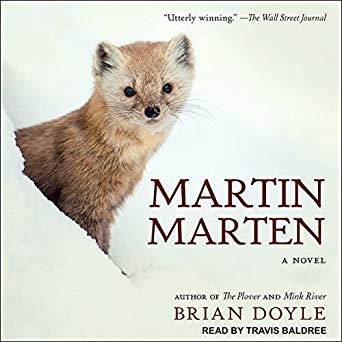
reread: Martin Marten by Brian Doyle (audio)

By coincidence, this book review was next in line when today’s date came up. But it feels perfectly appropriate for this gift-giving holiday, because Brian Doyle is a gift, and I think this novel is my favorite of his.

I have returned to my very first Brian Doyle experience with Martin Marten (originally reviewed here), because I miss him and love his work. Having enjoyed a few other audiobooks of his, I thought I’d try Travis Baldree’s narration.

It’s very good; I enjoyed the different voices for each character, from Maria to Dave to each of Dave’s parents, to Moon and Emma Jackson and Miss Moss and Mr. Douglas the trapper. I thought he preserved the sense of wonder and boundlessness that characterizes Doyle’s work. I found myself not thinking of the narration much, actually, and just living in the world of Martin Marten, and I think the disappearance of an art form’s container is often the highest compliment.

And the book is everything I remembered. As is said early in The Princess Bride, this book has everything it. “Fencing, fighting, torture, revenge, giants, monsters, chases, escapes, true love, miracles…” Well, there’s no fencing here, but there is death and birth and love and fighting and beginnings and endings and the easy connection of the two, and an un-wedding, and blizzards and springtimes and basketball and running and maps and trees and all the animals and plants and beings… Brian Doyle inspires lists like these; he writes in lists like these. He is all-encompassing, in the best and least pretentious way. For example, here is a paragraph that caught my eye this time around.

And deep mysteries too, things that no one could ever explain and in most cases no one ever knew or apprehended or discovered–a new species of snow flea mutating in a dark crevasse on Joel Palmer’s glacier; a blue bear born to two black ones but alive only for a day; a place where trees and bushes and ferns decided to intertwine and make a small green cottage complete with walls and a roof and a door; a cave with the bones of a creature eight feet tall inside; a pencil lost by Joel Palmer at nine thousand feet of elevation on the south side of the mountain, long ago encased in ice and now some twenty feet beneath the surface, waiting to be found in the year 2109 by a young woman named Yvon, who would be amazed that the pencil never wore out no matter how much she used it, as if it had patiently stored up words for two centuries; and much else, more than we could account even if this book never ended and its pages and pulses went on forever, and it was the longest book in the history of the world. Even then, it couldn’t catch more than scraps and shards of the uncountable stories on the mountain, of bird and beast, tree and thicket, fish and flea, biome and zygote. And this is not even to consider the ancient slow stories of the rocks and their long argument with the lava inside the mountain and the seething and roiling miles beneath the mountain, all the way to the innermost core of the sphere, which might be a story of metallic heat so intense that to perceive it would be your final act in this form; another mystery.

A dear friend of mine, nearing the end of her MFA study, read this book on my recommendation and sent me a message that said simply, “my prose is lifeless.” Well, it’s not, but I know what she meant: Doyle’s just jangles with life. I know he is not for everyone. The above paragraph includes a single sentence fragment that is 198 words long. He gushes. But for those of us it works for, I think it works very well.

I wish I could go to live in one of Brian Doyle’s fictional towns. Although it does snow a lot there.

If you love the natural world and are charmed by the idea of not privileging any one species (ahem, humans) over all the rest; if you are excited by the many possibilities for joy in the world, big and small; if you love life, words, all kinds of critters, and even humans; if knowledge for its own sake thrills you; if you are prone to being pleased by lists and wonder–do give the novels of Brian Doyle a try. He has made this world a far better place.


Rating: there is no reason to amend my original 10 tomatoes.

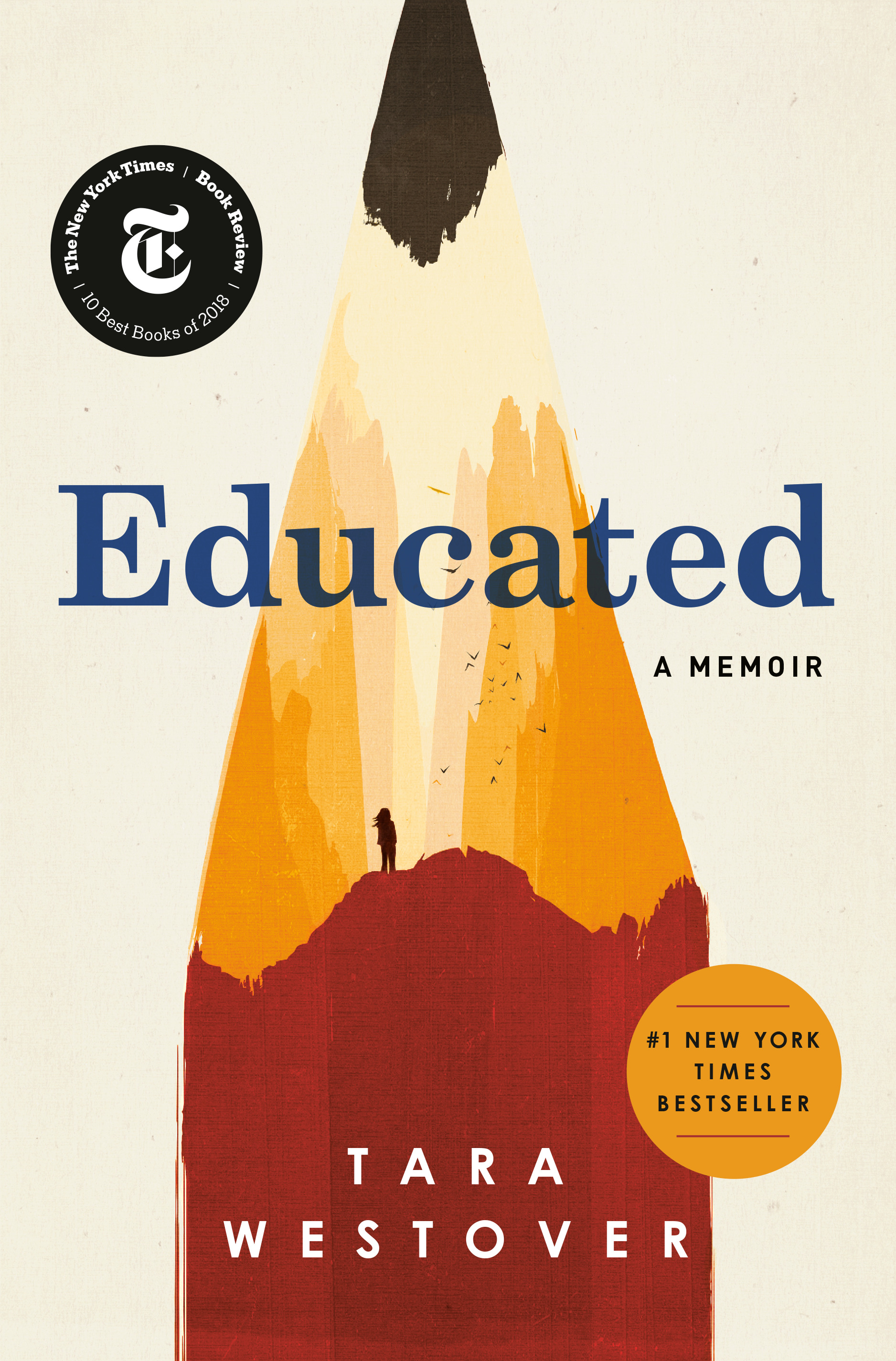
Educated by Tara Westover

We are all more complicated than the roles we are assigned in stories.

Last Friday, I briefly reviewed Tara Westover’s talk at West Virginia University. Now here’s her book.

It’s a hell of a book. I’ve written about this before: every book has the two layers, the content itself – the story it tells – and the telling of it. Sometimes one or the other clearly dominates. I read a lot of books in which the telling, the lovely lyric or literary or weirdly styled telling of it, trumps the story itself (man comes of age, meets woman, ho hum). And I read some that are very much about the story, where the telling is just serviceable. I sometimes remark when they both align to a remarkable level. This one is noteworthy because the story is so outrageous: truly, it would stand alone as a sensational tale (which is not altogether a good or a bad thing, although rather maligned in memoir). But it doesn’t rely on the shock value of its story to carry it; the telling is also elegant, and Westover makes some wise observations along the way.

As I wrote the other day, Westover was raised by some pretty extreme isolationist Mormons. She was not allowed to go to school or to a doctor. Her father seems a little nuts; he is a religious zealot, insists upon total control in the household, is prone to wild mood swings, and late in the story, becomes something of a cult leader. He makes his living by scrapping metal from his junkyard(s) and doing odd building jobs. His seven children are expected to work as part of the family business – with him, or with their mother, a midwife and homeopathic healer. This latter was not her idea, but his, so that the family would not need doctors, and as a way to serve God. She is a reluctant student but eventually finds her stride and gets serious about faith healing (which involves something she calls muscle testing, clicking her fingers and whatnot). It’s all pretty far out for me. Because Dad is crazed about the junkyard/scrapping work, and because he lives in a bit of a fantasy where nothing bad happens to the righteous, he is opposed to safety measures, actively forbidding gloves and protective eyewear (etc.) and using ludicrously dangerous equipment. So the family suffers quite a few serious injuries. They do enter the hospital a time or two, but also treat third degree burns over a large percentage of the body, and head wounds involving exposed brains, at home. So, the first sensationalist point of this story is the extreme isolation, zealotry, and risk-taking the Westover family lives.

The second is abuse. Young Tara is absolutely placed in mortal danger by her family, repeatedly and constantly, and this is a form of abuse. But the greater issue is with one of her older brothers, who beats and tortures her as a matter of daily life when she is a teenager. He inflicts sprains and I think one broken bone. “I found myself cleaning the toilet every morning, knowing my head might be inside it before lunch.” He laughs at her, taunts her, calls her whore until she knows deep within herself that it is so, and he gaslights her into feeling that she’s imagined all of the above. I can’t do the trauma justice here. Talk about shock value.

The abuse extends from here. She and a sister try to confront the family about the brother’s abuse (which apparently extends to several of his siblings), but this results in a range of lies and false fronts, and no change. Eventually, it results in each whistleblower being invited to recant and be received back into the fold, or be disowned, which is Tara’s fate. At the time of the book’s writing, she is not in touch with her parents or most of her siblings.

But again, her book does not rely on these events for its impact – or at least, not entirely. It’s hard to think about her life without concentrating on these stories (as I have here in this review). But meanwhile, Tara gets an undergraduate degree from Salt Lake City’s Brigham Young University; travels to Cambridge on a Gates scholarship; receives an MPhil from Trinity at Cambridge; studies at Harvard; and gets her PhD back at Cambridge. This would be a remarkable academic journey for the most privileged among us, but especially so for someone who never set foot in a classroom until Brigham Young, who had no support at home for her education, and who battled mental illness and extraordinary obstacles and gaslighting from her family at every step along the way. For dog’s sake, she takes school breaks at home where she is gaslit and physical abused, then returns to the school grind. It’s quite bizarre and almost unbelievable.

So, let’s mention the whiff of controversy. The Westover family is divided: some of Tara’s siblings back up her story, while others (and of course her parents) deny what she has written. I’m not especially concerned. If they are the people we’ve read about in these pages, we expect them to react in these ways. It’s hard to confirm such a story, but she does seem careful to consult the memories of others (those siblings she’s in touch with), and why would they support her if indeed this were fiction? I tend to believe her at this point.

I don’t think Tara’s done growing and learning – she’s just in her early 30s now, and I appreciated her comments at WVU last month, that she doesn’t know what’s next for her. (Nothing more arrogant than thinking we know what’s coming next! Or maybe that’s just the van-dweller in me.) I don’t think she’s done integrating the lessons of her spectacularly weird upbringing; we probably all still have a lot to learn, from her and from ourselves. But I think her telling of this story is careful, thoughtful, and compelling. She throws no one under the bus; even the abusive brother, even her enabling, turncoat mother, even her possibly mad father, get compassion, second-guessing, the ambivalence of a narrator who knows she doesn’t know everything. I found her someone I’d be glad to be friends with. She has a curious mind, and is still investigating what’s happened to her (although she’s come a long way in protecting herself).

There are other elements here to appreciate as well. For example, Tara’s attachment to her family is also inextricable from her attachment to place, the mountain where she’s grown up exerting a hold on her (and you know I like a sense of place). She meditates on the value of education, and its different definitions – the value of open-mindedness, and of knowing there is a larger world out there than your own particular mountain.

I am left quite impressed – by what Tara has lived through and overcome, by her journey and her accomplishments, and by her thoughtful, precise, contemplative, considered, literary telling of it. And I am curious about what she’ll take on next. I’m very glad I read this book. (And very sorry to miss the second book club meeting on it, but that’s another story.)


Rating: 7 tinctures.

Tara Westover at West Virginia University

Last month, I traveled with a small group of English faculty, English majors, and Honors College students from the little town where I live and teach, up to Morgantown and West Virginia University. My department chair organized several activities around the memoir Educated, by Tara Westover. She got us books at a discount; we set a couple of book club meetings; and she got us tickets to see Westover speak at WVU.

It was a perfectly pleasant evening, driving up at dusk and gathering for dinner (at a most strange pseudo-Mexican joint), and then over to the university, which was an experience for those of us from a college of about 1500 students: the ballroom seats several hundred, and was located in a building that reminded me more of the big universities I come from. After a notably awkward introduction, Tara Westover came on.

At this point I had read about half her book, as directed for the book club meeting later that week. So I was familiar with part of her story (and I knew how it finished, at least in broadest terms). Westover was raised in Idaho by fundamentalist Mormons. She did not go to school or see a doctor. At seventeen, she followed in the footsteps of an older brother and self-studied for the ACT, then went off to Brigham Young University in Utah – her first time in a classroom. It was here that she was exposed for the first time to many concepts we take for granted, including (in a memorable example) the Holocaust.

I thought we were attending a reading, but instead Westover spoke about her thoughts on education. She was quite informal and off-the-cuff, although as the talk proceeded I decided it was more practiced than I’d originally thought. (Which is fine.) She retold her story, as in the book, for the benefit of those who hadn’t read it (and in slightly different terms). She spoke of education as having value in broadening our perspectives, and helping us see multiple points of view. This feels like an obvious and simple observation, on some level; but it was a revelation, to think of someone having to learn this in early adulthood from such a limited perspective as she had growing up. I also found very useful one thing she said, about how young people – like my freshman students – can tend to overemphasize the events of their lives (or so it appears to us, a few years older), because their perspectives are so different: if you’re 18, a year is an awfully long time, as a percentage of your lived experience. Whereas it’s a bit easier, if you’re 40, to see how little that test failed or boyfriend lost really matters in the long run. We can tend to say patronizingly that kids that age don’t know what love is (or whatever), but it’s just that their perspective is quite different. We could reframe things. In the same way, she talked about the shape of the narrative arc, and how you can’t see your own arc if you’re still on top of the damned thing; you can’t see where the narrative arc peaks, where the climax is, until it closes. I’m going to try to use these ideas when talking to my freshmen students next semester – about narratives, no less!

Westover’s experiences make her a compelling figure for the college student to consider, especially the first-generation student, as many of mine are. Her talk was often interesting (her story is quite sensational, for one thing), and inspirational. I’m glad we made the trip.

My review of Educated will be up on Monday.

guest review: The Water Dancer by Ta-Nehisi Coates, from Pops

Ta-Nehisi Coates’ first novel is The Water Dancer, a victim of my high expectations I’m afraid; so this is an ambivalent, and very subjective, review. First, the challenges: an indirect narrative style that often confounds and obscures, with overworked symbolism and metaphor that just didn’t work for me. I appreciated the general sweep of the story and many key characters, and ultimately, the ‘message’ or ‘meaning’ I think it all carries. But ultimately the journey was not as satisfying as it may have been with a more comfortable form. Nevertheless, I match this with Whitehead’s The Underground Railroad, and films 12 Years a Slave and Harriet*, all providing healthy realistic images of slavery, and the human stories embedded in that history.

We follow first-person narrator Hiram Walker from a failing Virginia tobacco plantation (owned by his white father, who owns his slave mother), to a vibrant, diverse and urban Philadelphia before the Fugitive Slave Act, front-line base for the ‘Underground’; and then his return to the plantation. The story’s sweep is like the contrast of those places: from stifling oppression and decay, to liberating promise, and back again. That middle is also a high point in this work; it encompasses Coates’ version of important real characters and events at a time of social ferment wider than just abolition. Notably: William Still (a monumental historical figure whose book The Underground Railroad Records Coates credits in a brief Author Note); wonderful characterization of the vibrant city at a social moment in time that was creative and liberating; and Harriet Tubman, by that name a character in this story, including a slave-liberating foray into her native Maryland, based on fact. (It was uncanny and tremendously satisfying to see the wonderful film Harriet on opening weekend, just as her story was unfolding in my reading.) Sophie (focus of Hiram’s affection); episodic ally Corrine and her loyal aide Hawkins; the tragic Dr. Fields; and the whole White family in Philadephia – are all important and endearing supporting characters.

In his telling, Coates shows a sophisticated sense of history as he describes the workings of plantation economics, terribly destructive to human lives, rich naturally abundant soil and the values of a nation in the process of forming itself. The central idea that anchors Coates’ tale is one to embrace: nothing in this world is ‘pure’ – not simple, and not just one thing (except perhaps the evil institution of slavery, a touchstone never questioned by our protagonist and his cohort). It’s a lesson in dialectics, in nuance; life is messy and non-linear, throwing us unexpected curves, confusion and tragic irony. Individuals thought to be one thing, can surprise in their complexity. Bloodlines are all mixed up, connecting people in surprising ways, and not always predictive of their soul. Freedom is not a place one can entirely escape to; it is much more complicated than that. In all this, Coates offers useful space for observing both our history, and our human-centric world.

Given that I know Coates to be a thoughtful and helpful social observer, and a skilled writer, I suspect he wrote exactly the book he wanted to write. I also expect it will age well with me, and perhaps more perspective will emerge as Coates’ career matures.

Sounds like a careful and considered response, Pops, and thank you. This is why an unusual narrative structure is a risk. Metaphor can be overdone; and we all have different thresholds, of course. I appreciate you wondering how it will age with you, too, though.


*I want to acknowledge that the movie Harriet has seen some very mixed reactions. There have been some concerns (like about casting). There have also been some counterpoints; this source claims the white savior allegation is not factual. I thought Buzzfeed and Business Insider (of all places) did a decent job of trying to parse the controversies. (I haven’t seen the movie, so I’m just sampling a few other thinkers here.)

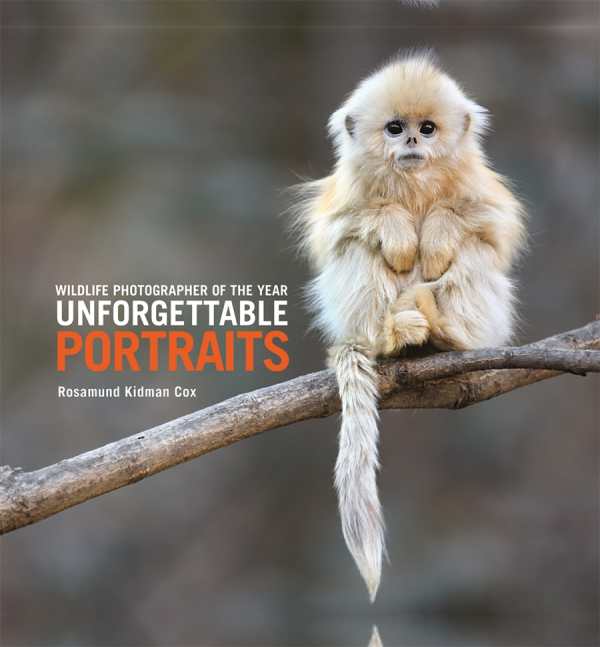
Unforgettable Portraits by Rosamund Kidman Cox

Lions, tigers and bears–and more–light up the incandescent pages of this collection of stunning wildlife photography.

Unforgettable Portraits is a beautiful, large-format collection of images from several decades of the international Wildlife Photographer of the Year competition. Each stunning photo–close-ups and dioramas; elephants, leopards, ants and springtails–gets accompanying text explaining the species, the context, the photographer’s equipment and technique, with an emphasis on endangered species and climate change. Readers meet the Atlantic wolfish, the spotted-tailed quoll and the Namib Desert’s welwitschia, and learn that spirit bears have “a mutation of the same gene that gives rise to red hair in humans” and that the photographer must be part wildlife scientist to get these shots, designing blinds and lying in wait for days, weeks and longer.

These 70 stunning images, by more than 50 photographers from more than 20 countries, would make a wondrous gift for any lover of wildlife, strangeness and beauty.


This review originally ran in the November 5, 2019 gift issue of Shelf Awareness for Readers. To subscribe, click here, and you’ll receive two issues per week of book reviews and other bookish fun.


Rating: 8 whiskers illuminated.

author interview: Matthew Ferrence, in Still: The Journal

Following my review of Matt’s Appalachia North, here is the interview we conducted, also published at Still: The Journal in their Fall 2019 issue.

Julia Kastner: You write about Sean Prentiss’s book, Finding Abbey: “He also journeys into himself, something I doubt he understood at the beginning of his project, even if it lies at the center of his book.” Did you understand, at the beginning of your project, what journey you were on?

Matthew Ferrence: The short answer is no.

The longer answer has to do with the process of publication itself…

Please click over to read the full interview. Thanks again to Still for publishing this work!

Appalachia North by Matthew Ferrence, in Still: The Journal

Following my earlier review, I am so deeply pleased to shared with you today this review in the Fall 2019 issue of Still: The Journal.

Matthew Ferrence’s Appalachia North is both memoir and outward-looking examination of place: what it means to be from somewhere, how our relationship to home can change, and the complicated and too-often negative role Appalachia plays in the national imagination, and in its own.

Ferrence was forty when he received a life-changing diagnosis…

Please click over to read the full review. Look for my interview with Matt on Friday. And many thanks again to the Editors at Still for considering and accepting my work.