Teaser Tuesdays: Body Counts by Sean Strub

Teaser Tuesdays is a weekly bookish meme, hosted by MizB of Should Be Reading.

bodycounts

Body Counts: A Memoir of Politics, Sex, AIDS and Survival is excellent both as a moving personal memoir and as a historical primer on the AIDS epidemic and cultural & political responses to it. I am impressed. As a teaser, let me share this line:

Hattoy was a larger-than-life character, politically astute, and outrageously witty, even for a gay man who had a college job working at Disneyland dressed as Donald Duck while tripping on acid.

…which highlights the humor still available to Strub as he relates some pretty sobering stories. This is, after all, his life, and a sense of fun is always appropriate in life. Review to come, but for now I can safely recommend it.

This quotation comes from an uncorrected advance proof and is subject to change.

Joe Hill

Following my experience with Joe Hill’s outstanding NOS4A2, I have been considering the relationship of Hill’s writing to his father’s.

Joe Hill

Joe Hill

A little background: as we all know by now, Joe Hillstrom King is the oldest son of Stephen King. Those being prodigiously large shoes to fill, he began his career as a novelist using Joe Hill as his pen name, not wanting to be associated with Dad – one can imagine the admiration or scrutiny that might have brought. More to the point, I imagine he would have been unable to fully appreciate any success gained as Stephen King’s son, unsure if he could take full credit for it. However, a few books in, it appears he’s now confident in his own career and independence; he “came out” as King’s son in 2007, partly because his public was getting suspicious. (He does awfully resemble his father.) I sympathize with Hill’s need to separate himself early in his career.

Stephen King

Stephen King


[As an aside, I sympathize still more with novelist Kelly Braffet, a lifelong King fan who has ended up his daughter-in-law. As I learned in that article that I recently shared with you, she began her relationship with King’s second son Owen terrified of speaking to her hero. This would indeed be terrifying – I can only imagine! I mean, if I were to date the son of a still-living Hemingway, at least I could rely on the fact that Hem is a bully and a blusterer, which I know how to handle; but King is apparently just a terrifically nice guy. And that’s so much scarier! Speaking of which, I loved the world’s strongest librarian‘s recent blog post about meeting Stephen King.]

I respect Hill’s decision to hide his family background early on, and I respect his decision to stop hiding it. But I wonder what effect my knowledge has had on my reading of his work, because here’s the thing: NOS4A2 has a hell of a lot of Stephen King in it. I mean this in the best possible way – I love King, and I love NOS4A2. buick8

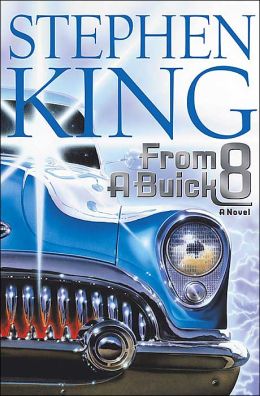
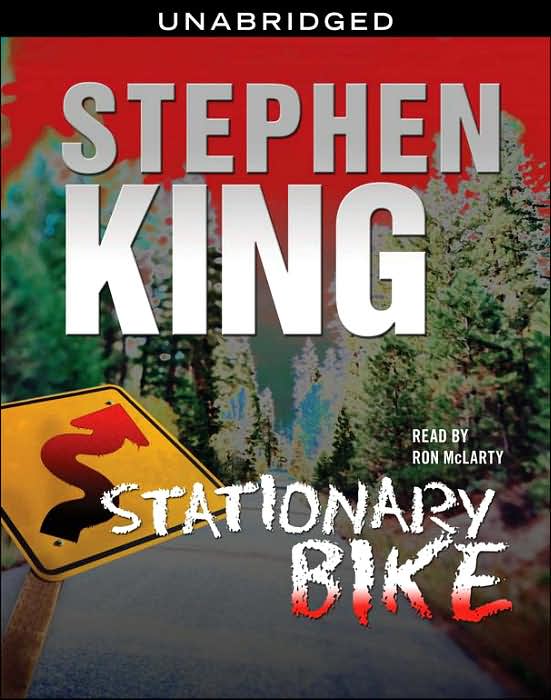
For one thing, there are plot points: a car with a will of its own is straight out of the very first Stephen King novel I ever read, From a Buick 8. A bicycle that takes its rider otherworldly places played a central role in Stationary Bike. I don’t mean to call Hill statbikederivative – he’s not – but it’s interesting to see these parallels, and it makes me wonder: if your father was Stephen King, would you consciously pull from his novels? Unconsciously? That would seem to be unavoidable.

Stylistically, too, I recognized a King-like realism and heightened awareness of pop culture and strongly recognizable settings; mixed with expert worldbuilding, the result felt inextricably related (no pun intended) to King’s strongest work. But that suggests a question, too. Would I have made these comparisons and found these similarities if I hadn’t known about the familial connection between the two authors? And that question is really the point of this blog post. I feel confident that I would have seen these connections, because they appear so striking. But we’ll never know, because I didn’t get to go into this reading blind. For that matter, I picked this book up because of the Hill’s relationship to King. And the point of that statement is that Joe Hill was so very right to begin his career under cloak of pseudonym. Now, though, it needn’t matter, because he’s a kick-ass author in his own right. Bring on Heart-Shaped Box.

At the end of the audio version of NOS4A2 that I listened to, there was included an author interview with Joe Hill. (That is, there are no questions, just Hill speaking, but it reads like an interview; I imagine the questions were asked off-stage.) This was an enjoyable way to hear him in his own voice, and I loved some of what he had to say about audiobooks in particular. He cites Harold Bloom, eminent literary critic, saying that audio is simply not the same – is not “literature” – and that listening is not reading (well, duh). Hill refutes this idea, pointing out that listening to literature is yes, different, but is its own important thing. He uses as an example a certain blind author of noted “literature”; I would also point out Homer, who was both blind and pre-written-history, who lived back when the oral tradition was the only way to share stories. At any rate, Hill’s celebration of audiobooks was nice to hear. (And unsurprising, considering his upbringing.)

Finally, in the same interview/monologue, Hill says that “imagination is as powerful as physical law.” I want to leave you with that: a very apt point from Hill, as an author and as a product of the King household.

book beginnings on Friday: The Orchardist by Amanda Coplin

Thanks to Rose City Reader for hosting this meme. To participate, share the first line or two of the book you are currently reading and, if you feel so moved, let us know what your first impressions were based on that first line.

I already had this book on my list (already had it loaded on my player, in fact), but then Christine Byl recommended it and it raced to the top of the figurative stack.

orchardist

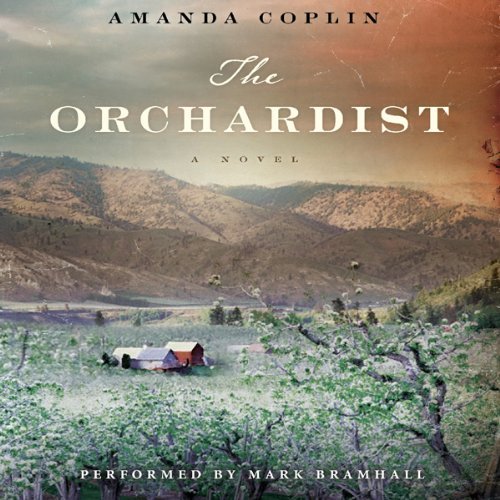
The Orchardist is a novel set in late-1800’s Washington state, and it begins with a description of the title character:

His face was as pitted as the moon. He was tall, broad-shouldered, and thick without being stocky, though one could see how he would pass into stockiness; he had already taken on the barrel-chested sturdiness of an old man.

I knew almost nothing about this book going in, except that I had heard good things; and I will tell you even less at this point about what’s inside the covers. I think this story is most enjoyable when you start it blind. So I’ll just say that so far, I’m mesmerized by the descriptions, the character-building, and the remarkable, quiet reflection of humanity. Do check it out. (I’m very much enjoying Mark Bramhall’s narration, too.) Happy Friday, friends.

NOS4A2 by Joe Hill (audio)

nos4a2Warning: here comes another rave review.

NOS4A2 is terrifying, enthralling, highly imaginative, and a deliciously entertaining wild ride. As much as I’m tempted to write a play-by-play plot synopsis, I shall resist, because discovering those twists and turns as told by Joe Hill is an excellent experience that I can’t match. So, a few brief sketches.

Victoria McQueen – known as Vic, or The Brat – rides a Raleigh Tuff Burner, a boy’s mountain bike that her dad bought her even though it’s really too big for her. We meet her at age 8, but follow her through several decades. Maggie Leigh is a small-town Iowa librarian with purple hair and an equal passion for Romance poetry and Henry Rollins. Lou Carmody is a fat man with a heart of gold who is passionate about superheroes, comics, fantasy, and his family. He works as a mechanic and is arguably the most loveable character in this story. There is a bad guy with a warped sense of “fun” and a love for little children; there is another bad guy who never really grew up and doesn’t want to. Settings range from the New Hampshire coast, to the Massachusetts woods, to the snowy mountains of Colorado, and of course that Iowa library.

NOS4A2 combines realism and a deft hand for family dynamics and truly touching, human, fully-wrought relationships with horror – and by horror I mean little children smiling sweetly while wielding chainsaws and singing Christmas carols by the light of an animate moon (and on from there). I came to love and care for Vic, Maggie Leigh, both Vic’s parents, Lou, Wayne, and all the rest: they are fully developed characters with all the quirks and back-stories a reader could ask for. The imagination employed to create these characters – not to mention the outrageous, chilling, perfectly explicated otherworld they have to deal with – is prodigious. I marvel at the mind that can create such things.

Spooky creepy world-building combined with all-American realism, horrifically menacing little children, and an expert sense of pacing and suspense put NOS4A2 in the highest class. Not to put too fine a point on it, then, Joe Hill has all the goods his daddy does. Full points as well to Kate Mulgrew for her narration, which ranges over numerous distinctive voices, including accents, genders, and terror. As Hill points out in the author interview at the end of this audiobook (on which more to come in a later post), a well-read audiobook is a uniquely awesome experience, and this is one. Fully absorbing, realistic and petrifying, NOS4A2 is a juicy good time, but not for the faint of heart. I’m on to find more of Joe Hill.


Rating: 10 Scrabble tiles.
(Final tip: DO listen to the audiobook!)

beer and books

Well. This is about as easy as it gets: 13 of the Best Literary Quotes About Beer were clearly compiled with me specifically in mind. From beer brewed by “noble twins… in their divine alevats, cunning as the sons of deathless Leda,” to “a great pot, filled with some very fragrant compound, which sent forth a grateful steam,” these lines will make you… thirsty.

I can’t quite decide about Ray Bradbury’s statement that “Beer’s intellectual. What a shame so many idiots drink it.” (Maybe I’m afraid he’s talking about me?) And I rather disagree, respectfully, with Haruki Murakami’s preferences as to temperature, although I concur with his feelings about the progression of temperature as one drinks.

Edgar Allen Poe’s lines are among my very favorite:

Fill with mingled cream and amber,
I will drain that glass again.
Such hilarious visions clamber
Through the chambers of my brain.
Quaintest thoughts — queerest fancies,
Come to life and fade away:
What care I how time advances?
I am drinking ale today.

I am a little saddened by Hemingway’s lines. On the one hand they are a fine example of what I love about his writing: Papa’s descriptions of food and drink are in fact some of the best things he does, and I can’t read those passages without watering mouth. But that this example comes from an ad cheapens it.

And as for the best final line… it had to be the Bard: “a quart of Ale is a dish for a king.” Indeed, sir.

Here’s a tip: ale will make a fine accompaniment to your reading pleasure, too.

Teaser Tuesdays: The Murder Code by Steve Mosby

Teaser Tuesdays is a weekly bookish meme, hosted by MizB of Should Be Reading.

murder code

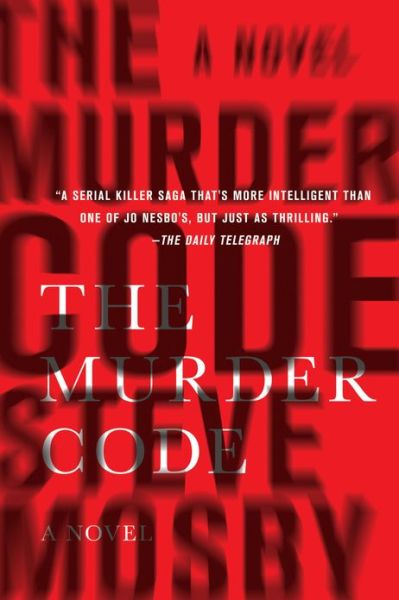
I wanted to share these few lines with you because they made me pause and wonder. The Murder Code is a thriller, and on the bloody side at that; but a line here and there hints at humanity, even romance.

Occasionally, it drives him to distraction, bu he also knows it is one of the things he would miss most about her if she was gone: that ultimately we love the rough edges of people more than the smooth surfaces.

And on the next page:

In such ways, he realises, do relationships grow over time. We begin by looking for perfection; we end up by loving flaws.

I found it remarkable that this author of hard-boiled gore also handles love so deftly. I’ve seen it done far less eloquently and realistically in this genre. And I had to stop and consider the truth of the statements.

Well done, Mosby. Stay tuned for my full review to come.

This quotation comes from an uncorrected advance proof and is subject to change.

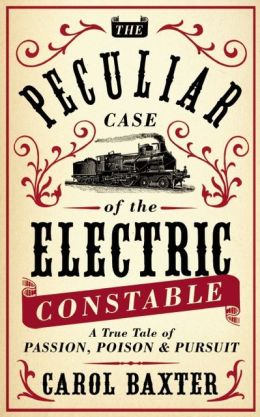
The Peculiar Case of the Electric Constable by Carol Baxter

An exhilarating real-life thriller about the murder that revealed the power of the telegraph.

peculiar electric

Australian historian Carol Baxter melds true crime and science in the gripping The Peculiar Case of the Electric Constable. The electric telegraph (or the “electric constable,” as it was known) was a newfangled, doubtful-looking invention in 1845, when a well-liked young woman was found gasping her final breaths in the small English town of Slough. Fortuitously, Slough was connected by an experimental telegraph line to Paddington Station; when a distinctively dressed gentleman was seen leaving the apparent murder scene and boarding a train, quick-thinking locals sent word along the line. The pursuit by telegraph of a criminal suspect marked a turning point, Baxter argues, and sparked the communications revolution that continues today. That the suspect, John Tawell, was a Quaker made this case still more sensational, and his personal history as a transported convict helped to transfix the public.

This peculiar case involved not only the “electric constable” but also the new fields of toxicology and forensic science. The murder trial riveted the medical and legal professions, setting new precedents; the public, already inspired by poisoning cases, was riveted by the cyanide evidence that “the Quaker murderer” provided. Baxter’s accounts of the telegraph’s technology, the prevailing cultural climate regarding murder and poisonings, contemporary forensic methods and Tawell’s personal history are all worthy of an engrossing thriller. (Her research was meticulous, though, she explains in an author’s note, and all the dialogue attributed and factual.) Expertly told, The Peculiar Case of the Electric Constable is a captivating accomplishment in nonfiction.


This review originally ran in the October 29, 2013 issue of Shelf Awareness for Readers. To subscribe, click here, and you’ll receive two issues per week of book reviews and other bookish fun!


Rating: 7 dark suits.

Antigone by Sophocles, trans. by Dudley Fitts and Robert Fitzgerald

oedipusThis is the third play in a trilogy. Please see my write-ups of the first two: Oedipus Rex and Oedipus at Colonus.

I have studied Antigone in some depth before, also in Fitzgerald’s translation, and I enjoyed it immensely again. The action is this: brothers Eteocles and Polyneices have done battle for the kingship of Thebes, and both have been killed, Eteocles within the city walls and Polyneices, attacking from without. Now king again, Creon – uncle to Antigone, Ismene, Eteocles, and Polyneices – decrees that Eteocles will be buried with full honors but Polyneices will not, because he was a traitor who attacked his own city. You have no doubt noticed the great significance of the oracles I’ve named so far in these plays: the gods were a very real, very important part of life in the ancient Greece represented in these works. One of the deeply serious principles at play in their culture would have been honoring one’s family, and respectfully burying one’s dead. Therefore, Antigone doesn’t hesitate to defy Creon’s royal decree – on pain of death – and bury her brother. She is caught, captured, makes no denial, and is sentenced. Creon is too cowardly to order her death, so he orders her locked in an underground cell and fed; whether she lives or dies, he says, is no fault of his.

The real conflict here is between god’s man and man’s law. Antigone asked Ismene to assist her in burying their brother but Ismene refused, citing man’s law as dominant; Antigone takes it as a given that god’s law, regarding the burial of one’s dead relatives, is superior. When Antigone is caught, Ismene changes her opinion, begging to be put to death with her sister, but Antigone refuses her this honor: she didn’t earn it. Creon, for his own reasons, refuses to punish her: he has begun to dread the consequences of his stiff policy, in light of public sentiment sympathizing with Antigone’s cause. From being steadfast and confident in his decree in the beginning, Creon is increasingly worried that he may be wrong; but – in another theme of the play – he is too proud (or has too much hubris) to back down. His son Haimon is engaged to marry Antigone, and comes to Creon to ask for her pardon – not because he is “girlstruck,” but because he cares for his father’s fate. This is the first of several warnings that Creon should heed; the next comes in the form of the respected seer Teiresias. Ironically, Oedipus had failed to listen to Teiresias in Oedipus Rex, and Creon will make the same mistake here. The Chorus eventually convinces Creon to pardon Antigone and bury Polyneices, but this decision comes too late. When the party arrives at Antigone’s cell, she has killed herself; Creon is there just in time to see his son Haimon do the same. This is a classic tragedy, in terms of its fatal flaw – Creon’s hubris in thinking to rule against god’s law, and then in his reluctance to admit he was wrong and change his policy – resulting in the death of his family. Because, oh yes, his queen wife (Haimon’s mother) also kills herself when she hears the news. Whew.

To me this is by far the strongest of the three plays. I noted a number of iconic lines that I felt the need to share with you. In fact, these lines taken together serve somewhat to give a feel for the action of this play, which is most importantly internal action: Creon is stiff and unbending; Creon doubts himself; Creon reverses. It is a conflict between moral stances. Also, as you can see, there is a feminist undertone here as well – represented not least by Creon’s idiocy.

Ismene to Antigone when Antigone asks her to disobey Creon’s rule:

We are only women,
We cannot fight with men, Antigone!

Same scene, Ismene to Antigone again:

Impossible things should not be tried at all.

Creon, arrogantly scolding Antigone for what he ironically sees as her pride in disobeying him:

She has much to learn.
The inflexible heart breaks first, the toughest iron
Cracks first, and the wildest horses bend their necks
At the pull of the smallest curb.

Creon again, betraying the real reasons for his reluctance to reconsider his stance:

Who is the man here,
She or I, if this crime goes unpunished?

And even worse – still Creon:

Whoever is chosen to govern should be obeyed –
Must be obeyed, in all thing, great and small,
Just and unjust!

(Just and unjust? Did you really mean to say that, Creon?)

If we must lose,
Let’s lose to a man, at least! Is a woman stronger than we?

Haimon, giving his father good advice:

It is not reason never to yield to reason!

Just a few of my favorite lines. I hope they communicate the power and drama in this short but very moving play.


Rating: 8 birds of augury.

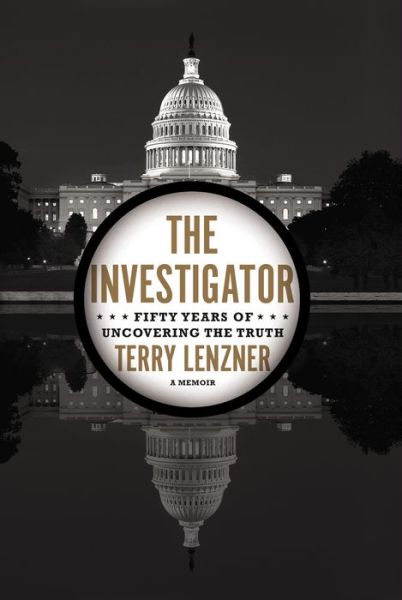
The Investigator: Fifty Years of Uncovering the Truth by Terry Lenzner

An investigator’s caseload over the decades offers a captivating glimpse of the intersection of politics, celebrity and money in the U.S.

investigator

Terry Lenzner’s career began in the Justice Department’s Civil Rights Division in the 1960s, and has ranged from the Senate Watergate Committee through private legal practice to his own company, Investigative Group International. A lawyer by training, he found his passion in research and sleuthing. The Investigator reads like a Forrest-Gump-style catalogue of cases that have caught the public eye–from the murders of three civil rights workers in Mississippi, to the Harrisburg 7’s federal case for antiwar activism, to Watergate, the Unabomber, Monica Lewinsky and the death of Princess Diana.

Lenzner’s clients include governments, politicians, businessmen and celebrities; the resulting wide-ranging subject matter in this memoir accounts in part for its appeal. Even the tedious financial fact-checking of an investigation into the Trans-Alaska Pipeline is brought to life by Lenzner’s passion. He gives character sketches of public figures he’s known, debunks public perceptions of certain events and offers investigative tips along the way. He is concerned with the truth, not satisfying the client at any price, and shares anecdotes in which the two goals were irreconcilable.

Impressively, this seasoned investigator is also a fine writer. His story opens compellingly, giving background while simultaneously jumping right into the action. Although “this isn’t meant to be a history book,” Lenzner writes, The Investigator is an absorbing and intelligent sampling of American history, told in puzzles and–sometimes–solutions.


This review originally ran as a *starred review* in the October 22, 2013 issue of Shelf Awareness for Readers. To subscribe, click here, and you’ll receive two issues per week of book reviews and other bookish fun!


Rating: 7 witnesses.

Oedipus at Colonus by Sophocles, trans. by Dudley Fitts and Robert Fitzgerald

oedipusThis is the second play in a trilogy; see the first, Oedipus Rex, here.

At the opening of Oedipus at Colonus, 20 years have passed, during which Oedipus has wandered in exile with his daughter Antigone as faithful companion and caregiver. He initially hoped for a sentence of death from Creon, but was given banishment instead. He arrives near Athens hoping for asylum, as his second daughter Ismene appears with news. Thebes is experiencing conflict: the two sons of Oedipus, Eteocles and Polyneices, are fighting for the kingship. An oracle has instructed that Oedipus can help; but he refuses, even when Polyneices shows up to ask for his father’s blessing. Oedipus resents that his sons heartlessly allowed him to be turned out of the city. Although he wanted death in the beginning, he has since decided that his crimes were unknowing – he killed his father in a fair fight, not knowing who the man was, and defending his life; and he married his mother not knowing his relationship to her, only knowing that she was a queen whose favor he had won. And he resents the life he’s earned by his innocent crimes. At Colonus, he meets Theseus, king of Athens, who defends Oedipus and his daughters against the treachery of Creon. Following another oracle that says Oedipus will bring peace and glory to the city that offers him refuge, Theseus welcomes Oedipus to die there at Colonus.

This middle play (the only one that I had not read before) was in some ways the quietest of the three, and apparently the least known. It was followed, in my edition, by a commentary that Oedipus Rex lacked. This commentary described the principles of translation ascribed to by Fitzgerald, and gave some background information on Greek theatre and tips for presenting this in the modern era. I found it useful. I was probably least moved by Oedipus Colonus; but it did portray the loving relationship between Antigone and her father (brother) that helps establish her love of family, which we will see so strongly in Antigone. She is growing as a character; she did not speak in Oedipus Rex, and in this play she is a speaking character but still subordinate to her father’s needs. She is kidnapped, apparently helpless to defend herself, but her strength is increasing as her father’s life ends.


Rating: 5 holy places.