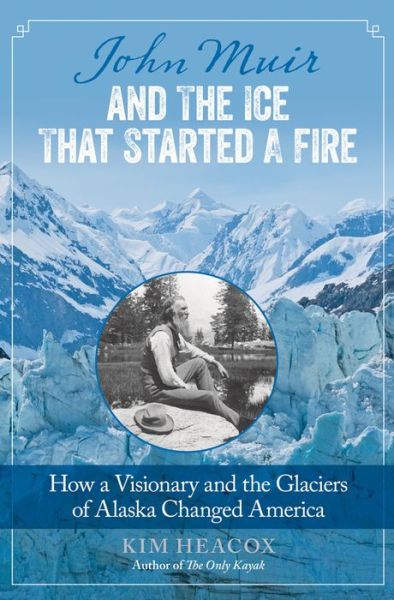
Teaser Tuesdays: John Muir and the Ice that Started a Fire by Kim Heacox

Teaser Tuesdays is a weekly bookish meme, hosted by MizB of Should Be Reading.

muir ice

You know I couldn’t pass up a history of John Muir and his role in creating the American conservation movement! I am learning a lot, and not only about Muir and glaciers.

Today’s demographers have estimated that of the roughly 110 billion people who have lived on earth the last 50,000 years, only a small fraction have achieved age fifty and beyond; of those, half are alive today. In other words, Muir was already the beneficiary of a relatively long life.

…although of course, being Muir, he did not go gently into that good night. I am not surprised at these numbers but had never considered such a thing; it’s a little boggling, isn’t it?

This quotation comes from an uncorrected advance proof and is subject to change.

guest review: The Falling Sky by Pippa Goldschmidt, from Pops

This review bears on some recent discussions: scientific fiction and scientific nonfiction.


Thanks to Kirk Smith at his blog, Fiction About Science, for both passing on a copy of this book to my Pops, and for publishing his review there. I am reposting it here, as originally published by Kirk Smith.

falling sky

The Falling Sky is about a “realistic scientist doing realistic science.” That is the hook that brought me to this special first novel written by a PhD astronomer, now a recognized writer in Edinburgh, Scotland. But it is so much more than that.

One could say this is the insightful story of a young woman finding her way from adolescence into a life of her own; or her personal contemporary tale of sexual awakening and relationships with other women; or a striking and remarkable exploration of how a scientist’s unique perspective can literally saturate the way she perceives and interacts with everything around her; or an emotionally wrenching journey with a family trying to make sense of a pointless and tragic death. It is really all of that.

That may seem to be quite a burden to place on an easy-reading first novel of only 264 pages; but Goldschmidt succeeds gracefully and does not overreach. Her story of Jeanette comfortably weaves modest measures of these elements together – and tempts the reader to fold closed the pages, finger inserted, while looking off into space to savor the author’s words and Jeanette’s thoughts. In that sense, this is not a “quick read.”

There is fuel here for artists, romantics, philosophers, mystics, feminists, photographers and scientists alike. Those familiar with Edinburgh are teased with pleasing glimpses.

But for one so inclined to the feast, it is possible to see the scientific perspective virtually everywhere in this story; in its language, metaphors, analogies, repetition of certain words and its oblique references to black holes, cosmology, time scales, anti-matter, entropy. Some may see excess or stridency in this; for those it should be accepted as essential immersion in Jeanette’s world, as setting and mood, and not as cause for anxiety or fear of missing something. There is more to savor.

Storytelling here is not linear, but not distracting: chapters alternate between “Now” and “Then” as the 3rd person narrative traces Jeanette’s young life as an astronomer while we gradually learn more of her adolescent past. She is smart & ambitious, yet confused. She is a talented and intelligent scientist whose rational lens often fails her in navigating the human world of relationships. She is an emotional creature like all of us, and it wrenches her life. The reader is drawn in as she searches.

For my money, this is a beautifully composed review, as well as describing what sounds like a quite attractive read. The book is in my hands now, so eventually you can expect me to weigh in. Thanks, Pops.

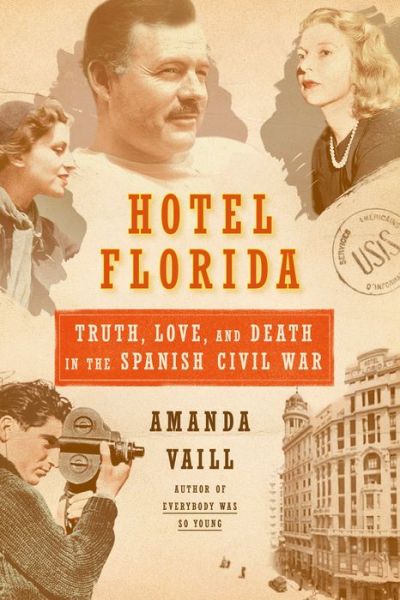
book beginnings on Friday: Hotel Florida: Truth, Love, and Death in the Spanish Civil War by Amanda Vaill

Thanks to Rose City Reader for hosting this meme. To participate, share the first line or two of the book you are currently reading and, if you feel so moved, let us know what your first impressions were based on that first line.

I am quite pleased with Hotel Florida, about the Spanish Civil War and concentrating on six individuals – three couples – who experienced it. I’m offering a little more book beginning than usual today, because I think this way gives a good feeling of Amanda Vaill’s work; so bear with me.

hotel florida

Three book beginnings…

Author’s Note:

“It is very dangerous to write the truth in war,” said Ernest Hemingway, “and the truth is very dangerous to come by.”

Prologue:

On July 18, 1936, at Gando in the Canary Islands, a short, balding, barrel-chested man in a gray suit, carrying a Spanish diplomatic passport in the name of José Antonio de Sagroniz, boarded a private seven-seater de Havilland Dragon Rapide aircraft that had arrived at Gando three days previously and had been waiting on the tarmac for him ever since.

And chapter 1:

Arturo Barea lay on the brown, pine-needled floor of a forest in the Sierra de Guadarrama, northwest of Madrid, with his head in his mistress’s lap. It was mid-afternoon on Sunday, July 19, and the resinous air was loud with the sound of cicadas.

The effect I noticed immediately here, is the connection between the Hemingway quotation and the Hemingwayesque first line of the first chapter. For one thing, note all the sensory detail in that second sentence. This is instantly recognizable to me as Hemingway’s style. And most pointedly, recall the opening line of Hemingway’s novel about the Spanish Civil War, For Whom the Bell Tolls:

He lay flat on the brown, pine-needled floor of the forest, his chin on his folded arms, and high overhead the wind blew in the tops of the pine trees.

I surely don’t need to tell you that this parallel was established on purpose. For that matter, Vaill ends her book with the opening line as (she tells us) Hemingway wrote it in his first draft:

We lay on the brown, pine-needled floor of the forest…

I like her use of structure here, the bookending of her book using Hemingway’s own words. I find that this really pulls it together.

Rather more book beginning than usual, I confess. Thanks for your patience. And let me say that Hotel Florida is about much more than Hemingway; but he is the most widely known of her six individuals, and arguable the biggest and most colorful personality, so I think the occasional emphasis can be excused. That said, I really enjoyed learning so much about her other characters. They include Martha Gellhorn, journalist and Hemingway’s partner (mistress during the war, wife after); photographers Robert Capa and Gerda Taro; and press officers Arturo Barea and Ilsa Kulcsar. As usual, you’ll have to stay tuned for my book review, but for now: I recommend.

This quotation comes from an uncorrected advance proof and is subject to change.

West Texas bicycle adventures 2014

As you know, gentle reader, I occasionally digress from books to write about bicycles, travel, or other causes for personal celebration. Today is one of those days. If you just want the books, c’mon back tomorrow.

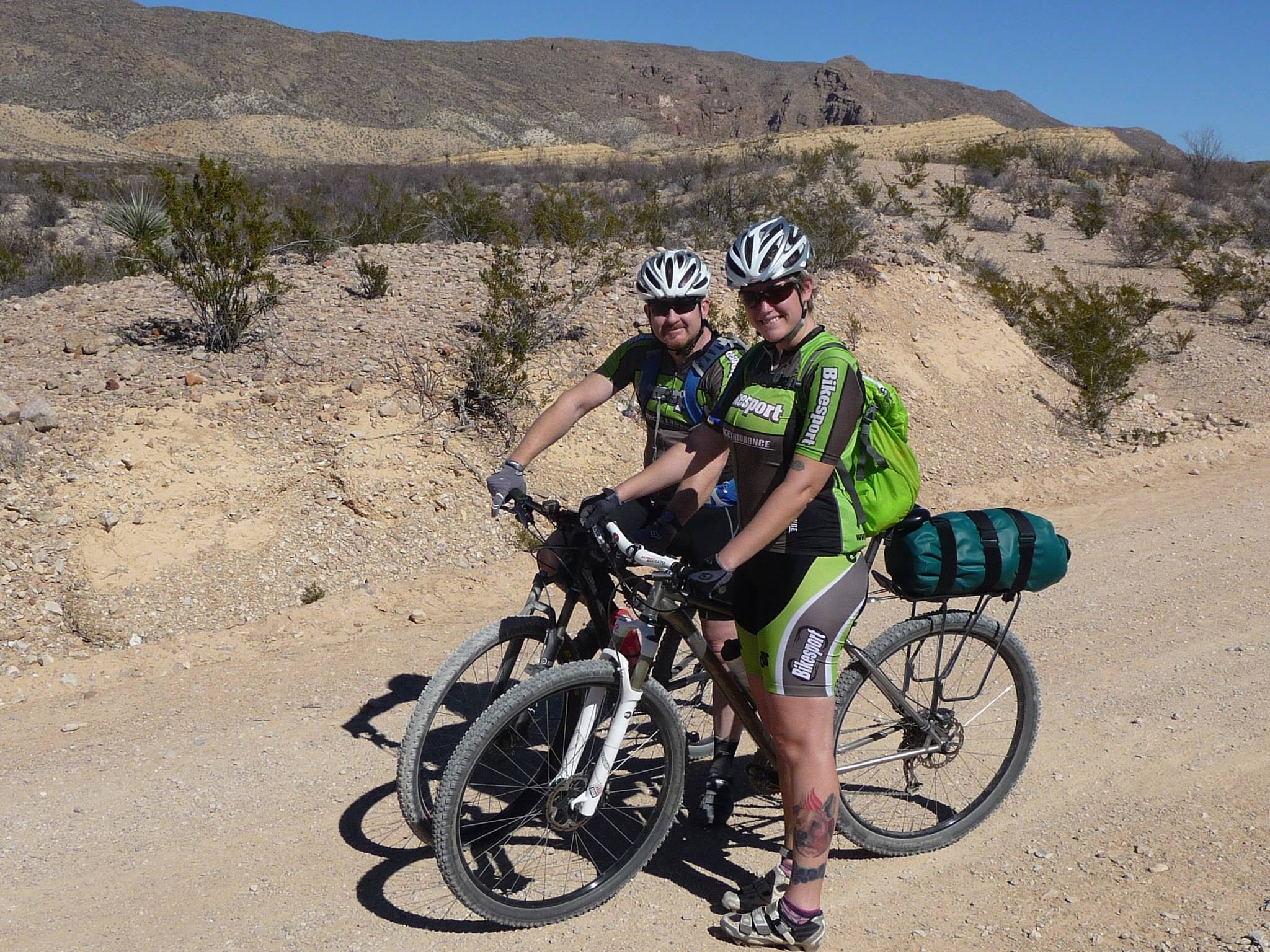
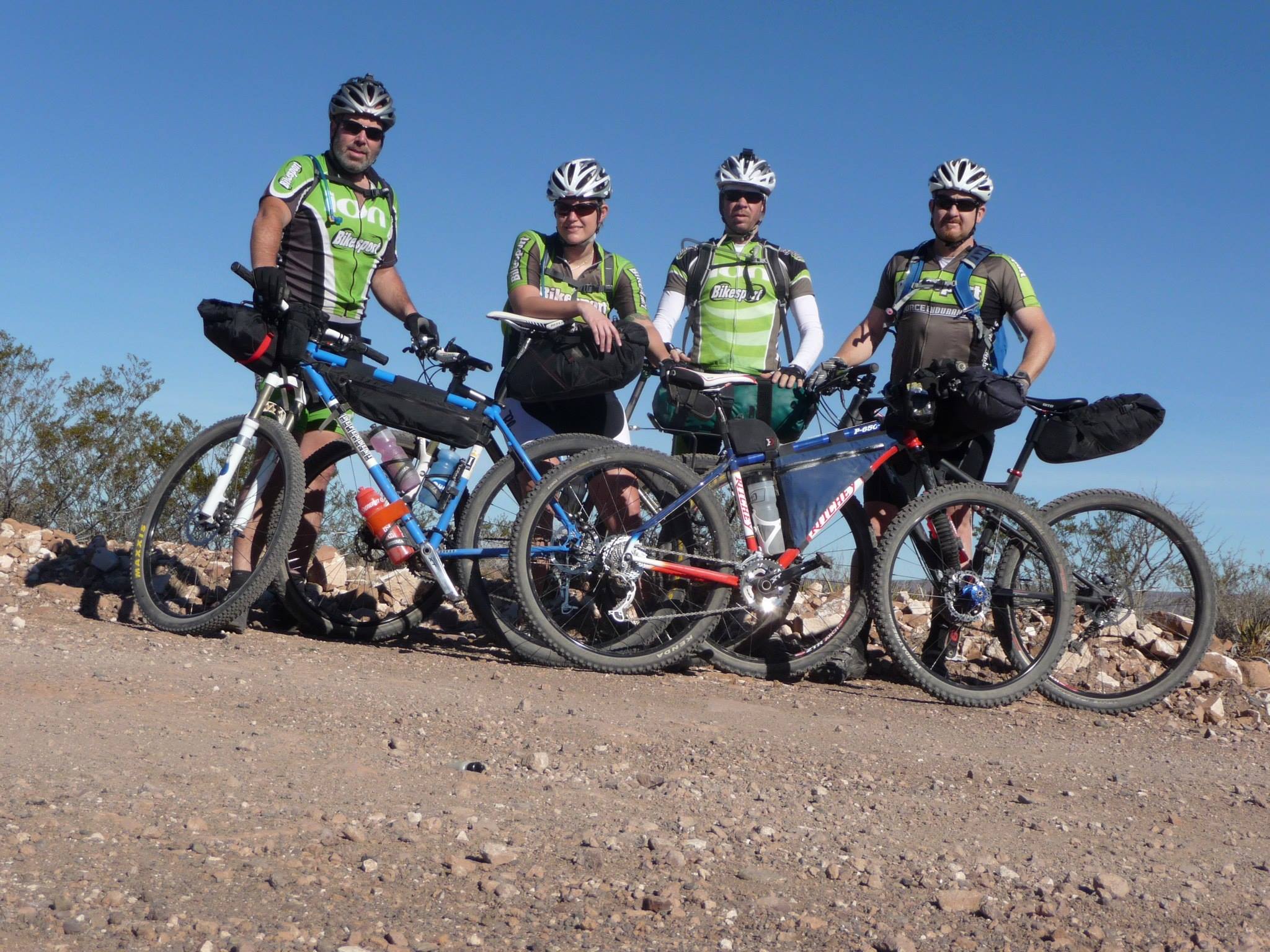
Last week Husband and I left town with a group of friends, as we try to do every February, headed for the Big Bend area of southwest Texas. Unfortunately I have missed the last two years: in 2012 I had just had knee surgery and couldn’t ride, and in 2013 I chose to go to Australia to see friends instead. So I last wrote about Terlingua and Lajitas back in 2011. It was so very good to be back in the big desert: big land, big sky, amazing great mountain bike trails, some of our very closest friends, and not much to do except slow down and enjoy ourselves. I thought I’d share a quick synopsis here with you, accompanied by some great photos. These were all taken by either me or my friends who I trust won’t mind. Thanks, friends. (As always, click to enlarge.)

On day 1, we arrived in Terlingua, checked into the cabins our team rents each year, and started packing up. Four of us (Husband, Holt, Damian and myself) were off for an overnight bikepack – camping out and self-supported, in Big Bend Ranch State Park.

fully loaded

fully loaded

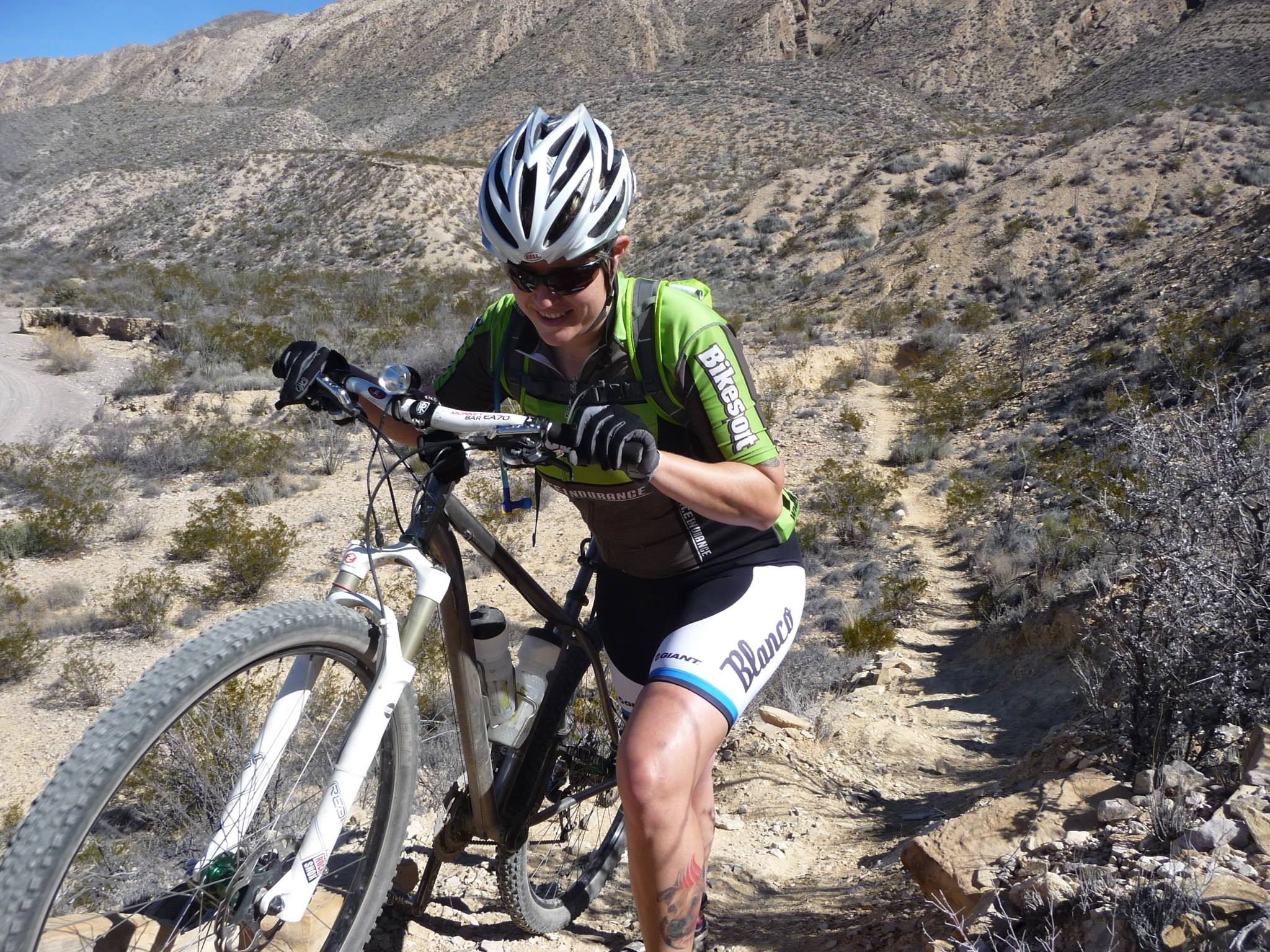
Day 1’s riding was pretty consistently up, up, up; we did a lot of hike-a-bike:

a rare moment in which I simultaneously push my bike and SMILE.

a rare moment in which I simultaneously push my bike and SMILE.

there was a lot of this.

there was a lot of this.

Just a little wildlife:

1601985_10201951626289293_773588372_o

Although not as much as one could wish. We saw bobcat prints, and I think I heard the guys say they heard coyotes yipping at night. (I am a good sleeper.) One year Husband and I saw a mule deer; not this year.

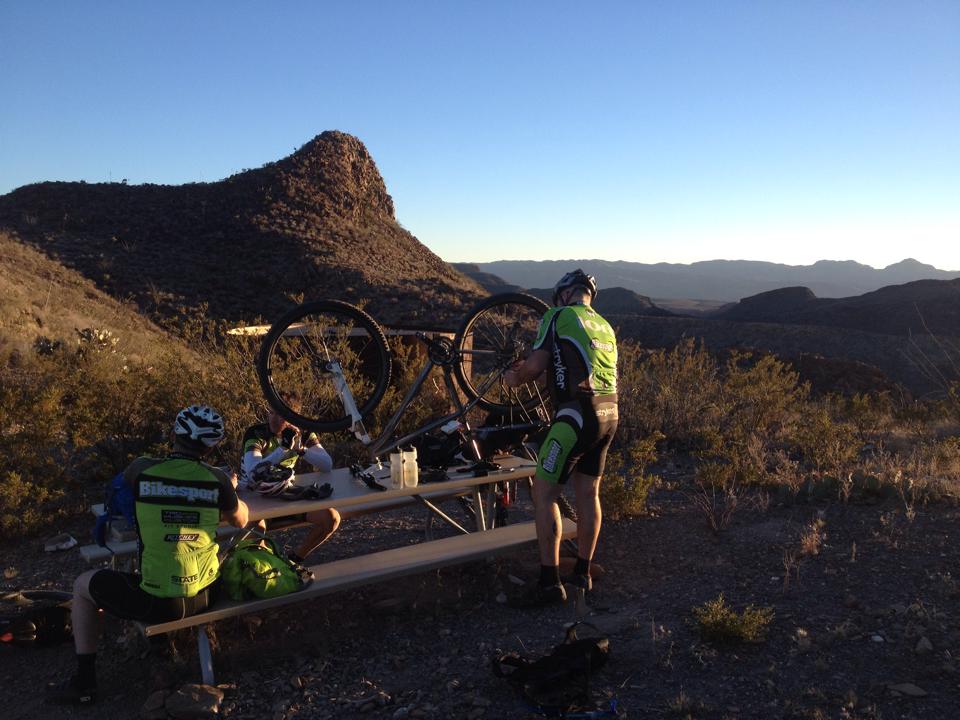
I had some issues with my rack, which afforded us the chance for this dusky repair job at a fortuitously placed picnic table up in the middle of the high nowhere:

lovely view, no?

lovely view, no?

Resulting in this repair (shot taken in the light of day 2):

1658240_10201951674410496_1469053492_o

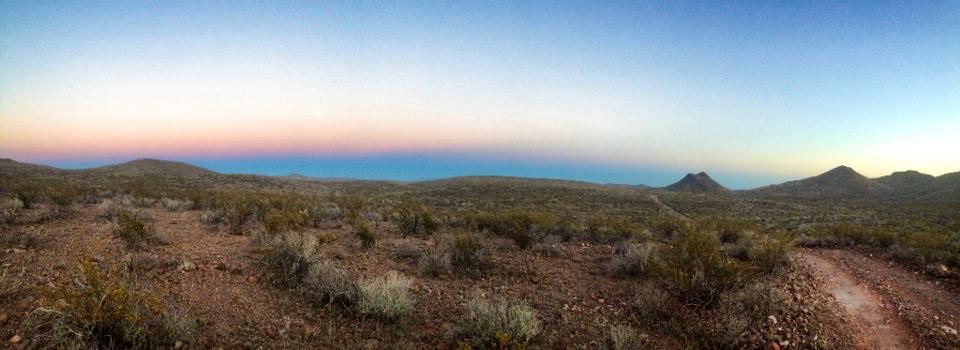
But it all worked out fine. And what a sunset!!

beautiful picture by my handsome Husband. (recommended: click to enlarge.)

beautiful picture by my handsome Husband. (recommended: click to enlarge.)

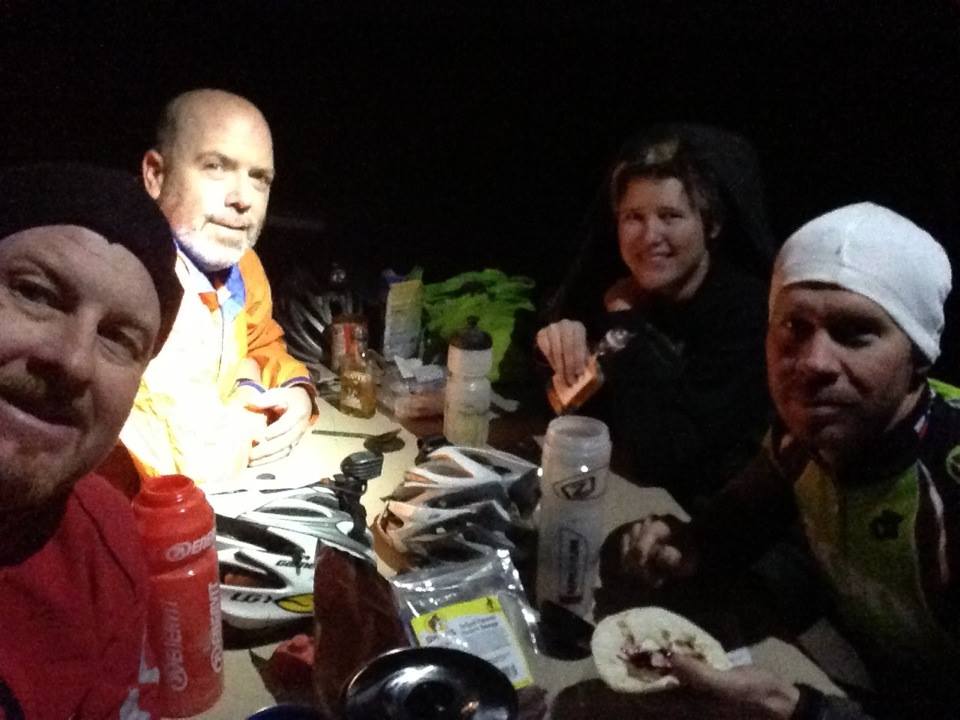
Settling in for the night…

1656295_10202001525931983_325802480_n

We ate, had a few sips of whiskey, and fell asleep under the mixed blessing of a very bright full moon that obscured the outrageous stars visible out there where the light pollution is minimal.

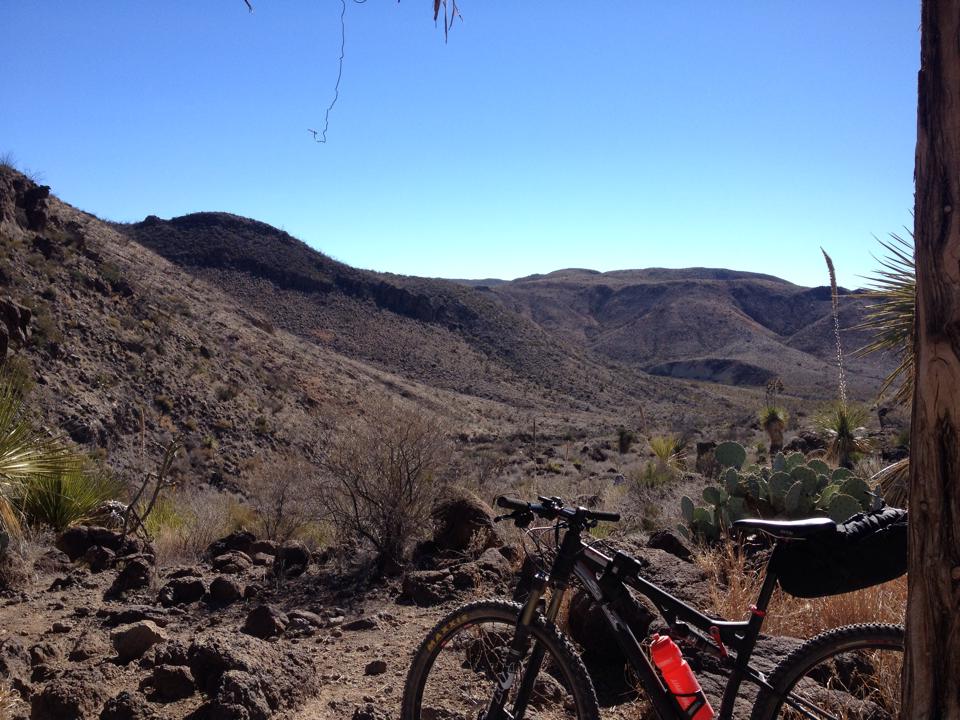
The next morning we got a leisurely start on a much more leisurely ride, generally downhill and starring views like this one.

1017647_10203113192019575_850379393_n

Although day 1 had been challenging, I think we were all very pleased with our self-sufficient journey and solitude. I especially had a difficult time with all the hike-a-bike, which aggravated both my feet and my bad knee (and all that pushing of the very heavy bike bothered my lower back) – but I was with a small group of good friends & good people. They helped me out and encouraged me, and never made me feel like I was a bother. Thanks, guys.

what a crew.

what a crew.

On day 3, we did a much lighter-weight ride, with more friends, from the cabin – no gear required.

Husband conquers the ruins

Husband conquers the ruins

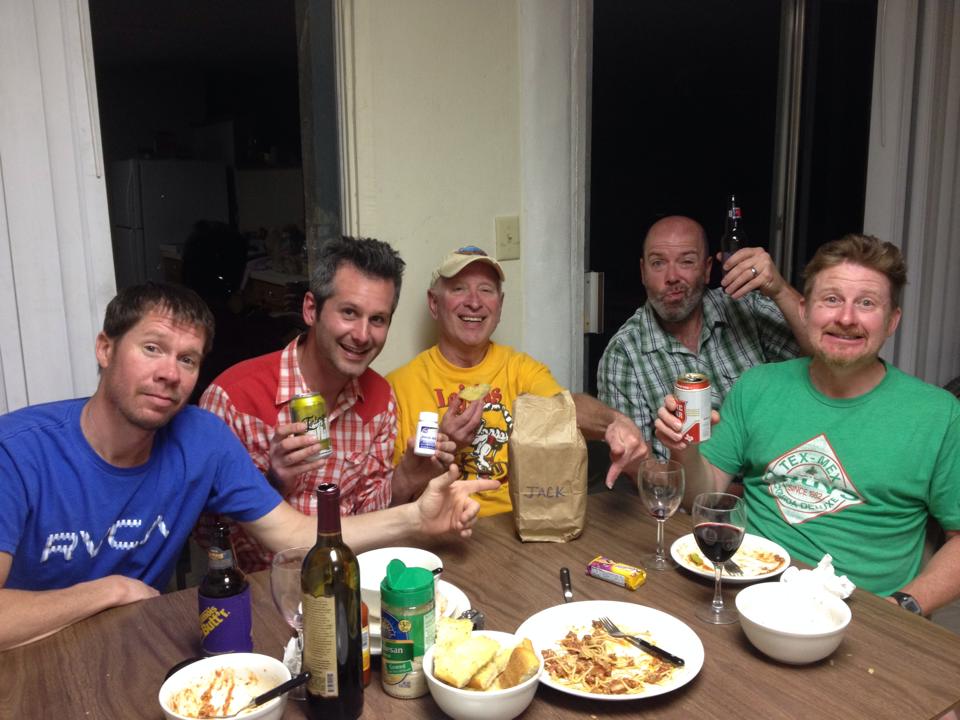
And at night, the whole pack of us enjoyed each other’s company.

1620356_10203113196619690_1638051300_n

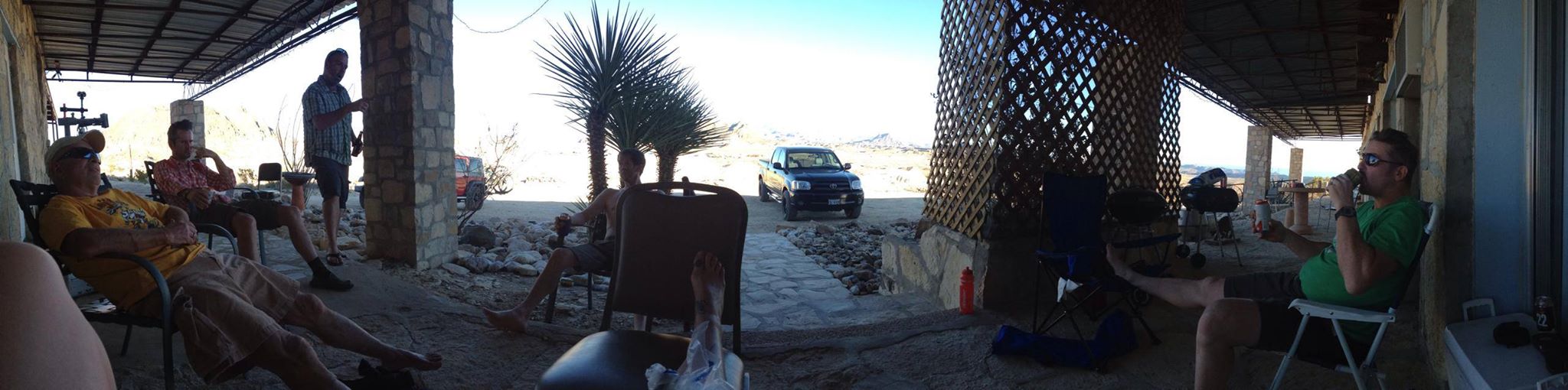
I mean, really. Look at these views from the porch of the cabin complex.

1601793_10203113195779669_346094371_o

photo 2

It was another great trip, and our love of these parts is confirmed and strengthened once again.

1798901_10203049876315944_1176066982_o

hemingWay of the Day: How To Tell If You’re In A Hemingway Novel

This is totally silly, and doesn’t make Hemingway sound terribly smart, or interesting; but there’s room for that in this world, too. The man was sometimes a caricature. In fact, I’ve been doing some musing lately as I read Hotel Florida: Truth, Love, and Death in the Spanish Civil War, by Amanda Vaill. It’s a lovely book, that examines the experience of six individuals (three couples) in the Spanish Civil War; Hemingway and Gellhorn are two of the six. I have some thoughts to share, but will save those for that book review. (Hint: good book.)

Today for giggles and deprecations: How To Tell If You’re In A Hemingway Novel. Enjoy.

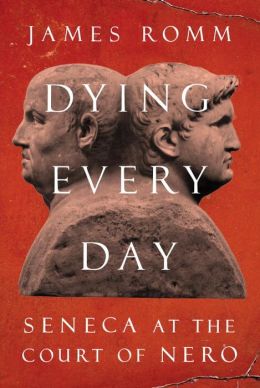
Teaser Tuesdays: Dying Every Day by James Romm

Teaser Tuesdays is a weekly bookish meme, hosted by MizB of Should Be Reading.

dying every day

Dying Every Day is well named. Nero’s rule over Rome beginning in the first few years AD was marked by death & murder in a multitude of forms, and Seneca, his philosopher/teacher-turned-adviser, offers enormous ambiguities. I chose a teaser for you that makes that point in a single sentence.

To act as imperial panderer, dispatching an ex-slave to the princeps to stop him from sleeping with his mother, brandishing Burrus and the guard as an implicit threat – these were hardly roles he had envisioned when he returned to Rome from Corsica, his trunk full of ethical treatises.

Stay tuned!

This quotation comes from an uncorrected advance proof and is subject to change.

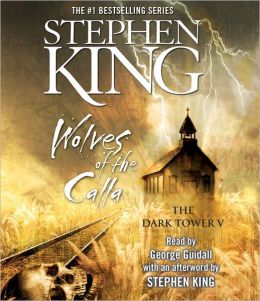
Wolves of the Calla by Stephen King (audio)

Just to review the Dark Tower series:

The Gunslinger (I)

The Drawing of the Three (II)

The Waste Lands (III)

Wizard and Glass (IV)

The Wind Through the Keyhole, written last but fitting between books IV and V.

and here we are with V: Wolves of the Calla.


wolvesThis is a very long one. My library copy of the audio came on 22 CD’s. Off the top of my head, I can only remember Anna Karenina being longer; but where that was a painful experience for me (sorry, Tolstoy fans), this was pleasurable.

The action of Roland’s ka-tet of 5 – Roland, Eddie, Susannah, Jake and Oy – takes up very little geographical space, unlike most of the previous volumes. They leave Topeka and the Wizard of Oz world, and encounter an envoy from a local town, Calla Bryn Sturgis. The locals are tormented by the Wolves from Thunderclap, the neighboring badlands: these “wolves” come about once a generation to the Calla, where a single-born child (or “singleton”) is a rarity. Most children are born in twins, and the wolves come to take own of each set away with them; when they are sent back to their families shortly after, they grow into severely mentally handicapped giants who live short, painful lives. The folken of the Calla have heard that there are gunslingers in the area, and they are struggling to decide whether to ask the gunslingers’ aid in defending their town against the coming wolves – or letting them take half the town’s children, as always.

Among them, to the great surprise of Eddie, Susannah and Jake – all originally from New York City, although of three different whens – is Father Callahan, also transplant from their world, and with terrible stories to tell about the vampires he had hunted in his former life, before coming to the Calla and settling among the people of Roland’s world. He will be an important player, among other reasons, because he is in possession of another piece of the wizard’s glass: the big bad one, Black 13. As he tells his strange life story, and the gunslingers interview the townspeople in preparation to fight against the wolves, Roland worries about this delay of their greater mission, the quest for the Dark Tower. He has a bad feeling about what will befall them here; but a gunslinger asked for his aid cannot demur.

To complicate things further, each of the ka-tet becomes aware on his or her own schedule of another terrifying fact: Susannah is pregnant, or at least one of the women living inside her body is – a result of the fighting-sex she had with a demon in the second drawing of Jake, in The Waste Lands. We recall that when we first met the woman who is now Susannah Dean, wife of Eddie, she was Odetta Holmes – and also Detta Walker. This schizophrenic (or possessed?) double became one, healthier, stronger woman in Susannah; but now she has a new inhabitant, the one called Mia, who is mother to a demon child that threatens Susannah’s life. (Whew. Got that straight?) It is a weakening of the ka-tet that each of them learns this fact separately and is reluctant to share it with the others. Also, Detta appears to be making a comeback within the split body of Susannah Dean. We still haven’t entirely categorized her as being mentally ill, or a victim of black magic… but considering the setting for this fantasy series, I think it’s the latter.

And in a final plotline and complication: the rose in the vacant lot in New York is confirmed as being an important part of the quest as well, being firmly linked to the Dark Tower itself. The ka-tet is now concerned with getting back and forth to New York to buy the lot and protect the rose as well.

As this lengthy (but not wearying) epic plays out, Roland and the reader begin to understand that beating the wolves, seeing Susannah safely through Mia’s pregnancy, protecting the rose, and handling the awful power of Black 13 are all related to the great mission of this series: achieving the Dark Tower. At the end of the story, the wolves are vanquished (at least for now), but Susannah/Mia is off on her own; Eddie is distraught, the ka-tet is splintering, and its efforts are divided between multiple aims.

My praise of the series continues; the strengths of one are the strengths of all. I’m still deeply invested in our ka-tet (and OH, when Oy made his little speech and bow! he still might be my favorite) and in their eventual fate; and I continue to find the shorter-lived characters of each book – in this case, the Calla-folken – worthwhile investments, too. I marvel at the mind of Stephen King that can create such large and involved worlds with all their interconnections. And what a tricky one he is! For Father Callahan comes from another of his novels, Salem’s Lot – one I’ve not read, so I had to have the joke spelled out for me, but it tickled me nonetheless; I can only imagine for the folks who had read it, what a great joke and mindbender this was.

I am now heading into book VI, Song of Susannah. I was on a road trip when the one ended, and just started right up into the next without pause. As we begin this next installment, the integrity of our little group is highly questionable, and I’m anxious for them. Stay tuned!


Rating: 7 sharpened dishes.

Valentine’s Day in book history

As I’ve done before, I figured I’d note today’s (consumerist, contrived) holiday with some book history, courtesy of A Reader’s Book of Days.reader's book of days

Born today:

Frank Harris (My Live and Loves), Galway, Ireland, 1856. I do not know this man. But I have been to Galway.

Carl Bernstein (All the President’s Men), Washington, D.C., 1944. I know of this one, of course, though I haven’t read the book. Interesting to know he was (is?) a D.C. native.

Died today:

1975: P.G. Wodehouse (The Code of the Woosters and lots of wonderful others, of course), Southampton, NY, at age 93. More’s the pity; would that he had lived to write more and more of those funny books.

2010: Dick Francis (Dead Cert, all those horse racing mysteries), Grand Cayman Island, at age 89. I’ve read none of his books, but I know his fans; I was working in a library where his books were popular at the time of his death, and I remember.

Additionally, I find it amusing that Nabokov features again on Valentine’s Day, since he came up on New Year’s as well!

In 1932, Vladimir Nabokov, in goal as always, played his first match with a new Russian émigré soccer team in Berlin. A few weeks later, after he was knocked unconscious by a team of factory workers, his wife, Vera, put an end to his soccer career.

[Oops.] I am a soccer fan and former player – and Nabokov fan, naturally – so I enjoy this factoid.

And,

1935: Samuel Beckett wrote to Tom McGreevy on Jane Austen, “Now I am reading the divine Jane. I think she has much to teach me.”

Well done, Beckett!

And finally, today in Julia’s personal history: we are typically in the desert wonderland of Big Bend National & State Parks & surrounding locales on this day, and this year follows that pattern. Husband and I are playing on our mountain bikes today, but I’ll check in on you upon my return.

I’m glad I picked today for a historical review in miniature; I learned some things. You?

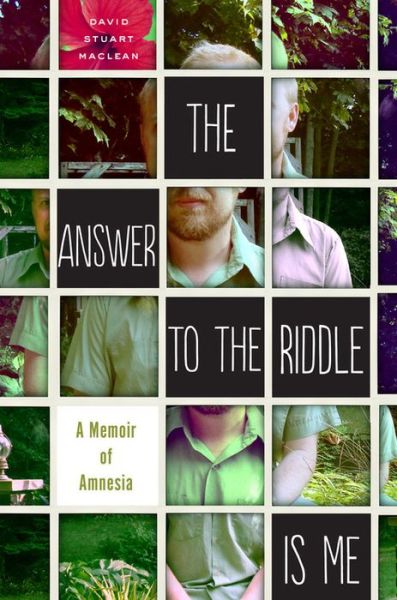
The Answer to the Riddle Is Me: A Memoir of Amnesia by David Stuart MacLean

A memoir from within the mind of an amnesiac, in full terrifying color.

riddle
In the opening scene of The Answer to the Riddle Is Me, David Stuart Maclean “wakes up” in a standing position, in a train station, in a place where English is clearly not the first language. He doesn’t know who he is, where he is or where he was going. A friendly policeman tells him that many tourists there do too many drugs and end up confused; Maclean concludes that he is a drug user and follows as he is told.

This scene is only the beginning of the enormous world of what Maclean can’t remember, and assumptions he’ll be led to make that will often turn out to be false. He was living alone in India on a government grant to aid his work as a novelist when an antimalarial drug he was taking overcame the blood-brain barrier and wreaked havoc. The Answer to the Riddle Is Me is Maclean’s story of amnesia and recovery, with all the false starts, depression, despair and small victories that come with such a trauma. Maclean often wishes himself back in a hospital where he’ll be spoon-fed and his decisions will be made for him, but he slowly, eventually resurfaces.

This heartfelt and painfully candid memoir tracks Maclean in real time, in fractured scenes and then in measured, purposeful steps, and comes with research into the medical issues involved. Readers will be mesmerized by the effort, and perhaps feel as rejuvenated in the end as Maclean does.


This review originally ran in the February 11, 2014 issue of Shelf Awareness for Readers. To subscribe, click here, and you’ll receive two issues per week of book reviews and other bookish fun!


Rating: 7 faces.

on author access

I have done some author interviews, as you may have noticed. I did a handful for a podcast, which was an interesting opportunity that I enjoyed but which came to be a little more work, and stress, than I was looking for in an unpaid gig – although many thanks again to Chris at Critical Wit for the chance, which was great while it lasted! And I do the occasional interview for the Maximum Shelf special editions of Shelf Awareness. For the former, I got to choose my own subjects; for the latter, they are assigned to me. When I go to choose interview subjects, I am looking firstly for authors whose books appeal to me (obviously), and nextly for authors that look like they would talk to me – that look like I could get access to them. Reasonably enough, debut authors who aren’t getting ALL the attention in the world are more likely to take the time to talk to little old me than are the Micheal Connellys of the business. (Not to pick on Connelly and for the record, I never asked him for an interview.) A good measure of this is, when I look at their website, does the “contact me” link take me to the author’s email address? or does it say something like “for speaking opportunities, contact the publicist at xxx and for interview requests, contact the whomever at xxx”? The first instance makes for a far better chance of somebody small-time, like myself, getting access.

But when I’m assigned an author interview at Shelf Awareness, I’m guaranteed access, even to the big authors, because the author (or his/her team) has agreed to the special issue in advance. It does promote the upcoming book, you know. So I get the assignment and I get connected with the author or some representative of the author – a publicist, an agent, or somebody with the publishing company. And when we’re both ready, I get set up with the author him/herself. This is easier for me because I don’t have to go seeking access; and it’s presumably easier for the author, for whom usually an appointment is set up and he/she just has to be available by phone or email at the agreed upon time.

So it was surprising when I had a different experience, some time ago. (I am posting this experience well removed, timing-wise, from the incident in question, to preserve this author’s anonymity. And I am calling this author Jane, and making her a woman because I’ve interviewed more women than men and that seems to help preserve anonymity, as well.) I got the book; I read the book; I wrote my review and my interview questions; and I was in touch with Jane’s representative (listed as a “cataloging coordinator” at the publishing company), who asked for an estimated time frame for when I’d be ready for the interview. I gave this estimate, and right about on time, emailed the representative again that I was ready to set up an appointment. As always, I offered the option to do the interview by phone (to be recorded and then transcribed), or by email (no transcription necessary, and more convenient for all parties, but less likely to get off-the-cuff, conversational answers). And that’s when things went south. This author’s representative said, ok, great! so this is what we’ll do: I’ll send you a list of questions you can ask Jane, and you can pick from that list. Um, no. That’s actually not an interview at all; that’s a press release. It’s not like I was going to ask hard or antagonistic questions – c’mon. I passed this issue along to my “boss” for this project, who agreed with my rejection of this option, and followed up with the publisher herself.

This begun a process. My boss and myself eventually communicated with no fewer than 4 people at the publisher: a Cataloging Coordinator, a Director of Advertising and Promotion, an Associate Director of Publicity, and a Publicity Assistant. The cataloging coordinator also referenced the opinions of an editor and a marketing director who apparently weighed in as well. There was a great deal of concern that author Jane (a fairly well established one, with several bestsellers to her name) just couldn’t possibly talk with me, or couldn’t possibly be asked questions that did not come from an approved list. (They did ask for my questions in advance, and I willingly provided them.)

After dealing with these 4-6 folks over a period of weeks, we did finally end up scheduling an interview with the hallowed Jane – a full 7 weeks after my original interview request, which had been preceded by a 2-week notice of my upcoming need for the interview, which was preceded by the original agreement between publisher and my boss. By this time, boss and myself were thoroughly aggravated with the process and all the players involved, including poor Jane, who we realized may very well have no knowledge of any of these goings-on. In fact, as it turns out in the end, she is very active and friendly via social media, and was so friendly and easy-going in the eventual interview that I’m 100% certain that she was innocent in these proceedings.

I had read nearly a dozen books since I’d read Jane’s, which was less than ideal for the interview, with my memory fading somewhat. And I worried that I would have trouble being friendly with her after all the trouble her people had given me – although that turned out to be easier than expected, because she was a peach. Things came out okay in the end; but just barely, and at a certain cost in terms of hairs pulled out by my boss and myself in the two months (plus) that the entire process took. And poor Jane to this day doesn’t know this story, I feel sure; if she reads this blog post (unlikely) I don’t know that she’ll recognize herself.

Should I have told her? I certainly feel that she’s being poorly served by a team that blackened her name with such unprofessional communications with an organization in her industry who was essentially on her side – trying to help her sell her book. I’m assuming they have some sort of mandate to not harass this well-established author – to not give out her home number to anybody who wants it, for example (obviously). But they handled my boss and myself badly.

I didn’t tell Jane this story, because she was just trying to get through this interview and get back to whatever she had going on on the afternoon in question. No hard feelings towards her in the end. But I wanted to share with you the interesting range of experiences I’ve had in interviewing authors… I’ve never encountered one who was less than friendly, professional, and gracious. But this publicity team seemed determined to shoot itself in the foot. How outrageous do you find these events? And for other book bloggers out there – what are your experiences trying to get access to authors? When I was pursuing my own interviews (cold calling), I never even bothered with anyone who looked unattainable. Maybe I’m a coward, but I didn’t want to have to beg, or bother anyone who didn’t want to deal with me. If it’s this hard when agreed to in advance…