Teaser Tuesdays: Wolves of the Calla by Stephen King

Teaser Tuesdays is a weekly bookish meme, hosted by MizB of Should Be Reading.

wolves

Hooray for Stephen King as usual! This is a long one, which I appreciate, as I get to lose myself in the Outworld of this novel, the fifth in the Dark Tower series.

For our teaser today: I was struck by these lines.

“But if you get her killed, Roland.. you’ll take my curse with her when you leave the calla, if you do, no matter how many children you save.”

Roland, who had been cursed before, nodded.

Doesn’t bode particularly well, does it?

What are you reading this week?

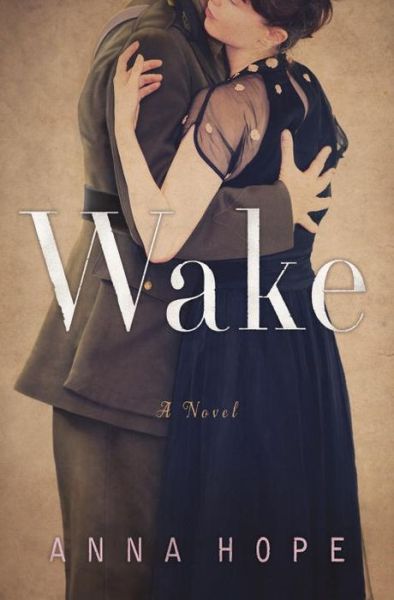
Wake by Anna Hope

With expertly written characters and a convincing melancholy tone, Anna Hope brings the aftermath of World War I to life through the lives of three English women.

wake

Anna Hope’s debut novel, Wake, follows three English women over a span of five days in 1920, building toward the two-year anniversary of Armistice Day and the end of World War I.

Hettie works in London as a dance instructor, paid by the dance to twirl with strangers, many of whom are missing limbs. She struggles to support herself as well as her irritable, aging mother and a brother who has not worked–or hardly spoken–since the war’s end. The festive, exotic dance hall where she works presents an interplay between light and dark, and Hettie’s forays with a more fortunate friend to a breathtaking speakeasy emphasize class differences. There, she meets a handsome, wealthy young man who intrigues her, but the distance from which he regards the world seems unconquerable.

Evelyn handles veterans’ pension complaints, a thankless job that keeps fresh the wound left by her boyfriend’s death in France. Asked every day to consider the fates of damaged young men, her bitterness grows. She used to be close to her brother, an officer, but he has not been the same since he returned.

And Ada is nearly mad, haunted by her son, whose death “of his wounds” has never been properly explained to her. Her loving husband feels that he has lost a wife as well as a son. When a young man appears on her doorstep and speaks her son’s name, Ada is staggered; this event threatens to precipitate her descent into mental illness.

Woven among the three women’s stories are brief views of military exhumation of unidentified bodies, candidates for the unknown soldier who will be reburied and honored on the anniversary of Armistice Day. These scenes establish and emphasize a gray, cold backdrop to the lives of Hettie, Evelyn and Ada.

Hope’s strengths lie in nuance and atmosphere, as she gently and subtly reminds the reader of humanity under the worst of conditions. The pervading mood of the novel is reinforced by poverty, an inability to talk about past trauma and the presence of countless maimed and begging young men. As the lives of her three protagonists come together and the unknown soldier nears his final grave, Wake’s deeply moving, ultimately universal story speaks evocatively across nearly a century.


This review originally ran in the February 7, 2014 issue of Shelf Awareness for the Book Trade. To subscribe, click here.


Rating: 7 dances.

book beginnings on Friday: Turtle Island by Gary Snyder

Thanks to Rose City Reader for hosting this meme. To participate, share the first line or two of the book you are currently reading and, if you feel so moved, let us know what your first impressions were based on that first line.

turtle island

I’m a little out of order, as I’ve reviewed this book already. But for further musing and perspective, I want to share with you a piece of the “Introductory Note” that explains its title.

Turtle Island–the old/new name for the continent, based on many creation myths of the people who have been living here for millenia, and reapplied by some of them to “North America” in recent years. Also, an idea found world-wide, of the earth, or cosmos even, sustained by a great turtle or serpent-of-eternity.

…Anglos, Black people, Chicanos, and others beached up on these shores all share such views at the deepest levels of their old cultural traditions–African, Asian, or European. Hark again to those roots, to see our ancient solidarity, and then to the work of being together on Turtle Island.

I collected turtles in high school. Stuffed, carved, as pendants and pillows. It’s the animal I chose as my own somehow. They still resonate; I don’t have all those turtles any more, but I’ve kept a small group of small ones, which turn out to be (by coincidence? I doubt it; but not on purpose) to be crafted from natural materials: stone, wood, shell. I feel at home here.

Turtle Island by Gary Snyder

turtle island

You all may recall that I am NOT a poetry person. I may be a tad too literal; I loved Shel Silverstein but never graduated from there. Clearly it didn’t help that I attempted Gertrude Stein later in life; her poetry is analogous in my mind to modern abstract art. Either I am a hopeless moronic philistine, or these people are making fun of us to our faces with some of this stuff.

So how did I end up here? I didn’t do my homework. I had heard enough good about Gary Snyder from people I respect for long enough that I finally jumped on a title somebody referenced: Turtle Island. I requested it from my local library. (I LOVE this service.) I went to pick it up when they told me to; and sure enough, on the cover, “Pulitzer Prize for Poetry 1975.” Well, heck, I’ll give it a whirl. (Pops and I are planning a readalong of a Snyder essay collection, Practice of the Wild, coming up, so I’ll get the prose, too.)

Snyder’s poems are short – rarely over one page (in a small format book), and often shorter. They tend towards the natural world and our relationship with it, and these of course were the subjects I was looking for. He’s really pretty accessible – for a poet. I don’t follow the stream-of-consciousness sort of thing very well, but I tried to just let his words float over me when I lost the thread. To mix a metaphor.

I liked several quite well. “Control Burn” (not “controlled”) has a clear message, and one I can get behind; and it read fairly straightforwardly. [Actually, as I look again, it would make for a very coherent sentence if you just took out all the line breaks and added a little punctuation. Look at that. I like poetry when it most resembles prose. sigh] I liked “The Call of the Wild” for its message as well; I appreciated a list of “Facts” (including “General Motors is bigger than Holland.”) but again that’s cheating: it is not a poem. Is it? Hm. If a list of facts can be a poem, maybe I’m a little better off than I thought. “The Wild Mushroom” is a more traditional poem with a recognizable meter, and it rhymes! (I am a philistymes.) It could also serve you as an abridged guide to which wild mushrooms are edible, which poisonous and which might “bring you close to God”; utility in poetry is always welcome, yes please.

“Mother Earth: Her Whales” is a lovely ode to all the earth’s inhabitants and indictment of what we’re doing here. And I love the tale of an ancient turquoise ring from Jemez discovered under the ruins of an apartment complex in Kyoto: “The Jemez Pueblo Ring.” I also like when he writes about his family, mostly his young sons; his tenderness shows clearly through.

But naturally, for me, things really get good when he switches to “Plain Talk” (the final one of the book’s four main sections), which is also known as “prose.” Here Snyder identifies problems with our world – we’re talking about the big problems, like population, pollution, and consumption – and recommends big fixes – with actions organized by social/political, community, and “our own heads.” He is concerned with the relationship of humans to the rest of the world: water, earth, dirt, plants, animals, mountains, air. His prose arguments are beautiful, well thought out, well informed (although brief), and resonate with me perfectly. I suspect that they assume certain things (bison on the plains are a good thing. our kids should play in the dirt) that not everyone agrees with; but I’m on his frequency. The people who think the big car, the big house in the big city, kids who wear designer sneakers, and the fancy career are important goals may not follow along here.

Snyder’s philosophies strike me as abundantly obviously correct, but also (sadly) far too simple and hopeful to work in our complex and stubbornly wrong world. He has all the problems described correctly, except that everything is far worse now than it was when this book was published in 1974. In that respect, it’s not good news, but Snyder shows great foresight in predicting the ways in which we’re doing even more poorly now; and further, I think it’s remarkable how relevant and right he still is in 2014. If you read this book today with no knowledge of its publication date, I think you’d find it intelligent, only understated or optimistic.

This prose conclusion to Turtle Island is absolutely the perfect conclusion to the poetry that precedes it. I confess that if I had to rate the poetry sections, I would probably end up giving this book a bemused 5 feathers or some such, with the qualification that I’m pretty sure there’s more here that I missed. But with this conclusion in “plain talk” to tie it all up for me, Turtle Island becomes a philosophical achievement along the lines of Thoreau, Abbey, Jensen, Dillard, and the like. In fact, I was often reminded of Abbey (as when Snyder refers to growth as a cancer); Jensen (as when he refers to a need for total change and starting over), some thoughts I’ve come up with (“on my own,” in theory, but clearly informed by my reading & discussions), and also with Ken Kesey’s band of Merry Pranksters.

This conclusion to the book bodes extraordinarily well for my shared reading with Pops of Snyder’s essay collection. Stay tuned.


Rating: 9 Ponderosa pines.

movie: Jack Reacher (2012)

To review: I love Lee Child’s Jack Reacher novels (no matter how far-fetched); like many “Reacher Creatures,” I was upset to learn that Tom Cruise would be playing him on the big screen. Where Reacher is something like 6’6″ and a looming giant and blonde, Cruise is short-ish and dark-haired. Plus I don’t really like Tom Cruise all that much. Husband is with me on all counts.

therefore this is a little insulting

therefore this is a little insulting

For these reasons we had made a point of not watching this movie up to now; Husband turned it down as the free movie on an airplane last year. But then came a quiet night at home when his channel-surfing was making my teeth grind, and it was free via some sort of movie-playing widget on the television (this is not my area of expertise), so what the hell.

Jack Reacher is based on the Reacher novel One Shot, set in Philly, in which an ex-army guy named Barr is accused in an apparent open-and-shut case: six shots were fired from a sniper rifle in a parking garage, and five civilians lay dead. Barr won’t speak to the police except to ask for Jack Reacher. Retired army cop Reacher is impossible to find, but lucky for the cops, shows up on his own to look into the case. Teamed up with Barr’s defense attorney – despite being rather convinced of Barr’s guilt himself – Reacher investigates, and finds (naturally) that things are more complex than they appear. In fact, there is a conspiracy, something Reacher’s fans will be familiar with. For that matter, Reacher’s fans will recognize all the elements: intrigue – problems with authority – fistfights and gunfights and ex-military camaraderie – explosive final scenes.

I had few and minor quibbles, and my reading of One Shot was so long ago that I didn’t fuss over digressions from the original plot. And despite a slight antipathy for Tom Cruise, Husband and I were both able to sort of …let that go and get into the movie. In other words, I had some hesitations but ended up enjoying this movie more than expected. Reacher’s pithy wit translated well to the screen, and the suspense and action were there and pretty solid – in spite of a totally ridiculous car chase (I mean REALLY ridiculous. besides which, in the books, Reacher is a self-acknowledged poor driver and rarely does it). I especially appreciated the moment when the Marine recognizes Reacher from his shooting skills, and that scene does come from the book.

Conclusion: I had concerns going in, but I confess I enjoyed this film. Cruise was tolerable; the humor, wit, action and suspense were all there; the plot is not to be argued with (says this Reacher fan). Touche, Tom Cruise.


Rating: 7 shots fired.

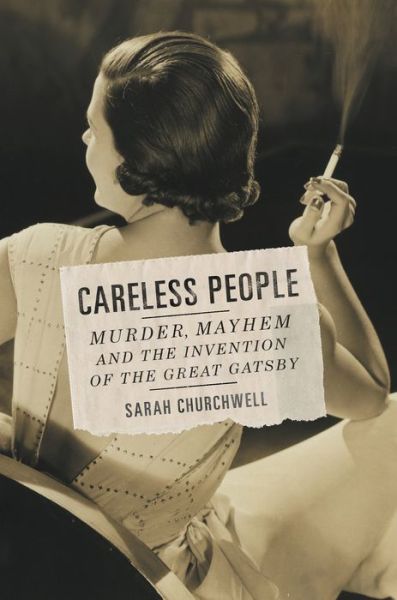
Careless People: Murder, Mayhem and the Invention of The Great Gatsby by Sarah Churchwell

New research and new angles on The Great Gatsby and its place in history.

carelesspeople

Sarah Churchwell (The Many Lives of Marilyn Monroe) takes on F. Scott Fitzgerald’s mythically proportioned masterpiece in Careless People, an expansive study of biography, history, literary criticism and cultural connections. Her inquiries focus on a double-murder involving a socially ambitious lower-class woman and a respected rector, both married but not to each other, found shot to death in each other’s arms. The case captured national attention in 1922, the year Scott and Zelda returned to New York–and the year in which The Great Gatsby is set.

With an appealing, freshly curious manner, original research and newly discovered resources, Churchwell explores the possible connections between Fitzgerald’s experiences in 1922 and what happened at the same time in his most highly regarded novel. She also compares the plot of The Great Gatsby to the real-world action of 1922. In the book, which alternates between the Fitzgeralds’ lives during the period The Great Gatsby came to life with the unfolding of media coverage of the murder case, Churchwell incorporates Fitzgerald’s correspondence, including delightful poems exchanged with Ring Lardner, and lists of slang (including some 70 ways to say “drunk”).

With elements of fun and tragedy–like the lives of its subjects–Churchwell’s study of the Fitzgeralds, The Great Gatsby and the world that birthed it presents new perspectives on a literary icon.


This review originally ran in the January 28, 2014 issue of Shelf Awareness for Readers. To subscribe, click here, and you’ll receive two issues per week of book reviews and other bookish fun!


Rating: 8 unattributed clippings.

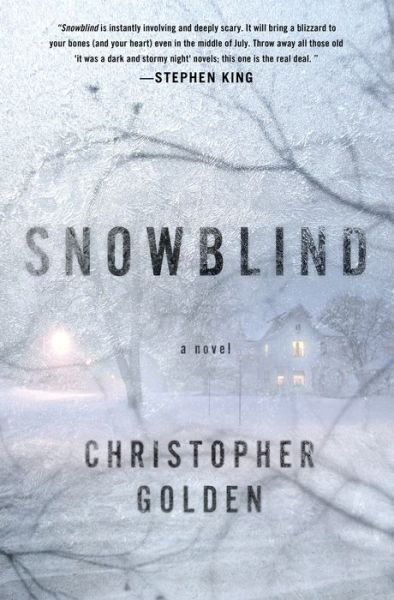
Snowblind by Christopher Golden

A full-throttle paranormal thriller starring a variety of complex, likable characters.

snowblind

Coventry, Mass., was expecting a snowstorm, but nothing like the one that blows through the opening pages of Christopher Golden’s Snowblind. The novel begins with small-town residents managing their relationships, jobs and businesses, readying for the possibility of power outages and blocked roads. Just as readers are drawn into the lives of the diverse sympathetic characters, though, they’re ripped away from us–and something more terrifying (and more cognizant) than ice and wind is involved.

Fast forward a dozen years. The survivors of the first storm–men and women still mourning their loved ones–are faced with a disturbingly similar weather pattern headed their way. Coventry is still haunted by the unexplained deaths, and now the lost townspeople are coming back to try to warn the survivors of the returning danger. Families will have to pull together quickly to avoid a second tragedy.

A fast-paced, thoroughly engrossing supernatural thriller, Snowblind employs likable, multifaceted characters linked by their small-town connections and a tragic past. Golden’s writing is suspenseful and action-driven; it’s not ornate, but he still takes time to develop stories about characters’ relationships and backgrounds that will engage readers. The terror evoked is visceral and real and, along with a fairy-tale element and realistic backdrop, grips readers from the very first pages. Snowblind is a tale of trauma, individual responsibility and, ultimately, redemption.


This review originally ran in the January 28, 2014 issue of Shelf Awareness for Readers. To subscribe, click here, and you’ll receive two issues per week of book reviews and other bookish fun!


Rating: 6 snow plows.

book beginnings on Friday: Wolves of the Calla by Stephen King

Thanks to Rose City Reader for hosting this meme. To participate, share the first line or two of the book you are currently reading and, if you feel so moved, let us know what your first impressions were based on that first line.

Hooray! The next Dark Tower novel! This is number 5.

wolves

I am passing over the rather lengthy introductory bit entitled “the final argument,” in which we are reviewed on the first four books of the series. I found this part mildly entertaining but could have done without it, considering how recently I’ve been speeding through the series; I think it’s extremely good to have, though, for readers beginning with this book or picking up after a long break. I do not think it suits today’s book beginnings theme, however.

So we start here with the prologue.

Tian was blessed (though few farmers would have used such a word) with three patches: River Field, where his family had grown rice since time out of mind; Roadside Field, where ka-Jaffords had grown sharproot, pumpkin, and corn for those same long years and generations; and Son of a Bitch, a thankless tract which mostly grew rocks, blisters, and busted hopes.

That makes for a fine echo of the classic Western thread that runs through these books. I am very glad to be back in the hands of Roland Deschain today.

the best of scientific nonfiction

In yesterday’s post, Pops shared with me a list of good fiction-about-science, as presented by author Kirk Smith. As part of that same conversation, Pops asked for my favorite scientific fiction – with “good” science being part of the criteria. Well, unsurprisingly, I didn’t have a lot to offer in that regard. I haven’t tended towards scientific fiction much (nor traditional sci fi); my fiction tends to be mysteries, historical fiction, literary fiction, or increasingly, fantasy; there is always a variety, but I’ve been short on science. I did come up with a few. But I did far better in recommending some really great nonfiction that is scientific in nature: both “good” science, and well written, enjoyable, accessible, good reading. He asked for those two lists, so I’m happy to share them here.

Some great fiction about science:

By Lisa Genova: Love Anthony and Left Neglected, but especially Still Alice. Genova has degrees in biopsychology and neuroscience (the latter a PhD from Harvard, ahem), so one expects that her novels about women and families, in which someone in the family (usually the woman) suffers a neurological disorder or disease, are scientifically accurate. I love that they are scientifically detailed and yet extraordinarily enjoyable novels, too.

Flight Behavior by Barbara Kingsolver: you can read my review, and also note that Kirk Smith and I both recommend this one; in a nutshell, Kingsolver teaches science in the most charmingly accessible of packages, the one and only Dr. Ovid Byron. You must read this; or better, you must hear the audio, because the accents are amazing. (Read by the author, a woman of many talents.)

Madeline L’Engle’s series: A Wrinkle In Time, A Wind in the Door, etc. I hesitate here, because the science begins in reality and then moves outside it (see: farandolae), so I’m not sure it qualifies. But kids’ books – about science – with a female protagonist. Good stuff.

Some great nonfiction about science:

My review hasn’t published yet, but it will any day now, and I’ll come back and edit this post: A Garden of Marvels by Ruth Kassinger is an outstanding, fun, and informative look at the history of botany, really from the birth of botany as a science (relatively recent, since we didn’t think plants were all that important as a subject of study for many centuries). It’s extremely accessible and well written, even funny. One of my recent favorites!

On a Farther Shore, William Souder’s recent biography of Rachel Carson, is for me a classic example of science made reader-friendly and socially important. It doesn’t hurt that I find Carson a fascinating & important figure, and admittedly, this is more biography than science; but I think it qualifies for this list, especially considering Pops’s comments yesterday about the representation of women in literature & science (and literature about science).

Einstein, the biography by Walter Isaacson, was mentioned in Kirk Smith’s talk apparently as being “challenging,” and I wouldn’t disagree entirely, but no knowledge of physics is prerequisite – and I didn’t get all the physics Isaacson described, either, but that was no requirement for enjoying Einstein’s story.

Unfortunately, I read The Immortal Life of Henrietta Lacks by Rebecca Skloot before I really began blogging. (I made a few posts on it early on: here, here, and here, but none qualify as a review.) So I can only say, looking back, that as with On a Farther Shore, science is made not only comprehensible, but oh so important and relevant for our past, present and future; not to mention the glaring & compelling social commentary. This is a great book (and one I gave away for World Book Night a few years ago).

Pilgrim at Tinker Creek by Annie Dillard (my review in parts one and two) is fascinating, varied, lyrical, fun, and whimsical. Both poetry and science. And the oddest chunks of science, too. Do check out some here and here.

River in Ruin by Ray A. March is a loving, informed but readable discussion of exactly what the title says.

Also pre-blog, I read My Stroke of Insight by Jill Bolte Taylor, and it made a major impact on me. I had only recently recovered from a brain injury (from a bike wreck and yes I was wearing my helmet), and reading this book by a neuroanatomist about her stroke & recovery helped me understand my own brain better. She’s a scientist, so she has the “good” science, but she’s also a human being with a personal story to tell, and she tells it well.

When we talk about science writing, though, **the grand prize** has to go to Hali Felt for Soundings. How did I rate that book only a 9? In my memory, it should be a 10. Again with the added benefit of handling women in science and the special challenges they face, Felt tells the story of Marie Tharp’s life and scientific breakthroughs with sensitivity, insight, and yes, science.

Bonus: just the other day this review posted at Shelf Awareness (by my friend Katie at Cakes, Tea and Dreams). I haven’t read the book, but I think it sounds delightful: Trespassing on Einstein’s Lawn: A Father, a Daughter, the Meaning of Nothing, and the Beginning of Everything, by Amanda Gefter.


That’s all I have today, Pops, but it ought to get you started! I’m pretty sure you’d put McKibben on this list; any others to share? Anybody?

the best of scientific fiction, from Pops

Not to be confused with traditional science fiction (although I have something for you on that topic, as well) – today’s is a quasi-guest post from Pops, who is excited to share about a recent author talk event he attended. The presenter was Kirk Smith, speaking on Lab Lit: Putting Real Science Into Fiction. Pops’s report:

I attended the Lab Lit program tonight. And I signed you up to review a book. Well, sorta. We should talk.

So, to review: Kirk Smith is an old-guy Seattle author with a passion for fiction about “realistic scientists doing realistic science” – ideally where the science is the central story, not ancillary. He has high standards for credibility and likes writers who can really “get inside the head” of scientist-protagonists. Eventually he became frustrated that satisfying examples were so rare, and resolved to write his own version.

This is sort of a special interest of my father’s. He’s been interested in several scientific issues over the last few years, and often disappointed in their presentation by the finest minds in the field – scientific minds being, unfortunately, often unable to communicate what they know clearly to the rest of us. The big exception being Bill McKibben (who I reviewed recently: Oil and Honey). This is a paraphrase of my father – hope I got that about right, Pops.

It was interesting; simply an avid, insightful reader sharing a niche passion; nothing topical like climate change & how to communicate science, though I would have enjoyed that too.

He spent 45 minutes talking knowledgeably about all the books on the attached handout [see below], and 15 minutes reading from & talking about his book (an ode to Einstein, with a female character). He lauded Isaacson’s Einstein, the only overlap I detect with your reviews (you get credit for enjoying a “challenging read!”). He recommends Einstein in Love.

Not true, Pops! I reviewed not only Einstein but also Flight Behavior, which I loved.

[His passion for this niche reminds me of my own for running fiction; of course he reads other forms! I get it.]

You are onto something here. As you said in your first paragraph, Smith “likes writers who can really ‘get inside the head’ of scientist-protagonists,” and I think that’s exactly what you like about running books: sharing an experience with the protagonist, recognizing the unique and awesome thing that is being a runner – or a scientist. Or (to digress), I suspect that Susan Vreeland gets accurately inside the head of an artist, in her Clara and Mr. Tiffany or The Forest Lover, both of which I loved. However, not being much of an artist, I can’t entirely attest.

You’ll see he covered non-fiction and biographies as well as other forms; he also has his own web site where he blogs & reviews, and recommends the LabLit site (by one of the authors) that inspired the terminology. He has corresponded with several of the authors on the list.

I came home with a free UK-only-available copy of The Falling Sky by Pippa Goldschmidt. One of us is committed to reviewing it by Feb 15, before its spring USA release. Call me.

Of course by the time I called, he had already started reading this book, which is fine because I have plenty of deadlines in the next two weeks without this one (!), which would require cross-country shipping to get to me, too! But I’m next in line for it when he’s done (so I have a more relaxed schedule to read it on), and his review will be cross-posted here when complete. Hooray! Guest reviews!

And for those who are curious about Smith’s reading list – I know I was! I’m sharing here the handout he shared at this book event, with Pops’s annotations on it (how lucky we are), and hoping that the wise and magnanimous Kirk Smith will not consider this a copyright violation too egregious. :-/ Seriously, thank you Kirk for the info; and readers, do check out his website here.

(click to enlarge)

(click to enlarge)


An addendum from Pops:

First, I noticed his top three fictions are all by female authors with female protagonists; then he eventually acknowledged the fact himself, in passing; then his reading (of his own novel) revealed the female protagonist in his own novel; and in response to a question explained (superficially I thought) why she is his stand-in for a fictional Einstein; and with a follow up question, finally spoke briefly but incisively about the challenge for girls & women in math & science fields to gain grudging credibility & respect.

So, one wonders: are the women appearing in his list (authors & characters both) a factor of his own selection, or if one did an “objective” survey of the landscape, would we see the same? An outbreak of women expressing a new voice? (In literature, or science, or both?)

Such fodder for future expression!

Such fodder indeed! I have no idea how to answer your questions, of course – possibly Smith could speak to these? (It would have been a great line of questioning to pursue on the spot with the audience! It sounds like he wasn’t anxious to head in this direction – of social commentary – on his own. But I understand how it took a day or two to get these thoughts, and thus this line of questioning, straightened out in your own head.) The pessimist (or realist?) in me doubts that there is a general and widespread trend toward a women’s majority in science & literature! Although for the most part we are increasingly represented, hm? That’s just a guess from me, though.