Teaser Tuesdays: Hotel Florida by Amanda Vaill

Teaser Tuesdays is a weekly bookish meme, hosted by MizB of Should Be Reading.

hotel florida

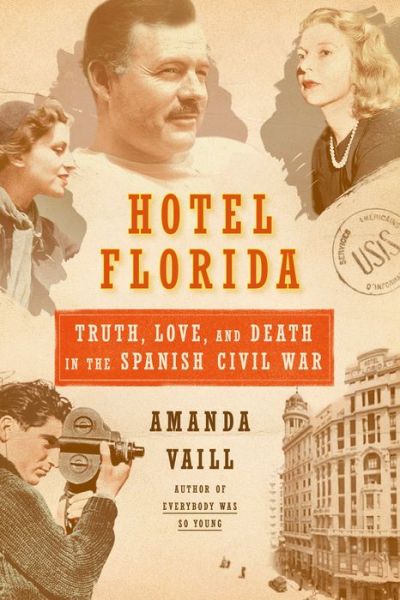
I am, of course, enjoying immersion in the beautifully composed Hotel Florida, a history of six individuals in the Spanish Civil War.

“THE PICTURE WAS BEYOND PRAISE AND SO WAS YOUR ATTITUDE,” wired Scott Fitzgerald after the screening he saw, at which Hemingway had spoken about la causa and the loss of Lukács and Heilbrun. Fitzgerald sensed in his old and now distant friend an attachment to the film project, and to the war in Spain itself, that had “something almost religious about it.” As so often, he saw Hemingway more clearly than Hemingway saw himself.

I appreciate the larger truth in these lines about the relationship between Fitzgerald (who doesn’t much play into this story) and Hemingway (who is one of its stars).

Also, I am thrilled to note just a handful of pages later an extended excerpt from Goethe’s poem, Der Erlkönig, which I memorized in its entirety for my German class in high school. (In German.) That was fun.

This quotation comes from an uncorrected advance proof and is subject to change.

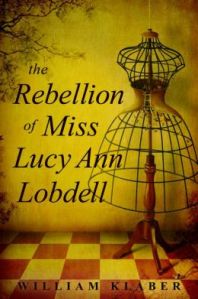
The Rebellion of Miss Lucy Ann Lobdell by William Klaber

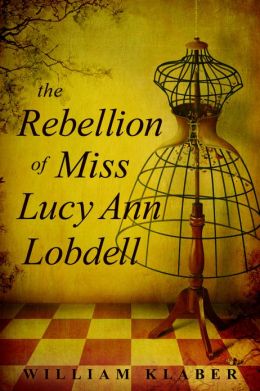
rebellion lucy annI am absolutely charmed by Lucy Ann Lobdell.

The backstory to this novel is an attractive little plot in itself. Journalist moves into an old farmhouse in upstate New York. Years later, he sits down with a local historian and hears the story of Lucy Ann Lobdell, who inhabited the area and is even linked to journalist’s own farmhouse. The aging local historian has searched and searched for Lucy’s memoir but never found it; he is now too tired to pursue her story further, but hands over his significant research to the younger journalist to follow. Journalist is likewise unable to find the memoir; but sensing the power in Lucy’s story, he writes it in novel form instead. And here it is.

Backtrack a little over 100 years. Lucy Ann Lobdell has had a difficult youth, and is entirely frustrated by the lack of options for women in the mid-1800’s, especially a young woman like herself with a daughter and whose no-good husband has run off on her. She runs away from home, leaving her daughter behind with her disapproving family, to put on men’s clothing and seek work as a man. Lucy works as a man can work (earning what a man can earn – and this references a problem that is somewhat ameliorated, but not solved, today) and lives independently – choosing her own company, holding her own hours, answering to no one. And thus she learns how much she has gained, and vows not to return to womanhood, where she will be manhandled, abused, underpaid, and never allowed to make her own choices. She dreams of having her daughter join her own day in her new life, but worries over what form that might take. What might she, as Joseph Lobdell (a name borrowed from her grandfather), be to the young Helen? Not a father; an uncle, perhaps?

Klaber’s novel, told in Joseph’s own first person voice, follows him as he works different jobs in different towns, moving around, facing various challenges. He’ll repeatedly be found out. He will eventually marry a woman named Marie – not the first with whom he’s had a romantic connection, but the first who has known his secret. Marie will accompany him through some of his roughest times, when he suffers from some form of mental illness. Of course, his conservative contemporaries will ascribe this to his sexuality, sexual preference, sexual identity – none of which terms were available to Joseph in the late 1800’s.

Here you see that I have switched pronouns; I’d like to note the brief statement that author Klaber makes, that “just which of the modern labels of sexual orientation or gender should be applied to the historic Lucy is something I will leave for others.” He notes that he honors Lucy/Joseph’s person journey. This strikes me as an appropriate stance for him to take. Such labels are fluid, and as none were open to “the historic Lucy,” I think we should take her as she presents herself. Of course, Klaber’s presentation of her or him are not her or his own; but we take what we have.

It’s easy to see what a an easy character Lucy can be to commiserate with. She is high-spirited, refuses to accept society’s limitations on her sex, and instead demands more. Her struggles are very sympathetic; not that it’s easy today, to figure out one’s sexual identity or sexuality, but how much more difficult in her time, with no role models or examples of what she might be. (Klaber cites one historian who claims the first use of “lesbian” in its current meaning was in reference to Lucy.) A theme running through her life, as told here, is the question of the extent to which she is a woman, or a man; only late in life she will come across the writings of Margaret Fuller, who proposes that we are all on a continuum between the two. Naturally Lucy/Joseph appreciates this concept.

We would like to know a little more accurately what happened to the historic Lucy/Joseph. Lacking that option, I’m glad Klaber chose to share with us as he could. He does invent dialogue, and it’s not clear to me how much of this might have come from the historical record. So as always with historical fiction, take a grain of salt. But her story is told feelingly. And as you know, I always have a weakness for women in history fighting uphill battles; her obscurity makes her rather more interesting still.

I’m glad I accepted this copy for review.


Rating: 7 wolves.

Full disclosure: I received my copy of this book from a publicist in exchange for my honest review.

book beginnings on Friday: The Remedy: Robert Koch, Arthur Conan Doyle, and the Quest to Cure Tuberculosis by Thomas Goetz

Thanks to Rose City Reader for hosting this meme. To participate, share the first line or two of the book you are currently reading and, if you feel so moved, let us know what your first impressions were based on that first line.

remedy

I have an awesome new book to tease you with today. I hope the title alone begins to interest; it did me. The first paragraph sets the stage:

In train after train, consumptives filled the passenger cars, their hacks and coughs competing with steam whistles and screaming brakes as the engines came to a halt in Potsdamer Platz. They came to Berlin without any sense of where to go or what to do once they arrived. And they kept coming, for days, weeks, and months. It must have struck Berliners as a sort of zombie pilgrimage: here were the walking dead of Europe, all suddenly flocking to their city in search of something – some fantastic substance that did not yet officially exist.

Not out til early April, so stay tuned for my review til then. But for now: I am quite impressed with the writing (my favorite: accessible, engaging, nonfiction science), and the fascinating story of the race towards a cure for tuberculosis, including Arthur Conan Doyle’s rather surprising role in it.

This quotation comes from an uncorrected advance proof and is subject to change.

A Burnable Book by Bruce Holsinger

A medieval scholar takes a fictional turn in 14th-century London, in a story full of murder, literature, politics and intrigue.

burnable book

A young prostitute watches horrified from the bushes as a woman is beaten to death–then looks down at the book in her hands, placed there by the victim moments before. A London “fixer” and minor poet named Gower is asked by his friend Geoffrey Chaucer to track a missing book. The court surrounding the new and untested King Richard II worries over the new games of playing cards and a book rumored to contain a series of verses circulating London regarding the deaths of kings past and present. This one book that troubles bawdyhouse prostitutes, the royal court, bureaucrats, poets and criminals holds potentially great consequences for England’s future. It is treasonous, a “burnable book.”

Bruce Holsinger, a prolific and respected medieval scholar, turns his hand to fiction with A Burnable Book. His academic background makes him well suited to render diverse settings in 14th-century London, from the Southwark stews to the grand halls of Westminster. The young woman murdered outside the city walls is only the first victim, and Gower is not the only one searching for the book in question, for scruples are scarce when the stakes are so high: England’s royal command itself is under threat. Murder mystery, political intrigue and the engaging world of Chaucer’s London are brought to life with a cast of complex, sympathetic characters who are far removed from and yet also familiar to our modern world. Holsinger’s expertise with medieval times is put to good use in a thriller filled with suspense and literary taste.


This review originally ran in the February 25, 2014 issue of Shelf Awareness for Readers. To subscribe, click here, and you’ll receive two issues per week of book reviews and other bookish fun!


Rating: 7 quatrains.

did not finish: Gone Girl by Gillian Flynn (audio)

gone girlI couldn’t do it, friends. This is a very well-known and much-loved novel of the last few years, and the word on the street is DON’T READ ANYTHING ABOUT IT before you read it! So I will say very little. Repeat: this is a spoiler-free, very short review.

There is a mystery. I did not read far enough to solve it. I am not very bothered by this. The reason I put it down so easily was: I didn’t like the characters. Possibly this is part of the trickiness of the book somehow; this book is famously tricky (I believe there is something about an unreliable narrator? but there are two narrators? I don’t know). But for me, the big failure was that I didn’t like these people so I couldn’t care about them enough to keep reading (listening) through the fact that they annoyed me very much. That’s all.

My audio version read by Julia Whelan and Kirby Heyborne was fine. They read the characters as obnoxious people, which seems to have been right on point, so I guess they did their jobs.

No rating; I only made it about 1/5 of the way through, so I’ll leave it at that.

Teaser Tuesdays: The Drunken Botanist by Amy Stewart


drunken botanist

Teaser Tuesdays is a weekly bookish meme, hosted by MizB of Should Be Reading.

I have only just begun this audiobook but have very high hopes that it will follow A Garden of Marvels beautifully. Booze & botany, where can we go wrong? The Drunken Botanist: The Plants That Create the World’s Great Drinks makes perfect sense to me. In her introductory pages, Amy Stewart writes:

If you’re a gardener, I hope this book inspires a cocktail party. If you’re a bartender, I hope you’re persuaded to put up a greenhouse, or at least plant a window box.

I think that puts it very well and succinctly, and I’m on board.

Alley Theatre presents Fool

Husband and I attended the opening “preview” night of Fool at the Alley Theatre last week. I love the theatre (don’t go nearly often enough), while Husband is… forbearing. So I try to take him to plays that he will enjoy. (The Lieutenant of Inishmore was a big hit.) For this season, he chose Fool and Vanya and Sonia and Masha and Spike (the latter coming up).

I borrow a plot synopsis from the Alley’s website, since it’s rather perfect, and it’s what convinced Husband to be my date:

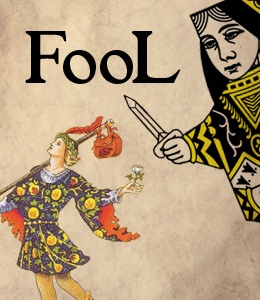
In Theresa Rebeck’s new comedy, Fool, two kings get together and place a wager on their fools – a jester competition, and the funniest one gets to keep his head. Two evil minions have a lot to say about this, but not as much as the kitchen wench. And what’s the queen been up to all night? A dramatical comical farcical tragical play about power, love and laughter, set in a medieval kitchen.

What you don’t get from this is playwright Rebeck’s reason for concocting this plot. According to the playbill, these silly, heartfelt jesters; the competitive pseudo-camaraderie of the servant class; the evil kings & their evil underlords; and the conniving queen, are all based on her experience in a very nasty corporate world. For me, this added a layer of interest to the story.

This was a highly enjoyable dramatic presentation. The jesters, and all the players, were freaking hilarious. We literally laughed out loud through a lot of it, which is not the norm even in comedic theatre, in my experience. It was also rather intelligent and heartfelt; I really enjoyed the characters and their conflicts. On top of it all, there was some very Shakespearean cross-dressing gender confusion, and while gender confusions may be comedic low-hanging fruit, they are also funny. And served well here.

I love the Alley because it is smallish, intimate, and not so formal that us informal people feel uncomfortable. Husband and I were on the front row (although way off to one side), so we were very close to the actors. It was a near-flawless performance – a stagehand walked onstage handling props when we think the lights should have been off, ah well – and the actors were in top form. We had a great time and left together laughing. More of the same, please.


Rating: 8 farts.

book beginnings on Friday: Gone Girl by Gillian Flynn (audio)

Thanks to Rose City Reader for hosting this meme. To participate, share the first line or two of the book you are currently reading and, if you feel so moved, let us know what your first impressions were based on that first line.

gone girl

Please don’t shoot me. I am not in love with Gone Girl at its beginning. (Deep breaths.) This book has received SUCH enthusiasm – not least from a good friend of mine – as well as critical acclaim, that I worry at my hesitations. But I own them.

Let’s begin at the beginning.

When I think of my wife, I always think of her head. The shape of it, to begin with.

Not much there; but let me say it was the second paragraph where I was first annoyed. So I called Liz and I said, Liz – how much time should I invest in this book that you loved and that I am thoroughly exasperated by? (This was 36 minutes in, via audiobook.) And she said, for stories with unreliable narrators I think you should hang in longer than average. Okay. I’m trying.

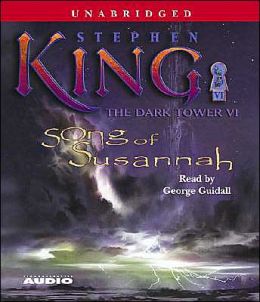
Song of Susannah by Stephen King (audio)

Just to review the Dark Tower series:

The Gunslinger (I)

The Drawing of the Three (II)

The Waste Lands (III)

Wizard and Glass (IV)

The Wind Through the Keyhole, written last but fitting between books IV and V

Wolves of the Calla (V)

and here we are with book VI, Song of Susannah.


susannah

I’m sorry to say I have to agree with what Jeff Coleman said (in a comment, here), about the series beginning to fray in this book. Our beloved ka-tet, in which we, the readers, have invested so much care and worry, is beginning to come apart. The characters are now separated and working independently or in pairs, and I think both the storyline, and the emotional investment King can ask of us, suffer. In fact, I am going to compare this problem to a recent television event: I think watchers of The Walking Dead are frustrated by how everyone is split up. We still care enough to watch week to week (at least my household does!) but we’re a little unhappy with the producers for keeping us so much in the dark as to where everyone is. We don’t mind a little conflict, a little suspense and fear – in the case of the Dark Tower series and the zombie tv series, both, I think we’re here for the suspense and the fear; and no story is anything without conflict – but it’s getting a little harder to invest as we’re spread around so thinly.

Susannah/Mia is battling, basically, herself; she is by herself; and her survival is not assured. Eddie and Roland are off on their own worrying about the rose, and they have a bizarre adventure in which they meet Stephen King himself, on which more in a moment. Jake and Pere Callahan, and thank goodness Oy, are… still around, but I’m not sure what they contribute to this novel other than to still pull my dog-loving heartstrings (Stephen King KNOWS I won’t stop reading as long as Oy is around). I am sorry to say that this may be the first book in this series in which nothing happens.

Stephen King writing about people who are in a book that Stephen King wrote, and who then go off to find & meet Stephen King, so as to convince him to write about them – this is interesting. It’s mind-bending, intriguing, very meta, and perhaps a little silly; I’m not sure how egomaniacal he’s being here, but I think I dig it. I like a good mind-bender. Again, though, I’m not sure what it contributes to the arc of the plot of this series; I am impatient for our characters to get together again; I’m worried about them, but not in a plot-progress kind of way. Hurry up and give us more action, King.

There is also a quick reference – so quick you could almost miss it, except that it is SHOCKING and I gasped on the train and people looked at me – that distressed me. I’ll write it here in white text, and you can highlight to read it if you’re unafraid of spoilers. There is a line that says something like “Eddie never got a chance to, because by then he and Roland would be separated by death.” What a heck of a thing to foreshadow, Stephen King. I am upset.

This penultimate book in the series leaves me anxious for the next one – I’m anxious for our splintered ka-tet, and also anxious that the last book will be a good one. It’s certainly a fat one; I couldn’t find it on audio, so I’ll have to wait until I find the print-reading time to slot in these 1,000 pages. Dear, dear.


Rating: 5 turtles.

(but only because it’s part of this series.)

A Garden of Marvels: How We Discovered that Flowers Have Sex, Leaves Eat Air, and Other Secrets of Plants by Ruth Kassinger

A charmingly accessible history of botany, full of the strange and wondrous, for readers intimidated by science.

garden of marvels

Ruth Kassinger (Paradise Under Glass) was frustrated by the kinds of mishaps with which many amateur gardeners are familiar: failures to thrive, unexplained deaths, mysterious midseason droopings. So she did what any reasonable science writer would do: research. How do plants really work? In hunting for a simple, layperson’s guide to botany, however, she came up short. Particularly in seeking “the story of the first discoverers of the basic facts of plant life”–that is, a history of botany–she could find only scholarly texts for which “Botany 101 is definitely a prerequisite.” From these frustrations was born the masterful, engaging A Garden of Marvels.

Kassinger’s greatest strength is unquestionably her quirky, conversational tone. She begins with a murder mystery (spoiler: the victim is a kumquat tree) and from these delightful opening lines, even the most science-averse reader will be hooked. While A Garden of Marvels does contain the odd gardening tip, it is more concerned with Kassinger’s travels: she visits farms, conservatories and laboratories around the nation, encountering diverse and eccentric characters she describes with humor and skill.

Her research into human history is likewise revealing: she points out that religious and societal philosophies caused our ignorance of and lack of interest in botany until very recently, and highlights those few pioneering minds whose experiments, observations and strange machineries caught us up. Darwin gets a chapter, and is accompanied by myriad little-known early scientists, all brought to life by Kassinger’s enthusiasm. A handful of relevant illustrations by Eva Ruhl assist along the way.

Kassinger is properly amazed at the science she discovers in nature, as well as the men (“and they were all men”) in history who broke ground with their scientific studies. For some readers, though, she may be a trifle overenthusiastic about the possibilities of genetic modifications of plant life and dismissive of concerns regarding these technologies–although the genetic possibilities in the simple garden petunia are positively mind-boggling.

Topics like plant sex, the history of scientific exploration and the fundamentals of genomics are all equally accessible in Kassinger’s capable hands. That she makes botany so approachable is a feat; that she makes it downright enthralling is almost as miraculous as an adorable photosynthesizing sea slug.


This review originally ran as a *starred review* in the February 24, 2014 issue of Shelf Awareness for the Book Trade. To subscribe, click here.


Rating: 9 different fruits on one tree.