Teaser Tuesdays: Never Go Back by Lee Child

Teaser Tuesdays is a weekly bookish meme, hosted by MizB of Should Be Reading.

never go back

Call me crazy, but I think this might be the sexiest Reacher novel yet. It’s early days, of course; I’ve only just begun. I had a long car trip alone up to a mountain bike race at some of my most favorite trails in Texas, and chose to start this latest Reacher book (narrowly edging out Bill Bryson’s A Walk in the Woods, which I think is up next). I am not disappointed. For one thing, I was thrilled to learn early on that Reacher has been recalled – he’s back in the army! This can only mean excitement…

My teaser for today:

Reacher led the way. Sullivan went next. The tall guy brought up the rear. They walked in single file, through the dog-legs, left and then right, to the cell door, which was unlocked and unbolted, because Reacher wasn’t in it. Reacher pulled it open and held it for the others. The tall guy smiled and took the door from him and gestured: after you. He was dumb, but not brain damaged.

Stay tuned; I don’t think this will take me long.

San Diego Opera presents The Masked Ball

A few weeks ago, I was happy to be able to fly out to southern California to visit my Grammy and be her guest at the San Diego Opera for their production of The Masked Ball, a Verdi opera that I was unfamiliar with. (This is not surprising; I’m not a big opera fan.) It goes without saying that I was there to see my Grammy more than to see the opera, but the opera was rather good, too. First, Grammy had clipped a review for me by the local (San Diego) arts critic James Chute. Anyone could read this piece and see that it is a glowing review; but Grammy informs me that apparently Chute is a spectacularly tough critic, ripping apart even the good shows, so that context adds considerably to the power of his positive remarks.

Therefore, I went into the performance with a little less trepidation than I might have had. Recall that I have had difficulty appreciating opera in the past and had in fact mostly sworn off it. Well, I found the plot fairly strong and interesting, and rather tragic a la Shakespeare, as in: if only these people had talked to each other first! Or turned around and looked behind them! Ah well. The costumes were sumptuous and appropriate; the sets were fine (more on that in a moment). The singing was absolutely glorious – not my style, perhaps, but if I step back to gain a little perspective, there’s no question that what these folks can do with their voices is astounding and impressive. There was a small Korean-American woman who played a young man and sang such outrageous soprano, a very fun staccato part, that I was charmed. Indeed all the singing was very very good.

The acting is, again, not in my favorite style because it is so dramatic; but I believe that’s the operatic style, and I think it was well done. My biggest beef with the whole experience was its pacing and length; to be quite honest I found it painful right toward the end and wished I were elsewhere. This was a three-hour event with two intermissions, so three equal parts of pretty precisely an hour apiece. I could handle much more than that if it were anything but opera; but in this case I found it trying. As I keep repeating, this is an issue of my personal taste rather than how well the whole show was done. In fact, I can’t find anything to complain about from an objective standpoint. I’m just (still) not an opera person.

Where I am a philistine, though, my Grammy is a very experienced and worthy judge of the opera; she has held season tickets for gosh knows how many seasons in how many cities, and has attended overseas as well; she has a music degree and makes a fine critic. She judged this to be a near-perfect performance, with her one small concern being that the stage sets were not imaginative; she says she’s seen them done better (can’t recall if she saw this opera performed in an earlier San Diego rendition, or in Houston). It seems true to me, too, that this opera was traditional, in its sets, costumes, and performance; but traditions are not always bad.


Ratings:

To my personal tastes, this opera might earn a scant 3 or 4 herbs from the gallows – but that would be high for an opera, wouldn’t it! From a more objective view, though, I think it deserves at least 8. You be the judge.

My visit with Grammy? Absolutely ten old photographs, every time.

my beautiful Grammy with her first grandchild (that's me)

my beautiful Grammy with her first grandchild (that’s me)

book beginnings on Friday: The Reef: A Passionate History: The Great Barrier Reef from Captain Cook to Climate Change by Iain McCalman

Thanks to Rose City Reader for hosting this meme. To participate, share the first line or two of the book you are currently reading and, if you feel so moved, let us know what your first impressions were based on that first line.

reef

A passionate history of explorers and climate change (and thus, one expects, necessarily of climate politics as well)? You have me sold, sir. Here is the opening paragraph of chapter 1:

James Cook did not know, on Sunday May 20, 1770, two weeks after leaving Botany Bay on the east coast of New Holland, the western portion of the continent, named by the Dutch captain Abel Tasman in 1644, that the HMS Endeavor was sailing into the southwest entrance of a vast lagoon where reef-growing corals began their work. It was a channel that later navigators would call the Great Barrier Reef inner passage. Cook didn’t realize that then, and he never would.

I am going to pick these first sentences apart a little here; bear with me. The concept McCalman opens with is a compelling one, and one he’ll return to: Cook was ignorant of what he discovered, and history in hindsight often makes the mistake of giving to discoverers credit for intention that they never had. Also, I think it’s a powerful image, this captain’s ship entering a dangerous and unknown area, and not even realizing it. In other words, I think McCalman chose a good opening subject; but golly, look at that first sentence! All the clauses: “he didn’t know, on the day, in the place, which was such a place, where this happened… that he didn’t know.” I dare McCalman to diagram that sentence; it might lead him to reconsider. And please do note that this is a pre-publication galley copy; he may still change it (or his editor might), so give the published look a glance and see when it comes out in late May. I am recommending the book despite a clause-heavy opener. Stay tuned.

This quotation comes from an uncorrected advance proof and is subject to change.

guest review: A Scots Quair by Lewis Grassic Gibbon, from Pops

Thank you, Pops, for sharing another recommended read. I remember hearing about this one several months ago!

Truly a classic of Scottish literature, A Scots Quair is a fictional trilogy written in 1932. I am totally enthralled; it is proletarian rustic history, romance of the earth, real-time anti-war essay, epic of Scotland’s industrial emergence, Victorian romance, visionary social observation, heartfelt conservationist ecology, salt-of-the-earth characters, staggering timeless relevance, Gaelic heart, linguistic challenge, lyrical poetic voice. Simply amazing. There are also striking cultural & spiritual similarities with the Pacific Northwest, and I’m not just talking cold & rain!

This was a “recommended” book discovered in planning for our 2010 trip to Scotland, which I loved and it certainly contributed to my appreciation and devotion here after such long delay. I wrote most of this summary after reading only book one, and it rings true as I finish the set two months since beginning the journey.

My paperback is printed in painfully small print; that combined with the blend of colloquial Gaelic & unfamiliar sentence structure to present a long learning curve before I fell into its flow and grew to cherish its voice. It took me a while to squeeze this commitment into a busy time, but after that tentative beginning I never wavered; the story was a reliable companion and ultimately I rued reaching the end.

Lewis Grassic Gibbon is the author. He writes of the period in which he lived: the dawning of the 20th century in Scotland up until publication in the 30s. The helpful 1986 Introduction by scholar David Kerr Cameron notes: “Sadly, Gibbon died aged only thirty-four, in 1935, almost as he completed the trilogy that would be his outstanding achievement, already aware of the fate of his beloved peasant folk but hardly realizing how important he himself would become.”

The story observes the course of change during this time in northeast Scotland by following Chris Guthrie from her birth to death, divided into three formative periods & locales in her life. The characters flowing in and out are countless, yet so many become familiar & cherished. Tragedies of the time are ever-present, as is a rich appreciation of nuance and humor in those lives. I am struck again by the wonder of a female character portrayed so compellingly by a male author.

This is one for all time, and I thirst to find some of it’s legacy in other forms…

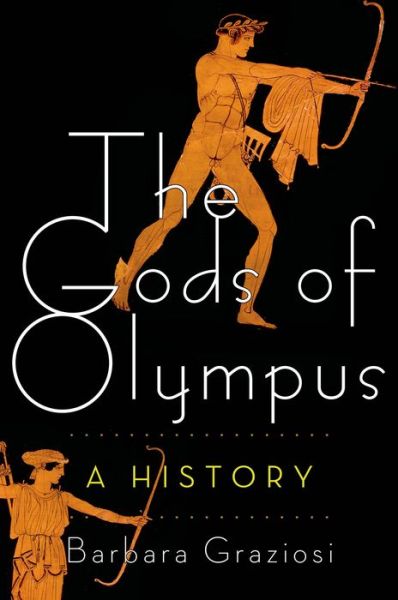
The Gods of Olympus by Barbara Graziosi

For novices and enthusiasts alike, a comprehensive and absorbing study of the gods of Olympus and how their cultural roles have changed over the centuries.

gods of olympus

From Homer and Hesiod, we know that Zeus has a large sexual appetite, that Athena is noble and warlike, that Aphrodite is the goddess of love and sexuality, that Hermes is a messenger with a sense of humor. But how did these myths and the personalities they depict survive to the present? Barbara Graziosi is a professor who’s written several academic works on the classics. In The Gods of Olympus, she directs her expertise to a more general audience for the first time, following the 12 gods and goddesses of the classical Greek pantheon from their first appearances in antiquity through our continuing modern awareness of them. Readers benefit immensely from her proficiency, which comes with a sense of humor: Graziosi occasionally appears in her own narrative, with an endearingly wry, self-deprecating tone.

The history of the immortal Olympians begins in Greece, where Graziosi explores their role in myth, ritual and cultural events. The Athens of Socrates, Plato and Aristotle reconsidered the value of the gods, in literature and in life, and when Alexander the Great expanded his empire toward the ends of the earth, he advertised his ability to travel even further than Dionysus. By gauging his own accomplishments against those of the gods, he sought to make himself like a god even as he reconfirmed the supreme importance of the deities.

Under Alexander’s rule, much of the “known world” was Hellenized, taking on Greek–and therefore Olympian–customs and culture. During the Roman Empire, the gods’ strong personalities were merged with the traditional Roman gods’ rule over matters of state, surviving in slightly different forms that best served those in power. As Graziosi demonstrates, this is the model through which they have come to us over millennia: the rise of Islam and Christianity likewise preserved the Olympians, though it transformed the gods into demons, allegories and cautionary figures. Their original worshippers are long gone, but the Olympic gods survive, flexible and changeable but continuing to inspire art and literature.

Graziosi’s knowledge is obvious, and easy to trust, accompanied by thorough notes and a helpful appendix to the original 12 gods and their corresponding Roman identities. Her writing is accessible and entertaining, her passion for her subject obvious; The Gods of Olympus will equally thrill longtime lovers of the classics, and appeal to readers seeking a friendly, engaging introduction.


This review originally ran in the March 10, 2014 issue of Shelf Awareness for the Book Trade. To subscribe, click here.


Rating: 8 centuries (just for starters).

Teaser Tuesdays: Out Stealing Horses by Per Petterson

Teaser Tuesdays is a weekly bookish meme, hosted by MizB of Should Be Reading.

out stealing horses

I am enjoying this audiobook on Pops’s recommendation; recall his review here. And I am enjoying, particularly a little joke like this one, in which author Petterson has his narrator note a very strange coincidence and then comment that he does not appreciate it when novelists put such strange coincidences in their books, since they are so unbelievable. It takes humor as well as guts for a novelist to poke at himself in this way! Here is the line that follows…

It may be all very well in Dickens, but when you read Dickens you’re reading a long ballad from a vanished world, where everything has to come together in the end like an equation, where the balance of what was once disturbed must be restored so that the gods can smile again.

A Dickens reference is always welcome as well; and I think this is a fine way of describing Dickens, as coming from a vanished world. It does feel that way sometimes, and perhaps recognizing his work in this way could help us enjoy him.

Well done, Pops. I will carry on.

The Drunken Botanist: The Plants That Create the World’s Great Drinks by Amy Stewart (audio)

drunken botanistI’m sure I don’t have to explain to you my interest in a book called The Drunken Botanist. I didn’t even look any further than the title; I requested it from my local library on that alone.

Amy Stewart opens with an anecdote: she was at a convention for “garden writers” when a colleague confessed he didn’t know what to do with a bottle of gin he’d received as a gift. She scolds him for being unaware that a botanist, of all people, should know all about booze: alcohol comes from plants to begin with, after all! I confess I hadn’t thought of it that way, of course, but I continued to be hooked.

The book is organized by: how we make alcohol (fermentation and distillation); what we make it from (alphabetically, agave through wheat); what we flavor it with (herb & spices, flowers, trees, fruit, nuts & seeds); and flavorings and garnishes (herbs, flowers, trees, berries & vines, fruits & vegetables). Throughout are dispersed cocktail recipes, instructions for syrups, infusions and garnishes, and gardening or growing tips. She stops short of homebrew advice, although the practice is alluded to many times. There are also several “bugs in booze” subsections: noble rot, yeast carriers, and the worm in the mezcal.

Stewart seems to have a fondness for hard alcohol: beer and wine get rather cursory treatment by comparison, at least to my eyes. Possibly that’s my bias showing through, and to be fair, beer or wine individually could fill its own book (or many of them – and they’re already out there). I find that she did a much finer job of sampling the wide world of distilled spirits than she did of sampling the wide world of beer or wine; but maybe if I knew more about the distilled spirits I wouldn’t feel that way. Certainly, as a beer lover first and foremost, I was sadly disappointed in her treatment of that category of booze. However, this didn’t badly hurt my feelings about the book as a whole, because there are plenty of good books on beer. That’s not what this book was all about.

I really enjoyed Stewart’s passion, and her drink recipes and tips are much appreciated. In fact, don’t tell him, but I’ve already ordered a print copy of this book for my main bartender, and he will receive this gift with my requests carefully marked within. I also enjoyed the broad education of all the things we make booze from, and some of the wild trivia I learned. I made several notes and/or paused to tell Husband: “did you know there’s a thing called pechuga mezcal? They hang a piece of raw chicken in the air above the still!” “There’s such a thing as a ‘burpless’ celery!” What fun. By no means comprehensive, of course, The Drunken Botanist is still an enjoyable, useful, entertaining introduction to “the plants that create the world’s great drinks” (and the less-than-great ones, too).

I heartily enjoyed Stewart’s book, with the exception of just a few frustrating moments when I wished she’d gone further into the beer bits. (Forgiven, as I said above. But noted: just a few frustrating moments.) However, I would advise against the audio version. For one thing, listening to recipes is not the right way to do it. With the kind of information being related, I think reading is far preferable to listening. And, I got a little lost within her organization of information, too. I think being able to see headings and subheadings would have helped a lot. Finally, while I liked reader Coleen Marlo’s voice and the personality she gave to the reading, I felt that she talked way too fast – quite possibly for any audiobook, but particularly for this one, again, considering its reference-style informational offerings and recipes.

The gardening tips were a little over my head, but your mileage may vary. I wouldn’t say that I have a black thumb, exactly, but the whole program baffles me. I appreciated the introduction I got from A Garden of Marvels, although that one, too, seemed to consider “basic” or “easy” some concepts that lost me. I definitely dig Stewart’s advice, just don’t know if I’ll be growing my own any time soon.

Verdict? Don’t miss this one if you love booze & plants! But get the print copy!


Rating: 8 garden cocktails.

Everything is Wonderful: Memories of a Collective Farm in Estonia by Sigrid Rausing

The personal side of an anthropologist’s year in post-Soviet Estonia.

wonderful

Sigrid Rausing spent a year on a collective farm on the west coast of Estonia in the mid-1990s, doing fieldwork for her Ph.D. in social anthropology. Her time there yielded an academic book, History, Memory, and Identity in Post-Soviet Estonia: The End of a Collective Farm. “Much as [that book] excluded the personal,” she writes, “this book excludes the academic.” Everything Is Wonderful contains Rausing’s remembrances, after nearly 20 years, of time spent in an unusual cultural landscape and the questions that remain with her.

The tone of this slim memoir is quiet and unobtrusive; engaging in participation observation is the anthropologist’s aim. Rausing contemplates the legacies of the Soviet Union in Estonia as a country and a culture, and in the village she lived in. As a parallel, she considers her own cultural identity as a Swede living in England who finds herself at home in a place where Estonian Swedes once made up a sizable and powerful minority, before the Nazis sent them to Sweden in a “perhaps overly collaborative” evacuation.

Rausing’s subjects include the everyday tedium and alcoholism of a small village in a deeply depressed region; they include dream interpretations, and loving descriptions of natural settings, despite the monochromatic winter that occupies most of the year. Interactions with her neighbors and friends are rendered with an eye for irony. Yet for all its bleak detail, Rausing’s work resonates with nostalgia as well. “I was tired, and often hungry,” she recalls, “but even now, twenty years later, I miss those long quiet walks in that melancholy and restful landscape.”


This review originally ran in the March 7, 2014 issue of Shelf Awareness for Readers. To subscribe, click here, and you’ll receive two issues per week of book reviews and other bookish fun!


Rating: 7 “cocktails.”

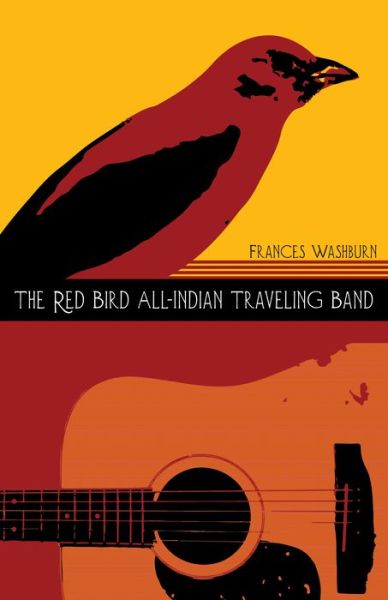
The Red Bird All-Indian Traveling Band by Frances Washburn

A slim, evocative, entertaining tale of strange happenings on an Indian reservation in South Dakota.

red bird

Sissy Roberts is the girl everyone tells their problems to, whether she likes it or not. But, as she tells the reader on the opening page of Frances Washburn’s The Red Bird All-Indian Traveling Band, “no one so far has confessed to me that they killed Buffalo Ames at the Scenic Fourth of July Rodeo.” The novel, despite being framed around Buffalo’s murder and the subsequent FBI investigation (which mostly consists of bothering Sissy for answers), is entirely Sissy’s story.

Though the FBI man sent to her corner of the reservation doesn’t believe in her ignorance, Sissy really doesn’t know who killed Buffalo that night–and she doesn’t know what she’s going to do to get out of this town and off the rez. Her interest in solving the murder is half-hearted; she is more concerned with solving the mystery of her own future and ducking lackluster marriage proposals from the shallow pool of men on the rez. But the two will prove to be interconnected.

The strengths of this slim, quirky novel are Sissy’s strange mix of tenderness and sass, and Washburn’s grasp of the rez and its sense of inertia. For all the frustration that Sissy and the other diverse, well-wrought characters experience, however, the final result is moderately uplifting, like the music Sissy delights in throughout.


This review originally ran in the March 7, 2014 issue of Shelf Awareness for Readers. To subscribe, click here, and you’ll receive two issues per week of book reviews and other bookish fun!


Rating: 8 beers.

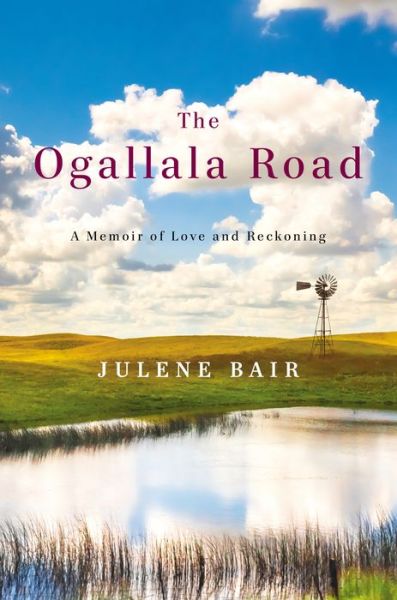
The Ogallala Road by Julene Bair

An environmentalist revisits the family farm with mixed feelings about water shortages, and finds a love story along the way.

ogallala

Julene Bair left the family farm in the high plains of Kansas for the bigger world of San Francisco, then the solitude of a rock house in the Mojave Desert. She returned pregnant, worked with her father on the farm for as long as she could stand it, then found security in a cowboy town in Wyoming, where she raised her son alone. She returned again to tour the ever-diminishing creeks and springs on foot and to study the Ogallala Aquifer, which the United States relies upon for 30% of its irrigated crops. Next to a big cottonwood, she meets a cowboy who admires Cormac McCarthy–and falls in love.

For most of The Ogallala Road, this cowboy, Wade, accompanies Bair as she struggles to reconcile the wilderness-loving, liberal-minded, Subaru-driving writer she’s become with her roots as a farmer’s daughter of Kansas’s conservative rural plains. The memoir clearly began as the story of a shrinking aquifer and a nation’s (or a world’s) self-destructive hubris, and one suspects Bair is as surprised as readers will be that romance takes so much of the spotlight. Wade embodies everything that both nourishes and infuriates her about Kansas, which is a challenge to their love story.

The farm that has sustained generations of her forebears retains a strong hold on Bair’s heart, and her family’s–and her own–role in depleting the aquifer becomes a central source of conflict. The Ogallala Road meanders through the history of the Cheyenne Indians’ longtime residence in the region, seeking insight into a more balanced relationship with earth and water. “Hang on to your land!” Bair’s father exhorted his children, but under the pressures of a changing world, they’ll consider selling. Bair comments on the difference between growth and progress, and a feeling of connection to the land that she suspects her father would have snorted at, while wrestling with her own guilt. In the end, it is the water, not Wade, that causes her the most pain–but the memoir closes with a tentative note of hope.

In its combination of nature writing, environmental concern and love story, The Ogallala Road is unusual. Bair’s contemplative praise of the high plains and the western deserts, her yearning for a father for her son and her lament for a dying way of life will strike chords for diverse readers.


This review originally ran in the March 7, 2014 issue of Shelf Awareness for the Book Trade. To subscribe, click here.


Rating: 8 million gallons.