on children’s books

In another episode of synchronicity, I was already going to write this post (for reasons below), when Shelf Awareness shared this item of “book candy”: 10 Children’s Books That Made Us, tagline “these beloved images and words defined the boomer generation.” Let’s be clear: I am not a boomer, but the child of boomers. So I was a little surprised to see that I grew up with all 10 of the books listed. Part of article author Linda Bernstein’s point was that boomer children loved these books enough to share them with their children, of course, so I can’t be all surprised. But still… I thought I was a Goodnight Moon baby, not that my mother was. Still fresh for me, you see. In fact, it was first published in 1947 – who knew? I guess that’s one definition of a classic: timelessness. I know there are new children’s books for every generation, and I know some of them are excellent (I’ve heard. I’m not a big reader of kid’s books myself), but I do hope that new parents are still turning to such geniuses as Dr. Seuss and Maurice Sendak for their children’s reading development and enjoyment.

But back to our regularly scheduled programming.

In reading Great Bear Wild by Ian McAllister (excellent!! but wait for my review at Shelf Awareness to learn more), I was charmed by discussion of the unique, complex, and surprisingly human-like social structures of wolves. This resonated with me because I remember clearly reading (and rereading) Julie of the Wolves, a kid’s “chapter book” by Jean Craighead George, and a Newbery Medal winner. Here is my plot summary, strictly from memory, so feel free to double-check me… a young girl (~13 years) escapes a forced marriage in an Alaska village into the tundra on her own. She has a few basic survival tools & skills, but of course finds herself in trouble in the winter, until she is adopted by a pack of wolves – not without her own efforts at observing them, mimicking their gestures of submission, and begging for food and help. They save her. And the reader learns a good deal about wolf packs.

This got me thinking about others in the category (children’s “chapter books”) that I loved, that I read and reread, and that helped form my love of reading. As a child, I read lots of books – lots! – but this is the list of those that still come to my mind, fondly, today.

  • Eva by Peter Dickinson
  • Enchantress from the Stars by Sylvia Engdahl
  • Island of the Blue Dolphins by Scott O’Dell
  • The Borrowers series by Mary Norton
  • Laura Ingalls Wilder’s Little House books
  • of course, The Outsiders by S.E. Hinton
  • Susan Cooper’s The Dark is Rising series
  • Beverly Cleary’s Ramona books
  • The Westing Game by Ellen Raskin
  • The Brothers Lionheart by Astrid Lindgren
  • Hatchet (and others) by Gary Paulsen
  • Number the Stars by Lois Lowry
  • Summer of My German Soldier by Bette Greene

(Perhaps unsurprisingly, when I browsed the list of Newbery Medal winners, I found several of these titles there.)

What do you remember fondly from your childhood? Do they still resonate with you today?

Halloween, or Dia de los Muertos, in book history

This post is part of a series.

To celebrate Halloween (today), or Dia de los Muertos (this weekend), let’s take a look at today’s date in authorly history.

reader's book of daysAccording to A Reader’s Book of Days, on October 31, 1795, John Keats was born, and in 2008, Studs Terkel died. I have not read much Keats, but I think I like him. I am very grateful to have a copy of Terkel’s The Great War on my to-be-read Britannica bookshelves, a gift from my buddy Gerber that I look forward to reading…someday.

In 1967, Richard Brautigan’s Trout Fishing in America was published. I am not sure why this resonates with me. Perhaps Maclean references him?

And in 1615:

Miguel de Cervantes hinted at the end of the first book of Don Quixote that further adventures might be forthcoming, but before he could complete his own sequel, a rival appeared that credited another author, Alonso Fernandez de Avellaneda, on the title page and insulted Cervantes as old, friendless, and boring. Cervantes, meanwhile, took advantage of being second by adding a scene in which Don Quixote and Sancho Panza themselves mock the false sequel. In the second book’s dedication, written on this day, he mentioned “the loathing and disgust caused by another Don Quixote,” and in the book’s preface he completed his revenge: humbly declining to abuse his usurper, he instead told a tale of a madman who, after inflating a dog from behind through a hollow reed, asks, “Do your worships think, now, that it is an easy thing to blow up a dog?” “Does your worship think now,” added Cervantes, “that it is an easy thing to write a book?”

And that is a sufficiently odd anecdote, I think, to recommend its being shared here.

You may recall that I read book one of Don Quixote several years ago, and solemnly promised to get around to book two someday. I have not. And I hear book two is better, too. Sigh. So many books…

Happy weekend, friends.

edition by edition: A Sand County Almanac, with Pops

"with essays on conservation"

“with essays on conservation”

My Pops has lately gotten into Aldo Leopold, with the help of a local reading group focusing on Sand County Almanac. I told him I certainly hoped he’d gotten a hold of the large-format, glossy-pictured edition that I read, because it was so beautiful; and he said that he had. But then he discovered something I never realized: that beautiful photo-edition is missing several essay originally included! The horror! I will have to return to a fuller version of the book; and Pops has taken care of that by gifting me a more complete copy. (It is waiting my arrival in our new home in the north. I am busy and therefore can be in no hurry…)

Pops further comments:

The Sand County reading group was last night. Only two new people showed up, which is not a big deal; though most are Aldo fans, it was nice discussion but mostly insignificant; except, a couple of people had seen this film and highly recommend it. Have you heard of it? Green Fire – more here.

No, of course I had not, but now it’s on the list…

And… do you remember reading this anywhere?

“Lead by Luna Leopold, Aldo’s son, a group of Leopold’s family and colleagues collaborated on the final editing of the book, reluctantly agreeing to one significant change: renaming the book from Leopold’s working title Great Possessions to A Sand County Almanac and Sketches Here & There.”

One of our group commented on the ingenious selection and sequence of pieces in the book, unaware that the editing was not Leopold’s own work. In fact, there are not dates on any of the essays; I think it would be very interesting to see that, because the edited result is surely not sequential in time.

I also see misleading references to the works: even the film page linked above cites A Sand County Almanac (without the suffix “And Sketches Here & There”) as the source for the famous “fierce green eyes” quote – whereas it actually appears in one of the sketches (“Thinking Like a Mountain”) – which was not included in the photo-edition you read, titled… A Sand County Almanac: With Essays On Conservation.

"with essays on conservation from round river"

“with essays on conservation from round river”


And… I took a further look at the selections in different editions (a friend brought a fourth edition besides the three I had). The newish paperback I bought for you (“With Essays on Conservation from Round River”) actually has a whole section of essays (not included elsewhere) besides the original sketches, so it is the “fullest” yet; what an adventure!

Wow! Great job, Pops! I can’t wait to find the time!

Words of caution, kids: watch your editions. I’ve certainly learned something. Thanks Pops for the lesson as well as the new & complete paperback!

Off Course: Inside the Mad, Muddy World of Obstacle Course Racing by Erin Beresini

One woman’s exhilarating experience in a strange extreme sport.

off course

Erin Beresini was a committed Ironman triathlete and endurance athlete facing overtraining injuries and burnout when she first heard about obstacle course racing (OCR). How silly, she thinks, and how divergent from her past efforts–perhaps just the thing to make new friends, find new motivation and relieve her overstressed muscles by working new ones. From her first mud run she is hooked, and gratifyingly exhausted. She jumps feet first into this bizarre new scene, undertaking a journey that culminates in racing the OCR world’s first marathon-length event, the Spartan Ultra Beast. In Off Course, she documents her labors.

Throughout Beresini’s often-funny personal story, she interjects details of the history and quirks of this recent trend in amateur athleticism. Characterized by mud, fire, ice and blood–and often involving broken bones, electric shocks, sadistic beatings and barbed wire–OCR strikes many as an insane way to chase fun and fitness. As it happens, millions have signed up for these events in recent years, in the United States and around the world. The sport draws “regimented military types and anti-organized sports rebels,” and shares a fan base with CrossFit and endurance athletics. Beresini also scrutinizes the compelling personalities (and controversies) behind the sport’s two main powerhouses, Spartan Race and Tough Mudder, as well as a handful of their participants. As weird as this tale is, it will appeal to both fans of sports narratives and readers who appreciate offbeat obsessions.


This review originally ran in the October 24, 2014 issue of Shelf Awareness for Readers. To subscribe, click here, and you’ll receive two issues per week of book reviews and other bookish fun!


Rating: 7 burpees.

two-wheeled thoughts & Teaser Tuesdays: Offcomer by Jo Baker

click for details

click for details

Teaser Tuesdays is a weekly bookish meme, hosted by MizB of Should Be Reading. Two-wheeled thoughts is my own.

offcomer
Offcomer is a fine and rather hypnotic first novel – by the author of Longbourne, but before it – only now in its first stateside publication. There’s a lot to it, but I was struck (of course) by these lines.

The bike was cool and damp after a night in the back yard. She wheeled it, ticking like a grasshopper, through the house and out the front door, bumped it down the steps. She pushed her right foot into the toeclip, swung into the saddle. Shuffling the other foot into its clip, she tacked slowly up the hill. The gears clicked into place with the certainty of a problem solved.

I love that it ticks like a grasshopper, and that the gears click like a problem solved. That is as it should be.

This quotation comes from an uncorrected advance proof and is subject to change.

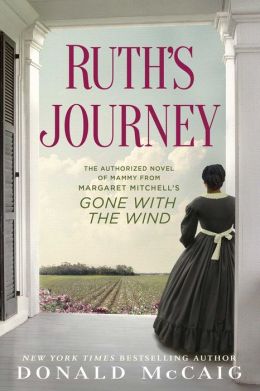
Ruth’s Journey: The Authorized Novel of Mammy from Margaret Mitchell’s Gone with the Wind by Donald McCaig

A familiar, but not unoriginal, expansion on a beloved character from a classic American epic.

ruth

In Ruth’s Journey: The Authorized Novel of Mammy from Margaret Mitchell’s Gone with the Wind, Donald McCaig (Rhett Butler’s People) tells the full story of Scarlett’s beloved nursemaid. He begins in France with Miss Solange, a wealthy heiress who travels to Saint-Domingue (now Haiti). There she takes in a local child to be part servant, part daughter, and names her Ruth, then moves to Savannah. Switching focus to Ruth, McCaig details her eventual brief marriage to a free man in Charleston, years of tragedy and rebellion, and her return to Savannah.

Though McCaig does touch a bit on Scarlett’s well-known story, the bulk of the narrative is focused on Ruth’s early life: the voyage to the U.S., her transition to adulthood, her loves and losses, and the moment she deliberately gives up her name and identity in favor of a new moniker: Mammy. Miss Solange has a daughter, Ellen, who in turn gives birth to the memorable Katie Scarlett O’Hara. Where Scarlett is petulant, Mammy is resilient. Through decades of love, death and betrayal, she consciously puts on a smile. She is cursed to foresee the ugly futures of those she cares for, but, as she repeats to herself, it is not for mammies to speak all that they see.

McCaig echoes the saucy, tongue-in-cheek tone of Mitchell’s classic. Mammy’s story is complex, and she commands respect. Lovers of Gone with the Wind will be the most obvious fans of Ruth’s Journey, but it stands on its own merits as a sweeping epic of time, place and history, thoroughly worthy of its inspiration.


(Final comment: Those readers who were concerned with the racial insensitivity of Mitchell’s original will not find any clear redemption or compensation here; but McCaig’s treatment is respectful and nuanced, certainly no worse and arguably slightly better than the classic in this regard.)


This review originally ran in the October 24, 2014 issue of Shelf Awareness for Readers. To subscribe, click here, and you’ll receive two issues per week of book reviews and other bookish fun!


Rating: 7 husbands.

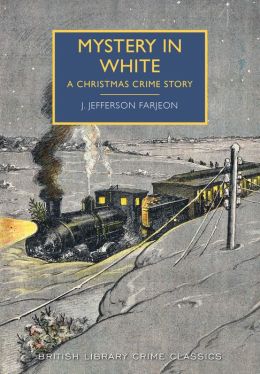
book beginnings on Friday: Mystery in White by J. Jefferson Farjeon

Thanks to Rose City Reader for hosting this meme. To participate, share the first line or two of the book you are currently reading and, if you feel so moved, let us know what your first impressions were based on that first line.

mystery

I have for you today a charming, classically styled mystery, republished any day now from a 1937 original. It begins innocuously, even innocently:

The Great Snow began on the evening of December 19th. Shoppers smiled as they hurried home, speculating on the chances of a White Christmas. Their hopes were dampened when they turn on their wireless to learn from the smooth impersonal voice of the B.B.C. announcer that an anticyclone was callously wending its way from the North-West of Ireland; and on the 20th the warmth arrived, turning the snow to drizzle and the thin white crust to muddy brown.

But oh, it won’t stay so!

This quotation comes from an uncorrected advance proof and is subject to change.

gift reviews

It’s that time of year again: coming up! Gift reviews! Oh wait, I should explain. I was well into telling Husband about this year’s prospects for gift reviews with Shelf Awareness, when he stopped me to ask who they are gifts for. I see I was unclear. These books are sent to me for *special* gift reviews: meaning, they are reviewed for a Shelf Awareness special issue that reviews books that might be given as gifts in the holiday season. Often these are coffee table style books. I’ve been writing gift reviews for, oh, several years for the Shelf – you can see some here.

So I’m excited this year to have received three big, beautiful coffee table books for gift-reviewing. Husband mostly no longer gets excited for me when books come in the mail! so I especially wanted to share these with you.

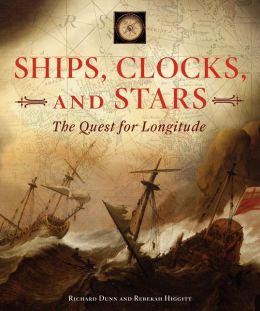
Ships, Clocks, and Stars: The Quest for Longitude by Richard Dunn and Rebekah Higgittships


For a Love of His People: The Photography of Horace Poolaw by Nancy Marie Mithlo and the Smithsonian Institutionfor love


Great Bear Wild: Dispatches from a Northern Rainforest by Ian McAllister, with a foreword by Robert F. Kennedy Jr.great bear


Beautiful, no? Reviews to come… oh, but if you want an early tip, let me say that I adored The Story of My Heart by Richard Jefferies, republished with commentary by Terry Tempest Williams and Brooke Williams. As just a tiny little book, both a pleasure to read and thought-provoking, and easily taken in small pieces, I think it would make an ideal stocking stuffer for… well, any number of different loved ones, really.

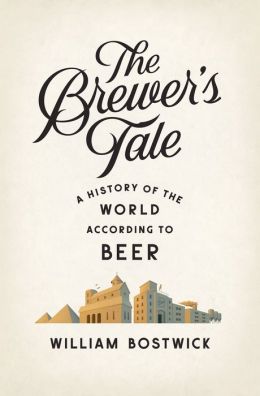
The Brewer’s Tale by William Bostwick

The influence of beer in history, and the more and less delicious forms it’s taken along the way.

brewers tale

In The Brewer’s Tale, homebrewer William Bostwick (Beer Craft) examines beer in history and the history in beer, brewing as he goes.

Bostwick follows the progression of human history, starting with primitive Mesopotamian bread and its immediate companion (rudimentary ale) and moving through the early European shamans who used beer (sometimes laced with hallucinogens) in their practices to the monks whose influence persists in abbey and Trappist ales. He visits the farmer who brewed with his leftover produce, and members of the London working class who passionately consumed the porters that were named after them. With each stop on this tour, Bostwick gives equal play to the past and to characters who maintain or rejuvenate these historic styles. He also attempts his own brews, with mixed results. Through grogs and meads; farmhouse ales like lambics, sours and saisons; porters, stouts and pales; and finally light (and lite) lagers, The Brewer’s Tale reminds us that beer is not only the stuff of frat parties or snifter-poured snobbery; it can be experimental, fresh and fun, and has always been at the heart of the human experience.

Bostwick runs a little heavy on symbolism, but his subject is heady and intoxicating, so why not the metaphor as well? The initiate will be well served, but even a well-read beer geek can be excited anew by these reflections, and the homebrewer may well be inspired to fresh projects. The Brewer’s Tale is history, a joyful celebration and a call to appetizing action in an easygoing, conversational tone.


This review originally ran in the October 21, 2014 issue of Shelf Awareness for Readers. To subscribe, click here, and you’ll receive two issues per week of book reviews and other bookish fun!


Rating: 8 caves.

synchronicity: Teaser Tuesdays: The Story of My Heart by Richard Jefferies, as rediscovered by Brooke Williams and Terry Tempest Williams

Teaser Tuesdays is a weekly bookish meme, hosted by MizB of Should Be Reading.

story

Is it a double-synchronicity if it’s a synchronicity about synchronicity?

Fair warning: I will be raving about this little book when it gets published and I’m allowed to do so. But for now… this is Brooke Williams, in one of his commentaries following a chapter of Jefferies’s 1883 work.

Jefferies was in conversation with me as I was in conversation with Jung. Jung also used “soul” and “psyche” interchangeably. The psyche, I’ve learned, is the complete human mind – conscious as well as unconscious. What intrigues me most is Jung’s idea of the collective unconscious – that part of the psyche every human shares, that evolved as our cells evolved, through natural selection, consisting of “mnemonic deposits accruing from the experience of our ancestors.”

Randomly discovering a book I’d never heard of and reading a passage about psyche and soul – concepts I’d been struggling to understand – was for me a “meaningful coincidence,” Jung’s definition for synchronicity.

Synchronicity is, according to Ira Progroff, “at the frontal edge of life where evolution is occurring.”

In parallel, you know I’ve used the word synchronicity here before. What you don’t know is that I had some trouble selecting the word I wanted to use to communicate the concept: of coincidence, but more than coincidence. Clearly (at least according to the definitions given above) I got it right. Thanks, Pops, for helping me to get it.

This quotation comes from an uncorrected advance proof and is subject to change.