vocabulary lessons: Grizzly Years by Doug Peacock

If you’re interested: see other vocabulary lessons as well.


grizzlyUnsurprisingly, Peacock taught me a number of new words in this book, generally of the technical & outdoors variety.

“…grizzlies can walk lightly over a thin crust, distributing their weight evenly on their plantigrade feet…” plantigrade: “walking on the sole with the heel touching the ground.” Which makes sense, as Peacock later writes: “I squatted and traced the outline of the grizzly’s rear foot in the crusted mud. How humanlike it was.”

“Not a single tree decorated the lacustrine benches.” lacustrine: “of, relating to, formed in, living in, or growing in lakes.” A parallel to ‘riparian’, then?

“I dropped down to explore the little mountain, half evenly timbered, half steaming rhyolite and broken andesite.” rhyolite: “a very acid volcanic rock that is the lava form of granite”; and andesite: “an extrusive usually dark grayish rock consisting essentially of oligoclase or feldspar.”

“We passed two tiny azure tarns beginning to melt in the weak spring sunlight…” or “I wondered if anyone had ever visited those four lonely tarns.” tarn: “a small steep-banked mountain lake or pool.”

“High above, I saw the broad wings that had startled the bovid…” bovid: ” any of a family (Bovidae) of ruminants that have hollow unbranched permanently attached horns present in usually both sexes and that include antelopes, oxen, sheep, and goats.” I knew ‘bovine’, of course, but was thrown to see ‘bovid’ (here, referring to a mountain goat); I thought bovine meant cows, specifically. I guess this word is a little more inclusive.

“A spine of dolomite ran off the range of peaks and continued down the mountain as a bedrock ridge.” dolomite: “a mineral CaMg(CO3)2 consisting of a calcium magnesium carbonate found in crystals and in extensive beds as a compact limestone.”

“We set up our tent, locating it out of the wind on the carpet of Carex.” Carex: “a vast genus of almost 2,000 species[2] of grassy plants in the family Cyperaceae, commonly known as sedges.”

“On an island to the south, melanism has prevailed in a species of jackrabbit living among gray andesites and scabrous vegetation.” melanism: “an increased amount of black or nearly black pigmentation (as of skin, feathers, or hair) of an individual or kind of organism.”

“Grunion appear on the beaches of the northern Gulf from February to April after the big tides of the full moon.” grunion: “a silverside (Leuresthes tenuis) of the California coast notable for the regularity with which it comes inshore to spawn at nearly full moon.” Okay, but what is a silverside?? The “Concise Encyclopedia” entry, a little further down the same page, is more helpful: “Edible Pacific fish (Leuresthes tenuis) found along the western coast of the U.S. In the warm months, it lays its eggs in beach sand during a full or new moon when the tide cycle is at its peak. The young hatch and enter the ocean on the next spring tide, two weeks later. Grunion reach a length of about 8 in. (20 cm).”


What have you learned in your reading recently?

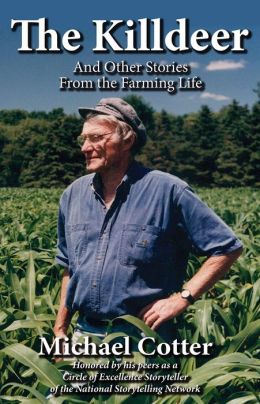
book beginnings on Friday: The Killdeer and Other Stories From the Farming Life by Michael Cotter

Thanks to Rose City Reader for hosting this meme. To participate, share the first line or two of the book you are currently reading and, if you feel so moved, let us know what your first impressions were based on that first line.

killdeer

Michael Cotter was always a storyteller; but he didn’t get to grow fully into that role from the beginning.

“Cut out those damn stories and get some work done around here!” That was my most dreaded message from my dad. Our farm was a livestock farm and it was pretty labor intensive in the early years.

Happily for his readers, he did get around to it, however. I’m really enjoying this collection. The title story “The Killdeer” comes especially recommended.

This quotation comes from an uncorrected advance proof and is subject to change.

Grizzly Years: In Search of the American Wilderness by Doug Peacock

I have a confession to make: I have been reading quickly lately. I’m busy – buying one house and selling another, getting rid of most of our furniture and one car, arranging to ship the other, planning a cross-country move and a goodbye party, and honoring social commitments with lots of friends because I don’t want to miss a chance. I’ve quit my full-time job, and now my employment consists of writing book reviews (and any additional editing work I can get). I’m reading with the finish line in mind: finish this book, write it up, start the next. One a day, ideally; and often it is that quick. I’m not unhappy with my output, and I love to read books and learn new things, and the more the better. But at some point I can’t take it all in…

And then there’s that one book that just forces me to slow down. This week, it was Doug Peacock’s searing, precise, deeply felt writing in Grizzly Years.

grizzly

After Vietnam, I caught myself saluting birds and tipping my watch cap to sunsets. I talked a lot when no one was around, especially to bears.

You recall that I was impressed by Peacock’s Walking It Off. And I recently enjoyed Great Bear Wild; which pushed me to finally pick up Grizzly Years, which has been waiting patiently on my shelf ever since Walking It Off more than two years ago now. As I neared the end of this outstanding read, a beautiful short chapter about the Sea of Cortés makes me want to move straight on to Sea of Cortez: A Leisurely Journal of Travel and Research by Steinbeck and Edward F. Ricketts, which I have owned for a year or more but sits unread. (Actually, it’s packed now, so it will wait.) And that’s how my reading path develops, sometimes.

But what about the book itself? It has many things in common with Walking It Off, which was written and published later but actually feels like a fine book to read in preparation for Grizzly Years. Like that later book, this one studies the interplay between war and wilderness, and I was again struck by what I would have thought would be the unlikely duality there; I guess I thought war was inimical to nature, through it’s destructive power; but Peacock repeatedly and convincingly likens his combat experience to his behaviors in grizzly habitat.

After Vietnam, he was too upset by the “real world” or what he calls (with perhaps a nod to Huck Finn) Syphilization. As Peacock says best himself:

Vietnam gave us a useful pessimism, a pragmatic irreverence I can wear comfortably down any bear trail. No one can ever show me a photo of a mutilated body or dead child again and tell me it is the way of the world. I can’t live in that world, but I do want to live. If this is a wound, it doesn’t want mending.

I was surprised to learn that his local “rough” bar on the edge of the wilderness is mostly populated by Vietnam vets.

They were friends, naturally, as this particular drinking establishment was largely avoided by company loggers, grizzly bear poachers, and higher ranking officials of the Department of Interior.

He tells us that those vets naturally moved toward the edges of Syphilization, the wildest country they could find. In this chapter, Peacock approaches Abbey’s tone of humor, but then gets serious again quickly. He’s a serious guy.

I’m afraid I am implying that the book is largely about war and its personal aftermath, though, which is incorrect. As its title indicates, it’s really about grizzly bears. Peacock spent a few decades traveling seasonally to visit with the same bears year after year, observing where they bed down and den and eat and mate, learning their habits and finding in respect for their wildness some peace for himself. These are not tame bears, and he doesn’t live peacefully side by side them – he has to be careful, because these are true, wild grizzlies. But he knows well enough how to do that, how to live nearby for days or weeks without dying (although he comes close a few times).

Much of the book is grizzly sighting after grizzly sighting; but it doesn’t get old. Every time it’s exciting and beautiful and tinged with danger (which contributes that humility he needs), and the scenery varies, as Peacock travels from his fire lookout in the Montana high country, to what he calls the Grizzly Hilton (also Montana, a pocket of habitat where he consistently sees the best bears), to Yellowstone, the Madison River to fly fish, the Sonoran desert, then to seek out the last Mexican grizzly in the Sierra Madre. (Maybe next year he’ll try the north country again, Yukon or Alaska.) He subsidizes his sparse lifestyle with a little money earned for photographs and film of grizzlies, a commercialism he is ambivalent about. When traveling in the backcountry, he lives off granola, protein powder and (like the bears) huckleberries; but in his lookout cabin, he cooks chanterelle mushroom bisque and cracks open fine Bordeaux wines. Peacock is well named: he is a colorful character, but has none of the strutting associated with the peacock. Abbey is less present here than in Walking It Off, which is fine because Peacock doesn’t need him. I may have gotten here by way of Abbey, but Peacock is a very, very fine writer without help of his friend’s celebrity. In the same style that I appreciated in Fire Season, Peacock intersperses his personal narratives of grizzlies and war with explorations of the history of grizzlies, their place in native cultures, and Syphilization’s damage upon them. He exhorts us gently and briefly in support of preserving a little habitat to let these creatures live. But mostly it’s just simple, beautiful description of his grizzly years.

Beautiful writing, thought-provoking and poignant and important, a fine work of natural observation and consideration of people and grizzlies, war and wilderness: Grizzly Years is one of the best books I’ve read this year and one of the most important I could recommend to you.


Rating: 10 yearlings.

Edward Abbey: on activism

One final paragraph of advice: do not burn yourselves out. Be as I am — a reluctant enthusiast… a part-time crusader, a half-hearted fanatic. Save the other half of yourselves and your lives for pleasure and adventure. It is not enough to fight for the land; it is even more important to enjoy it. While you can. While it’s still here. So get out there and hunt and fish and mess around with your friends, ramble out yonder and explore the forests, climb the mountains, bag the peaks, run the rivers, breathe deep of that yet sweet and lucid air, sit quietly for a while and contemplate the precious stillness, the lovely, mysterious, and awesome space. Enjoy yourselves, keep your brain in your head and your head firmly attached to the body, the body active and alive, and I promise you this much; I promise you this one sweet victory over our enemies, over those desk-bound men and women with their hearts in a safe deposit box, and their eyes hypnotized by desk calculators. I promise you this; You will outlive the bastards.

From a speech to environmentalists in Missoula, Montana, and in Colorado, which was published in High Country News, (September 24, 1976), under the title “Joy, Shipmates, Joy!”, as quoted in Saving Nature’s Legacy: Protecting and Restoring Biodiversity (1994) by Reed F. Noss, Allen Y. Cooperrider, and Rodger Schlickeisen. (see also similar lines quoted here.)

I am heading north to mountain bike, hike, kayak, snowshoe, and otherwise wander and enjoy in this spirit. Thanks, Ed.

Teaser Tuesdays: Offcomer by Jo Baker

Teaser Tuesdays is a weekly bookish meme, hosted by MizB of Should Be Reading.

Sorry, I know I already gave you one teaser from this one, but I just couldn’t help myself.

offcomerI loved a lot of things about this book, but one of them was the striking passages about physicality, the physical effects of noticing others’ physical presences throughout. I thought I’d share this one with you.

As she came towards him, the last grains of his ambivalence crumbled away. He suddenly realised, for the first time, that she was, in fact, beautiful. The idea was startling, even terrifying. Even that evening nearly a year ago, when she had taken off her clothes for him to draw her, when she was utterly new and unknown to him, he hadn’t really thought that she was beautiful.

Oh, the terrifying beauty! It’s not what you think, though… I suppose I’ll be mysterious and leave it at that for now.

This quotation comes from an uncorrected advance proof and is subject to change.

simpatico

Simpatico: not quite the same as synchronicity, although there is overlap. From Merriam-Webster:

Definition of SIMPATICO
1: agreeable, likable
2: being on the same wavelength: congenial, sympathetic

I am thinking of books that read alike (synchronicity) as well as readers who appreciate the same thing (simpatico: being on the same wavelength; sympathetic). Readers who read alike, if you will.

I was considering this concept while reading Doug Peacock’s Grizzly Years the other day. I came across a passage about living and traveling in wilderness, and how Peacock felt it was similar to being in combat: “treading lightly and staying invisible.” How he prefers to bushwhack off established trails, himself. And how he empathizes with a grizzly bear fleeing a bigger grizzly:

The same thing used to happen to me back in Southeast Asia [during the Vietnam War]: whenever the shit really hit the fan, when it looked as if we were about to be overrun and it became a matter of everyone for himself, my first impulse, or perhaps instinct, was to slide off alone into the jungle and keep going until I found vegetation thick enough to hide in, a sanctuary where I could ride out the hunt for Americans. So I thought I knew what it might feel like to be outgunned by bigger bears.

Peacock’s thinking about wilderness got me thinking, and one of the first thoughts I had was, my dad needs to read this. I thought about the books I’ve insisted he read (rather than just recommended). There was Fire Season: I remember saying, look, dad, just go out and buy a hardback copy and read it, and if you don’t love it I’ll buy it off you. (He loved it.) I repeated it with Dirt Work, which also turned out well. I think I’m going to put Grizzly Years into the same category.

Pops and I are often simpatico in our reading. Not perfectly overlapping, of course – far from it – but I often find myself thinking, he needs to read this. And judging from the emails I get with assigned reading from him, I think he reacts similarly, similarly often.

The same day that I had these thoughts about Peacock’s writing, ForeWord Reviews shared the following article via social media: “When You Love A Book Because of Who It’s From”. I found the idea intriguing: that a recommendation from someone I love or respect could actually improve that book in my eyes. (As it turns out, the article is more about romantic love – that special someone and shared reading experiences. Not so personally applicable to me; Husband is not a reader and we have a beautiful and full life anyway; but I’m happy for the article’s author and her partner.) I have not experienced this first-hand. Recommended books sometimes work, and sometimes don’t, but these successes and failures don’t correlate with how much I love the recommender. (See: that one book recommended by my Grammy who I adore, that I could not read.) I do have trouble parting with a (physical) book that was a gift from a loved one. But as far as enjoying the insides? No, I think I’m pretty clinical about that stuff. The one exception is my Shelf Awareness editor, Marilyn, who sends me books to read with varying levels of confidence and is pretty much spot-on – she’s amazing – but then, that’s her profession. It’s less… emotional, on her part and mine.

What about you? Is your reading enjoyment colored by the person who recommended the book? Do you have a reading friend, or romantic partner, who is so simpatico that you can absolutely rely on his or her recommendations?

Stay tuned for my review of Grizzly Years, and hopefully Pops’s as well.

book beginnings on Friday: When Books Went to War by Molly Guptill Manning

Thanks to Rose City Reader for hosting this meme. To participate, share the first line or two of the book you are currently reading and, if you feel so moved, let us know what your first impressions were based on that first line.

books went

You can easily understand, of course, what attracts me about this book: history, even books in history, making a difference in the unlikeliest of places. I was very excited to receive this in the mail. It begins:

“Were you ever so upset emotionally that you had to tell someone about it, to sit down and write it out?” a Marine asked in a letter to the author Betty Smith. “That is how I feel now,” he confided.

And so it continues: confiding in nature, filled with primary sources, on the impact of books in war. Stick around!

This quotation comes from an uncorrected advance proof and is subject to change.

Under the Wide and Starry Sky by Nancy Horan (audio)

starryI love-love-loved Nancy Horan’s Loving Frank, so I was easily sold on the idea of this, her second novel, on audiobook. Under the Wide and Starry Sky is the story of Fanny Van de Grift Osbourne, an American woman who fled a troubled marriage when she took her three children with her to Europe to pursue her studies in the arts. There, Fanny met a young Scotsman, a sickly lawyer with a passion for writing rather than the law. This man, 10 years her junior, is Robert Louis Stevenson. He is attracted to her first; her reciprocation comes a little later; but they end up in a passionate love affair, complicated by her married-with-children status and his family’s disapproval (of his writing, as well as of Fanny as an adulterer and an American). She goes back to California; he follows her; she eventually divorces, and they marry. Fanny and Louis (as he is called) live in a wide variety of locations all over the world, as he battles persistent health problems and writes such classics as Treasure Island and Dr. Jekyll and Mr. Hyde.

As Loving Frank touched on the life of the more-famous Frank Lloyd Wright while focusing on his longtime mistress Mamah Borthwick, so does this story cover Stevenson by covering his wife. Fanny is brave, and strong-willed, and protective of her own, but also strong-tempered. She is creative, and sees herself as an artist in her own right – a painter, a writer – but is overshadowed by Louis. His health is best when at sea, while she gets deathly seasick as soon as she steps aboard. Their romance, their shared life, is deeply felt, ardent, and loving, but also rocky; both are passionate people with strong personalities, and they have their troubles.

This novel was not the overwhelming success for me that Loving Frank was, although I certainly enjoyed it. Both books are novels, works of fiction, but also shed a great deal of light on the real lives of men (and women) I didn’t know much about. As I’ve discussed before, fiction is not the most reliable source of knowledge, but I know more now than I did, and I won’t go writing any nonfiction monographs based off this reading (in other words, good enough). More, I enjoyed getting to know both strong women, Mamah and Fanny. However… Under the Wide and Starry Sky slowed down for me considerably in the middle. This might be partly my fault. Due to my own life’s events, I slowed way down in my listening patterns; maybe I was too far away from regular “reading” to appreciate the rhythm of Horan’s writing. But I think more objectively that the story of Louis and Fanny was faster-paced and more engaging early on, during their courtship and the grand achievement of their marriage, and later on, as they battled some significant late-life challenges, than it was in the middle when they bickered with friends and set up a few different homesteads. Also, I think Mamah got the spotlight of Loving Frank much more decisively, where Louis was a stronger costar in Under the… Sky. This is a loss from the feminist perspective (that I suspect Horan was pursuing, and that is part of her books’ attraction), of giving the women behind these men a little of the focus and attention they deserve. On the other hand, Stevenson himself was a great character to get to know (and I loved the Scottish accent as performed by Kirsten Potter), so that if you were not concerned about the feminist angle, you might be happy to have more Louis and less Fanny. Frankly, she was a little less likeable to me.

Although it lacked the magic sparkle that made Loving Frank a near-perfect achievement in my book, Under the Wide and Starry Sky was enjoyable, and I will miss Fanny and Louis in my life. For historical fiction about the strong women behind their better-known strong men, I continue to recommend Nancy Horan. And Potter’s narration was nuanced, had personality, and improved the experience.


Rating: 7 cacao seeds.

All the Wrong Places by Philip Connors

Two disclosures on this one: I read an advanced reader’s copy; and I consider the author a friend.


wrong placesFrom the author of Fire Season which I loved so much (first-ever 10 out of 10 here at pagesofjulia) comes a newer and even more personal story. Connors’s first book was about life as a fire lookout in the Gila Wilderness; we learned a great deal about the author himself, including some of the demons he’s fought in his life; but we also learned a lot about federal fire management (historical and present), the flora, fauna and atmosphere of the Gila, and what it’s like to balance the isolation involved in a profession I’d never heard of before, a profession “in its twilight.” It was both a deeply personal book, and a book about the world.

By contrast, All the Wrong Places is a singularly personal story. As briefly mentioned in Fire Season, Connors had a younger brother named Dan, who killed himself when they were both in their early twenties. Connors has written about this event and its aftermath in a few articles since; and now, in book-length form. I can only imagine it was difficult, writing a book about long-term pain.

This story follows Connors from the University of Montana, where he was enrolled at the time of the suicide, through his years working in New York for the Wall Street Journal (which considering his politics is a serious conflict in itself); his experience there during the events of September 11; and his path to becoming a fire lookout. The essence of the book, the questions it asks and tries to answer, are why? and how do I deal with this; who am I to become in this aftermath? He tries to investigate his brother’s death, his decision and final moments; but more than that question, All the Wrong Places considers what Connors will be in his own life, how this effects him, how to deal & recover. It would be too pat for Connors to put a full stop to that questioning, but he does come to some place of …if not conclusion, maybe a degree of acceptance. If not redemption, peace.

Connors’s writing has many strengths, but in this case, the greatest may be his ability to be sometimes, astonishingly, funny even while handling this shocking pain and terrible tragedy. He remains lyrical in the oddest, or most difficult, circumstances. In studying the collected notes of a man obsessed with McDonald’s, who’d visited over 1,000 of them and scrupulously recorded their nuances:

Their banal repetition had a strange poetry to it, a kind of Whitmanesque list-making for the end of the millennium; in almost every instance he’d noted what he’d eaten, and the thought of all those empty calories, millions and millions of them, staggered me.

This poetic description of the absurd and vaguely ghastly, in itself, is oddly satisfying. There’s something intriguing going on there.

In other words, his writing is as fine as ever, humorous and thoughtful and touching, and I hadn’t realized how much I’d missed his voice, which is thoroughly recognizable and comforting.

But less comforting, again, is the subject matter at hand, so painful, and so personal. It’s astounding to think about baring oneself to this extent to anyone willing to buy a book at a bookstore. I consider Phil Connors a friend: after I loved his first book he wrote to me, we corresponded a bit, and then Husband and I got to meet him in person too. I thought I knew him moderately well, but learned so much more in this book. I wonder how that colors my reaction; it’s closer to home this way. The pain of others can be paralyzing; and frankly it’s easier with a degree of remove, as in my former job at a cancer hospital, where my library patrons were held at a professional distance (even though we talked about some pretty personal stuff). I want to compliment Connors’s “bravery” in telling this story, but that feels too simplistic (and I bet he’d brush off the compliment). I’m getting less eloquent here, I know. Thank you, Phil, for sharing your story. I found it riveting, I’m so glad you’re okay, and even though this may not have been your goal, I think it might help some other people.


Rating: 9 faxes.

I read an advanced reader’s copy of this book, which is subject to changes before publication. All the Wrong Places will be published in February 2015.

Teaser Tuesdays: Screenplay by MacDonald Harris

Teaser Tuesdays is a weekly bookish meme, hosted by MizB of Should Be Reading.

screenplay

Allow me to introduce you to a strange and dreamy novel originally published in the year of my birth, which recalls somewhat The Great Gatsby, The Picture of Dorian Gray, and (most pointedly) Alice’s Adventures in Wonderland. For your teaser today, please enjoy our narrator-protagonist on his mother:

To me she behaved exactly as she did to the rest of her friends; she was affectionate without sentiment, she confided every intimate thought that came to her without hesitating, she often asked my advice on things, and when I came home at the end of the day she embraced me as she did her other friends, male and female, as was the custom in their set – in the French manner, a quick hug and a touch of the lips on both cheeks.

The oddness is only just beginning, I assure you. Stay tuned; I think it’s a good one.

This quotation comes from an uncorrected advance proof and is subject to change.