Harmattan Season by Tochi Onyebuchi

My first Onyebuchi is an interesting one to characterize as to genre. Harmattan Season is a PI story with some classic noir elements: protagonist Boubacar is down on his luck, a little self-sabotaging, unsure of what he’s working toward, fighting some old demons and secrets. It’s historical fiction, set in a West African nation under French colonial rule in a not-quite-modern timeline. It’s fantasy, or speculative fiction: there is magic afoot. One could argue it’s dystopian, but the colonial rule bit kind of covers that already.

Onyebuchi has a firm grasp of pacing and suspense, and Bouba is a compelling central character. He’s mixed race, or deux fois (“two times”), half French and half indigenous, and struggles with that identity: does it mean he gets part of each of two worlds? Or none of either? Does he fit in a little bit everywhere, or nowhere at all? The reader will learn slowly that his in-between status is further indicated morally by some of his past actions.

“Fortune always left whatever room I walked into, which is why I don’t leave my place much these days.” In the opening scene, Bouba is awakened in the middle of the night by banging on his front door. A woman stumbles in, holding a bleeding abdominal wound. She asks him to hide her; he does, as the police arrive next. One of them, it turns out, is an old associate of Bouba’s – you might even say a friend, or the closest thing he has. They leave. The woman has vanished. Unpaid, Bouba spend most of the rest of the novel trying to solve the mystery of the bleeding woman: who she was, what happened to her. He will uncover many layers of intrigue, wrongdoing, and attempted corrections, in spheres both political and personal.

I think a better grasp of West African history and politics would have given me a deeper understanding of some plot elements – and some linguistic background might have helped as well. There were a few unfamiliar words, some of which I got from French (like deux fois), some of which seem to belong to Onyebuchi’s fictional world (dugulenw), but some of which are not his invention (like the title’s harmattan, a dry seasonal West African wind). How many of the latter, or how many slight variations or references, did I miss? This is a good example of how reading ‘the other’ can be a bit more challenging but also why it’s important to do it. I’m just noting where I might have missed some nuance. Partly, I think, for this reason, I had a slow time getting engaged with the momentum of the plot, but we got there, and I wound up feeling involved with Bouba’s wellbeing and that of the community he gradually decided he belonged to.

I think Onyebuchi is a skilled writer with a fascinating and fresh take on genre intersections, and I’m curious about what else he’s done.


Rating: 7 apples.

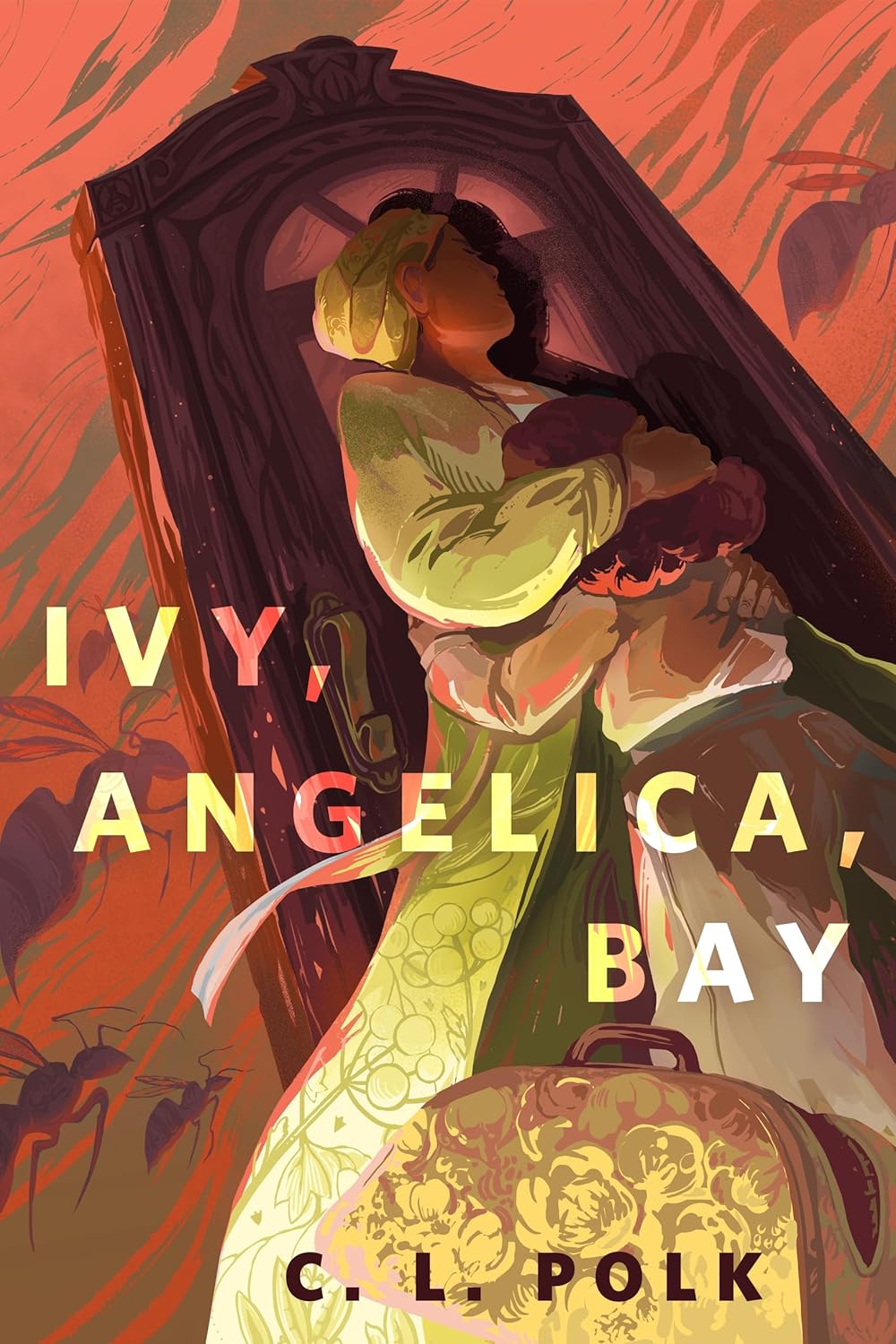
shorts by C. L. Polk: “St. Valentine, St. Abigail, St. Brigid”; Ivy, Angelica, Bay; The Music of the Siphorophenes

I have been missing Polk’s Kingston Cycle (starting with Witchmark), and was pleased to find a few shorts (for free!) on their website. Here are one short story and two novelettes. (The last is offered with two spellings! Apologies if I’ve used the ‘wrong’ one here.)

“St. Valentine, St. Abigail, St. Brigid” is a short story with some sweetness in its protagonist’s devotion, and in the honey produced by her mother’s bees, but also darkness, in the prices we pay and the love that is not returned. Theresa’s mother is a powerful magician, a mistress of the bees. Theresa was the price she exacted from a client. She is protected and privileged, but not loved. She will make her own deals for the sake of her own affections. As I recognize from other Polk works, this story combines a dreamy, weighted atmosphere and deep feeling in a delicious blend, with a mythic tone and a character I care deeply about in just a short span of time.

I was even better pleased to find Theresa again, grown up, in Ivy, Angelica, Bay. The heartbreak hits a bit harder here, perhaps because we are growing up. But she’s coming into her powers, as well. The ending offers a twist I love, with opportunities; I wonder if we might hope for more fiction, perhaps at novel-length, in this world: Theresa and the other mistresses of the bees who come before and after, and the world of good people but also darkness in which they move.

The Music of the Siphorophones or Siphorophenes (no cover image I could find) comes from a slightly differently imagined world. Where the bees wield their power in a world that looks a lot like ours, this novelette reminds me a bit of The Expanse: space pilots in a future universe in which ‘spacers’ (who live on ships and stations and planets far from human origins) have developed very differently from ‘grounders’ (mostly-Earthbound people), and there are galaxies’ worth of threats to consider in interspace travel, from pirates to intrigue in politics and entertainment, and good old-fashioned human trauma. But also the Sirens, who offer (reputedly) something like a religious experience to those lucky enough to encounter them. There will be big moral questions on offer for our small cast of characters here, and again, opportunity for this world to grow into more writings for Polk, if they desire it. I hope they do.

This continues to be a talent I’d like to hear more from.


Rating: 7 bulbs of water.

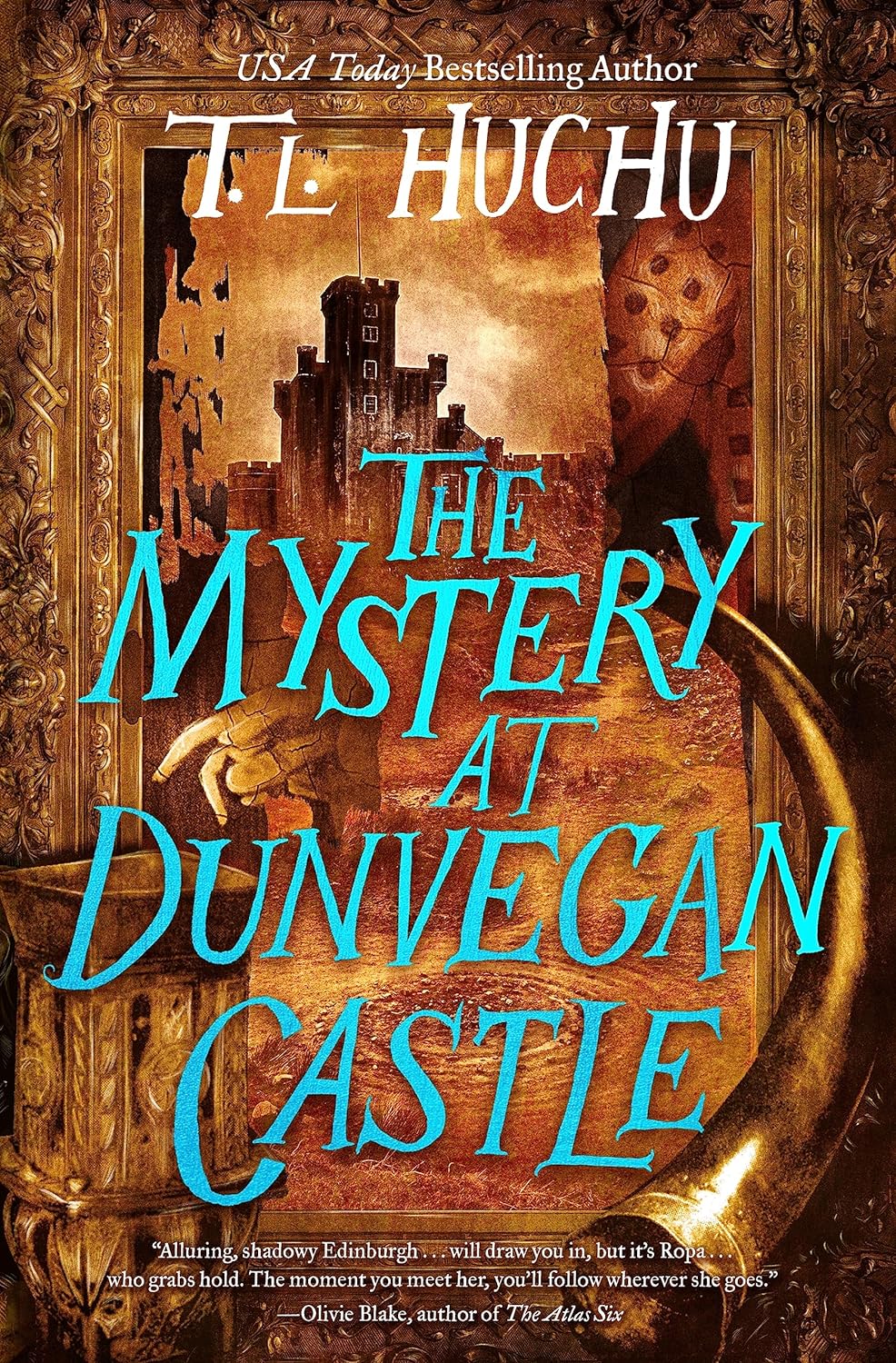
The Mystery at Dunvegan Castle by T.L. Huchu

Book three of Edinburgh Nights (The Library of the Dead; Our Lady of Mysterious Ailments) might be the best yet. Ropa is still pushing on in her unpaid internship for the Society of Sceptical Enquirers (or rather, its secretary, her patron, Sir Ian Callander), and at this book’s start, she finds herself at Dunvegan Castle on the Scottish Isle of Skye, assisting with the biennual conference. This should be low-level drudgery, but Callander is good about keeping Ropa handy; and anyway, events quickly take a turn for the unusual, necessitating Ropa’s special skills in solving mysteries. A prestigious Ethiopian magician comes to visit, a priceless ancient scroll (valued both as an antiquity and for the secrets it contains) is stolen, and a librarian – Ropa’s favorite, in fact – is murdered. And our young hero is on deck to save the day. But where she has some experience solving crimes and battling magicians, here at Dunvegan she might just be outclassed. Everybody on site except Ropa, it seems, is a professionally trained magician. Academia and the Society have turned out much less virtuous than she’d imagined. With the written advice of Niccolò Machiavelli running through her mind, Ropa decides she can trust no one. Even her heroes are suspects.

This might be the saddest in the series, as Ropa becomes disillusioned with the society and the Society she had been so keen to join. We continue to admire her for her own strong morals, even if standing on principle sometimes gets her in arguably unnecessary trouble. But her ideals are shaken as she finds out that the people she’d looked up to are fallible.

That said, it’s a great story, expertly paced and compelling, with characters we care about. And I was thinking this was a trilogy, but this book ends on a hell of a cliffhanger, and I’m glad to see there are four published books in the series with a fifth due in December! So I’m pleased to be hooked by Huchu’s singular and unforgettable young ghostalker-turned-investigator. Get on board.


Rating: 8 servings of cranachan.

Witchcraft by Sole Otero, trans. by Andrea Rosenberg

This graphic novel follows an unusual household over several centuries in Buenos Aires, Argentina, through various characters whose lives are impacted, if not ruined, by three enigmatic sisters.

Argentinean comics artist Sole Otero (Mothballs) offers a tale that meanders through historical and speculative fiction with Witchcraft, a graphic novel that spans centuries in Buenos Aires. In Otero’s evolving but recognizable visual style, the opening scene emerges spookily from the fog, as a ship arrives in Nuestra Señora del Buen Ayre in 1768. (One of a series of footnotes explains that this was the original name of Buenos Aires, given by the conqueror Pedro de Mendoza.) Readers see three women disembark with their goat, taking with them the three-year-old son of another passenger, to the latter’s wails of despair. From these early, atmospheric pages, a sense of unease is established and maintained.

The following sections of the narrative undertake large jumps in time. In more or less present-day Buenos Aires, a man tells his friend a scarcely credible story of nude women dancing around entranced nude men, with a goat and a chalk circle and “this super creepy music.” In an earlier, historical setting, a Mapuche woman goes to work at a grand estate for three sisters who are both feared and respected in their local village, to a horrifying end. In modern times, a reclusive woman exchanges e-mails with a similarly lonely man, the veterinarian who came on a house call to look at her sick cat; he tells strange, disturbing tales about his family and the elderly goat they want him to save. A nunnery sends an allegedly evil orphan girl to live with three sisters who normally adopt only boys. From these and other narrative threads, populated by spirits, witch hunts, pleas and losses, readers begin to piece together the fractured story of the María sisters and their unusual, perhaps supernatural, habits.

Otero’s style of illustration varies somewhat between sections, but is often distorted or off-kilter, and highly detailed; in full color, her characters’ facial expressions and contortions advance the unnerving atmosphere of the larger story. Page spreads may include carefully spaced panels or no panels at all; text style likewise shifts, with infrequent footnotes to help readers along. This results in a sinister, mysterious, and deeply compelling reading experience. Translated by Andrea Rosenberg (who also translated Otero’s Mothballs), Witchcraft blends horror, dark magic and dark humor, rage and righteousness. This disjointed, sometimes discomfiting, entertaining story addresses colonial power and indigenous resistance alongside ritual, sex, and sacrifice in an eerie, phantasmagoric package not soon forgotten.


This review originally ran in the August 18, 2025 issue of Shelf Awareness for the Book Trade. To subscribe, click here.


Rating: 6 trees climbed.

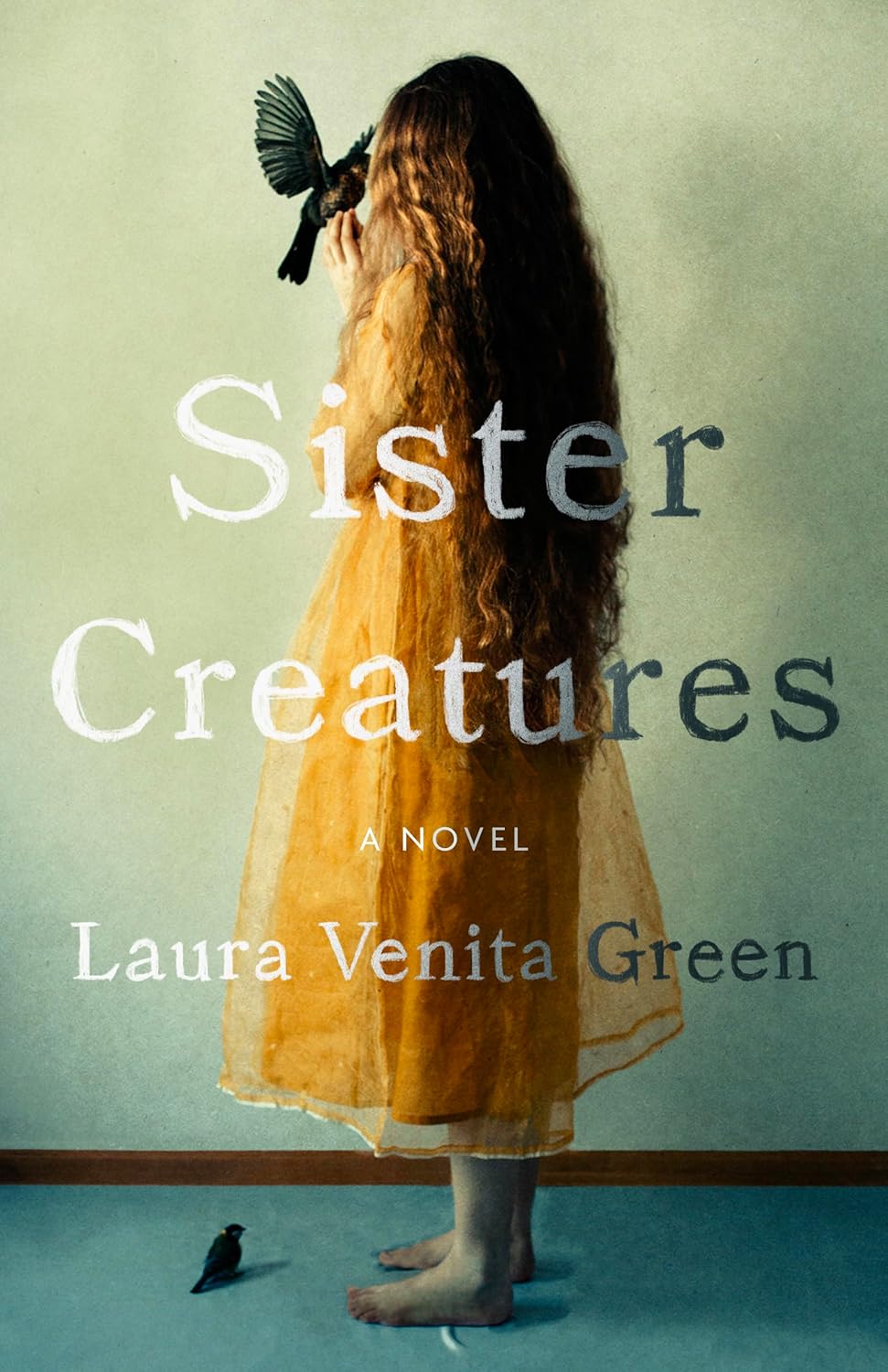
Sister Creatures by Laura Venita Green

From rural Louisiana to locations around the globe, the same problems and secrets follow a quartet of girls-become-women in this arresting, unnerving, and wise debut novel.

With Sister Creatures, Laura Venita Green invites her reader to navigate a shape-shifting world, beginning in rural Louisiana and ranging overseas and into starscapes and imagination. Rotating among a small group of girls and women, this imaginative narrative muddies the line between the novel’s real world and a fictional one within it. The result is dreamy, often disturbing, and hauntingly unforgettable.

In the opening scene, Tess uses her isolated job as a live-in nanny to hide away from the life she feels has already cratered, at age 20, with her heavy drinking. A neighboring teenager, Gail, makes a disquieting appearance: she is clearly not well, perhaps in danger, but rejects Tess’s half-hearted offer to help. The older girl “hat[es] how relieved she felt not to have to deal with anything.” Gail’s plight becomes a legend to the other characters until she makes a reappearance as an adult at the novel’s end. Meanwhile, Tess grows up and has a daughter of her own, lives around the world as part of a military family, but struggles to escape the problems she hid from in Pinecreek, La. Her former best friend, Lainey, leaves Louisiana as well, resulting in permanent banishment at the hands of a troubled younger sister. Another young woman, Olivia, wrestles with the local options, characterized as “Jesus and booze,” and with a sexuality not likely to be tolerated there. And then there is a recurring character whose entire reality seems in question. While they all choose to leave Pinecreek, the struggles that originate in their shared hometown follow these characters to Munich, Baltimore, New York City, and beyond.

In their parallel comings-of-age, and across generations, Green’s characters thread their paths between love and spite, affection and abuse. Their loose connections and jumps in chronology reward close attention, contributing to a slightly off-balance reader experience that is very much a part of the novel’s atmosphere. Sister Creatures blurs the concepts of reality and of right and wrong. Are the woods–of Louisiana, Maryland, or Bavaria–sanctuary or threat? Who is real and who is made up? Green’s narrative offers a strong literary bent, as characters interact with “The Yellow Wallpaper,” old fairy tales, misogyny, motherhood, and their own creative pursuits. They hurt each other, but they help each other, too; this is a novel ruled by nuance and surreality as well as the all-too-real.

Sister Creatures is often unsettling, but pairs moments of great sweetness alongside discomfiting ones. This novel remains thought-provoking long after its final pages.


This review originally ran in the August 12, 2025 issue of Shelf Awareness for the Book Trade. To subscribe, click here.


Rating: 7 cut-out musical notes.

Our Lady of Mysterious Ailments by T.L. Huchu

At the start of book 2 of the Edinburgh Nights series, young Ropa Moyo thinks she’s got a big break with an apprenticeship at the Society of Sceptical Enquirers, working directly with Sir Callander, Scotland’s top magician. But in the opening scene, her apprenticeship is downgraded to an unpaid internship. The big shots who work highly regarded “scientific magic” in this culture see this as a role with honor and opportunity–Callander has not taken an intern in many years–but Ropa is not exactly a member of that rank of society. She and her Gran and little sister Izwi live in a slum, in poverty, and Ropa is their sole wage earner. She cannot afford “unpaid.” (Race is not a very ‘forward’ issue in these books, but Ropa’s family is originally from Zimbabwe, and those roots influence the style of magic she’s learned from her Gran and which puts her a bit at odds with the establishment.)

Luckily, her buddy Priya has the lead on a side job: figuring out the nature of illness for a young patient at Our Lady of Mysterious Ailments. And, because Ropa is resourceful and always hustling, another mystery presents itself as well, one that might actually come with a serious paycheck. (Our protagonist is always worried about medications and medical care for Gran, and schooling for the precocious Izwi.) Chasing one puzzle and another, trying to impress the society and keep her family afloat, hard-working Ropa alternates between hopefulness and despair. Interestingly – and in a departure, as far as my memory serves, from The Library of the Dead – the case(s) here are tangled up with Scottish history and old wrongs.

Ropa’s unmistakable, unforgettable narrative voice is a big part of the charm to these novels. She offers a mix of a sort of classic, hard-boiled detective’s cynicism with a teenaged variety of same, and a youthful (not quite naïve) optimism, with both sardonic wit and earnest love for her family and friends. There is significant slang to season that combination to boot. I’d recognize Ropa anywhere, and although I have to look up the odd word, I’m always stimulated, intrigued, and entertained.

I hope it goes without saying that I’m all in for book 3 of this trilogy.


Rating: 7 movie posters.

Open Wide by Jessica Gross

This mind-bending novel examines the nature of love and the social conventions that govern relationships and asks where limits should be drawn, if at all.

Jessica Gross (Hysteria) staggers and challenges readers with her sophomore novel, Open Wide, starring a socially awkward protagonist who finds love and dives in very, very deeply.

Olive compulsively records all the hours of her life, “collecting sounds the way other people collect stamps.” She records diegetic sounds, which she uses in her work as a radio producer, and conversations, which she plays back–to study what went right or wrong, to soothe or arouse herself. She has long yearned for romance when she meets Theo, a handsome colorectal surgeon. He agrees with Olive’s proffered metaphor: people’s insides look like pink pasta. Olive can’t get enough. She wants to spend every night together. She wants to “climb inside” him.

Alongside their deepening love affair, Olive reveals to readers her relationships with her sisters and mother, through which Gross also explores boundaries (or lack thereof) and obsessive love. “My mother had climbed inside of me. My little self, filled with her bigger one. Her daughter, who was not supposed to be the vessel, but the one contained.” However, Theo is not parent or child to Olive but partner, so their intimacy is different, Olive tells herself.

Olive’s first-person narration of her bizarre story is an inspired choice that makes readers privy to her fears, confusions, passions, and rationalizations. By the final pages, which reveal what has changed in Olive’s surreal world, readers will feel dizzy with her perspective and its consequences. Open Wide is a tense, engrossing examination of the bounds of love.


This review originally ran in the August 8, 2025 issue of Shelf Awareness for Readers. To subscribe, click here, and you’ll receive two issues per week of book reviews and other bookish news.


Rating: 7 dog walks.

Stay tuned for my upcoming interview with Gross.

Lessons in Magic and Disaster by Charlie Jane Anders

Adult daughter and mother, both struggling and bickering, work to come together with magic spells, an impossible dissertation, and lots of love.


“Jamie has never known what to say to her mother. And now–when it matters most of all, when she’s on a rescue mission–she knows even less.”

At the start of Charlie Jane Anders’s Lessons in Magic and Disaster, Jamie’s mother, Serena, is struggling. Since the death of her wife, Mae, six years ago, simultaneous with Serena’s career imploding, Serena has been holed up with her grief in a one-room schoolhouse in the woods. Now Jamie, wrestling with her dissertation on 18th-century literature, has decided enough is enough. In the interest of pulling Serena out of her black hole, Jamie’s finally going to tell her mom her big secret: Jamie is a witch.

But her attempt to teach Serena some nice, wholesome, positivity-based magic misfires, because Serena is prickly, powerful, and pissed at the world. Learning magic proves hazardous, to her and to Jamie. There are also ill effects on Jamie’s partner, Ro, an endlessly patient and lovely person whom Jamie values above all–although she’s yet to tell Ro about her magic. Meanwhile, the college where Jamie studies and teaches is once more threatening to cut her already pitiful stipend, she’s at a sticking point on her dissertation, and her undergraduate students can be terrifying. But she’s just discovered a previously unknown document that might decide the authorship of a novel at the heart of her research. And with Serena’s frighteningly intense powers, it is both scary and tempting to consider what Jamie might do.

As the younger witch attempts to teach her mother the rules of magic (which self-taught Jamie has defined for herself), both women must confront relationships past and present, with each other and with their partners. In flashback sections, Serena’s early years with Mae offer heartbreakingly sweet and thought-provoking reflections on love and childrearing. Jamie’s present life with Ro, a Ph.D. candidate in economics, is nerdy and deeply loving, strongly rooted in intentional reinvention of traditional roles. Serena and Jamie are a prickly and troubled mother/daughter duo, but both are earnestly trying to come together. They will face challenges to their love as well as to their personal safety, as the stakes rise in a world of bigotry and social injustice, but they will also form stronger bonds with each other and other strong women.

Anders (Never Say You Can’t Survive; All the Birds in the Sky) excels at dialogue and the portrayal of relationships both loving and thorny. Her characters face profoundly serious dangers, but there are frequent notes of levity, joy, fun, and intimacy throughout. Lessons in Magic and Disaster features the magic of spells and charms but also that of human connection, and readers will be richer for the experience.


This review originally ran in the July 3, 2025 issue of Shelf Awareness for the Book Trade. To subscribe, click here.


Rating: 8 slices of chocolate fudge cake.

The School Between Winter and Fairyland by Heather Fawcett

Can’t get enough Heather Fawcett; I’m powering through her books for younger readers. This is offered to ages 8-12. Autumn Malog is twelve years old when we meet her. She serves as a beastkeeper for the Inglenook School for young magicians, as the Malogs always have. It is a humble role, and she’s a little wistful for the magicians’ cloaks and privileges and learning, but you can’t change what you come from. And anyway, she’s far more concerned about her twin brother, Winter, who has been missing for nearly a year now, presumed dead by everyone but Autumn. She has always been able to feel Winter and his whereabouts; she can’t tell where he is now, but she is sure that he still is. “Nobody believed her, and she couldn’t really blame them. It sounded far-fetched even to her. So, rather than trying to convince anyone, she set about gathering evidence.” Autumn is no-nonsense like that. Better to get it done than to muck about. She is burdened with three useless older brothers, and the family is rounded out by Gran, even more no-nonsense than Autumn, unsentimental, but gifted in her care of the monsters that the family keeps safe and healthy for Inglenook.

Then Autumn encounters Cai Morrigan, one of Inglenook’s most famous students ever. Just twelve years old, he is prophesied to save their kingdom from the Hollow Dragon. But he is less impressive up close than his reputation would have it; and he shares with Autumn his great secret: he is terrified of dragons, to the point of fainting within dozens of yards of them. He asks for her help, and Autumn in turn asks him to help her find Winter. These two quests will bond the two young people, and offer bigger, more existential challenges than either anticipates.

I love this wholesome story about toughness, finding one’s tribe, and when to accept and when to push back against the limitations life proposes. It is also about friendship as well as familial love. And fanciful monsters, and plucky heroes, and the call of the forest. All good things, compellingly told. I will continue to live in Fawcett worlds as long as she creates them.


Rating: 7 slices of seabread.

Trouble the Saints by Alaya Dawn Johnson

Trouble the Saints is bewitching, mesmerizing. It begins mid-scene, a move that is always risky but can have big rewards: the writer asks the reader to wade through a little confusion in favor of action and immediacy, trusting her to wrangle the context clues and have patience with the pace at which details and secrets unfold. It’s well done here. There are cards, and dreams, and magic hands – saints’ hands – and a violent backstory for a protagonist who is however strongly committed to her own concept of justice. The reader finds out as she does how she’s been betrayed – and by the one she loves the most.

Phyllis, or Pea or Sweet Pea to those she is close to, is a paid assassin for a Russian mobster in early 1940s New York City. She is known as Victor’s knife, or Victor’s angel – because she only agrees to kill when the victim deserves to die. She is also a ‘high yellow’ woman of color passing for white in a pretty high-stakes setting. Her years-ago lover, Dev, is a Hindu man guided by karma and reincarnation; he could not abide Pea’s work. His current partner is also one of Pea’s dearest friends, the singer/dancer/entertainment manager Tamara, who is Black enough to suffer the full weight of prejudice and discrimination when Pea can sometimes skirt it. So: violence, organized crime, race and racism and colorism, oh and Hitler’s on the rise, and also Pea’s immaculate skill with her knives is owing to her saints’ hands, which manifest in different ways for different individuals. Dev can sense threats with his. Tamara doesn’t have the hands, but she is an oracle: with her great-aunt’s cards she can read fortunes, or the future, or both – the rules are revealed slowly, to us as well as to these characters. There are others, with different backgrounds, skin tones, and degrees of magic or understanding. Danger and hauntings are everywhere, but there is also romance and the kind of connection that transcends that label.

Trouble the Saints is an astonishing book that keeps surprising, not least with its changes in perspective. These subjects range widely and never feel overambitious for the remarkable Alaya Dawn Johnson, who imbues even the gruesome with poetry. She’s a new name to me but one I’ll be looking for. It took me a day or two to recover, and I’m still thinking about love, friendship, and what we carry on with us. Whew.


Rating: 8 letters.