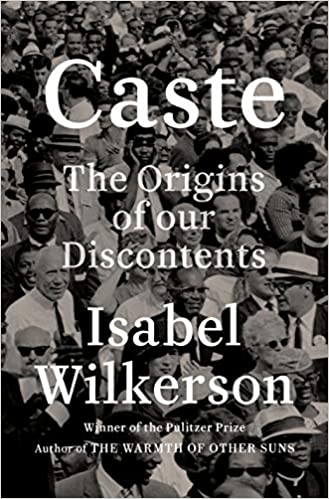
Caste: The Origins of Our Discontents by Isabel Wilkerson

In this meticulously researched and beautifully crafted book, Pulitzer Prize-winning journalist Isabel Wilkerson argues that the U.S. has a race-based caste system.

Pulitzer Prize-winning journalist Isabel Wilkerson (The Warmth of Other Suns) offers a singular and vital perspective on American society with Caste: The Origins of Our Discontents. This examination of caste and its consequences on every aspect of culture is unusual, eye-opening and of life-or-death importance. As in her previous work, which she continues and deepens here, Wilkerson lives up to the scope and significance of her subject matter, delivering a book that is deeply researched, clearly structured, well-written and moving.

The root of so many social ills in the United States, Wilkerson argues, is not precisely racism but casteism, which is closely linked to the concepts of race invented and reinforced since before the country’s founding. “Caste and race are neither synonymous nor mutually exclusive,” she writes, and then explicates and defines her terms precisely, with the support of exhaustive research. “Caste is insidious and therefore powerful because it is not hatred, it is not necessarily personal. It is the worn grooves of comforting routines and unthinking expectations, patterns of a social order that have been in place for so long that it looks like the natural order of things.”

Wilkerson interrogates and defines caste systems by comparing and contrasting three: those of Nazi Germany, India and the United States. The job of analyzing more than 400 years of American history, social structures on three continents and the complexities of sociology, psychology, history, anthropology, philosophy and more is an enormous one, but Wilkerson is more than capable. She lays out eight pillars of caste, including divine will, heritability, occupational hierarchy, and terror as enforcement. She puts to work a number of convincing metaphors to illustrate her points: infectious disease, the challenges of owning an old house, actors (mis)cast for a theater production, rungs on a ladder, the biblical concept of the scapegoat. She uses a new vocabulary to recast old problems, usually referring not to terms of race or class but of caste, and discusses recent electoral politics with descriptions rather than names, defamiliarizing the familiar and thereby offering her reader a fresh perspective.

Wilkerson’s understanding of caste proposes a nuanced take on the Trump election: many working-class white voters did not in fact vote against their interests, but rather prioritized one interest–upholding the caste system–over others, including access to health care, financial stability and clean air and water. She effectively argues that while “caste does not explain everything in American life… no aspect of American life can be fully understood without considering caste and embedded hierarchy,” and shows how it causes psychological and physical health damage to everyone living within this system.

Caste is a thorough, brilliant, incisive investigation of the often invisible workings of American society. Original, authoritative and exquisitely written, its significance cannot be overstated.


This review originally ran in the July 6, 2020 issue of Shelf Awareness for the Book Trade. To subscribe, click here.


Rating: 9 owners of old houses.

Memorial Drive: A Daughter’s Memoir by Natasha Trethewey

A former U.S. Poet Laureate remembers her mother, and wrestles with her brutal murder, in compelling and feeling style.

Natasha Trethewey, two-term United States Poet Laureate, forges a serious, poignant work of remembrance with Memorial Drive: A Daughter’s Memoir. Trethewey’s mother, Gwen, is the focus of this book: the daughter’s memories and what she’s forgotten, and, pointedly, the mother’s murder at the hands of her second ex-husband. The murder took place just off Memorial Drive in Atlanta, Ga.; the aptly named thoroughfare runs from downtown to Stone Mountain, monument to the Confederacy, “a lasting metaphor for the white mind of the South.”

Trethewey is the daughter of an African American mother and a white Canadian father. Their marriage was illegal; she was born just before the Loving v. Virginia Supreme Court case that struck down laws banning interracial marriage. Memorial Drive begins with her upbringing in Mississippi with her doting extended maternal family, necessarily recounting her early understanding of race and racism. This happy period ends abruptly with mother and daughter’s move to Atlanta, when Trethewey’s parents divorce. Atlanta has its strengths, such as a vibrant African American community, but very quickly, Gwen meets the man who will become her second husband. From the beginning, Joel is a sinister figure. Twelve years later, 19-year-old Trethewey returns to Atlanta from college to clean out her mother’s apartment after Joel brutally murders Gwen.

While this central event is harrowing, Memorial Drive does not focus only there. Trethewey ruminates on memory and forgetfulness, and recalls her developing love for and skill with metaphor, language, writing. Back home in Mississippi, her great-aunt “would appear each day at the back door, singing my name through the screen, her upturned palm holding out toward me three underripe figs… she was teaching me the figurative power of objects, their meaningful juxtapositions.” During the painful retelling of her stepfather’s physical abuse of her mother, Trethewey resorts to the second person, a whole chapter delivered to her younger herself. Concluding: “Look at you. Even now you think you can write yourself away from that girl you were, distance yourself in the second person, as if you weren’t the one to whom any of this happened.” Memories of her mother often appear as images, offering symbolic interpretations of the 12-year gap left by trauma. While Trethewey does pursue forensic exploration (transcripts of recorded phone calls between Gwen and Joel, as well as a visit to a psychic), this memoir is more introspection than true-crime investigation. And it is gracefully and gorgeously rendered, as befits a poet of Trethewey’s stature.

Trethewey declines to offer a neat conclusion, but she succeeds in making meaning from pain. Memorial Drive is loving and elegiac, disturbing and incisive.


This review originally ran in the June 18, 2020 issue of Shelf Awareness for the Book Trade. To subscribe, click here.


Rating: 7 lost records.

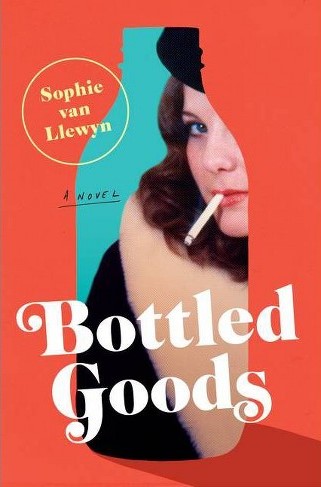
Bottled Goods by Sophie van Llewyn

An unusual story of 1970s Communist Romania with a thread of magical realism, told in flash-style snippets.

Bottled Goods, Sophie van Llewyn’s first novel, is a curious story of oppression set in 1970s Communist Romania, featuring a young woman pressing against the confines not only of culture and state but of family. Largely realistic, the narrative takes the odd, surprising turn toward magical realism, making the already strange world of heavily monitored government control feel stranger still.

Readers first meet Alina as a girl, then a young single woman, working as a translator and tour guide on the Romanian coast. It is here that she meets her future husband, a history student (later professor) named Liviu. While Alina comes from a background of privilege and property, lost when the Communists took power, Liviu comes from privation, which he does not let her forget. When they marry, “It was not a wedding, but a documentary about customs and traditions that she had been watching, trapped inside the bride’s body.” Trapped indeed in several ways, she goes to work as an elementary schoolteacher–which she dislikes–but life is tolerable until Liviu’s brother defects to France. Then the Secret Services enter their lives and everything changes.

Luckily or unluckily, Alina has an aunt with connections to the government, to whom she turns for help. Aunt Theresa’s assistance varies from intervention with the authorities to entanglements with fairies and strigoi (Romanian folk spirits). When Alina gets desperate, the fairies’ form of help will upturn her life yet again.

The short chapters in Bottled Goods resemble pieces of flash fiction (van Llewyn’s accustomed form). Some unfold in first-person narration, some in third person; some take the form of lists, postcards or how-tos. This formal variation puts readers slightly off-balance, as Alina is continually off-balance, trying to navigate the dizzying rules of her society and increasingly frustrating relationships with her husband and her mother, among others. Van Llewyn’s prose, often simple and unadorned, has moments of lovely imagery: “The beach is a conglomerate of eyes glazing her as if she were an apple.”

Though not always entirely likable, Alina is an insistent protagonist, pulling readers along relentlessly. The magical elements of her story play well off the mundane and the grotesque in everyday life, with surprisingly charming details throughout. Fluid in form, often stark in style and surrealistic in subject matter, Bottled Goods is a strange and compelling story about freedom of choice and those we choose to keep near to us.


This review originally ran in the June 16, 2020 issue of Shelf Awareness for the Book Trade. To subscribe, click here.


Rating: 6 pairs of Levi’s blue jeans.

bonus post: Shelf Awareness Turns 15!

Please pardon the extra post on a Tuesday, for this pleasing big news. I loved yesterday’s email, and hope you will too. Shelf Awareness Turns 15.

Maximum Shelf author interview: Paul Beatty

Following Monday’s review of Cuyahoga, here’s Paul Beatty: History-Adjacent.


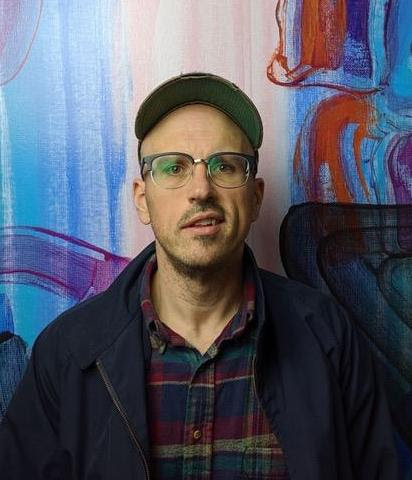
Pete Beatty is a Cleveland-area native. He has taught writing at Kent State University and the University of Alabama, and has worked for the University of Chicago Press, Bloomsbury, Open Road Media, Belt Publishing and other places, including a driving range behind a Dairy Queen and a liquor store in Chicago. He currently works at the University of Alabama Press and lives with his wife in Tuscaloosa, Ala. Cuyahoga, to be published by Scribner in October, is his first novel.

To what extent is this novel based on the true history of Ohio City and Cleveland?

For a novel that prominently features magical powers, it does have a pretty firm root in history. There is an Ohio City. It’s a neighborhood in Cleveland, and it was an independent city that rivaled with Cleveland. There was a bridge built between the cities, and they got in a nonsensical fight over where to put it and how many bridges to build. I’ve read all the newspapers I could get my hands on from the 1830s, and it doesn’t seem like it made any more sense then than it does now. There remains a rivalry in Cleveland between the east and the west side. It has elements of ethnicity, race, class and just plain old-fashioned… the narcissism of small differences. We’re 99.9% the same people, but we’re not exactly the same, so we’re going to hate each other because we’re next to each other.

The actual bridge war was a brawl on the bridge in the fall of 1837. I think one person got knocked down, and a cow was killed by an errant gunshot, and then the sheriff showed up and busted the fight up.

I was a history major, and prior to writing this novel almost everything I’d written was nonfiction. I was thinking the other day whether it’s fair to describe my book as a historical novel; it’s almost more history-adjacent, because of the fantastic elements. But that’s not to say that it doesn’t have real elements of history in it. In this moment, in 1837, people in northeastern Ohio–what was then the frontier–were dealing with a shift in identity from being frontierspeople to townspeople. There was a national economic crisis, and the region had its own economic crisis of there not being any money. The plot element of the hero not being able to get money for the heroic feats that he does–I sort of sublimated the Panic of 1837 into speculative fiction.

How did your background in editing and publishing help you write this novel–if it did?

The original version of this novel had no punctuation of any kind. Literally zero. No periods, no quotation marks, no apostrophes, nothing. It was almost written in verse; the lineation was a lot more distinct. Part of the motor of the book is that it runs at this constant mumbly speed–it was written in such a way as to be unpunctuated. I don’t recommend this–don’t write an entire book without punctuation just to see what happens.

As I was writing it, the version with no punctuation, I imagined it with an indie publisher or a university press or something. It was weirder. It had a lot of sharper edges. My editor brain did kick back in and I made it more accessible. I didn’t take out any of the themes, it just became a little less gnarly. There was a lot more barf and historically appropriate insensitivity that was taken out when I wanted to get into PG-13 as opposed to R.

Who came to you first, Big or Meed?

I was sitting in the Phoenix Coffee Shop in 2015 when the voice of Meed talking about his brother came into my head. At first I thought it was just a short story. I have this other novel I’ve been playing with forever, but this book just kind of took over. Meed has a very insistent voice. I’m always a little wary of writers talking about how their characters showed them the way, but now I know why people say that. It’s not entirely made up. Sometimes you latch onto something and it just goes.

That coffee shop is in Ohio City on Bridge Avenue, and it eventually becomes that same bridge.

Who’s your favorite character in this story?

Dog. I mean, he’s completely irredeemable. In earlier drafts of the book he was much more of a villain. He had an animosity toward any kind of change, any kind of better future. That ended up getting grafted into Meed. I realized that I was drawn to writing the story of how the things that have a potential for being destructive or vindictive or evil can happen inside a character, with the right sort of framing. Initially Dog was this scary villain, and he became much more a sort of sad angry grandpa who’s blowing stuff up because he wants the world to stop.

Stop changing? Or just stop?

I think he wants it to stop changing, but he isn’t entirely honest with himself about whether he wants it to stop changing or just end completely. He reminds me a little of Falstaff from Shakespeare, and that surfaces pretty explicitly. He’s the friend of the young central figure who’s set in his ways, and very charming, and whispering ideas in the ear of Meed that almost make sense, even though they’re not good ideas.

Meed’s voice is such a fascinating hodgepodge. How did you create and keep track of such a guy?

Even now I don’t know that I necessarily completely nailed the consistency of the character. And in a kind of backward way that makes me think I did succeed, because he feels human. He feels like somebody with a bundle of contradictions, who has a complicated relationship with his sibling, and I think we all have complicated relationships with our siblings. If we don’t have them, those complicated relationships bubble up inside us, with our parents or our friends. He obviously is familiar with scripture, with Shakespeare, with the Greek classics, the Iliad, the Odyssey–but his familiarity is almost naïve. It’s in his language and it’s part of his voice, and he doesn’t necessarily know his own resonances. But he can criticize himself: “I’m being really lazy comparing my brother to Jesus, or talking about Judas Escariot when I feel guilty.”

Meed’s voice, more than anything else I’ve ever written, was the product of equal parts inspiration and deliberate craft. I would be stuck for a while and then he’d just start talking. I’d be at the computer, like poking garbage with a stick, and then the Meed voice would tune in. It felt like a broadcast from my id or something. I listened to Johnny Cash reading the New Testament on audiobook, to get those cadences. I was single at the time, and my way of falling asleep was just to leave my phone with that audiobook playing in bed. I’d be listening to the Bible in the dark, and I’d fall asleep, and depending on whether I’d set the timer, I’d wake up and Johnny Cash would just be talking. So, somebody with a relatively thick Arkansas accent reading the Bible–that was sort of the metronome for the voice.


This interview originally ran on May 13, 2020 as a Shelf Awareness special issue. To subscribe, click here, and you’ll receive two issues per week of book reviews and other bookish fun.

Maximum Shelf: Cuyahoga by Paul Beatty

Maximum Shelf is the weekly Shelf Awareness feature focusing on an upcoming title we love and believe will be a great handselling opportunity for booksellers everywhere. The features are written by our editors and reviewers and the publisher has helped support the issue.

This review was published by Shelf Awareness on May 13, 2020.


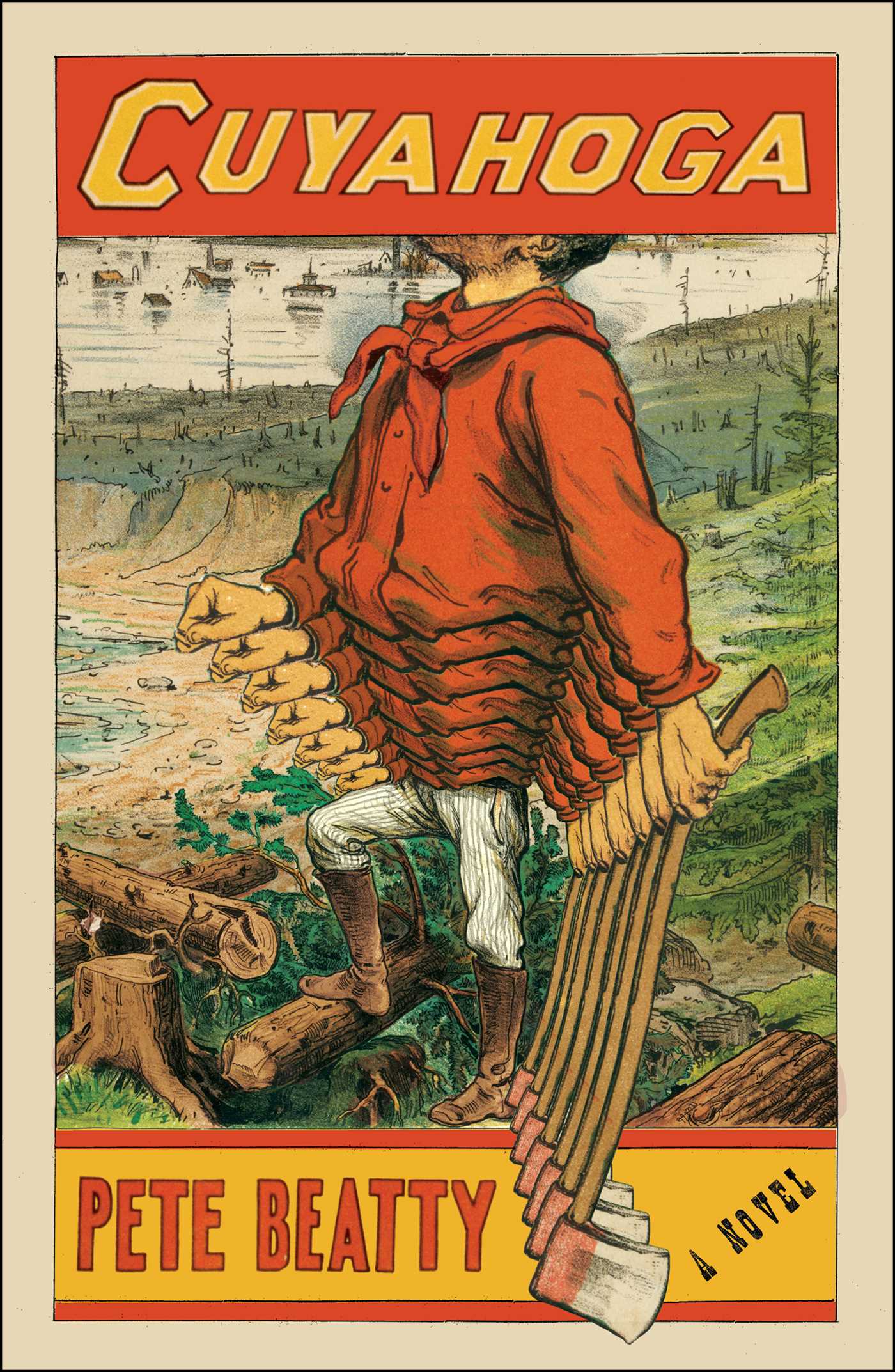
Pete Beatty’s Cuyahoga is a wild romp, a colorful tall tale and a tender-hearted revisionist history. In the early days of Ohio City and Cleveland, the two cities at the mouth of the Cuyahoga River struggle for primacy, peopled by larger-than-life heroes and classical fools.
The year is 1837, and the narrator of this farfetched story is Meed (short for Medium Son). He promises “wholesome tales, without too many fricasseed widows. True mostly–I will not lie any more than is wanted for decency.” His own protagonist is his brother, Big Son, part superhero and part town mascot, a “foremost spirit of the times,” with “shoulders wide as ox yokes… waist trim as a sleek lake schooner.” In the opening pages, Big must subdue a forest before Ohio City can be founded. “I imagine you are accustomed to meek and mild trees that do not want correcting,” Meed tells readers in a confidential tone, but “you do not know the manners of our trees.” Big’s feats are the stuff of legend, and the crafting of that legend is Meed’s work:

“Stories will go to rot without puttingup. You must salt them into Egyptian mummies, or drown them in lying sugar. Bury them in winter and freeze their blood.

But you would hide the honest stink, the moschito bites, the wounds, the living glory.

Let you and me do without salt and sugar. Taste matters true–even if the truth is half rotten.”

Cuyahoga often appears to be Big’s story, but like many of the best narrators, Meed must eventually step forward and reveal himself. Along the way he will profile the conjoined cities and a number of their livelier inhabitants. The fate of the brothers is inextricable from the drama of the towns’ rivalry.

Big’s problem, which launches this picaresque tale, is that his fabled feats inspire the admiration of the townspeople, but rarely pay in currency. He wishes to marry the beautiful, strong, quick-witted and thoroughly independent Cloe Inches, “somewhat-sister” to Meed and Big (all three are adopted). Readers understand early on that Cloe does not wish to marry at all, but the protest she makes over Big’s lack of funds is the message he hears most clearly. Much of Cuyahoga tracks his attempts to earn a living that will let him “make an honest man of myself,” as Big puts it, and win her hand.

Big’s attempts to better himself merge with Ohio City’s bid for greatness. The towns’ rivalry comes to a head with the question of a bridge across the Cuyahoga: Who will pay for it? Where will it be located (and therefore who will get the business of the tradespeople who use it)? When a location is chosen that puts Cleveland at an advantage, a chant rises up in Ohio City: “Two bridges or none.” This is the kernel of conflict that will put Big at odds with his town, unsettle Meed’s established loyalties and threaten the peace of the Cuyahoga’s twin cities.

Cuyahoga is seasoned liberally with other memorable characters: the prickly Cloe is joined by “Elijah Frewly, the worst rastler in Ohio, who wore black eyes regular as whiskers” and the grimly nurturing Mrs Tabitha, who “ambuscades” her children (adopted and natural) with corncakes each morning. (One of Meed’s poetic traits is the coining of words: “To ABSQUATULATE were a general term for departing with haste.”) Even among such a cast, grocer (read: barkeeper) August “Dog” Dogstadter stands out. Dog’s bar brims with uncouth characters and bristles with weaponry: “Hoes, plows, rakes, scythes. Mattocks and sledges. Pokers and tongs. Mammoth laundry spoons and rusted cleavers. Implements for encouraging people. Pikes, clubs, a spear….” Dog himself embodies and leads this menagerie, not necessarily a force for good. After the first attack on the hated bridge, Dog and his motley crew are immediate suspects. Meed is always on hand to record the drama, including horse and boat races, midnight graveyard hauntings, threatening nocturnal pigs and the finer points of the frontier coffin-making business.

For all its vivid spirits and outsize feats, Cuyahoga‘s greatest achievement is Meed’s unorthodox voice, unpolished but often piercingly wise, and peppered with surprising allusions. “FIVE DOLLARS SHERIFF’S FINE FOR ANY PIG TO WONDER IN THESE PREMISES,” the graveyard sign reads; “I believe the sign maker meant WANDER and only spelled badly. But the mistake had a poem to it.” Meed is given to poetry in his own cockeyed way. Early morning events take place “before dawn put a rosy finger on Ohio,” in reference to ancient Greek classics. His voice and perspective are by turns simple, philosophical, silly and serious. Readers are entirely on his side by the time the loveable, hapless Meed must eventually balance his devotion to his hero brother with his own desires, and ask: “If I were a spirit, how would I go?”

Zany Midwestern history, oddball superhero story, poignant tale of brotherhood and self-discovery: this is an utterly fresh debut novel. Cuyahoga is ever surprising.


Rating: 7 shinplasters.

Come back Wednesday for my interview with Beatty.

Foxfire Story: Oral Tradition in Southern Appalachia ed. by T. J. Smith

Decades of carefully collected oral storytelling and local lore from Southern Appalachian culture offer a singular perspective.

Since 1966, Foxfire has been educating and working to preserve local heritage in Georgia’s Rabun County. The organization has published the Foxfire magazine for over 50 years, and more than 20 books. But Foxfire’s archives are still rich and deep enough to furnish mostly never-before-published material in Foxfire Story: Oral Tradition in Southern Appalachia, a collection of folktales, stories, mountain speech, pranks, jests and much more gathered over the decades.

Editor T.J. Smith–Georgia mountain native, Ph.D, folklorist and Foxfire’s executive director–groups these materials into categories: anecdotes come from personal experience and often contain a punch line; folk beliefs connect us to cultural or religious communities and are sometimes known by the pejorative “superstition.” Proverbs and sayin’s include colloquial comparisons: sharp as a tack, a needle, a briar, a pegging awl. Legends include ghost stories and tales of treasure hunts. In a second, shorter section, Smith organizes additional storytelling by the teller. Here, Ronda Reno recounts the tradition in her family of the “granny witch,” or herbalist/midwife/community healer. Cherokee storyteller Lloyd Arneach describes his art form and how it grew, almost by accident, into a career.

The legends, folktales, songs and stories in this collection are often unsophisticated, portraying ways of life that are dying out or already gone. They shed light on endangered occupations, economies and ecological niches. With Smith’s commentary, these unaffected narratives and usages (git-fiddle: “term for guitar in the context of old-time string music”) offer a glimpse of a world otherwise unavailable to many readers.


This review originally ran in the May 1, 2020 issue of Shelf Awareness for Readers. To subscribe, click here, and you’ll receive two issues per week of book reviews and other bookish news.


Rating: 5 panthers.

Things You Would Know If You Grew Up Around Here by Nancy Wayson Dinan

Forces of nature and preternatural human empathy come together in an extraordinary novel about relationships, love and place.

Set against the true events of Memorial Day weekend 2015 in central Texas, Things You Would Know if You Grew Up Around Here explores empathy, history, local lore, fantastical happenings and simple humanity. Amid catastrophic flooding, Nancy Wayson Dinan’s protagonist offers a compelling balance between the weird and the ordinary. Eighteen-year-old Boyd has always been unusually perceptive. Her best friend Isaac is the only one who never asked anything of her, in the unspoken way that people do. “Hurt children trailed Boyd… the forked stick of a dowser… tuned not to water, but to pain.”

It’s the fourth year of the drought, the beginning of summer, and Isaac is camped on the edge of the lake below Boyd’s house, panning for gold: “You can pay a semester of tuition at UT with a tiny sack of that gold dust.” After the first night’s rain, landscapes are rearranged, people scattered, and the rain still falls. Boyd can feel Isaac lost somewhere, “the copper fear in his mouth… the shivering of his chilled limbs.” Bridges out and all roads blocked, she sets out cross-country, on foot. “She had no doubt she could find Isaac; she was drawn to him like a magnetic pole, reading his distress like a Geiger counter.”

So begins a chain of events and searches: Isaac in mortal danger; Boyd following instinct alone into uncharted territories; her neighbor Carla, a retired hippie recluse from Austin, following her own instincts after Boyd. Boyd’s mother, Lucy Maud, accompanied by a motley crew of aging family members and Boyd’s father. Isaac’s father, also missing, gone treasure-hunting just as the rains began.

Dinan’s narrative shifts among these quests: Carla slipping through the mud in her yoga slides. Lucy Maud, alternately drawn to her estranged husband and annoyed by his ineptness. Isaac in one predicament after another. And Boyd, whose unlikely understanding has expanded until she must navigate both time and space, lost children and Texas history, wandering through the same sodden world where she looks for Isaac.

Things You Would Know If You Grew Up Around Here is fabulous and engrossing, both faithful to the real-world details of central Texas and wildly imaginative, peopled with treasure hunters, prehistoric beasts, distracted professors and one improbable young woman facing a momentous decision. Dinan’s storytelling flows as forcefully as a flash flood in this spellbinding first novel in which a handsome young man, refreshingly, awaits rescue by a powerful woman.


This review originally ran in the April 27, 2020 issue of Shelf Awareness for the Book Trade. To subscribe, click here.


Rating: 8 glyptodonts.

The Tree and the Vine by Dola de Jong (trans. by Kristen Gehrman)

This sensitive novel illuminates women who love women in pre-World War II Holland.

Originally published in 1954, Dola de Jong’s The Tree and the Vine was a groundbreaking portrayal of lesbian lives in Holland just before the outbreak of World War II. This updated translation from the Dutch by Kristen Gehrman retains what is fresh, understated and moving in the original.

Bea, a shy office worker and the narrator of this story, keeps to herself and considers social activity a chore, until she meets Erica. Within weeks, they become roommates, and Bea is increasingly fascinated by her heedless new friend: Erica, a journalist, keeps strange hours and doesn’t seem to sleep. Her moods vacillate. Over many months, the pair becomes close, and Bea is simultaneously obsessed and resistant to her own feelings, telling herself that independence is paramount. “I could no longer live without her, and with her there was nothing but the strange existence that had been predetermined.”

As the threat of a German invasion grows, Erica gets involved with several female lovers, often in abusive relationships, while Bea plays the loyal friend always there to bail her out of trouble. On the brink of war, realizing that Erica is half Jewish and engaged in risky behaviors, Bea takes a half-step toward recognizing what they share. “She never spoke those few words again…. We’ve accepted it, each in our own way.”

The tone of The Tree and the Vine is often backward-looking and elegiac, told at a distance of years. But the immediate events of the women’s lives feel frantic: Erica rushes about, Bea panics. What is most important almost always goes unsaid.

The prose can occasionally feel a bit stilted, or involve a bit more telling than showing; but in fact what is shown, often, is not actions or expressions but Bea’s own deep feeling and anguish. The result is a love story on the brink of war in which the love never quite steps out in the open and the war remains off-stage. A sense of looming, momentous events pervades this slim novel.

In a thoughtful translator’s note, Gehrman notes linguistic peculiarities of de Jong’s original: anglicisms and words and expressions from the French, for example, which Gehrman has worked to maintain, and her delicate handling of Dutch idiom. She argues that The Tree and the Vine is not just a lesbian novel but “reflective of a broader female experience.” By turns emotional and restrained, this powerful story indeed offers valuable perspective on the human experience.


This review originally ran in the April 23, 2020 issue of Shelf Awareness for the Book Trade. To subscribe, click here.


Rating: 6 sandwiches.

author interview: Paul Lisicky

Following my review of Later: My Life at the Edge of the World, here’s Paul Lisicky: Turning Up the Volume on the Everyday.


Paul Lisicky‘s work has appeared in the Atlantic, Conjunctions, the New York Times, Ploughshares, Tin House and many other publications. He was a 2016 Guggenheim Fellow, and has received awards from the National Endowment for the Arts, the James Michener/Copernicus Society and the Fine Arts Work Center in Provincetown, Mass., where he has served on the Writing Committee since 2000. He is the author of Lawnboy, Famous Builder, The Burning House, Unbuilt Projects, The Narrow Door: A Memoir of Friendship and Later: My Life at the Edge of the World, available now from Graywolf Press. Lisicky teaches in the MFA program at Rutgers University and lives in Brooklyn, N.Y.

How do you write a memoir about events nearly 30 years ago?

photo: Beowulf Sheehan

In many ways I’ve been writing this story over and over. At the center of my first two books is the prospect of AIDS and HIV. My third book is about characters who are dealing with an unnamed illness, the fourth is about dementia, and the fifth has cancer at the center of it. I think this material has been a part of my imagination for my entire adult life, and there came a point where it seemed crucial to get it to the page. I don’t think that those early years in Provincetown ever felt very far away to me. My friend Polly and I continue to talk about those events with regularity. Honestly, I think those days are firmer and more precise in my imagination than any other time before or since. If you asked me to write about Provincetown from 1996 onward, after protease inhibitors changed the landscape of AIDS for people who could afford them, my memories would be far more diffuse. But there was something about that window of time between 1991 and 1994 that continues to be sharp and bright and italicized to me. It’s so fascinating how memory works, and how much more is stored and alive in the imagination than you know.

How do you navigate writing about the lives of other people?

I don’t write about anyone who I don’t love very deeply, even though it might not always look like it. I’m drawn to people who are super vivid and complicated. I think it’s a sentence-by-sentence matter. If I’m aware of saying something that feels like it has more power over the subject than I should have, then I stop and process and think. There isn’t a simple answer, because largely it’s about paying attention to my intuition. It also involves showing the work to the people who appear in the pages. At least three of the people who appear in the book have seen the book and have vetted and approved everything I’ve written. It’s important to tell people, Look, I really love you. Some of the material here might be difficult, it might feel like it invades your privacy or puts down observations you don’t want to hear, but we can talk about that. It’s a matter of conversation first.

Is there a trick to writing beautifully about sad subject matter?

It’s not even something I think about. I could not write this book without folding in the landscape of Provincetown. Not just the topographical landscape, but the people on the streets, their interest in clothing, display, performance–all of that feels like it’s a part of this story. I think when one is writing about illness one is also writing about life. Life at the precipice can be super intense: it turns up the volume on the everyday. And that might be experienced as beauty by the reader, but as I’m writing I’m not terribly conscious of that quality.

It’s a book about surviving day to day, and how people take care of each other and check in on one another. And joy did not at all feel slight in those times. Joy was an aspect of participation, and those people in that community felt the need to draw life and joy and community out of one another. I think that’s one of the reasons why I felt compelled to write the book, because community and belonging got people through those times.

The book has a life of its own. I want to write something that feels more acute, more conscious than my usual everyday thinking mind. I’m trying to write something that teaches me as I write it.

How is writing your sixth book different from writing your first or second?

The first or second felt so tentative. I had no structural confidence. I didn’t know how to think about my work outside of the landscape of the individual sentences. And I don’t think that’s necessarily a bad thing, but over the years I’ve developed some chops in terms of how to think about how one scene may dialogue with the scene after it. I’m aware of building a conversation from passage to passage over the book, developing a passage around an image or metaphor that might speak to one that follows. I feel I have much more structural confidence and much more awareness of the book, any book, as a whole. I’m as excited about the macro elements of putting a book together as I am the sentences.

I learned a lot from The Narrow Door, which couldn’t follow a linear structure. When I tried to write that book in a linear fashion, it simply didn’t work. It wasn’t able to hold the simultaneous stories that that fed one another in my imagination. I had to write that in a way that was faithful to how my mind moved. That was tremendously freeing and an educational experience. It was teaching me how it needed to be written.

Is this a timely book?

I hope it is. I’m still taken with the idea of community at the center of this book. I don’t feel like I’m in a world where community takes care of me the way it took care of me then. It was a world that instantly felt welcoming, and not too much. In a world before social media, faces and gestures and simple kindnesses did a lot to sustain life. Life has not been that way for me since, and I suspect it isn’t that way for most of us. Most of our casual interactions happen through social media, the world of online. I wanted to write a book that thought about what we don’t have right now. And that’s not in any way to idealize the world at the center of Later, because that’s a world that was under siege day by day–it would be wrong to sentimentalize that period and think about it with nostalgia, because those were rough, rough times. But they were also times of deep tenderness and affection and looking out for one another. I needed to examine that world and bring it to the page, and offer readers another possibility of living. What don’t we have in our lives right now, and what could we have if we were lucky enough to organize them around a participatory life?

What’s next?

I’m working on a book about my father, or fathers in general. He’s a vivid and complicated character–you got to see a little about him in Later–kind of scary and loving and completely unpredictable. Still thought of himself as young when he was 90 years old. He became more open, gentler, as he grew older, but not in a Pollyanna-ish way. A lot of life in that human. For a while that book was braided with Later but I realized that it needed a separate life. So I have a lot of material: it goes back to the structural question. I don’t right now know how to shape it. It needs some boundaries to give it some cohesiveness. I have some ideas about it, but I’m excited about the fact that I still don’t know, that I haven’t found its glue. I have a kind of faith that I might not have had with earlier books. Once I find out the answer to this simple question, it’s all just going to fall into place.


This review originally ran in the April 14, 2020 issue of Shelf Awareness for Readers. To subscribe, click here, and you’ll receive two issues per week of book reviews and other bookish news.


In case it’s not clear, this interview took place “before COVID,” and I think Paul’s answer to the question of timeliness, about community, offers an interesting glimpse into the near past, across this great new divide. I said just the other day that Paul’s perspectives have aged well in ways that not all writing has. In mere weeks, some of our writings and perspectives have come to sound silly, near-sighted, insipid, frivolous. I think Paul Lisicky’s wisdom holds fast in what Paul Kingsnorth calls the Great Strangeness.