podcast: S-Town

S-Town is an American investigative journalism podcast hosted by Brian Reed and created by the producers of Serial and This American Life. All seven chapters were released on March 28, 2017.

I have been hearing about this podcast for years, and I’m sorry it took me so long. As soon as I started it I was hooked, riveted, couldn’t stop. So beware.

S-Town is the polite abbreviation for Shittown, which is the moniker given Woodstock, Alabama by a colorful character who is from there. John B. McLemore contacts Brian Reed by email, and the two end up emailing and talking on the phone for some time – at least many months, maybe a year or more – before Reed is convinced to go down and meet the man in person. John B’s original story for Brian is about a murder that has been covered up by corrupt Bibb County, which he would like the journalist to investigate. Well, this is an early spoiler but a mild one: the alleged murder never actually took place. But by the time Reed figures that out, he’s met John B, who is an addicting character. Wildly eccentric, genius, and yet somehow also an everyman. S-Town thinks it’s about a murder, for a minute, but really it’s about John B himself.

Or is it? I coach my students to pay close attention to titles, and this podcast is titled after the town itself; or rather, John B’s colorful description of the town. Maybe the show is about John B’s worldview. The man himself; the town; John B’s philosophies; Brian Reed’s unresolved feelings about these subjects; the final disposition of the man at the center of things.

To quote the Vox article that is linked later in this review:

John is all of the following: a queer liberal conspiracist who socializes with neighborhood racists; a manic depressive consumed by predictions of cataclysmic global catastrophe; an off-the-grid hoarder of gold who takes in stray dogs; a genius with a photographic memory who’s spent his whole life caring for his mother while designing a massive and elaborate hedge maze in his backyard; and one of the most skilled antique clock restorers in the world.

I feel that, on one level, S-Town is an example of the best of what creative nonfiction can do. It focuses on a man who is, at least in some ways, just a regular dude from a backwater town in a part of the country that we are accustomed to looking down on. It turns out that the everyman is remarkable, however: he is inarguably hyperintelligent; he’s also eccentric, disturbed, deeply troubled. (He actually reminds me so vividly of someone I have known intimately for much of my life that I was often freaked out by the similarities, so much that I don’t think I can name that person here, although those close to me will recognize who I mean.) He’s endlessly fascinating. Reed gives the impression of simply capturing the outpouring of weirdness from John B and passing it on to us – artfully composed, but otherwise authentic. Look how crazy real life can be! Fact is stranger than fiction, and all that; the best stories occur in nonfiction because we wouldn’t find them believable in fiction, I often feel.

Of course, there is a little bit of a falsehood there. All narratives are mediated in some ways. No story could tell everything about a man, and this one is limited by time (seven episodes averaging just under an hour apiece), and by Brian Reed’s limited access to John B. (The subject here is extremely forthcoming, but who can ever share all of himself; and they only know each other for so long.) Any narrative necessarily shapes its subject, no matter how honest it tries to be. But I find this piece of creative nonfiction – the seven episodes as a whole – an extraordinary example of craft and art, and an exemplar of the power of creative nonfiction at its best.

It’s also been the subject of some controversy. I’ve tried to keep the rest of this review pretty nearly spoiler-free, but if you want to appreciate the podcast as intended, stop reading now and go listen to it first.


There have been complaints (and lawsuits) over Reed’s use of personal information. Did he exploit John B? Has he aired more personal business than the subject intended? John B is not here to speak for himself, which makes these questions harder to answer. But I think… if Reed has exposed a lot of John B’s innards, that’s just what journalists do. John B contacted a journalist, knowingly invited Reed into his life, and then granted him enormous access to himself, his home, his mind, and his writings. And John B was a smart man. If it’s a bit off-putting to see so much personal stuff exposed – and I do find it a bit uncomfortable – well, what else did we expect? It is certainly great storytelling. We can’t know what John B would have thought of the final product. But he doesn’t strike me as a man worried about outward appearances. Sometimes journalism, and creative nonfiction, can be a little unsavory, folks. (Perhaps this is why I’m pretty much a nonpracticing nonfictionist at this point.) But S-Town no more so than the rest of it. If anything, I think Reed did a decent job of resisting the temptation to view Woodstock with disdain or even the curiosity of a visitor to the zoo; I think he tried for nuance.

Rather unusually, I’m writing this review more than a week after finishing the podcast – I generally like to get to things much more quickly – and so I can tell you it’s sticking with me, as fascination and as a bit of a puzzle. I’m not ready to indict Brian Reed or the podcast, but I don’t feel excellent about the whole thing, either. For a few other perspectives, many of them less complimentary than mine, check out Medium (with spoilers!); even better, I think, is Vox‘s coverage (also with spoilers). The latter does a very good job of explaining what is outstanding and what is troubling about S-Town, in my estimation. But best of all would be to go listen to it yourself.

John B will be with me for some time.


Rating: 9 drops of mercury.

“These Precious Days” by Ann Patchett

From the January 2021 issue of Harper’s Magazine, sent to me by the infallible Liz, a transcendent essay by Ann Patchett. Now, I’m not sure if this is for real or how stable it is, but at least for now this link will let you read it for free, which you definitely should do. And it’s worth whatever they want you to pay for it, in any case.

“These Precious Days” is a lengthy essay, but it is riveting at every point. I had to put it down and walk away just to give my mind and my emotions a break, and to stretch it out – it is that strong and beautiful an experience. And it was hard to figure out where to take that break, because it wants to flow right through from start to finish.

There is a story running through this piece, and it is a story of a friendship, formed and forged during extraordinary times. As Patchett reminds us, she is a novelist, with a real interest in how stories are structured, where they begin and where they end. So it is with purpose that she gives us the story’s chosen beginning: it’s almost bedtime, Patchett has just finished a novel, and she needs something short to read before bed. From the umpteen books that naturally surround Ann Patchett, she chooses a collection of short stories by Tom Hanks. She is surprised to find it “a very good book,” and this sets her off on a journey where she gets to know Tom Hanks a little, interviews him for a television show, meets his assistant, sees him a few more times. This leads to Tom Hanks narrating the audiobook of The Dutch House, among other things. I’m not going to say any more about what happens. Trust me, you won’t be able to walk away from this one (unless you force yourself to do so with great effort, as I did, mostly for the pleasure of returning to it).

One thing I love about this essay is how it performs as a braided essay, barely. Patchett stays in a single narrative for the most part, telling the story of the developing friendship in the extraordinary times. After her introductory story about Tom Hanks (who is not the new friend, but reappears occasionally), she stays in this main thread so much of the time, and tells it so beautifully (and it is such an absorbing story) that I forget about the other thread – that there is a meta-thread in this essay about story, and about the shape and the shaping of this story. Those few and brief moments when she reminds us of the other topic are all the more effective for their scarcity. We are reminded that the narrator’s character is a novelist, and that the need she feels to shape narrative can’t be divorced from the life she’s living, where she has a dear new friend who is in danger. It’s extremely skillful writing, and I loved several facets of it: that weaving of threads (just barely, just a touch of one for seasoning in the main dish), the expertly paced storytelling, the appreciation for so-called coincidence, the delightful characters (of whom the author’s husband is a secondary example, but one I really liked), and the self-aware voice of Patchett herself. I’m left with the impression that Patchett is like Tom Hanks in a way (or my impression of Tom Hanks): despite being famous, they’re both also very decent and nice, more than one might expect. She’s allowed us intimately in here in a way that I think will appeal to many readers as it did to me.

Now’s a good time for me to confess that I’ve read none of Patchett’s fiction. (I think I’ve read a column or two, within the world of her bookstore advocacy.) I know her by reputation as a fine novelist and an important advocate of independent bookstores. I can now see that she is absolutely gifted and I need to read more of her work.

I can’t remember the last time an essay so bewitched and transported me. I insist you seek this one out. Thanks a million times as usual, Liz. (How’d I do?)

movie: Hemingway (2021)

Obviously I was interested in the new documentary from PBS titled simply Hemingway, and appearing in three episodes totaling just shy of six hours. I’ve read a dozen or so Hemingway biographies and almost all of his fiction and nonfiction, much of it repeatedly. Let’s say I’m a fairly serious Hem scholar for an amateur. But it’s also been a few years. This counted therefore as a good check-in and test of my continuing interest.

I think Ken Burns and Lynn Novick and their team did a good job with the nuance and contradictions, the good and the bad, of this intriguing man, his life and his work. This doc isn’t just about his writing or about the man, but both at once, back and forth, because they’re inextricable. Hem was a truly extraordinary talent, a genius; he was also a bully and a jerk in many ways; he could also, apparently, be a lovely person some of the time. He had an unfortunate tendency to be cruelest to those who most helped him. He profoundly and undeniably changed writing in the English language. He was a very ill man late in his life, in terms of his mental health. And that life was full to brimming of wildly improbable stories (two plane crashes in a row?). He was larger than life, by several measures, and so it’s a hard life to write about. And it’s easy to say (because it’s true) that he was the genius, or the asshole; but it’s harder to say that he was many contradictory things at once. This production handles it very well, in my opinion.

Hemingway constructed his myth, to a large degree, and he made the mistake that all mythmakers do: he thought that he could control it. And there comes a time that you can’t anymore. It’s taken on a life of its own. It became very exhausting to be Hemingway, the Hemingway that the public thought, and let’s face it, when he was in the public he was always in the public eye. And people expected Hemingway to be Hemingway.

–Michael Katakis

The film is packed with still images of Hemingway and the characters surrounding him; his original works; and (more limited) archival footage. It relies heavily on his own work. And it includes interviews with other writers (Tim O’Brien, Abraham Verghese, Mary Karr, Edna O’Brien, Mario Vargas Llosa, Tobias Wolff); Hem’s middle son, Patrick; John McCain (a surprise, but he made some meaningful contributions); and biographers and scholars including Mary Dearborn, Paul Hendrickson, and Michael Katakis, manager of Hemingway’s literary estate.

Even in six hours of close study, I was left feeling like this was an abridgement – and of course it is, when so many (different) biographies have been written, which would take much longer than six hours to take in. That’s the Hemingway nerd talking. It’s impressive what they do accomplish in this time (which of course would be plenty for most viewers). It gives a very thorough introduction to a complicated life. I think the only new-to-me information I noticed was the extent to which the Kansas City Star‘s style sheet prescribed what we think of as the Hemingway style: short, declarative sentences, few adjectives. I loved spending time again with the four women who married this man. They’re so different from each other, fascinating, and strong characters themselves.

He weighs about 200 pounds, and he is even better than those photographs. The effect upon women is such that they want to go right out and get him, and bring him home, stuffed.

–Dorothy Parker

In the end I found this a nicely balanced representation, which shares my view that Hem was both superlatively talented and also deeply, awfully flawed. His work and his life fascinate me no less than ever, and that’s really saying something. I do recommend this documentary, which you can stream online for free here.


Rating: 8 strings above the toilet.

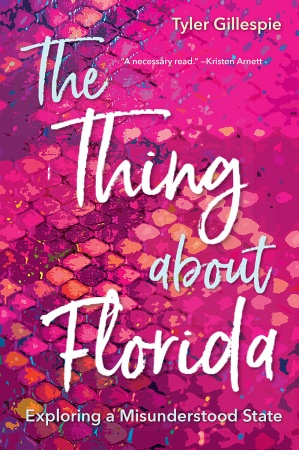
The Thing About Florida: Exploring a Misunderstood State by Tyler Gillespie

Disclosure: I was sent a digital ARC of this book by the author in exchange for my honest review.


Tyler Gillespie’s essay collection The Thing About Florida: Exploring a Misunderstood State has just this week been released, and I’m happy to share it with you here. This book was indeed a good match for my reading tastes! It’s about a misunderstood or maligned place (Texas transplant to West Virginia here: I sympathize), and it’s about place, which I always gravitate towards. It’s a collection of essays that roam widely in theme, and I found Gillespie’s voice very appealing: he can be hilarious and self-deprecating, but also serious and earnest; he considers important questions, as in the painful experiences of the LGBTQ+ queer community in Orlando especially following the mass shooting at the Pulse Club in 2016.

One of the audience members near me asked her friend if the alligators were animatronic. The area’s theme parks seemed to make people question reality. Florida, in general, has a way of doing that.

Essays cover a range of topics: “Because Florida” jokes and “Florida Man”; hurricanes; Civil War reenactors (and the question of how ‘southern’ Florida really is); cattle ranchers; a gay resort/campground, which relates to aging issues for queer folks; alligators! and those who wrangle, wrestle, and love them; snakes, including breeding and smuggling and the escaped ones thriving in Florida; reptile people (that is, those who love them and attend reptile conventions); and the Joy Metropolitan Community Church, where queer Floridians find an open-minded home. “Joy MCC stood less than ten miles away from some of Orlando’s theme parks like The Holy Land Experience. Those attractions gave visitors pyrotechnic performances and larger-than-life experiences. People could escape their daily lives there, while Joy MCC–and places like it–let people come home. They gave Floridians a second chance to be who they already knew they were.”

There is opportunity for humor in some of these topics more than others. I appreciated Gillespie’s stark discomfort with the Civil War reenactors, his (perhaps surprising) affinity for the cattle ranchers (“Marcia’s food almost made me want to sign up to work as a cowboy-for-hire until I remembered the wild hogs and all the broken bones and who I generally am as a person”), and his relationship with his grandmother as it played out in hurricane prepping. He’s most concerned with human culture and history; the scope of this book does not extend very far into the natural world (except in its role as host to those alligators and snakes, etc.). He does evoke some of the landscape, though: “Sawgrass stretched for years, and gnats pestered us like siblings.” I guess I was a little surprised to find Florida characterized as a homophobic place, as my picture of Florida stereotypes involved large numbers of retirees and gay men; but there’s plenty of rural space there as everywhere, and it is the South. (Is it? There are a few perspectives, and again as a Texan, I sympathize – we run from Deep South to TexMex to the southwest. But I certainly thought of Florida as the South, however arguable that idea may be.) Which is to say, totally unsurprisingly, that I learned something from this book.

The best part, though, is definitely Gillespie’s voice. I feel like I made a friend reading this. That’s a way to say: the narrator is personable, intimate, funny, accessible, approachable. It’s pretty rare to feel this way after reading a book, and that’s okay, because not every book sets out to make its reader feel like a friend, but this one certainly accomplishes it. Perhaps the greatest victory Gillespie wins here in arguing for Florida as a real place (not a cartoon landscape) lies in his own relatability. Florida, like every other place you might name, is not any one thing. It contains the city and the country, a wide range of politics and educational and lifestyle backgrounds, and all kinds of different people. Summing up anyplace too easily would be a disservice, and Gillespie does his home state a service here by complicating it. He doesn’t argue that it’s perfect, or the best place, and he readily acknowledges its weirdness, but he makes it variable and diverse and flawed and weird and real. Somebody should commission a series of The Thing About books for the other 49 states, and keep going from there.

Thanks for thinking of me, Tyler.


Rating: 7 burgers.

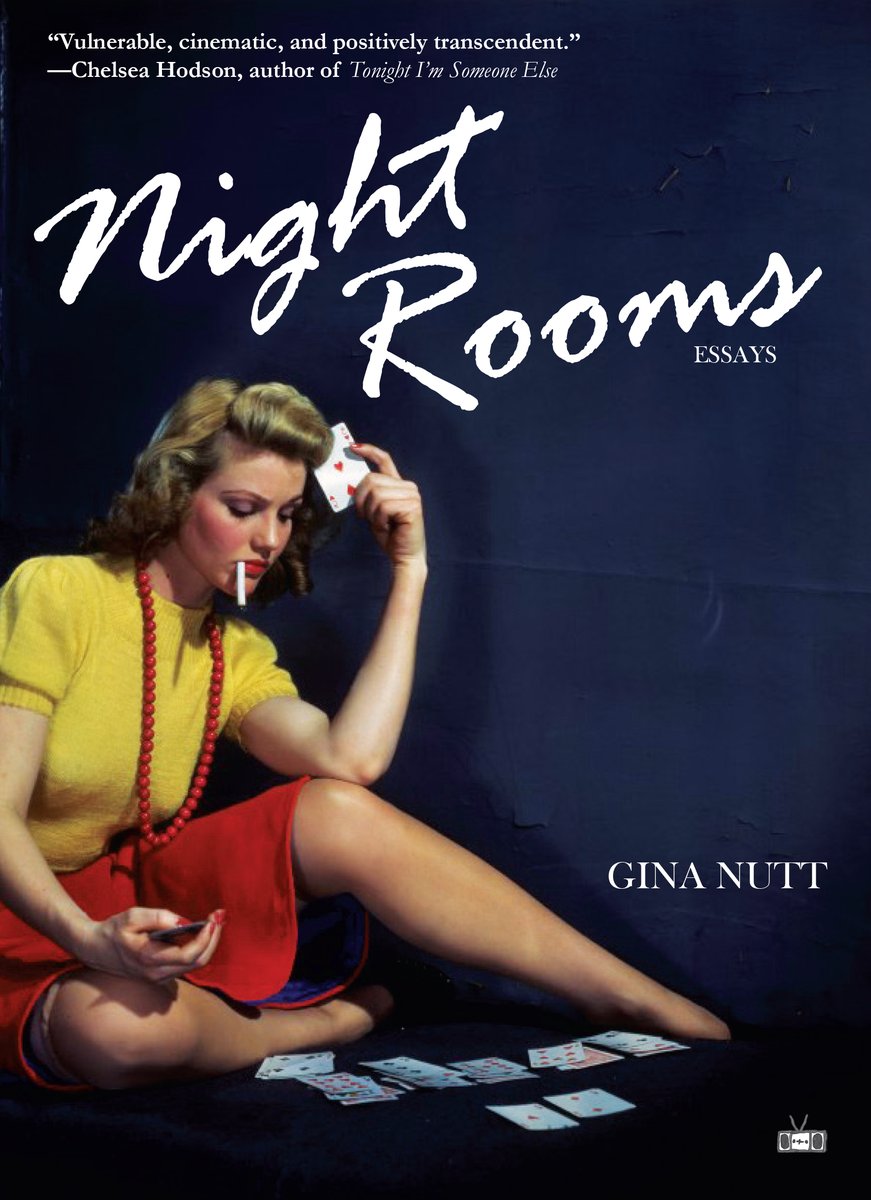
Night Rooms: Essays by Gina Nutt

These 18 essays about gender, horror, grief and much more are thought-provoking, discomfiting and lovely.

Gina Nutt’s Night Rooms is a startling collection of 18 essays ruminating on life experiences, cultural tropes and horror films, examining questions of gender, fear and grief. Fragmented in form, but firmly interconnected, these essays refuse to look away. Nutt’s prose is lyrical, provocative, intimate and intelligent.

“I used to imagine wanting someone alive would revive them, if caught right after dying.” This opening line establishes one of Nutt’s main subjects: the deaths of loved ones and how people do (or don’t) handle them. She wants to find “a balance between mourning and moving on. How does it look to not be so enamored with the image of the final girl–the one who survives–that we forget, or disavow, our dead (selves).” That final girl of horror movies is objectified: a symbol, a survivor, part of a lineage.

Nutt (Wilderness Champion) is also a poet, and has a way with a simple line in brief scenes and observations: in grief or depression, “time pulls thick, opaque as taffy.” “I am making this [darkness] a buoy.” Her voice is vulnerable and frank. Repeatedly she describes a cultural artifact rather than naming it, so it is recognizable to most readers, but made unfamiliar: “the cartoon mouse dressed in a red sorcerer’s cloak and a pointy violet hat with white stars on it.” Quoted sources are named in footnotes, but those only paraphrased are not, so that different readers will find themselves involved to different degrees–as is true with the cultural artifacts themselves.

Haunted houses, horror flicks with sharks in them, ghost stories and slasher films meet beauty pageants, ballet lessons, sexual explorations and home décor to question what it is about the macabre that fascinates. Although subtitled as “essays,” Night Rooms feels more like it contains chapters, which make reference to one another as much as within themselves. The deaths that occupy the narrator in the book’s beginning are relevant again at its close. Indeed, while these essays are fragmented, cinematic in flashes of image, sound and feeling, they are equally fragments of the whole. Together, these pieces form an experience that is sensory, intellectual and emotional, illuminating difficult and even uncomfortable truths.

Part personal reflection and part cultural study, this unusual collection will haunt readers, in the best ways.


This review originally ran in the March 15, 2021 issue of Shelf Awareness for the Book Trade. To subscribe, click here.


Rating: 7 insects framed in flight.

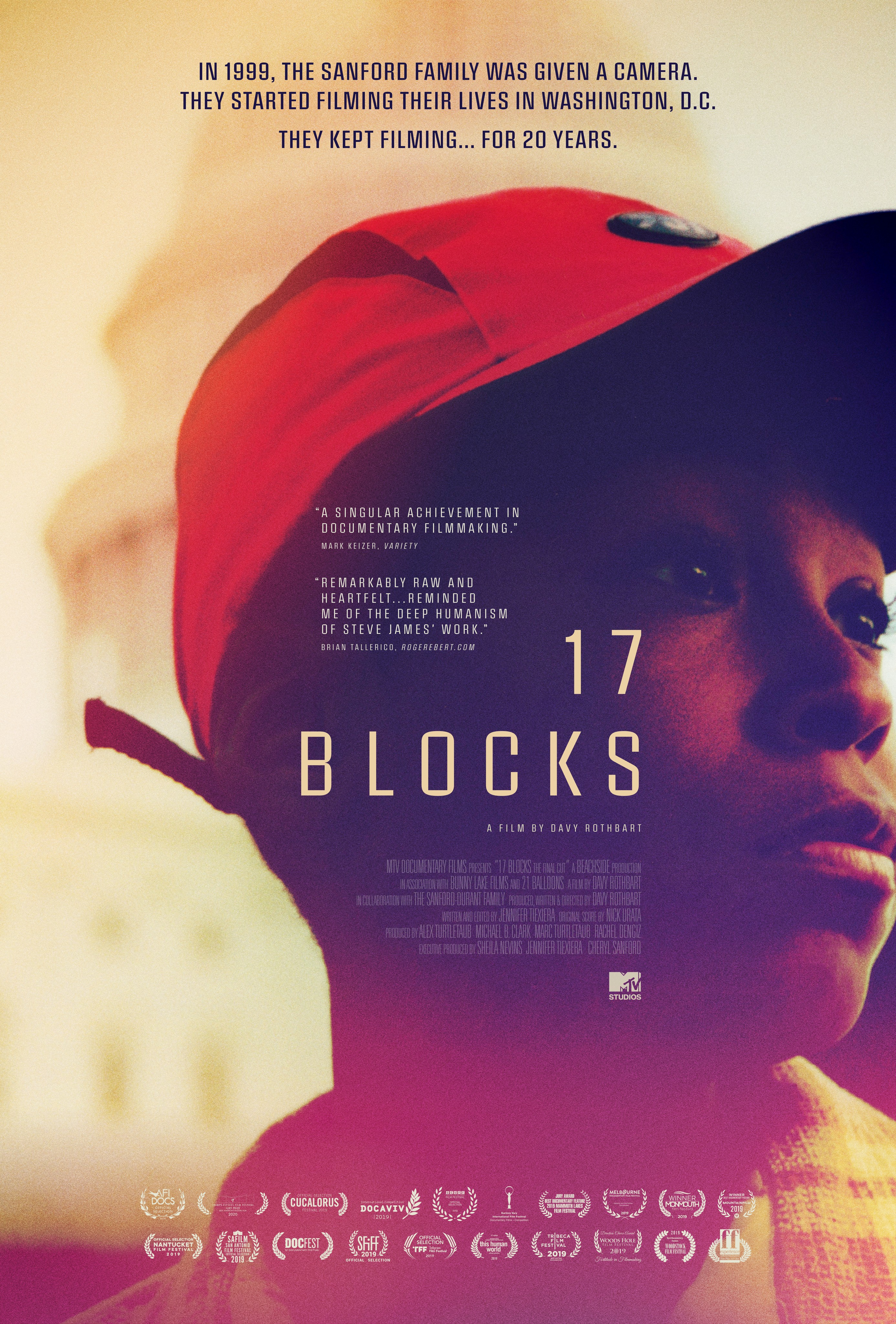
movie: 17 Blocks (2019)

A filmmaker meets two brothers – Emmanuel, 9, and Smurf, 15 – at a pickup basketball game in southeast Washington, D.C. They strike up a friendship. Film footage from the following twenty years, shot by both filmmaker and the family members themselves, eventually yields this documentary: 17 Blocks, in reference to the distance between the Sanford family home (at the film’s opening) and the nation’s capitol building. Count that as a not-completely-subtle cue to consider certain contrasts.

The Sanfords and Durants are poor and Black and plagued by social ills including addiction, gun violence, and incarceration. They live through terrible tragedy. Their lives are presented here seemingly unmediated: they speak directly to the camera; raw footage is edited together. (All narratives are mediated, of course. And it’s worth nodding to the feat of culling 1,000 hours of footage to create such an intelligent narrative in 90-something minutes.) There is plenty of opportunity to think through larger issues, beginning with the commentary implied by the title. What is most horrifying about this movie is the pain in the lives of the Sanfords; what is perhaps even more horrifying is that they are representative of so many lives, that their pain is so common.

There’s a quite good review over at Rogerebert.com (although it gets the Sanford kids’ birth order wrong), to which I’ll refer you for a deeper look; reviewer Matt Zoller Seitz makes some good points that I agree with about why the film is excellent, as well as a few mild criticisms. I appreciate his point that the film “probably doesn’t push hard enough against reactionary, Puritan, possibly racist readings of the Sanford family’s misery as it should have.” He also warns viewers of how hard 17 Blocks is to watch, and he’s right: it’s awful, discomfiting stuff, and the discomfort one feels watching it is only appropriate and reasonable. There’s another layer for me, though, too. The first half or so felt awfully close to ‘poverty porn’ (a term I may have first learned when I first started to get to know Appalachia). The problem is that in order to recognize problems in communities, in systems, we have to look at people’s suffering. But there’s something inherently problematic about the looking at – something voyeuristic – that’s discomfiting in a different way. I haven’t quite sorted my feelings about this. Possibly, if we are to make a movie of the Sanfords’ lives and look at it like this, we have a responsibility to work harder to do the work Seitz mentions, the pushing back, “in order to guard it more righteously against bad faith interpretations.” I’m not sure. This is not properly a criticism I’m offering, but a question. Also, it is very relevant that Sanford matriarch Cheryl was an active part of the production and promotion of the movie; the family is on board and involved, which we should keep in mind in considering the complicated situation with this (white) filmmaker and any potential question of exploitation.

I don’t know. But I do know that the film is artful, wrenching, visually intriguing and deeply affecting, and I’ll be thinking about it for some time. If you check it out, please let me know what you think.


Rating: 7 t-shirts.

movie: Escher: Journey Into Infinity (2018)

I had left Italy. I lost the Italian landscape and architecture and something else had to take its place. This stimulated the formation of inner images. I started working with passion when I discovered that I had things of my own that had to come out, that I could express something others don’t have.

What a beautiful, completely absorbing and eventually transcendent film. For starters, something like Fantastic Fungi, there is such a rich body of work in the weird world of M.C. Escher that any proper documentary should turn out to be visually stunning, and this one does the job properly. I loved the animations of his prints, which it turns out he’d imagined happening. (There was a moment when a tessellated lizard clicked, came to life, and clambered out of its print. Hops lost his shit.) What I didn’t see coming was such a fascinating life – I’d known nothing of Escher the man, I guess, and in fact hadn’t realized how recently he lived and worked, and therefore how World War II and the rise of fascism had affected his life. I had not expected Graham Nash (of Crosby, Stills and Nash) to be onscreen early, telling the amusing story of Escher’s claiming he was a mathematician and not an artist at all. The Escher that emerges here is grumpy and flummoxed by the hippies’ interest in his work, and their annoying tendency to colorize his black-and-whites with such bright hues. His eldest son is there too, describing (chillingly) how the family chose to leave Italy 1935 after the son (as a small child) showed a disturbing interest in playing the baby fascist. This whole story was fascinating, whimsical, frequently funny and also pathos-ridden.

I appreciated Escher the romantic (in his relationship with his wife), the curmudgeon, and the tortured artist:

What I can say is that no print ever succeeds. They all fail. Simply because I always pursue a vision that cannot be realized… my prints, none of which were every made with the primary aim of making something beautiful, simply cause me headaches… that is the reason that I never feel fully at home among my colleagues. They pursue beauty first and foremost. Perhaps I only pursue wonder.

And this film was simply mind-blowing. The music, the diegetic sound, the still photography, the video of landscapes and architectures referred to in Escher’s work, the animations from his work, the delightfully performed narration (“told in his own words from hundreds of letters, diaries and notes”) by Stephen Fry – it all came together for a very special experience. I’m so glad my parents clued me in. (This has inspired purchase of an Escher art book, so stay tuned for more reviews. Always more.) Definitely recommended.


Rating: 9 steps.

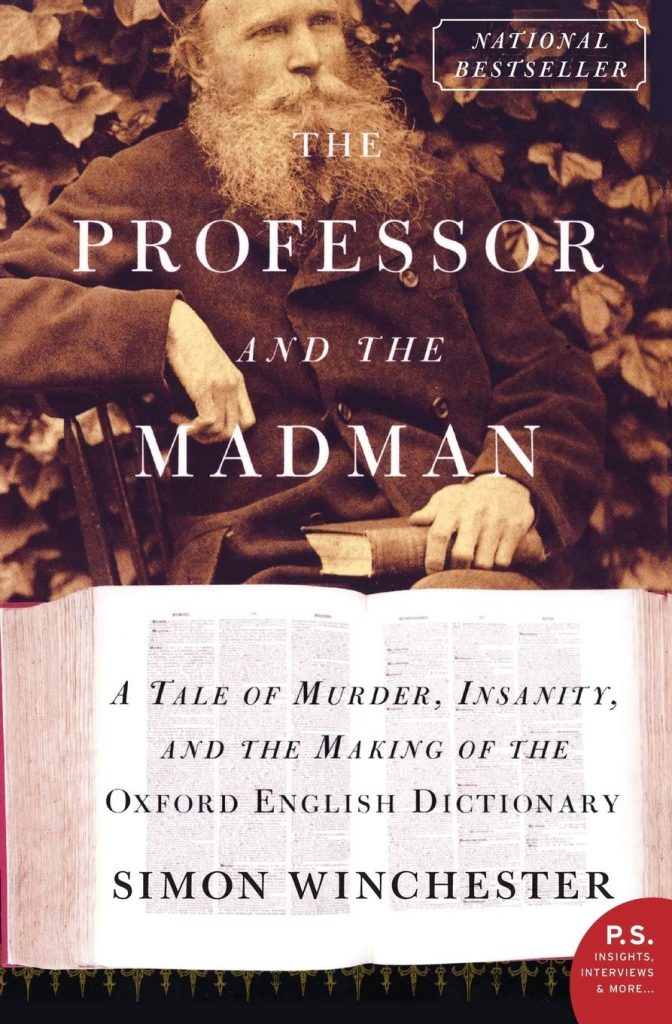
The Professor and the Madman: A Tale of Murder, Insanity, and the Making of the Oxford English Dictionary by Simon Winchester

Liz sent me a clipping from The New York Times Book Review recommending this book, which turned out to be a happy synchronicity in two ways: one, I had had the book on my shelves for years, still bearing a sticker from the library where I worked when I first met Liz. Two, I stuck that clipping, that slip of paper, in the book as a reminder, and the book turns out to be in some ways about little slips of paper, which I had learned by the time I found the clipping in its pages again. Good work as ever, Liz.

Simon Winchester’s The Professor and the Madman is a fine example of creative nonfiction writing of the less-personal kind: not memoir, but history; but history told with a novelist’s eye. This Tale of Murder, Insanity, and the Making of the Oxford English Dictionary is for word-fans, of course – that OED mention has pulled them in – but also for readers who enjoy an absorbing historical narrative.

The Professor, here, is the Scottish Dr. James Murray, teacher and philologist who was eventually recruited to take on a formidable role: the editorship of a project of such enormity that most thought it could not be done. Here, Winchester backs up to give us a quick history of lexicography (Samuel Johnson figures centrally). The new project attempted something unprecedented: to define every word in the English language, not only those deemed “difficult” or somehow deserving of promotion; to describe rather than prescribe how they were used; and to record the history of each word, using quotations from written material, including the identification of each word’s first entry in written history. The philologists and word-nerds who undertook this goal repeatedly declared that they thought it would take a handful of volumes or a handful of years; it would take more than seventy years to publish its first “complete” version in twelve volumes, which of course needed immediate supplementing and updating. Dr. Murray was the editor and boss of this project, which would become the OED, in one of its earliest incarnations (the one that stuck).

That’s the title’s Professor. And then there was Dr. William Chester Minor, an American who spent his childhood in Ceylon with missionary parents, then trained as a medical doctor at Yale, served as a surgeon for the Union army in the American Civil War, and was later institutionalized for his delusions. Enjoying a little freedom in London in 1872, those delusions convinced him that he was pursuing one of the bad men who abducted and molested him at night, which is how he came to shoot and kill an impoverished local brewery worked named George Merrett, who left behind a pregnant wife and seven small children. For this, Minor would be “detained in safe custody… until Her Majesty’s Pleasure be known.” He spent nearly the next fifty years of his life in an asylum in Broadmoor, just outside of London, “a certified criminal lunatic.”

Winchester offers that Minor’s life was saved, in a sense, when he came across an advertisement from Murray, seeking volunteers to read… well, everything, and search out the quotations needed to write what would become the Oxford English Dictionary. Minor happily had some spending money (his family was well-off, and he drew a pension from his military service), and the good graces of the asylum leadership at Broadmoor let him build a prodigious library of rare and old books. Aside from these he had nothing but time, and created his own system of indexing that changed the way he was able to serve Murray and the OED. Over decades, he would serve as one of the most prolific volunteer contributors to the project, sending in tens of thousands of little slips of paper with words and quoted texts carefully penned. He and Murray would build a friendship, and together they built a book. It is Winchester’s conclusion that while Merrett’s murder was tragic, and Minor’s life another tragedy, they were both necessary to contribute to something of a miracle in lexicography.

Liz’s clipping from the NYTBR (by Charlie Savage) calls The Professor and the Madman a “mashup of erudition and melodrama,” and I think that is a fine description. There is plenty of hearty history and lexicographic detail here, which I loved. There is also a definitely flair for the dramatic, and there were a few points where I didn’t love Winchester’s editorial tone. (A laugh at the expense of one dictionary reader and then “one of the women readers” – why that detail? – or a snobbish note about a slum. He could be a bit creepy about the naked girls on the Ceylon beaches. I didn’t care for the way he characterizes the stepmother as “so often the cause of problems for male children.”) There’s no question that this is a novelistic history, in the spirit of Erik Larson or Jon Krakauer – who were among my first experiences with creative nonfiction. By novelistic I mean that the storytelling is clearly meant to be entertaining: an eye for the colorful detail, a leaning into suspense, even a bit of a red herring here or there. It’s great fun. When Samuel Johnson is “damned” as “a wretched etymologist,” I cackled.

Chapters open with dictionary definitions of a word that will figure in that chapter’s narrative. This was a fun way to keep the OED in our sights and a little history in our perspective. There were a number of words and phrases in the text that I had to go look up, too: manqué, astrakhan, vade mecum, pudicity, rebatos, Rhinegrave, perukes, nostalgie de la boue, tocsin, rebarbative, swingeing… and you know I always enjoy that part of my reading, too. (Haven’t convinced my students yet that it’s fun to learn new words, but I’m working on it.) So again, is this a book for word-nerds and OED fans? Emphatically yes; but not only for them (us). It’s also just a ripping tale, a bit sensational and pathos-ridden. If you like dramatic historical fiction, this one is for you, too.

Not perfect, no, but enormous fun.


Rating: 7 catchwords.

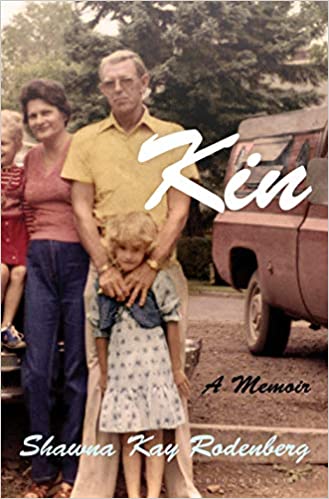
Maximum Shelf: Kin by Shawna Kay Rodenberg

Maximum Shelf is the weekly Shelf Awareness feature focusing on an upcoming title we love and believe will be a great handselling opportunity for booksellers everywhere. The features are written by our editors and reviewers and the publisher has helped support the issue.

This review was published by Shelf Awareness on February 17, 2021.


Shawna Kay Rodenberg’s harrowing memoir Kin leads the reader backward and forward in time and across an American landscape of trauma and healing. With a persistent focus on family and home, Rodenberg documents a process of learning and personal growth that is both unique and universal.

Kin opens in 2017, as the author guides CBS reporters though her native eastern Kentucky. They seek to crack open what they see as Trump country, and Rodenberg hopes to complicate that story. The backdrop is “my family’s mountain, the mountain where my grandfather mined coal, where my father was reared with great love and brutality, where I picked my grandmother’s strawberries and my grandfather’s roses… the mountain on which my family sought refuge after leaving The Body, an end-times wilderness community, cloistered in the woods of northern Minnesota, that my father joined when he was red-eyed and mad with fear, following his tour of duty in Vietnam.” The narrative then moves back in time to Rodenberg’s childhood in Grand Marais, Minn., and the purposeful deprivations of The Body.

Rodenberg’s upbringing in this strict religious sect gives her a cultural background that will make it hard for her to fit in later, and she suffers more than one form of abuse within The Body, including her father’s recurrent rages. “Instead of following in alcoholic, workaholic footsteps, he made religion his primary vice, religion that was unconventional, ecstatic, even perhaps rebellious–and virtually militaristic, which must have felt familiar.” The family eventually moves back to the secular world, to Ohio, to Kentucky and finally to the mountain of family origin. The austere, often angry influences of The Body will follow them.

This memoir recounts family stories, some from Rodenberg’s memories, some passed down. She writes of each of her parents’ childhoods, and of her aunts, uncles, cousins, grandparents and neighbors. She recounts the history of her hometown, Seco, Ky., a former coal-mining camp. Kin begins well before the traumatic story of Shawna’s birth, “bruised-ass-backward into a world of chaos.” The chronology is disjointed, jumping back and forth, shifting timelines as well as locations, which can be disorienting for the reader, but that effect feels true to the narrator’s experience: Kentucky exerts a strong pull even in Minnesota, and pains felt by generations past are ever present.

At each stage, Rodenberg struggles with the meaning and shape of love and caring, and the confusing truth that those who love us most can hurt us most. Religion will continue to play a large role in her life, complicated by her father’s movements to and away from a strict adherence to The Body’s teachings. She will continue to wrestle with sex and the aftermath of childhood sexual abuse, through her troubled first attempt at college and beyond. Kin closes with Rodenberg on the cusp of pregnancy and marriage, but hints at what is to come: “I wish I could tell [that earlier version of myself] she had come to the beginning, not the end.”

Rodenberg’s prose is graceful and effortless, vulnerable and raw, beautifully descriptive without drawing attention to itself. She emphasizes character of place, from coal country where women “kept the food covered and draped cribs with quilts to keep the dust off their babies” to “town-sized time capsules, stoppered and sealed…. Barns sank beneath fields of kudzu and the roofs of old houses bowed in the middle like the backs of the ancient, singular mares that waited outside to be fed and put away.”

While Kin is first and centrally a memoir of family, it is also about Appalachia, about histories more complicated than the opening scene’s reporters care to see. It is ultimately about forgiveness, understanding and love. Rodenberg seeks an emotional reconciliation with her parents, especially the father she has butted heads with all her life. Of that battle, “even now, writing about it fills me with worry that I might be inadvertently reengaging, and that is why talking about it, why telling was and still is the hardest thing…. This is what it means to come from people who have been broken and exploited, they see the world in sides, theirs and the other, and disloyalty is the gravest offense, the blasphemy of the mountains.” In a world of just two sides, it might be an act of rebellion to both love someone and hold them responsible.

As narrator, Rodenberg is intelligent and insightful. As character, she is resourceful, scrappy, defiant, brave and exposed. Her memoir is heart-rending and hard-won. “I didn’t know when I started writing this book that it would become my own book of Revelations, rife with warning and promise, an account of my own and other apocalypses that created me, end times that predated me but shaped me as surely as if I’d lived through them myself.” That sense of regional and filial legacy defines Kin, a work of nuance that complicates received narratives in all the best ways.


Rating: 7 skirts.

Come back Monday for my interview with Rodenberg.

Gone to the Woods: Surviving a Lost Childhood by Gary Paulsen

I had not thought of Gary Paulsen in years, until I saw the Shelf Awareness review of this new book. (Hat tip to my colleague Jen Forbus for that review.) Paulsen might have been the first author I really fixated on; I remember setting out to own all his books, and while I didn’t get very far (maybe six or eight of them), I’m pretty sure I wrote “Julie’s Gary Paulsen library” or some such inside the cover of each one, and had them set up on their own little shelf. Early signs of something, there. My favorite was Hatchet, of course, and its sequel; and I vividly remember a scene from the beginning of another book where the narrator watches a… chipmunk? eating another creature, blood down its front… what book was that?

Anyway – when I saw that he’s returned with a memoir of his own childhood, I was sold. And let me tell you. This book had me entranced from the opening lines. I wept.

Gone to the Woods has an innocence and a simplicity built into its writing style and the value system, I think, of its narrator. This makes it accessible to younger readers, but not at all to them alone. I think this is a memoir for everyone. Paulsen tells his story in the third person, calling his protagonist only ‘the boy,’ although the name ‘Gary’ is used once or twice by other characters. This helps to give the boy an elemental quality, like he’s sort of an archetypal boy, although his story is very specific. When the book opens, he is five years old, living in Chicago with his mother in 1944. She has a factory job, and coming from a small farm in northern Minnesota, is “not even remotely prepared to resist the temptations of the big city.” She lives in the bars and does not parent her small son, who she’s trained to perform for the men who try to win her favor. Grandmother hears of this lifestyle and is “critical, then concerned, and finally… past horrified and well into scandalized.” Her solution colors the boy’s method of problem-solving for life: “If it doesn’t work Here, go over There.”

The first adventure of the book, then, is the five-year-old boy’s solo journey by train from Chicago to International Falls, Minnesota. This takes several days and involves a train absolutely jam-packed with severely injured soldiers, smelling of and oozing pain and death, so that the boy is physically ill from it all – because didn’t I say, his father, who he’s never met, is a soldier off in the war. The boy becomes stuck in a train toilet, among other things, and observes out the train window the woods that will become his sanctuary. By the time he arrives at his aunt and uncle’s farm he is wrung out with exhaustion, trauma, and confusion. But the farm will be a perfect place for him, the first place he feels he belongs, is valued, is taught. He’s given his own room and bed. It’s lovely. Then it’s taken away from him.

I’ll stop summarizing here. The boy’s upbringing is one trauma after another, including a few years on the streets of American-occupied Manila, and a continuing absence of parental concern. I appreciate that the narrator is slow to judge his parents, and I think it would have been easy (narratively speaking) to be ugly about the mother’s drinking and many boyfriends, for example, but neither the young boy nor the adult man who writes these lines takes that easy road. (At least until the teenager’s perspective, at which point he thinks of both parents as vipers. But this is about the damage they do to him, rather than some puritanical judgment of mom’s moral choices.) He is an unjudgmental creature in general. Paulsen is wonderfully good at the innocent child’s perspective, elements of which are present in the teenager too.

Trauma after trauma, but with a few bright points, like the aunt and uncle in the Minnesota woods, and a saintly librarian when he is thirteen years old who makes him a gift of notebook and pencil, for whom this book might be considered a gift in return. And the woods and rivers and streams, which are always a bright point. From age five, the boy learns that the woods will allow him to take care of himself, even when he lives in a city again, keeping to the alleys and nights to avoid bullies, and escaping to the stream where he can fish for food or shoot squirrels and rabbits when his parents fail to provide for him. Even in Manila, a city of a certain sort of trauma (truly, the violence and death this child witnesses by his sixth birthday is unfathomable), he finds beauty and human kindness.

At times the events were hard for me to take in, and I wondered if younger readers were really the right audience for this. But on reflection, I think Paulsen offers just enough. I think children might take away what they need from this book – I’m no proponent of censoring life’s pains from kids – and it’s the adult mind and perspective that makes it even harder to read, if that makes sense.

The story is harrowing but also lovely, always riveting, and an important testimonial from a generation that we will eventually lose access to. It is excruciatingly beautiful in how it’s told. The immediacy of traveling with the boy is heart-rending and direct. I can’t imagine how this book could be improved upon.


Rating: 10 willow branches.