Lonely Planet Ireland

I took a fresh new 2012 copy of Lonely Planet Ireland with me on our trip there recently. My parents are fairly experienced travelers and users of travel guides, and my mother recommended Lonely Planet just barely above Rick Steves for our use on this trip. Also, the first Dublin taxi cab driver we encountered raved on and on (and on; he was a real talker) about the author of the Dublin & Cork sections, Fionn Davenport. The book was recommended, is what I’m saying.

And frankly, I was disappointed. This book frustrated me repeatedly. A few beefs:

  • A number of places and businesses that I was interested in appeared on maps of various cities but apparently had no other reference in the book. These include the hotel nearest the Guinness Storehouse (showed on the map with a name but no other info: no contact info, no price range) and, surprisingly, the Jameson Distillery. I know they give tours there because a friend of mine took one recently; but again, other than appearing on a map, no Jameson in the book.
  • The price of a train from Cork to Dublin was quoted in the book, and was within a Euro of being correct (it is a current book, after all; and I happily allow a few dollars’ discrepancy) but there was no mention of the fact that that price applies for online purchases only and if you show up to buy tickets in person the price almost doubles. This cost us almost $100 and is a great example of where a guidebook could have paid dividends. But didn’t.
  • Recommended that we not order Guinness in Cork but didn’t explain why. What is the cultural beef there? What are the consequences? Please teach me something!
  • Map unclear on national border between Republic of Ireland and North Ireland. As we drove from one to the other we kept wondering; no map in the book helped. Beyond that, I looked around for discussion of the two countries, their relationship, differences beyond the pound vs. the Euro, and found none.
  • Perhaps the biggest issue of all: no warning about “dry Friday” (Good Friday, when no alcohol is sold in the Republic). This, after saying something to the effect that “pubs are likely to be a large part of your reason for visiting” (they were) and “you may find it awkward to turn down a drink.” I think “dry Friday” deserved a mention. Even in the “Holidays” section, when I looked it up, it indicated that “many businesses close” but it is not a formal or legal holiday; which is not what we found there. Again, another failed opportunity for this guidebook to save the day.

I think this book missed several important points. But on the other hand, having it around was far better than having no book at all! The maps helped us get around on a few occasions (although they were far from ideal), and it gave us a few options for activities that we hadn’t considered. It helped explain Dunluce Castle after we saw a sign, and that helped us decide to stop. It told us about the Belfast black taxi tours of the political murals, that we ended up enjoying so much. It recommended the restaurant we ate at in Cork – which, by the way, despite being this book’s “top pick” we found just mediocre. Final verdict? Carry this book rather than no book at all. But in the future, I will look elsewhere than Lonely Planet for my travel guide needs.


Rating: 2 pubs.

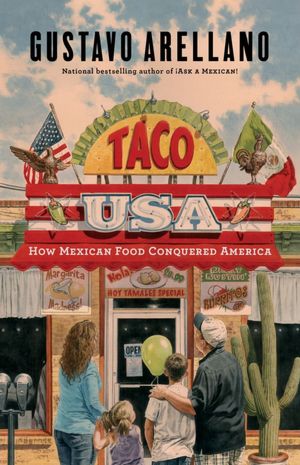
Taco USA by Gustavo Arellano

A deliciously close-up look at Mexican food in the United States.


Gustavo Arellano is the author of the nationally syndicated column ยกAsk a Mexican! (and a 2008 book by the same title). Fans will recognize his voice in Taco USA: wise and knowledgeable, but always conversational and informal, even rambling–and very, very funny. Arellano capably handles the history of Mexican people and their cuisine, but Taco USA is less about Mexican food in Mexico than about its interpretations in the United States.

Several waves of Mexican food that have swept the U.S. (beginning with tamales and chile con carne or “chili”), and Arellano treats these as historical trends, tying them to larger themes in U.S. food history. We are reminded that Mexico is the source for global food staples such as corn, tomatoes and chocolate as well as the chile itself. Arellano refutes an emphasis on “authentic” Mexican cuisine in favor of the various permutations (Cal-Mex, Tex-Mex, southwestern, even Midwestern Mexican) that we know and love today. These are not bastardizations, he argues, but legitimate culinary heritages unto themselves, related to the Mexican tradition but not beholden to any of its rules. He is obviously passionate about his subject, which takes him from Taco Bell to Mission-style burritos to Rick Bayless.

Even the experienced border-dweller or Mexican food aficionado is likely to learn a lot, and giggle while doing so. What more can one ask of nonfiction? Just beware a growing desire to run out and get a burrito.


This review originally ran as a *starred review* in the April 17, 2012 issue of Shelf Awareness for Readers. To subscribe, click here, and you’ll receive two issues per week of book reviews and other bookish fun!


Rating: 8 delicious burritos.

book beginnings on Friday: Walking It Off by Doug Peacock


Thanks to Rose City Reader for hosting this meme. To participate, share the first line or two of the book you are currently reading and, if you feel so moved, let us know what your first impressions were based on that first line.

Doug Peacock was a good friend of Edward Abbey’s, and was the inspiration for the Hayduke character in Abbey’s highly regarded The Monkey Wrench Gang – thus, obviously, my interest in this memoir. It begins:

High in the shadow of Dhaulagiri they are bleeding the yaks. Two Tibetans hold the curved horns of the shaggy beast and a third man uses a wooden bowl to catch the bright red blood that pulses and spills out a hole in the yaks’ neck.

So, a little rough in the beginning if you don’t like pulsing blood! I’m okay though. ๐Ÿ™‚ What are you reading this weekend?

River in Ruin by Ray A. March

One American river’s well-researched journey from trickling stream to environmental disaster.


The Carmel River is barely a stream at its source, less than 40 miles long, and likely known only to the residents of its immediate surroundings. But it has a rich and telling history–from early Spanish explorers to its eventual place on the nonprofit environmental organization American Rivers’ top 10 list of Most Endangered Rivers in 1999. But the Carmel is especially important to journalist Ray March because he grew up nearby; with River in Ruin, he makes an excellent case for its story being an archetype of endangered rivers everywhere.

The paradise that is California’s Monterey Peninsula has attracted settlers since 1602, when Sebastian Vizcaino first discovered the Carmel River. Later, railroad magnates adopted the area as a site for profitable tourism, quickly followed by real estate speculators and the development of several small towns. The original Spanish mission and agriculture, followed by the later hotels, golf courses and townships all relied upon the Carmel for water, requiring the construction of dams and reservoirs and the flooding of idyllic valleys. Ecological implications abound: forest fires were exacerbated by a no-burn policy; the local steelhead population is nearly extinct. March details these and more consequences of local development while showing how the growth of the environmental movement nationwide has paralleled local awareness of the plight of the Carmel River and Monterey Peninsula. March’s treatment of the history, the politics and the personalities involved is heartfelt and personal; several times he consults diaries and includes individual stories (including his own), making the Carmel’s story resonate with his readers.


This review originally ran in the April 6, 2012 issue of Shelf Awareness for Readers. To subscribe, click here, and you’ll receive two issues per week of book reviews and other bookish fun!


Rating: 7 salmon.

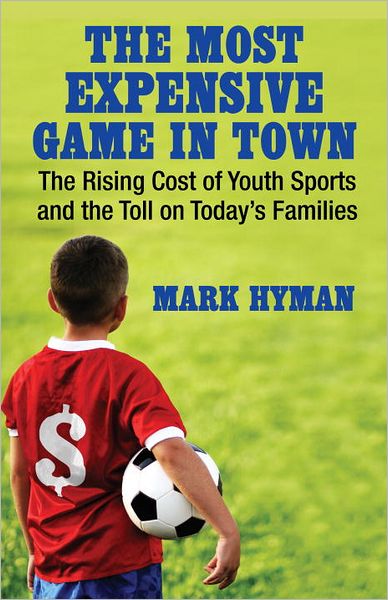
The Most Expensive Game in Town: The Rising Cost of Youth Sports and the Toll on Today’s Families by Mark Hyman

An impassioned argument that the mass commercialization of youth sports is not healthy for kids.


Mark Hyman’s first book, Until It Hurts, dealt with our national obsession with youth sports and its negative consequences for our children. The Most Expensive Game in Town expands on that theme by following the money. His research includes interviews and discussions with parents and grandparents, coaches, corporate sponsors and entrepreneurs–all of them spending and making money from youth sports in the United States. His conclusion: money can have adverse effects on the kids that sports programs are supposed to benefit in the first place, even when many of the parties involved have only the best intentions.

Hyman’s case studies include visits with parents who became unintended entrepreneurs because they saw a way to improve their kids’ experience as well as parents disturbed by the costs of supporting their kids. He looks at the big business of marketing through children–such as youth tournament sponsorships–and the promises made that kids will have a heightened chances of playing college sports or landing an athletic scholarship.

It’s difficult to grasp the size of the ill-defined youth sports industry, but Hyman makes it clear that the amounts involved are shocking. Finally, he examines the plight of kids in inner cities (and others affected by poverty) whose access to the obvious benefits of sport, participation and competition is limited. Hyman’s arguments are well-researched yet very readable, bringing home an issue that is perhaps underexamined but of great importance to parents and concerned citizens.


This review originally ran in the March 27, 2012 issue of Shelf Awareness for Readers. To subscribe, click here, and you’ll receive two issues per week of book reviews and other bookish fun!


Rating: 5 soccer balls.

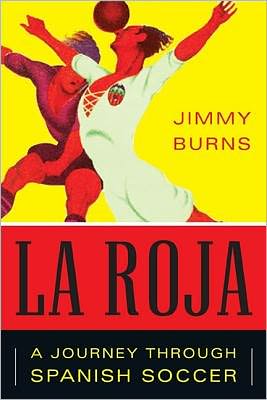
book beginnings on Friday: La Roja: How Soccer Conquered Spain and How Spanish Soccer Conquered the World by Jimmy Burns


Thanks to Rose City Reader for hosting this meme. To participate, share the first line or two of the book you are currently reading and, if you feel so moved, let us know what your first impressions were based on that first line.

I found us a funny teaser for today:

He briefly embarked on a new career as a referee but found the profession lacking excitement. He was saved from growing old and bitter by an early death.

Ha! That’s one way to look at it. Sort of a different approach than that old quip about aging: that it beats the alternative.

So far this book is more Spanish history than soccer, per se, but it’s early yet. And there’s nothing wrong with Spanish history, for that matter.

What are you reading this week?

This quotation comes from an uncorrected advance proof and is subject to change.


Be advised: I’m out of town, so you’re viewing pre-scheduled posts until April 9. I love your comments and will respond when I return! But I’ll be out of touch for a bit. Thanks for stopping by!

Teaser Tuesdays: A Queer and Pleasant Danger by Kate Bornstein

Teaser Tuesdays is a weekly bookish meme, hosted by MizB of Should Be Reading. Anyone can play along! Just open your current read to a random page and share a few sentences. Be careful not to include spoilers!

A Queer and Pleasant Danger: the true story of a nice Jewish boy who joins the Church of Scientology and leaves twelve years later to become the lovely lady she is today. And that lengthy title-and-subtitle is the tamest part of the whole book.

Today’s teaser:

“Paul, Mildred, I have news for you. Albert is an artist.”

My mother gasped. My father muttered, “Oh, crap.”

I was thrilled with the diagnosis.

That, of course, was just the beginning for Albert and his parents Paul and Mildred. This is a wild, outrageous book, and I highly recommend it, but it may not be for the faint of heart.

This quotation comes from an uncorrected advance proof and is subject to change.

Edward Abbey: A Life by James M. Cahalan

I appreciated Calahan’s biography of Ed Abbey. I found it the perfect next step in my increasing fascination of the man’s work, which (for me at least) is also necessarily a fascination with the man. As I’ve mused before, there is too much of the man in the work for one to possibly extricate them. And this book was just the thing for me. I learned a lot about Abbey, some of which you can find in that earlier post. Calahan’s angle on Abbey, if you will, seems to be the contradictions of the man – an angle I’m always ready to appreciate. In this case, he (Calahan) speaks often to the public figure Abbey created for himself and the often distinct private, “real” Abbey. And then there are those controversial aspects…

Abbey’s stance on immigration, for example. The public maligned him for being a racist after he spoke (and wrote) against allowing immigrants in from Mexico, which was perhaps an understandable response, but an overly simplistic one. In a nutshell, Abbey conceived his anti-immigration stance as an issue of economics, not of race; he stressed that he was against immigration of any kind of people from anywhere, including the internal migrations within the United States (easterners moving into his beloved west), which he conceded he could do nothing about. He had lots of Hispanic, Mexican, and Native American friends, and liked to visit Mexico. He also, though, wrote and spoke of the unpleasantness of Mexico and Latin America and stated that he didn’t want to live there (and neither, he pointed out, did most Latin Americans – meaning those immigrated to the US). I understand this stance perfectly and see how it could be a position without consideration of race: more people are bad for these precious and shrinking wild open spaces, regardless of their race. But it’s easy to see where he got beat up for this position, too, especially considering his reluctance to back down from controversy, to apologize or restate his position. Rather, he was inclined to bait his critics by making farcically backwards remarks.

Similarly, Abbey’s relationship with women was a complicated one. He repeatedly stated that they were the “better” sex, that he respected women and certainly that he loved them (as evidenced, in some sense, by his five wives and many extramarital relationships!). But there was that ludicrous letter he wrote to “Mizz” magazine, and all the cheating he did on his wives. He was supportive and helpful in the professional writing careers of a number of serious women (Terry Tempest Williams comes to mind, as I recently read her most recent work – the review should be out any time now). But even in his fifth and by far most successful marriage, he was firm in his wish for his wife to be a full-time mother to their children. Misogynist? Ah, I don’t quite think so; but his relationship with women was complicated.

And another example: Abbey repeatedly denied that he was a naturalist. I’ll let Cahalan himself speak here.

It is true that Abbey was not a naturalist in the scientific way that Rachel Carson or even Annie Dillard was qualified to be; he got mediocre grades in subjects such as zoology. Wendell Berry was right (and Nancy Abbey agreed) that Abbey’s real subject was himself – that as an author he was primarily an “autobiographer” more than an “environmentalist.” Yet Desert Solitaire and The Monkey Wrench Gang activated more than a generation’s worth of activists toward a radical new brand of direct action in defense of wilderness. While telling the story of himself and his friends, Abbey managed to change the world.

I share these observations on Abbey just to share some of what I’m learning about him. But back to the book review:

I like that Cahalan has a coherent approach to Abbey’s life here: the contradictory man, the public vs. private figure, the questions his life raises. Cahalan muses on these questions without authoritatively answering them, which is appropriate. These are questions without definitive answers. It is a sensitive biography, appears well-researched, and gave me just what I was looking for. I leave it thoughtful and curious about still more Abbey, but thoroughly satisfied (for now) in terms of biography. I recommend this work, and I still recommend all the Abbey you can find!


Rating: 7 women younger than the last.

book beginnings on Friday: To the Last Breath by Francis Slakey


Thanks to Rose City Reader for hosting this meme. To participate, share the first line or two of the book you are currently reading and, if you feel so moved, let us know what your first impressions were based on that first line.


My cover (which is an advanced reader’s edition; this book will be published May 1) has a first-person quotation rather than the one on the image at right (click to enlarge). It reads,

In 1997, I decided to scale the highest peak on every continent and surf every ocean. Over the next twelve years, I survived a storm atop Everest, an ambush by guerrillas, and a head-on collision in the high desert. But every escape from death brought me closer to life.

That is, of course, not your book beginning! The book starts:

I am out of balance. I hang dangerously off center but I’m oblivious, until some dim awareness of the world shakes me awake.

It begins full-on, with an adrenaline-charged event. I’m enjoying it so far. What are you reading this weekend?

This quotation comes from an uncorrected advance proof and is subject to change.

Tutankhamen: The Search for an Egyptian King by Joyce Tyldesley

A new biography of a very old figure still shrouded in mystery.


Joyce Tyldesley (Cleopatra: Last Queen of Egypt) takes on the life of King Tutankhamen, examining the many questions still surrounding his life and the archeology of his tomb, whose discovery in 1922 caused a wave of what Tyldesley calls “Tut-mania” across the Western world. As a king, Tutankhamen came to rule very young, yet managed to effect great change during his short reign–but was then removed from written records by his successors, an act with great consequence in ancient Egyptian theology. His tomb is unusual: relatively undisturbed, and as Tyldesley retraces, surrounded by mystery and myth.

The first, larger part of Tutankhamen is devoted to the archeological record and what it tells us about Tutankhamen and some of his relatives. Tyldesley discusses and critiques various theories (for example, regarding his biological parents) and acknowledges that little is known for certain. Next, she examines Tutankhamen’s legacy in our world–most notably, the rampant myths and legends about the curse on his tomb, which spread as quickly as the news of its discovery. Finally, for those interested in a clear storyline, she outlines her best approximation of Tutankhamen’s life story (while noting that it is only a well-educated theory).

Tutankhamen succeeds in making this ancient monarch accessible to the average reader. Beware of developing an appetite for Egyptology upon reading!


This review originally ran in the March 13, 2012 issue of Shelf Awareness for Readers. To subscribe, click here, and you’ll receive two issues per week of book reviews and other bookish fun!


Rating: 5 mummies.