Pilgrim at Tinker Creek by Annie Dillard, part the second

pilgrimattinkercreekI’m afraid I am continuing with my mixed feelings here, as in my first review. Pilgrim at Tinker Creek, for me, comes in sections, or in three parts. As I wrote, the early bits were difficult for me, a little too metaphysical and spiritual. And then, remember how I said that chapter 7 blew me away? Well, chapter 8 is even better.

Chapter 8 is entitled “Intricacy,” and addresses the amazing, extraordinary intricacy, complexity, tiny detail and huge scale and huge scale of tininess in the natural world. Dillard relates statistics that are mind-boggling: “the average size of all living animals, including man, is almost that of a housefly.” “There are… two hundred twenty-eight separate and distinct muscles in the head of an ordinary caterpillar.” “Six million leaves on a big elm.” She writes about the Henle’s loop in the human kidney, the lower lip of the dragonfly nymph. Tiny, infinitely complex things that make our world so strange. She uses this phenomenon to explore the idea of a creator – and here Dillard and I will disagree a little, but that’s okay. “Look… at practically anything… and see that not only did the creator create everything, but that he is apt to create anything. He’ll stop at nothing.” She takes the strange and prolific nature of our world to be proof of a creator – “no claims of any and all revelations could be so far-fetched as a single giraffe” – and I don’t. It’s all right, though; this book is plenty safe for atheists; she’s not preaching. She’s just exploring. And I love the science, all that tiny tiny trivia, the explanations of the human kidney and the aquatic horsehair worm.

Next is chapter 9, “Flood,” and here I am going chapter by chapter – that’s how good this book is. “Flood” addresses Hurricane Agnes, and hurricanes are something we’re increasingly familiar with, not only in Houston but in New York City these days as well. (Which leads me to point out that Dillard is blissfully unaware of climate change and ecological collapse; happy her in 1974.) There is more of what I love in Dillard: detail, observation, science, and a glorious, joyful celebration of the world.

And then it falls off again, descending (or ascending, depending on your feelings) into the spiritual once again. My level of detail falls off here, too, because what can I say? I paid less attention when she zoomed back out into the mistiness. The last few pages of this book were an effort, and I didn’t retain anything I can tell you about now.

Verdict? Rather a difficult one. Liz said, great, I’ll just read those middle chapters! But of course that’s no way to go unless you know your tastes are mine.

I am glad I read this book; it yielded some inspirational moments and great quotations (as you will see). But those came overwhelmingly from the middle portion of the book. Others, I have no doubt, will swoon over the “patting the puppy” and the tree with the lights in it. Discover for yourself; but I do think it’s worth the effort, in the end. If I were to do it again, I would just read the middle parts. Rather like Walden, then, in my final conclusions – just as I thought at the beginning.


Rating: in an attempt to be fair, 6 mushrooms.

Writing Down the Bones by Natalie Goldberg

bonesI bought this pocket-sized book on the recommendation of one of Haven Kimmel’s fictional characters, if you believe it. That’s the most common cover at left; mine is pleasingly worn and small (see below), and I appreciated that about it. I carried it around off and on for about six weeks before I finished it, including on an overnight backpack in Colorado. It is an instructive work on writing, with chapters just a few pages long, so one doesn’t feel that she has to read it cover to cover or as one piece. I will be referring back to it. photo

Natalie Goldberg is foremost a poet, it seems to me, although she has written one novel and other how-to-write books as well; she teaches writing in various formats. She is also a Buddhist, and her meditation practice and study with a Zen master (I hope I’m saying that right) are quite central to her message here; she is big on letting go of the self, of self-criticisms, and letting the writing flow out of oneself; writing is, for her, a form of meditation. She is very serious about a writing “practice,” which I interpret in several ways: it is a practice like meditation or yoga is a practice; also one has to practice it in the way one practices anything to improve at it. She counsels a regular writing schedule, even just ten minutes a day – keep the hand moving for ten minutes, don’t cross anything out, don’t edit.

Her advice seems to be most aimed at creative writers, perhaps most of all at poets, but I think (and I think she thinks) it is also useful for any kind of writer. Partway through my reading, I recommended this book to a friend’s nephew who wants to be a sports journalist. On the face of it, sports journalism is pretty far from poetry, but I think Goldberg’s advice (immersion in the form; daily practice; exercises on set topics) would still serve.

One of the greatest gifts I feel that I’ve taken away from reading this little book is the message that I am a writer, already, and should own that and move forward in it. I’m not waiting to be a writer when I can do it full-time, or when I’m published, or anything silly like that. (Although those milestones will/would be nice!) I’m a writer, now; I just need to do more of it.

The message I take with greatest caution, on the other hand, is her exhortation to write by hand. She talks about the usefulness of a computer (or typewriter), but feels strongly about handwriting. She writes about what kind of pen, paper, notebook a person might should use. I wonder if her advice would be any different today – this book was originally published in 1986 – but I suspect not much. My problem is that I have done the bulk of my writing on a keyboard and am much, much faster at that than at handwriting! I’m of the generation that had a computer fairly young. For me, handwriting means slowing down, and it means cramps. On the other hand, I could write a book on a keyboard without much stress. If she’s preaching a fast, obstacle-free flow of words out of my head and onto the page (screen), shouldn’t I type? But then, perhaps the more mechanical relationship to those words is something that should be cultivated. (What about the cramps??)

Either way, I found this book inspirational and full of thought-provoking little tips, not to mention a few writing prompts I will need to follow. I am pleased. Not dated in the least (with the possible exception of the handwriting issue!), I find Writing Down the Bones to be a fine assistant to the aspiring writer.


Rating: 8 minutes.

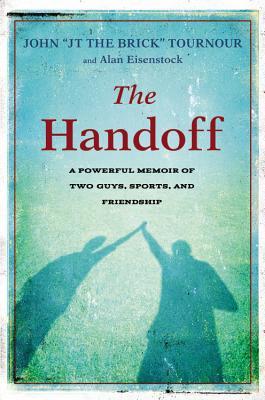
The Handoff: A Memoir of Two Guys, Sports, and Friendship by John “JT the Brick” Tournour

An earnest remembrance of a friend and the wisdom he passed on to a sports talk radio anchor.

handoff2

After a fun-filled, full-speed youth as president of his fraternity and, later, working as a professional cold-calling stockbroker, John Tournour finds his true calling: sports talk radio. He starts out as a listener calling in, then gets his own show but has to pay for airtime, gradually working his way up until one day he gets a fateful call. Andrew Ashwood mentors John, now known on the air as “JT the Brick,” through an ascending career, and they become the closest of friends. When Andrew is diagnosed with cancer, JT naturally gets the call to be his chemo buddy and “main go-to guy.”

Though The Handoff begins with JT’s childhood, we know from the beginning that Andrew will be its focal point. JT failed to take notes on Andrew’s every word in those final months, realizing only in hindsight that he was not only modeling how to live–and how to die–but also sharing all his life lessons, on and off the air.

JT may be macho and manly–this is smack-talk sports radio, after all–but he is heartfelt and emotional in relating his love for Andrew and his appreciation of everything his friend had to offer. Although sports radio is JT’s passion and the background for his friendship with Andrew, his readers need not know or even much care about sports (or radio) to empathize. The Handoff is a memoir of life and loss, but foremost of friendship.


This review originally ran as a *starred review* in the August 23, 2013 issue of Shelf Awareness for Readers. To subscribe, click here, and you’ll receive two issues per week of book reviews and other bookish fun!


Rating: 6 callers.

The Happy Atheist by PZ Myers

The creator of the popular Pharyngula blog makes a funny, impertinent and highly intelligent argument for atheism and happiness.

happyatheist

PZ Myers is serious and unapologetically funny at the same time–and, despite 15 churches in his immediate neighborhood and their fellows worldwide, he is indeed a happy atheist.

The Happy Atheist is irreverent in every sense of the word, experimentally seeking creative acts of sacrilege and poking fun at religion from diverse angles. Short chapters make for quick, easy reading: “The Great Desecration” relates Myers’s project of desecrating communion wafers, which inflamed the public to a degree that flabbergasted him.

He offers other reasons for the religious to be offended as he describes “the proper fate for a holy book” and instructs us to “take pride in the example of Eve–she is the author of a real promise of a great humanity.” But even in making fun–and he assures us that laughter is the greatest weapon we can wield against religion–Myers is loving and compassionate, and it is clear that he aims to increase everyone’s happiness by converting the wayward to atheism. Trusting in his expertise as a biology professor, he moves from more lighthearted larks toward a more serious scientific examination of the shortcomings of religion, especially by comparison. “Science,” he quotes Richard Feynman, “is what we do to keep from lying to ourselves.”

The Happy Atheist finishes with a heartfelt discussion of The Epic of Gilgamesh on a hopeful and inclusive note. Far from being out simply to insult, Myers genuinely wishes to improve humankind and our lot here on earth. But some hilarity along the way can’t hurt.


This review originally ran in the August 20, 2013 issue of Shelf Awareness for Readers. To subscribe, click here, and you’ll receive two issues per week of book reviews and other bookish fun!


Rating: 6 plain old crackers.

Pilgrim at Tinker Creek by Annie Dillard, part the first

Clearly I will need to publish this review in two parts, for the sake of your patience with my long-windedness. Actually I fear three posts. This is a fascinating book about which I have mixed feelings and many tangential thoughts; also at about halfway through, I’ve filled three bookmark slips of paper with notes rather than the average one-or-less-per-book, so there you are. This is my review of roughly half the book.


pilgrimattinkercreekDespite a promising beginning, I am not sure that I love Annie Dillard as much as do many of my favorite authors. Odd, that. In fact, I enjoyed Christine Byl’s Dirt Work far more. And she hasn’t won any Pulitzers (yet).

For one thing, there is too much theology for my taste, and too much metaphysical rambling metaphor: seeing visions, entering the past and seeing the future. Too much philosophy, man’s (“man”! too much “man”! 1974 this was published, by a woman, and still the universal creature is “man” rather than person or even woman for goodness’ sake) …man’s self-consciousness, relativism… and not enough just being. I’d rather spend more time in the picture and less time examining the frame and the picture-maker, if the picture is our world.

Wikipedia brought some interesting thoughts to mind. [I take Wikipedia with salt; but I still find it a useful starting point for general knowledge.] For example: “The author has described [Pilgrim at Tinker Creek] as a ‘book of theology’, and she rejects the label of nature writer.” What is up with people “rejecting the label of nature writer”? Edward Abbey did, too, which rejection I think in turn his readers reject. Of course, Dillard’s point – that this is more theology than nature writing – helps explain part of my problem with it. But then, there is excellent nature writing within it: I love the finely detailed discussion of insect habits. Oh, and while we’re mentioning him: “Edward Abbey in particular deemed [Dillard] Thoreau’s ‘true heir’.” Both these quotations from Wikipedia come sans specific reference, although there’s a solid-looking reference list at the end of the article. So, take that with salt, as I said.

Dillard did remind me of Thoreau, which is both a compliment (obviously) and a qualification, for me personally, as I struggled a little with Walden, too. Walden was apparently the subject of Dillard’s master’s thesis, so we can expect some parallels there. I would call these two books a readalike pair, and recommend the one if you liked the other.

Now, on the Annie Dillard Wikipedia page, I found more useful phrases: “one critic… call[ed] her ‘one of the foremost horror writers of the 20th Century'” for her apt descriptions of the natural world (I imagine that critic had the mating practices of the praying mantis in mind!), which I find delightful, and true in a most positive sense. And “In The New York Times, Eudora Welty said the work was ‘admirable writing’ that reveals ‘a sense of wonder so fearless and unbridled… [an] intensity of experience that she seems to live in order to declare,’ but ‘I honestly don’t know what [Dillard] is talking about at… times,'” which is, again, a great way to put it, and I couldn’t agree with you more on all counts, Ms. Welty. Both these quotations are attributed, by the way: the first, to Dillard’s website, and the second, to the NYT review in question. Not attributed, however, is the assertion that “In 1971 she read an old writer’s nature book and thought, ‘I can do better than this.'” This would seem to belie the phrasing of the Wikipedia Pilgrim article that she “rejected the label of nature writer.”

But oh, then I got to chapter 7, “Spring.” I am entranced! She writes about learning languages and yearning to decode birdsong, about the mockingbird that sings from 2am til 11pm in her chimney in springtime; about newts, to whom “no one pays the least attention… except children”; more about trees (I love it); and then the part about the duck pond, which is hilarious, wise, and again hilarious. This is where we meet the plankton about whom she is rather passionate, and she studies them under the microscope.

I don’t really look forward to these microscopic forays: I have been almost knocked off my kitchen chair on several occasions when, as I was following with strained eyes the tiny career of a monostyla rotifer, an enormous red roundworm whipped into the scene, blocking everything, and writhing in huge, flapping convulsions that seemed to sweep my face and fill the kitchen.

Rather, she does it as a “moral exercise”, because “if I have life, sense, energy, will, so does a rotifer.” In chapter 7, I love this woman and this book. It was in chapter 7 that I got up from my lunch – during my lunch break, I walked away from lunch – to find Liz, who was on duty at the reference desk, to read her a page aloud. (That was the page about the duck pond and the frogs.) So along with my complaints, there is much to love in this book. Take for example the section on the mating habits of the praying mantis: Dillard portrays these practices as horrifying, hilarious, and disturbingly like our own; it is a feat. I think I like her best when she digs into the science and minutia of the natural world, and exclaims in joy, fear, disturbance, or wonder at it. In other words, when she is a nature writer (wink).

Stay tuned for my review, part the second, and we will all find out together what my final feelings for Dillard will be.

book beginnings on Friday: Pilgrim at Tinker Creek by Annie Dillard

Thanks to Rose City Reader for hosting this meme. To participate, share the first line or two of the book you are currently reading and, if you feel so moved, let us know what your first impressions were based on that first line.

pilgrimattinkercreek

I have come across Annie Dillard’s name in enough nature writings I’ve enjoyed – fiction and non – that it’s definitely time to find her myself. I’ve started with her Pulitzer Prize-winner, Pilgrim at Tinker Creek. I’m including the whole first paragraph here because I felt it necessary:

I used to have a cat, an old fighting tom, who would jump through the open window by my bed in the middle of the night and land on my chest. I’d half-awaken. He’d stick his skull under my nose and purr, stinking of urine and blood. Some nights he kneaded my bare chest with his front paws, powerfully, arching his back, as if sharpening his claws, or pummeling a mother for milk. And some mornings I’d wake in daylight to find my body covered with paw prints in blood; I looked as though I’d been painted with roses.

Evocative, isn’t it, the idea of this woman naked, painted in bloody cat prints like roses? Poetic, a little shocking. I like this as a beginning; it certainly gets one’s attention. This is, incidentally, the image referenced in my recent (new favorite) read, Dirt Work: Christine Byl called this a “lyric” defining “wild”. So that’s an auspicious start. Stay tuned.

Dirt Work: An Education in the Woods by Christine Byl

dirt workChristine Byl opens her memoir with the pleasant scene of herself and three fellow crew members, crusty and dirty, having a post-hitch beer at a small-town Montana bar. A young woman approaches and asks how she keeps up with the boys, one of whom volunteers that it’s all they can do to keep up with her.

She then backs up and tells the story of how she got there. Like many young women in our culture, Christine was expected and expecting to go to college, to do cerebral work and keep her hands (literally) clean; but a summer gig held her, and she reveled in physical challenges, in learning new things, in the mechanical world. Eventually she reveled in her hardening muscles and her expertise, in surprising men with her ax-work and in mentoring other young women coming up in the “matriarchy” of trail work (still predominately male) within Glacier National Park.

After six seasons in Glacier, alongside boyfriend and eventual husband Gabe (a delightful character: mostly off screen, but clearly a capable young man in his own right, and clearly happy to stay lovingly out of Christine’s way), she does return to graduate school, in Alaska. But during the summers she still works on building and maintaining trails, this time in Denali. Christine and Gabe come to love Alaska – yes, even the winters: there is a delightful passage arguing that the light summers are in some ways harder than the dark winters, and I made both my parents (recently moved from the Mexican to the Canadian border) read it. They settle a few miles outside the borders of Denali National Park, and Christine finds a balance between the cerebral – she gets an MFA in fiction, and writes this beautiful book; and the physical – she and Gabe now run their own independent trail-building company.

So many things to love in this book; where to begin? As a sometimes volunteer trailworker myself, I don’t pretend to know 2% of what Christine does; but I might know just enough to appreciate what she loves about it, and what a challenge it can be. I still haven’t mastered the efficient, all-day ax swing myself, but I’d like to. Also, I have a friend named Susan who I’ve written about before, who has a great deal in common with this author. (I briefly wondered if “Christine Byl” was a pseudonym.) Susan, like Christine and apparently like many trail workers, has an advanced degree but chooses to labor for a living; she’s a woman in what is clearly a man’s world, and is half of an independent trailbuilding company. I get the impression that while it’s hard work, Susan and her husband Ryan wouldn’t do anything different.

Christine writes beautifully about the phenomenon of choosing to do physical work when she could be keeping her hands soft. She writes about the well-intentioned questions her family asked, about when she was going to get a “real job”: she says that they have confused happiness with orthodoxy. (I can only imagine how many of us can sympathize with that concept!) She writes about the “sorority” of men in trailwork, and the way that pulls women together; she writes about the pride she feels when upending male expectations of her blonde head and small frame. As a writer, and clearly a gifted one, she structures this book as solidly as she would a bridge or retaining wall. Each of 6 chapters is represented by a tool (axe, rock bar, chainsaw, boat, skid steer, shovel), a location (North Fork, Sperry, Middle Fork, Cordova, Denali twice) and a locale (river, alpine, forest, coast, park, home). Within those chapters she roves and rambles, musing on natural phenomena, social relations, her own body and personality, strengths and shortcomings, and then returns to tool and place to ground herself. The structure of this book, then, is both well-anchored and floating, and I found that it worked very well.

I was charmed by Christine Byl’s honesty; her love of place; her range of experiences and understanding of two worlds, that of universities and that of woods; and of course her lovely writing. She’s hard as nails, with two hernia surgeries and a preference for outhouse over indoor plumbing. She’s brash and can tend towards a loud and dirty mouth (that makes two of us), but she’s got a soft core. I like her; I’d like to be her friend, and of course I’d really love to learn from her.


Rating: 10 pulaskis (my personal favorite trailwork tool).

I fear I’m getting out of control with the perfect-10 ratings, friends, but what can I say: it’s been a great year for reading. I will take a little of the credit, in that I think I’m getting better at picking what I’ll like, and not wasting time on what I won’t. But mostly, wow, there are some amazing books out there!

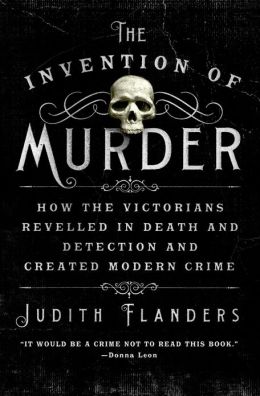
The Invention of Murder: How the Victorians Revelled in Death and Detection and Created Modern Crime by Judith Flanders

An exhaustive, engaging examination of how murder and the murder mystery novel infiltrated our modern world by way of 19th-century Britain.

murder

Judith Flanders (A Circle of Sisters) tackles an unwieldy subject in The Invention of Murder, telling the tale admirably well, even entertainingly.

The Victorian British, Flanders tells us, were the first to identify murder as an object of fascination–inspiring in turn a passionate interest in trials, executions, motives and, eventually, the developing profession of solving crimes. The action opens in 1811 with the murdered Marr family, and quickly moves to 1820s Edinburgh, where Burke and Hare infamously killed so they could to sell the corpses to doctors as medical specimens. Flanders introduces a lengthy list of famous (and obscure) murderers and serial killers, culminating, of course, with Jack the Ripper. Alongside the killers and their victims, she presents Thomas Hardy, George Eliot and many contributions by Charles Dickens to illustrate her thesis that murder in life inspired murder in art. Fictional murderers and detectives play a role equal to their real-life counterparts, as Sweeney Todd and Sherlock Holmes take the stage.

Flanders also tracks the evolution of the police force from a force of deterrence to an investigative organization, along with the parallel development of murder and detection in literature and on the stage. The penny-blood (or penny-dreadful), a cheap booklet telling a sordid and often illustrated tale of horror, morphs into the detective novel (and play), as the public shifts its interest from bloody murder to the newly invented and increasingly sympathetic crimesolvers we know and love today.


This review originally ran in the August 2, 2013 issue of Shelf Awareness for Readers. To subscribe, click here, and you’ll receive two issues per week of book reviews and other bookish fun!


Rating: 6 dismembered parts.

Teaser Tuesdays: Dirt Work by Christine Byl

Teaser Tuesdays is a weekly bookish meme, hosted by MizB of Should Be Reading. The idea is to open your current read to a random page and share a few sentences. And try not to include spoilers!

dirt work

I am very much excited about this relatively new memoir by a female trailbuilder with experience working for the Parks and Forest Services in Montana and Alaska. It looks to have a good combination of nature writing, memoir, and women’s issues. I have already found several noteworthy passages; but I had to choose…

[If you want a clue about a person’s work]… look at her hands. I trust dirty fingernails. I am drawn to people with that half moon, the sliver of filth that indicates kinetic expertise. Perhaps they do fieldwork – ratty truck, weathered tools. Are they teachers, the ones who kneel next to kids examining earthworms in mud? Potters, naturalists, firefighters, farmers: dirt is a secret code, dusty knuckles the special knock of a fraternal order. I trust this small sign because it implies a tangible relationship. To get dirt under your fingernails, you have to touch the world.

So, yes, lovely writing to boot. Stay tuned for my glowing review.

two striking paragraphs from Young Men and Fire

A cloudburst was already waiting to challenge us at the top of the ridge. From the bottom of Meriwether Canyon we could both see and hear it making preparations for a joust with us. As we tried not to fall backwards to where we started in the canyon, we could hear the storm rumble and paw the ground. When we neared the top, it tried to beat us back by splintering shafts of lightning on gigantic rocks. There was a lone tree near the top, only one, and in case we had any foolish ideas of taking refuge under it a bolt of lightning took aim and split it apart; it went down as if it had been hit by a battle-ax. Trying to reach the rocks, we were held motionless and vertical in our tracks by the wind. Only when the wind lessened for a moment could we move – then we fell forward. With the lessening of the wind the rain became cold and even heavier and forced us to retreat from the battlefield on top. The rain fell on us like a fortified wall falling. By the time we reached the bottom of Meriwether, we were shivering and demoralized and my brother-in-law probably already had pneumonia.

All this was like a demonstration arranged to let us know that Mann Gulch had power over earth, air, and water, as well as fire. As the wind continued to lessen, the rain increased and fell straight down. It was solid now everywhere. It knocked out the motor in our borrowed boat, and we couldn’t get it started again; after a while we didn’t try anymore, and it took several hours to pole and paddle our way back to Hilger Landing. My brother-in-law was seriously sick before we got there; he would never go back to Mann Gulch. So for some time Mann Gulch was mine alone, if I wanted it, and for some time I left it to the elements. I turned to the archives because I knew they would be dry and no wind would be there and the air would be the same air the stacks had been built around and nothing but a book or two had been moved since. The signs would demand “Silence” and even the silence would be musty, and for a time anything musty had an appeal.


I am seriously tempted to leave this passage to stand alone. Below I will make a few notes toward a closer reading of it; but feel free to skip my little words and reread Maclean and go on with your day.


Or, if you want my thoughts:

Here Maclean relates his first attempt to visit Mann Gulch, scene of the decades-old tragedy he wants to write a book about. It is a geographically remote and wild area, not easily reached. He refers several times in Young Men and Fire and in his related notes and letters (in The Norman Maclean Reader) to the “truculent universe,” reluctant to give up its secrets regarding these events. This first visit to the spot itself clearly informs his feeling of the universe’s truculence. Perhaps, he thinks, the archives will be more revealing. (As it turns out, they weren’t, especially.)

These paragraphs are both easy to read, and dense with description. You can feel the weather beating through your computer screen, can’t you? Look at the action verbs, the militarism, the agency attributed to the inanimate storm. It is waiting to challenge; preparing to joust; it rumbles and paws the ground. It tries to beat us back; it takes aim and disabuses us of foolish ideas. The top of the gulch is a battlefield; rain was like a fortified wall falling.

There is comedy: when the wind stopped we were able to move again – we fell forward. (Can you see the slapstick even in this dramatic moment? Does it make you smile?)

All of this was a demonstration – and note Maclean’s reference to the concept behind the title of this book, the elemental forces of earth, air, water, fire (and young men).

In this round of battle, Maclean concedes that the Gulch has won; he retreats to the archives, where the librarians among us are amused and charmed by the air the stacks had been built around, and the appeal of mustiness after such a run-in with the wild outdoors.


I again encourage you to read this amazing book.