Teaser Tuesdays: Body Counts by Sean Strub

Teaser Tuesdays is a weekly bookish meme, hosted by MizB of Should Be Reading.

bodycounts

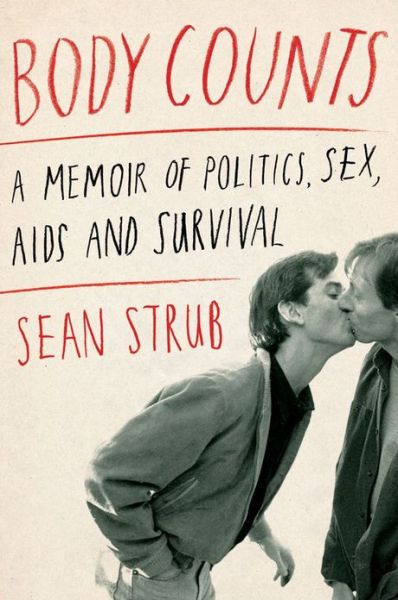
Body Counts: A Memoir of Politics, Sex, AIDS and Survival is excellent both as a moving personal memoir and as a historical primer on the AIDS epidemic and cultural & political responses to it. I am impressed. As a teaser, let me share this line:

Hattoy was a larger-than-life character, politically astute, and outrageously witty, even for a gay man who had a college job working at Disneyland dressed as Donald Duck while tripping on acid.

…which highlights the humor still available to Strub as he relates some pretty sobering stories. This is, after all, his life, and a sense of fun is always appropriate in life. Review to come, but for now I can safely recommend it.

This quotation comes from an uncorrected advance proof and is subject to change.

The Peculiar Case of the Electric Constable by Carol Baxter

An exhilarating real-life thriller about the murder that revealed the power of the telegraph.

peculiar electric

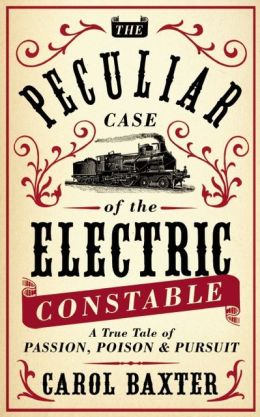
Australian historian Carol Baxter melds true crime and science in the gripping The Peculiar Case of the Electric Constable. The electric telegraph (or the “electric constable,” as it was known) was a newfangled, doubtful-looking invention in 1845, when a well-liked young woman was found gasping her final breaths in the small English town of Slough. Fortuitously, Slough was connected by an experimental telegraph line to Paddington Station; when a distinctively dressed gentleman was seen leaving the apparent murder scene and boarding a train, quick-thinking locals sent word along the line. The pursuit by telegraph of a criminal suspect marked a turning point, Baxter argues, and sparked the communications revolution that continues today. That the suspect, John Tawell, was a Quaker made this case still more sensational, and his personal history as a transported convict helped to transfix the public.

This peculiar case involved not only the “electric constable” but also the new fields of toxicology and forensic science. The murder trial riveted the medical and legal professions, setting new precedents; the public, already inspired by poisoning cases, was riveted by the cyanide evidence that “the Quaker murderer” provided. Baxter’s accounts of the telegraph’s technology, the prevailing cultural climate regarding murder and poisonings, contemporary forensic methods and Tawell’s personal history are all worthy of an engrossing thriller. (Her research was meticulous, though, she explains in an author’s note, and all the dialogue attributed and factual.) Expertly told, The Peculiar Case of the Electric Constable is a captivating accomplishment in nonfiction.


This review originally ran in the October 29, 2013 issue of Shelf Awareness for Readers. To subscribe, click here, and you’ll receive two issues per week of book reviews and other bookish fun!


Rating: 7 dark suits.

The Investigator: Fifty Years of Uncovering the Truth by Terry Lenzner

An investigator’s caseload over the decades offers a captivating glimpse of the intersection of politics, celebrity and money in the U.S.

investigator

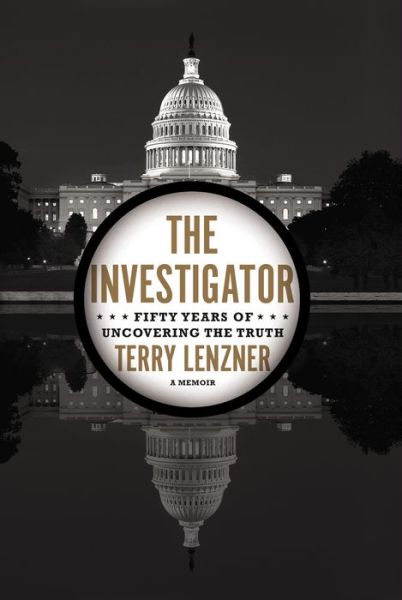
Terry Lenzner’s career began in the Justice Department’s Civil Rights Division in the 1960s, and has ranged from the Senate Watergate Committee through private legal practice to his own company, Investigative Group International. A lawyer by training, he found his passion in research and sleuthing. The Investigator reads like a Forrest-Gump-style catalogue of cases that have caught the public eye–from the murders of three civil rights workers in Mississippi, to the Harrisburg 7’s federal case for antiwar activism, to Watergate, the Unabomber, Monica Lewinsky and the death of Princess Diana.

Lenzner’s clients include governments, politicians, businessmen and celebrities; the resulting wide-ranging subject matter in this memoir accounts in part for its appeal. Even the tedious financial fact-checking of an investigation into the Trans-Alaska Pipeline is brought to life by Lenzner’s passion. He gives character sketches of public figures he’s known, debunks public perceptions of certain events and offers investigative tips along the way. He is concerned with the truth, not satisfying the client at any price, and shares anecdotes in which the two goals were irreconcilable.

Impressively, this seasoned investigator is also a fine writer. His story opens compellingly, giving background while simultaneously jumping right into the action. Although “this isn’t meant to be a history book,” Lenzner writes, The Investigator is an absorbing and intelligent sampling of American history, told in puzzles and–sometimes–solutions.


This review originally ran as a *starred review* in the October 22, 2013 issue of Shelf Awareness for Readers. To subscribe, click here, and you’ll receive two issues per week of book reviews and other bookish fun!


Rating: 7 witnesses.

Teaser Tuesdays: A Little History of Literature by John Sutherland

Teaser Tuesdays is a weekly bookish meme, hosted by MizB of Should Be Reading.

literature

I am quite impressed so far with this truly small introduction to literature, from myth and the oral tradition through the now. It’s a feat.

I chose this teaser for you because I found it impactful – something I’d never thought about before, and yet made perfect sense in the instant I read it. Also a little chilling, but that’s just me.

Why did what we (but not they) call the ‘novel,’ the ‘new thing,’ emerge at this particular time and in this particular place (London)? The answer is that the rise of the novel took place at the same time and in the same place as the rise of capitalism. Different as these two things may seem, they are intimately connected.

Stay tuned for more!

This quotation comes from an uncorrected advance proof and is subject to change.

Stretching by Bob Anderson, illustrated by Jean Anderson

I received my copy of Bob Anderson’s iconic Stretching on my 16th birthday, as you can see here:

stretch

That inscription reads, “Happy 16th Julie. May you always keep on stretching mind, body & soul – 7 years & beyond! Love, Dad.” You see I was Julie rather than Julia and he was Dad rather than Pops – it’s been a little while! (The 7-year part is a reference to my aunt (my father’s sister) Laura Kastner’s book, The Seven Year Stretch.) I was a young athlete and my father was a slightly older one, and he wanted to pass on the important lessons communicated here.

stretchingStretching was originally published in 1980, before I was born; my copy was printed in 1997, but this book has been through multiple editions since. I still see posters on the walls at gyms and the like with Jean Anderson’s recognizable illustrations, teaching Bob Anderson’s stretches. Paging through this book now, I am impressed at how well it stands up. We mostly still use the concepts outlined here. I showed it to my physical therapist’s intern (hi, Percy!) and he thought it still looked pretty solid.

The book opens with chapters on who should stretch (hint: he’s pretty inclusive), when to stretch, why to stretch, etc., and then begins on the stretches themselves, which are heavily illustrated. The illustrations, by the author’s wife, are perfect: simple line drawings that show the positions used, with cross-hatching to indicate where I should feel the stretch.

I hope the Anderson's won't mind my sharing of this one page (click to enlarge)

I hope the Anderson’s won’t mind my sharing of this one page

A good portion of the book is dedicated to these text-and-illustration teachings; and then come combinations of stretches, like stretching routines for times of day and while watching television, and for various sports. As a soccer player I wore out that two-page spread; as a cyclist I keep a photocopy of the corresponding two pages handy. Then there are exercises for developing strength; a note to teachers and coaches; and advice on nutrition, back care, and running and cycling techniques. The nutrition part is a little more apt to be dated – possibly outdated, depending on what you believe, but mostly dated in the sense that today a person could read copious volumes on any one of several dozen faddish, extreme dietary programs (yes, I’m looking at you, Paleo), and Anderson’s advice is old-fashionedly simple. Also charmingly dated is the bit on cycling technique; nothing I found in a quick skim is wrong, but as with nutrition, it’s a far cry from the laser-heavy methods of precision bike fitting we use today. Frankly, I miss Anderson’s matter-of-factness and simplicity, but there you are.

In a word, this is a great reference manual for anybody – literally – but possibly of special interest to athletes, because of the sport-specific advice offered. Although old, it’s still gold. Thanks, Pops! Still stretching!


Rating: 9 deep breaths.

book beginnings on Friday: The Hunted Whale by James McGuane

Thanks to Rose City Reader for hosting this meme. To participate, share the first line or two of the book you are currently reading and, if you feel so moved, let us know what your first impressions were based on that first line.

huntedwhale

The title recalls a certain famous fictional white whale, or is that just me? This is a coffee-table style book, I expect (my copy is pre-publication), and filled with images. It begins:

The hunt is one of man’s most ancient endeavors. One can barely imagine an early time when man was free from the need to find nutritious food or eliminate a dangerous predator. It’s been posited that language itself grew out of the need for precise communication as men stalked and hunted prey.

No argument there, I don’t think. And I like that McGuane pulls language into his opening lines – this being a work of written artistry, after all. But The Hunted Whale promises to star the whale, as well as the hunt, so stay tuned.

These quotation comes from an uncorrected advance proof and is subject to change.

a few short pieces


“A Shirt Full of Bees” by Bill McKibben

My father sent me a copy of this essay, but it’s not shareable under copyright restrictions; and I couldn’t find a publicly accessible version I was happy with. I’m sorry. If you can track down this issue of Utne Reader, through your local library for example, you can read the article yourself.

How strange the way things come together. I’ve just recently been enjoying Annie Dillard’s Pilgrim at Tinker Creek; and my favorite parts of that book are her in-depth, lengthy examinations of parts of nature. One of those subjects she gets good and lost in is newts. And here is Bill McKibben, opening “A Shirt Full of Bees” with an episode starring Terry Tempest Williams (When Women Were Birds; I also loved her Pieces of White Shell) and a newt. Williams crouched on her haunches for half an hour examining the newt, “lost in the world of the newt” in McKibben’s words, and he found himself bored, restless, ready to keep walking, to reach the summit – something we do constantly, of course. And then, on another day, he steps on a yellow jacket nest, and as he erupts in hives and dashes down-mountain for medical aid – “My dog was the best dog I’ve ever had, but I doubted she was up to surgery” – McKibben sees more clearly the beauty around him. That’s the larger point in this short essay: we are always pushing for the summit, and too busy to examine the newts on our path. As I observed in Oil and Honey (the only one of his books I’ve read; but my father is rather an expert), McKibben is a gifted writer. He pulls together two anecdotes – his walk in the the woods with Williams and the newt; his walk in the woods with his dog and the yellow jackets – in a lovely, poignant, meaningful, beautifully written and well-structured essay of three pages. This is the goods, right here.


“Confessions of a Recovering Environmentalist” by Paul Kingsnorth

Pops reminds us that Kingsnorth was the author of “Dark Ecology” that I discussed back in January. This latest is available here.

Kingsnorth opens charmingly with recollections from his youth, ages 12, 19, and 22, in natural settings. These are the experiences that taught him to love “the other-than-human world.” He became an “environmentalist,” that radical thing. And now he laments what “environmentalism” has been bastardized into: a quest for zero-carbon emissions, for alternative energy sources, for sustainability – all good things, doubtless, except that “sustainability,” he argues, is code for finding a different way to do the same things we do now. In other words, we need to release less carbon, so we need to find another energy source so that I can still have my lights and electricity and drive my car and buy my cheaply made clothing at the mall. He points out that we seek a way to sustain our lifestyle – not to sustain the earth, which is sort of what we claim to be seeking. And of course there is the central, painful irony, that “the farmers are being edged out by south-country refugees like me, trying to escape but bringing with us the things we flee from.” He even addresses the touchy subject of “industrial wind power stations (which are usually referred to, in a nice Orwellian touch, as wind ‘farms’)” which McKibben has also struggled with. Are “wind farms” environmentalist?? There is an argument.

Kingsnorth is clever in his criticisms: “these days I tend to consider the entire bird with a kind of frustrated detachment” (that is, the oft-cited bird that has a left wing and a right wing), with which I certainly sympathize; “the colonization of the greens by the reds” characterizes all those myriad left-wingers (“disillusioned socialists, Trots, Marxists, and a ragbag of fellow travelers who could no longer believe in communism or the Labour Party or even George Galloway…”) who’ve taken over his movement. But don’t let his wittiness distract you from the fact that he is right. Again ironically, the problem seems to lie in the success of the “green movement”: save-the-planet is now a perfectly respectable, mainstream concept that you can now find on 3 out of 4 cereal boxes, and that bringing of Kingsnorth’s environmentalism into centrist politics has weakened it, watered it down, naturally, as centrism does.

Like the earlier Kingsnorth piece I read, this one gives quite a dark view in examining “environmentalism.” But like that other pessimistic-or-realistic writer, Derrick Jensen, I see his points, and I’m rather more inclined to follow him than I am to follow McKibben’s optimism.


“A Tough Flower Girl” by Phillip Connors

I am not yet done following Phil Connors. This is not a new piece, but one I’ve had to reread now that I am an affirmed follower of Norman Maclean. Connors’ article is available here.

Another fine piece of writing: Connors explores what we find so moving, timeless, and important in Maclean, but he also creates a piece of art in its own right. This short article is an excellent introduction to Maclean, in his best-known A River Runs Through It (and the two accompanying stories), in Young Men and Fire (better-loved, I think, by both Connors and myself), and in The Norman Maclean Reader (imperative for those of us left wanting more by the first two). It is an incisive piece of literary criticism and appreciation; but it also includes a personal story, as Connors opens by pointing out his biographical similarities to the great Maclean. If it is indeed “uncool to admit an enthusiasm based in part on biography”, call me uncool. Not that I share biographical parallels with my literary idols (ha), but I certainly consider their biographies integral to my appreciation. Funnily, I have just finished searching for a good Maclean biography, and am disappointed by the lack. Somebody please write this book. Phil?

Read this article because it says true things about an amazing writer, but also because it is in itself a sparkling, crystalline beauty.


“Smoke” by Phillip Connors

A new piece from Connors, available here.

I am reminded of how much I love Connors’ voice, that he isn’t afraid to have one, first of all, and that he is both intellectual and casual in it. He acknowledges that “self-quotation is a dishonorable habit, but it sounds a little smug to say I saw it coming and leave it at that,” and so he self-quotes from Fire Season, that book I loved so much, in which he predicts that “the big one” is coming. “If you live on a peak in fire-prone country, as I do every summer in the Black Range of New Mexico’s Gila National Forest, the big one will eventually come for you.” This very short piece is the story of that fire beginning, and beginning to be fought, and its victory: it burned over two hundred square miles, just this past summer of 2013. There is always a conflict in considering these events. Fire is nature, a natural part of a forest’s life cycle, healthy. But we the human influence have thrown that cycle off until the fires we finally earn and reap are less healthy for the world we’ve come to love, and that’s part of the tragedy that Connors has to share. He ends this piece, appropriately, on a conflicted, hopeful, tragic note. At least he has those memories.

I’m looking forward to the next book that he is reportedly working on now.

Oil and Honey by Bill McKibben

Highly literate and expert musings on climate change, from home to the global theatre.

oil
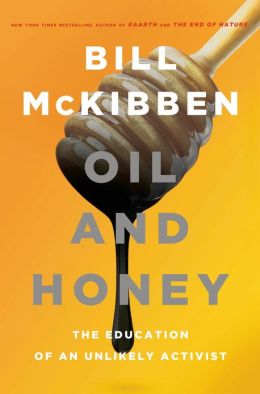
Oil and Honey centers partly on climate change, a subject on which Bill McKibben (The End of Nature; Eaarth; founder of 350.org) is expert; but it is also personal in nature, a dualism reflected by the title. McKibben is concerned simultaneously with oil–representing fossil fuel industry practices and climate change–and honey. Having entered into a land-share agreement with his friend, beekeeper Kirk Webster, McKibben finds his home and Webster’s apiaries exerting a gravitational pull just as his political activism draws him far and wide. These two sides of his life–personal and political, local and global, analog and digital–are the focus of this combination memoir and call to action.

The subtitle refers to his journey from writer to activist, by way of 350.org and the Keystone Pipeline–a trip he did not intend but found obligatory. Activist though he may be, McKibben remains a fine writer, evocative, articulate, clever and humble in examining his mistakes. In piercing prose, McKibben unites his longstanding authority on climate change with his novice stature in the world of beekeeping. He muses on the small-scale and private implications of our changing world, which incline him to work with his family and Kirk’s bees in his beloved local community in Vermont; and likewise on the necessity for global action to combat the continuing quest for fossil fuels. Oil and Honey travels the world but always cycles back, like the seasons, to McKibben’s Vermont home, likening global systems to beehives in a manner both profound and lyrical–and important.


This review originally ran in the – issue of Shelf Awareness for Readers. To subscribe, click here, and you’ll receive two issues per week of book reviews and other bookish fun!


Rating: 8 degrees.

Weeds: A Farm Daughter’s Lament by Evelyn Funda

A memoir about the loss of the family farm, and everything it means to the child of immigrant farmers–and to us all.
weeds
Evelyn Funda’s mother escaped Nazi-occupied Czechoslovakia in a wine barrel, eventually landing in the United States. Her father was the son of Czech immigrants, early homesteaders who sought to make farmland of the Idaho desert. The family farm never felt like it would be Evelyn’s: this “farm daughter,” unwelcome among the tractors and irrigation pipes, would leave to become a college professor. Her musing memoir opens in the fall of 2001 with a triple tragedy: the sale of the family farm; her father’s cancer diagnosis; and her mother’s death, closely followed by her father’s.

Weeds is an elegy, an academic’s personal tale of research and disillusionment, and Evelyn’s own story–with hints of a botanist’s or social historian’s study. (The chapters are named for weeds, beginning with dodder, which she long misheard as “daughter,” when her father cursed the unwelcome growth.) The pursuit of her mother’s joyful youth in a series of cities and countries, of the truth of her grandfather’s apocryphal tales, of her parents’ romance and of the history of her own hometown takes Evelyn to dusty library stacks and to small Czech villages, where she meets dozens of cousins and examines old bones.

Meditative and lyrical, Weeds smoothly braids weeds with family. Funda is sometimes frustrated along the way, but finally satisfied with the personal history she builds for herself–and the conclusion that, even in exile, one can find a sense of place and of belonging.


This review originally ran in the September 6, 2013 issue of Shelf Awareness for Readers. To subscribe, click here, and you’ll receive two issues per week of book reviews and other bookish fun!


Rating: 7 kolaches.

remarkable bits from Pilgrim at Tinker Creek

Correct: we are still not done with Annie Dillard. I may have to make her a tag as I have done for Abbey and Hemingway. (…Haven Kimmel, Norman Maclean…)

EDIT: here we are.

On top of my reviews, I felt the need to share some of my favorite lines and passages with just a few notes. Enjoy.

There are seven or eight categories of phenomena in the world that are worth talking about, and one of them is the weather.

One wonders very much what else would make her list!!

I want to think about trees. Trees have a curious relationship to the subject of the present moment. There are many created things in the universe that outlive us, that outlive the sun, even, but I can’t think about them. I live with trees. There are creatures under our feet, creatures that live over our heads, but trees live quite convincingly in the same filament of air we inhabit, and in addition, they extend impressively in both directions, up and down, shearing rock and fanning air, doing their real business just out of reach. A blind man’s idea of hugeness is a tree. They have their sturdy bodies and special skills; they garner fresh water; they abide. This sycamore above me, below me, by Tinker Creek, is a case in point; the sight of it crowds my brain with an assortment of diverting thoughts, all as present to me as these slivers of pressure from grass on my elbow’s skin.

I loved this because I, too, love trees; and this is a well-articulated (but still rather charmingly airy, too) explanation why. Also, I enjoy Dillard’s use of the semi-colon, my personal favorite punctuation mark. (Yes. I’m a librarian and a reader and writer. I have a favorite punctuation mark.)

My God, I look at the creek. It is the answer to Merton’s prayer, “Give us time!” It never stops. If I seek the senses and skill of children, the information of a thousand books, the innocence of puppies, even the insights of my own city past, I do so only, solely, and entirely that I might look well at the creek.

“It never stops.” Golly, I hope she’s right. Climate change has us receiving too much rain here and not enough rain there; the forests are burning; the glaciers are melting; I fear the creeks are stopping (and starting up elsewhere). But in 1974, I can understand this thinking.

I suspect that the real moral thinkers end up, wherever they may start, in botany.

This, too, is charming: a nerdy confirmation of the power of trees and other green things (and non-green things as well).

John Cowper Powys said, “We have no reason for denying to the world of plants a certain slow, dim, vague, large, leisurely semi-consciousness.” He may not be right, but I like his adjectives. The patch of bluets in the grass may not be long on brains, but they might be, at least in a very small way, awake.

Who is Dillard to say that he may not be right? Goodness, with all the time travel and metaphoric “patting the puppy” she gushes and coos, why not let trees have a certain semi-consciousness? And those complaints aside, does anyone else hear the Ents walking through those lines? Lovely.

All the green in the planted world consists of these whole, rounded chloroplasts wending their ways in water. If you analyze a molecule of chlorophyll itself, what you get is one hundred thirty-six atoms of hydrogen, carbon, oxygen, and nitrogen arranged in an exact and complex relationship around a central ring. At the ring’s center is a single atom of magnesium. Now: If you remove the atom of magnesium and in its exact place put an atom of iron, you get a molecule of hemoglobin. The iron atom combines with all the other atoms to make red blood, the streaming red dots in the goldfish’s tail.

And that blows my mind: a scientific, tiny-scale, real-life confirmation, like a metaphor but grounded in reality on the molecular level, of our intricate connection as living, breathing, animal things to living, breathing green things. I love that.