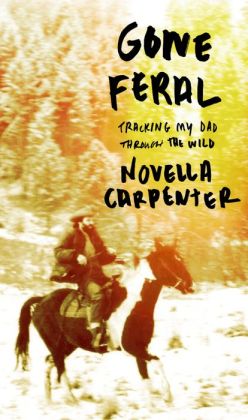
book beginnings on Friday: Gone Feral: Tracking My Dad Through the Wild by Novella Carpenter

Thanks to Rose City Reader for hosting this meme. To participate, share the first line or two of the book you are currently reading and, if you feel so moved, let us know what your first impressions were based on that first line.

gone feral

Novella Carpenter’s Gone Feral tells the story of seeking a relationship with her mostly-estranged father, who prefers the outdoors to the city. It begins:

My dad officially went missing on October 17, 2009.

The morning I found out, I woke up to the hum of traffic from Interstate 980 harmonizing with the nickering of milk goats at my back stairs.

She managed to sneak right in there her own preferred ratio of city-to-outdoors: she has an “urban farm” in Oakland. Not a bad beginning, I think.

This quotation comes from an uncorrected advance proof and is subject to change.

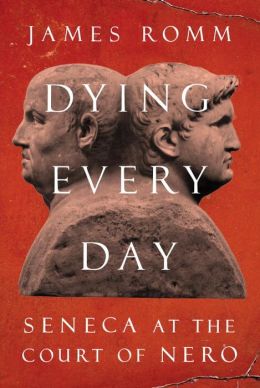
Dying Every Day: Seneca at the Court of Nero by James Romm

An accessible study of Seneca, adviser to the appalling and scandalous Roman emperor Nero.

dying every day

Classical historian James Romm tackles Nero’s Roman Empire, and the controversies and contradictions of the moral philosopher Seneca, in the appropriately titled Dying Every Day.

Nero became emperor in 54 A.D., at the age of 16, under the thumb of his overbearing mother, Agrippina. Like his uncle Caligula–who had also come to the throne at a young age–Nero scandalized Rome with debauchery, exhibitionism, violence and terror. Romm’s chapters are tellingly named: Fratricide, Regicide, Matricide, Matriticide and Holocaust are bookended by two Suicides, the whole capped by an epilogue entitled Euthanasia.

Nero’s legacy is fairly straightforward, but the tutor brought out of exile to prime him for autocratic rule is a more complex character. Seneca was a Stoic who admired Socrates and Cato, prolifically produced moral treatises and scorned wealth. In his role as Nero’s teacher, mentor and trusted senior adviser, however, he colluded in murders within the royal family and amassed a personal fortune. His prose and drama leave behind a contradictory image, and historians from his contemporaries through the present day have puzzled over his true character. Ascetic Stoic moralist or conniving courtier? Romm (Ghost on the Throne) doesn’t claim to settle the centuries-old mystery, but sheds light using ancient sources and occasional references to modern critics, joining his readers in marveling at a regime remembered by history for its shocking excesses.


This review originally ran as a *starred review* in the March 18, 2014 issue of Shelf Awareness for Readers. To subscribe, click here, and you’ll receive two issues per week of book reviews and other bookish fun!


Rating: 7 bloodlines.

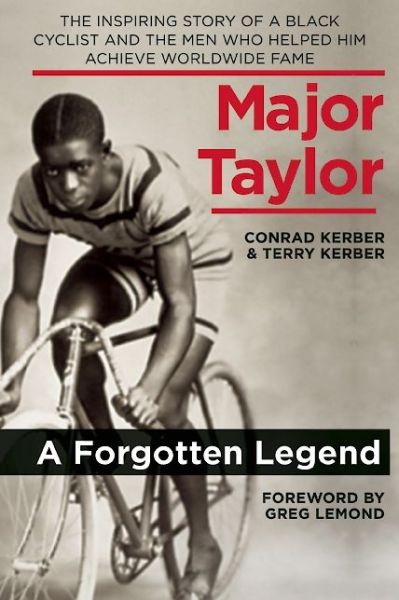
did not finish: Major Taylor: The Inspiring Story of a Black Cyclist and the Men Who Helped Him Achieve Worldwide Fame by Conrad Kerber & Terry Kerber

major taylorI am deeply disappointed that this book didn’t turn out to be a good one, because its subject is deserving, and interesting, and near to my heart, and not nearly well-enough-known. “Major” Taylor was a track cycling superstar in the first decade of the 1900’s, when track cycling was new; in fact, bike racing and bicycles in general were in their infancy. He was unique not only in being one of the fastest men alive, but also because he was a black man in the Jim Crow era; this would have made even a quiet life (earning a livelihood, having a family) harder than some of us can appreciate, but it made a professional athletic career especially remarkable. As a track racer myself (retired now), I have a special interest in his story, so I was excited to get an advanced reader’s copy of this new biography.

I was going to try to pass this by, but my first hesitation came with this book’s subtitle. “The Inspiring Story of a Black Cyclist and the Men Who Helped Him Achieve Worldwide Fame” – I don’t know, call me oversensitive, but I can’t help but feel that this is like saying “the black man and all the help he needed because he was black” – it’s a little derogatory, isn’t it? Would the subtitle have been worded in the same way if this were a book about a white man? I furrowed my brow but decided to give the authors some benefit of the doubt and prepared myself to enjoy their work.

Unfortunately, however, Kerber & Kerber’s deserving subject can’t compensate for their writing, which I’m sorry to say I found painfully poor. It felt that they were going to great efforts to use big words, superlatives, and complex sentence structures. I repeatedly found myself hung up on odd wording; for example, Jim Crow is a “stale” tradition? I don’t think it was the “staleness” that made institutionalized racism unbearable. Or it felt like they were trying too hard for drama: “a rider didn’t dare show signs of weakness or dearth of bravado for fear of his rivals swooping in for the kill.” The authors are happy to assert that a bicycle racer who died in 1896 “surely” said such-and-such to his wife when he saw her last; Taylor “surely” squeezed his eyes shut during a victory ceremony for his hero. They make peculiar statements, such as: “in those days before effective helmets, nearly every seasoned racer suffered physical injuries or saw his body wear out.” Well, you’ll be shocked to learn that even today seasoned racers commonly suffer injuries and the “wearing out” of our bodies! I, too, believe the bicycle is a wonderful thing; but when you state that it “uses energy more efficiently than a soaring eagle” I would love to hear which scientific test backs you up. I would think a soaring eagle is a pretty efficient machine; do you mean that a bicycle goes faster per human effort than a soaring eagle goes per eagle effort? Because I think soaring is pretty low-effort. And I found myself stopping several times to puzzle over the choice of an adverb or verb: a journalist “hollered” a line in print that didn’t seem especially remarkable, or Taylor “gushed” that he found himself sitting next to one of the biggest champions of the day.

I don’t know. Call me nit-picky, but all these little issues and strange wordings distracted me terribly from the life of Major Taylor, and made me doubt the reliability of the authors’ research. I tried to reassure myself that this must be the first biography of Major Taylor, and thus valuable, even if poorly written; but no, look at that, there are several.

I stopped reading at page 57, sorely disappointed. Do note that this is an advanced reader’s copy; possibly improvements will be made before publishing. But unless they rewrite the whole thing from the beginning, I would advise looking elsewhere for the remarkable story of Major Taylor’s athletic accomplishments.

Teaser Tuesdays: A Walk in the Woods by Bill Bryson

Teaser Tuesdays is a weekly bookish meme, hosted by MizB of Should Be Reading.

a walk in the woods

My limited experience with Bill Bryson has been positive; he’s a funny man. And a story of hiking the Appalachian Trail sounds appealing. So here we are with Bryson’s A Walk in the Woods. I must say, though, he does go out unprepared! For example, on waking up his first morning out on the trail:

It seemed very strange, very novel, to be standing outdoors in long johns.

Please tell me he had CAMPED before setting out on this adventure?! He did an awful lot of reading & purchasing, both of which are fine things to do in preparation for a new adventure, but I would also have advised some hiking and camping beforehand as well… we shall see.

book beginnings on Friday: The Reef: A Passionate History: The Great Barrier Reef from Captain Cook to Climate Change by Iain McCalman

Thanks to Rose City Reader for hosting this meme. To participate, share the first line or two of the book you are currently reading and, if you feel so moved, let us know what your first impressions were based on that first line.

reef

A passionate history of explorers and climate change (and thus, one expects, necessarily of climate politics as well)? You have me sold, sir. Here is the opening paragraph of chapter 1:

James Cook did not know, on Sunday May 20, 1770, two weeks after leaving Botany Bay on the east coast of New Holland, the western portion of the continent, named by the Dutch captain Abel Tasman in 1644, that the HMS Endeavor was sailing into the southwest entrance of a vast lagoon where reef-growing corals began their work. It was a channel that later navigators would call the Great Barrier Reef inner passage. Cook didn’t realize that then, and he never would.

I am going to pick these first sentences apart a little here; bear with me. The concept McCalman opens with is a compelling one, and one he’ll return to: Cook was ignorant of what he discovered, and history in hindsight often makes the mistake of giving to discoverers credit for intention that they never had. Also, I think it’s a powerful image, this captain’s ship entering a dangerous and unknown area, and not even realizing it. In other words, I think McCalman chose a good opening subject; but golly, look at that first sentence! All the clauses: “he didn’t know, on the day, in the place, which was such a place, where this happened… that he didn’t know.” I dare McCalman to diagram that sentence; it might lead him to reconsider. And please do note that this is a pre-publication galley copy; he may still change it (or his editor might), so give the published look a glance and see when it comes out in late May. I am recommending the book despite a clause-heavy opener. Stay tuned.

This quotation comes from an uncorrected advance proof and is subject to change.

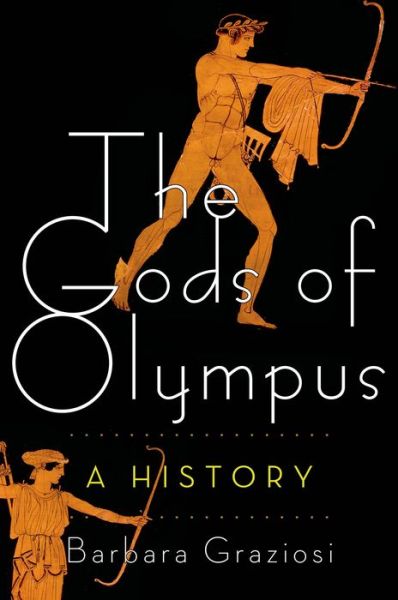
The Gods of Olympus by Barbara Graziosi

For novices and enthusiasts alike, a comprehensive and absorbing study of the gods of Olympus and how their cultural roles have changed over the centuries.

gods of olympus

From Homer and Hesiod, we know that Zeus has a large sexual appetite, that Athena is noble and warlike, that Aphrodite is the goddess of love and sexuality, that Hermes is a messenger with a sense of humor. But how did these myths and the personalities they depict survive to the present? Barbara Graziosi is a professor who’s written several academic works on the classics. In The Gods of Olympus, she directs her expertise to a more general audience for the first time, following the 12 gods and goddesses of the classical Greek pantheon from their first appearances in antiquity through our continuing modern awareness of them. Readers benefit immensely from her proficiency, which comes with a sense of humor: Graziosi occasionally appears in her own narrative, with an endearingly wry, self-deprecating tone.

The history of the immortal Olympians begins in Greece, where Graziosi explores their role in myth, ritual and cultural events. The Athens of Socrates, Plato and Aristotle reconsidered the value of the gods, in literature and in life, and when Alexander the Great expanded his empire toward the ends of the earth, he advertised his ability to travel even further than Dionysus. By gauging his own accomplishments against those of the gods, he sought to make himself like a god even as he reconfirmed the supreme importance of the deities.

Under Alexander’s rule, much of the “known world” was Hellenized, taking on Greek–and therefore Olympian–customs and culture. During the Roman Empire, the gods’ strong personalities were merged with the traditional Roman gods’ rule over matters of state, surviving in slightly different forms that best served those in power. As Graziosi demonstrates, this is the model through which they have come to us over millennia: the rise of Islam and Christianity likewise preserved the Olympians, though it transformed the gods into demons, allegories and cautionary figures. Their original worshippers are long gone, but the Olympic gods survive, flexible and changeable but continuing to inspire art and literature.

Graziosi’s knowledge is obvious, and easy to trust, accompanied by thorough notes and a helpful appendix to the original 12 gods and their corresponding Roman identities. Her writing is accessible and entertaining, her passion for her subject obvious; The Gods of Olympus will equally thrill longtime lovers of the classics, and appeal to readers seeking a friendly, engaging introduction.


This review originally ran in the March 10, 2014 issue of Shelf Awareness for the Book Trade. To subscribe, click here.


Rating: 8 centuries (just for starters).

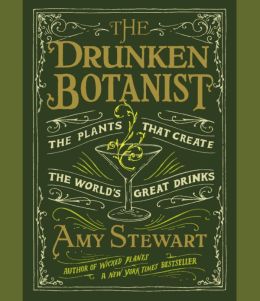
The Drunken Botanist: The Plants That Create the World’s Great Drinks by Amy Stewart (audio)

drunken botanistI’m sure I don’t have to explain to you my interest in a book called The Drunken Botanist. I didn’t even look any further than the title; I requested it from my local library on that alone.

Amy Stewart opens with an anecdote: she was at a convention for “garden writers” when a colleague confessed he didn’t know what to do with a bottle of gin he’d received as a gift. She scolds him for being unaware that a botanist, of all people, should know all about booze: alcohol comes from plants to begin with, after all! I confess I hadn’t thought of it that way, of course, but I continued to be hooked.

The book is organized by: how we make alcohol (fermentation and distillation); what we make it from (alphabetically, agave through wheat); what we flavor it with (herb & spices, flowers, trees, fruit, nuts & seeds); and flavorings and garnishes (herbs, flowers, trees, berries & vines, fruits & vegetables). Throughout are dispersed cocktail recipes, instructions for syrups, infusions and garnishes, and gardening or growing tips. She stops short of homebrew advice, although the practice is alluded to many times. There are also several “bugs in booze” subsections: noble rot, yeast carriers, and the worm in the mezcal.

Stewart seems to have a fondness for hard alcohol: beer and wine get rather cursory treatment by comparison, at least to my eyes. Possibly that’s my bias showing through, and to be fair, beer or wine individually could fill its own book (or many of them – and they’re already out there). I find that she did a much finer job of sampling the wide world of distilled spirits than she did of sampling the wide world of beer or wine; but maybe if I knew more about the distilled spirits I wouldn’t feel that way. Certainly, as a beer lover first and foremost, I was sadly disappointed in her treatment of that category of booze. However, this didn’t badly hurt my feelings about the book as a whole, because there are plenty of good books on beer. That’s not what this book was all about.

I really enjoyed Stewart’s passion, and her drink recipes and tips are much appreciated. In fact, don’t tell him, but I’ve already ordered a print copy of this book for my main bartender, and he will receive this gift with my requests carefully marked within. I also enjoyed the broad education of all the things we make booze from, and some of the wild trivia I learned. I made several notes and/or paused to tell Husband: “did you know there’s a thing called pechuga mezcal? They hang a piece of raw chicken in the air above the still!” “There’s such a thing as a ‘burpless’ celery!” What fun. By no means comprehensive, of course, The Drunken Botanist is still an enjoyable, useful, entertaining introduction to “the plants that create the world’s great drinks” (and the less-than-great ones, too).

I heartily enjoyed Stewart’s book, with the exception of just a few frustrating moments when I wished she’d gone further into the beer bits. (Forgiven, as I said above. But noted: just a few frustrating moments.) However, I would advise against the audio version. For one thing, listening to recipes is not the right way to do it. With the kind of information being related, I think reading is far preferable to listening. And, I got a little lost within her organization of information, too. I think being able to see headings and subheadings would have helped a lot. Finally, while I liked reader Coleen Marlo’s voice and the personality she gave to the reading, I felt that she talked way too fast – quite possibly for any audiobook, but particularly for this one, again, considering its reference-style informational offerings and recipes.

The gardening tips were a little over my head, but your mileage may vary. I wouldn’t say that I have a black thumb, exactly, but the whole program baffles me. I appreciated the introduction I got from A Garden of Marvels, although that one, too, seemed to consider “basic” or “easy” some concepts that lost me. I definitely dig Stewart’s advice, just don’t know if I’ll be growing my own any time soon.

Verdict? Don’t miss this one if you love booze & plants! But get the print copy!


Rating: 8 garden cocktails.

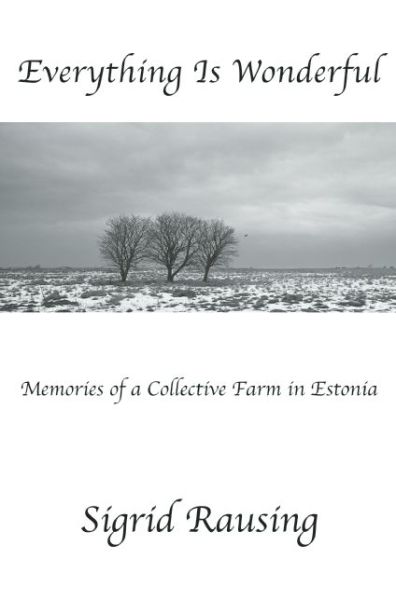
Everything is Wonderful: Memories of a Collective Farm in Estonia by Sigrid Rausing

The personal side of an anthropologist’s year in post-Soviet Estonia.

wonderful

Sigrid Rausing spent a year on a collective farm on the west coast of Estonia in the mid-1990s, doing fieldwork for her Ph.D. in social anthropology. Her time there yielded an academic book, History, Memory, and Identity in Post-Soviet Estonia: The End of a Collective Farm. “Much as [that book] excluded the personal,” she writes, “this book excludes the academic.” Everything Is Wonderful contains Rausing’s remembrances, after nearly 20 years, of time spent in an unusual cultural landscape and the questions that remain with her.

The tone of this slim memoir is quiet and unobtrusive; engaging in participation observation is the anthropologist’s aim. Rausing contemplates the legacies of the Soviet Union in Estonia as a country and a culture, and in the village she lived in. As a parallel, she considers her own cultural identity as a Swede living in England who finds herself at home in a place where Estonian Swedes once made up a sizable and powerful minority, before the Nazis sent them to Sweden in a “perhaps overly collaborative” evacuation.

Rausing’s subjects include the everyday tedium and alcoholism of a small village in a deeply depressed region; they include dream interpretations, and loving descriptions of natural settings, despite the monochromatic winter that occupies most of the year. Interactions with her neighbors and friends are rendered with an eye for irony. Yet for all its bleak detail, Rausing’s work resonates with nostalgia as well. “I was tired, and often hungry,” she recalls, “but even now, twenty years later, I miss those long quiet walks in that melancholy and restful landscape.”


This review originally ran in the March 7, 2014 issue of Shelf Awareness for Readers. To subscribe, click here, and you’ll receive two issues per week of book reviews and other bookish fun!


Rating: 7 “cocktails.”

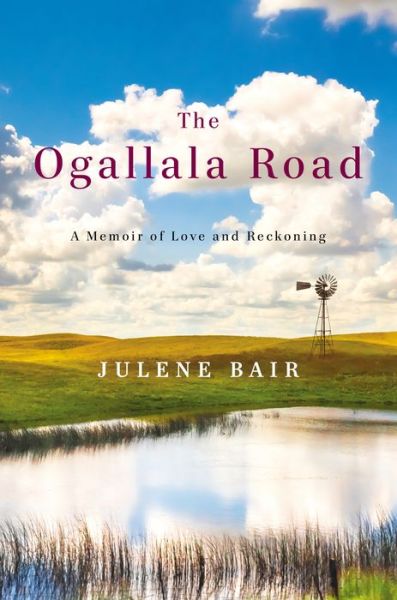
The Ogallala Road by Julene Bair

An environmentalist revisits the family farm with mixed feelings about water shortages, and finds a love story along the way.

ogallala

Julene Bair left the family farm in the high plains of Kansas for the bigger world of San Francisco, then the solitude of a rock house in the Mojave Desert. She returned pregnant, worked with her father on the farm for as long as she could stand it, then found security in a cowboy town in Wyoming, where she raised her son alone. She returned again to tour the ever-diminishing creeks and springs on foot and to study the Ogallala Aquifer, which the United States relies upon for 30% of its irrigated crops. Next to a big cottonwood, she meets a cowboy who admires Cormac McCarthy–and falls in love.

For most of The Ogallala Road, this cowboy, Wade, accompanies Bair as she struggles to reconcile the wilderness-loving, liberal-minded, Subaru-driving writer she’s become with her roots as a farmer’s daughter of Kansas’s conservative rural plains. The memoir clearly began as the story of a shrinking aquifer and a nation’s (or a world’s) self-destructive hubris, and one suspects Bair is as surprised as readers will be that romance takes so much of the spotlight. Wade embodies everything that both nourishes and infuriates her about Kansas, which is a challenge to their love story.

The farm that has sustained generations of her forebears retains a strong hold on Bair’s heart, and her family’s–and her own–role in depleting the aquifer becomes a central source of conflict. The Ogallala Road meanders through the history of the Cheyenne Indians’ longtime residence in the region, seeking insight into a more balanced relationship with earth and water. “Hang on to your land!” Bair’s father exhorted his children, but under the pressures of a changing world, they’ll consider selling. Bair comments on the difference between growth and progress, and a feeling of connection to the land that she suspects her father would have snorted at, while wrestling with her own guilt. In the end, it is the water, not Wade, that causes her the most pain–but the memoir closes with a tentative note of hope.

In its combination of nature writing, environmental concern and love story, The Ogallala Road is unusual. Bair’s contemplative praise of the high plains and the western deserts, her yearning for a father for her son and her lament for a dying way of life will strike chords for diverse readers.


This review originally ran in the March 7, 2014 issue of Shelf Awareness for the Book Trade. To subscribe, click here.


Rating: 8 million gallons.

Teaser Tuesdays: Hotel Florida by Amanda Vaill

Teaser Tuesdays is a weekly bookish meme, hosted by MizB of Should Be Reading.

hotel florida

I am, of course, enjoying immersion in the beautifully composed Hotel Florida, a history of six individuals in the Spanish Civil War.

“THE PICTURE WAS BEYOND PRAISE AND SO WAS YOUR ATTITUDE,” wired Scott Fitzgerald after the screening he saw, at which Hemingway had spoken about la causa and the loss of Lukács and Heilbrun. Fitzgerald sensed in his old and now distant friend an attachment to the film project, and to the war in Spain itself, that had “something almost religious about it.” As so often, he saw Hemingway more clearly than Hemingway saw himself.

I appreciate the larger truth in these lines about the relationship between Fitzgerald (who doesn’t much play into this story) and Hemingway (who is one of its stars).

Also, I am thrilled to note just a handful of pages later an extended excerpt from Goethe’s poem, Der Erlkönig, which I memorized in its entirety for my German class in high school. (In German.) That was fun.

This quotation comes from an uncorrected advance proof and is subject to change.