book beginnings on Friday: The Remedy: Robert Koch, Arthur Conan Doyle, and the Quest to Cure Tuberculosis by Thomas Goetz

Thanks to Rose City Reader for hosting this meme. To participate, share the first line or two of the book you are currently reading and, if you feel so moved, let us know what your first impressions were based on that first line.

remedy

I have an awesome new book to tease you with today. I hope the title alone begins to interest; it did me. The first paragraph sets the stage:

In train after train, consumptives filled the passenger cars, their hacks and coughs competing with steam whistles and screaming brakes as the engines came to a halt in Potsdamer Platz. They came to Berlin without any sense of where to go or what to do once they arrived. And they kept coming, for days, weeks, and months. It must have struck Berliners as a sort of zombie pilgrimage: here were the walking dead of Europe, all suddenly flocking to their city in search of something – some fantastic substance that did not yet officially exist.

Not out til early April, so stay tuned for my review til then. But for now: I am quite impressed with the writing (my favorite: accessible, engaging, nonfiction science), and the fascinating story of the race towards a cure for tuberculosis, including Arthur Conan Doyle’s rather surprising role in it.

This quotation comes from an uncorrected advance proof and is subject to change.

Teaser Tuesdays: The Drunken Botanist by Amy Stewart


drunken botanist

Teaser Tuesdays is a weekly bookish meme, hosted by MizB of Should Be Reading.

I have only just begun this audiobook but have very high hopes that it will follow A Garden of Marvels beautifully. Booze & botany, where can we go wrong? The Drunken Botanist: The Plants That Create the World’s Great Drinks makes perfect sense to me. In her introductory pages, Amy Stewart writes:

If you’re a gardener, I hope this book inspires a cocktail party. If you’re a bartender, I hope you’re persuaded to put up a greenhouse, or at least plant a window box.

I think that puts it very well and succinctly, and I’m on board.

A Garden of Marvels: How We Discovered that Flowers Have Sex, Leaves Eat Air, and Other Secrets of Plants by Ruth Kassinger

A charmingly accessible history of botany, full of the strange and wondrous, for readers intimidated by science.

garden of marvels

Ruth Kassinger (Paradise Under Glass) was frustrated by the kinds of mishaps with which many amateur gardeners are familiar: failures to thrive, unexplained deaths, mysterious midseason droopings. So she did what any reasonable science writer would do: research. How do plants really work? In hunting for a simple, layperson’s guide to botany, however, she came up short. Particularly in seeking “the story of the first discoverers of the basic facts of plant life”–that is, a history of botany–she could find only scholarly texts for which “Botany 101 is definitely a prerequisite.” From these frustrations was born the masterful, engaging A Garden of Marvels.

Kassinger’s greatest strength is unquestionably her quirky, conversational tone. She begins with a murder mystery (spoiler: the victim is a kumquat tree) and from these delightful opening lines, even the most science-averse reader will be hooked. While A Garden of Marvels does contain the odd gardening tip, it is more concerned with Kassinger’s travels: she visits farms, conservatories and laboratories around the nation, encountering diverse and eccentric characters she describes with humor and skill.

Her research into human history is likewise revealing: she points out that religious and societal philosophies caused our ignorance of and lack of interest in botany until very recently, and highlights those few pioneering minds whose experiments, observations and strange machineries caught us up. Darwin gets a chapter, and is accompanied by myriad little-known early scientists, all brought to life by Kassinger’s enthusiasm. A handful of relevant illustrations by Eva Ruhl assist along the way.

Kassinger is properly amazed at the science she discovers in nature, as well as the men (“and they were all men”) in history who broke ground with their scientific studies. For some readers, though, she may be a trifle overenthusiastic about the possibilities of genetic modifications of plant life and dismissive of concerns regarding these technologies–although the genetic possibilities in the simple garden petunia are positively mind-boggling.

Topics like plant sex, the history of scientific exploration and the fundamentals of genomics are all equally accessible in Kassinger’s capable hands. That she makes botany so approachable is a feat; that she makes it downright enthralling is almost as miraculous as an adorable photosynthesizing sea slug.


This review originally ran as a *starred review* in the February 24, 2014 issue of Shelf Awareness for the Book Trade. To subscribe, click here.


Rating: 9 different fruits on one tree.

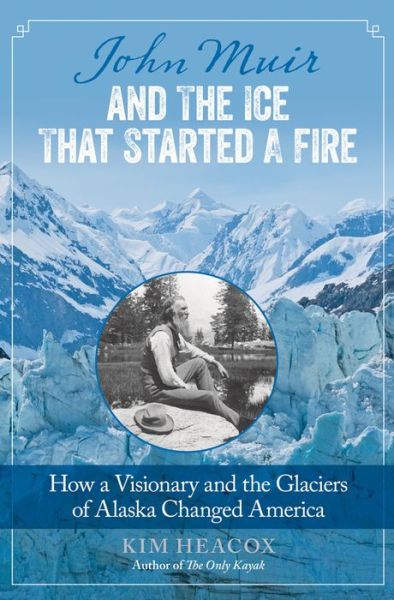
Teaser Tuesdays: John Muir and the Ice that Started a Fire by Kim Heacox

Teaser Tuesdays is a weekly bookish meme, hosted by MizB of Should Be Reading.

muir ice

You know I couldn’t pass up a history of John Muir and his role in creating the American conservation movement! I am learning a lot, and not only about Muir and glaciers.

Today’s demographers have estimated that of the roughly 110 billion people who have lived on earth the last 50,000 years, only a small fraction have achieved age fifty and beyond; of those, half are alive today. In other words, Muir was already the beneficiary of a relatively long life.

…although of course, being Muir, he did not go gently into that good night. I am not surprised at these numbers but had never considered such a thing; it’s a little boggling, isn’t it?

This quotation comes from an uncorrected advance proof and is subject to change.

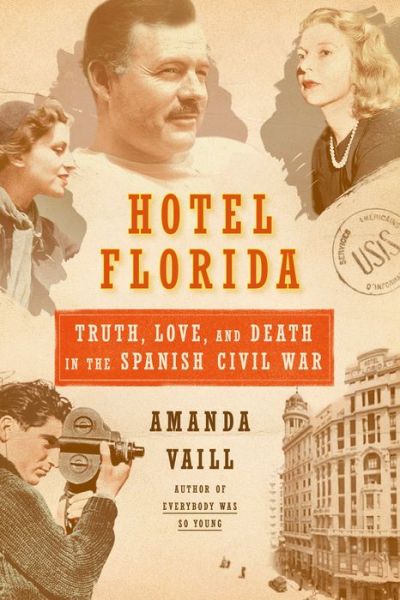
book beginnings on Friday: Hotel Florida: Truth, Love, and Death in the Spanish Civil War by Amanda Vaill

Thanks to Rose City Reader for hosting this meme. To participate, share the first line or two of the book you are currently reading and, if you feel so moved, let us know what your first impressions were based on that first line.

I am quite pleased with Hotel Florida, about the Spanish Civil War and concentrating on six individuals – three couples – who experienced it. I’m offering a little more book beginning than usual today, because I think this way gives a good feeling of Amanda Vaill’s work; so bear with me.

hotel florida

Three book beginnings…

Author’s Note:

“It is very dangerous to write the truth in war,” said Ernest Hemingway, “and the truth is very dangerous to come by.”

Prologue:

On July 18, 1936, at Gando in the Canary Islands, a short, balding, barrel-chested man in a gray suit, carrying a Spanish diplomatic passport in the name of José Antonio de Sagroniz, boarded a private seven-seater de Havilland Dragon Rapide aircraft that had arrived at Gando three days previously and had been waiting on the tarmac for him ever since.

And chapter 1:

Arturo Barea lay on the brown, pine-needled floor of a forest in the Sierra de Guadarrama, northwest of Madrid, with his head in his mistress’s lap. It was mid-afternoon on Sunday, July 19, and the resinous air was loud with the sound of cicadas.

The effect I noticed immediately here, is the connection between the Hemingway quotation and the Hemingwayesque first line of the first chapter. For one thing, note all the sensory detail in that second sentence. This is instantly recognizable to me as Hemingway’s style. And most pointedly, recall the opening line of Hemingway’s novel about the Spanish Civil War, For Whom the Bell Tolls:

He lay flat on the brown, pine-needled floor of the forest, his chin on his folded arms, and high overhead the wind blew in the tops of the pine trees.

I surely don’t need to tell you that this parallel was established on purpose. For that matter, Vaill ends her book with the opening line as (she tells us) Hemingway wrote it in his first draft:

We lay on the brown, pine-needled floor of the forest…

I like her use of structure here, the bookending of her book using Hemingway’s own words. I find that this really pulls it together.

Rather more book beginning than usual, I confess. Thanks for your patience. And let me say that Hotel Florida is about much more than Hemingway; but he is the most widely known of her six individuals, and arguable the biggest and most colorful personality, so I think the occasional emphasis can be excused. That said, I really enjoyed learning so much about her other characters. They include Martha Gellhorn, journalist and Hemingway’s partner (mistress during the war, wife after); photographers Robert Capa and Gerda Taro; and press officers Arturo Barea and Ilsa Kulcsar. As usual, you’ll have to stay tuned for my book review, but for now: I recommend.

This quotation comes from an uncorrected advance proof and is subject to change.

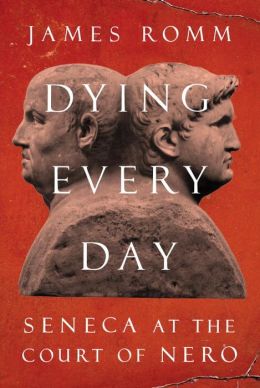
Teaser Tuesdays: Dying Every Day by James Romm

Teaser Tuesdays is a weekly bookish meme, hosted by MizB of Should Be Reading.

dying every day

Dying Every Day is well named. Nero’s rule over Rome beginning in the first few years AD was marked by death & murder in a multitude of forms, and Seneca, his philosopher/teacher-turned-adviser, offers enormous ambiguities. I chose a teaser for you that makes that point in a single sentence.

To act as imperial panderer, dispatching an ex-slave to the princeps to stop him from sleeping with his mother, brandishing Burrus and the guard as an implicit threat – these were hardly roles he had envisioned when he returned to Rome from Corsica, his trunk full of ethical treatises.

Stay tuned!

This quotation comes from an uncorrected advance proof and is subject to change.

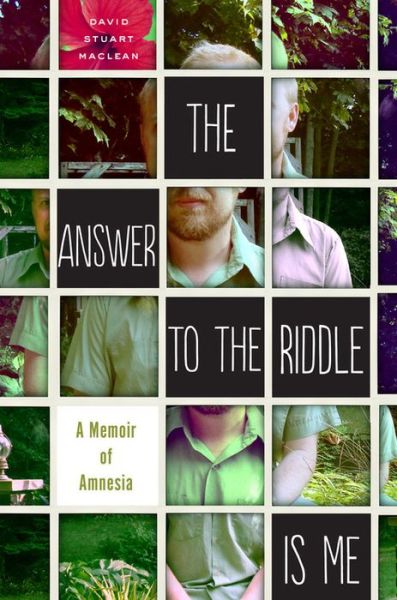
The Answer to the Riddle Is Me: A Memoir of Amnesia by David Stuart MacLean

A memoir from within the mind of an amnesiac, in full terrifying color.

riddle
In the opening scene of The Answer to the Riddle Is Me, David Stuart Maclean “wakes up” in a standing position, in a train station, in a place where English is clearly not the first language. He doesn’t know who he is, where he is or where he was going. A friendly policeman tells him that many tourists there do too many drugs and end up confused; Maclean concludes that he is a drug user and follows as he is told.

This scene is only the beginning of the enormous world of what Maclean can’t remember, and assumptions he’ll be led to make that will often turn out to be false. He was living alone in India on a government grant to aid his work as a novelist when an antimalarial drug he was taking overcame the blood-brain barrier and wreaked havoc. The Answer to the Riddle Is Me is Maclean’s story of amnesia and recovery, with all the false starts, depression, despair and small victories that come with such a trauma. Maclean often wishes himself back in a hospital where he’ll be spoon-fed and his decisions will be made for him, but he slowly, eventually resurfaces.

This heartfelt and painfully candid memoir tracks Maclean in real time, in fractured scenes and then in measured, purposeful steps, and comes with research into the medical issues involved. Readers will be mesmerized by the effort, and perhaps feel as rejuvenated in the end as Maclean does.


This review originally ran in the February 11, 2014 issue of Shelf Awareness for Readers. To subscribe, click here, and you’ll receive two issues per week of book reviews and other bookish fun!


Rating: 7 faces.

book beginnings on Friday: Turtle Island by Gary Snyder

Thanks to Rose City Reader for hosting this meme. To participate, share the first line or two of the book you are currently reading and, if you feel so moved, let us know what your first impressions were based on that first line.

turtle island

I’m a little out of order, as I’ve reviewed this book already. But for further musing and perspective, I want to share with you a piece of the “Introductory Note” that explains its title.

Turtle Island–the old/new name for the continent, based on many creation myths of the people who have been living here for millenia, and reapplied by some of them to “North America” in recent years. Also, an idea found world-wide, of the earth, or cosmos even, sustained by a great turtle or serpent-of-eternity.

…Anglos, Black people, Chicanos, and others beached up on these shores all share such views at the deepest levels of their old cultural traditions–African, Asian, or European. Hark again to those roots, to see our ancient solidarity, and then to the work of being together on Turtle Island.

I collected turtles in high school. Stuffed, carved, as pendants and pillows. It’s the animal I chose as my own somehow. They still resonate; I don’t have all those turtles any more, but I’ve kept a small group of small ones, which turn out to be (by coincidence? I doubt it; but not on purpose) to be crafted from natural materials: stone, wood, shell. I feel at home here.

Turtle Island by Gary Snyder

turtle island

You all may recall that I am NOT a poetry person. I may be a tad too literal; I loved Shel Silverstein but never graduated from there. Clearly it didn’t help that I attempted Gertrude Stein later in life; her poetry is analogous in my mind to modern abstract art. Either I am a hopeless moronic philistine, or these people are making fun of us to our faces with some of this stuff.

So how did I end up here? I didn’t do my homework. I had heard enough good about Gary Snyder from people I respect for long enough that I finally jumped on a title somebody referenced: Turtle Island. I requested it from my local library. (I LOVE this service.) I went to pick it up when they told me to; and sure enough, on the cover, “Pulitzer Prize for Poetry 1975.” Well, heck, I’ll give it a whirl. (Pops and I are planning a readalong of a Snyder essay collection, Practice of the Wild, coming up, so I’ll get the prose, too.)

Snyder’s poems are short – rarely over one page (in a small format book), and often shorter. They tend towards the natural world and our relationship with it, and these of course were the subjects I was looking for. He’s really pretty accessible – for a poet. I don’t follow the stream-of-consciousness sort of thing very well, but I tried to just let his words float over me when I lost the thread. To mix a metaphor.

I liked several quite well. “Control Burn” (not “controlled”) has a clear message, and one I can get behind; and it read fairly straightforwardly. [Actually, as I look again, it would make for a very coherent sentence if you just took out all the line breaks and added a little punctuation. Look at that. I like poetry when it most resembles prose. sigh] I liked “The Call of the Wild” for its message as well; I appreciated a list of “Facts” (including “General Motors is bigger than Holland.”) but again that’s cheating: it is not a poem. Is it? Hm. If a list of facts can be a poem, maybe I’m a little better off than I thought. “The Wild Mushroom” is a more traditional poem with a recognizable meter, and it rhymes! (I am a philistymes.) It could also serve you as an abridged guide to which wild mushrooms are edible, which poisonous and which might “bring you close to God”; utility in poetry is always welcome, yes please.

“Mother Earth: Her Whales” is a lovely ode to all the earth’s inhabitants and indictment of what we’re doing here. And I love the tale of an ancient turquoise ring from Jemez discovered under the ruins of an apartment complex in Kyoto: “The Jemez Pueblo Ring.” I also like when he writes about his family, mostly his young sons; his tenderness shows clearly through.

But naturally, for me, things really get good when he switches to “Plain Talk” (the final one of the book’s four main sections), which is also known as “prose.” Here Snyder identifies problems with our world – we’re talking about the big problems, like population, pollution, and consumption – and recommends big fixes – with actions organized by social/political, community, and “our own heads.” He is concerned with the relationship of humans to the rest of the world: water, earth, dirt, plants, animals, mountains, air. His prose arguments are beautiful, well thought out, well informed (although brief), and resonate with me perfectly. I suspect that they assume certain things (bison on the plains are a good thing. our kids should play in the dirt) that not everyone agrees with; but I’m on his frequency. The people who think the big car, the big house in the big city, kids who wear designer sneakers, and the fancy career are important goals may not follow along here.

Snyder’s philosophies strike me as abundantly obviously correct, but also (sadly) far too simple and hopeful to work in our complex and stubbornly wrong world. He has all the problems described correctly, except that everything is far worse now than it was when this book was published in 1974. In that respect, it’s not good news, but Snyder shows great foresight in predicting the ways in which we’re doing even more poorly now; and further, I think it’s remarkable how relevant and right he still is in 2014. If you read this book today with no knowledge of its publication date, I think you’d find it intelligent, only understated or optimistic.

This prose conclusion to Turtle Island is absolutely the perfect conclusion to the poetry that precedes it. I confess that if I had to rate the poetry sections, I would probably end up giving this book a bemused 5 feathers or some such, with the qualification that I’m pretty sure there’s more here that I missed. But with this conclusion in “plain talk” to tie it all up for me, Turtle Island becomes a philosophical achievement along the lines of Thoreau, Abbey, Jensen, Dillard, and the like. In fact, I was often reminded of Abbey (as when Snyder refers to growth as a cancer); Jensen (as when he refers to a need for total change and starting over), some thoughts I’ve come up with (“on my own,” in theory, but clearly informed by my reading & discussions), and also with Ken Kesey’s band of Merry Pranksters.

This conclusion to the book bodes extraordinarily well for my shared reading with Pops of Snyder’s essay collection. Stay tuned.


Rating: 9 Ponderosa pines.

Careless People: Murder, Mayhem and the Invention of The Great Gatsby by Sarah Churchwell

New research and new angles on The Great Gatsby and its place in history.

carelesspeople

Sarah Churchwell (The Many Lives of Marilyn Monroe) takes on F. Scott Fitzgerald’s mythically proportioned masterpiece in Careless People, an expansive study of biography, history, literary criticism and cultural connections. Her inquiries focus on a double-murder involving a socially ambitious lower-class woman and a respected rector, both married but not to each other, found shot to death in each other’s arms. The case captured national attention in 1922, the year Scott and Zelda returned to New York–and the year in which The Great Gatsby is set.

With an appealing, freshly curious manner, original research and newly discovered resources, Churchwell explores the possible connections between Fitzgerald’s experiences in 1922 and what happened at the same time in his most highly regarded novel. She also compares the plot of The Great Gatsby to the real-world action of 1922. In the book, which alternates between the Fitzgeralds’ lives during the period The Great Gatsby came to life with the unfolding of media coverage of the murder case, Churchwell incorporates Fitzgerald’s correspondence, including delightful poems exchanged with Ring Lardner, and lists of slang (including some 70 ways to say “drunk”).

With elements of fun and tragedy–like the lives of its subjects–Churchwell’s study of the Fitzgeralds, The Great Gatsby and the world that birthed it presents new perspectives on a literary icon.


This review originally ran in the January 28, 2014 issue of Shelf Awareness for Readers. To subscribe, click here, and you’ll receive two issues per week of book reviews and other bookish fun!


Rating: 8 unattributed clippings.