Gone Feral: Tracking My Dad Through the Wild by Novella Carpenter

Back-to-basics urban farmer Novella Carpenter investigates family in her second contemplative memoir.

gone feral

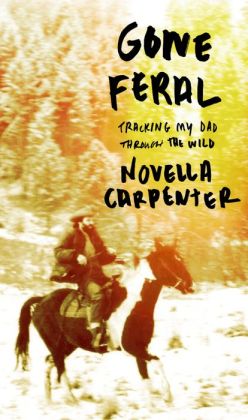
When Novella Carpenter was 36, her father went missing. It turned out to be a false alarm, but the threat of losing him helped Novella realize that, if she was ever to get to know George Carpenter, she might be running out of time, since their relationship had been stuck somewhere between uneasy and estranged for years. Gone Feral: Tracking My Dad Through the Wild charts her journey home.

After a romantic meeting in 1969 San Miguel de Allende, Mexico, her parents embarked on an idealistic European tour before settling on a farm in Idaho in “voluntary poverty.” But the marriage ended when Novella and her sister were five and seven, and their mother moved them to Washington State; Novella didn’t see much of her father after that. Now, three decades later, she has a small urban farm in Oakland, Calif., which she documented in her memoir Farm City. When she and her boyfriend, Bill, decide to try to get pregnant, she wonders about her own genetic legacy. Breeding ducks, chickens and milk goats has taught her the importance of the stock line. In working to become a parent herself, after the scare of George going missing, she goes in search of her father, hoping to build the relationship they never had.

George is still scraping by near the Idaho farm where Novella was born. He’s a regular backwoods curmudgeon, making a meager living by logging and cutting firewood and sharing his cabin with wild animals. She hopes they’ll go fly-fishing, re-creating the romance of A River Runs Through It. Maybe they’ll forage for wild foods or he’ll teach her how to fell a tree perfectly. Instead, he rants about the devils that possess the old family farm and exhibits previously unnoticed signs of post-traumatic stress disorder (the legacy of his service in the Korean War). Novella is disturbed, angered all over again at what she sees as his abandonment, and concerned about the genes she’ll pass on to a child, if she ever succeeds in getting pregnant.

Gone Feral is reflective, as Novella ponders the paradoxes of her upbringing–for example, the liberal hippie value system (hers and her mother’s) that rejects her father the mountain man–and wonders what it is she really wants for her own child. Traveling through the country and her own past teaches her about herself, her origins, and how to build a future that includes father as well as child.


This review originally ran in the May 20, 2014 issue of Shelf Awareness for the Book Trade. To subscribe, click here.


Rating: 5 babies.

guest review: The Worst Hard Time: The Untold Story of Those Who Survived the Great American Dust Bowl by Timothy Egan, from Mom (audio)

Thanks Mom for sending these reading notes.

I’m reading a Playaway version of Worst Hard Times. I picked it up because it’s a World Book Night item, on display at the library when I went to pick up my box of Catch 22 to give away. I was most interested in this audio player-book just sitting on the shelf. (Add earbuds, battery, and stir.)
worsthardtime
It’s a pretty grim picture. Worst Hard Times is the dust bowl story, and follows people’s stories in several of the farms & towns of the worst areas. Egan writes for the NY Times, and recently wrote a scathing attack on the idea that the landslide in Oso was one of those “acts of God” that are so unfortunate but . . . . (Actually there was lots of warning by geologists, an earlier landslide in the last decade, with the logging of the hilltop as the coup de gras).

The Dust Bowl is called the worst man-made disaster of the U.S., and easily understood in hindsight as a tragic result of lack of understanding of natural forces, as well as grasping for even more wealth when the land was giving its riches reliably during the wet years of the Twenties. He gives more details than can be born, almost: the dust swirling, no plates set out until time to use them, wet bedsheets hung up over windows every night, people dying of “dust pneumonia.” The old cattlemen said it was a crime to uproot the prairie grass, and that the land would be ruined – more importantly, to them, even than the loss of the land for cows.

This area, which was called the Great American Desert, was given to the Apaches. When the government decided to give the land to settlers, Texas, especially, made every effort to eradicate the buffalo in order to drive off the Indians.

So, a good story. The reader, not so much. (He’s “an accomplished actor, director and combat choreographer” according to the audio blurb. Huh?) He put a little too much hick into the voices when he quotes them, and, like some readers I’ve noticed, makes women’s voices especially irritating, with a too-high intonation. The most irritating, though – a subjective reaction, I know – is his pronunciation of Boise City as /boyZAY/. Really?

Oh, Mom, I do so get it! The pronunciations from my recent read of Bryson’s A Walk in the Woods are fresh in my mind – unfortunately the only one I can cite specifically is urinal as “your-RYE-null” (very strange!) but there were others, equally odd & distracting. I think I’m more upset by the overly hick accents and the obnoxious women’s voices, though.

Does Egan overtly make the comparison between our hubris & lack of foresight with the Dust Bowl, and same with the recent mudslide (etc. etc.)? Or leave us to figure it out? If the latter, readers like yourself make the connection without difficulty; but I always appreciate the former. If you have a statement, go ahead and make it, please! Stand up for what you think.

I would say yes. I’m not through yet, but he lets a lot of characters say this. He also writes of the preachers who said that people are being punished for some sin, or that prayer & positive thinking will make it all better.

The sodbusters are all from the devil, according to the cattlemen. The saddest part of that is not that they are right, but that the dust dunes and drought ends up killing even the grass that remains.

There’s a scientist who explains it perfectly, and after Roosevelt’s election, he gets put in some government function to help solve the problems. There’s a town where the people agree to follow this guy’s recommendations for saving the land. Don’t remember the details, but hope to see this followed up in a later chapter.

There’s a newspaper owner (Dalhart or Boise City) who stops reporting all the bad stuff. Then he decides the people just need to embrace the situation. Look at the black clouds, the wind, the dead earth, and see the majesty of nature. Nuts! He doesn’t mention embracing all the death.

So I think Egan will have a strong conclusion to this effect.

The roaring boom of prosperity and the miracle of turning land into wheat (=$$) is a big theme. Plain people learning that they could have become rich if they planted every acre. They couldn’t tear up the prairie fast enough. We even have what he calls suitcase farmers, entrepreneurs who come to town and pay someone to rent their land and plant wheat. They just wait around for the harvest and the profits. After the bust and the drop in wheat prices, off they go, with no more interest in the land they have mined. How much hubris can you stand?

This does sound like a good story – though decidedly grim, as you say. I’d like to put it on the (long) list… Thanks for sharing!

The Reef: A Passionate History: The Great Barrier Reef from Captain Cook to Climate Change by Iain McCalman

The Great Barrier Reef is both easily understood and awe-inspiring in this history of its discovery, exploitation and beauty.

reef

With The Reef, Iain McCalman (Darwin’s Armada) has composed “a passionate history” of the Great Barrier Reef, opening with his own long-awaited voyage (part of a reenactment of Captain Cook’s original trip). Following the prologue, he withdraws to the role of historian rather than participant, and chronicles the Great Barrier Reef as known to Western society over the last few centuries.

The Reef is divided into three parts. Beginning in 1770 with Captain Cook and proceeding through later explorers who helped chart the reefs in the 1800s, “Terror” emphasizes the threat the reef posed to ships and their navigators, and the fear of cannibals and others thought to inhabit the area. In Part II, “Nurture,” the reef begins to offer refuge for those seeking to escape civilization or make a fresh start. Europeans are taken in by native islanders, or discover island paradise; naturalists arrive, captivated by the biodiversity and beauty of the area while beginning to realize that coral is a resource that can be exploited. “Wonder” sees the scientific community take an interest, disagreeing about the origins and biology of the reef. Ecology emerges as a new field of study, its proponents seeking to place the reef in the larger context of other natural environments, to study relationships and cause and effect. Individual activists work to defend the unusual and changing ecosystem from mining, oil spills, overfishing and the rough use of tourism.

At the end, we are introduced to nature-loving scientist J.E.N. Veron, nicknamed “Charlie” after Charles Darwin, an engaging character who communicates the final dire message of the Great Barrier Reef’s looming extinction. Returning to the personal nature of his prologue, McCalman’s epilogue speaks to the grim consequences of climate change but holds forth hope as well.

The few images in The Reef include portraits of the personalities involved but not the corals themselves (although McCalman refers his reader to books that offer the latter). This work’s strengths include a coherent structure, friendly narrative style and a reasoned culminating call to action that does not disrupt its primary role as a comprehensive history. Plentiful notes indicate strong research, but McCalman’s writing is accessible to any reader interested in the intersection of science, nature and history. From perceived threat to resource to paradise destination to climate-change indicator–Charlie Veron calls corals “the canaries of climate change”–the Great Barrier Reef is fully explored in this engaging study.


This review originally ran as a *starred review* in the May 6, 2014 issue of Shelf Awareness for the Book Trade. To subscribe, click here.


Rating: 7 dives.

Teaser Tuesdays: The Owl Who Liked Sitting on Caesar by Martin Windrow

Teaser Tuesdays is a weekly bookish meme, hosted by MizB of Should Be Reading.

owl

Sorry; I know I gave you the beginning just the other day. But I couldn’t help myself.

Talk about charming. If this isn’t British and eccentric and oddly, wryly funny enough for you… well, it is for me.

Mumble found herself frantically flapping and back-pedalling on top of (the paper towel roll), riding the ever-diminishing cylinder like a lumberjack on a rolling log until both of them fell off the end of the table. She seemed to find my helpless laughter irritating (one can take umbrage so much more convincingly when one has a lot of feathers).

That final parenthetical kills me.

Martin Windrow kept a Tawny Owl as a… companion, I think, more than pet, for something like 15 years. It is an interesting story and I think I’m going to recommend it. Stay tuned.

This quotation comes from an uncorrected advance proof and is subject to change.

book beginnings on Friday: The Owl Who Liked Sitting on Caesar by Martin Windrow

Thanks to Rose City Reader for hosting this meme. To participate, share the first line or two of the book you are currently reading and, if you feel so moved, let us know what your first impressions were based on that first line.
owl

This book is as thoroughly delightful as the title implies. I’m only a few pages in, but I’m hooked. Check this out.

Shaving is tricky with an owl on your shoulder.

When I am working on the right side of my throat, Mumble tends to make darting, snake-like passes with her beak at the handle of the razor as it reaches the top of each stroke.

Windrow goes on to note that he has tried to shift Mumble to his left shoulder while he shaves his right side, but she is no more a morning person than he is; they are both reluctant to try new things at such an hour.

Subtitled “Living With a Tawny Owl,” The Owl Who Liked Sitting on Caesar (a bust of Caesar, that is) is absolutely charming so far. I think I’m going to recommend this one.

This quotation comes from an uncorrected advance proof and is subject to change.

The Remedy: Robert Koch, Arthur Conan Doyle, and the Quest to Cure Tuberculosis by Thomas Goetz

The compelling connection between Sherlock Holmes and the search for a tuberculosis cure.

remedy

Thomas Goetz’s The Remedy achieves a rare feat: serious, accurate scientific writing that is also engaging and entertaining.

In the mid-1800s, the practice of medicine largely resembled groping in the dark. Patients came to doctors “with the hope of a cure but never the expectation of one.” The final decades of that century, however, were marked by extraordinary advances in science, technology and medicine: “germ theory” was developed, infectious diseases were better understood, and more-modern notions of hygiene and sanitation began to catch on. Robert Koch, a provincial German doctor, pioneered experiment design and research standards, and in 1882 he identified the bacterial cause of tuberculosis–the most deadly disease in human history.

Koch attempted to develop a cure for TB, which he presented in Berlin. Despite meticulous empirical methods he had established, Koch’s zeal for his remedy led to his downfall, as his treatment was unprovable. An obscure British doctor and sometime writer, also provincial, was the first to pen an appropriately skeptical response. Despite his criticism, Arthur Conan Doyle was a great admirer of Koch and appreciated his scrupulous observations; in fact, Goetz asserts that without Koch, “there may never have been a Sherlock Holmes as we know him.”

The intersection of Koch and Doyle brought the spirit of scientific discovery to crime detection, and the spirit of investigation to scientific research. Goetz’s exploration of their lives and their impact on the world as we know it is both historically significant and enthralling.


This review originally ran in the April 18, 2014 issue of Shelf Awareness for Readers. To subscribe, click here, and you’ll receive two issues per week of book reviews and other bookish fun!


Rating: 9 dead rabbits.

In addition to my shorter review, above, I’d like to add a few more details. A big part of what I loved about this book was the breadth of scope. For example, to provide his readers with an accurate view of what Koch, Lister, Pasteur, and other scientists of the day were up against, Goetz describes at some length the state of medicine in their time. He warns us against coming too easily to the idea of germs and microbes as self-evident; and funnily enough, I was talking with a friend about this book, and she said just that: isn’t it obvious that surgeons would wash their hands beforehand?? But as Goetz so carefully points out, no, not obvious at all; when first presented as a theory, germs were as ridiculous as the idea that the earth might be round. Etc.

Along with medical background, we learn about the common practices of farming and domestic life; we learn about the lingering national hatred that would have pitted Pasteur and Koch so strongly against one another in the aftermath of the Franco-Prussian War; and about the social constructs that led Arthur Conan Doyle to work so hard at being a doctor when he really wanted to be a celebrated author. (I was reminded of other authors I’ve read about, like Louisa May Alcott: Doyle was always frustrated by the great success of his detective stories in the face of the failure of his more literary novels, just as Alcott was annoyed by the success of Little Women–a book she didn’t like very much. And you know, Doyle killed off Holmes, only to be pressured into his resurrection.)

I suppose I’m a sucker for breadth of scope. Nonfiction that covers history, science, social issues, and literature – and does it in fine literary style, to boot – will always win my heart. Back to the theme of synchronicity that I’m written on before: the older I get and the more of this interdisciplinary study that I encounter, the more I am convinced that this is way we should study history. How many of us found history boring in high school? I did. But once you link music, literature, fashion, politics, science, military conflicts… on and on, once you link all these threads so that the world of the past comes alive – who could not be fascinated? I think we do our kids a real disservice by not embracing this kind of study in their regular schooling.

The Remedy is both a good read, and an examination of a piece of world history whose importance really can’t be overstated.

Hotel Florida: Truth, Love, and Death in the Spanish Civil War by Amanda Vaill

Vaill’s story of three love affairs, set against the Spanish Civil War, yields a nuanced perspective on war journalism and romance.

florida

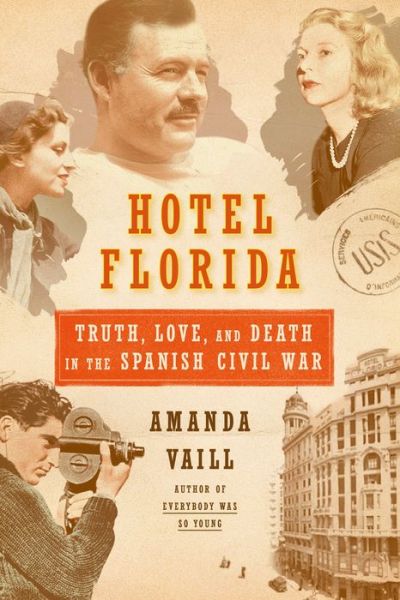
During the Spanish Civil War, Madrid’s Hotel Florida was a meeting point for war correspondents, press officers and foreign intellectuals. Amanda Vaill (Everybody Was So Young) uses the hotel as a focal point to examine the war through the lives of three men and three women. These six individuals–all leftists of various stripes and pedigrees, converging on Spain from all over Europe and the U.S.–allow Vaill to range freely through the history of the war, which raged from 1936 to 1939.

Vaill follows her subjects chronologically, shifting locations through Francisco Franco’s rebellion against the Popular Front government and the events that led up to the Spanish Civil War. Arturo Barea of Madrid serves as a censor for the Propaganda Department, finding his leftist politics and commitment to truth well matched by his new assistant Ilsa Kulcsar, who comes from an Austrian resistance cell and speaks many languages. Meanwhile, Ernest Hemingway feels stifled in Key West; a new war to cover provides him with an excuse to get away from his wife and find fresh material to revive his stagnant writing. The attractive young journalist he’s just met, Martha Gellhorn, is also eager to get to Spain. Finally, a young man named Endre Friedmann is exuberantly pursuing his passion for photography in Paris when he meets the charming Gerta Pohorylle. They set off for Spain together with their ideals on their sleeves. Taking new names–Robert Capa and Gerda Taro–they will find fame and love and change the face of war photography forever. One of them will die on Spanish soil.

In addition to explaining the complexities of the Spanish Civil War, Hotel Florida lives up to its grand subtitle. Vaill examines the meaning of truth as conceived by each of her six players–writer, journalist, translator, censor, press officer, photographer. Their romances, all born of war, and the deaths to which they bear witness bring emotion and heartbreak. Buttressed by plentiful research, Vaill’s prose exhibits touches of Hemingway’s own writing style and a gift for narrative that keeps Hotel Florida accessible and engaging.


This review originally ran in the April 15, 2014 issue of Shelf Awareness for the Book Trade. To subscribe, click here.


Rating: 8 ideals.

John Muir and the Ice that Started a Fire by Kim Heacox

The carefully researched and engaging story of John Muir, Alaska’s glaciers and the movement they built together.

muir ice

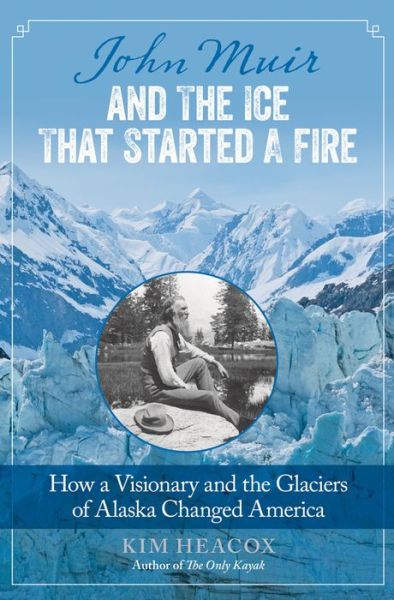
John Muir and the Ice That Started a Fire is neither a straightforward biography of Muir nor a simple study of the global significance Alaska’s glaciers. Rather, Kim Heacox (The Only Kayak) is concerned with the relationship between Muir and the glaciers that rivaled Yosemite in his affections, and the impact that pairing had.

From a humble background in Scotland and Wisconsin, and between stints as a surprisingly apt businessman, Muir lived as a self-described tramp, ardent nature lover and student of flowers, trees, mountains and–upon finally reaching Alaska–glaciers. His famed role as author and activist came late in life, and not easily: he found writing hard work and political activism distasteful, though necessary. However, Muir made perhaps the greatest impact on conservation of any individual in United States history.

Heacox meticulously researched and lovingly describes Alaska’s rivers of ice and Muir’s path toward them, his emergence as writer and preservationist, and his far-ranging influence in legislation, literary legacy and new traditions–including the birth of the conservation movement as we know it. Though often descriptive rather than persuasive, Heacox lends his own voice to the cause in his final chapters: “To debate [climate change] is to give credibility to an argument that shouldn’t exist.” He closes by adding the arguments of Aldo Leopold, Bill McKibben and Derrick Jensen to Muir’s, in the interest of preserving our wild spaces–thereby continuing Muir’s work.


This review originally ran in the April 11, 2014 issue of Shelf Awareness for Readers. To subscribe, click here, and you’ll receive two issues per week of book reviews and other bookish fun!


Rating: 8 little dogs.

A Walk in the Woods by Bill Bryson (audio)

In A Walk in the Woods, Bill Bryson describes his experience on the Appalachian Trail. He and his family had just moved to New Hampshire and he discovered the trail almost literally in his back yard, and decided, what the heck? he’d try walking it. At the last minute, an old friend agrees to join him, to his relief (now he won’t be alone out there with the bears); this old friend turns out to be overweight, a smoker, recently sober, and in no shape for such a lengthy walk in the woods, but they set off nevertheless, beginning to walk the AT in Georgia and headed for Maine.

a walk in the woodsOh, Bill Bryson, you funny, infuriating man. I have had a love-hate relationship, as they say, with this book. Bryson is very amusing, and this is his strongest suit; at his best, he had me giggling aloud on the train during my commute, which I try not to do because that’s weird, right? But he can be downright annoying as well. I’m not sure what he conceives this book actually is; amusing memoir? (For which, grade B+, at least.) Nature tale? (C-, on which more in a moment.) Camping satire? (Please stop.) His ineptitude at the outdoorsiness might be funny to somebody, but I just find it obnoxious and …well, kind of stupid. On the other hand, he hiked the Appalachian Trail for months, you guys, completing nearly 900 miles of it, and I have to respect that, as I’ve never done any such thing. But with such an opportunity to tell us about the AT, he spends a great deal of time telling us what poorly prepared rookie campers he and his friend Katz are; the trail itself is often just background, if even that. The book was 1/3 through before he even mentions a view, let alone describes one; and precious few times from then on. In fact, I think I’ve answered my question: Bryson conceives of this book as an amusing memoir, and the fact that it takes place on the AT is mere coincidence and in no way important to the story he has to tell.

When he rails against our destruction of natural areas and our Park Service’s poor management of those lands, he does a fine job, and I both learned something and enjoyed the polemic; but then he pulls punches, as when writing about tree diseases:

A great tragedy, of course. But how lucky, when you think about it, that these diseases are are least species-specific. Instead of a chestnut blight, or Dutch elm disease, or dogwood anthracnose, what if there was just a tree blight? Something indiscriminate and unstoppable, that swept through whole forests? In fact, there is. It’s called… acid rain.

No, Bryson, it’s called people! Call a spade a spade! Sigh.

Later in the book, when Bryson and Katz (the brunt of all the best jokes) part company temporarily, Bryson shifts focus a bit toward the history of the AT and gets less jokey. I appreciate this content, but it lacks the sparkle of his more humorous writing. In other words, I felt that A Walk in the Woods struggled throughout with an identity crisis.

The audio edition is good, I’ll say that without qualification. William Roberts’s reading is hilarious, and suits Bryson’s writing voice well. The book is absolutely at its best when describing Bryson & Katz’s mishaps on the trail, and only mildly interesting (for those interested in such things) when it leaves their narrative to wander the AT on a more intellectual level. One final pet peeve: as far as I can understand, Katz and Bryson do a lot of littering. Katz repeatedly handles the frustration of his heavy pack by dumping gear, and I don’t think there are garbage cans out in the woods. (I hope not.) There are a cigarette pack and three butts discarded by Katz at an important point. This makes me ANGRY. Littering on the AT?!

Representative quotation:

I had come to realize that I didn’t have any feelings towards the AT that weren’t confused and contradictory.

Me too, Bryson.


Rating: 5 cream sodas.

I wasn’t sure whether to go with 4 or 5; but I did finish the book, so there’s that.

The Empathy Exams by Leslie Jamison

An essay collection that earnestly examines feelings–the author’s and the world’s.

empathy

Leslie Jamison follows her debut novel, The Gin Closet, with an essay collection that has earned her the Graywolf Press Nonfiction Prize. The Empathy Exams opens with Jamison’s experience as a medical actor. In this role, she is given a character, complete with props and not only symptoms, but behaviors: body language, failure to make eye contact, dishonesty. In portraying deception, or a pretended lack of self-knowledge, Jamison contemplates what it is to feel, how we communicate what we feel and what we do with these communications.

While all her essays are linked by the topic of empathy, their subjects range widely. One essay about incarceration deals with a man serving time for mortgage fraud who continues to declare his innocence; another covers the case of the West Memphis Three and the documentaries about them that so moved Jamison as a young woman. “Morphology of the Hit” studies Vladimir Propp’s Morphology of the Folktale, which Jamison calls “a map for storytelling,” and she uses that map to construct a narrative of the random act of violence she experienced in Nicaragua.

Within the context of pain, both injury and chronic illness receive repeated treatment. The Barkley Marathon, a grueling, almost unfinishable race through Frozen Head State Park in Tennessee, is presented both as a subcultural phenomenon and a subtext for pain. Jamison attends a conference for Morgellons patients–who believe they are infested with fibers and foreign matter crawling out of their skin–and the few doctors who will take them seriously; she finds herself responding with such empathy that she is in danger of catching the disease herself. She also leads readers on two “Pain Tours,” closing with the specter of female pain, and female guilt over pain–making the studied choice to apologize for neither.

Throughout these varied topics, Jamison makes references to many thinkers and influences, from Lucy Grealy (Autobiography of a Face), Susan Sontag and Frida Kahlo to her own friends. Her essays often dwell in the theoretical and the academic; she is interested in philosophies, and admits to difficulty experiencing, recognizing and sharing her own emotions–a difficulty that occasionally manifests in pedagogy. However, readers will finish with no doubt she is sincere in her quest to own, identify and comprehend empathy.


This review originally ran in the April 3, 2014 issue of Shelf Awareness for the Book Trade. To subscribe, click here.


Rating: 4 itchy patches.

Not a great rating, right? Reminder: when I write reviews for the Shelf I work to (mostly objectively) state what is of high quality about a book, and who might like it and why; if applicable, I mention who might want to steer clear. When I rate the books here, I am stating my personal reaction. I think Jamison did good research & does some good writing; but the academic & theoretical nature of these essays didn’t appeal to me. I was hoping for a more emotional reaction to the world; and specifically I was interested in the medical acting concept, which received relatively little play time. I wonder if *I* have an essay to write about empathy, based on my experiences working in a cancer hospital. I don’t know that I’m ready to write it right now; but if/when I do, it will be more emotional and less cerebral than these essays here. Not better or worse; but this is how my personal reaction – the personal appeal this book had for me – rates The Empathy Exams.