Worn Stories by Emily Spivack

A meditative collection of short, accessible memoirs documenting the meaning of clothing.

worn stories

Emily Spivack’s fascination with the past lives of clothing led her to create a website, wornstories.com, on which she collects “sartorial memoirs” from friends, family, acquaintances, celebrities and everyday strangers. Now her book, Worn Stories, assembles those accounts. They are short, and generally recorded as told to Spivack but are occasionally written by the contributor. Each brief narrative is accompanied by a photograph of the item, against a white background, adorned at most by a clothes hanger. The text describes how the speaker came to own the article, or what took place in and around it that made it worth keeping–sometimes for decades. A dress, a pair of shoes, a hat or accessory conveys an emotion or an experience: love, loss, accomplishment. They may symbolize a place or a time in a life, or remind us of what we don’t want to forget.

These vignettes are at turns hilarious (humorist John Hodgman’s long-sought Ayn Rand dress or trucking manager Pamela Jones’s party dress), silly (reporter Jenna Wortham’s sequined top) and poignant (creative ambassador Simon Doonan’s Lycra shorts or writer/bartender Kelly Jones’s tie-dyed wrap skirt). Some have historical significance: Holocaust survivor Dorothy Finger had an ill-fitting suit made from a piece of wool fabric that was the only thing she saved from her life in Poland.

Spivack speaks directly to her reader only in a brief introduction. The collection of contributors’ reports forms a whole that is entertaining, thoughtful and loving of the universal tales we have to tell about the garments we carry through our lives.


This review originally ran in the August 29, 2014 issue of Shelf Awareness for Readers. To subscribe, click here, and you’ll receive two issues per week of book reviews and other bookish fun!


Rating: 8 stains.

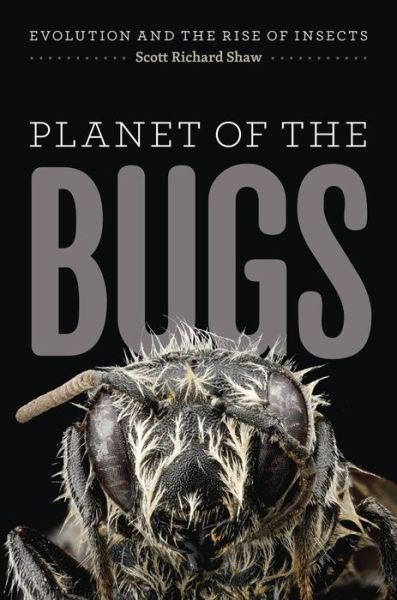
Teaser Tuesdays: Planet of the Bugs: Evolution and the Rise of Insects by Scott Richard Shaw; and Texas State Things

Teaser Tuesdays is a weekly bookish meme, hosted by MizB of Should Be Reading.

bugs

Yes, we just teasered this one last week. I’m sorry, I couldn’t help it. (This is just a segue to talk about the great state of Texas, anyway.)

Several times I have run across the concept, in this book, of a state fossil. For example,

The state fossil of Maine, Pertica quadrifaria (an Early Devonian land plant), provides a nice place to start. This is a rare and distinctive state fossil, compared to others that we’ve discussed so far.

Others discussed so far include the state fossils of Wisconsin and Pennsylvania (two different trilobites).

I had never encountered the idea of a state fossil before; how interesting! Of course the first thing I did was go looking for Texas’s state fossil. According to The Paleontology Portal:

Texas does not have a state fossil, but it does have a state dinosaur, as well as a fossil for its state stone (petrified palm wood). Pleurocoelus was a large herbivorous sauropod dinosaur that lived during the Early Cretaceous (~ 140-110 million years ago).

Which just sent me searching further. And what did I learn! We all know about the state flower (Texas bluebonnet), state tree (pecan), state mammal (small) (the armadillo), and state motto (“Friendship”). But who knew we had an official state cooking implement (the Dutch oven)?? or a state tartan (Texas Bluebonnet tartan)?? And a state molecule, no less! I wonder how many other states have a state native pepper as well as a state pepper (other). And on and on. Yes, I used Wikipedia. And I am fascinated.

Thank you, Planet of the Bugs, for this side-venture.

This quotation comes from an uncorrected advance proof and is subject to change.

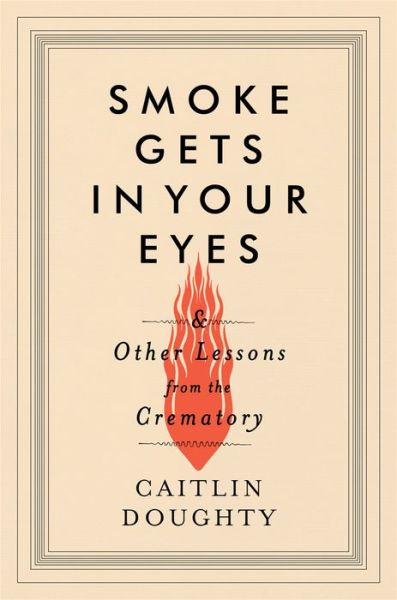
Smoke Gets In Your Eyes (& Other Lessons from the Crematory) by Caitlin Doughty

A young woman’s mortuary career and enthusiasm for death inform an entertaining and thought-provoking memoir.

smoke

At 23, Caitlin Doughty had an undergraduate degree in medieval history and a lifelong fascination with death. Interested in turning her preoccupation into a profession after a move to the Bay Area, she found it surprisingly difficult to get a job in the mortuary business without relevant experience, but eventually secured a position as crematory operator at Westwind Cremation & Burial in Oakland, Calif. In just a few months of working with her deadpan boss Mike, socially awkward body-transport driver Chris and jovial embalmer Bruce, Caitlin learned a great deal, as she relates in her debut, Smoke Gets in Your Eyes.

She learned how to cremate bodies (do the larger people early in the day, babies at the end), what exactly happens after the oven (bones have to be ground down in a special blender to create the uniform ashes the family expects) and how to pick up a recently deceased body from a family at home (mostly, keep your mouth shut). She learned that dead people aren’t really scary, once you get used to them, and came to believe that wired jaws and copious makeup are less attractive and less respectful than simply letting the dead look–and be–well, dead.

In her memoir of “lessons from the crematory,” Doughty shares tidbits of research into the death rituals and mythologies of other cultures throughout history: Tibetan sky burial, the dutiful cannibalism of the Wari’ people in the jungles of Brazil, ancient Egyptian embalming techniques. She points out a central difference between contemporary Western practices and theirs: the Wari’ and others conform to a system of beliefs, where our so-called modern death-disposal techniques arise from a fear of mortality and a need to hide dead things away. In her experience at Westwind, and later in mortuary school, Doughty developed her own value system, emphasizing an honest relationship with our mortality and a frank acceptance of and love for our dead.

Doughty’s research, musings and anecdotes about the crematory are charmingly conveyed in an earnest yet playful voice, brimming with surprising humor as well as insight. Her coming-of-age tale encompasses love and life (and death), and her appeal for a new cultural approach to the end of life is refreshingly frank and simple at the same time that it is profound. Despite addressing a subject that will strike some as morbid or unpleasant, Doughty is an engaging and likable narrator,and Smoke Gets in Your Eyes is thoughtful and approachable.


This review originally ran as a *starred review* in the August 21, 2014 issue of Shelf Awareness for the Book Trade. To subscribe, click here.


Rating: 8 dresses.

Teaser Tuesdays: Planet of the Bugs by Scott Richard Shaw

Teaser Tuesdays is a weekly bookish meme, hosted by MizB of Should Be Reading.

bugs

I am choosing my teaser sentences today off the very first page of the charmingly titled Planet of the Bugs (although it is not quite a book beginning, since these are not the first lines). What wonderful examples of evocative, lovely writing, though; I couldn’t help but share.

As the songs of frogs, katydids, crickets, and cicadas emanated from the forest, my boots sloshed along the pathway. Typical of San Ramon, it had been raining all day, the trail oozed treacherously slick with slippery mud, and water was everywhere. On mushroom caps sprouting from a rotting log by the trail, silvery droplets rolled to the edge, clung briefly shimmering – then fell away. The sounds of water were all around, bubbling and gurgling over mossy rocks in the river, chattering in nameless streams and rivulets. A light mist was still falling, and the emerald vegetation, dappled in a hundred shades of green, was dripping and glistening with raindrops.

Doesn’t that just make you want to dive right in – bugs or no bugs?

This quotation comes from an uncorrected advance proof and is subject to change.

guest review: Fire Season by Philips Connors, from Tassava

reviewYou will recall from way back my original post about this very fine book, and my dad’s review of same. Now I have another to add to the accolades.


fireFrom his website, I’d like to share with you my buddy Christopher Tassava’s review (even with the undeserved praise in that opening line).

My ridiculously well-read friend Julia recommended that I read Fire Season, a book-length essay by Philip Connors on his work as a fire-tower lookout in the mountain forests of New Mexico. Connors’ writing is amazing, evoking both the wildness of his setting (which I now have a deep desire to see firsthand) and the civilized nature of his work, which aims, at its base, to preserve what man values in nature. I loved lines like

Time spent being a lookout isn’t spent at all. Every day in a lookout is a day not subtracted from the sum of one’s life.

which seems as true for my favorite outdoor activity (riding bikes!) as it does for being a lookout.

Connors’ skills at crafting prose are matched by his skills at explaining the American perspectives on fire and on wilderness. Much of the book concerns how the U.S. Forest Service – Connors’ employer – has understood the primordial force of wildfire, and how it has reacted to it. The historical material is fascinating on its own (someone seriously proposed clear cutting the Rockies to prevent fires!) and as context for Connors’ own stints in the watchtower. Not all of the fires he spots garner a response from the Forest Service: some are left to burn acres and miles of forest, contributing to the endless natural cycle of burning and growth.

But Connors also adds his voice to the conversation about what wilderness is, and what it’s for. He comes down in favor of preserving wilderness for its own sake: not as a place for humans to “recharge” but as a place apart from humans and, I thought by the end of the book, better than we are.

Glad you loved it, Tassava! Next up is Dirt Work, which I believe he is also loving. Stay tuned.

The Big, Bad Book of Botany: The World’s Most Fascinating Flora by Michael Largo

A quirky illustrated reference guide to the oddities of the plant world and botanical history.

largo

Broccoli as we know it today comes to us as a product of early bioengineering (by the Etruscans around 800 B.C.). Eve’s forbidden fruit may have been not an apple, but a fig. In Aztec culture, virgins were not permitted to look upon the lusty avocado fruit on the tree. The blister bush contains chemicals that interact with human skin and then combust upon exposure to sunlight. In Greek mythology, the artichoke was created when Zeus became angry with his mistress and transformed her into the thistle as punishment. Bamboo blooms only every 65 or 120 years, and when it does, rat populations explode. Nutmeg has mild hallucinogenic properties.

From Absinthe to Żubrówka (“widely known as the plant that makes the best Polish vodka”), The Big, Bad Book of Botany is not your standard reference book. It is far from comprehensive; Michael Largo (The Big, Bad Book of Beasts) instead hopes to entertain and educate by focusing on plants with odd characteristics and their history and roles in different cultures, including medicinal uses both current and bygone. Entries are alphabetically ordered (although some take a little hunting: oleander is filed under B for “Be-Still Tree”), and accompanied by some 150 illustrations by the artists of the Tropical Botanic Artists collective. Some entries include tips on gardening or on avoiding poisoning.

Simply written with an eye for humor and cocktail-party-friendly trivia, this botanical exploration can serve as a coffee-table piece or conversation starter. Just don’t mix up your yew with your yerba.


This review originally ran in the August 5, 2014 issue of Shelf Awareness for Readers. To subscribe, click here, and you’ll receive two issues per week of book reviews and other bookish fun!


Rating: 5 petioles.

Teaser Tuesdays: We Make Beer: Inside the Spirit and Artistry of America’s Craft Brewers by Sean Lewis

Teaser Tuesdays is a weekly bookish meme, hosted by MizB of Should Be Reading.

beer

I was all over this title, as you can imagine. (Husband would like to point out that “we” don’t make beer. He does. I am quality control.) Sure enough, it only took a few pages to find a few memorable and evocative lines to tease you with:

As the glass is set gently back on the table, the beer drinker’s tongue pokes out to get one more taste off the lips before they open to reveal a quick smile. The stresses of the day’s work are slowly washed away, with layers of lacing on the glass standing as tombstones memorializing each of the annoyances from the previous eight hours.

Anybody else ready to knock off for the day already?

This quotation comes from an uncorrected advance proof and is subject to change.

did not finish: Wall, Watchtower and Pencil Stub: Writing During World War II by John R. Carpenter

When is it fair to criticize a galley for its mistakes?

Full disclosure: I was sent a pre-publication galley copy of this book. The errors I am about to complain about may be corrected in the final published product. However, I am doubtful. This is a well-finished, glossy-covered galley, and my observation is that such copies rarely undergo massive revamps, which is what this one would need to satisfy my complaints. [Even when I have received unfinished copies, including typed manuscripts on loose pages, I’ve found far fewer errors than this.] I have found the odd typo in ARCs and galleys I’ve been sent, or the odd note clearly intended for someone in the editorial process (“need caption here” or “photo credit?”). What I see here looks to me like more of a consistent stylistic choice. Still, it’s only fair to point out that the final publication will be different from this one in some ways. I definitely like the concept, so I hope corrections are made… many of them.


pencil stubI read through the preamble, the preface, and chapter 1, which concludes on page 15, and I couldn’t take any more. I found distracting multiple uses of a comma to connect two independent clauses, as in:

The outcome is no longer in doubt, the names of the victors and defeated are well-known.

Correct grammar would demand either a semicolon or a conjunction to connect these two clauses, or alternatively, they could be two sentences entirely.

The outcome is no longer in doubt; the names of the victors and defeated are well-known.

The outcome is no longer in doubt, because the names of the victors and defeated are well-known.

The outcome is no longer in doubt. The names of the victors and defeated are well-known.

A few more:

Hillary was a pilot, in the first chapters of the book he presents himself as arrogant and immature.

Hillary did not survive the war – he died in January 1943 – but he was unequivocal, his whole act of writing and his book were an act of communication with his readers: a call to end delusions.

Again, I read 15 pages, and these are just a few examples I chose out of many.

Other usage oddities:

It could have ended entirely different.

(Differently, I’m sure he means…)

The realization by a civilian he could be treated as an insentient thing often came suddenly.

This is the only one that strikes me as possibly a simple mistake, the omission of a word that would have made the sentence flow easily and understandably, so the reader could pay attention to content and put away her red pen.

I feel like I read this concept somewhere, or maybe I made it up, but it seems a good rule of thumb to me that a galley should not be judged negatively on the basis of a few errors throughout, that one assumes will be corrected in final publication. However, at the point where those errors are prolific enough to be distracting, they must be addressed. After all, publishers send out galleys to promote the upcoming book, don’t they? It would seem to be very counter to that cause to send out a copy so full of errors that I can no longer pay attention to the purpose of the book. That was the case here, and I couldn’t continue.

For those interested in the quite attractive topic of “writing during WWII,” you might still want to check out the final version of this book. But maybe browse its pages first to see if this consistent misuse of commas is corrected. Or maybe you’re less sensitive than I am…

Teaser Tuesdays: So We Read On by Maureen Corrigan

Teaser Tuesdays is a weekly bookish meme, hosted by MizB of Should Be Reading.

so we read on

I am quite over the moon for the latest book about The Great Gatsby, by NPR’s Fresh Air book critic, Maureen Corrigan. It’s called So We Read On. Please note that even the title of this book is a nod to the complexity of language. Presumably if we were to hear Corrigan speak about her book (as, since she works in radio, I hope we will), we would know what I am still wondering: does she say “so we read on,” rhymes with feed, current tense? or rhymes with head, past tense? I love this ambiguity.

But wait! There’s more. In the opening pages, Corrigan shows that she will have a sense of humor even while exhorting her audience about the importance of her topic:

When we make our first chain-gang shuffle into Gatsby, we spend so much time preparing for standard test prompts on the eyes of Dr. T.J. Eckleburg and the color of Gatsby’s car and – above all – the symbol of the green light at the end of Daisy’s dock that the larger point of the novel gets lost. It’s not the green light, stupid; it’s Gatsby’s reaching for it that’s the crucial all-American symbol of the novel.

One main premise of her book (which is very friendly and accessible, by the way) is that most of us, who read Gatsby for the first time in high school or even middle school, are too young or distracted to fully appreciate it on that first try. I rather liked it in high school (I was a pretty enthusiastic English student, believe it or not), but I am absolutely on board with her larger point.

Recommended! Stay tuned.

This quotation comes from an uncorrected advance proof and is subject to change.

vocabulary lessons: The Fish in the Forest by Dale Stokes

If you’re interested: see other vocabulary lessons as well.


fish forestAs you know, I found the salmon’s story in The Fish in the Forest simply mesmerizing. I also learned a lot – and not just about salmon. Here are some vocabulary words I had to look up.

epiphytes attach to their host plants for support and as a means to reach more sunlight… but are traditionally classified as non-parasitic”: “There are epiphytic plants that grow on trunks and branches high in the forest canopy…”

relict, “a surviving species of an otherwise extinct group of organisms”: “The present salmon populations in the Pacific Northwest stem from relict populations that have been extant since the last ice age…” (I suspected a typo here for “relic” – this being a pre-publication proof edition, typos would not surprise. But no, I learned something new here. “Relict” is perfectly appropriate.)

trophically, “of or relating to nutrition”: “Even when not preying on salmon directly, humpbacks are linked to them trophically because they feed on fishes that compete with salmon for food.” Further explained a little later on within the book itself: “The troph in heterotroph and autotroph implies nourishment…” In other words, what we’re talking about here (in context) is organisms that are linked on the food chain, or the food web. They are trophically linked.(Another that looked like a possible typo; except that “tropically” would have made no sense in context!)

collocate, “to occur in conjunction with something”: “The other two races have overlapping ranges along the coast but seldom interact or collocate.”

semelparous, “reproducing or breeding only once in a lifetime” (or, to put it more bluntly, once they breed, they die): “Their life history of anadromy and semelparity transports millions of tons of salmon flesh into nutrient-poor freshwaters that then shape the entire Salmon Forest.”

gestalt, “the general quality or character of something”: “All living things possess a unique gestalt…”

I had previously come across the concept of anadromy (I don’t recall where) and looked it up (defined: “ascending rivers from the sea for breeding”); but finding it repeatedly in this book made me curious about the pronunciation of anadromous: “…the critical return to freshwater to spawn is called an anadromous life history…”

I like a good vocabulary lesson alongside a fine reading experience – don’t you? Or does reaching for the dictionary frustrate you?