Teaser Tuesdays: The World of Raymond Chandler: In His Own Words, edited by Barry Day

Teaser Tuesdays is a weekly bookish meme, hosted by MizB of Should Be Reading.

chandler

Yes, it’s true, I just recently did a book beginning; but Chandler is just so quotable (thus this whole book, of course). I couldn’t let this one pass us by.

I write when I can and I don’t write when I can’t, always in the morning or the early part of the day. You get very gaudy ideas at night but they don’t stand up.

That first sentence is unclear: which condition happens always in the morning or the early part of the day? the can, or the can’t? I choose to believe that it is the can; many respected writers (ahem Hemingway) do or did their best work in the mornings. I am certainly a morning person myself. And I like this idea that our nighttime ideas are “gaudy”; I think that’s perfect. I get ideas at night, but they never stand up to sunlit scrutiny. What about you?

This quotation comes from an uncorrected advance proof and is subject to change.

book beginnings on Friday: The World of Raymond Chandler: In His Own Words, edited by Barry Day

Thanks to Rose City Reader for hosting this meme. To participate, share the first line or two of the book you are currently reading and, if you feel so moved, let us know what your first impressions were based on that first line.

chandler

I love the Chandler quotation that opens the lovely introduction to this collection of his writings in little snippets. I had to share.

I’m just a fellow who jacked up a few pulp novelettes into book form… All I’m looking for is an excuse for certain experiments in dramatic dialogue. To justify them I have to have plot and situation; but fundamentally I care almost nothing about either. All I really care about is what Errol Flynn calls “the music,” the lines he has to speak.

I think that is a fine way to note what sets Chandler aside, which is in many ways the quintessential gruff wit of hard-boiled, pulpy dialog. (Or dialogue.) I love it.

This quotation comes from an uncorrected advance proof and is subject to change.

We Make Beer: Inside the Spirit and Artistry of America’s Craft Brewers by Sean Lewis

Anecdotes and observations of American craft brewing that will make readers thirsty.

beer

Sean Lewis was working as a sportswriter in 2010 when he got his first writing assignment from Beer Advocate–a profile of the infant Blue Hills Brewery in Canton, Mass. He worked there as an unpaid intern, learning the brewing ropes, and admired what he calls “the Tao of the brewmaster.” Many brewery tours and interviews later, in We Make Beer, he relates the “spirit and artistry” of craft brewers from coast to coast, from garages and barns to the largest brewhouses in the nation.

Lewis visits with major players (Boston Beer Company, Sierra Nevada, Stone), younger, smaller efforts (Nebraska, Jackalope), brewpubs and production breweries, and explores various approaches to the concept of growth. For example, Sheepscot Valley Brewing Company has chosen to stay local to Whitefield, Maine, and the community has repaid that effort, while West Coasters Sierra Nevada and Lagunitas have recently opened East Coast locations to serve their expanding markets. In language that will make readers thirst for a well-crafted pint, and with graceful transitions between topics, Lewis undertakes what is clearly a labor of love–much like the businesses he writes about. His celebration of the women and men of craft brewing is both accessible to the novice (see his one-page appendix on the brewing process, and explanation of the pronunciation of “wort”) and thoroughly rewarding for the beer aficionado. A comment about a collaboration between three breweries is equally applicable to the larger concept of Lewis’s book: “It just seemed like a fun thing to do.”


This review originally ran in the September 26, 2014 issue of Shelf Awareness for Readers. To subscribe, click here, and you’ll receive two issues per week of book reviews and other bookish fun!


Rating: 8 pints, naturally.

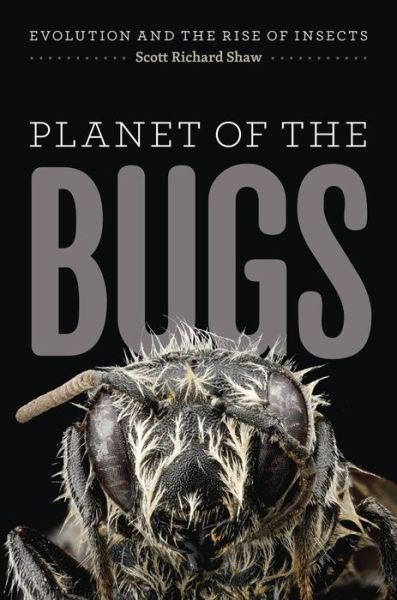
Planet of the Bugs: Evolution and the Rise of Insects by Scott Richard Shaw

An impassioned view of insect evolution and the awesome implications of bugs for all life on earth.

bugs

Scott Richard Shaw has been collecting bugs since he was four. Now a professor of entomology at the University of Wyoming, he shares his passion for these creatures and their cosmological significance in Planet of the Bugs.

The scope of this work is immense. Shaw begins with the Cambrian period, more than half a billion years ago, by examining the sea-dwelling arthropods that first developed body armor and mobility, and then follows them through prehistory and into the modern day. He argues for the predominance of insects, as they are Earth’s most diverse and adaptive animals and thus the best survivors over time. The dinosaurs were impressive, and we like to emphasize the importance of our own human species in earth’s history–he criticizes this human-centrism throughout–but Shaw makes an excellent case that insects “literally rule the planet.”

Planet of the Bugs is packed with intriguing trivia. Parasitic flies feed in turn on the blood of vampire bats; caddisflies are “nature’s most adept architect,” building portable, protective cases for themselves using the natural materials around them; the griffinflies of the Carboniferous period (which looked something like huge versions of the modern dragonfly) had wingspans of two to three feet; female sawflies and wasps choose the sex of their offspring.

Shaw boggles the reader with his enthusiasm and expertise, and reveals a playful side. Among his many encyclopedic turns, he waxes philosophical and indulges in metaphor and even humor, resulting in a surprisingly accessible and entertaining read. A love of bugs is not required.


This review originally ran in the September 23, 2014 issue of Shelf Awareness for Readers. To subscribe, click here, and you’ll receive two issues per week of book reviews and other bookish fun!


Rating: 7 old wings.

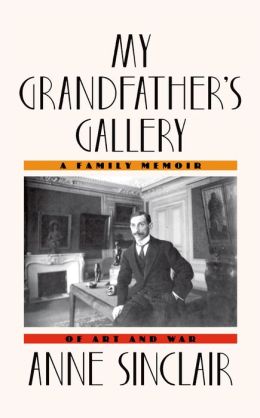
My Grandfather’s Gallery by Anne Sinclair

Investigations by an art dealer’s granddaughter into paintings stolen in World War II France.

grandfather

Paul Rosenberg was a successful art dealer in Paris in the 1930s, a friend to and advocate for Pablo Picasso, Georges Braque and Henri Matisse. A Jewish man, he fled his home in Vichy France in 1940, fearing for his family, his livelihood and his collection of modern masterpieces. From his new home and gallery in New York City, he campaigned for the rest of his life to recover the many valuable paintings and sculptures he lost during the war, looted by Nazis and French collaborators.

Journalist Anne Sinclair didn’t pay much attention to her maternal grandfather’s life and work as an art dealer until he was long dead. In examining old papers, however, she discovered a story that moved her and that represents the experience of many French artists and art professionals, whose collections were stolen and never returned. In My Grandfather’s Gallery, Sinclair writes that she “wanted to create an homage to my grandfather, a series of impressionist strokes to evoke a man who was a stranger to me yesterday, yet who today seems quite familiar.”

Many unidentified paintings continue to lie in museum basements throughout France even now, “awaiting the return of those who will not come back.” Sinclair, like her grandfather, acknowledges that lost lives trump lost art; but the spoliation of priceless paintings constitutes an important piece of her family history, as recorded in this deeply felt memoir. Despite an occasionally awkward translation to English, My Grandfather’s Gallery is a powerful history made personal.


This review originally ran in the September 19, 2014 issue of Shelf Awareness for Readers. To subscribe, click here, and you’ll receive two issues per week of book reviews and other bookish fun!


Rating: 5 letters.

Teaser Tuesdays: The Brewer’s Tale by William Bostwick

Teaser Tuesdays is a weekly bookish meme, hosted by MizB of Should Be Reading.

brewers tale

“A history of the world according to beer”! Who’s surprised that I needed to read this?

There is no great shortage of written words regarding beer’s important place in history: that it is part of what brought European settlers to New England; that it helped us preserve grain & feed ourselves, and take in liquid when water was unsafe to drink; that it drove us to establish settled civilizations (& agriculture). But just as I learn something new from every brewery tour I take, even into the dozens, I haven’t yet reached the point of satiation on beer-in-history. Here’s something I hadn’t quite considered in these terms before:

…if beer’s essence can be distilled to one idea, it’s this: beer is made. Our first recorded recipes were for beer because beer was the first thing we made that required a recipe, our first engineered food. Wine, for example, just happens – a grape’s sugars will ferment on their own, without a human touch; even elephants and butterflies seek out rotting fruit. But grain needs a modern hand to coax out its sugars and ferment them into alcohol.

And these lines come from the introduction! (Libraries show up on page 2.) You have my attention…

This quotation comes from an uncorrected advance proof and is subject to change.

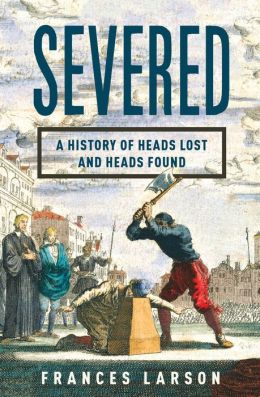
book beginnings on Friday: Severed: A History of Heads Lost and Heads Found by Frances Larson

Thanks to Rose City Reader for hosting this meme. To participate, share the first line or two of the book you are currently reading and, if you feel so moved, let us know what your first impressions were based on that first line.

severed

This one is eye-catching, no? The first few lines follow suit:

Josiah Wilkinson liked to take Oliver Cromwell’s head to breakfast parties. The broken metal spike which had been thrust through Cromwell’s skull at Tyburn, 160 years earlier, provided a convenient handle for guests to use while examining the leathery relic over their devilled kidneys.

It gets a little more gruesome from here, as you might expect, but gratuitous gore it isn’t. It looks (early on) to be a thoughtful examination of the heads in our history, from an anthropological standpoint. And assuming you’re up for, you know, severed heads – I think it will be quite good.

This quotation comes from an uncorrected advance proof and is subject to change.

So We Read On: How The Great Gatsby Came to Be and Why It Endures by Maureen Corrigan

An impassioned guide to The Great Gatsby by a highly qualified and devoted fan.

so we read on

NPR’s Fresh Air book critic Maureen Corrigan (Leave Me Alone, I’m Reading) didn’t like The Great Gatsby the first time she read it for school when she was a teenager. But after teaching and lecturing about it for decades, her enthusiasm and ardent passion for F. Scott Fitzgerald’s classic novel infuse So We Read On (a title that spins off the novel’s famous closing line).

Corrigan argues that “if there is such an animal [as the Great American Novel], then The Great Gatsby is it.” She feels that many readers who encounter Gatsby for the first time in high school or even middle school are too young and inexperienced to appreciate it fully; many will unfortunately and unnecessarily form a dislike for a book that they might learn to love later in life. She also debunks a widespread interpretation of the novel as a grand, decadent celebration of materialistic American culture; it is, rather, an enormously subtle criticism of a class system that Fitzgerald felt had snubbed him.

In exploring these and other ideas, Corrigan undertakes a close reading of the text, examining language and punctuation and considering the context of the Roaring ’20s, the Lost Generation, Fitzgerald’s literary colleagues (including his “frenemy” Ernest Hemingway) and family (the famous or infamous Zelda). Despite her scholarly method, Corrigan’s work remains resolutely accessible to the everyday reader. Indeed, those who haven’t encountered Gatsby since high school are her intended audience. With humor and even the occasional pun, Corrigan offers the love of a classic novel to any and all.


This review originally ran in the September 9, 2014 issue of Shelf Awareness for Readers. To subscribe, click here, and you’ll receive two issues per week of book reviews and other bookish fun!


Rating: 9 dives.

Wawahte by Robert P. Wells

Wells tells a haunting tale of three Canadian Indians and abuse during their forced schooling in government institutions.

wawahte

In Wawahte, Robert P. Wells sets out to tell the story of Canada’s First Nation children who were taken from their homes and their parents by the Canadian government and installed in Indian residential schools. For more than one hundred years, from 1883 to 1996, generations of children were subjected to physical, verbal, and sexual abuse, racism, and denigration in these institutions, and were punished for speaking their native languages or practicing their beliefs. As told to Wells by three Indian residential school survivors, these haunting narratives are a familiar but gripping story of Western imperial dominance. While the writing is unpolished, the accounts are nonetheless harrowing and important.

…Click here to read the full review.


This review was published on August 27, 2014 by ForeWord Reviews. 8-29-2014 10-30-23 AM


My rating: 5 nights.

book beginnings on Friday: Older, Faster, Stronger by Margaret Webb

Thanks to Rose City Reader for hosting this meme. To participate, share the first line or two of the book you are currently reading and, if you feel so moved, let us know what your first impressions were based on that first line.

older

I am well pleased with this current read, and want to share.

A year ago, at age 50, I set out on a journey to run my way into a younger self. Just as Henry David Thoreau set off for the wilds of Walden Pond to enter a solitary relationship with nature and understand how to live well, I wanted to enter a deeper relationship with my body and understand how to train it well.

These first two lines tell you what the book is about. This lucky woman spends a year studying on how to be the best marathon runner she can be, with all sorts of science & experts to back her up, and shares with her reader what she has learned. Stay tuned; I like it.

This quotation comes from an uncorrected advance proof and is subject to change.