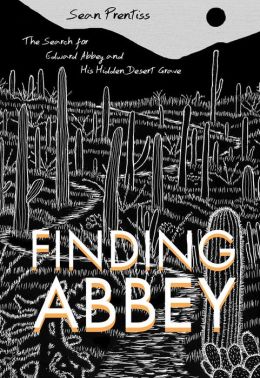
Finding Abbey: The Search for Edward Abbey and His Hidden Desert Grave by Sean Prentiss

A journey to find a famous grave and an exploration of the meanings of environment and home.

finding abbey

After the death of environmental writer Edward Abbey (The Monkey Wrench Gang; Desert Solitaire), four of his friends took his body to the desert near Albuquerque, N.Mex., and illegally buried him in a hidden location. For decades since, the mystery of his final resting place has tantalized Abbey’s fans and followers. Writer Sean Prentiss set out to track down his hero, as related in the thoughtful Finding Abbey: The Search for Edward Abbey and His Hidden Desert Grave.

Prentiss calls on Abbey’s close friends Jack Loeffler, Ken Sleight, David Peterson and Doug Peacock, several of whom inspired characters in Abbey’s fiction. He visits locations that Abbey called home over decades of peripatetic soul-searching. Prentiss does his own exploring, too. Though newly settled in the Midwest for a university job, Prentiss feels enticed by Abbey’s desert Southwest, a region he has also lived and traveled in. As much as he seeks a literal gravesite, or communion with a complicated man, Prentiss equally seeks a home for himself.

Prentiss questions whether he really wants to find the object of his search. “Answers don’t solve questions. Only searching does.” His tone is wondering, and his quest is both personal (where will Prentiss call home?) and universal (what does a sense of place mean to anyone?). His goal might be disrespectful, considering the continued efforts of the Abbey camp to keep the grave’s location a secret, but Prentiss navigates this potential difficulty with sensitivity. While it offers no revelations, Finding Abbey is philosophical, poetic, a creative biography and a loving, evocative celebration of a controversial life.


This review originally ran in the May 15, 2015 issue of Shelf Awareness for Readers. To subscribe, click here, and you’ll receive two issues per week of book reviews and other bookish fun!


Rating: 7 cans of beer.

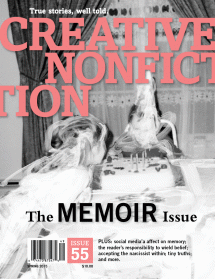
Creative Nonfiction, issue 55: The Memoir Issue (spring 2015)

Full disclosure: I am a fan of the folks over at Creative Nonfiction. I’ve taken one of their classes (and think I’ll do another this winter), and I attended their conference in Pittsburgh last month (also excellent!). This post is about the magazine, which comes out quarterly. Summer 2015 is “The Memoir Issue,” fatter than usual at just over 100 pages, and filled with memoir stories and essays about the genre. I read it from cover to cover, but wanted to share a few of my favorite pieces.

cnf memoirLee Gutkind’s “From the Editor” column asks, “What’s the (Personal) Story?” It’s brief, but a fine backdrop to creative nonfiction and the rise of the memoir. If you ever get a chance to hear Lee speak, expect to be entertained; I enjoyed his energy at the conference, where he helped us all wake up first thing in the morning with his extraordinary energy and enthusiasm. Next, Robert Atwan contributes an essay called “Of Memory and Memoir,” in which he argues that we’d benefit from a better understanding of how memory works (and doesn’t work), in a world where the memoir is so popular and ubiquitous. I think this is an interesting challenge; memoir is often, and appropriately I think, concerned with the line between truth and perspective, and the failure to remember perfectly. I don’t know if we can expect to solve the mystery of our imperfect memories, but Atwan does well to consider the problem.

And then there are the memoir essays themselves, of which I had a few favorites. “Do No Harm” by Kelly Fig Smith won the magazine’s prize, and naturally makes my list. She tells the story of a terrible tragedy that hits her family, and the hospital experience that came with it; it’s about perspective and compassion, I think. “Steps” by Scott Loring Sanders recounts the hike shared by a newly sober father, a young son, and their two dogs; it’s about mistakes and rehabilitation. Gina Warren’s “Girl on Fire” observes the difficulties of caregiving. The final essay, “The Grief Scale,” is by Suzanne Roberts, who wrote Almost Somewhere, a book I rated 6 small but important steps. This essay is better, I think. I like how she circles back at the end to reference the story she thought she was writing, was trying to write; but what we are treated to is instead the story that flows out of her, about being griped at on an airplane, and losing or fearing to lose our loved ones. I found it very effective.

Finally, “The Perils of Perfect Memory” by Daphne Strassmann questions our new reliance on social media and its effects on memory and memoir. Were we better off keeping our memories to ourselves, letting them brew and cure inside us before releasing them on the world? And in “Pushing the Boundaries,” Rolf Potts offers a different format, of found texts assembled in a piece he calls “Age, Formative,” which is powerfully disturbing.

These are just a few of the pieces I found most intriguing; the whole issue is definitely worth taking in. You can view parts of it or buy it here.

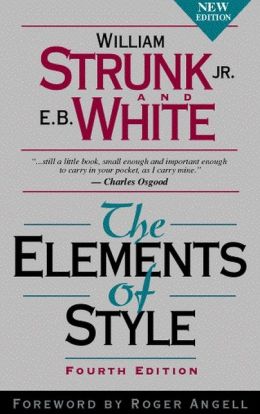
The Elements of Style (fourth edition) by William Strunk and E.B. White

Who can confidently say what ignites the mind? Who knows why certain notes in music are capable of stirring the listener deeply, though the same notes slightly rearranged are impotent? These are high mysteries, and this chapter is a mystery story, thinly disguised.
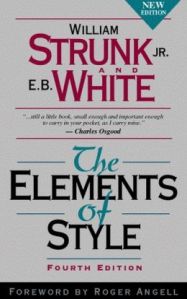
styleI am fairly confident I was asked to use this book in school at some point; but I am quite sure I never read it cover to cover before this. And I’m afraid I can’t recall where I saw it recommended. But I’m very glad I checked it out from my local library, and I think I will go ahead and buy a copy too.

I read the fourth edition, which has four authors. Roger Angell writes the foreword, describing his stepfather E.B. White’s working style. White wrote the introduction for the 1979 edition. The original text was by William Strunk, unaccompanied; Strunk’s student White reworked his professor’s text after the latter’s death, adding a few paragraphs and updating some of the references. An afterword by Charles Osgood wraps things up in the style of the whole book and his three colleagues: brief, succinct, and sparkling.

This is a shockingly enjoyable little book considering that it is “just” a style guide that offers advice about… the overuse of adjectives (especially in dialog), passive voice, brevity, clarity, and the joining of dependent and independent clauses. The Strunk-and-White text is what it exhorts us to be: brief, clear, humble but stylish. I was absolutely charmed throughout.

This is a very small book. Even with its four authors in this edition, it requires the glossary and index to clear 100 pages, and is pocket-sized. However, even being so tiny, it was the first book I’ve read in a long time that required two separate quarter-page bookmarks that I filled with my notes. Thus this long review. Strunk would almost certainly wish for greater brevity, but I’ve included lots of quotations for you to enjoy.

The Elements of Style got me reflecting. I think it’s beautiful that there is such a thing as style in writing; I think it’s lovely that a place like Shelf Awareness needs and has a “house style,” a set of decisions made in advance and for consistency about how we will all write (or, more so, be edited). I love that writing allows for variation within the realm of strict correctness, and that even though this complicates things it also allows for added artistry in what is truly the art of communication.

I thought of my high school English teacher more than once as Strunk discussed style, vs. the clear-cut rules of grammar. Mrs. Smith agreed that we should all learn the (rather more boring) proper, correct, and formal way to write before we began experimenting; the breaking of rules is for the gifted who have earned that right by putting in their time with less exciting work. I will never forget her fine example (and think of her every time I encounter it): Hemingway writes in The Sun Also Rises that Robert Cohn “was married by” the first woman who came along, and this use of the passive voice is both purposeful and effective. Until her students become the next Hemingway, however, Mrs. Smith instructed that we should strive for active over passive verbs. This is the same principle with which Strunk writes,

“But,” you may ask, “what if it comes natural to me to experiment rather than conform? What if I am a pioneer, or even a genius?” Answer: then be one. But do not forget that what may seem like pioneering may be merely evasion, or laziness – the disinclination to submit to discipline. Writing good standard English is no cinch, and before you have managed it you will have encountered enough rough country to satisfy even the most adventurous spirit.

Let me continue: I marked no end of droll phrasings and thought I’d share a few.

White shares a memory of his Professor Strunk:

He felt it was worse to be irresolute than to be wrong. I remember a day in class when he leaned far forward, in his characteristic pose – the pose of a man about to impart a secret – and croaked, “If you don’t know how to pronounce a word, say it loud! If you don’t know how to pronounce a word, say it loud!”

(Strunk was so economical with his words, White tells us, that he had to re-lengthen his speech by repetitions.)

Flammable. An oddity, chiefly useful in saving lives. The common word meaning “combustible” is inflammable. But some people are thrown off by the in- and think inflammable means “not combustible.” For this reason, trucks carrying gasoline or explosives are now marked FLAMMABLE. Unless you are operating such a truck and hence are concerned with the safety of children and illiterates, use inflammable.

Or, on the question of shall vs. will:

A swimmer in distress cries, “I shall drown; no one will save me!” A suicide puts it the other way: “I will drown; no one shall save me!” In relaxed speech, however, the words shall and will are seldom used precisely; our ear guides us or fails to guide us, as the case may be, and we are quite likely to drown when we want to survive and survive when we want to drown.

This is not the only time he considers grammar a matter of life and death.

Muddiness is not merely a disturber of prose, it is also a destroyer of life, of hope: death on the highway caused by a badly worded road sign, heartbreak among lovers caused by a misplaced phrase in a well-intentioned letter, anguish of a traveler expected to be met at a railroad station and not being met because of a slipshod telegram. Think of the tragedies that are rooted in ambiguity and be clear!

The tragedies, indeed! I love the tone. And how lovely are these thoughts about the art of writing in general:

Writing is, for most, laborious and slow. The mind travels faster than the pen; consequently, writing becomes a question of learning to make occasional wing shots, bringing down the bird of thought as it flashes by.

Or,

Writing is one way to go about thinking, and the practice and habit of writing not only drain the mind but supply it, too.

I think I will need to put that up on the bulletin board over my desk.

Some of Strunk’s usage preferences are either not ones I share, or are dated in their particulars and thus less helpful. But the bulk of the advice he gives is both correct and delightfully expressed. Also, it bears noting that his tips are meant to apply to more formal or academic writing; he repeatedly allows that certain forms (a love letter is one example he uses more than once, which is again charming) will take different usage.

As entertaining as The Elements of Style is to read, its utility is alive and well: I found a revelation in rule #11 on page 75, regarding verbs and adverbs in dialog. Something that has always bothered me in my reading, but that I couldn’t have articulated, has been made plain to me and now I will be able to criticize more clearly when I encounter it (and, I hope, avoid it in my own writing). Thank you, Professor Strunk.


Rating: 8 split infinitives.

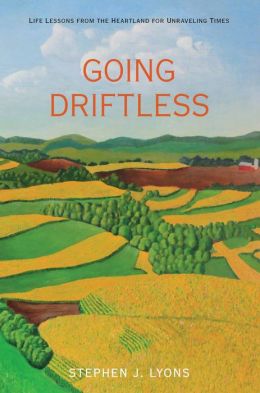
Going Driftless: Life Lessons from the Heartland for Unraveling Times by Stephen J. Lyons

An admiring profile of the successful, low-impact communities in a little-known region of the Midwest.

driftless

Stephen J. Lyons (A View from the Inland Northwest) muses on a remarkable region of the U.S. in Going Driftless: Life Lessons from the Heartland for Unraveling Times. “The Driftless” spans a small area of southwest Wisconsin, northwest Illinois, northeast Iowa and southeast Minnesota. A distinctly unglaciated history defines certain geographic parts, and a network of streams provides variant topography. In these pages, Lyons explores that landscape and the cultural experimentation born there.

The remote hills and valleys of the Driftless are uncharacteristic of the Midwest, and these steeper slopes have sheltered alternative lifestyles for decades, from the back-to-the-landers who arrived in the 1970s to naturalists, traditional and organic farmers, artists, musicians and other singular souls living there today. Over several years, Lyons visits various Driftless communities, chatting with their leaders as well as others encountered by chance. He surveys farming and dairy cooperatives, families living off the grid, small business owners, food co-ops, a Zen monastery and successful planned communities. For example, Lyons outlines the history of Seed Savers Exchange, located near Decorah, Iowa, which curates a collection of more than 20,000 seed varietals from around the world in the public domain. The region attracts those interested in getting back to basics, hoping to build communities.

Going Driftless comprises a series of sketches of people, places and organizations, and steers clear of judgment or conclusion in favor of quiet contemplation. Lyons gently suggests near the book’s end that these unobtrusive lifestyles have something to offer in unstable times.


This review originally ran in the May 12, 2015 issue of Shelf Awareness for Readers. To subscribe, click here, and you’ll receive two issues per week of book reviews and other bookish fun!


Rating: 7 apples.

A Buzz in the Meadow: The Natural History of a French Farm by Dave Goulson

A celebration of biology and the joy of discovery–and a reminder to tread lightly.

buzz
Dave Goulson follows A Sting in the Tale, about his years studying bumblebees, with A Buzz in the Meadow: The Natural History of a French Farm. In 2003, Goulson purchased a 33-acre property with a decaying farmhouse and barn, and turned it into a private nature reserve; here he describes the multitude of wildlife he shares those acres with. His goal is to celebrate the wonder of the natural world–especially insects, which make up roughly two-thirds of known life on Earth.

Goulson charmingly depicts the mating practices of dance flies and the many butterfly species he sees on his daily run, and elucidates the habits of the famously cannibalistic female mantis with added knowledge gained through his own studies. A Buzz in the Meadow is both a descriptive work and a call to arms, a reminder that all species are precious and necessary, even the tiny ones. Goulson repeatedly states that conservationists should look beyond large and charismatic creatures like whales and tigers; he perhaps overstates that “the extinction of the giant panda… would not have any knock-on consequences. There would perhaps be a tiny bit more bamboo in a forest in China,” but his point is well taken–that insects make up the majority of life and play an outsized role in the interconnectivity of biological systems worldwide. Goulson’s tone is personal, even humorously self-effacing, but clearly expert. A Buzz in the Meadow accessibly presents natural science and gracefully offers an earnest wake-up call to conservation.


This review originally ran in the April 28, 2015 issue of Shelf Awareness for Readers. To subscribe, click here, and you’ll receive two issues per week of book reviews and other bookish fun!


Rating: 6 dormice.

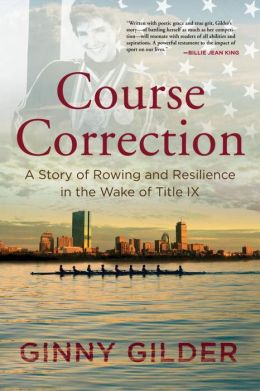
Course Correction: A Story of Rowing and Resilience in the Wake of Title IX by Ginny Gilder

The exertions of rowing crew under Title IX, as a means to overcoming one woman’s demons.

course

Ginny Gilder made her way from a privileged Upper East Side life in New York City to Yale University in 1975, in the early years of Title IX, which legislated equal educational opportunities for both men and women in all areas, including athletics. Ginny had never been an athlete; her family instead emphasized business success and keeping up appearances. But she was drawn to the grace, beauty and seeming effortlessness of rowing, and against the coach’s instincts, joined the Yale crew. The story she tells in Course Correction of collegiate competition, gender discrimination, the long road to the Olympics and personal growth, also yields Ginny’s eventual healing from the emotional traumas of a well-concealed family history.

In four sections titled Catch, Drive, Release and Recovery–the four parts of a well-executed rowing stroke–Gilder details the corresponding segments of her life. Rowing captures her passion; she drives herself through injuries and health problems to an eventual Olympic medal; she learns to let go; she forms a successful family of her own, despite a damaged past.

Gilder’s prose is earnest, heartfelt, expressive and clearly strongly felt. Her narrative will appeal to sports fans and readers dedicated to memoirs of pain and redemption. Course Correction touches on the injustices that Title IX was designed to correct (including a memorable scene involving a nude protest), and portrays a painful, affecting and impressive athletic career. But it is centrally a story of one woman’s lengthy and hard-won coming-of-age and coming home.


This review originally ran in the April 24, 2015 issue of Shelf Awareness for Readers. To subscribe, click here, and you’ll receive two issues per week of book reviews and other bookish fun!


Rating: 7 ankle bracelets.

The Light of the World by Elizabeth Alexander

Moving, charming, delicately lovely, this memoir of a husband’s death offers solace and even joy.

light world

Poet Elizabeth Alexander (Crave Radiance; the 2009 Inaugural Poem) was enjoying a loving, creative, exultant and full life with her husband, Ficre Ghebreyesus, and their two sons, when Ficre died suddenly. The Light of the World is her record of that man–a husband and father, an artist, activist and chef–and of Alexander’s grief and gratitude for the years she shared with him and the love and family they made.

This astonishing and naturally poetic memoir of love and loss is vivid and abundant with sensory detail and bright color. Alexander includes recipes–Ficre’s, and those that comforted her after his death; gives evocative descriptions of his paintings and the food and music they both loved; counts his scars; and recounts her dreams of him. But The Light of the World is not a dream itself: Alexander is lucid and absolutely present. Perhaps to ward off the end it threatens, the story she sets out to tell starts, and starts again, and starts again: at their respective mothers’ pregnancies; at Ficre’s 50th birthday, the week of his death; when they met at a coffee shop in 1996. Alexander then resolutely travels through the tragic center of her story and into the life that follows, when her family of four becomes “a three-legged table,” as she phrased it in her first poem afterwards. In this tender, perceptive portrayal, Ficre comes alive again: an Eritrean native, a peace-lover born into war, a painter also accomplished in photography, collage and sculpture, an eager reader fluent in seven languages and who “could say hello and thank you in literally dozens of other[s],” an activist and member of African, African-American and global communities. “Your life is just like a foreign film!” a friend rightly exclaims, and Alexander’s is just the voice to portray his broadly informed, musical, painterly existence.

Short chapters and language of unrivalled beauty ease a sad story, and Alexander and her sons do make a joyful noise in the end. She feels that she carries “a Santa’s sack of gifts” of Ficre’s thoughts and impressions that belong to her alone; she celebrates the time they had. Their shared dreams, scars, meals, songs, dances, history and family are fittingly and exquisitely honored here.


This review originally ran as a *starred review* in the April 23, 2015 issue of Shelf Awareness for the Book Trade. To subscribe, click here.


Rating: 9 red lentils.

Teaser Tuesdays: Going Driftless by Stephen J. Lyons

Teaser Tuesdays is a weekly bookish meme, hosted by MizB of Should Be Reading.

driftless

I love that there is always something new to learn. In today’s read, I learned about a unique Midwestern region called “the Driftless” that I was unaware of. And how about this rather profound quotation from a local resident.

I ask him if, after forty years in the same place, anything still surprises him.

“Constantly. For one thing, you’re kind of surprised when trees you planted die of old age.”

Stay tuned.

This quotation comes from an uncorrected advance proof and is subject to change.

Teaser Tuesdays: A Buzz in the Meadow by Dave Goulson

Teaser Tuesdays is a weekly bookish meme, hosted by MizB of Should Be Reading.

buzz

My teaser today from A Buzz in the Meadow: The Natural History of a French Farm is actually a footnote, outside the main text; but I felt it was too profound not to share.

Sadly, funding for taxonomic work such as describing new species has shrivelled in recent decades, so such specialists are now hard to find. Soon there may be no experts left in many fields, so there will be no one to go to for help if you suspect you have discovered a species new to science.

It’s a sad world.

This quotation comes from an uncorrected advance proof and is subject to change.

The Wilderness of Ruin: A Tale of Madness, Fire, and the Hunt for America’s Youngest Serial Killer by Roseanne Montillo

A dramatically told history of murder, madness and urban growing pains.

ruin

In The Wilderness of Ruin: A Tale of Madness, Fire and the Hunt for America’s Youngest Serial Killer, Roseanne Montillo (The Lady and Her Monsters) concentrates on a gripping era of Boston’s history. In the late 1800s, a series of seemingly unrelated events are her focus: the Great Fire of 1872, which broke out despite the efforts of a fire chief who saw dangers parallel to Chicago’s Great Fire the previous year; the literary work of Herman Melville, who was increasingly fascinated by the concept of insanity; and, at the heart of this book, the crimes and incarceration of a boy named Jesse Harding Pomeroy.

Montillo follows Pomeroy’s childhood, his early crimes of torture against younger boys and the murders of two small children for which he would be convicted, in a burned-out city struggling with modernization and increasing class divisions. Throughout the investigation and trial, Pomeroy exhibits characteristics that would later have termed him a psychopath, and his lawyers’ attempt to plead insanity is part of the early establishment of precedent in such cases. Meanwhile, Melville experiments in his literature with the labels of monomania and moral insanity, and Dr. Oliver Wendell Holmes applies his medical expertise to the possible role of sensational dime novels in Pomeroy’s crimes, and weighs in on the question of executing the boy, who was 14 years old at the time of his conviction. Using detailed research, Montillo braids together these cross-disciplinary subjects–urban development and class, fire and murder, the definition of insanity and the standards of judicial punishment–into a story that has the momentum of a thriller.


This review originally ran in the March 31, 2015 issue of Shelf Awareness for Readers. To subscribe, click here, and you’ll receive two issues per week of book reviews and other bookish fun!


Rating: 6 piles of ashes.