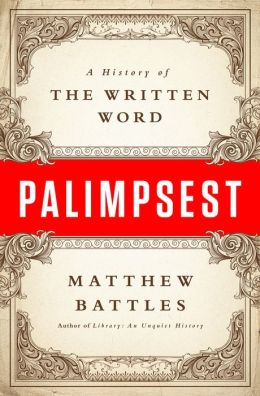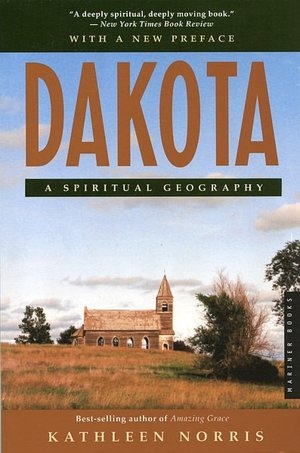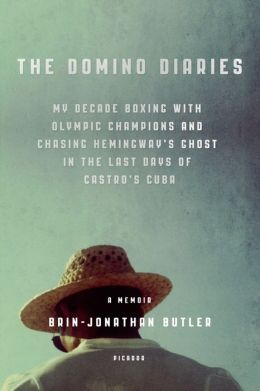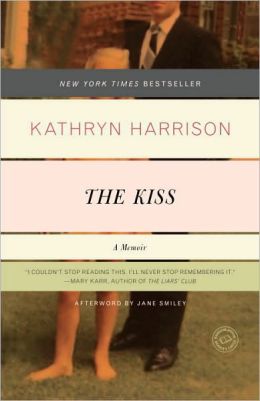
Palimpsest: A History of the Written Word by Matthew Battles

Bibliophiles and historians will be thrilled by this enthusiastic, detailed account of writing throughout history.

palimpsest

Matthew Battles (Library: An Unquiet History) undertakes a mammoth topic with Palimpsest: A History of the Written Word. Rather than an exhaustive chronicle, however, he has composed an extended meditation, a roaming through the centuries. The result is a collection of narrative examinations of writing as a technology, as a means of wielding power, as artistry and as communication. As Battles quotes it, the Oxford English Dictionary defines a palimpsest as a “writing surface on which the original text has been effaced or partially erased, and then overwritten by another.” His imagination is captured by this concept in fact and as metaphor, and Palimpsest is in part a drawn-out consideration of “mind as page” and “page as mind” (the titles of its opening and closing chapters).

Battles’s survey ranges from Mesopotamian cuneiform in the fourth century BCE to early printing, word processing and social media. He explores Thoreau’s views on Confucianism, the clay tablets of The Epic of Gilgamesh, the topology of Chinese hanzi and the fascination with writing in Great Expectations. He is intrigued by the politics of the printing press and various typefaces. Historians, writers, philosophers and anthropologists including Socrates, Claude Lévi-Strauss, Jean-Jacques Rousseau, Emily Dickinson, Ezra Pound and Ralph Waldo Emerson provide context for the philosophical significance of writing. Battles points out that modern computer code is a type of writing as well, “a kind of text that can’t exist on its own. But what other kind of text has ever existed?”

Among other revelations, Palimpsest elucidates the original meaning of “pirated” literature: “not… the unauthorized reproduction of someone else’s work but the use of a printing press without proper license,” and Allen Ginsberg’s modern redefinition of “graffiti,” which originally referred in the Italian to words or ornaments carved in clay forms. How we learn to write changes as our cultural expectations of writing change; thus what Battles calls a “feedback loop” of change in writing technologies perpetuates. In other words, in an increasingly digital age, Battles argues that writing is in flux–as it has been since its beginnings.

Palimpsest returns more than once to an emphasis on writing as art, and Battles’s own writing style is often decorative. The meandering structure of this expansive essay on writing in history, as well as its formal and academic tone, may pose challenges for some readers. However, the reader and writing fan absorbed by writing’s miscellany will find much to love and sink into in Palimpsest.


This review originally ran as a *starred review* in the July 10, 2015 issue of Shelf Awareness for the Book Trade. To subscribe, click here.


Rating: 4 radicals.*

*For my personal reaction to his style, although the quality of writing and research are sure to please other readers.

Teaser Tuesdays: The Writing Life by Annie Dillard

Teaser Tuesdays is a weekly bookish meme, hosted by MizB of Should Be Reading.

writing life

Annie Dillard is wonderful. I am glad to be back with her funny, wise but slight self-deprecating voice – and about writing this time! Wonderful. Check out these words of “comfort” to writers disappointed with their slow pace of production.

It takes years to write a book. Between two and ten years. Less is so rare as to be statistically insignificant. One American writer has written a dozen major books over six decades. He wrote one of those books, a perfect novel, in three months. He speaks of it still with awe, almost whispering. Who wants to offend the spirit that hands out such books? Faulkner wrote As I Lay Dying in six weeks. He claimed he knocked it off in his spare time from a 12-hour-a-day job performing manual labor. There are other examples from other continents and centuries, just as albinos, assassins, saints, big people and little people show up from time to time in large populations. Out of a human population of four and a half billion, perhaps 20 people can write a serious book in a year. Some people lift cars, too. Some people enter week-long sled dog races, go over Niagara Falls in barrels, fly planes through the Arc du Triomphe. Some people feel no pain in childbirth. Some people eat cars. There is no call to take human extremes as norms.

This, I feel, is a great example of her voice: funny and filled with factoids while simultaneously being entirely serious, and empathetic. Of course I am enjoying this audio edition. Strangely, since I mention voice, the voice doing the reading is not Dillard’s. I guess I don’t know what her literal voice sounds like, but the reader here is suiting me fine.

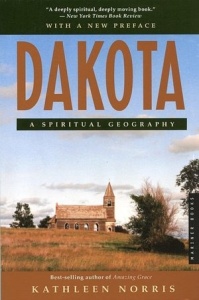
Dakota: A Spiritual Geography by Kathleen Norris

dakotaContinuing in my series of not-new-but-still-important creative nonfiction readings (see The Kiss and The Liars’ Club)… Kathleen Norris’s essay collection, Dakota, is brilliant. I see somewhat where it is dated, discussing for example economic depression and agricultural crisis – because, if anything, things are worse now. But her astute ideas and conclusions are brilliant and in many ways timeless.

You saw my teaser earlier this week, so you know I am impressed. Norris, a poet, of course writes beautifully; it’s worth reading her words for their language alone. But I was really drawn in by the ideas behind them. As her subtitle notes, she is concerned with spirituality and geography. As you might have noted by now about me, I am not attracted to spiritual musings, but I was won over by the geography (in so many senses) and the sense of place which is at the heart of this collection. And I found myself on board for a certain amount of spirituality as well.

My favorite parts of the book were those that characterize place: the physical, biological, climactic characteristics that make “Dakota,” the unique region of both western North and South Dakota that Norris calls home, as well as the cultural and human characteristics of this scarcely populated area. I love thinking about and learning what is definitive about place, in both those senses: the natural, physical, extra-human as well as the human, and the idea of their interconnectedness. (Dakota would doubtless look a little different without people – Las Vegas certainly would – but there is no possibility, I think, of people without place.)

“The Holy Use of Gossip” taught me how gossip can be a good thing, or rather, taught me to recognize as “gossip” (originating, according to the Oxford English Dictionary, from God + sibling) the talking about each other we do in my close group of friends: when we share with each other that one of us is having a bad day, has suffered a loss, needs our help. This is well-intentioned and positive sharing that I’m glad we do. “Gatsby on the Plains” explores how community can lift its members up, or cut itself off from help: Norris writes that

…disconnecting from change does not recapture the past. It loses the future.

Intermittent “Weather Reports” read like short, poetic journal entries of real, specific days, in between more formal essays. They are often not strictly reports on the weather, unless we expand our definitions of weather, which we may well be intended to do.

She writes a good bit about community, how it is formed and how it can be both good and bad for itself. Norris came (back) to Dakota as an adult: her grandparents were of that place, and when she inherited their home there, she and her husband moved in. She is both from there (because the communities knew her grandparents) and not (because she grew up elsewhere, and came in as a traveled, educated, artistic outsider), which made for some interesting challenges for her and her new neighbors. Her 2001 introduction to this edition of the 1993 book discusses her adopted community’s reaction to her work, her publicization of Dakota: in a word, there was both pride and anxiety, but the fact that she stuck around eventually earned her a more thorough local membership.

On the subject of community, I am intrigued by her repeated conflation of the desert, the plains, and even the ocean that once covered this region, with the monastery. She spends quite a few pages throughout comparing the sense of quiet, of great distances increasing mutual support, and contrasting some of the ways in which these communities work. For example, I appreciated the idea (in “Where I Am” – naturally one of my favorite essays) that the monastery is different from small plains towns in that the former has a formal text or rulebook that they agree to live by: in the case of Norris’s central example, Saint Benedict’s Rule, which guides Benedictine monasteries. The small towns often find conflict because they are not all working from one central, agreed upon set of rules or values or ethics.

As an artist, Norris finds that she benefits immensely from the immensity of space in the plains. And she’s got some great stories to tell about sharing art and poetry with her new communities.

I find that prairie people are receptive to a broad range of contemporary poetry, although they’d be unlikely to cross town to attend a poetry reading at a college, were there a college in the vicinity. Their appreciation of the poems I’ve read aloud – from a broad spectrum of contemporary American poets – has given me a new understanding of the communal role of poets, a role poets have mostly abandoned by closeting themselves in academia. Surprises await poets who venture out into the larger community.

I love this idea, that poets (and by extension, many formally educated or academic folks) have quarantined themselves with those like them, and are both failing to share what they have and – more so – failing to learn from others, by locking the doors to the ivory tower.

In a strange counterpoint to this sentiment, though, I found Norris occasionally off-puttingly snobbish about the reading of books: that more prairie people should do it, that they shouldn’t consider themselves well-educated or wise without doing it. Now, don’t get me wrong: clearly I love reading books and find a great deal of value in doing so, and I think books have a lot to offer everyone and everyone should read more. But I also think that people can be very intelligent, wise, and valuable without formal reading; I think that the same prescriptions don’t work for all of us, and I think it’s a shame if she’s found (for example) a great oral storytelling tradition and then laments the lack of book reading. It makes her sound snotty in a way that the rest of the book does not. I like her better than this.

I think it’s just a moment of weakness or misstep, though, because in fact she returns to this subject with more sensitivity in “Status: Or, Should Farmers Read Plato?”

I know as well as anyone that a lot of book learning doesn’t make a person wise (sometimes it simply legitimizes stupidity), but I can’t help but connect the fact that so many Dakotans have been denied access to their culture with the fact that they don’t trust that their own stories are worth much.

The fact of their inhibited access to their own culture and stories is perhaps the best argument for lack of book-reading as a major problem. And she goes on to contemplate what difference it makes to a pig farmer to miss out on Plato, and what Tolstoy and the Brontes can bring to a small-town waitress. I like the nuanced discussion there.

Dakota gets more and more spiritual in its subject matter as it progresses, so that I struggled more toward the end. Discussion of monastic retreats, and Norris’s relationship with the religious communities of Dakota, were often interesting to me; they are in some ways further discussion of community ideals, and I am more or less on board with the spirituality of nature, of relating to wind and sky and plant life. But occasionally there was too much God for my personal tastes. When I encounter the idea of monasteries, and other writers’ productive experiences there, I have found myself tempted sometimes to consider the same; but then I realize what I really need is to just go camping alone.

I found a lot to love and a lot to continue to consider here: about place, about inheritance, about storytelling and relating to one another, about community and about definitions of spirituality. I love Norris’s writing. Although I struggled here and there, or perhaps because I did, this beautiful and thought-provoking book will stay with me and, I think, continue to guide me.


Rating: 8 readings.

The Domino Diaries: My Decade Boxing with Olympic Champions and Chasing Hemingway’s Ghost in the Last Days of Castro’s Cuba by Brin-Jonathan Butler

An amateur boxer’s love affair with Cuba.

domino

Brin-Jonathan Butler first traveled to Cuba as a teenager, hoping “to find a boxing trainer and to meet the guy from The Old Man and the Sea.” He accomplished both goals and over the years that followed made repeated trips, seeking Cuban boxing, baseball and literary heroes, as well as the mysteries of the sequestered island. Eventually, Butler’s fixation on Cuba inspired a forthcoming documentary, Split Decision, about Cuban athletes’ difficult choices between staying and leaving. In The Domino Diaries, he confesses that the project was partly an excuse to stay, having become “homesick for a place [he] wasn’t born to.” His memoir further unravels the relationship he’s formed with this nation.

His escapades make for fine writing and include a tryst with Fidel Castro’s granddaughter and an interview with boxing legend Teófilo Stevenson that results in Butler’s being banned from Cuba. The Domino Diaries is a memoir of boxing heroes and political strife, a study of Castro’s legacies and Cuba’s “Special Period” of economic crisis, and an ode to the grace, joy and sadness of Cuban culture; it is also the personal story of Butler’s own traumas and his mother’s escape from Hungarian communist rule. These threads necessitate some meandering, but the resulting musing tone Butler employs is elegiac and quite effective. Rather than an exhaustive survey of the large and thorny topic of Cuba’s economy, politics and culture, Butler’s memoir is a rambling exploration, appealingly written in a distinctive voice and peppered with wisdoms phrased with lovely wit.


This review originally ran in the June 26, 2015 issue of Shelf Awareness for Readers. To subscribe, click here, and you’ll receive two issues per week of book reviews and other bookish fun!


Rating: 7 cigars.

Teaser Tuesdays: Dakota: A Spiritual Geography by Kathleen Norris

Teaser Tuesdays is a weekly bookish meme, hosted by MizB of Should Be Reading.

dakotaWarning: rave review coming. Dakota is an amazing feat of essays exploring ethics, community, a sense of place and belonging and the meaning of home, geography, the unique features of the western Dakotas, and yes, spirituality (a subject usually sure to turn me away). This teaser post is just that, a preview of what I love about this book. For example,

The word ‘geography’ derives from the Greek words for earth and writing, and writing about Dakota has been my means of understanding that inheritance and reclaiming what is holy in it.

or, quoting Benedictine monk Terrence Kardong,

We have become as indigenous as the cottonwood trees… If you take us somewhere else, we lose our character, our history – maybe our soul.

I would love to share the entire 16 pages of “Where I Am,” which include the factoid that

the absolutely temperature range record for the Western Hemisphere [was] set in 1936 when a town in western North Dakota registered temperatures from 60 degrees below zero to 121 above within the same year.

or “Rain,” a single-page poetry-in-prose listing of the types of rain experienced there. Mind-blowing, right?

I am very impressed, and hope you’ll go looking for your copy of Dakota, too. My review is coming.

The Liars’ Club by Mary Karr

Following on The Kiss, I came to The Liars’ Club intrigued to see how the masters do this work. I have a special interest in memoirs about one’s parents, because I want to write one. And Mary Karr is credited with being one of those, during the “memoir craze” of the 1990’s, who got it right (rather than “just” being sensational). (Yes, Angela’s Ashes is coming up, too.)

Mary Karr grew up in a small Texas oil town she calls Leechfield, on the Louisiana border. Her mother was driving through town between husbands when she got a flat tire, and met the tall, bar-brawling oil man who would become Karr’s father. As a child, the author is devoted to her father and enjoys hanging out at the Legion with the beer drinkers; she is dismayed by her maternal grandmother’s coming to stay with the family as she dies of cancer. Her mother has a nervous breakdown and is institutionalized briefly before moving her two daughters to Colorado and divorcing their father, but the family will reunite in Leechfield once more.

“The Liars’ Club” refers to the beer drinking veterans who hang out at the American Legion bar, playing dominoes and pool, drinking and telling stories. It is only one of the worlds perfectly painted by Karr’s descriptive prose, as well as crab boils, neighborhood gossips, binge-drinking horrors, death threats, jellyfish attacks, bonfires and sexual abuse. I like that she uses sensory details in a way that doesn’t feel forced (a laundry list of inputs) but does give the setting immediacy: the sights and smells of an oil refinery, for instance, are unforgettable.

I love the way in which Karr is a character in her own story. She occasionally refers to what others’ memories assert (in contrast to her own) or adds a detail learned later through her research, but overwhelmingly, the perspective is that of little Mary Marlene, a girl who is spunky, prone to fistfights, and none too bright (she’s so modest), but devoted to her family. She reminded me very much of Haven Kimmel’s young self in A Girl Named Zippy – whose sequel, She Got Up Off the Couch, is perhaps my favorite memoir-of-parent to date. I had to remind myself from time to time that this wasn’t Zippy talking.

Evocative prose, easy-reading descriptive writing, and an eye for both detail and pathos make this a special memoir. But what makes it outstanding is a balance between the horrific and the hilarious, that Karr can tell painful stories with vigor and make me smile or giggle one page later. A well-written, exciting and entertaining, heartfelt memoir it absolutely is, and as a reader, I highly recommend it for pleasurable reading. As a writer, I’d like to pull it apart and see how it works, because the result is powerful and apparently effortless, but I bet it has strong bones. Luckily, there’s this book coming out…


Rating: 8 plastic-wrapped dress shirts.

Teaser Tuesdays: The Liars’ Club by Mary Karr

Teaser Tuesdays is a weekly bookish meme, hosted by MizB of Should Be Reading.

I am loving Mary Karr’s well-regarded memoir about growing up in small-town East Texas. She is amazing in many regards, on which more to come soon; but today I want to talk about describing place. I have a special fascination with a “sense of place” in the books I read, whether they are fictional descriptions of real places (James Lee Burke and Michael Connelly, on Louisiana and Los Angeles respectively) or made-up places (Stephen King’s Dark Tower series, or du Maurier’s Manderley), or nonfiction.

liar's clubAs an example of the latter, I think this paragraph-and-a-half near the beginning of The Liars’ Club is as good as it gets.

If Daddy’s past was more intricate to me than my own present, Mother’s was as blank as the West Texas desert she came from. She was born into the Dust Bowl, a vast flat landscape peppered with windmills and occasional cotton ranches. Instead of a kitty for a pet, she had a horny toad. She didn’t see rain fall, she said, for the first decade of her life. The sky stayed rock-white and far away.

About all she later found to worship in Leechfield was the thunderstorms, where were frequent and heavy. The whole town sat at a semitropical latitude just spitting distance from the Gulf. It sat in a swamp, three feet below sea level at its highest point, and was crawled through by two rivers. Any hole you dug, no matter how shallow, magically filled up with brackish water. Even the wide ditches that ran in front of the houses, where I later learned that sidewalks ought to be, were not enough to keep the marsh from burbling up.

This is an astounding piece of writing. So much is communicated, and much of it we take in without even noticing. On the surface, we see that Mother is from West Texas, where it is dry, and East Texas, where the author grew up, is much wetter. But just below that surface, we get a time-frame (implied by the Dust Bowl reference), and a visual cue from “rock-white”: rocks aren’t white everywhere, but now we have a blinding tone for the “blank” West Texas desert. I love that Leechfield is “spitting distance” from the Gulf of Mexico: another reference to wetness; and “was crawled through” by two rivers? That’s a passive voice usage to compete with Hemingway’s famous one that I keep referring to. I like what is implied by that last line: Karr didn’t know about sidewalks til she left town. Not to mention the onomatopoeic effect of burbling…

Creative Nonfiction magazine has a special issue coming out on the theme of Weather. If they get to publish any passages remotely as communicative and deceptively simple as this one, I think they’ll be glad.

The Kiss by Kathryn Harrison

kissThe Kiss came recommended as a powerfully told memoir, the artful representation of a shocking story that does not rely upon its sensational nature to make an impact, but showcases the author’s craft. All this is true, and I am left feeling very impressed and somewhat reeling, from both the story itself and the writing.

Kathryn Harrison was raised by her mother’s parents, her mother an on-and-off presence in her life who never gives her the love she longs for. She meets her father only twice while she is growing up; his third visit, when she has just turned 20, marks the beginning of a new stage. When he kisses her goodbye at the airport, the air goes electric, and they begin an incestuous affair that will last years and cause the rest of her life to wither. Their relationship is obsessive and controlling: in other words, awfully unhealthy, even if they were not father and daughter; and it will damage her forever.

Clearly there is shock value, and the potential for merely prurient appeal. But Harrison does not let the salacious subject matter carry her book. She examines her troubled childhood, her need for love, her search for herself, and sees in hindsight the way she was preyed upon. Her father is a preacher, who argues that God wants them to be together sexually.

I never question his sanity; although I will come to the point where it is less painful to regard my father as crazy than to conclude that he has been so canny in judgment of my character and its frailties that he knows exactly what language to use, what noose of words to cast around my neck.

She studies her story, and muses on it, and the result is a work of craft, not of voyeurism.

It is still disturbing, make no mistake. You will shiver and flinch, because she doesn’t turn away from the ugly bits – and they don’t all involve her father; there is also the one with the kittens, and the scene in which Harrison’s unloving mother takes her to a doctor to have her hymen broken with medical implements. (Seriously.) But it is also, strangely, beautiful. As a writer, I am here to take notes and see how she does this thing: tells this horrifying story with grace and insight and art. I don’t really understand it, although I hope to.


Rating: 8 photographs.

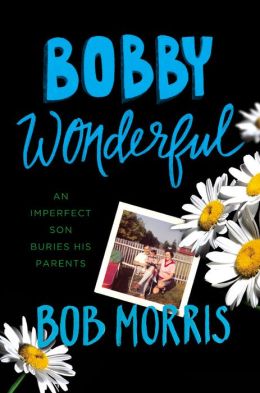
Bobby Wonderful: An Imperfect Son Buries His Parents by Bob Morris

A son’s memoir of love and endings, despite his shortcomings and mistakes.

bobby wonderful

Bob Morris (Assisted Loving; Crispin the Terrible) loved his parents very much, even if he was not always the ideal son. His older brother, Jeff, played that role; Bob was less reliable.

When his mother died, her last garbled word was his name: Bobby. As his father died several years later, he cried out: “Wonderful!” As Morris relives and reconsiders those difficult experiences–caring for each of his parents (more or less), witnessing and helping to make decisions about the ends their lives–he pairs those final words to make the title of his searingly candid memoir, Bobby Wonderful.

Morris is on a much-needed vacation in Scotland, tasting whiskies and forgetting his cares, when he gets the call to come home for his mother’s last days. His first reaction is resentment; the scarf he brings her as a souvenir is a knockoff of the first one he considered. Still, he was there, with Jeff. In the years that follow, Morris helps his father learn to date again and encourages his independence, in part because Morris is busy trying to enjoy his own life. When his father attempts suicide, though, Morris is forced to face uncomfortable questions about his father’s end-of-life wishes, his own devotion and what it means to be a good son.

Morris’s struggles are sensitively told, deeply moving and highly relevant in a world where more and more people face situations like his. Bobby Wonderful is a gift of a book: an often funny but also perfectly serious contemplation of living and dying well.


This review originally ran in the June 12, 2015 issue of Shelf Awareness for Readers. To subscribe, click here, and you’ll receive two issues per week of book reviews and other bookish fun!


Rating: 7 performances.

Lanterne Rouge by Max Leonard

An amiable history of a largely unsung hero pays respects to the last-place finisher of the Tour de France.

lanterne

Even non-cycling fans recognize the Tour de France as the sport’s biggest annual event. Naturally, the attention of the press and the viewer is focused at the front of the race, where attacks, group sprints and winners are born. In Lanterne Rouge: The Last Man in the Tour de France, Max Leonard directs overdue consideration to a different segment of the Tour, where he finds a less fairytale-like but very sincere story.

Ever since the Tour was founded in 1903, as a struggling newspaper’s publicity stunt, someone necessarily has come in last place. Cycling’s term for that someone dates back almost as far: based on his research, Leonard argues that it must have been in use before World War I. The usage of lanterne rouge, or red lantern, is generally accepted as having come from the railroad, where a red lantern lit the last car, letting signalmen know the line behind was clear. Over the last century and more, the lanterne has been variously a joke, a dishonor, an achievement to be sought after and a source of controversy, conflict and myth.

Importantly, the lanterne rouge achieves the accomplishment of finishing the race. The Tour has always had a high rate of attrition. Many men withdraw from the race over weeks of mountain passes, long days and severe weather; some years, Tour staff have pulled trailing riders from the race as well. The lanterne is the man who finishes last–but finishes, a respectable feat.

Leonard makes his passion easily felt as he follows his underappreciated subject. In his prologue (a word not only for a book’s introduction but also a preliminary time-trial stage of the Tour), he attempts to ride a mountain stage of the Tour, but DNF’s (“did not finish”), and his failure will haunt him for the rest of his research and writing process. He then spends nearly two years meeting with surviving lanternes and those who remember them, and searching French libraries for scraps of information about the earliest ones. For example, he pursues the legends of the first lanterne rouge, Arsène Millocheau of 1903 (but did he really finish the race?), and of Abdel-Kader Zaaf of 1951, whose story involves wine, naps, religious difference and colonial racism. Leonard studies the lanterne (and, somewhat resignedly, the leading yellow jersey as well) exhaustively, throughout history and through the race’s evolutions and rule changes. A chapter on drug and doping scandals rounds out any analysis of the Tour, and yes, some lanternes were involved.

Lanterne Rouge is an engaging, exhaustive survey of the last man in the Tour de France, a history, a collection of appealing anecdotes and a psychological consideration of winning and losing. An obvious choice for serious cycling fans, Leonard’s approachable study will also please general sports fans, history enthusiasts and those who root for the underdog.


This review originally ran as a *starred review* in the June 12, 2015 issue of Shelf Awareness for the Book Trade. To subscribe, click here.


Rating: 7 bidons.