
Fourth Genre, volume 18, number 1 (spring 2016)

fourth-genre-18-1

I began this issue of Fourth Genre feeling a little underwhelmed. But I finished impressed, and intrigued. My personal reactions to these essays ranged widely. Some of them just let me down. I read a prizewinning essay that struck me as more interesting in its clever format than in its content; and I felt the same about several of the essays that followed. I gave up on an essay that felt increasingly weighted down by academic, philosophical wordiness. I was frustrated by another that characterized travelers as trying in vain to make themselves more interesting: this writer recommends “an hour-long excursion to the public library” and the purchasing of souvenirs “in your own living room, never having changed out of your pajamas” over real-world experiences. Now, I heartily recommend visiting your public library regularly. But I felt that this writer missed an important point, that some of of us have profound experiences by visiting in person places outside of our daily geographic routine. Of course, this is merely a personal reaction, as they all are.

Some left me a little ambivalent. “Recapitulation Theory” by Mira Dougherty-Johnson struck me. I’m not sure it holds together as a whole for me; but at many points throughout I was fascinated (and not least by the narrator’s role as librarian). The contributor bios indicate that this is part of a larger project, which makes perfect sense. I appreciated the tortoise trivia, and the emotion, in Lawrence Lenhart’s “Too Slow Is How That Tortoise Go: A Carapace in 37 Parts”; but I regretted the on-the-page formatting of text wrapped around carapaces and scutes. I found it distracting – it made reading more challenging – and didn’t feel it added anything that more traditional block formatting of graphics wouldn’t have accomplished.

On the other hand, I found some gems. “Sixteen Forecasts” by Denise Duhamel and Julie Marie Wade was another playfully formatted essay but one I enjoyed more. And I am intrigued by the two authors: how did they put this together? I want to know. “Light” by Kathryn U. Hulings is a powerfully feeling narrative about the trauma of a suffering, self-destructive loved one. Mimi Dixon’s “Anesthesia” is, again, a more traditionally formatted essay but one with more to say. Rachael Perry’s “The Sand Dunes: An Elegy” is scarcely a page long, but deeply lovely and evocative. Jane Bernstein’s “The Incident in My Park” is an electric, disturbing story – that is, a narrative. Not that it’s done entirely straightforwardly. There are time jumps; there is musing. But perhaps what I’m finding here is a preference for narratives (a la Creative Nonfiction). With “Brother Sammy,” Deborah Thompson is a little more subtle in building the narrative that frames her reflections, but in this lovely, short essay, she made me think, and this was another successful piece for me.

And then came the highlights of the journal, beginning with “Animalis: References for a Body, One Winter” by Katherine E. Standefer. She uses a decidedly nontraditional format, something I quibbled with earlier in the journal; but this one worked so cleanly for me. I was aware of the form (footnotes, in this case, and with the relationships between source and note often unclear), but it didn’t get in the way of what I was reading: a personal history in snippets, engrossing and moving throughout. And then! “Animalis” is followed by Standefer’s essay about the essay, “Breaking the Body: On the Writing of ‘Animalis’.” This was the perfect choice for a piece about the piece, both because of its unusual form and because of the story of how it came to be: in a word, slowly. I was captivated! And the loveliness of her lines crosses over to the craft piece, in which she writes

The reference list of our bodies? It is both broken and gorgeous. The shards, glinting light, became the essay’s wrestle.

and

I learned that an unruly essay, controlled by the reins of voice, will hold its readers and deliver them somewhere new.

Things continued to solidify for me, to make sense and to make enjoyable reading, as the journal proceeded with craft essays. After Standefer’s essay and commentary came Lina M. Ferreira Cabeza-Vanegas with “The Peach Orchard” and “On ‘The Peach Orchard’,” which totally drew me in as well: she writes about La Violencia in Colombia in very complex ways using several narratives. I was impressed, and her commentary was equally engrossing. Dawn S. Davies writes “Disquiet and the Lyric Essay” in which we learn a lot about the writer (voice!) as well as consider some questions about what makes an essay ‘lyric.’ The book reviews that follow struck me more as responses to books than reviews of them (although I enjoyed the playful review of Dinty W. Moore’s Dear Mister Essay Writer Guy). In an “Inter-Review” with Wendy S. Walters (in which they discuss each other’s new books), Michael Martone says he

think(s) of publishing as more like political organizing than the gatekeeping of taste and promoting something as “good” or “bad.”

which I found an interesting thought.

All in all, I found immersion in this lit journal a thought-provoking, sometimes frustrating, somewhat challenging reading experience. It’s yielded more reading: I have a play, a song, an essay and a blog post now queued up from references in this issue. I enjoyed some of the writing very much, and some of it wasn’t for me; but that’s the world, and that’s okay. It seems that Fourth Genre appreciates nontraditional formats almost for their own sake, and I’m not sure my tastes run in quite the same way, but there is much here to like. I’ll keep my eyes open.


Rating: 7 hermit crabs.

A Woman on the Edge of Time: A Son Investigates His Trailblazing Mother’s Young Suicide by Jeremy Gavron

The legacy of a mother and her suicide reveals the story of both a woman and a social movement.

woman on the edge

Jeremy Gavron grew up with the faintest of impressions of his mother, who died when he was four years old, in 1965. He didn’t know that her death was a suicide until he was 16, and only decades later did he embark upon an exploration of her life and reasons for ending it. A Woman on the Edge of Time is a record of his examination and tentative conclusions.

Gavron’s mother, Hannah, is a tantalizing character. A talented, magnetic youth, she excelled in acting, equestrian sports and poetry; had an affair with the headmaster of her boarding school; married at 18; earned a doctorate in sociology while raising two young sons; and wrote a feminist text that would be published shortly after her death. In an echo of Sylvia Plath’s suicide two years earlier, she gassed herself in a flat just one street over from Plath’s. And, like Ted Hughes, Gavron’s father all but erased her presence from the lives of her two children.

In chasing this shadowy figure, Gavron corresponds and visits with Hannah’s friends, colleagues and family, and studies letters, diaries and photographs left behind. Along the way, the reader is exposed to English cultural history, particularly in Gavron’s investigations of Hannah’s book The Captive Wife, a qualitative study of young homebound mothers. As he concludes, there can be no thorough comprehension of a suicide or of a mother he doesn’t remember. A Woman on the Edge of Time ends with Gavron’s attempted “narrative verdict,” which though incomplete does offer him some closure.


This review originally ran in the September 23, 2016 issue of Shelf Awareness for Readers. To subscribe, click here, and you’ll receive two issues per week of book reviews and other bookish news.


Rating: 7 gurns.

The Black Panthers: Portraits from an Unfinished Revolution by Bryan Shih and Yohuru Williams

Photos, essays and interviews with rank-and-file Black Panthers “complicate the Panther story in a good way.”

black panthers

With The Black Panthers: Portraits from an Unfinished Revolution, photojournalist Bryan Shih and historian Yohuru Williams seek to tell a nuanced story of the Black Panther Party, one different from the popular conception of gun-wielding “thugs,” chiefly male, in black leather jackets and Afros with the leadership–Huey Newton, Bobby Seale and Eldridge Cleaver–centered in Oakland, Calif.

In pursuit of the rank-and-file perspective, Shih photographs and interviews Panthers or former Panthers, male and female, whose narratives express pride, humility, trauma, frustration and hope. Accompanied by essays solicited from scholars, this collection tells a more complex and sympathetic story. While not uncritical, the authors do champion an interpretation that emphasizes love and service over violence, featuring, for example, party programs like Breakfast for Schoolchildren (in more cities than just Oakland), free busing and ambulance services, free health care clinics and more. Shih’s photographs are striking and expressive, capturing the “humanizing details” he sought.

The Black Panthers is not the complete story: for instance, the “deep misogyny and sexism within the rank and file and leadership” is mentioned but not really addressed. Perhaps there is no complete story–as proven here, the party was made up of diverse members, with varied goals and motivations. Shih and Williams’s objective to expose this multiplicity, and inspire a second look at an energetic but ill-fated cause, is achieved with this intelligent, unapologetic book.


This review originally ran in the September 16, 2016 issue of Shelf Awareness for Readers. To subscribe, click here, and you’ll receive two issues per week of book reviews and other bookish news.


Rating: 8 humanizing details.

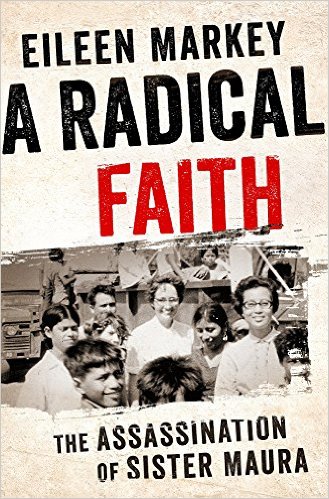
Teaser Tuesdays: A Radical Faith: The Assassination of Sister Maura by Eileen Markey

Teaser Tuesdays is a weekly bookish meme, hosted by MizB of Books and a Beat.

Teaser

“The 1980 murder of four American women – three of them Catholic nuns – by the US-trained El Savadorian military shocked the American public and set off a decade of debate over Cold War policy in Latin America. The women themselves became symbols and martyrs, short of context and background.” (From the back of the book.) A Radical Faith undertakes the story of one of those four women in particular.

radical-faith

Here are a few lines from the book itself to whet your appetite:

Maura was shocked by the discrepancy between the wealth of the mining company and the poverty of her students. But questioning La Luz wasn’t her job or the job of the priests and nuns. They were in Siuna to instill faith, to cultivate a love of God and obedience to the precepts of the church. And anyway, they would remind themselves, the company provided electricity…

(At this point she is working in Nicaragua, not yet El Salvador.) I chose this teaser because it feels like a turning point for the character of Sister Maura. I’m less than 100 pages in, but I feel like what is coming is an important realization she’s about to have: that it is in fact her job to seek justice on earth for the people she’s traveled south to help. We’ll see if I’m right.

This quotation comes from an uncorrected advance proof and is subject to change.

The World in Flames: A Black Boyhood in a White Supremacist Doomsday Cult by Jerald Walker

This vivid, immersive memoir describes an innocent childhood in a terrifying religion.

world in flames

The Worldwide Church of God taught that the Great Tribulation would begin in 1972 and end three years later in a river of fire from which only the Chosen Ones would be saved. Jerald Walker grew up with these teachings looming over his head. In 1975, at the predicted end of the world, he would be 11 years old. In The World in Flames, Walker relates his unusual upbringing in Chicago as the sixth child of blind African American parents, in the black wing of a church that preached segregation as well as fire and brimstone.

Except for a brief prologue and epilogue offering a glimpse of the adult Walker, the whole of this fantastical true story is told from a child’s disarming perspective. Jerry is six when his memoir opens in 1970, and his days are filled with fear. Preoccupied with the coming events and concern for a friend who is not Chosen, he struggles to navigate family secrets, severe corporal punishment and a religion based on threats. As narrator, Jerry is matter-of-fact and innocent about the improbability of his home life. This narrative voice renders an incredible story accessible. Perhaps the most heartbreaking detail is Jerry’s guileless devotion to his church.

Walker (Street Shadows) recounts his growth from wide-eyed child to hapless teen, and finally to skeptic, with immediacy and feeling and without offering judgments. His personal history verges on the absurd, but his telling of it is earnest and unadorned, never sensational. The World in Flames is a difficult story simply and gracefully told.


This review originally ran in the September 9, 2016 issue of Shelf Awareness for Readers. To subscribe, click here, and you’ll receive two issues per week of book reviews and other bookish news.


Rating: 7 lines of scripture recited.

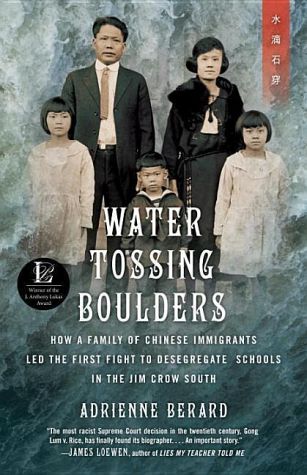
book beginnings on Friday: Water Tossing Boulders: How a Family of Chinese Immigrants Led the First Fight to Desegregate Schools in the Jim Crow South by Adrienne Berard

Thanks to Rose City Reader for hosting this meme. To participate, share the first line or two of the book you are currently reading and, if you feel so moved, let us know what your first impressions were based on that first line.

I am of course intrigued by what the back of this book calls a “vital, hidden chapter of America’s past.”

water tossing boulders

Water Tossing Boulders concerns a Chinese immigrant family in Mississippi, where the children were denied public education in 1924. It begins:

As with all rumors, the stories grew over time, in the long months between June and September, when the air is so thick that gossip is all that circulates. The new students wouldn’t bathe. They didn’t have money to buy books. They didn’t care about learning. They had so many brothers and sisters, their mothers didn’t even know their names.

I guess I’m fascinated to see how a tragic but familiar story of Southern segregation and separate-but-equal schooling applies to a community we don’t normally associate with that story. Stick around.

This quotation comes from an uncorrected advance proof and is subject to change.

Teaser Tuesdays: Gone ‘Til November by Lil Wayne

Teaser Tuesdays is a weekly bookish meme, hosted by MizB of Books and a Beat.

Teaser

gone til november

That’s right, the rapper. Gone ‘Til November is his long-awaited book-form release of his diary from a prison term served in 2010. What can I say, I like the unexpected, and Lil Wayne certainly has a perspective to offer.

Today’s teaser comes from page 1, and makes a true and poignant point:

Isn’t it bugged out how only time will tell?

Yes, sir, it is that.

Stick around for my review to come.


This quotation comes from an uncorrected advance proof and is subject to change.

Love from Boy: Roald Dahl’s Letters to His Mother ed. by Donald Sturrock

Forty years of letters from a beloved children’s author to his mother offer an intriguing, entertaining perspective on both the man and the world.

love from boy

Roald Dahl, renowned for both children’s classics and eerie adult short stories, wrote his first letter home from boarding school in 1925, when he was nine years old; Donald Sturrock (Storyteller: The Authorized Biography of Roald Dahl) edits this collection of previously unpublished letters from Dahl to his mother. In Love from Boy, Sturrock’s minimal narrative appears alongside the epistolary bulk of the text, accompanied by a small selection of Dahl’s photographs and drawings.

Organized in seven chapters by phases of Dahl’s life, the correspondence tracks the growth of a beloved imagination and literary career. Over 40 years, Dahl evolves from funny prankster to crafty storyteller to a more serious and cynical mind, particularly following World War II. Dahl had a thoroughly interesting life even before he began writing in earnest: from English boarding schools to travel and corporate work in colonial Africa, hours logged as a Royal Air Force pilot, diplomatic work in the United States and collaboration with Walt Disney in Hollywood. But Love from Boy also provides a personal perspective on his eye for detail and the absurd, his predilection for pranks, his knack for characterization–“He’s a short man with a face like a field elderberry, and a moustache which closely resembles the African jungle. A voice like a frog…”–and his quirky preoccupation with personal hygiene, especially dental care. Love from Boy is both an endearing glimpse of a much-loved author and a sober view of mid-20th-century world events.


This review originally ran in the September 6, 2016 issue of Shelf Awareness for Readers. To subscribe, click here, and you’ll receive two issues per week of book reviews and other bookish news.


Rating: 7 tubes of Euthymol.

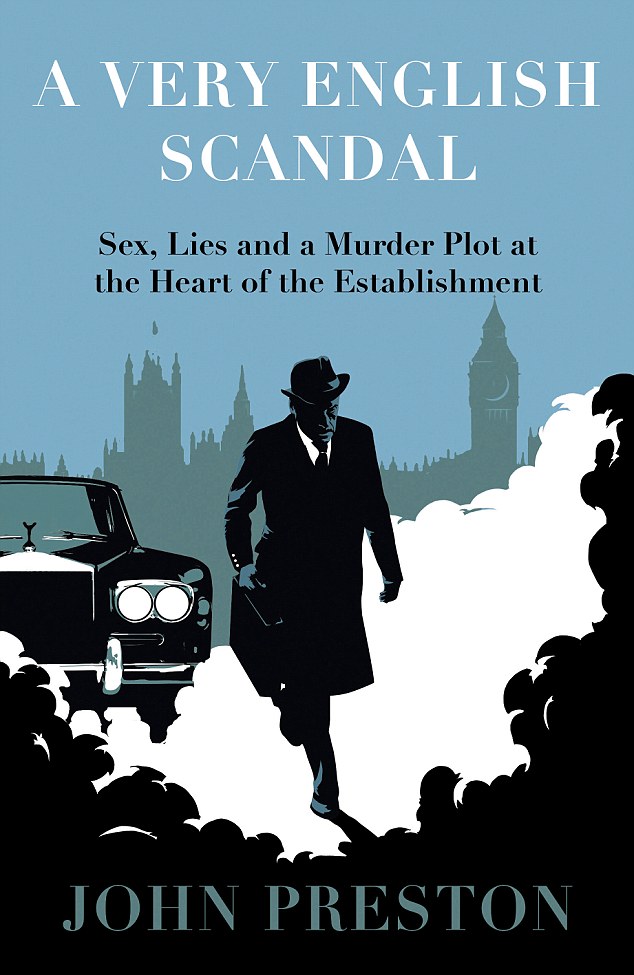
book beginnings on Friday: A Very English Scandal by John Preston

Thanks to Rose City Reader for hosting this meme. To participate, share the first line or two of the book you are currently reading and, if you feel so moved, let us know what your first impressions were based on that first line.

very english

The title of this book alone tickles me.

So begins A Very English Scandal: Sex, Lies and a Murder Plot in the Houses of Parliament:

One evening in February 1965, a man with a fondness for mohair suits, an unusually wrinkled face and a faint resemblance to Humphrey Bogart walked into the Members’ Dining Room at the House of Commons.

I smiled when I read this line, which so tidily sets a scene with those odd descriptive details that bring a character to life. I think this is a great starting sentence, and I’m looking forward to more! Stick around.

This quotation comes from an uncorrected advance proof and is subject to change.

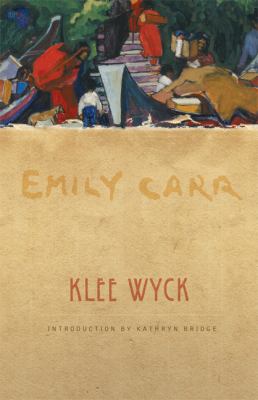
Klee Wyck by Emily Carr

klee wyckKlee Wyck is a collection of short stories–fragments, really, many of them–begun in Emily Carr’s youth and then polished and published in her old age. I’ve written a little about some of these fragments here and here.

First and most importantly, I need to emphasize the story revealed in Kathryn Bridge’s fine introduction. If you are at all interested in this book, it is imperative that you get this edition of it. Here’s why.

Emily Carr is best-known as one of Canada’s finest painters. She was passionate about depicting her home environment of west coast British Columbia, which as she explored it in her teens and twenties in the late 1800s was still mostly unspoiled big forests; but perhaps she was most passionate about the lives, traditions and plight of the Indian or First Nation people she knew there. Their totem poles were among the central themes of her work. She also wrote extraordinarily well, and her writing was concerned with the same issues. The collection Klee Wyck serves largely as an indictment of the white settlers, especially the missionaries, who worked so hard to destroy native cultures. After a first edition by Oxford University Press, publishers Clarke, Irwin and Company purchased the rights to Klee Wyck, and put out an educational version thereof that thoroughly whitewashed Carr’s words and intentions. Bridge details the tragically extensive cuts and edits. And that’s the version of Klee Wyck that was available to so many for so long.

As it stands now, the restored & complete collection I’ve read is lovely, understated but firm. As I said in the teaser posted earlier this week, Carr had a keen eye for clean, tight prose, rather like Hemingway I’d venture. Her sentences are clear and direct, but often glittering with word choice and turns of phrase.

The grating of our canoe on the pebbles warned the silence that we were come to break it.

The sockets had no eye-balls, but were empty holes, filled with stare.

The tent full of sleep greyed itself into the shadow under the willow tree.

(She also has a knack for anthimeria, or the usage of one part of speech for another.)

The tips of the fresh young pines made circles of pale green from the wide base of each tree to the top. They looked like multitudes of little ladies in crinolines trooping down the bank.

The story “D’Sonoqua” about a character in the Indians’ mythology, and the striking, horrifying, awesome totems she inspires, is as striking as the totems Carr describes. In other words, I read her skill with language as parallel to the skill of the carver when she writes

The power that I felt was not in the thing itself, but in some tremendous force behind it, that the carver had believed in.

That clean transfer of force from the thing itself to the receiver is Carr’s gift, too.

And then in contrast is the story “Wash Mary,” a scarcely 2-page sketch of a woman Carr knew when she–Carr–was very small. Its simplicity is its accomplishment; I love that everything we see is everything the child Carr saw, nothing more, and with no added translation of meaning. It’s powerful nonetheless, perhaps because it shows how much a child can see without understanding.

Klee Wyck does address nature and the visual arts, the subjects for which Carr is known. But this book is firmly about people, not trees or totem poles. It’s about a human tragedy, for example the Indian children taken from their parents and villages to Indian residential schools (as I read about in Wawahte). This is why it’s so important to get this edition. Also: gorgeous, clean, precise writing. Emily Carr was a master of several forms. Do check it out.


Rating: 8 strong thoughts.