
Gone ‘Til November: A Journal of Rikers Island by Lil Wayne

Lil Wayne’s prison diary gives a day-to-day account of his time in Rikers Island and a taste of the rapper’s offstage voice.
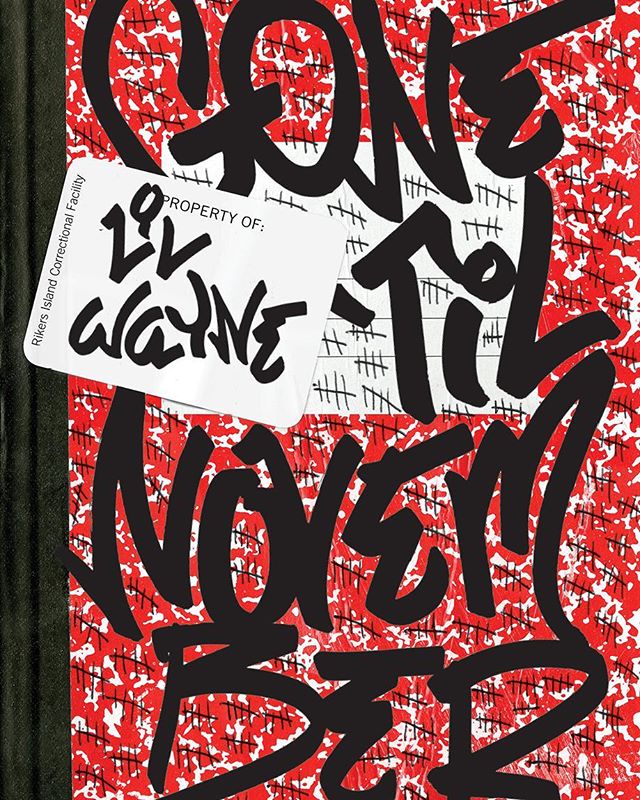
gone til november

In 2010, Lil Wayne entered New York’s Rikers Island Prison Complex to serve a yearlong sentence for illegal possession of a firearm. The New Orleans rapper was in the midst of a record-breaking career: multiple platinum records, Grammy Awards and financial success. In the eight months he spent in Rikers, Wayne kept a slim journal, published as Gone ‘Til November.

Wayne repeats himself: what he eats day to day varies little (the theme is burritos filled with chicken, rice, noodles, Doritos or Ruffles, beef jerky), and each night he does pushups, prays, reads his Bible and listens to ESPN. This monotony is to be expected in a prison diary, and is broken by the minor dramas of Wayne’s visitors, fellow inmates and the corrections officers he befriends. While the odd mention is made of violence occurring in other wings, the celebrity rapper has a relatively safe experience, plagued mostly by boredom. Entries are undated, requiring close attention to mark the time Wayne was incarcerated, from March through November. His slangy, informal tone shines vibrantly throughout.

A diary in which not much happens may sound less than gripping: this memoir will appeal most to Wayne’s many fans, who will find references to other rappers, future projects and Wayne’s lovers and children. But as an account of daily life in prison and its discontents, and as an exhortation to avoid incarceration, Gone ‘Til November offers a rare perspective for general readers as well.


This review originally ran in the October 25, 2016 issue of Shelf Awareness for Readers. To subscribe, click here, and you’ll receive two issues per week of book reviews and other bookish news.


Rating: 6 burritos.

Bayou Magazine, issue 65 (fall 2016)

bayou mag 65Bayou, from the University of New Orleans, is one of the briefer lit journals, which I confess leaves me sort of relieved: easier to get through in a sitting. In turn I’ll pass that brevity on to you.

Three essays grace these pages. “Holiday” by Ann Hillesland is, again, brief (a theme!), and takes a look at a movie that interested the writer when she was a teen, its commentary on her life; she comments in turn. I am sympathetic with this kind of writing, as a book reviewer. “Lifeline” by Patricia Feeney recalls Pat Conroy’s The Death of Santini, for its elegiac look at a rather unloveable family member. In ten pages, it manages a great deal of pulled-back perspective and passage of time; there’s a lot of movement.

My favorite was “The Mending Wall,” by Andrew Bertaina, who is undertaking something like what I hope to undertake in writing about my own mother: seeking the parts we can by definition never know. It also yielded the remarkable lines,

Perhaps you cannot mend things when you are still broken. I will never understand love or people: we are collections of moments, of opinions, of thoughts, not whole.

Overall, these pieces feel a tad less polished than the essays that appear in The Believer or Oxford American, which is not all bad: I’ve written before about the value of amateur art, the feeling of community and of real people efforting, and of movement and progress: we start here, and we improve. It can’t all be Broadway and the NBA; it is heartening to see community theatre and Division III college ball. Also, there has to be somewhere for us amateurs to submit to. I hope this doesn’t sound like faint praise: I enjoyed my time spent with Bayou, and you’ll see more of it here.


Rating: 7 showtimes.

Teaser Tuesdays: Take Me to Paris, Johnny by John Foster

Teaser Tuesdays is a weekly bookish meme, hosted by MizB of Books and a Beat.

Teaser

I am reading a beautiful, sad memoir about a love affair and the death of the beloved to AIDS. Juan was a Cuban refugee living in New York City and training as a dancer when he met John, an Australian history professor.

take-me-to-paris-johnny
John Foster tells this story with some lovely lines, like these.

I have one other memory of that November afternoon: the wind. It whipped off the river sharp and mean, and we were glad to step down from the street into the musty warmth of the subway on our way home. Juan was still living out of the bag of summer clothes that he had deposited, and since retrieved, at the Port Authority Bus Terminal.

Deceptively simple; but can’t you feel the wind? Whipping off sharp and mean really gets it there, for me. As I read this book, I feel like the tone of the title suits it: dreamy, sad, with some whimsy. Look for my review closer to the December pub date.

This quotation comes from an uncorrected advance proof and is subject to change.

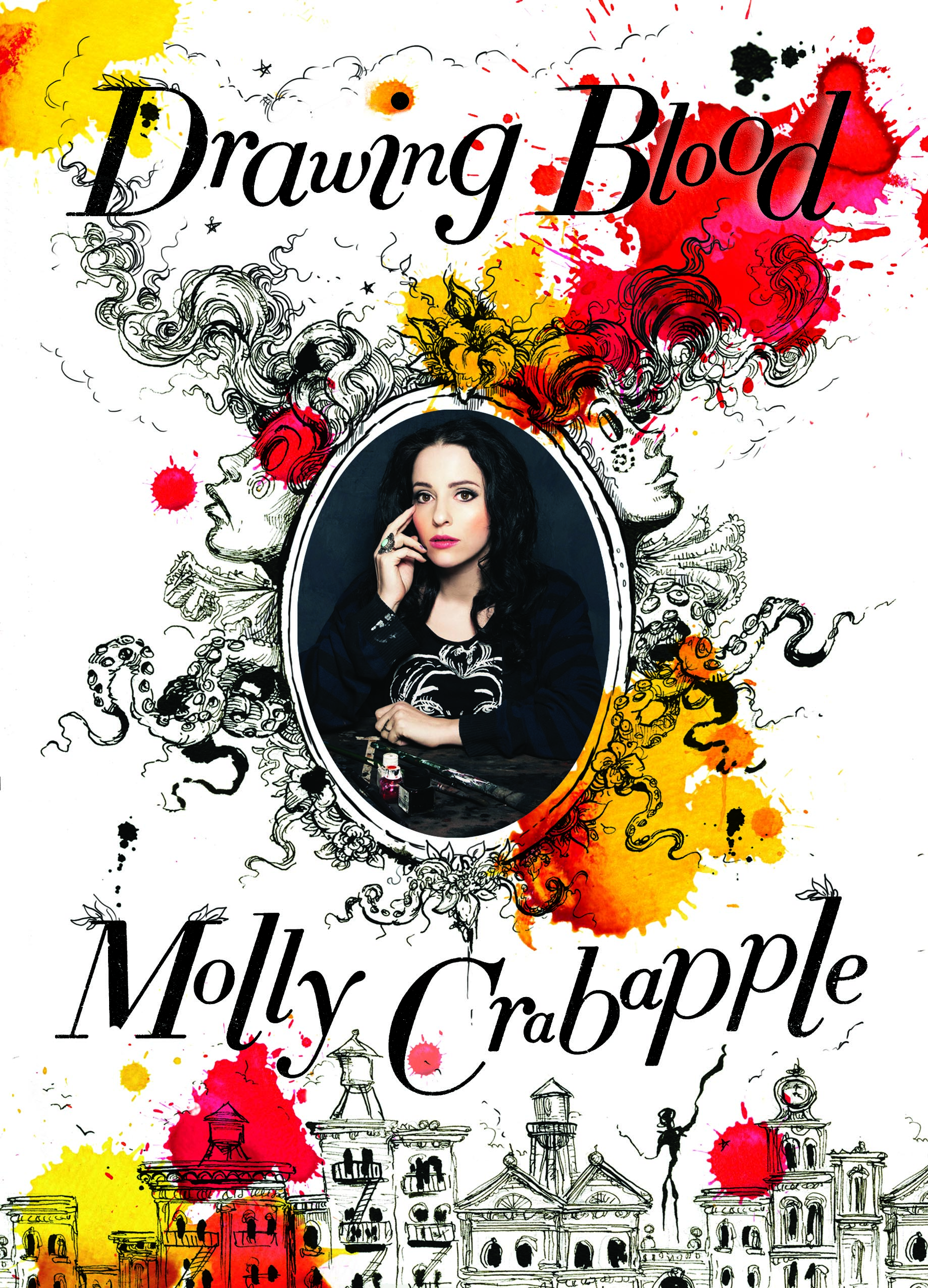
book beginnings on Friday: Drawing Blood by Molly Crabapple

Thanks to Rose City Reader for hosting this meme. To participate, share the first line or two of the book you are currently reading and, if you feel so moved, let us know what your first impressions were based on that first line.

A little departure here from paid reviews of pre-pub books: Drawing Blood was published nearly a year ago. A friend asked me to comment on this memory with visual art included.

drawing-blood
It begins:

I was drawing Khalid Sheikh Mohammed.

I sat in the courtroom at Guantánamo Bay Naval Base, watching a pretrail hearing for the 9/11 military commission in a room bisected by three layers of soundproof glass.

Well, that’s certainly attention-grabbing, and starts us off with the immediate question: who is this person and why is she where she is? I’ll let you know what I learn.

Happy Friday, friends.

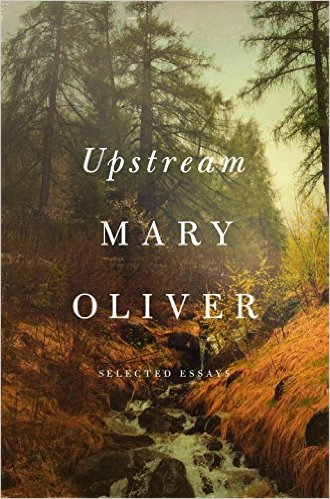
Upstream: Selected Essays by Mary Oliver

In a collection of prose, a Pulitzer Prize-winning poet ruminates joyfully on art and nature.

upstream

Pulitzer Prize-winning poet Mary Oliver should also be known for her prose: thoughtful, joyful and wise, always sparkling with characteristic energy. Upstream collects previously published essays and one new piece, skillfully grouped to chart a philosophical journey and “felt experience” much like that which she attributes to Walt Whitman.

Oliver revisits her childhood, and early instances of the sense of wonder so integral to her poetry, which she has often found in nature. The essay “My Friend Walt Whitman” speaks of a youthful and persistent literary affinity. Others explore natural places and creatures–spider, puppy, bear, bird–and the pleasures of artistic work. The middle of the collection contains slightly longer pieces of literary criticism–rediscovery of and praise for Edgar Allan Poe, Ralph Waldo Emerson, Whitman and William Wordsworth. Poets and the natural world mingle as Oliver invokes Percy Bysshe Shelley while hunting for turtle eggs. Finally, the previously unpublished essay, “Provincetown,” honors the Massachusetts fishing town where Oliver lived for many years. Brief but redolent, this love letter to a place in the passage of time tends to look backward, as do several of the essays immediately preceding it, so that the collection moves toward retrospection.

Upstream serves as an excellent, accessible introduction to Oliver’s work, and despite its largely previously published contents, will satisfy her fans with its fresh arrangement and feeling of movement. These meditations are evocative, lovely and of course poetic, charming in small pieces and as a whole.


This review originally ran in the October 25, 2016 issue of Shelf Awareness for Readers. To subscribe, click here, and you’ll receive two issues per week of book reviews and other bookish news.


Rating: 8 rumors of total welcome.

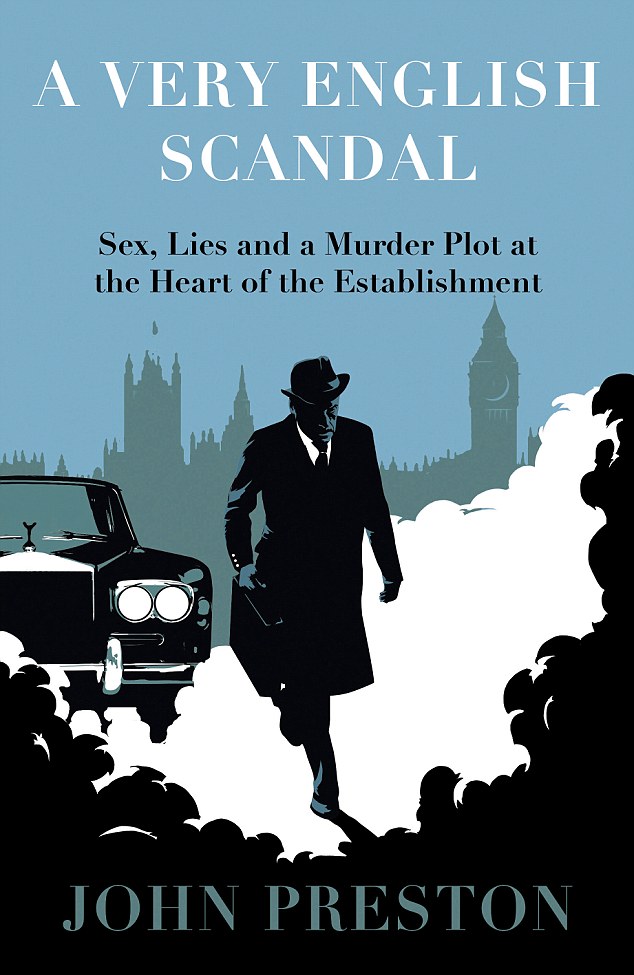
A Very English Scandal: Sex, Lies, and a Murder Plot in the Houses of Parliament by John Preston

John Preston energetically recounts extraordinary crimes of British political high society.

very english

Novelist John Preston turns to nonfiction with A Very English Scandal: Sex, Lies and a Murder Plot in the Houses of Parliament. In this thrilling story, a member of Parliament almost gets away with murder.

Jeremy Thorpe was an MP for the Liberal Party in the 1960s and ’70s, became his party’s leader and looked poised to lead a coalition government. His charisma enchanted everyone he met. But he had secrets. When the battle to legalize homosexuality was being fought, Thorpe had affairs with other men, harassed and abused them, and eventually–when one young man wouldn’t go quietly–conspired to have him killed. After years of posturing and payoffs, and a final dramatic scene of attempted murder worthy of fiction, Thorpe faced charges of conspiracy and incitement to murder at London’s Old Bailey.

Preston tells this salacious tale with a mostly straight face. The characters he portrays are often ridiculous: Thorpe’s relentless optimism and self-importance is countered by his victim Norman Scott’s sad struggles with mental illness, and the worshipful devotions of Thorpe’s friend and helper, David Holmes. Preston’s central source, Peter Bessell, is a fellow MP and fervent friend deeply mired in Thorpe’s intrigues. Bessell is perhaps the most vulnerable character in this drama: a bit absurd, but earnest, he is powerless to resist Thorpe’s magnetism. A Very English Scandal is a story of human weaknesses and outrageous spectacle. Preston’s play-by-play will captivate readers of true crime, British upper-crust history and classic tragedy alike.


This review originally ran in the October 25, 2016 issue of Shelf Awareness for Readers. To subscribe, click here, and you’ll receive two issues per week of book reviews and other bookish news.


Rating: 6 letters.

book beginnings on Friday: Paul Smith’s Cycling Scrapbook

Thanks to Rose City Reader for hosting this meme. To participate, share the first line or two of the book you are currently reading and, if you feel so moved, let us know what your first impressions were based on that first line.

cycling-scrapbook

For one of Shelf Awareness’s upcoming gift editions, I am reading a big, hefty coffee-table book on one of my favorite topics.

Cycling has always been the sport for me. You probably won’t be surprised to learn that I was attracted by its sense of style: things like Fausto Coppi’s sunglasses, Jacques Anquetil’s jerseys and the beautiful graphics on a piece of Campagnolo kit have provided a regular source of inspiration in my work.

But there’s much more to it than that.

I am initially a little amused that Smith finds it obvious that he’d be attracted by cycling’s style, because I don’t think that’s a terribly common reaction today to Lycra-clad roadies on the streets of U.S. cities and towns. I know what he means, of course. And I think his tastes are more understandable in the era he’s referring to, and the more so because he’s British.

I like the way this beginning finishes up with a teaser, too. Aren’t we all anxious to hear what ‘more’ there is to come?


This quotation comes from an uncorrected advance proof and is subject to change.

Teaser Tuesdays, in praise of words: Gods, Wasps and Stranglers by Mike Shanahan

Teaser Tuesdays is a weekly bookish meme, hosted by MizB of Books and a Beat.

Teaser

If you’ll excuse me for reprising the book from last Friday’s book beginning, I couldn’t resist these lines about how the name of the Ficus benjamina came to be.

gods-wasps-and-stranglers

Linnaeus gave the name Ficus carica to the common domesticated fig species after Caria – a region of ancient Anatolia in what is now Turkey. The scientific name he gave the other fig of my childhood, Ficus benjamina, has a more convoluted origin. Cut the tree and white latex will bleed out. Various other species also produce this particular kind of sticky fluid, which people have used for centuries to make perfumes, incense, medicines and other products. This substance is known as gum benzoin, from an Italian interpretation of a Javan word that is Arabic in origin. English tongues mangled the word some more to form ‘gum benjamin.’ So over time, the benzoin trees ended up being called benjamin trees, hence the benjamin fig (Ficus benjamina). I prefer its better-known name – the weeping fig – which it got because, when it sheds its leaves, they fall like green tears to the ground.

Whew! and, isn’t it extraordinary, the journey that term has made through languages and geography to bring a standard “ficus” tree to us? I love language.

The rest of the book is excellent, too.


This quotation comes from an uncorrected advance proof and is subject to change.

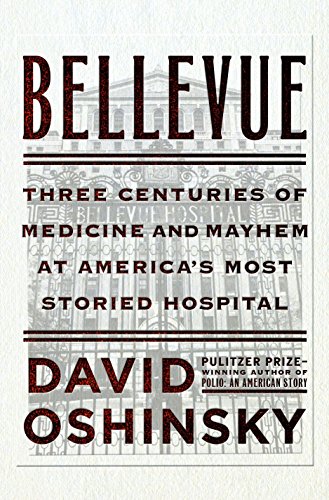
Bellevue: Three Centuries of Medicine and Mayhem at America’s Most Storied Hospital by David Oshinsky

This fascinating history of New York’s famous public hospital provides a microcosm of national and worldwide medical history.

bellevue

Bellevue is one of the oldest and most famous names in United States hospitals, known for housing violent criminals and mental health patients, the homeless and sufferers of rare and exotic diseases. The incredible, multi-layered history told by David Oshinsky in Bellevue: Three Centuries of Medicine and Mayhem at America’s Most Storied Hospital covers medical and general history both national and global. This thorough narrative is wide-ranging and endlessly gripping.

The institution began in 1736 as an almshouse, where the indigent were housed and given rudimentary medical care. From these earliest days, “Bel-Vue” had a reputation for dealing with society’s unwanted. And as Oshinsky shows, in its many incarnations, this reputation is intact. The flipside is that this public hospital has always attracted service-minded professionals pursuing innovation. Before modern considerations of medical ethics, this often meant experimenting on Bellevue’s impoverished patients and their diverse range of ailments: in exchange for charity medical aid, the thinking went, they offered themselves for clinical trials–as painful and medieval as they could be at times. Nevertheless, the hospital became central over the years in battling the yellow fever epidemic of the 1790s, the “Great Influenza” of the 1910s, the AIDS crisis of the 1980s, the September 11 attacks and Superstorm Sandy. Bellevue would see hospitals shift from being considered a last resort, only for those too poor to afford a private doctor’s home visits, to becoming the best medical care available (the development of anesthesia, germ theory and infection control being crucial).

The hospital has enjoyed affiliations with several medical schools, among the U.S.’s earliest and best, including its continuing relationship with New York University. NYU students get training in a premier teaching hospital that still treats an enormous and diverse patient population, while Bellevue gets talented, passionate residents and interns, many of whom remain and make their careers there. The history of Bellevue reflects social struggles, as women, Jews and African Americans gradually gained access to the medical profession, and anti-immigrant vitriol was aimed in turn at Irish, Italian and Jewish populations, among others, as waves of struggling immigrants contributed to Bellevue’s patient population. Bellevue successfully treated New York’s sole Ebola patient in 2014. Its tenuous funding situation (mostly public, and always under attack), high standards of care and public service mission continue.

Bellevue’s beauty and staggering scope lies in these historic, social and interdisciplinary connections. William Burroughs, Sylvia Plath, Charlie Mingus and Lead Belly passed through Bellevue’s history; its physicians have traveled the world and played roles in the scientific advances that have shaped modern medicine. Bellevue hosted the invention of forensic medicine, and major developments in medical photography, child psychiatry and AIDS treatments. Oshinsky (Pulitzer Prize-winner for Polio: An American Story) generally adheres to an impersonal, journalistic style, but his moving portrayal can’t hide his admiration for this longstanding institution. Bellevue is that rare, page-turning history: engaging, smart, clearly written and of broad general interest.


This review originally ran in the October 14, 2016 issue of Shelf Awareness for the Book Trade. To subscribe, click here.


Rating: 9 five-gallon containers of fuel.

book beginnings on Friday: Gods, Wasps and Stranglers: The Secret History and Redemptive Future of Fig Trees by Mike Shanahan

Thanks to Rose City Reader for hosting this meme. To participate, share the first line or two of the book you are currently reading and, if you feel so moved, let us know what your first impressions were based on that first line.

gods-wasps-and-stranglers

Finally we receive mail at the new address! Which means books! Up next on my reading schedule, thanks to US Postal, is this short profile (if you will) of the much-discussed fig.

It begins:

The figs were big orange beacons that lured me from afar. The snake was lime green and venomous and just centimetres from my face.

I love the colors, and the immediacy! That’s a good start.


This quotation comes from an uncorrected advance proof and is subject to change.