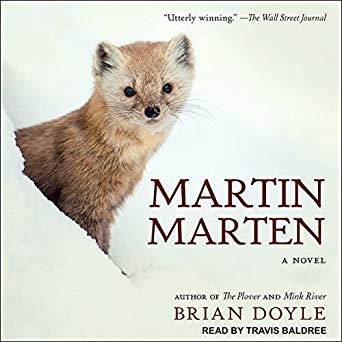
reread: Martin Marten by Brian Doyle (audio)

By coincidence, this book review was next in line when today’s date came up. But it feels perfectly appropriate for this gift-giving holiday, because Brian Doyle is a gift, and I think this novel is my favorite of his.

I have returned to my very first Brian Doyle experience with Martin Marten (originally reviewed here), because I miss him and love his work. Having enjoyed a few other audiobooks of his, I thought I’d try Travis Baldree’s narration.

It’s very good; I enjoyed the different voices for each character, from Maria to Dave to each of Dave’s parents, to Moon and Emma Jackson and Miss Moss and Mr. Douglas the trapper. I thought he preserved the sense of wonder and boundlessness that characterizes Doyle’s work. I found myself not thinking of the narration much, actually, and just living in the world of Martin Marten, and I think the disappearance of an art form’s container is often the highest compliment.

And the book is everything I remembered. As is said early in The Princess Bride, this book has everything it. “Fencing, fighting, torture, revenge, giants, monsters, chases, escapes, true love, miracles…” Well, there’s no fencing here, but there is death and birth and love and fighting and beginnings and endings and the easy connection of the two, and an un-wedding, and blizzards and springtimes and basketball and running and maps and trees and all the animals and plants and beings… Brian Doyle inspires lists like these; he writes in lists like these. He is all-encompassing, in the best and least pretentious way. For example, here is a paragraph that caught my eye this time around.

And deep mysteries too, things that no one could ever explain and in most cases no one ever knew or apprehended or discovered–a new species of snow flea mutating in a dark crevasse on Joel Palmer’s glacier; a blue bear born to two black ones but alive only for a day; a place where trees and bushes and ferns decided to intertwine and make a small green cottage complete with walls and a roof and a door; a cave with the bones of a creature eight feet tall inside; a pencil lost by Joel Palmer at nine thousand feet of elevation on the south side of the mountain, long ago encased in ice and now some twenty feet beneath the surface, waiting to be found in the year 2109 by a young woman named Yvon, who would be amazed that the pencil never wore out no matter how much she used it, as if it had patiently stored up words for two centuries; and much else, more than we could account even if this book never ended and its pages and pulses went on forever, and it was the longest book in the history of the world. Even then, it couldn’t catch more than scraps and shards of the uncountable stories on the mountain, of bird and beast, tree and thicket, fish and flea, biome and zygote. And this is not even to consider the ancient slow stories of the rocks and their long argument with the lava inside the mountain and the seething and roiling miles beneath the mountain, all the way to the innermost core of the sphere, which might be a story of metallic heat so intense that to perceive it would be your final act in this form; another mystery.

A dear friend of mine, nearing the end of her MFA study, read this book on my recommendation and sent me a message that said simply, “my prose is lifeless.” Well, it’s not, but I know what she meant: Doyle’s just jangles with life. I know he is not for everyone. The above paragraph includes a single sentence fragment that is 198 words long. He gushes. But for those of us it works for, I think it works very well.

I wish I could go to live in one of Brian Doyle’s fictional towns. Although it does snow a lot there.

If you love the natural world and are charmed by the idea of not privileging any one species (ahem, humans) over all the rest; if you are excited by the many possibilities for joy in the world, big and small; if you love life, words, all kinds of critters, and even humans; if knowledge for its own sake thrills you; if you are prone to being pleased by lists and wonder–do give the novels of Brian Doyle a try. He has made this world a far better place.


Rating: there is no reason to amend my original 10 tomatoes.

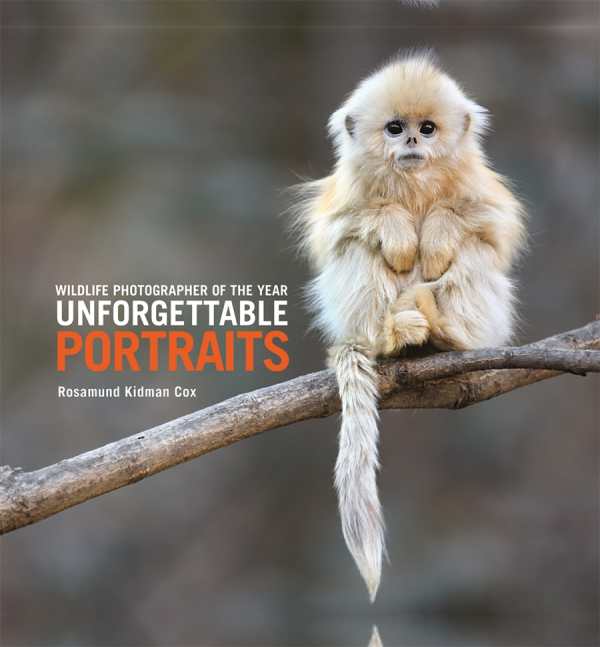
Unforgettable Portraits by Rosamund Kidman Cox

Lions, tigers and bears–and more–light up the incandescent pages of this collection of stunning wildlife photography.

Unforgettable Portraits is a beautiful, large-format collection of images from several decades of the international Wildlife Photographer of the Year competition. Each stunning photo–close-ups and dioramas; elephants, leopards, ants and springtails–gets accompanying text explaining the species, the context, the photographer’s equipment and technique, with an emphasis on endangered species and climate change. Readers meet the Atlantic wolfish, the spotted-tailed quoll and the Namib Desert’s welwitschia, and learn that spirit bears have “a mutation of the same gene that gives rise to red hair in humans” and that the photographer must be part wildlife scientist to get these shots, designing blinds and lying in wait for days, weeks and longer.

These 70 stunning images, by more than 50 photographers from more than 20 countries, would make a wondrous gift for any lover of wildlife, strangeness and beauty.


This review originally ran in the November 5, 2019 gift issue of Shelf Awareness for Readers. To subscribe, click here, and you’ll receive two issues per week of book reviews and other bookish fun.


Rating: 8 whiskers illuminated.

guest review: A Song for the River by Philip Connors, from Pops

Just a few lines, but good ones I think, from Pops about Philip Connors’s latest, which I originally reviewed here.

This week I finished reading this one. All the things you said, and probably more, as you also said. Really difficult reading sometimes (no, I have not read All the Wrong Places).

For me, it was very much an offering of lessons in seeking to fully embrace, process and find peace with loss – of so many different kinds. It’s a careful balance, between complete denial (mainstream versions of distraction) and over-thinking things into dark chasms of the soul. We both know people at the extremes and the wide expanse in between. Connors is indeed courageous to seek this balance ‘publicly’ – and well-equipped to give voice to the messy, insecure & fraught process. I am in awe.

Me, too, and always. I’m glad to hear you found the same. Phil, keep writing.

Good News by Edward Abbey

It has been too long since I got into some Ed Abbey. Good News follows The Brave Cowboy, in that it spends a little more time with old Jack Burns. This novel takes place in and around Phoenix, in a near future when political, economic, and other social systems have collapsed, leaving bands of people and individuals to fend for themselves. In “the city,” that takes the form of an army run by a nasty fascist leader known as The Chief. Guess how Jack Burns and his friends feel about this.

In the opening pages, Burns is accompanied by a Harvard-educated Hopi shaman named Sam. They will join up with a young man named Art, angry over the murder of his family and theft of their land (a la Fire on the Mountain), and eventually a beautiful barmaid. In the city, a small band of guerrilla resistance fighters, apparently largely made up of liberals from the university in town, harasses The Chief’s forces. It’s a very good-versus-evil story, without much interest in nuance. In classic Abbey style, the good guys indulge in a little fun sex and lots of good-natured shit-talking.

Some have called this a science-fiction novel, but I don’t agree. It’s set in the future (call it a not-too-distant future when this book was published in 1980; it feels quite like near future now, to some of us), but that does not sci-fi make. There’s no made-up technology to speak of. No, I’d call this a wacky Abbey satirical Western, maybe a bit picaresque. It speaks in absolutes. I was especially captivated by a four-and-a-half-page monologue by a Captain in The Chief’s army, rhapsodizing the past world she calls “the golden age.” Electricity, cars, neon signs, travel, sports, traffic, food, wine, a pill for everything, gadgets and televisions everywhere you looked… “You could drive your car anywhere. Anywhere! We had drive-in movies, drive-in banks, drive-in liquor stores, drive-in eateries, yes, my dear, eateries, charming term, we had eateries galore, people were always eating, eating, eating, oh it was gorgeous… the quickie marriage and the quickie divorce… there was always another partner waiting, by the pool, back at the condominium.” I can just imagine what fun Abbey had writing these pages.

Critics and readers generally agree that this is one of Abbey’s lesser novels. Kirkus panned it, cutely calling it “very small beer.” And I do find it to be a little less thrilling than some of the other very fine work he’s done, but that’s not the same as saying this is not a good book. I was at every point entertained; the pages kept turning; and for those of us who love and laugh along with Abbey, this is classic stuff, easily appreciated. Maybe that reviewer’s feeling that “[Abbey]’s farcical skills show considerable signs of wear and tear” and “the 1960s-ish attitudes have become shufflingly automatic” were sentiments of the moment; and, more likely, that reviewer was not among Abbey’s audience, not a sympathizer. Fair enough. Everything is not for everyone. I did find one reviewer who calls this book his favorite of Abbey’s. To each her own.

For those of us grinning at Abbey’s strange and curmudgeonly values and sense of humor, Good News is a worthwhile piece of the corpus. I was reminded of The Stand, The Walking Dead, and the Dark Tower series (especially as The Chief operates from a Tower that dominates the landscape and serves as symbolic). There’s also a little Escape From New York in the fantastical zaniness. Again, if you’ve bought into Abbey’s world, I absolutely recommend this one – for one thing, don’t you want to know what becomes of Jack Burns?? If you haven’t, give this a try; just don’t take it too seriously. Or maybe take it deathly seriously as a glimpse at our future. Eye of the beholder…


Rating: 7 piano tunes.

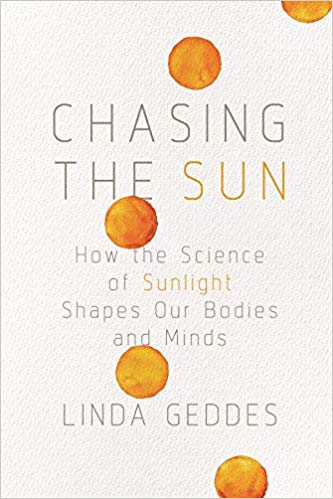
Chasing the Sun: How the Science of Sunlight Shapes Our Bodies and Minds by Linda Geddes

This broad study of the sun’s power over humankind, even in an age of electric lights and bright screens, is both absorbing and potentially life-changing.

Linda Geddes (Bumpology) illuminates the importance of one singular star in our human lives with Chasing the Sun: How the Science of Sunlight Shapes Our Bodies and Minds. The sun is life: allowing photosynthesis, warming the earth, providing solar power–it’s no wonder humans have long worshipped it. We have “assimilated starlight into the very fabric of our beings.”

People have resorted to the sun for medical purposes since early times, as well, and it is health and wellbeing that concerns Geddes in this lively, enlightening study. Circadian rhythms, her research reveals, are vital to many aspects of human life, governing blood pressure, body temperature, alertness, immune reactions, sleep cycles and quality and much more. “Almost half of our genes are under circadian control, including ones associated with every major illness investigated so far–including cancer, Alzheimer’s disease, type 2 diabetes, coronary artery disease, schizophrenia and obesity.” Shift work has recently been recognized as a probable carcinogen. In other words, the importance of sunlight to human existence can scarcely be overstated.

For this thoroughly researched investigation, Geddes consults history, international medicine, chronobiologists and NASA. She’s learned we get far too much artificial light and too brightly at night, while daytime interior lighting in most homes and offices is not nearly bright enough to simulate the sun’s power over our bodies. She also outlines light therapies for mental health issues, as well as for tuberculosis, and the special struggles and successes of populations at high latitudes, like Iceland. She speaks with fascinating people, like the man with non-24-hour sleep-wake disorder and the woman whose grandmother stuck to a strict meal schedule well into her 90s, and she visits the German “Chronocity” of Bad Kissingen, which advertises itself as “a place where internal time is as important as external time, and sleep is sacrosanct.”

While helpful to those interested in seasonal affective disorder or jet lag, this journey to the sun and back will certainly expose any reader to new concerns and marvels as well. Chasing the Sun offers many sobering lessons (sunlight and sleep cycles are life-and-death issues) and helpful tips (the utility of melatonin and vitamin D, and the importance of putting down that smartphone at least 30 minutes before bedtime). Geddes’s hopes for using what she’s learned, however, lean toward technological advances, not a return to older ways. This is also a riveting read, filled with characters, places, anecdotes and histories sure to fascinate. Geddes brings a sense of wonder to her work that is infectious, and makes scientific and medical concepts easy to understand through simple, serviceable prose. Caution: Chasing the Sun may inspire readers to try eating by candlelight and waking with the sun.


This review originally ran in the August 27, 2019 issue of Shelf Awareness for the Book Trade. To subscribe, click here.


Rating: 7 excited submariners.

reread: Mink River by Brian Doyle (audio)

My father was right to recommend this reread (re-listen) after finishing The Plover. I didn’t even necessarily remember Declan, hero of the latter novel, from Mink River. And while he was definitely present here, and a colorful character, and recognizable from his later role, I was struck by the knowledge that there were many such colorful characters, whose lives might have been pursued in a sequel. And I was struck with grief all over again that we have lost the brilliant, generous, loving, exuberant voice of Brian Doyle too soon from this world. I wanted him to write so many more books.

He was still living when I read (listened to) this book the first time. This time, I felt saddened at many turns, ironically, in appreciating the delightful high spirits and joy and wisdom in his every line. Gosh, but I’m devastated at this loss, all over again and over and over.

But the book itself: still a wonder and a joy to experience. I fell in again with the inhabitants of Neawanaka, particularly the families of Worried Man and Maplehead and Cedar, No Horses and Owen and Daniel; Declan and Grace, of course; and others: Nicholas, Michael and Sarah, and the budding romance (as I see it) between Stella and the doctor. I ached for Moses the crow and the nun, his rescuer and dear friend. I remember listening to this novel for the first time, working out at the YMCA in Bellingham, Washington. It’s funny how memory can transport us into the past. People talk about smell being such a powerful mnemonic, but for me it’s never been as strong as songs and stories, the listened-to. Hearing Worried Man and Cedar share a beer at lunch again took me back to the abductor and adductor machines and sweat, just like that.

As for writing about the book itself, I think I did a pretty good job the first time around, and will let that stand. I will say, about the audio version, it was outstanding a second time; but I wish I had the words in front of me to consult and quote from. So I’ll be finding myself a print copy as well. Consider that the highest of praise.

We miss you, Brian.


Rating: still those 8 bottles.

did not finish: Erosion: Essays of Undoing by Terry Tempest Williams

I stopped at page 238 of 314, in my galley copy, but that’s three quarters of the book, and I feel warranted to share my reactions. This was to have been a Shelf Awareness review, but I had too many concerns about this book. And you must know how it pains me to criticize a writer I love; but I have to say honestly that this book does not live up to her best work.

Erosion: Essays of Undoing is a collection of Williams’s work in the last few years, in the disturbing times of Trump, concerned in particular with the decimation of Bears Ears and Grand Staircase-Escalante National Monuments (but of course all of the disturbing trends we’re seeing). In the spirit and style of Williams as many of us have come to know and love her, she reacts: with pain, with home, with spirituality, with connection, with often lovely writing. But in many ways, Erosion falls short.

For one thing, there are several ways to put together an essay collection, and this one feels clearly like a gathering up of published work of the last several years, putting them into a certain order and stapling them at the corners. There is an enormous amount of redundant information here: in particular, the signing of the two National Monuments into existence by Obama and their undoing by Trump are explicated a number of times in very few pages, and in similar wording. This feels really lazy. I just recently put together my MFA thesis, sort of a memoir-in-essays, and those essays started out with quite a bit of redundancy; I spent months reworking them to be sure they flowed smoothly and didn’t restate; my thesis advisor worked me pretty hard, because we had high standards for that product, which is just a little ol’ MFA thesis that maybe no one will ever read. I certainly intend to hold Williams to the same standard. I think it shows a lack of respect for her readership to throw this collection together like this. The inclusion of several poems, and an interview with Tim DeChristopher, could certainly have worked in a more carefully put together book, but here they feel haphazardly inserted, as if trying to make a certain page count.

The Williams style can be a little vague and mystical; I have a lower tolerance for (shall we say) the woo-woo than some readers, but in the past she’s made it work for me – beautifully, in fact – in the right proportions and with the right subject matter. In those successful books, she earns it with a careful attention to her surroundings, a quiet, humble voice that I read as an authority on her subjects. Here, that signature style failed to perform. I think it’s in part because this book is much more polemic, timely, policy-related; the vagueness doesn’t resonate as wisdom but rather feels like a shortcoming. I marked the line “Scientists credit the ESA for saving 227 species from going extinct,” wondering which scientists and when they said it; but with no bibliography or footnotes, I regret that this author loses some credibility.

An essay about her losing her job was revealing in a few ways. To sum up: in an act of civil disobedience, Williams purchased at auction the oil and gas leasing rights to a plot of public land. Shortly thereafter she was fired from her longtime position at the University of Utah, which she feels was politically motivated (and it makes a lot of sense to me that it was), although that is denied. The university, she says, claims “I was making too much money for doing too little compared to teaching fellows who were teaching several classes a semester, something like that.” It’s the “something like that” that got under my skin; it felt dismissive of the teaching fellows, and dismissive of the concern that the university may need to spend its limited funds (or didn’t you know that education funding is decimated these days, Terry?) on teaching hours rather than the author’s pet project (which I’m sure is a fine one, certainly). She goes on to claim that being asked to teach out of a classroom with four walls, and have field trips approved rather than happen at her whim, felt like a “straitjacket.” This strikes me as a bit shrill, and feels like the voice of privilege: a longstanding professor who is used to going outside the rulebook is appalled that she is being asked to at least start from a classroom. It’s a the-rules-don’t-apply-to-me sort of attitude which I think makes her case much less sympathetic.

From here we learn that, having lost her job, the narrator is interested in selling more articles and essays for publication to make a little income while she figures things out; and this was an aha! moment for me. Aha! Terry Tempest Williams sees that, with her name, she can sell a book of collected essays, a few poems, and an interview, many (all?) of them previously published, without massaging them into place or editing them at all. I see the book in my hands taking shape.

I can see now that Williams’s oldest books have worked best for me, and more recently they fall a little short. You know that my admiration for Pieces of White Shell continues. I had begun to think that maybe my criticism of this book came from my recent time in a writing program, that I was too quick to see where sentences, paragraphs, whole essays needed further editing. But I taught from Pieces of White Shell within the last year, and I’ve read and admired other books recently; it’s not like I’m impossible to please. I’m even forgiving of a few weak lines here and there, because none of us is perfect (although not all of us have access to the editing teams at FSG’s Sarah Crichton Books, either).

There’s something else I noted here that I don’t think counts as a vote against Williams, but it’s something I want to remember for clarification’s sake: I (and perhaps others) had been thinking of Williams as an environmental writer for the U.S., but that’s not right. She’s really about her own region, and not the rest of the country. I think this accounts for part of my concern with The Hour of Land, that she was so hard on Gettysburg and mostly stuck to the west. It’s normal, I believe, for us to have regional loyalties; no one can know a place as big as this country as well as they can know their own backyard. But be clear: Williams is not here for the Pacific Northwest, or Appalachia, or the Midwest or the South or, or – she’s here for the desert Southwest, her homeland and her love. Nothing wrong with that. But I need to remember it and not get confused.

I know I’ve been harsh here. Maybe it’s hard to be let down by an author I’ve admired; maybe I’m harder on her than a new reader would be, because I’m holding her to the high standard of her earlier work as it affected me. It’s hard to see our heroes fall. But this book struck me as lazy, and Williams’s narrative voice as increasingly self-referential and unaware of privilege. I’m disappointed.

On the other hand, of course, her heart is still very much in the right place as far as I’m concerned (although our regional focuses are different), and I have a sense of nostalgia for a voice I recognize. I only wish I didn’t feel like she were phoning it in.


Rating: 5 pronghorns.

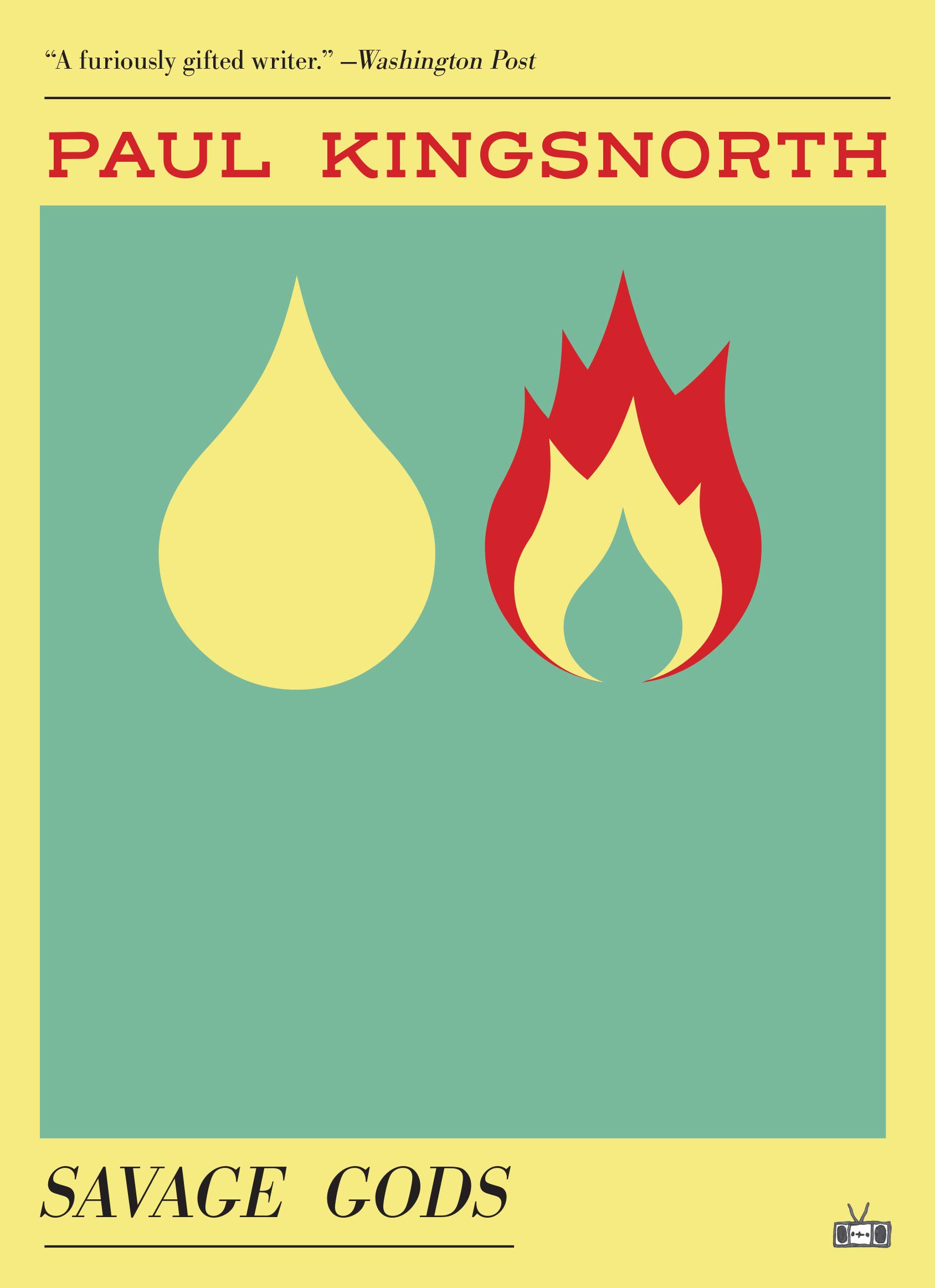
Savage Gods by Paul Kingsnorth

Disclosure: I was sent an advanced copy of this book in exchange for my honest review, because I was a preexisting Kingsnorth fan.


If I read nothing for a year and if I wrote nothing for a year, would I, could I, begin to clear away the scaffolding which language, written language, conceptual, abstract language, has built up around my poor right brain? Could I fend off the assault which logic, reason, empiricism, analysis has been raining on my inner poet all my adult life? Could I silence the watcher? Could I split the gauze?

(I would quote the entire first two pages to you if I could.)

Savage Gods is a raw piece of questioning nonfiction, an honest and open view into the soul of a writer at a loss for words and mission. Paul Kingsnorth has moved with his family to a home in rural Ireland, where he hopes to finally feel at home in a place, to finally belong. This plan has failed, and he is compelled to contemplate all the ways in which plans fail, and people–especially writers–especially Paul–fail to fit in, even when they think that’s what they really want. This wandering, seeking style of writing is one I especially love, and my feeling of kinship for Kingsnorth made it especially poignant to read these struggles. Also, let it be said that although he feels his words abandoning him, he’s written another remarkably articulate, lovely, moving book.

Kingsnorth pulls in the outside voices of D. H. Lawrence, Annie Dillard, Milan Kundera, a mythologist from Botswana named Colin Campbell, a Zen teacher named Charlotte Joko Beck, poets R. S. Thomas and W. S. Graham, cultural ecologist David Abram, American Indian activist Russell Means, Mark Boyle*, Bruce Springsteen, gods Loki and Buddha and Freya, and many, many more. He spends time with the tension between poets Yeats and Patrick Kavanagh, which serves as metaphor for a tension within himself. “My inner Kavanagh is bloody-minded and self-destructive. It wants to strip away the world’s delusions and my own, detach from all notions, be joyful, have fun and do good work and screw the rest. My inner Yeats wants to go hunting for wandering Aengus in the Burren at dusk, prefers the inner flame to the outer ashes and is constantly disappointed that his imagined world is nothing like the real one.” I love the recruitment of other voices, all of these in conversation with Kingsnorth’s fine, inquiring, discerning mind, but it is still his voice that sits center stage.

Having moved to a small rural holding in Ireland, Kingsnorth thought he knew what he was doing, thought he was moving in the direction of his goals: to settle, to be rooted, to be self-sufficient, to be involved with the land, “to be closer to nature and further from the Machine,” to learn new skills, to be the best parent possible, and to write “truer books than I had ever written before.” Instead, he finds his relationship with the thing he does best–words, language, writing–troubled. He worries if language is not in fact part of the problem.

I would love to have access to a searchable electronic version of this book, and some statistics, because I suspect there are far more (literal) question marks in this than in most nonfiction books of similar length. (Not long, scarcely over 100 pages.) The narrator is constantly questioning; the mood of the book is best described as lost. Here, I took a short survey for you from over several pages:

But lessons don’t work like that, do they?… Can you have a concrete cottage?… I knew this, so why didn’t I know it?… What does that incident carry for me?… What would that be like? And could I have it?… What does a writer do when his words stop working?… Can you write from silence?

This is one of those wonderful works of nonfiction in which basically nothing happens but still it leaves my head spinning for days. It’s a beautiful, all-encompassing book, and it captures quite well the sense of nihilism and despair that can come of considering the state of our world; but it captures as well the thrush’s song, which is both joy and pressure: “My kids would just have heard him, reacted, and moved on, but I stood there listening rapt while, at the same time, berating myself for not having the kind of spontaneous experience of the thrush’s song that I wanted to have and I felt I ought to be able to have, especially if I was going to write books with thrushes’ songs in them.” I feel it deeply. I will follow this writer anywhere; I hope he is able to keep working, keep “wrangling that beast and then going down to make dinner for the kids.”


Rating: 8 red-tailed bumbles.

*Boyle wrote in The Way Home of meeting Paul at the pub for conversations of significance, and Paul reciprocates here, which I find strangely thrilling.

Late Migrations: A Natural History of Love and Loss by Margaret Renkl

This subtle, searing essay collection examines the griefs of family and of the natural world as one.

Margaret Renkl’s Late Migrations: A Natural History of Love and Loss is a quiet but stunning collection of essays merging the natural landscapes of Alabama and Tennessee with generations of family history, grief and renewal. Renkl’s voice sounds very close to the reader’s ear: intimate, confiding, candid and alert.

Renkl grew up in “lower Alabama,” the adored child of parents, grandparents and great-grandparents: in an old picture, “my people are looking at me as if I were the sun.” Her childhood was lived close to the red dirt, pine needles and blue jays of that space. As an adult, she lives in Nashville with a husband and three sons, and carefully cultivates a backyard garden with bird nests, baths and feeders. These are the backdrops to her observations of nature. “The cycle of life might as well be called the cycle of death: everything that lives will die, and everything that dies will be eaten.”

Sections are headed with simple, natural-world titles (Tomato, River, Thunderstorm) and adorned with illustrations by the author’s brother, Billy Renkl. Within these sections, the essays are brief–often just two or three pages–and can stand alone, but accrue to form a truly lovely larger picture. “Safe, Trapped” handles the duality of protective spaces: that shelter is also captivity. An echo, several chapters later: the realization that her childhood was never the sanctuary she thought it was at the time. Alongside the concern of how to keep loved ones safe, she writes about the natural cruelty of rat snakes, crows and snow.

Late Migrations studies family and loss: the deaths of great-grandparents, grandparents and parents; Renkl becoming a parent herself and worrying over her children. Spending a night in a prewar infirmary on the grounds of an orphanage, dreaming of babies in cages, Renkl goes to the window to view cardinals at a feeder and “watched until I knew I could keep them with me, until I believed I would dream that night of wings.” At about the midpoint of her book, this feels like a point of synthesis. Dreaming of babies in cages and trading them for wings, to “keep them with me,” represents a neat joining of her themes, which are of course not nearly so separate as they initially appear.

This is a book about the labors of bluebirds, red-tailed hawks and cottontails, and about grief: the loss of loved ones, the risks to her own children and the everyday struggles of backyard nests. A book of subtlety and sadness, yes, but also a tough, persistent joy in the present and the future. “Human beings are creatures made for joy,” Renkl writes. “Against all evidence, we tell ourselves that grief and loneliness and despair are tragedies…. In the fairy tale we tell ourselves, darkness holds nothing resembling a gift.” Part of her work in this book is to find and recognize the gift in the darkness, “to reveal it in its deepest hiding place.” Late Migrations is itself that gorgeous, thought-provoking gift.


This review originally ran in the June 11, 2019 issue of Shelf Awareness for the Book Trade. To subscribe, click here.


Rating: 8 bluebirds.

I sat reading, in Renkl’s chapter “Bluebird” at a state park in North Carolina, about bluebirds nesting in bluebird boxes. And I looked up to see a male bluebird, brightly feathered, ducking into a bluebird box, his anxious, drabber mate sitting on top and watching me and my little dog with concern. I couldn’t believe it: I looked down at the page, up at the bluebirds. We were a dozen feet apart. I kept reading and watching as the couple kept up their cycling through the box – she got a little more comfortable with me over time, but stayed watchful. A rare experience.

The Wild Boy by Paolo Cognetti

Best book of the year to date.


A city dweller returns to the mountains of his youth, and his gorgeous, reflective memoir is full of nature and humanity.

Having just turned 30, Paolo Cognetti (The Eight Mountains) felt restless and unfulfilled in the city of Milan. He missed his childhood summers–the first 20 years of his life–spent in the Italian Alps. Inspired by Thoreau’s Walden and the principled quest of Chris McCandless (subject of Jon Krakauer’s Into the Wild), he rented a renovated but rustic cabin alone in a village of ruins in a high alpine valley and undertook to learn what the mountains had to teach, to “live deep and suck out all the marrow of life.” After years of frustration, he hoped to write again.

The Wild Boy is a memoir of three seasons spent in that cabin, or, more accurately, spent hiking and exploring the mountains he remembered from when he was a boy–that wild boy he hopes to find again. The account opens briefly in winter, for background, as Cognetti makes his decision and locates his mountain home. Spring, summer and fall form the bulk of the story, which ends when he heads back down the mountain again: “I already knew all the dreams that I would have that winter.”

In the interim, Cognetti gets to know the local flora and fauna; briefly attempts a vegetable garden; studies other writers’ words; travels far and wide on foot; and makes new friends, human and otherwise. Thoreau writes of the pleasures of solitude, but this narrator finds he desires companionship–if they are the right companions. Two men in particular make strong impressions. His landlord, Remigio, is a creature of the mountains, with whom Cognetti literally makes hay. They share few life experiences, but quickly become fast friends, and Remigio turns out to suffer from writer’s block as well: “This was the story I had strayed into, hoping to find how to write again.” The other is an alpine shepherd named Gabriele, with whom Cognetti shares meals and wine. Gabriele will give him a gift at the end of their season together that Cognetti didn’t know he needed.

The Wild Boy has a lovely and profound story to tell about connections to land and history and one another. In seeking simplicity and a new start in his life, Cognetti rediscovers timeless truths about the human condition. In addition to the strength of its contents, this is a stunningly beautiful book. It is a slim volume whose simply titled chapters (Snow, Hay, Vegetable Garden, Neighbors) carry significant wisdom and weight. Cognetti’s prose is incandescent when writing about nature, about human history, about friendship and, perhaps most of all, about words: “That was why he had become such a voracious reader. He was looking for the words that would allow him to speak about himself.” For any reader who has wondered about the next step, loved a mountain or a book, struggled with writer’s block or stared in wonder into a forest, this astonishing memoir is necessary.


This review originally ran in the June 6, 2019 issue of Shelf Awareness for the Book Trade. To subscribe, click here.


Rating: 10 words.