musings on “A River Runs Through It” by Norman Maclean, from Tassava

In reading and rereading some pieces by and about Maclean recently, I was struck by the certainty that my buddy Tassava would love him. He told me he’d read none, so I set out to remedy that. Unsurprisingly, A River Runs Through It and Other Stories was a big hit.

Rivers Run through It

At my friend Julia’s recommendation, I read Norman Maclean’s “A River Runs through It” today – a gorgeously warm fall day that seemed perfectly suited to the action of that incredible, indelible, devastating story.

He follows with some photos that reflect his personal connection to Maclean’s writing.

Henry's Fork in Island Park, ID (March 2014), photo by Tassava

Henry’s Fork in Island Park, ID (March 2014), photo by Tassava

Read the rest here.


Thanks, Tassava. I hope you love Young Men and Fire as much as I did, too!

One Out of Two by Daniel Sada, trans. by Katherine Silver

This delightful novella translated from the Spanish, about identical twins and the tricks they play, asks questions about identity and loyalty and answers them with glee.

one out of two

Daniel Sada (Almost Never) died in 2011, but the prolific Mexican writer left behind many short stories, novels and poems. Katherine Silver has translated his humorous novella One Out of Two into English for the first time.

“Now, how to say it? One out of two, or two in one, or what?” Constitución and Gloria Gamal are identical twin sisters, and this is their shared identity and life’s work. At 13, they were orphaned by a car wreck, but they did not notice for weeks, not until they ran out of food, so consumed were they with one another. Now in their 40s, they dress alike, wear the same makeup and hairstyle; whoever gets up first in the morning gets to choose that day’s attire for both. They have practiced the same gestures and mannerisms until they are indistinguishable. They even switch names from day to day. (“Why shouldn’t they!”) Established as seamstresses in a small Mexican town where everyone knows them–but can’t tell them apart–they take pleasure in their indistinguishability, the singular quality in their mundane existence.

This strange, even surreal description of twinned lives begins Sada’s magnetic tale. Then a problem challenges the Gamal sisters’ contented tricks of identity: one of them meets a man. They brought this startling element of difference into their lives somewhat on purpose, when they decided to send only one twin to a wedding, expressly because they believed she would have a better chance of catching a male eye if she were not half of a whole. After all, “this business of having a double can be vexatious, almost almost leech-like.” So Constitución comes home to announce: “I danced all night with a slender man of interesting age.” The novel calls this “her best sentence ever,” and it may well be, but it is not Sada’s; his winding, lyrical, frequently abstract language is one of the great joys of this comical, silly and touching story.

Of course, the introduction of a suitor raises questions for the twins. Separate or share? He has no idea that there are two, and so they take turns in romance. But two women who have split everything up to this point find a man harder to enjoy as equals. The tension of One Out of Two is related to illusion, deceit and identity, as Constitución and Gloria discover envy and competition for the first time. In a mere 100 pages, Sada dances his reader through these conflicts and on to a joyfully droll and loving conclusion. His playfulness with language, plot and character make One Out of Two a true pleasure; his readers’ only regret is that it is over so soon.


This review originally ran in the October 22, 2015 issue of Shelf Awareness for the Book Trade. To subscribe, click here.


Rating: 7 grape sodas.

Teaser Tuesdays: Norman Maclean, edited by Ron McFarland and Hugh Nichols

Teaser Tuesdays is a weekly bookish meme, hosted by MizB of Should Be Reading.

Returning to Norman Maclean has been an epiphany, all over again: his writing may well be perfect. I’m not sure I’ve read anyone better.

norman maclean

This edition in the “American Author Series” includes essays by Maclean (some developed from talks he gave), two interviews with him, and essays in appreciation and criticism of his work. There are no sizable excerpts from A River Runs Through It or its accompanying stories, because as the editors rightfully point out, we already have access to those; their goal here (among others) is to bring us Maclean works that are less accessible.

Nevertheless, I had read some of these pieces before – I could not say where – but nevertheless they are so good I am boggled every time I read them.

Today’s teaser comes from “Retrievers Good and Bad”, which is among other things a catalog of duck dogs in Maclean’s family.

The Missouri is one of the main flyways for ducks in America, and when the autumn storms begin in the north, the ducks come whistling out of Canada, hit the Missouri River, follow it to the Mississippi and coast the rest of the way to Louisiana. When they go around those big bends on the upper Missouri, the air is left hurt and shaking, and if you are a duck hunter, the place to be is behind a rock on the cliffside of the bends, because the ducks’ speed on the turns almost drives them into the cliffs and into your bun barrel. That is just where my father and I were.

Of course “the air left hurt and shaking” is an extraordinary phrase, but there is a rhythm to the whole, and an awareness of scope and scale; and then it finishes with family and immediacy. To me, this simple couple of sentences is a fine example of what Maclean can do with words.

Breakfast at Tiffany’s by Truman Capote

BreakfastatTiffanysWhere to begin? Breakfast at Tiffany’s is so classic as to seem larger-than-life. As is often the case, though, I’d never seen the movie either (that’s up next), so at least I didn’t have any of those preconceptions working against me.

I love this beginning, because it speaks to me:

I am always drawn back to places where I have lived, the houses and their neighborhoods.

The narrator is awfully like Truman Capote himself, and looks back upon a time when he was living in a brownstone apartment building in New York City. The bartender from around the corner, who was a friend or at least a regular acquaintance at that time, has asked him to visit. It’s about Holly Golightly, who was the narrator’s neighbor and another bar regular. Joe Bell, the bartender, reports that she has ostensibly been spotted in Africa, of all places. There she is reputed to have slept with a woodcarver:

“I don’t credit that part,” Joe Bell said squeamishly. “I know she had her ways, but I don’t think she’d be up to anything as much as that.”

Which is a rather excellent characterization of Joe Bell, I think.

We then flashback, as the narrator recalls his coming to know Holly, her outrageous comings and goings and relationships, and her departure – fleeing the city while out on bail, headed for Rio. He got a postcard:

Brazil was beastly but Buenos Aires the best. Not Tiffany’s, but almost.

The narrator concludes that he hopes Holly eventually found somewhere she belonged, “African hut or whatever.”

Of course that summary leaves out everything in between, which is the good stuff. I think I’ll leave that be, and if you’re like me and had never read the story, I hope you will.

Holly is a mysterious character. Her erstwhile Hollywood agent says, “She isn’t a phony because she’s a real phony. She believes all this crap she believes.” She is said to have given different versions of her past, although I think we never see her do so on-screen: she may give no version at all, but I’m not sure we ever hear her own voice offer contradictory stories. That may be one of the layers of artifice to this tale, which is obsessed with artifice. Damn; I already need to go back for a reread.

Holly is almost too fabulously odd and wild, somehow sweet and conniving at once, too fantastical, for my tastes. The narrator, now, he’s somebody I’d like to study. I love that he is off-screen (because we look through his eyes, we never see him) but also the center of everything: we see through his eyes, see what he sees. He is both undescribed and reveals himself everywhere, like Gatsby‘s Nick Carraway. Is he honest? Is he real? In what artifices is he engaged? And, of course I wonder, to what extent is he Truman Capote? (I read recently that Holly is based “by Truman’s admission” on a few women he knew – stay tuned for my review to come of Brooklyn: A Personal Memoir. It will be worth your wait.)

There’s a lot going on here; I think it’s a good candidate for a close reading. And I’m especially curious now about the movie, because the novella I just read doesn’t lend itself easily to the screen. For one thing there’s that narration question; and I think there’s actually less action, less ramping-conflict-to-denouement than movies like. I read this as a mystery story, in part: which is the real Holly? And I fear a movie would be apt to go ahead and answer that question, where Capote hasn’t. But this is all guesswork. I’ll be looking for the movie next.

Holly and our unnamed narrator are both compelling and memorable characters. I expect I’ll be wondering about them for some time now. Her story is sensational and salacious, and interesting in that regard; but I find the mystery of Holly’s inner truth (if you will) the central gem of this book. It is, of course, decorated by Capote’s language and eye for detail, as in characterization via dialog; for example, Holly goes on amusing and surreal several-page-long monologues which bring her into focus for me. But my favorite line of the book was this one:

Aprils have never meant much to me, autumns seem that season of beginning, spring; which is how I felt sitting with Holly on the railings of the boathouse porch.

And I think we’ll leave it at that.


Rating: 7 pieces of memorable speech.

Paulina & Fran by Rachel B. Glaser

A novel about two young art students, the thrills they enjoy and the wounds they inflict on themselves and each other.

paulina and fran

Rachel B. Glaser (Pee on Water; MOODS) focuses on two memorable, magnetic characters in Paulina & Fran, a novel of the challenges in friendship and love, beginning in a New England art school.

Paulina is flamboyant, wildly sexual and capable of great cruelty toward her friends. She attacks the world with a confident demeanor but is secretly plagued by an inability to get what she wants, because she doesn’t know what that is. Fran is more self-contained, a talented painter but lacking commitment, easily swayed by the love and approval of others. On a school trip, the two are drawn together, owing in part to their lack of other social options, but the bond they form is remarkably powerful, even hypnotic, on both sides. The mesmerizing spell is broken when Fran ends up dating Paulina’s ex-boyfriend, setting into motion a series of mutually destructive events that follow the two women–and collaterally the helpless boyfriend–well past graduation.

Paulina can be repellently vicious, while Fran is merely lost; both will occasionally try the reader’s patience, but both are finally sympathetic. These are finely detailed, compelling, complex young adults facing archetypical trials: work and art; sex, devotion, obsession and betrayal; the cavernous future; and how to be oneself and be a friend. Their journey is often funny and sometimes horrifying, filled with pretentious art “crits” (critiques), thrift store fashion and homemade hair products. Paulina & Fran is both a glittering, raucous ride and a thoughtful depiction of life: painful and ecstatic.


This review originally ran as a *starred review* in the September 8, 2015 issue of Shelf Awareness for Readers. To subscribe, click here, and you’ll receive two issues per week of book reviews and other bookish fun!


Rating: 7 crits.

book beginnings on Friday: One Out of Two by Daniel Sada, trans. by Katherine Silver

Thanks to Rose City Reader for hosting this meme. To participate, share the first line or two of the book you are currently reading and, if you feel so moved, let us know what your first impressions were based on that first line.

one out of two

This is a very slim (100-page) novel in translation from the Spanish, and I am excited and charmed by its first lines.

Now, how to say it? One out of two, or two in one, or what? The Gamal sisters were identical. To say, as people do, “They were like two peas in a pod,” the same age, the same height, and wearing, by choice, the same hairdo.

My ARC offers a blurb on the front cover from Robert Bolaño: “Of my generation I most admire Daniel Sada, whose writing project seems to me the most daring.” Sada died in 2011.

This quotation comes from an uncorrected advance proof and is subject to change.

A Clue to the Exit by Edward St. Aubyn

Edward St. Aubyn’s favorite of his own novels surveys characters from his other work, in a clever, sophisticated consideration of death and consciousness.

clue to the exit

Edward St. Aubyn (Mother’s Milk) calls A Clue to the Exit his favorite of his own novels. Originally published in 2000, it’s now being reissued by Picador.

Charlie is a hack screenwriter who’s just been told he has six months to live. (He takes issue with the idea that his doctor has “given” him six months, as if it were a gift he should be grateful for.) He starts driving more carefully, even as he considers suicide, experimenting with the proper response to this news. He contacts his ex-wife about seeing his daughter; he sells his house and takes half his riches to Monte Carlo to lose it as quickly as possible. And, suddenly inspired, he sets out to write a serious novel–much to his agent’s exasperation.

In Monte Carlo, he meets a beautiful stranger, who he imagines might help him with his burden of mortality. Angelique is a gambling addict, and in her company Charlie feels an equal craving for his own writing. They have a deal: she gambles away his fortune, and he writes in the casino as he watches her. His novel, On the Train, tackles the big question of consciousness, or nothing less than the meaning of life, and Charlie’s autobiographical protagonist is none other than Patrick Melrose, St. Aubyn’s most famous character, who is joined by others that St. Aubyn’s fans will recognize from previous work. The characters of the novel within the novel argue philosophy on a train stuck in Didcot, as Charlie finds himself stuck as well between games of chance and the need to map his own final months.

St. Aubyn’s craft is on full display with this inward-looking work of simultaneous parody and earnestness. Nearly every line is quotable, a small but shining victory of prose. On the Train visits with Proust and Buddha, while “a clue to the exit” references Henry James on “the human maze,” but alongside serious, even wearying considerations, Charlie’s story is often very funny and self-referential. A third-person narrative “is so much more personal than a first-person narrative, which reveals too flagrantly the imposture of the personality it depends on,” writes St. Aubyn in Charlie’s voice: A Clue to the Exit is told in first-person, while On the Train is in the third. This feedback loop is a central device. “Feeling too upset to write, I made the brave decision to write about feeling too upset.” A parade of absurd characters and dinner parties accompanies Charlie’s, and his character Patrick’s, contemplations of death. As Charlie’s six months run out, St. Aubyn continues to surprise his reader in the final pages.

A refined and stylish novel of cynicism and the question of death, A Clue to the Exit is a perfect sample of St. Aubyn’s craft.


This review originally ran in the August 13, 2015 issue of Shelf Awareness for the Book Trade. To subscribe, click here.


Rating: 6 chips.

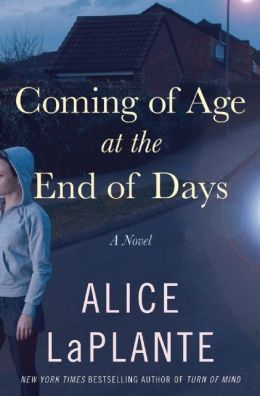
Coming of Age at the End of Days by Alice LaPlante

In this expert psychological thriller, a disturbed teenaged girl meets a doomsday cult and struggles for survival and identity.

coming of age

The title of Alice LaPlante’s third novel, Coming of Age at the End of Days, succinctly describes its plot. At the beginning, Anna Franklin is 16 and terribly depressed, fixated on death. Therapy and medication do nothing to bring her out of it. Her anti-religious mother begins reading to her from the Bible, just to give them some time together and to introduce Anna to literary references; this does not lighten Anna’s world, but instead gives its darkness meaning, as Revelations resonates with her mood. What finally causes her depression to break is a new family in the neighborhood. Lars and his parents introduce Anna to their church, where it is preached that the Tribulation at the End of Days is coming. There will be blood, violence and suffering. Her heart sings at the news.

Anna begins having a recurrent dream of a central image in her church’s system of beliefs; she has visions and becomes convinced she has an important role to play. Joyfully, she plans for the coming End of Days. Her parents are relieved that she no longer appears suicidal, but disturbed anew at this fresh challenge. Anna and Lars, a compelling, alternately magnetic and frightening young man, are socially isolated and bullied at school. On the other hand, Anna’s parents are loving, wise and committed to her well-being. Additionally, there is Anna’s neighbor Jim–back in his parents’ basement, in his mid-20s, suffering his own breakdown–and a chemistry teacher, the youthful, no-nonsense Ms. Thadeous. When Anna experiences a tragedy that “more than satiate[s] her hunger for death,” these few but remarkable friends represent a chance to reconsider the End she is working toward.

At the center of Anna’s story–and of all these characters’ stories–are obsessions. “Images. Sounds. The Red Heifer. Bosch’s depiction of hell. A rock hitting a tree.” Anna’s mother is a deeply devoted pianist; her father is an earthquake nut, eagerly awaiting The Big One, in a secular obsession otherwise not unlike his daughter’s. LaPlante (Turn of Mind) masterfully weaves a distressing plot in which complex, sympathetic characters, each with a complete and absorbing past, are brought to the brink of destruction and then seemingly asked: What kind of life, and death, will you choose? The reader’s imagination will be won by this brilliant, thought-provoking and memorable novel. Coming of Age at the End of Days perfectly captures the dynamics of family relationships and friendships, loyalties and priorities, and the nuanced workings of an unusual mind.


This review originally ran in the July 23, 2015 issue of Shelf Awareness for the Book Trade. To subscribe, click here.


Rating: 8 times vermillion.

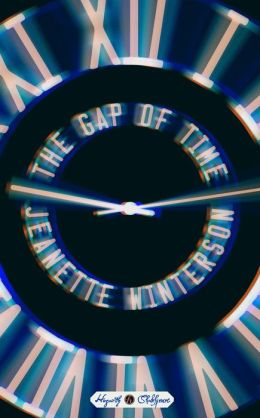
Maximum Shelf: The Gap of Time by Jeanette Winterson

Maximum Shelf is the weekly Shelf Awareness feature focusing on an upcoming title we love and believe will be a great handselling opportunity for booksellers everywhere. The features are written by our editors and reviewers and the publisher has helped support the issue.

This review was published by Shelf Awareness on July 22, 2015.

gap of timeThe Hogarth Shakespeare project undertakes to reinvent the Bard’s classic works in novel form; the first installment is The Gap of Time by Jeanette Winterson (Oranges Are Not the Only Fruit; Why Be Happy When You Could Be Normal?), a “cover version” of The Winter’s Tale. In Shakespeare’s original, the kings of Sicilia and Bohemia are great friends until one accuses the other of sleeping with his wife. The jealous Leontes plots to murder his friend Polixenes, but misses his chance and instead takes out his rage on his pregnant wife, the queen Hermione. By the time his suspicions are proved false, he has lost both his son and his wife, and the baby girl Hermione gives birth to has disappeared. Leontes ordered the baby taken into the wilderness and abandoned, but the man he assigned this task died in the process, so the baby’s fate is unknown. Sixteen years later, a romance between Polixenes’s son and a beautiful, mysterious shepherd’s daughter may offer redemption and even a second chance.

The Gap of Time is set dually in modern London, just following the 2008 economic crisis, and the fictional American city of New Bohemia. Londoners Leo and Xeno were childhood friends and, for a time, lovers; as adults, despite very different values, the bohemian Xeno and the materialistic Leo have become business partners in Sicilia, a high-tech gaming company. Leo’s wife, MiMi, son, Milo, and his uber-capable assistant, Pauline, round out a highly functional, loving family of sorts, until Leo becomes obsessed with the idea that MiMi and Xeno are sleeping together. Leo reacts violently, and loses his son and wife. When he tries to ship MiMi’s baby daughter overseas to Xeno, whom he wrongly believes to be her father, the little girl goes missing.

In New Bohemia, Shep and his son, Clo, who run a piano bar, come across a carjacking too late to save its victim, after which Shep is able to pull a baby out of the nearby hospital’s BabyHatch, a high-tech receptacle for abandoned infants. He is convinced this child is a gift meant for him, to help him heal after his wife’s death, and raises the girl as his own. Her name, according to papers found with her, is Perdita. He could never conceal from her that she is adopted: Perdita is white, while Shep and Clo are black; but she grows up in a home filled with love and music, never doubting that she is wanted. As in the original, 16 years will pass before Perdita encounters a romantic interest who, though equally ignorant of their connected past, will lead to her learning about her origins.

A very brief recap of The Winter’s Tale at the beginning of the book informs the reader, so that no knowledge of the original is necessary to follow or enjoy this retelling. Indeed, The Gap of Time will please readers who have never given Shakespeare a second glance, as well as his committed fans. Winterson has fashioned the ideal remake: paying respect to the original and faithfully following many plot points, as well as the general spirit, she simultaneously builds upon it, not only making Shakespeare’s work accessible to modern minds but providing a freshly felt and relevant emotional experience.

Shakespeare’s sympathetic and intriguing plot involving several twists and changes of heart plays well with Winterson’s nuanced tone, while her characters are more multi-faceted than the originals. Leo is a deeply flawed man who nonetheless attracts the reader; Xeno is magnetic, beautiful and sensual; and MiMi is a woman of more complex feelings than the dignity Shakespeare gives Hermione. The next generation, Perdita and Zel, Xeno’s son, are appealing, with passions and interests of their own. It is Shep and Clo, though, Shakespeare’s nameless Shepherd and Clown, who get the most reworking, and to great advantage.

Most of The Gap of Time takes place in London and New Bohemia, but also visits Paris, the Seine and, of course, the bookshop Shakespeare and Company. As realistic as these settings are, it is the gaming world invented by Leo and Xeno that is most imaginative and vibrant. Leo is obsessed with the scene in Superman: The Movie where Superman zips round the world and turns back time to save Lois Lane. Their game is creative, vividly rendered and evocative of Xeno’s disappointment in what his life has become, as well as Leo’s preoccupation with the idea of time’s malleability. It is a game filled with angels of death, and it is called The Gap of Time.

As the title indicates, Winterson’s version of The Winter’s Tale plays with the concept of time even more than the original did, asking questions about what is changeable about our pasts and our futures. Leo wishes he could take back his madness and its consequences; Xeno wishes he’d handled it differently. This is a stirring tale filled with waste, simple mistakes and regrets. But as in the original, it also offers hope, young love and the possibility of new beginnings. In an unusual twist, Winterson herself steps forward in the final pages to speak in the first person about what she hopes for from this story–and then she steps back to allow her characters to finish it.


Rating: 7 feathers.

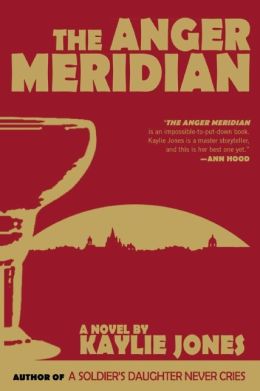
The Anger Meridian by Kaylie Jones

A newly widowed woman is forced to face her own secrets, in vibrant San Miguel de Allende.

anger meridian

Merryn is up late at night, awaiting and fearing her husband’s drunken homecoming, when she opens the door to find two policemen announcing that he has been killed in a car accident. She quickly bundles up their nine-year-old daughter, the precocious Tenney, and leaves Dallas, Tex., for her mother’s home in San Miguel de Allende, in central Mexico.

The rest of Kaylie Jones’s striking novel, The Anger Meridian, is set in San Miguel, where Merryn’s mother, Bibi, presides over an opulent home and her frightened daughter’s life. As Merryn struggles to navigate her husband’s legacy (the FBI has followed her to Mexico to investigate his business dealings) and her and Tenney’s future, she has the opportunity to confront many dishonesties, including her own. Lying is one of The Anger Meridian‘s central themes.

The tone of Jones’s writing quivers with tension from the opening page. Merryn is traumatized, anxious, grinds her teeth at night; she behaves like an abuse victim. But where does her damage come from? And whom should she–and the reader–trust? A handsome American expat doctor, a lawyer friend of the family, a local yoga teacher, the members of Bibi’s entourage and clever Tenney each offer different angles on Merryn’s life. In the end, there are several puzzles to untangle in this lovely, finely plotted novel, which highlights colorful San Miguel and the complexities of family, loyalty and honesty. The Anger Meridian is at once a suspenseful mystery and a superlatively gripping story of self-discovery.


This review originally ran as a *starred review* in the July 21, 2015 issue of Shelf Awareness for Readers. To subscribe, click here, and you’ll receive two issues per week of book reviews and other bookish fun!


Rating: 7 martinis.