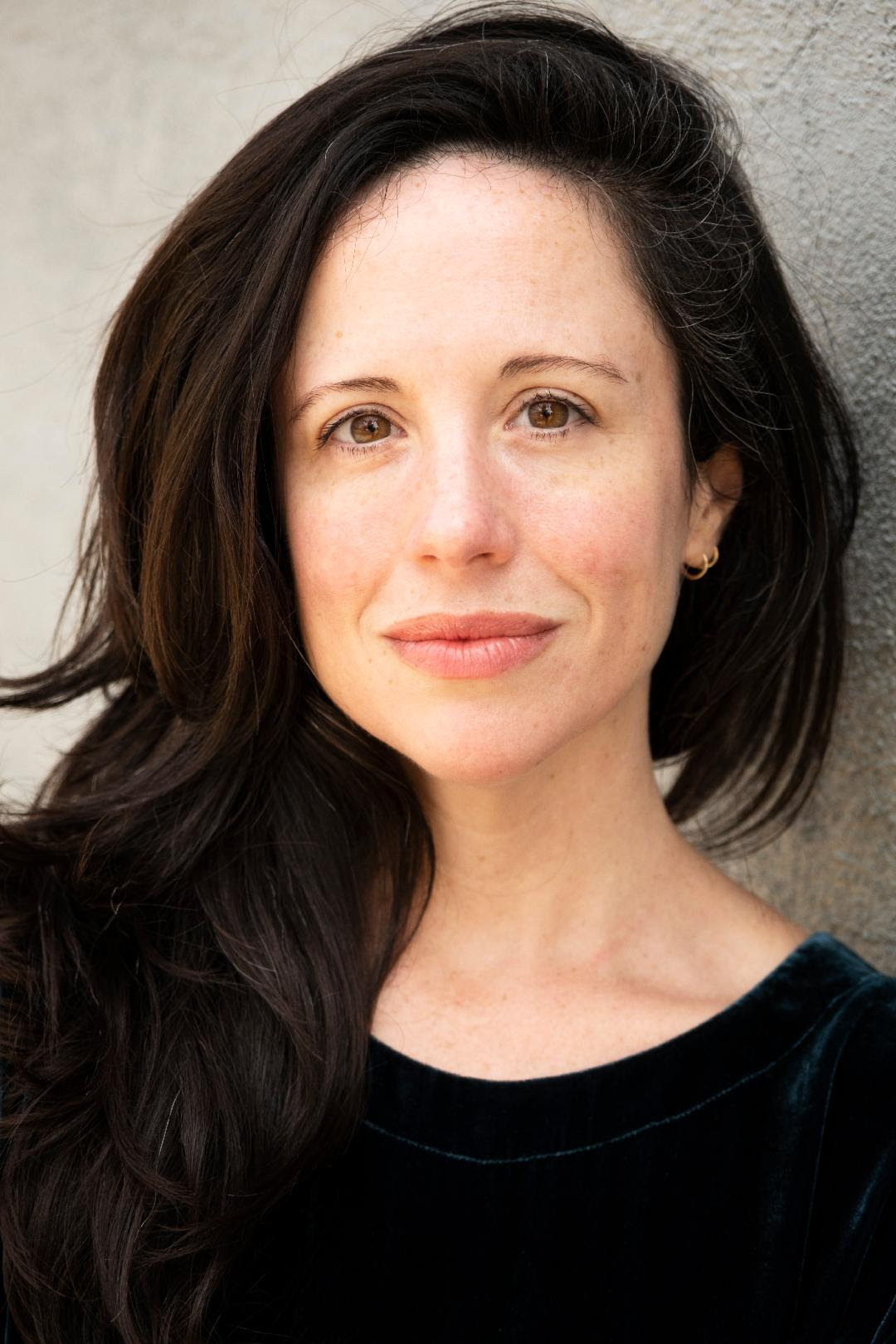
Maximum Shelf author interview: Rachel Kushner

Following Monday’s review of Creation Lake, here’s Rachel Kushner: A Woman Up to No Good.


Rachel Kushner is the author of three acclaimed novels, Telex from Cuba, The Flamethrowers, and The Mars Room, as well as a book of short stories, The Strange Case of Rachel K, and The Hard Crowd: Essays 2000-2020. Creation Lake (Scribner, September 3, 2024) is a captivating novel about an American woman operating as an independent spy in France who finds herself questioning her own worldview.

Where did this novel begin for you?

Rachel Kushner
(photo: Gabby Laurent)

First was the idea of a commune of young Parisians decamping to a remote part of southwestern France, where they struggle to farm on rocky soil, and are watched by the police. This is a milieu that, how shall I put it, is not at all unfamiliar to me, and I always thought would make a great novel.

Next was the area itself, based on real places I know well, that are rich with ancient caves, with traces of life going back half a million years. For a minute I toyed with writing a novel set in prehistoric times. The dialogue would be challenging! It became a kind of joke, a self-taunt, to write cave people into fiction. I ended up setting the book in modern times (roughly 2013), but with one of the characters thinking kind of lavishly about the past.

So I had a setting: rural France, a fictional place based on areas I know intimately. I had a conflict: a group of activists who are on a collision course with French authorities. I had some ideas and themes about nomadism and cave dwellers and subversion.

But who would tell the story, and why?

Then it came to me: Several years back, a young environmental activist I didn’t know personally, but who was connected to people I do know, was entrapped by a woman working undercover for the FBI. He ended up charged with arson and sabotage and got 20 years in federal prison. He served almost nine years before his lawyers were able to prove the entrapment and successfully overturn his conviction. The case, and the idea of this FBI informant, got under my skin and I thought, what kind of person ends up becoming an agent provocateur? Who is this sort of woman, and how does she think? Later, a somewhat similar situation unfolded involving some people I know personally: a guy in their political milieu, who presented himself as this leftist activist, was actually a U.K. undercover cop, surveilling my friends. When he was exposed, publicly, it turned out that he’d been having sexual relationships with women in leftist movements around Europe. It blew up into a major scandal. He was outed and had to disappear into the private sector, spying on people for multinational corporations and the like (he’s probably still doing that now). The U.K. police have now been sued by several of the women that this undercover cop had relationships with. And this undercover cop himself has also sued the police, for “failing to protect him from falling in love.”

I decided to write a novel from the perspective of one of these sorts of spies–invented, not based on either case that I know about. My character has already been kicked into the private sector–where there are no rules, no oversight, and she doesn’t even quite know who her bosses are. She’s a spy and a narc, a woman up to no good, if also caught up in forces that are larger than she is (as we all are).

Do you think of this as a spy novel? What are your influences in that genre?

Not exactly, but it is infused with certain elements of noir, or my own version of noir, which is perhaps a broad category and mostly a mood, which might include spy novels and crime novels, thrillers, heists, assassination plots, international intrigue… but I don’t submit to the genre in the way that a true noir is expected to. I’m too in love with characters, the fun of dialogue, scenes ripe for comedy, and bigger questions about life, to write a straight spy novel. That said, I am a huge fan of the French crime writer Jean-Patrick Manchette and inhaled all of his novels over a summer while trying to first conceive of this book, so his greasy prints are probably all over it, if in a kind of oblique way, because he’s inimitable in the way his blazing dark humor verges on slapstick, while his protagonists are dead serious about weapons, and late-’60s Citroën models, and how to shoot to kill. Often, their plans go haywire, and what’s meant to be a tight, taut job ends up a full-blown fiasco. But I think that through reading him, I probably gave myself a permission that was new to me, to make things happen–to put plans in people’s heads, and guns in their hands, and to send in unwitting political stooges for a showdown.

How important are Bruno’s beliefs to this story?

Bruno is driven by the dilemma of what future we can believe in, when we know that no revolution is coming, and that capitalism is here to stay. His solution is to “leave this world”: to reject civilization and renovate entirely his own consciousness, and what it means to live and to thrive, without waiting for the collapse of the status quo, because he knows, deeply and terribly, that this collapse is not coming. He’s focused on the ancient past, and speculates on life before the written-down, in search of a time before society took “a wrong turn.” Many leftist critiques of capitalism tend to identify that wrong turn at the dawn of agriculture. For Bruno, it’s much earlier. He’s down on the Homo sapiens, altogether! He imagines that once upon a time a rich mélange of different genetic types of humans roamed Europe and Asia. The Neanderthal, long-maligned for having gone extinct, becomes Bruno’s “beautiful loser.” Surely the story isn’t simply that the poor “Thal” (as Bruno thinks of him) “couldn’t hack it.” So what did happen, and what was lost, when that line of humans dwindled to nothing and disappeared? And did they leave any signs for us, for how we might organize life? Bruno’s beliefs become increasingly important to the narrator and narc, as the plot, and book, move toward conclusion. And as the story’s master manipulator, everything comes down to her and what she’s got up her sleeve.

What makes the narrator a compelling protagonist?

She is capable, cunning, dissimulating, overconfident, blunt, blandly beautiful, and a heavy drinker. The novel is entirely from her perspective, and she is free to share with the reader what she keeps hidden from everyone else around her. She was a really good outlet for the crueler (and cruder) edges of my sense of humor. It was like an amazing drug to inhabit her as my alter ego: writing this book in her voice was the most fun I’ve ever had, doing anything.

How is Creation Lake different from your previous novels?

Literary novels, even very fine ones, come at some point in their narrative development to rely on some manner of coincidence. It happens in life, but in a novel it’s cheap. In a novel whose protagonist is a spy, nothing is a coincidence, and the writer has no need of such a crutch, because her protagonist is an agent of destruction who has everything rigged (or so she believes). That was a new euphoria for me. Also, very short chapters, blunt and brief little salvos meant to be spring-loaded. I wanted to feel vaulted by these short chapters, and hopefully the reader does too.


This interview originally ran on May 8, 2024 as a Shelf Awareness special issue. To subscribe, click here, and you’ll receive two issues per week of book reviews and other bookish fun.

Maximum Shelf: Creation Lake by Rachel Kushner

Maximum Shelf is the weekly Shelf Awareness feature focusing on an upcoming title we love and believe will be a great handselling opportunity for booksellers everywhere. The features are written by our editors and reviewers and the publisher has helped support the issue.

This review was published by Shelf Awareness on May 8, 2024.


Rachel Kushner (The Flamethrowers, The Mars Room) envelops her readers in an absorbing tale of espionage, philosophy, intrigue, and chaos with her noir fourth novel, Creation Lake.

An unnamed narrator opens these pages with extended quotations from the e-mails of a man named Bruno Lacombe, which she is reading without his knowledge. Bruno’s ideas will form an important thread throughout the novel, although he never appears in the flesh; the epistolary sections offer a perspective on events, a worldview, in juxtaposition to the narrator’s. She begins by reading his e-mails as part of her job, but their meaning will shift. And Bruno’s corporeal absence allows for some question as to his true form.

This narrator, presently using the alias Sadie Smith, is an American woman living in France. A former FBI spy, she was fired after a case she worked as an undercover agent did not bring the trial result the agency desired. Now she performs similar work for shadowy private interests: she takes on a character and infiltrates a group, instigating as well as observing its actions. In the Guyenne region of France, she is to penetrate an organization of anarchist environmental and anti-civilization activists called Le Moulin and learn of their involvement in a recent act of sabotage. The assignment to observe and investigate becomes an assignment to provoke further action, and she may yet be asked for more.

Creation Lake has layers. It is partly a spy novel. “Sadie” gains entry to the Moulinards through her fiancé, Lucien, a wealthy, privileged young man she easily seduced and moved in with following a carefully planned “cold bump” that Lucien thinks was an accidental encounter. She moves through the community she’s been assigned to, playing one character off the other, with readers privy to her inner commentary about both the assigned mission and the personalities of her new acquaintances. Along with her sexual relationship with Lucien (enacted with carefully concealed distaste), she carries on another affair that is more pleasurable but no more honest. She can be funny, cutting, and disarmingly self-critical. Despite holding all the cards–at least in her own view–“Sadie” is not precisely a highly organized personality.

Creation Lake is also in part an exploration of philosophies, as Bruno preaches the virtues and qualities of the Neanderthal and other early relatives and forebears of Homo sapiens. An enigmatic figure, he lives in a cave and extols the virtues of primitivism by e-mail. Kushner’s not-necessarily-reliable narrator brings a certain amount of mystery herself: amoral, even nihilistic, she seemingly cares not a bit about the principles at question in her work, but only about her paycheck and a few simple pleasures. Unmoored by the FBI, she has no leader or cause to follow, barely pausing at collateral violence. Importantly, her role with the Moulinards is that of a sympathetic outsider hired to translate their writings. Rather than a true convert, she is able to ask questions, showing curiosity and a friendly skepticism. This allows her to fully explore the Moulinards’ beliefs, although she is unimpressed by their devotion to principle.

None of these characters is heroic or even especially virtuous; the narrator points out the hypocrisy and self-serving nature of the activists. “Charisma does not originate inside the person called ‘charismatic.’ It comes from the need of others to believe that special people exist.” On the other hand, she may find herself more susceptible to the philosophies of the unseen Bruno than she was equipped for. Bruno apparently writes these e-mails for one audience–the Moulinards–but they will perhaps have their greatest effect on the audience he is apparently unaware of.

With punchy short chapters and bursts of action, the plot builds tension to a boiling point while resisting any convention or formula of the spy novel genre, which it reinvents as much as it inhabits. Kushner’s pacing is inexorable, ratcheting up tensions to propel readers to a surprising ending. Spare, even stark, Creation Lake considers the past and the future of humankind without sentiment, letting the narrator’s unblinking observations stand alone. She is hardworking and apathetic, drinking a bit too much and going through the motions of a job that she has no particularly strong feelings about.

If Kushner’s expansive plot considers no less than the very origin and fate of humanity, “Sadie” considers only her next destination. As focused as she can be on the job at hand, her approach to life is profoundly blurred. Gritty and hard-edged, this is a novel of both cynicism and belief, with a mysterious narrator at its center, adrift but anchoring its plot. There is something dark at work throughout, but Kushner keeps a sense of fun, pleasure, and unexpected humor as well. “Deep down, even if they lack the courage to admit it, inside each person, they know that the world is lawless and chaotic and random.” Taut and propulsive, Creation Lake leaves its readers with plenty to think about once its pages close.


Rating: 7 cans of warm beer.

Come back Friday for my interview with Kushner.

Maximum Shelf author interview: Essie Chambers

Following Monday’s review of Swift River, here’s Essie Chambers: One More River to Cross.


Essie Chambers earned her MFA in creative writing from Columbia University and has received fellowships from MacDowell, the Vermont Studio Center, and Baldwin for the Arts. A former film and television executive, Chambers was a producer on the 2022 documentary Descendant. Her debut novel, Swift River (Simon & Schuster, June 4, 2024), is a complex, place-centered coming-of-age reckoning with race and class.

What was the beginning kernel of this book?

Essie Chambers
(photo: Christine Jean Chambers)

I wanted to write about the experience of being a young person growing up in a small, weird, homogeneous town and being isolated, the only one. The image came out of nowhere, of a bigger-bodied person and her tiny mother walking on the side of the road. I knew that I had to write about these people. That was the powerful, impactful seed. I grew up in a small town; it’s a very isolating thing if you can’t get around. That very first sentence: “The summer after I turn sixteen, I am so fat I can’t ride my bike anymore.” That sentence came with such clarity. They have to walk. She’s a bigger-bodied person; what would it mean for that to be the way she got around?

Why include letters from Lena and Clara?

I grew up writing letters to my elders. I was forced to write thank-you letters, and I came around more willingly with my grandmother; we wrote regularly. I treasure those letters. I got to know a lot about my mom’s family through that correspondence. That form is a beautiful way to talk across generations. I knew the present-day story I wanted to tell. As I built the layers and came to understand how big a role history was going to play, I knew I had to connect the history to Diamond in a personal, meaningful way, to deepen the mystery of the community and what happened to Pop, and to give Clara, a character from another time, a real voice.

With Lena, I wanted Diamond to finally have a way to connect to the Black side of her family, but I wanted to maintain the sense of isolation that Diamond had with her mother; that would be gone if they met face to face. The letters were a way for a seed to be planted, and for me to show the ripples in Diamond’s life.

Inheritance is such a strong theme in this book. We think of inheritance as money; for her inheritance to be stories and letters just felt really powerful.

Your title is the name of the town. Is the book as much about place as it is about Diamond?

It’s absolutely just as much about place. The town is a character. But actually I thought of the title as being the river, rather than the town. River in these mill town communities is so central–it’s power, literally. Life-giving power. Rivers have many meanings across cultures. Crossing a river can mean transitioning from one phase of life to another. In Black culture and traditions and spirituality, river can mean life and rebirth, a place where you get baptized, where you wash away your sins and get renewal. All sorts of spirituals have “river” in their title. I started thinking about one called “One More River to Cross.” The notion was that getting to freedom was all about crossing many rivers. Just when we think we’ve crossed all the rivers there’s one more to cross. Freedom is so elusive. A river is also dangerous and fast and perilous–it’s just so rich.

When Clara is falling in love with Jacques, she talks about not being able to find language for it. It was like the experience of being held by God, when you don’t have language and you don’t have words, and something is holding you and you can’t see it–she likens it to floating on the Swift River, where she just feels held by something divine. What a beautiful feeling that was.

Was there research involved?

A ton, and research led me to the most important part of the book. I knew that I wanted to write about a Black person’s experience growing up as the only person of color in a community. I started thinking about Pop’s experience. I wanted to do more digging about Black people in rural New England. I was shocked at how little was written about them. I’m drawn to these hidden or forgotten histories. I was familiar with the sundown town, where a predominantly white community excludes Black people with laws, harassment, terrorism, or violence–the name comes from signs that were often posted right at the welcome sign, warning Black people that if they were caught after sunset, they might be killed. I had a lot of assumptions about racist violence in the North versus the South; I was surprised to learn that sundown towns were a very Northern phenomenon. It kind of blew my mind open. I found one book, Sundown Towns: A Hidden Dimension of American Racism by James Loewen. A detail jumped out at me: sometimes an exception for one or two Black people was made if they were serving an essential function. If they were domestics or something, they would be allowed to stay. And I thought, Diamond is going to be descended from a person who was allowed to stay after a violent expulsion of the Black community. Boom, that was it. That’s my connection. That gives her roots; that gives me a chance to explore another character who is experiencing a different version of being the only one. It cracked the story wide open for me. That came from my research. I highly recommend that book.

How does your work in film and television translate to writing a novel?

I am a very visual storyteller. I often see a scene first: the image of Diamond and Ma on the side of the road. It’s incredibly exciting. Seeing an image first generates an emotion, and then I get to find the language to channel the emotion. The image gives me confidence that I know what the shape is going to be.

I spent a lot of time telling stories for kids and young adults in TV. I love telling stories about childhood; that moment in life is just so rich. We’ve all felt the pain of living through this very particular developmental stage. The language is “never” and “forever.” The feelings are so big–it’s not necessary for big things to happen in order to feel that pain and create drama. That was very much a mantra in telling this story: big things don’t need to happen in order to be felt in a big way.

Is the perspective of big bodies under-represented? What does this add to Diamond’s story?

I felt like everybody should be able to see themselves in books. I want more, more, more: diversity of story, where weight is not stigma, where weight loss isn’t the goal. Bodies not being represented in a stereotypical way. That really had a massive impact on how I thought about telling Diamond’s story. I didn’t want her to be skinny and happy at the end. I didn’t want weight to define her journey. I just wanted people to feel what it felt like to be in that body. It’s a way that she feels like an outsider, and that’s a universal experience.


This interview originally ran on January 24, 2024 as a Shelf Awareness special issue. To subscribe, click here, and you’ll receive two issues per week of book reviews and other bookish fun.

Maximum Shelf: Swift River by Essie Chambers

Maximum Shelf is the weekly Shelf Awareness feature focusing on an upcoming title we love and believe will be a great handselling opportunity for booksellers everywhere. The features are written by our editors and reviewers and the publisher has helped support the issue.

This review was published by Shelf Awareness on January 24, 2024.


Swift River tackles an impressively broad range of issues, including race, class, and body image, within the coming-of-age of Diamond Newberry. Essie Chambers’s first novel, building upon her work in film and television (Descendant, 2022), is set in the decaying New England mill town of Swift River, with meditations on place and the effect of a hometown upon generations of lives. Sixteen-year-old Diamond narrates: “This isn’t a mystery or a legend. It’s a story about leaving. It starts with my body. My body is a map of the world.” Her voice is strong, clear, and confident, interspersed with flashbacks to Diamond’s life at age nine, when her father disappeared. These two timelines are eventually joined by letters from a previously unknown aunt and great-aunt, so that the voices of three women over decades triangulate a story of longing, family connections, and growing into oneself.

“Picture my Pop’s sneakers: worn out and mud-caked from gardening, neatly positioned on the riverbank where the grass meets the sand.” This indelible image, published in the newspaper, haunts Diamond as she mourns her lost father. He was the lone man of color in Swift River. “Pop is the only other brown I know. No one else in town has dark skin like ours, not even Ma, which is what makes our family different.”

Years after the sneakers on the riverbank, in the summer of 1987, Diamond’s Ma, of “pure Irish stock,” is unemployed and dependent on pain pills after a traumatic car accident. Mother and daughter live in extreme poverty, and Diamond has dealt with her grief by eating. Diamond and Ma, like many mothers and daughters, have a complex, push-and-pull relationship, mutually dependent and melding love and disdain. By class, by race, by Diamond’s weight–their household is defined by difference. Ma has a plan to finally get a death certificate for the missing Pop (now that the requisite seven years have passed) and collect his insurance. Diamond, at 16, has forged Ma’s signature and signed herself up for driver’s education classes. She seeks escape. Out of the blue, a letter from an Aunt Lena in Woodville, Georgia, disrupts Diamond’s sense of herself and her heritage, and establishes her first link to any family since her beloved Pop disappeared.

As Diamond and Lena exchange letters, a new version of Swift River unfolds. Diamond learns about the past: “Time is folded in half. Black people live here, they call this town home. They are millworkers and cobblers, carpenters and servants. A ‘Negro’ church sits next to a ‘Negro’ schoolhouse; the mill bell carves up their days… clotheslines stretch across yards like flags marking a Black land… In one night, they’re gone. Those were my people.” Aunt Lena also sends Diamond older, preserved letters from Lena’s Aunt Clara, so that three versions of Swift River emerge through the years. Race is at the heart of their stories, an issue Diamond has had little context for until now. As she grows into herself, and rebels against Ma–including learning to drive, a literalization of her need for movement and self-determination–she finds new family and a new version of the world she thought she knew.

Swift River is an ambitious novel. Diamond and Ma struggle with small-town ostracization and class. The history of Swift River, with its firm racial lines and exodus on the night the Black former residents called “The Leaving,” as well as Pop and Diamond’s personal experiences, offers access to a larger history of race in America. Diamond’s choices about her own body, including food, track her sense of agency and self. The gravity of the novel’s themes is leavened by Diamond’s strengths: she is smart, sings beautifully, and takes initiative in her own life against all odds. At driver’s ed, she makes a new friend, Shelly, a hard-edged girl with problems and hopes of her own. Between the many hardships, Chambers imbues the story with warm compassion, gentle humor, and a care and respect for relationships between women: Diamond and Ma, Diamond and Aunt Lena, Clara and her sister Sweetie. “Who is a person without their people?” Other than the significant absence of one man, this is a story about women.

Chambers’s choice of the epistolary format is inspired, as Lena’s and Clara’s voices emphasize the importance of relationships and connection. Their perspectives on Swift River strengthen the significance of place and displacement. Lena writes to Diamond, “Your hometown makes you and breaks you and makes you again. Daddy said that to me. I wonder if that’s how you’ll feel about Swift River if you ever leave it?” The question of whether to stay or to go is at Swift River‘s heart, as Diamond told readers early on: “It’s a story about leaving.”

Featuring strong characters and a strong sense of place, amid numerous social issues and personal challenges, Chambers’s first novel will appeal to a wide audience and stick with its readers long past its stirring final pages.


Rating: 7 newspapers.

Come back Friday for my interview with Chambers.

Maximum Shelf author interview: Yael van der Wouden

Following Monday’s review of The Safekeep, here’s Yael van der Wouden: ‘All That’s Left of Them.’


Yael van der Wouden was born in Tel Aviv and currently lectures in creative writing and comparative literature in the Netherlands. Her debut novel, The Safekeep, a quiet consideration of the aftermath of World War II in the Dutch countryside, will be published by Avid Reader Press in May 2024.

What about this story needed telling?

Yael van der Wouden (photo: Roosmarijn Broersen)

The most common story you hear from Dutch Jewish people of my generation is they grew up not knowing they were Jewish. Around age 20, 25, when their grandparents got older, the story came out: they were Jewish and either had to hide during the war or decide to convert entirely. They were so traumatized by being recognized as Jewish that they just wiped it clean. I have a lot of friends around me who around that age started digging into that history. I think I leaned heavily into that.

My mother is Israeli but her heritage is Bulgarian and Romanian, and my dad is not Jewish. He’s Dutch. My Jewishness is not related to my Dutchness. I grew up within Jewish culture, so a lot of those friends came to me. I was always embarrassed to tell them I can give you the songs, the rituals, but the real, true, in-depth knowledge, I do not have. But I guess when you have nothing, then anything resembling a cultural narrative is a lot.

I spent a lot of my 20s in a turmoil of frustration and anger around how nonexistent Jewish heritage is in the Netherlands. It’s been cannibalized: taken apart and consumed by mainstream Dutch culture. There’s a lot of Yiddish in Dutch, which is very confusing when no one is Jewish but everyone says words you understand. How did this word get here? Mazzel, or punim which means face, or lef which means bravery, heart. There were traces. Empty synagogues, houses with David stars on them but no one lives there anymore… it’s as if–no, it is that an entire community of people has just disappeared overnight. And no one ever asked where they went.

All that’s left of them is the traces of language, and locale. The places where they lived. When I started to notice what was around me and what was not present, I (in very 20s fashion) became very frustrated and angry. It’s a conversation that I’ve been having with myself and with people around me ever since. What needs to happen with that history? What does an apology mean? Who is the apology for? Is it for the person who apologizes, or is it for the person on the other end, who receives it? I don’t want an apology. What kind of acknowledgement do I want? That’s the question that’s been on my mind for a long time.

What’s changed in the Netherlands?

If one person is born into responsibility, and the other person is born into misery, how do you marry the two? In that conversation I was having with myself, it’s more than acknowledgment. “Yes, this happened. Yes, I’m sorry.” What I wanted for these characters is for them to find the next step, which I believe is desire. Desire to have the other person around. Desire to have the other person stay. The other side of the coin.

The Netherlands had one of the highest percentages of deported people during World War II. The narrative is that the Dutch had a great resistance, they helped people hide, but actually a lot of people asked for money to hide people. Only people who had wealth could hide. The Dutch are very big on bureaucracy. So when the German officers and officials asked, where are the Jews and where do they live, the Dutch just said, here they are. That’s why it happened so quickly, across the board. They were very efficient. For me the flip side of not caring that someone is going to be taken away is desiring the person to come back, desiring them to stay. How do we take ignorance and prejudice and flip it into desire? I don’t think that tolerance and acceptance is the solution. I think desire is the solution. I wanted to take Isabel and crack her open and see what would happen if that small life, that small way of thinking, were filled up with desire.

The conversation about Jewish life in the modern-day Netherlands is either about the war, or Israel and Palestine. When the Dutch talk about Jews they talk about those who have died or those who are not there. It’s never about the present, the people who live here and how we are a part of society. It feels invisible–and at the same time, I don’t want my visibility to be connected to death. I want it to be about Passover or Rosh Hashanah, or anything else. When you talk about somebody only in the context of them not being there, you’re emphasizing that they don’t belong in your midst. And that goes back to the idea of desire. Maybe it’s a childish thing. I just want to be desired.

Your book includes some lovely erotic writing.

For me, erotica is about the knife’s edge of voyeurism and participation. As a reader, you want to feel like you are present, but if you are too present then I think the text tries to envelope you, tries to comfort, and I think good erotic writing makes you a little uncomfortable.

Zoom in, zoom out. Zoom in on a body part–ideally you don’t zoom in on a body part that is sexual. An elbow, the tip of the nose. Something unexpected. Then you contrast that with something that is very sexual or very obvious. I think that’s how you create that erotic tension.

People sometimes enter into it with their own discomfort, and rather than treat it earnestly, they make it either as weird as possible or as disgusting as possible. Every body part, all the filthy juices. They will not create something attractive, but lean into an element of disgust. I think you need a little bit of disgust, but it should be a palette. It needs to be a good goulash: the sour, the sweet, the savory. You have to be completely earnest about it or it will not work. You need to fully mean to write something personal and intimate.

What do you feel makes a fascinating protagonist?

Everybody will have a different answer. For me the answer is quite similar to the question of what makes good erotica. I think the answer is contrast. Conflict. My favorite line about protagonists is from E.M. Forster. When he talks about Maurice, he says he wanted to write the most normal, run-of-the-mill guy, and then give him something that upends his worldview. For Maurice, it is that he falls in love with a man. The entire mechanism of him has to change in order to accommodate this thing within him that doesn’t fit within the norm. I think that’s the most fascinating character. Somebody who has their idea of who they are, and then you throw something in the middle that topples that Jenga tower. Those are the most interesting moments in our lives, when you have this idea of who you are and something or somebody comes along and you realize, oh, no–I had no idea who I was.


This interview originally ran on January 17, 2024 as a Shelf Awareness special issue. To subscribe, click here, and you’ll receive two issues per week of book reviews and other bookish fun.

Maximum Shelf: The Safekeep by Yael van der Wouden

Maximum Shelf is the weekly Shelf Awareness feature focusing on an upcoming title we love and believe will be a great handselling opportunity for booksellers everywhere. The features are written by our editors and reviewers and the publisher has helped support the issue.

This review was published by Shelf Awareness on January 17, 2024.


Yael van der Wouden’s first novel, The Safekeep, explores the rural Dutch landscape in the years following World War II through the life of a lonely, sheltered woman reluctantly forging new bonds. In what is largely a closed-in, personal story with a solitary protagonist, van der Wouden also examines larger issues in the social context of Dutch postwar society.

The story is set in 1961, in a rural Dutch province that has largely recovered from war, on its surface. Isabel has spent her life tucked away in the house where her family relocated from Amsterdam during the war. An uncle found the place for them, and 11-year-old Isabel took up residence with her mother, younger brother Hendrik and elder brother Louis. Eventually, their mother died and the brothers moved away, but Isabel stayed, believing there was nowhere else for her. She keeps the house meticulously, polishing dishes and micromanaging a series of beleaguered maids. “She belonged to the house in the sense that she had nothing else, no other life than the house, but the house, by itself, did not belong to her.” She lunches occasionally with Hendrik, less often with Louis. In her lonely, strictly regimented life, the house is Isabel’s constant, the thing she can control, her greatest comfort.

The Safekeep opens in her garden. While digging out late-season vegetables, Isabel finds a shard of broken ceramic, “Blue flowers along the inch of a rim, the suggestion of a hare’s leg where the crockery had broken. It had once been a plate, which was part of a set–her mother’s favourite…. There was no explanation for the broken piece, for where it had come from and why it had been buried. None of Mother’s plates had ever gone missing.” This beginning offers an early clue that Isabel’s understanding of the house and its contents, of her own personal history, may be flawed.

Further disruptions follow. Hendrik, a steadfast supporter of his solitary sister, nevertheless lives a life she hasn’t come to terms with. He lives with a man; this makes Isabel uncomfortable. Worse, Louis brings yet another young woman, Eva, to a dinner with his siblings. Eva sets Isabel on edge for reasons Isabel does not understand. Additionally, any serious liaison for Louis implies a threat to Isabel, who is permitted to stay in the house only until Louis (its intended inheritor) settles down to start a family. Worse yet, at Louis’s insistence, Eva comes to stay at the house with Isabel while he is on a trip: Isabel is horrified to be made to share her space with a woman she despises.

The tension in the house rises to a nearly unbearable pitch. Isabel habitually suspects her maids of stealing, and now suspects Eva, whose own history is murky, as well. Isabel obsessively inventories china dishes, silverware, and items of décor, counting spoons and watching Eva’s every move. She cleans and displays and relocates the mysterious shard of plate from the garden, imbuing this small object with outsized power. Eva’s presence continues to feel inexplicable. Louis’s return from abroad, to collect Isabel’s unwanted houseguest, is delayed. Tensions continue to build.

Van der Wouden excels in surprises, including changes in tone. The Safekeep remains, almost in its entirety, nearly claustrophobic in its focus on Isabel’s commitment to her family home. “Bound to the house, [Hendrik] said. As if it was a tether and not a shelter. And not her own love, too.” But this tightly bound, insular story of one woman’s struggle finally zooms out, with near dizzying quickness, to engage with larger questions. An old friend of Isabel’s mother is preoccupied with a dish that was given to her “to keep” before the war, by a neighbor who now wants it back. This friend believes it is hers now; the neighbor disagrees. “What does it matter, gifting, keeping? She gave it to me. It was a terrible time. She was gone for years.” As its title hints, van der Wouden’s novel will puzzle over various meanings of safekeeping. Likewise, the sparsely populated story is punctuated by passages of erotic writing that surprise as much by their loveliness as by their departure from the book’s otherwise lonely atmosphere. Not only the story of one family’s struggle or Isabel’s quiet pain, The Safekeep addresses themes of yearning, possession, the difficulties of Dutch recovery from World War II and of same-sex couples’ experiences in a society still regaining its feet.

In the end, like a country recovering from a trauma, Isabel must step outside her space of comfort and familiarity in order to learn and grow. “Isabel tested one [of the frozen canals] with her foot, and found it solid, and then stood on it in wonder: a miracle, she thought, to stand so solidly on what could also engulf you.” Van der Wouden communicates and implies much with a minimalist style that is often quietly, shockingly, beautiful. “The shadows lifted as though they’d only been glimpsed under the hem of a skirt–the lift on an arm, secrets of the body that only unfolded for the night.” The Safekeep is a slow-burning, deceptively austere novel, whose subtle, crafty questions and lovely, lyric style will follow the reader long after its conclusion.


Rating: 8 pears.

Come back Friday for my interview with van der Wouden.

Maximum Shelf author interview: Rachel Lyon

Following Friday’s review of Fruit of the Dead, here’s Rachel Lyon: This Is an Ancient Story.


Rachel Lyon’s debut novel, Self-Portrait with Boy, was a finalist for the Center for Fiction’s First Novel Prize. An editor emerita for Epiphany, Lyon has taught creative writing at the Sackett Street Writers Workshop, Bennington College, and other institutions. A native of Brooklyn, N.Y., she lives in western Massachusetts with her husband and two young children. Her second novel, Fruit of the Dead (Scribner, March 5, 2024), is a smart, chilling, richly detailed retelling of the Demeter-Persephone myth in modern times.

Was it the Demeter and Persephone myth that struck you? Or was there a different impetus?

Rachel Lyon
(photo: Pieter M. van Hattem)

The myth actually came in midway through the writing process. I was working on a book about a young woman who becomes entangled with a middle-aged man and all the power dynamics of that. I started thinking about precedents of this story, and landed on the Persephone myth. There were many structural similarities to the book already, so I worked on a pretty massive rewrite with Persephone as a model. There was a version of the book that involved Zeus and other mythological characters, but I ended up sticking pretty close to my original characters, just infusing the myth into the book that I had.

It was the beginning of the #metoo movement, and I was frustrated by a lot of men’s reactions. A lot of “gee, how is this suddenly happening now?” And I was like, it’s not sudden! This is an ancient story. So that’s what I hope people get from the mythological element here, the idea of how ancient this story is.

Why did your story need Spenser and Fern?

I don’t know if I knew that Cory was going to be a caretaker, but babysitting is just one of those jobs that so many young women have. Caretaking became a really central theme as I began to include her mother’s voice. I myself was in the process of starting a family as I was working on the book, so it was inescapable for me on a personal level, writing about caretaking and young children.

I love writing children. I taught elementary school for a couple of years before grad school, and I did a bunch of babysitting myself before I had kids, and I just think kids are so funny. I don’t think they’re always given enough dignity or personality on the page. So I was really interested in taking a stab at that.

And Cory couldn’t really go work for Rolo without any experience. So on a plot level, it had to be something easy that she was going to go do. Rolo uses them as signals: “I’m a dad. I’m a friendly character.”

Did you always know the story would be told in alternating points of view?

No. When I was beginning to incorporate the mythology, I started looking specifically for texts told in Persephone’s perspective, and I couldn’t find any. So my first project was to write a story for her, from her point of view, and to give her some agency. Because honestly, in so many versions, she’s abducted, she’s raped, she’s negotiated over, and she’s saved. She has no agency at all. In a contemporary novel we want our characters to have some agency. I wanted to do that for her, for this conceptual Persephone. But as I continued working on it and I became a parent myself, I felt more and more like I needed to include Demeter’s voice. And it was particularly useful because I was writing this teenaged character who’s not well equipped to make intelligent thoughtful decisions for herself. Without an extra pair of eyes or an extra voice that could look at her from the outside and communicate her to the reader, I felt like it was possible that the reader would not be able to see her from the outside. I needed this character to be a loving, worried, invested, exterior voice.

Tell us more about your research.

I read several versions. I kept coming back to the Homeric hymn to Demeter. It felt manageable–it’s only a few pages long–and it’s very strange. There’s this weird tangent in the middle of Demeter’s hunt where she loses hope, and becomes involved as a caretaker in a family. She’s a wet nurse for this baby. She’s in drag as an old woman, and she ends up dipping this child, anointing him in flames, and his mother rushes in and freaks out at her, and Demeter flies into a rage and reveals herself. She says, “How dare you question me? I’m a goddess!” and the woman of course is like, “Oh god no” and they build a temple to Demeter there… the child ends up half immortal or something. And then Demeter goes on with her hunt. It’s a really weird moment in this retelling, because it has nothing to do with the main plot. I struggled for a while: Do I just elide that moment? Or is it even possible to make the novel work with that bizarre tangent? I was talking to another writer about it and she was like, you gotta try. So I tried. Emer loses it and she becomes involved with another family for a moment before resuming her hunt.

How different was this one from your first novel?

Very different. Everyone says when you write your first novel, you have to teach yourself how to write a novel. I think that’s true. It was true in my experience. I relied pretty heavily on suspense. That book is a will she/won’t she book. Its main thrust comes from the reader wondering if she’ll ever tell this secret. And that’s what keeps you turning the pages. With this one I didn’t really have that. You’re not waiting for something to be revealed, although you are waiting for the other shoe to drop. So I maybe taught myself how to do that with Self-Portrait with Boy, but, no, it’s a totally different book.

Self-Portrait with Boy is based on an incident that occurred in the building that I grew up in when I was a kid. A boy fell off the roof. It was a very sad thing that happened in that community. The book is totally fictional, but I drew on that one event, and then the pastiche, that world that I had grown up in for the book. On that level it’s vaguely autobiographical, aesthetically. This book is not aesthetically autobiographical, but it’s much more personal. I think I got annoyed writing a character who was different from me on so many levels. It wasn’t as interesting to me in the end. You work on a book for so long, and if you can’t get something out of it, I feel like it dies on the page. It felt important for me with my second book to write something I was really struggling with. At the time I started working on this book, that [struggle] was mistakes I made in my youth and substance issues and all this kind of naughty, feminine stuff. I’m hoping that the more I work on these long projects the more personal I can get, because it felt really good to get to work hard with that material and I’d like to continue down that road.


This interview originally ran on November 28, 2023 as a Shelf Awareness special issue. To subscribe, click here, and you’ll receive two issues per week of book reviews and other bookish fun.

Maximum Shelf: Fruit of the Dead by Rachel Lyon

Maximum Shelf is the weekly Shelf Awareness feature focusing on an upcoming title we love and believe will be a great handselling opportunity for booksellers everywhere. The features are written by our editors and reviewers and the publisher has helped support the issue.

This review was published by Shelf Awareness on November 28, 2023.


Rachel Lyon’s second novel, Fruit of the Dead, is a lushly detailed, mesmerizing retelling of the ancient Greek myth of Demeter and Persephone, set in modern times. This version retains original themes and subject matter, including power struggles, sexual assault, and cycles of growth and decay, while adding fresh commentary on addiction, class dynamics, and late-stage capitalism. Readers absolutely do not need familiarity with the myth to enjoy the novel, but such familiarity will be amply rewarded by Lyon’s subtle, clever references. The result is smart, disturbing, rich with opulent detail, and harrowing (there are several scenes of sexual assault).

The figure of Demeter, goddess of the harvest, appears as Emer Ansel, who runs an agricultural NGO. “We design, provide the seeds, outsource growth to farmers, and export to the hungry in Yemen, Syria, South Sudan, etcetera.” She is a woman of lofty principles but has sunk perhaps too comfortably into her professional role; a colleague accuses her of wearing “white savior drag.” Demeter had a beautiful daughter named Persephone, fathered by Zeus (god of the sky, king of the gods); Emer is single mother to Cory, who’s just turned 18, a wayward teen who has been accepted to zero colleges. Mother and daughter are at serious odds.

To escape the Manhattan apartment they share and forestall an uncertain future, Cory takes a job at her long-beloved summer camp, River Rocks. At a vulnerable moment (among other things, she is high), while caring for Spenser Picazo, a sensitive boy she’s befriended who’s also the summer’s youngest camper, she first encounters Spenser’s father. Rolo Picazo–the reimagined character of Hades, god of the underworld–is a self-made, superstar executive of a Fortune 500 pharmaceutical company. He has made his significant fortune on painkillers and now faces congressional hearings for his role in a pattern of destructive addictions.

Cory finds Rolo compelling, intimidating, by turns magnetic and repulsive. He is a massive man with a forceful personality. “His gaze is hard and hungry. It could consume her, she thinks, if she let it.” She finds herself spirited away in “a licorice melt of a Cabriolet,” accompanied by seven-year-old Spenser and his younger sister, Fern, figuring, “what killer would bring his kids along for the ride?” Rolo has her sign an NDA and transports her to a private island with no cell or wifi service, to serve as new nanny to his two young children. Cory is isolated, insecure. Rolo offers a lavish, seductive lifestyle, and literal intoxication. Emer descends into a wild panic over the disappearance of her barely-of-legal-age daughter, as Cory descends into the pleasurable fuzz of the ruby-colored pills Rolo provides.

Among Fruit of the Dead‘s themes is the specter of hazards faced by women and girls. Banishing frightening thoughts, Cory reminds herself dismissively, “occasional visits by violence are part of the cost of growing up female.” Rolo acts as if anything he desires is his for the taking: by charisma, by money, by force. His threat is looming and omnipresent, beyond its embodiment in one character. While these power struggles are central, Lyon excels at creating complex characters: Spenser and Fern are especially charming, well-rounded children.

In one of Lyon’s inspired storytelling choices, chapters alternate between the perspectives of Cory (in close third person) and Emer (first person), so that readers see Cory receive a text from her mother that she interprets as malicious, and later watch Emer send it with hopes of loving inspiration. These quietly tragic misunderstandings abound. Cory has moments of clarity, with misgivings about her disappearance into Rolo’s empire of painkillers and dissipation, but she loves her young charges. She mostly thinks her mom is a jerk, and what did Cory have going on, anyway? Emer quickly spirals, beset by calamities at work even as she searches for Cory. “How long have I spent hunting her down, daughter of evasion, daughter of evaporation, daughter of god help me.” The “daughter of” refrains lend this retelling an appropriately mythic tone. “Daughter of goofing, daughter of grief,…” “daughter of splendor, daughter of heartbreak, daughter of elusion,…” “daughter of warmth, daughter of sweetness, daughter of mine.” And “daughter of unwelcome surprises.”

Lyon (Self-Portrait with Boy) expertly leads readers to sympathize with both mother and daughter, even as their perspectives differ. This push/pull echoes the Greek myth’s focus on seasonal cycles: Persephone’s return to Demeter heralds springtime, her inevitable return to the underworld forcing growth to start over again. The best efforts of the protective mother can only delay the child’s foray into danger; every reawakening continues the struggle. Fruit of the Dead offers hope, but always with a seed of foreboding.

This compulsively enthralling novel recasts an ancient myth in familiar times to great effect. Disquieting, propulsive, wise, and frightening, Lyon’s imaginative second novel is hard to put down and harder to forget.


Rating: 8 succulents.

Come back Monday for my interview with Lyon.

Maximum Shelf author interview: Douglas Westerbeke

Following Friday’s review of A Short Walk Through a Wide World, here’s Douglas Westerbeke: “It Might as Well Be Infinite.”


Douglas Westerbeke is a librarian in Ohio, at one of the largest libraries in the United States. He began writing with screenplays, and has served for the last decade on the local panel of the International Dublin Literary Award. His first novel, A Short Walk Through a Wide World, coming from Avid Reader Press on April 9, 2024, is the dazzling story of a woman who must keep moving to outrun a mysterious curse, and a library that seems tailored perfectly to her.

Did reading for the Dublin Literary Award help you write this novel?

Douglas Westerbeke (photo: Roan Westerbeke)

I was reading 50 to 100 novels a year, and some I loved and found really inspiring, and some of them were awful. I thought: I can do better than that. The more you read, the more story ideas you keep having; it snowballs, I guess. I used to write short stories when I was a little kid. My mom always told me, you should write a novel. I said no, I can’t be a novelist, those are real writers! I can’t be like them. The Dublin Literary Committee opened my eyes. It’s achievable. You could be like one of these guys–mostly gals, actually. That’s what inspired me. I thought, I’ll give it a try. It’s hard. I’m not used to working on prose that hard, at a sentence level. That’s where all the work really is, for me anyway. And structure. This one is particularly hard for structure.

What impact did your screenwriting background have on the novel?

I lived in Los Angeles for a while, writing screenplays and sending them out. I did pretty well–four of them got optioned, but they never got produced. I gave up. Well, I shouldn’t say that, because I kept writing. In fact, the day I was going to give up, I had another story idea, about a guy who tries to give up his life as a musical composer.

I had kids, and that slowed things down, and I had cancer, and that really slowed things down. And then the Dublin Literary put me on a different path. Forget that, I’ll try this. My odds were better. Back there it was like a million to one, and this is like 100,000 to one. I thought, those are pretty good odds!

Where did the idea of Aubry’s illness come from?

This all began as a short story idea. It was kind of a comedy. It was an old lady in the same time period–if you put it in the modern day, everybody would just be hanging out in airports, right? Older days, you get to ride trains and ships. Old lady goes to her doctor and says, I’m feeling arthritic, something small like that, and the doctor says, maybe try traveling. Go somewhere warm and dry. And all she hears is “travel.” She just takes off, and she’s so scared of her ailment, she ends up in these dangerous situations traveling around the world. She’s this doddering old fearful lady–the joke is, the cure is worse than the ailment. But then I kept thinking, how am I going to end it? She’ll be on a cruise ship, and it’ll break down in the ocean, they have to anchor, and in the middle of the night she passes away. She was so concerned that what the doctor said was true that she just passes away. And then all of a sudden I was like, this isn’t a comedy anymore!

I thought, maybe she should uncover some great mystery of the world before she goes. She ended up being a nine-year-old girl instead, because now I have so many ideas, I’m not going to get it all with just this little old lady. It’s got to be a whole lifetime.

You are a librarian whose novel, naturally, involves a very special library.

It’s the best place ever to work. I love working there. And working there, you’re doing your stuff, you’re processing the new books, you’re answering questions, you’re doing research, and all the while some book will be sitting on the corner of the desk, and you’re just looking at it the whole day, and it looks really interesting, but you have so much work to do. That’s the life. But then maybe at the end of the day you’ll have some time to yourself, and you’ll open it up. It’s like a treasure trove. Random stuff. I’ve studied an analysis of Shakespeare, I’ve learned how to invest in the stock market, I’ve compiled hundreds of recipes to cook, all because random books kept coming across my desk. And then you start to realize, I’m not reading even the tiniest fraction of the books in this collection. I will never live long enough to read them all. It might as well be infinite.

I was always struck by the impossibility of all this knowledge no one person could ever get. And we have these libraries all over. I mean, I’m in a pretty big library, but even in a small branch I wouldn’t be able to read it all. The idea of the infinite library, I guess, comes from that. But I’m not the first guy. Borges does this all the time. It’s also a riff on him, I suppose.

You are yourself well-traveled. What kind of research was necessary?

I’ve traveled a bit, but almost nothing in this book happens in places I’ve been. I’ve been close to Thailand, or Siam–I was in Malaysia. Doesn’t count! And I certainly wasn’t there in 1900. The whole world is different now, so you really have to research it in the library anyway.

I read all up on the gold rush, and how all these women got rich up there, and I read all about North Africa and people’s experiences, Westerners who got shipwrecked and tried to make their way across the Sahara… the best book I got, I found up in the storage in our library. It was all about the Indian royalty during colonial Britain, and it had all these photographs.

You have the story first. The research is really useful–it helps add color, detail. If you’re way off on an aspect of the story you can correct it. But for the most part, the story I had when I started was the story I ended up with. You want to be sure you’re not doing any blatant anachronisms or anything. I love Braveheart but there’s no historical accuracy whatsoever. But this novel takes place in a lot of obscure little corners of the world, a century ago. All these places no longer exist. And it’s a fantastical story as well, which gives you a lot of wiggle room. You don’t necessarily have to be a nitpicker when it comes to the research, but it does help you to not mess something totally up. You can describe the Arab woman with the copper coins.

What’s next?

I’m working on another with similar themes to this. It’s tricky because it’s modern-day and the characters are two little kids, and I’m trying to write it in their voice. I’m reading a lot of Emma Donoghue.


This interview originally ran on October 12, 2023 as a Shelf Awareness special issue. To subscribe, click here, and you’ll receive two issues per week of book reviews and other bookish fun.

Maximum Shelf: A Short Walk Through a Wide World by Douglas Westerbeke

Maximum Shelf is the weekly Shelf Awareness feature focusing on an upcoming title we love and believe will be a great handselling opportunity for booksellers everywhere. The features are written by our editors and reviewers and the publisher has helped support the issue.

This review was published by Shelf Awareness on October 12, 2023.


Douglas Westerbeke’s debut novel, A Short Walk Through a Wide World, is a wild romping adventure, a poignant tale of relationships and interconnectedness, and a compelling journey of self-discovery. The worldwide (and possibly beyond) travels of Aubry Tourvel have something for every reader, with a momentum that’s impossible to turn away from.

“The paper is clean and white–she hasn’t drawn her first line–so when the drop of blood falls and makes its little red mark on the page, she freezes. Her pencil hovers in her hand. Her heart, like it always does, gives her chest an extra kick.” With these opening lines, readers meet Aubry mid-scene, in a marketplace in Siam. Her illness has returned. First the blood, “And then the pain strikes–a terrible, venomous pain–a weeping pain, like a nail through a rotten tooth.” The first pages are adrenaline-fueled, as Aubry runs for her life.

Aubry recounts her past in fragments to people she meets along the way. In early chapters, she narrates the beginning of this singular illness, this mysterious curse that appeared when she was nine years old in 1885, where her family lived in Belle Époque Paris. She ran, and “Every step made her breath flow easier, made the pain slip a little farther away. She knew this would be her strategy from now on. She would outrun it.” Precocious Aubry quickly intuits the inexplicable rules of her condition: she can never revisit the same place twice, can never retrace her steps, can stay in one place only two to three days, four at the most, before she must move on. And so begins a life of constant travel. From a privileged, spoiled childhood, Aubry becomes resourceful, wary, self-sufficient, standoffish, and eventually a kind–but always watchful–wanderer.

Aubry fashions a spear and becomes adept with it. She travels mainly on foot and by boat, doing odd jobs, fishing and hunting. Her relationships, while often meaningful, last only days. One of her most significant love affairs lasts a whole week, aboard a moving train, until the train breaks down and she must leave her lover behind. A few acquaintances try to travel with Aubry, but it becomes increasingly clear that she is special, able to withstand more than the average human. On foot, she crosses the Himalayas, and the Calanshio Sand Sea in the Libyan desert. She finds libraries filled with wordless books containing only pictorial storytelling–to overcome language barriers–and discovers that these libraries, perhaps a little magic, are for her alone.

The workings of Aubry’s unique, global-scale library are never clear, even to her. There, she finds everything she needs: sustenance, warmth, information. “It comforts her that for every path she’s taken during her many revolutions around the world–for every individual footstep, it seems–there’s a story. Something once happened, a past that is not hers.” This is what library-lovers everywhere have long known, but it is also a device that allows for one of the more magical elements of Aubry’s strange travels. “‘It seems,’ said [one brief acquaintance], ‘that the world you travel through is not the same world we travel through.’ My God, thinks Aubry. My God.”

It is a lonely life. People she meets tend to “romanticize her illness. They imagine an eternal holiday, which is ludicrous, of course. Does anyone really want an eternal holiday? A holiday is a temporary break from the routine, a chance to shake off the dust of habit, to experiment with new foods and customs, but then to return, perhaps borrowing from the outside, perhaps rejecting it–but either way, a return.”

Westerbeke’s imagination is prodigious, and the details with which he fleshes out this absorbing tale are equally abundant. A Short Walk Through a Wide World abounds in the tastes, smells, textures, and sensations of a woman who lives almost from moment to moment. Her haphazard travels, rarely planned, are always in response to a sharp pain or a nosebleed, or worse. She stays just a half-step ahead of the illness which she’s come to personify. “It clung to her back, fingers and toes screwed into her bones, gasping and grinning at all the places she went, a happy demon mounted forever on her shoulders.” She speaks to it, and it responds.

Aubry’s travels arrange themselves into a moving story, often sad, but also filled with joy and fun. Aubry has a special weakness for children, and delights in engaging with them wherever she goes, from a ferry in Siam to a tribe in the Congo. This expansive tale offers new ways of looking at the world–wise, questioning, as rich in emotional depth as it is in detail. The characters she meets are numerous and diverse: New Zealanders rescue her in Siam; an Ottoman fisherman encourages her to gain a meaningful skill; an Indian prince befriends her; a Tibetan nomad invites her to hunt a mysterious beast; a Mexican journalist tracks her down in Alaska. A Short Walk Through a Wide World is utterly engrossing, a world–worlds–to get lost in. In these riveting, swashbuckling adventures, tender meditations on relationships, and philosophical musings about travel and home, every reader will find something to love.


Rating: 9 horned cucumbers.

Come back Monday for my interview with Westerbeke.