Maximum Shelf author interview: Eliana Ramage

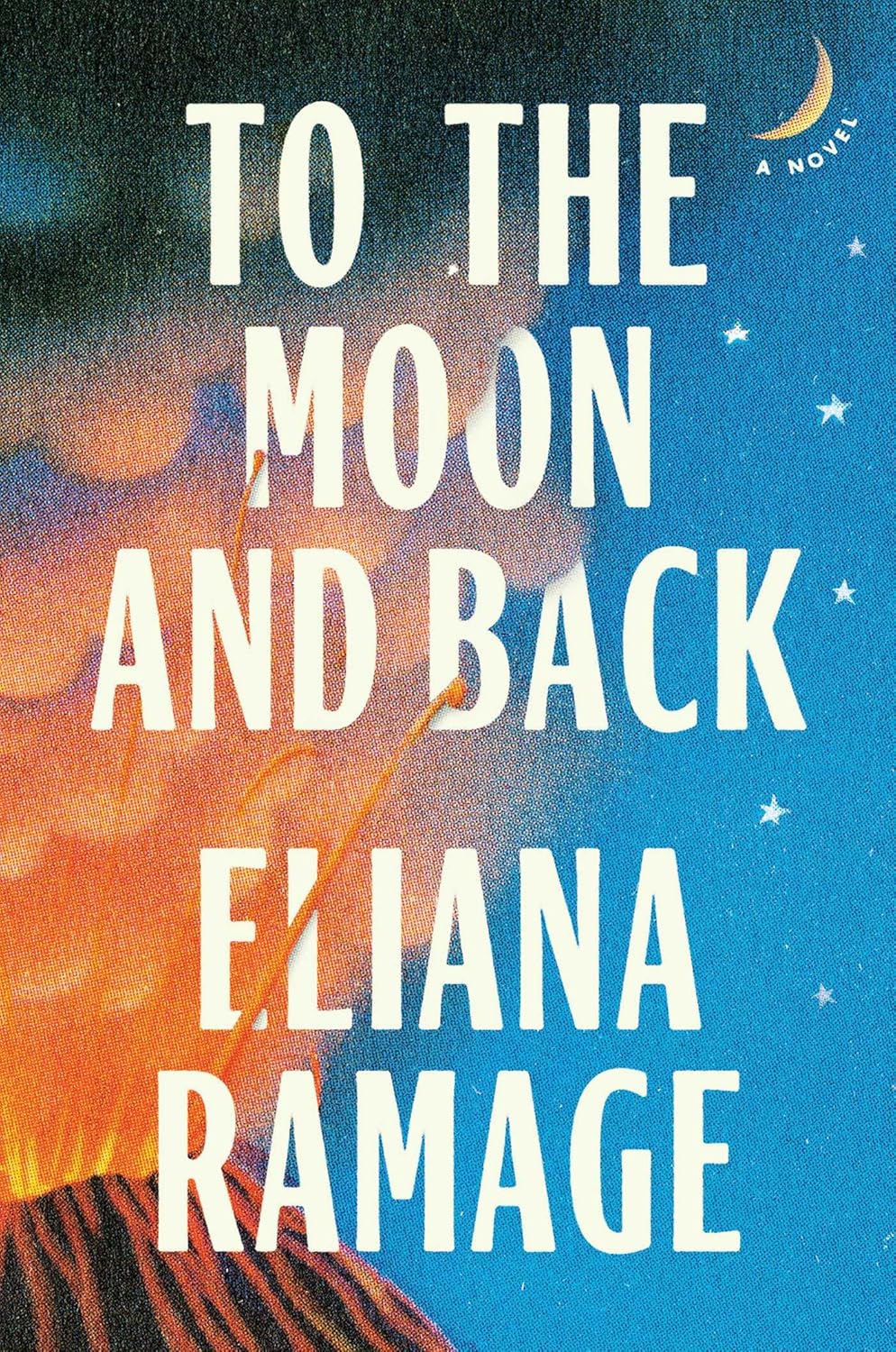
Following Friday’s review of To the Moon and Back, here’s Eliana Ramage: Personhood Isn’t Static.


Eliana Ramage holds an MFA in fiction from the Iowa Writers’ Workshop. She has received residencies and fellowships from the Kimmel Harding Nelson Center, Lambda Literary, Tin House, and Vermont Studio Center. A citizen of the Cherokee Nation, she lives in Nashville, Tenn., with her family. Her first novel, To the Moon and Back (Avid Reader Press, October 28, 2025), is the spellbinding story of a woman who aims to become the first Cherokee astronaut, with her loved ones and generations of history as backdrop.

Why space? (Which came first: Steph or the astronaut dream?)

Eliana Ramage

(photo: Leah Margulies)

Actually, Della came first! I started writing about Della when I was about 23 years old. I loved her. For me, she’s the easiest to love. I wrote a novel draft from her perspective, astronaut-less, and when I brought in Steph there was still something missing. When Steph turned out to really want something (space travel!), and when she came to live in the same fictional world as Della instead of in a separate project, I got what it meant to need an engine in a novel for the long haul.

As for why space? I love space! I’ve always loved it, since I was a kid watching Star Trek: The Next Generation with my brothers. The show taught me to have optimism when it comes to the far future. It’s easy to feel like there’s no point in our efforts towards good–for other people, for the earth, for both–when you assume we will always do terrible things to each other. Space exploration, an extremely long-term group project, carries a lot of weight for a novel that’s interested in who we are and what kind of world we’ll leave behind. When I say “group” I mean humanity, and I also mean specifically Cherokees. I wanted Cherokee people in the novel to grapple with their identities, as people everywhere have done forever. What does it mean to be Cherokee? When we’re living on Mars–an inclusive and optimistic “we,” because I’d be dead or unwilling–that question will still be there.

Is this a coming-of-age novel?

At first the book was heavily focused on Steph’s early years, because I defined “coming-of-age” more narrowly and as the kind of writer and reader I was. And that’s still true, I’ll read any yearning queer kid with big ambitions!

What changed is that I got older. This book took me up to age 34, with stops like coming out and having a child. The mom-as-side-character turned out to be (of course!) more complicated than I’d thought, and I revisited Steph’s first love with different expectations for what it could hold.

This is still a coming-of-age novel, but now I know personhood isn’t static after a character makes it through their teens. We see how much Steph changes and surprises herself, all the ways her life expands outwards for better or for worse, which is something I didn’t know to expect for myself in my early 20s. Now it’s one of my best hopes for anyone.

You’ve created an interesting blend of points of view and epistolary fragments. How did you choose which voices to highlight?

Kayla, Hannah, and Della are all characters who are or who become hyperaware of how they’re understood by others. For Kayla there’s the pressure to be a certain kind of Native woman on social media; for Della there’s the worry that her story will continue to be told for her after her Native identity was picked apart on a national scale; and for Hannah there’s the tension between what to share with her children and what to keep for herself.

A few years ago, I was messing around with my computer on an airplane and thought it would be a funny exercise to ask how Steph might represent herself on Tinder over about a decade. But 10 years of Tinder profiles is 10 years of choosing how you want to be seen and judged. It went from a joke to something deeper, and I leaned into epistolary forms for other characters. Stepping outside of first-person point-of-view for Kayla, Hannah, and Della meant a more conscious engagement with questions of representation.

Your characters navigate identity, trauma, science, ambition, romantic and familial relationships. How did you handle keeping so many threads balanced in the larger narrative?

I’m so glad I get to talk about school supplies! There were so, so many school supplies. While the novel itself went through a lot of change, I stayed obsessed with trying to organize it. Post-it notes, highlighters, stickers on top of Post-it notes to indicate several things tracked within a single scene… I was inspired by [author] Claire Lombardo, who back in grad school built the most beautiful storyboards and color-coded charts that I’ve ever seen.

Between drafts, I’d make storyboards where different threads were different colors (i.e., “Green is science, according to this green index card this scene is science-y, oh NO wait, why have we not seen a green sticky note for 100+ pages?!”).

By the time I made it to my last three years of edits, I had an evolving system of checklists. As I read each chapter, I’d make myself check off that yes, this chapter had addressed/touched on/hinted at [insert long list of threads I was determined to keep in balance]. Some of the things I’d check for were broad, like the heading “Astro!” to make sure the novel hadn’t strayed from its interest in space. But some were weirdly specific, like (for example) “[Bicycle] Where?” That one meant that for a few objects that really don’t spend much time on the page, I wanted to remember where they’d been stashed and ask myself if they were needed.

To what extent are Steph’s or Della’s remarkable lives based on true stories?

Steph became a character after the first Cherokee Tri-Council meeting, which I attended in 2012 with my family and two Cherokee friends. That first version of Steph wasn’t interested in space, which is wild to me now. Looking back, I think No-Space Steph would react to other people and their actions, but she didn’t have that drive to push forward on her own.

A few years later, long after Steph had become an aspiring astronaut, my brother began a Ph.D. program. He was studying the political and economic history of the Cherokee Nation between 1866 and 1906. Just about everything I was starting to learn from him was surprising to me–regarding both our nation and our own ancestors.

One day, when I was visiting friends in Oklahoma, my brother invited me to join him in the Western History Collections at the University of Oklahoma. That, along with several years of sibling talks that would follow, complicated and deepened my understanding of Cherokee identity and how it was understood in the past and today.

I wanted that for Steph, particularly as she looks to the future, so I decided that up until the year 1860 her ancestors would be my ancestors. Lending Steph a real, research-based history wasn’t the key to many answers for Steph. But it raised questions! And, importantly, it added Steph to a conversation that had begun long before her.


This interview originally ran on March 25, 2025 as a Shelf Awareness special issue. To subscribe, click here, and you’ll receive two issues per week of book reviews and other bookish fun.

Maximum Shelf: To the Moon and Back by Eliana Ramage

Maximum Shelf is the weekly Shelf Awareness feature focusing on an upcoming title we love and believe will be a great handselling opportunity for booksellers everywhere. The features are written by our editors and reviewers and the publisher has helped support the issue.

This review was published by Shelf Awareness on March 25, 2025.


Eliana Ramage’s debut, To the Moon and Back, is a far-reaching, ever-surprising, intricate novel about identity, family, ambitions, career, romance and, yes, astronomy.

When readers meet Steph Harper, she is almost six years old. “I imagine her terrified. Our mother. Two children in the backseat. She drove like a woman followed, even after we left him at the foot of that tall hill. There was blood there, back in Texas, and tiny shards of glass still covered my sister.” Their mother, Hannah, is in flight from a vague threat–abuse, trauma–with her two little girls in tow. Precocious Steph is already developing her obsession with astronomy. Kayla is just a baby, sparkling in broken glass but unscathed by what haunts the others: “Our mother would never have Kayla’s confidence because Kayla had no memory of another self. Of another place. Of what was possible, here on earth. Maybe what was wrong with our mother was also wrong with me.”

From Texas, the fragile family resettles in the Cherokee Nation, in Tahlequah, where Hannah hopes to recover community and reclaim her heritage. Steph and Kayla learn to speak Cherokee. Steph watches the sky and fine-tunes her plans to become an astronaut: when readers meet her for the second time, she is 13 and concerned only with getting into Exeter Academy, which she hopes will put her on course for Harvard and then NASA. She studies the biographies of astronauts and the hard science she will need, with the help of a telescope gifted to her by her mother’s new boyfriend, Brett. “It had been my goal to understand the origins of earth, the universe, and everything in it by my fourteenth birthday. I was behind schedule.” This dream is what gives Steph’s life focus; she needs this to live. “I’d picture an astronaut watching me back. Some astronaut would call his daughter through mission control and she’d say tell me what you see and he’d say oh, the Northern Hemisphere, North America, and that would be true, but also true was Oklahoma, a field, a tree. A girl alone, looking up.” It is also true that the dream, which in some ways saves her, may be what keeps her from finding happiness in relationships on Earth: with her mother, her sister, or the love of her life.

Distracting her along the way are her feelings for girls, which she suspects will not be appreciated in Tahlequah: “If I could figure out the money and the applications and the getting myself to college, I decided I would be gay. Or bi, maybe? At schools like Harvard, they let you figure that out.”

As Steph moves from Tahlequah to Hollis College in rural Connecticut, a parallel character is introduced. She was named Della Owens at birth, when she was adopted by a Mormon couple in Provo, Utah. But as the center of a legal case resting upon the Indian Child Welfare Act, she became known as Baby D. Many Native Americans believe she belongs with her people. Della’s path intersects Steph’s when they find themselves at Hollis together, and they will intertwine from there, coming of age in parallel and navigating romance, Native heritage, and ambition.

For a portion of the book, Della’s first-person voice alternates chapter-by-chapter with Steph’s, which otherwise dominates. Later, these perspectives are joined by various epistolary elements: e-mails, social media posts, text messages. To the Moon and Back excels in surprise; these points of view are only one area in which Ramage takes her reader in unexpected directions, geographically and otherwise. The novel is gloriously expansive, epic, and sweeping. It covers just a couple of decades, from 1995 to 2017, although the history of previous generations certainly comes to bear on the present timeline. But like Steph herself, the story keeps reaching beyond its expected limits. It is not only a coming-of-age story, but also about a variety of Native American experiences, and about queer experiences and those intersections. It’s about lofty goals, astronomy, and yearning. Just when readers grasp the enormity of Steph’s single-minded focus on becoming an astronaut, she reaches further, to becoming a better human being. The events of Steph’s life are often sensational, but always, in Ramage’s expert storytelling, believable.

So many threads would be too much for a less skilled writer to wrangle, but these characters are developed with such steady pacing, depth, and perfect detail that they always feel natural. A plot summary with spoilers would sound, perhaps, absurd. But To the Moon and Back is anything but. It is a complex, absorbing, thought-provoking novel, compulsively readable. Steph is exceptionally eccentric, and her story is also universal, all-encompassing. Her impressive character arc comes, eventually, to wisdom and an unlikely peace: “I want to love the universe, even if I don’t know what it is. I do not have to know what it is.” Readers will be enriched for having shared these pages with her.


Rating: 9 M&Ms.

Come back Monday for my interview with Ramage.

Maximum Shelf author interview: Aaron John Curtis

Following Friday’s review of Old School Indian, here’s Aaron John Curtis: The Punch Is Real.


Aaron John Curtis is an enrolled member of the Saint Regis Mohawk Tribe, which he’ll tell you is the white name for the American side of Akwesasne. Since 2004, Curtis has been quartermaster at Books & Books, Miami’s largest independent bookstore. His debut novel is Old School Indian, a spirited, funny, and gravely serious story about a man who travels from his longtime home in Miami back to the reservation in New York State where he was raised, to process a serious medical diagnosis. It will be published by Hillman Grad Books/Zando on May 6, 2025.

Abe’s story closely mirrors your own. What are the pros and cons of writing autobiographical fiction?

Aaron John Curtis (photo: Cacá Santoro)

The hard part is trying to disguise people who don’t want to be recognized. [I’ve been told] that if you change someone’s physical description, they never recognize themselves, because no one is aware of their own behavior. So I kept that in mind. But I was lucky in that for all the stories, I got permission. The hard part is some of the stuff goes to some pretty dark places. Hot-topic cold-prose is one thing, but it’s easy to go surface, to just say, this happened. My editor was so good at “drill down here, dig a little deeper,” and you do, and it’s emotional, and you lose that day being sad. That’s hard. At the beginning the hard part was actually doing it. Because I had in my mind if you did autofiction, it didn’t count as a real book, like I wasn’t a real author, it wasn’t legitimate.

Because you didn’t make it up?

Exactly. But this is all true and it’s all made up! It’s this weird mix. My writer’s group was really like, just go for it. Once I had the first draft, I was like, oh, this is how I want to write books from now on.

Why this story now?

I did not realize it at the time, but I had been having symptoms for a few years by the time [my illness] started to present. I was in the mountains of northern California, harvesting pot actually, and I had this mark on my leg. Oh, I’ll get that checked out when I get back to Miami. And because I’d been in the mountains, they thought it was MRSA. They treated it like MRSA, and it started to spread, and it was months of them trying to diagnose it. Dermatologist, rheumatologist, dermatologist, rheumatologist… they lived in the same high-rise… all this is in the book. They would have dinner and call me at like 10 at night, sounding like they were tipsy.

They have that sheet of paperwork where they check off what they’re testing for. That second time they were testing, the doctor checked off the whole sheet. And when we got back the results, they were all negative. They didn’t tell the doctor anything, and she just stared at me and said “you’re fascinating.” And I was like, “yeah, fascinating.”

Just trying to deal with that anxiety–whatever I’d been trying to write before didn’t matter. Just to get through my day to day, work a job, support my wife, and all that stuff–I had to get it out somewhere. And it was going toward the page. At the time I still wasn’t diagnosed; I didn’t know what was going to happen to the protagonist, either. And someone in the writer’s group said, well, what if there was a healer? And I was like, oh my god. A Native healer. Thanks for that trope. In my head, I was like, that’s borderline offensive. But then it was like, oh. Hmm. I know a healer. I’m related to a healer. Okay. Yeah. Imagine what getting him involved would look like.

How did you come up with Dominick as narrator? Seems like he was fun to write.

He’s got a little attitude. In my first draft, the narrator was first person, and was pretty hostile toward the reader. I don’t know if that was anger toward the disease or all these issues that had been on my mind about just being Native in life. I imagined a white reader and I had a lot of anger to take out. [Author] Diana Abu-Jaber kind of runs lead on my writer’s group, and she suggested I do it third person, see what that unlocked. That group is mostly older, middle-aged professionals, and then I had a second writer’s group that was younger and all women of color but for one guy. And they had read the first three chapters in that first person, and then the next were in third person, and they said it lost something. One person said, if I read that first book, I’d be running around telling everyone this is the best book ever. The second book, it was still good, but I wouldn’t have had that same reaction. Oh. Hmm.

But I was really digging what the third person was doing. I don’t know exactly when Dominick started. Maybe it was when I was doing the poetry.

Also, I don’t live on the reservation, I never have, and I wanted someone who’s a little more authentically Mohawk than Abe is. I hoped that would address the fact that I’m not born and raised there.

You operate as both novelist and poet. Which is your home?

The fiction comes a lot more naturally. I noticed, as I was editing the book, I was getting better at doing the poetry. And my original thought was, because Abe is working on it as well, as you read the book, the first set of poems would be kind of bad. And by the end you’d be like “wow, he can really do it now.” By the time we came to the final draft of the book, each poem was as good as I could make it.

Poetry is something I want to do more of, definitely a challenge.

What haven’t I asked?

Did Tóta really do a split when she was 72? Yeah, she did. And [her] punch is real.


This interview originally ran on November 18, 2024 as a Shelf Awareness special issue. To subscribe, click here, and you’ll receive two issues per week of book reviews and other bookish fun.

Maximum Shelf: Old School Indian by Aaron John Curtis

Maximum Shelf is the weekly Shelf Awareness feature focusing on an upcoming title we love and believe will be a great handselling opportunity for booksellers everywhere. The features are written by our editors and reviewers and the publisher has helped support the issue.

This review was published by Shelf Awareness on November 18, 2024.


Old School Indian by Aaron John Curtis is an engrossing trip cross-country and through time with an unusual protagonist-and-narrator duo, who together explore family, culture, history, identity, health and healing, community and connection. With serious situations and heartbreaking turns, this debut novel is both thought-provoking and hilarious.

When readers meet Abraham John Jacobs (Abe), he stands half dressed in his great-uncle’s trailer on the reservation where he was born and raised. He’s 43 years old, ill with a yet-undiagnosed malady, and he’s reluctantly agreed to let Uncle Budge try a healing. “If Rheumatologist Weisberg hadn’t canceled his appointment the day before he was supposed to finally get a diagnosis, Abe would probably still be in Miami, trying to decide which Halloween parties to attend.” Budge is an aging former alcoholic with a Butthole Surfers t-shirt stretched across a big belly; his spiritualist mystique fits in between more pedestrian concerns. “Not everythin’ we’re put here to do feels great,” he points out.

Abe has flown in for this visit, or recuperation, minus his wife, Alex, with whom relations aren’t so strong at the moment. The narrator, Dominick Deer Woods (whose identity won’t be clear for some time, and who is given to direct addresses to the reader), acknowledges that “Abraham Jacobs might not sound like an ‘Indian’ name, but you’ve got the hardcore Catholic first name and the surname of what used to be the biggest landowners on Ahkwesáhsne. So if you’re in the know, then you know the name Abraham Jacobs is rez as hell, cuz.” Feisty, bold, and brimming with voice, Dominick enriches this account at every turn.

This latter-day Abe, in Ahkwesáhsne in 2016 with the yet-to-be-diagnosed autoimmune disorder, anchors the novel’s present timeline, which is interspersed with flashbacks to the story of Abe’s life up to this point. Dominick relates Abe’s childhood and teenaged years in less detail, but focuses in earnest when he leaves the rez to attend Syracuse University, where he immediately meets Alex, a larger-than-life, sparkling, Miami-born, blonde musical theater major with whom he will be permanently infatuated. With Alex, Abe moves from Syracuse to Virginia to Miami, enjoys an expansive and mostly fulfilling sex life with a multiplicity of partners of all genders, performs at open mic nights as a budding poet, and eventually marries. Alex has been a regular on the rez for Thanksgiving holidays (a high point for the Ahkwesáhsne Kanien’kehá:ka, who white folks know as Mohawk Indians, and, yes, Dominick gets the irony) for decades. But he will take his time revealing why she’s not here.

At the rez, Abe gets sicker. The lesions on his lower legs look terrible but feel okay; his joints look fine but cause him excruciating pain. His medical team back in Miami is slow with a diagnosis, but when it comes, it’s grim. His faith in Uncle Budge’s healing increases with his pain, desperation, and reluctant observation of the older man’s wisdom. Lying on the carpet to be massaged is one thing; a much harder part of the process involves Abe examining his relationship with his family and the reservation community. The situation with Alex–still at home in Miami while Abe deteriorates up north–continues to decline. Unexpected help may yet be on the way.

Dominick Deer Woods brings intriguing dimensions to this novel. He is “your proud narrator,” while Abe is “our humble protagonist.” He reviews that Abraham Jacobs is “a Native name but that doesn’t make it an Indian name. Dominick Deer Woods, though? You could light a peace pipe with it.” Dominick in these and other respects exists in contrast to Abe. Where Abe is serious, hesitant, and out of touch with Ahkwesáhsne, Dominick is hard-hitting, informed, playful, angry, and very funny. He offers an interplay, a not-quite-literal dialogue, throwing Abe into relief, helping to illustrate and define him. He also offers poetry, and one of the most electrifying descriptions of writing poetry that readers are likely ever to come across.

Abe’s life and Dominick’s smart observations of it present a nuanced investigation of family (by both blood and marriage) and several layers of identity: what it means to be Ahkwesáhsne Kanien’kehá:ka (or, if you must, Mohawk); to be from the rez, on the rez, off the rez; and to navigate American history and modern cultural tropes. Old School Indian is concerned with gaps and distances: between the reservation and Syracuse, between Syracuse and Miami, between Abe and Alex, between Abe and his family back on the rez, between Abe and Dominick. As middle-aged Abe confronts difficult truths about himself, his body, and his relationships, he will consider how he wants to move through the world in large and small ways: in poetry, in love, in health. Dominick observes about a teenaged band that plays on the reservation, “No gig… will be as well-received as this one, since the reality of them will always be chasing listeners’ memories. But they have tonight, and they play and sing like the world is ending tomorrow.” Abe may yet do the same, and he and readers will be better for it.


Rating: 8 gingham sheets.

Come back Monday for my interview with Curtis.

Maximum Shelf author interview: Lisa Genova

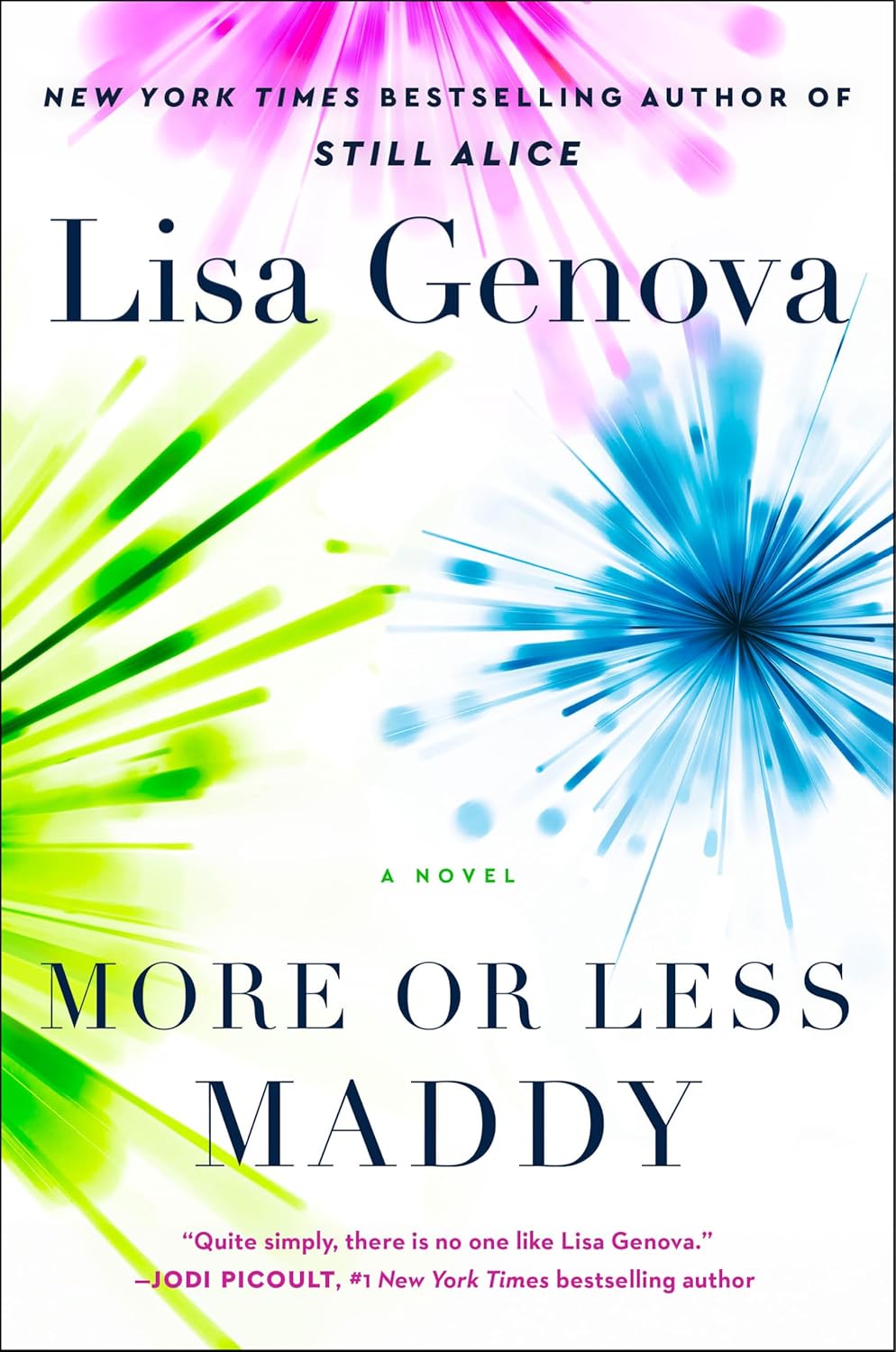
Following Friday’s review of More or Less Maddy, here’s Lisa Genova: On Empathy.


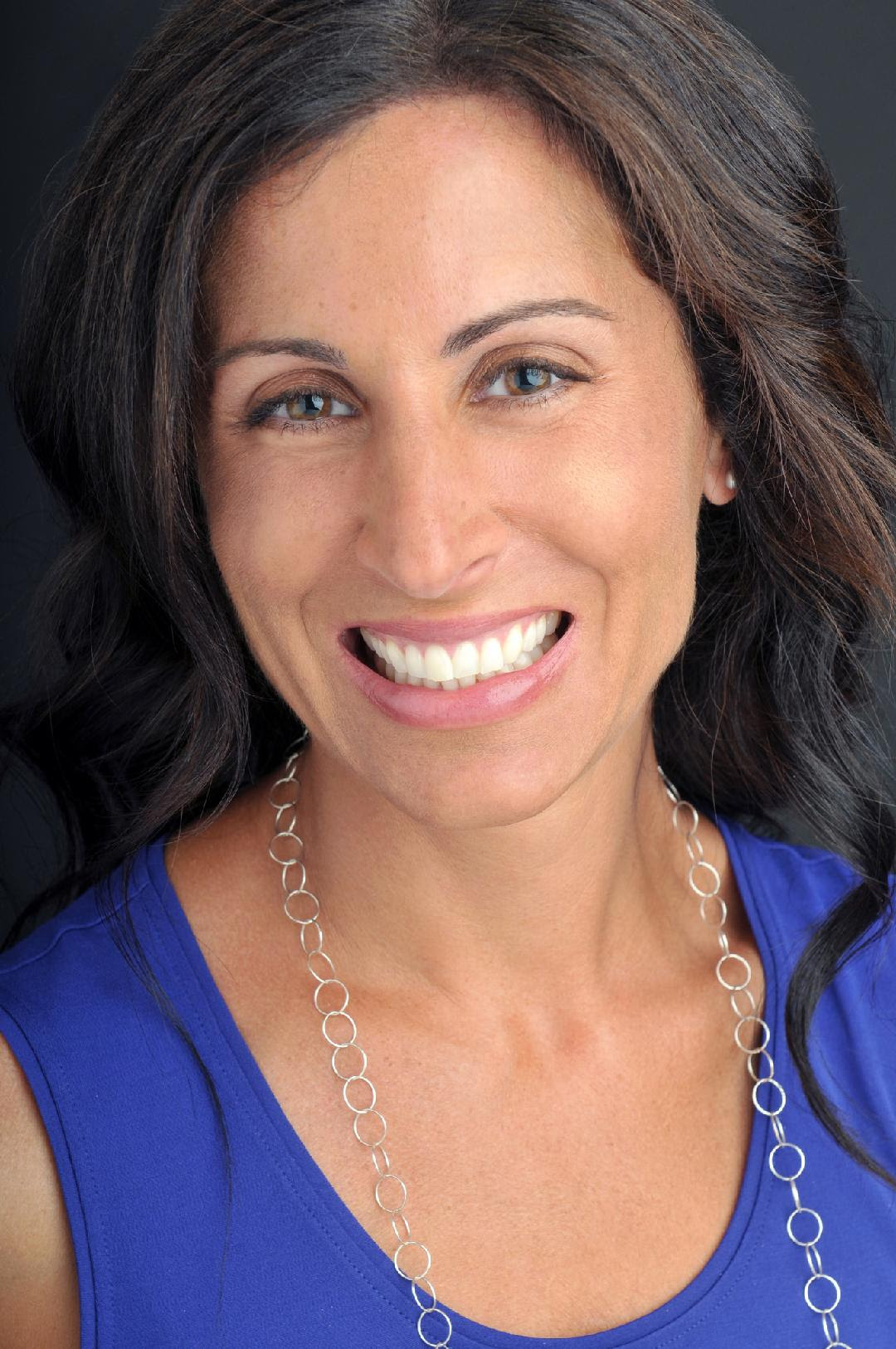
Lisa Genova–who’s been hailed as the Oliver Sacks of fiction and the Michael Crichton of brain science–is the author of Still Alice (adapted into an Oscar-winning film starring Julianne Moore), Left Neglected, and Remember: The Science of Memory and the Art of Forgetting, among others. Genova holds a degree in biopsychology from Bates College and a Ph.D. in neuroscience from Harvard University. Her sixth novel, More or Less Maddy (Gallery/Scout Press, January 14, 2025), features a young woman coming to terms with bipolar disorder.

Why bipolar?

Lisa Genova
(photo: Greg Mentzer)

I’m excited to talk about the distinction between a mental illness and a neurological condition. There’s a stigma attached to the idea of mental illness. I can’t trust you, you’re crazy, you’re dangerous–all of that gets piled on immediately. We would never refer to ALS, autism, or Alzheimer’s as a mental illness. And yet depression, schizophrenia, bipolar–those are also neurological conditions. To distinguish them as mental illness seems to add an unnecessary burden on these folks that this is somehow their fault.

My neuroscience background is my unique lens on fiction and it’s why I write, because these topics are so daunting and overwhelming, and fiction is such a lovely place to help people empathize. I picked bipolar disorder because I had a sense it was everywhere.

Every time I said my next novel was going to be about bipolar disorder, it got the same reaction: a mix of gasps, whispers, and applause. That’s never happened with any other topic I’ve announced. People started DM-ing me on social media: I have a mother, I have a brother, I have a dad. Not necessarily offering to talk to me, although a lot of people did, but others were just thanking me already for this book I hadn’t written yet. I felt an enormous sense of responsibility and opportunity to contribute something meaningful.

Your website identifies you as an “empathy warrior.” Is that what drove you to fiction?

My grandmother had Alzheimer’s. I was 28 when she got the diagnosis. I had a Ph.D. in neuroscience. Alzheimer’s was not my area of expertise, but I had the vocabulary. I dove into the research, I read on how the disease was managed from a clinical perspective, but what was missing was, what does it feel like to have this? And how to feel comfortable with her Alzheimer’s. I had a tremendous amount of sympathy for her, and for us, but I did not know how to be with her. If she started talking to plastic baby dolls, I left the room. I let my aunts take over. I felt heartbroken, frustrated, scared, and embarrassed. I felt sympathy, but sympathy actually drives disconnection. Keeps us emotionally separate. I didn’t know how to get to empathy. I didn’t have the understanding or the maturity to just be with her and imagine what it’s like to be her in a room, not recognizing it as her home. Everything I’d been reading about Alzheimer’s was from the outside looking in. The scientists, caregivers, and social workers have valuable points of view, but none of them were the perspective of the person who’s living it. Fiction is where you get a chance to walk in someone else’s shoes, find that human connection, that shared emotional experience. That was the beginning. When Still Alice worked, and I got feedback about how much it helped, there was so much appreciation–I just knew. I love doing this, and now I feel the value in it. I’m going to keep going.

How did you create Maddy?

I begin all my stories by reading as much as I can. I read lots of memoirs and textbooks, and then I go out and talk to people. For this book I sought out the authors of some of those textbooks. I talked to the guy who runs the bipolar treatment center at Mass General. I found a psychiatrist at McLean Hospital. I spoke with psychiatrists from all over. If you have diabetes, there’s a single protocol, no matter where you live in the world. With bipolar that is not the case. You go to 10 doctors, you’re going to get 10 different prescriptions. I’m always trying to tell the truth under imagined circumstances, but one thing I’m very cognizant of is my books are known for being informed. They’re researched, and they’re going to be used as a blueprint. They’re used in medical schools, in OT, PT, speech pathology. I wanted to get the best practices right. My experts are always the people who live with it and their families. I spent a lot of time talking with lots of people. It’s an ongoing conversation, it’s in-depth and really intimate, and I’m grateful that people trust me with their stories.

Bipolar begins young. I wanted Maddy to be a woman. I wanted to consider the expectations of her to live a normal life as a woman, and the limitations that imposes. If this starts just as you’re launching a life, how disrupting and confusing would that be? I wanted her to be a college student, with all those expectations and pressures. In making her a comedian, I wanted her to choose something that was outside the stability of the expected life. Comedy I liked because it’s very public; she’d be in front of people. Comedians sort of live the bipolar experience. If you’re killing it, that’s the highest high. You’re connecting, everybody gets you, there’s a human bond. If you’re bombing, it’s the lowest of lows. It’s a death. Weirdly, that swing is a nice metaphor for what it could feel like to be bipolar. I’m a big comedy fan, so this gave me a lovely excuse. Comedians who are great at what they do, it’s because they’re speaking truth. They’re tapping into a vulnerability in the human condition. If I could write my character’s comedy and that progression toward having something meaningful to say about accepting herself with bipolar, that would be really cool. It was terrifying, too, because I’d never written comedy. I did take a standup comedy writing class and I did a five-minute set.

Did you discover a new calling?

Oh no. Ohhhh, no. Not going to quit my day job.

Do you consider yourself an activist author?

That’s what the “empathy warrior” is about. It’s about humanizing, destigmatizing. These books are an opportunity. If I see someone with dementia, or who might be manic, my reflexive response isn’t, I need to get away from that. My response becomes more, I’m not afraid of you. How can I help?

I advocate for resources for care and for research. In the author’s note of this book I send people to the International Bipolar Foundation for more education, and to donate money if they’d like. I’ve raised millions of dollars for Alzheimer’s care and research. And we’re 15 years out from Still Alice, so I stay as an activist, advocate, empathy warrior. I want my books to be a reason for people to learn more, to contribute, to offer help.


This interview originally ran on August 27, 2024 as a Shelf Awareness special issue. To subscribe, click here, and you’ll receive two issues per week of book reviews and other bookish fun.

Maximum Shelf: More or Less Maddy by Lisa Genova

Maximum Shelf is the weekly Shelf Awareness feature focusing on an upcoming title we love and believe will be a great handselling opportunity for booksellers everywhere. The features are written by our editors and reviewers and the publisher has helped support the issue.

This review was published by Shelf Awareness on August 27, 2024.


Harvard-trained neuroscientist Lisa Genova debuted as a novelist with Still Alice (2007), about a woman who is diagnosed with early-onset Alzheimer’s disease. Genova’s later novels Left Neglected, Love Anthony, Inside the O’Briens, and Every Note Played feature characters with hemi-spatial neglect, autism, Huntington’s disease, and ALS, respectively. Her sixth novel, More or Less Maddy, follows a young woman with bipolar disorder. As ever, Genova brings both an expert understanding of the neuroscience and a masterful eye for compelling characters in an emotionally textured narrative. Maddy’s story is completely absorbing; it may keep readers up all night.

Maddy Banks has had a privileged upbringing in suburban Connecticut. There were some tough times in her early childhood, and her father is a shadowy figure. But since her mother, Amy, remarried, it’s been easy: dinners at the country club, a popular boyfriend, a highly successful older sister, and an easygoing jock of an older brother. In high school, “each day was laid out for her like a matching outfit on a bed, when both her inner and outer worlds felt organized, predictable, happy, and light. Life was handed to her like a potted succulent, small and tidy and requiring little effort to maintain.” But the transition to college has not been smooth: “She remembers herself then… and it’s as if she was a different girl in another lifetime. She can’t pinpoint exactly how, but she doesn’t feel like she used to feel.”

Her first year at NYU is a shock: “The impossible-to-keep-up-with workload, living with a roommate who drove her crazy, having no clue what to major in, still not finding her passion or her tribe, losing [her boyfriend] Adam. Twice.” In her sophomore year, Maddy’s diagnosed at the student health center with depression. The antidepressants she’s prescribed help to set off her first manic episode, a big splashy event that results in her first stay in a mental hospital. Maddy and her family–who are loving, if not always graceful with the challenges they face–are in for a roller coaster.

In her more stable moments, and especially during the hypomania that often precedes full mania, Maddy develops an interest in stand-up comedy. Along with her love for Taylor Swift–and delusions about their friendship, with a budding business and creative relationship–Maddy’s passion for comedy becomes a trigger for her mother: getting excited about comedy, Amy Banks believes, means a manic episode is imminent. But while Maddy does not in fact have a personal relationship with Taylor Swift, she does have a gift and a passion for comedy. In Amy’s country-club world, this is not a reasonable life path. But Maddy wants it to be. It is one of the tricks of bipolar disorder that “real” excitements can be mistaken for illness, making it difficult for Maddy to pursue her legitimate dreams.

Maddy, her family, and readers learn about bipolar disorder together, with accompanying denial, anger, grief, the ups and downs of sorting out medications and side effects, and relapses. It is heartrending to see Maddy’s anguished efforts to come to terms with her disorder and to dissect what is real and healthy from what is delusion. Readers are privy to her self-talk: “It’s okay to feel disappointed and sad.”; “It’s okay to be happy.”; “It’s okay to be giddy.” It is one of the greatest gifts of fiction to allow readers into experiences that are not their own, to find empathy. Genova’s descriptions of Maddy’s episodes are evocative, clear, and relatable: “Before her hypomania ripened to rotten, there was a delicious sweetness to her thoughts and life. She had a massive amount of unearned confidence in her ability to do anything that struck her fancy. She made big dick energy look flaccid by comparison.”

Secondary characters are equally convincing and essential. Amy is capable of actions that frustrate Maddy (and readers), but she also genuinely wants the best for her child. Maddy’s sister, Emily, is almost too perfect–life comes easily for her, and it’s the life of their mother–but she is goodhearted, and that seems to be the life she truly wants. Maddy’s high school boyfriend, Adam, is one example of the gradual realization that things are not always as they appear. He had the right markers–basketball star, handsome, popular–but readers, and Emily, see some red flags in his treatment of Maddy, who goes on to make other exemplary friends and meet other objectionable characters along her rocky path.

It is an important element of Maddy’s development that she chooses to embrace her own unique self–her sense of humor, her interests, her differences–rather than follow the cookie-cutter plan laid out by her upbringing. “When Maddy was growing up, being normal was always the unquestioned goal…. Normal was her default, unexamined way of life. It meant fitting in, blending with the colors, sounds, and shapes around her.” All young people are out to find themselves; Maddy must live her own version of that. She is not defined by her disease, but is rather a complex young woman navigating the expected tumult of coming-of-age with added complications. Her story is affecting, harrowing, beautiful, and enlightening, as well as a great pleasure to read.


Rating: 8 notebooks.

Come back Monday for my interview with Genova.

Maximum Shelf author interview: Michael Idov

Following Monday’s review of The Collaborators, here’s Michael Idov: The Moment When Things Open Up.


Michael Idov is a novelist, director, and screenwriter. A Latvian-born American raised in Riga under Soviet occupation, he moved to New York after graduating from the University of Michigan. Idov has written for New York magazine and has been the editor-in-chief of GQ Russia. He is the author of Ground Up and Dressed Up for a Riot and has worked on film and TV projects including Londongrad, Deutschland 83, Leto, and The Humorist. He and his wife and screenwriting partner, Lily, divide their time between Los Angeles, Berlin, and Portugal. The Collaborators, coming from Scribner on November 19, 2024, is a lightning-paced espionage thriller.

Does this novel fit the spy thriller genre?

Michael Idov
(photo: Ilya Popenko)

I don’t think the spy thriller is a genre. I think it’s an umbrella milieu, like horror in film. There’s something about the clandestine world that works as a device for boiling down the issues that could be tackled in any genre. From le Carré’s best novels, basically great literature of British manners, to Mick Herron’s social satire, to outright farce and parody, or a post-modernist puzzle box like Ian McEwan’s Sweet Tooth, my favorite novel of his–the spy thriller novel has room for all of that. My goal was never to transcend or put a gloss or a spin on the thing. I love the thing itself and I wanted to do it justice. Any deviations from the formula are just things that naturally come through, dragged in by my own biography and personality, consciously and unconsciously.

Every genre offers both the writer and the reader enough elasticity that at some point the term becomes meaningless, unless it’s a very pure and formulaic example. Which sometimes, when executed well, can also be great. Readers are very savvy. They know the structure. They almost hum along with the melody, even if they’re hearing it for the first time. There is a certain pleasure in seeing every beat hit at the right moment in the right manner.

How much research did you do?

I gave myself two rules. Not being a spy, putting as much of myself into it as I could was the best hope for authenticity and verisimilitude for this book. So the rules were: at no point will any scene take place anywhere I haven’t lived myself. I wouldn’t be describing abstract cities, but specific intersections, streets, cafes. And, at no point will a character speak a language that I don’t speak. If I speak it badly, so will they. That’s why Maya’s French is so shitty, because mine is. There’s a sprinkling of Latvian and German, precisely because that’s the most I could do for the characters. But when it comes to actual research into the intelligence community–I’m lucky to have a few people in the OSINT world (open source intelligence), and this comes through in the character Alan Keegan. I am fascinated by that world, even more so than the “classic” intelligence agencies. I feel like OSINT is a force for good in the world more often than classic intelligence work.

Some things that may feel like genre inventions are taken directly out of reality. My favorite two examples: the opening is very explicitly based on the Ryanair Incident of 2021, when they called in a fake bomb threat to land a plane over Belarus, in Minsk, and yanked an opposition reporter off the plane and let everyone else go. Which led to Belarus becoming even more of a pariah state, and no international airlines fly over it since then. And the other thing that seems like a complete action-movie moment that’s entirely real is, in the fall of 2022 somebody hacked the Russian Uber equivalent, Yandex, and did send like 300 taxis to the same address, creating a traffic snarl that brought the city to a standstill. The moment I read about it, I knew I would use that real event as the climax of a car chase. There’s a huge paper trail around that incident, and people are arguing still whether this was the Ukrainians or some sort of harmless prank.

This goes to my general impetus behind the novel itself. Spy novels tend to come in two flavors: realistic and fantastic. I’m very fond of the term spy-fi that people use to describe things like the Mission Impossible movies. There is room for something that is very realistic and researched and true to the underlying geopolitical situation, but at the same time still finds room for a couple of car chases and a shootout. Because these things do happen! To prove that point, I’ve used the ones that actually have happened.

How do you stay organized for such a complex novel?

Everything has to be plotted out, structurally–as screenwriters rather unpleasantly put it, “beat out” in order to function. I have a 40-page document that’s just the chronology, down to the hour of what happens when, and how long it takes every character to move from point A to point B, and what time it is in every time zone. You have to make sure that there are no whoppers, like oh, it’s the middle of the night in New York, so you can’t describe people going to work. It is a giant Lego set.

That said, I did try to leave room to surprise myself. Oftentimes this happens when you imagine a space in minute detail, and then let your characters go in that space and surprise yourself with what your characters can do there. You build a room and then you make up what happens based on what props you’ve given the characters. Maybe this is where my movie brain took over. Okay, I have a clear view of this, wouldn’t it be cool if X did Y in these rooms.

This novel is expertly paced. What’s the secret?

Just being a fan of the genre. Imagining myself as a reader and not wanting to bore myself. When you really feel for these characters, at some point you develop a feel for when things start to drag: I’ve got maybe two more pages here before something needs to happen–as Raymond Chandler said, when you don’t know what to do, have two people burst in with guns.


This interview originally ran on July 17, 2024 as a Shelf Awareness special issue. To subscribe, click here, and you’ll receive two issues per week of book reviews and other bookish fun.

Maximum Shelf: The Collaborators by Michael Idov

Maximum Shelf is the weekly Shelf Awareness feature focusing on an upcoming title we love and believe will be a great handselling opportunity for booksellers everywhere. The features are written by our editors and reviewers and the publisher has helped support the issue.

This review was published by Shelf Awareness on July 17, 2024.


“When the MiG-29 swung into view, barely 50 yards portside, passenger Anton Basmanny in seat 12A didn’t feel all that surprised. In fact, he even knew the reason it was there. He was the reason…. When you were the Kremlin’s least favorite blogger, a lot could happen.” Thus opens The Collaborators, a ripping gem of a novel by Michael Idov (Ground Up; Dressed Up for a Riot) that transports readers around the world–Minsk, Moscow, London, Berlin, Los Angeles, Portugal, Morocco, and more–and through a range of geopolitical and interpersonal intrigues. Propulsively paced, and containing as much humor, romance, philosophy, and whimsy as classic spy-thriller action, this brilliant novel will charm readers and linger long after its final pages.

After beginning with the plight of the Kremlin’s least favorite blogger on board a troubled flight to Riga, Idov’s narrative jumps to an American spy at work in that capital city. “At Yale, from where the CIA recruited him, Ari Falk had been an Army ROTC scholarship student… and a Slavic literature major: half meathead, half egghead. Add a Jewish name, desperate poverty, and tense foster-kid demeanor, and the result was so difficult to parse that most peers gave up without trying.” Falk likes Riga, but his job concerns him: he may be a bit too ethical, or even sentimental, for CIA work. “Falk felt like the farmer who adopted a new shelter cat each time a coyote ate the previous one. Once you subtracted the issue of intent, he ran a coyote-feeding program.” Falk is looking for Anton Basmanny, who has not arrived as expected.

Pages later, Idov introduces Maya Chou Obrandt, an aspiring actor, daughter to a Taiwanese-American mother and a Russian-American, self-made-billionaire financier father whose death by apparent suicide has just been announced on the news–but with no body, his fate remains unknown. Idle, frustrated, she sets off to search for her missing father. “As long as she was Maya Chou Obrandt, Girl Detective, she wasn’t Maya Chou Obrandt the twice-relapsed twenty-three-year-old addict, or Maya Chou Obrandt the corpse.” On their separate but intersecting missions, Maya and Falk meet by accident at a marina in Tangier, and team up as an unlikely duo: the disaffected CIA agent and the wayward heiress, who uncover decades-old plots beyond either’s imagining.

The Collaborators features short, punchy chunks of narrative switching close-third-person perspectives between a number of characters. Anton, Falk, and Maya are joined by a Russian bagman, a British open-source intelligence innovator with no poker face, and players from various espionage agencies, all lively with idiosyncrasies and multilingual dialog. But all are not what they seem, as identities shift and allegiances come into question: a teenaged Jewish boy at a refugee camp near Rome in the 1980s exhibits commercial acumen that attracts the attention of an American spy; a striking older couple fly business class but are untraceable; Russian agents across history and an aging CIA man intersect in unexpected ways. Not all the characters whom readers will meet, and even like, survive until the novel’s end, but Idov makes every loss and gut-punch count. The action opens in 2021, but events appearing as flashbacks from the Cold War through the 1980s and ’90s strongly influence that present. Idov spins a complex plot, spanning decades and much of the globe, but it proceeds at a lively pace: beware the late-night binge read.

Idov’s many strengths include line-by-line clever riposte (“stop looking at me like I’m a talking dog,” Maya tells Falk when the latter is indeed impressed by her reasoning) and the details that make his characters individual and often lovable (a band t-shirt, a love for bad tea). Readers with an interest in the geopolitical intrigue will certainly be drawn in by modern-day plots involving telecommunications, commerce, and machinations of power, but it is equally rewarding to sink into the dramas of love affairs cut short by espionage (one character’s sacrifice is labeled Faustian by another who may face a similar choice).

Although it does excel at certain features of the espionage thriller–car chases, shootouts, and double- and triple-crosses–The Collaborators is by no means a book for genre readers alone, or even primarily. There is much to love for anyone who appreciates an engaging story, and despite its plot-related strengths–compelling pacing, adrenaline-charged action sequences–the story at heart is character-driven. Characters espouse thought-provoking philosophies and go to great lengths to navigate romances challenged by international intrigue. Despite the body count, the novel often harbors a lovely, even feel-good tone.

Idov’s intelligent, emotive spy novel is funny and sweet, as well as blood-soaked; clever and riveting in its plot twists; and focused on idiosyncratic characters first and foremost. No special expertise in Russian intrigue is required, nor even a special interest in the espionage genre. Brilliant, entertaining, rocketing, and unforgettable, The Collaborators is not to be overlooked.


Rating: 8 glasses of tea.

Come back Friday for my interview with Idov.

Maximum Shelf author interview: Rachel Kushner

Following Monday’s review of Creation Lake, here’s Rachel Kushner: A Woman Up to No Good.


Rachel Kushner is the author of three acclaimed novels, Telex from Cuba, The Flamethrowers, and The Mars Room, as well as a book of short stories, The Strange Case of Rachel K, and The Hard Crowd: Essays 2000-2020. Creation Lake (Scribner, September 3, 2024) is a captivating novel about an American woman operating as an independent spy in France who finds herself questioning her own worldview.

Where did this novel begin for you?

Rachel Kushner
(photo: Gabby Laurent)

First was the idea of a commune of young Parisians decamping to a remote part of southwestern France, where they struggle to farm on rocky soil, and are watched by the police. This is a milieu that, how shall I put it, is not at all unfamiliar to me, and I always thought would make a great novel.

Next was the area itself, based on real places I know well, that are rich with ancient caves, with traces of life going back half a million years. For a minute I toyed with writing a novel set in prehistoric times. The dialogue would be challenging! It became a kind of joke, a self-taunt, to write cave people into fiction. I ended up setting the book in modern times (roughly 2013), but with one of the characters thinking kind of lavishly about the past.

So I had a setting: rural France, a fictional place based on areas I know intimately. I had a conflict: a group of activists who are on a collision course with French authorities. I had some ideas and themes about nomadism and cave dwellers and subversion.

But who would tell the story, and why?

Then it came to me: Several years back, a young environmental activist I didn’t know personally, but who was connected to people I do know, was entrapped by a woman working undercover for the FBI. He ended up charged with arson and sabotage and got 20 years in federal prison. He served almost nine years before his lawyers were able to prove the entrapment and successfully overturn his conviction. The case, and the idea of this FBI informant, got under my skin and I thought, what kind of person ends up becoming an agent provocateur? Who is this sort of woman, and how does she think? Later, a somewhat similar situation unfolded involving some people I know personally: a guy in their political milieu, who presented himself as this leftist activist, was actually a U.K. undercover cop, surveilling my friends. When he was exposed, publicly, it turned out that he’d been having sexual relationships with women in leftist movements around Europe. It blew up into a major scandal. He was outed and had to disappear into the private sector, spying on people for multinational corporations and the like (he’s probably still doing that now). The U.K. police have now been sued by several of the women that this undercover cop had relationships with. And this undercover cop himself has also sued the police, for “failing to protect him from falling in love.”

I decided to write a novel from the perspective of one of these sorts of spies–invented, not based on either case that I know about. My character has already been kicked into the private sector–where there are no rules, no oversight, and she doesn’t even quite know who her bosses are. She’s a spy and a narc, a woman up to no good, if also caught up in forces that are larger than she is (as we all are).

Do you think of this as a spy novel? What are your influences in that genre?

Not exactly, but it is infused with certain elements of noir, or my own version of noir, which is perhaps a broad category and mostly a mood, which might include spy novels and crime novels, thrillers, heists, assassination plots, international intrigue… but I don’t submit to the genre in the way that a true noir is expected to. I’m too in love with characters, the fun of dialogue, scenes ripe for comedy, and bigger questions about life, to write a straight spy novel. That said, I am a huge fan of the French crime writer Jean-Patrick Manchette and inhaled all of his novels over a summer while trying to first conceive of this book, so his greasy prints are probably all over it, if in a kind of oblique way, because he’s inimitable in the way his blazing dark humor verges on slapstick, while his protagonists are dead serious about weapons, and late-’60s Citroën models, and how to shoot to kill. Often, their plans go haywire, and what’s meant to be a tight, taut job ends up a full-blown fiasco. But I think that through reading him, I probably gave myself a permission that was new to me, to make things happen–to put plans in people’s heads, and guns in their hands, and to send in unwitting political stooges for a showdown.

How important are Bruno’s beliefs to this story?

Bruno is driven by the dilemma of what future we can believe in, when we know that no revolution is coming, and that capitalism is here to stay. His solution is to “leave this world”: to reject civilization and renovate entirely his own consciousness, and what it means to live and to thrive, without waiting for the collapse of the status quo, because he knows, deeply and terribly, that this collapse is not coming. He’s focused on the ancient past, and speculates on life before the written-down, in search of a time before society took “a wrong turn.” Many leftist critiques of capitalism tend to identify that wrong turn at the dawn of agriculture. For Bruno, it’s much earlier. He’s down on the Homo sapiens, altogether! He imagines that once upon a time a rich mélange of different genetic types of humans roamed Europe and Asia. The Neanderthal, long-maligned for having gone extinct, becomes Bruno’s “beautiful loser.” Surely the story isn’t simply that the poor “Thal” (as Bruno thinks of him) “couldn’t hack it.” So what did happen, and what was lost, when that line of humans dwindled to nothing and disappeared? And did they leave any signs for us, for how we might organize life? Bruno’s beliefs become increasingly important to the narrator and narc, as the plot, and book, move toward conclusion. And as the story’s master manipulator, everything comes down to her and what she’s got up her sleeve.

What makes the narrator a compelling protagonist?

She is capable, cunning, dissimulating, overconfident, blunt, blandly beautiful, and a heavy drinker. The novel is entirely from her perspective, and she is free to share with the reader what she keeps hidden from everyone else around her. She was a really good outlet for the crueler (and cruder) edges of my sense of humor. It was like an amazing drug to inhabit her as my alter ego: writing this book in her voice was the most fun I’ve ever had, doing anything.

How is Creation Lake different from your previous novels?

Literary novels, even very fine ones, come at some point in their narrative development to rely on some manner of coincidence. It happens in life, but in a novel it’s cheap. In a novel whose protagonist is a spy, nothing is a coincidence, and the writer has no need of such a crutch, because her protagonist is an agent of destruction who has everything rigged (or so she believes). That was a new euphoria for me. Also, very short chapters, blunt and brief little salvos meant to be spring-loaded. I wanted to feel vaulted by these short chapters, and hopefully the reader does too.


This interview originally ran on May 8, 2024 as a Shelf Awareness special issue. To subscribe, click here, and you’ll receive two issues per week of book reviews and other bookish fun.

Maximum Shelf: Creation Lake by Rachel Kushner

Maximum Shelf is the weekly Shelf Awareness feature focusing on an upcoming title we love and believe will be a great handselling opportunity for booksellers everywhere. The features are written by our editors and reviewers and the publisher has helped support the issue.

This review was published by Shelf Awareness on May 8, 2024.


Rachel Kushner (The Flamethrowers, The Mars Room) envelops her readers in an absorbing tale of espionage, philosophy, intrigue, and chaos with her noir fourth novel, Creation Lake.

An unnamed narrator opens these pages with extended quotations from the e-mails of a man named Bruno Lacombe, which she is reading without his knowledge. Bruno’s ideas will form an important thread throughout the novel, although he never appears in the flesh; the epistolary sections offer a perspective on events, a worldview, in juxtaposition to the narrator’s. She begins by reading his e-mails as part of her job, but their meaning will shift. And Bruno’s corporeal absence allows for some question as to his true form.

This narrator, presently using the alias Sadie Smith, is an American woman living in France. A former FBI spy, she was fired after a case she worked as an undercover agent did not bring the trial result the agency desired. Now she performs similar work for shadowy private interests: she takes on a character and infiltrates a group, instigating as well as observing its actions. In the Guyenne region of France, she is to penetrate an organization of anarchist environmental and anti-civilization activists called Le Moulin and learn of their involvement in a recent act of sabotage. The assignment to observe and investigate becomes an assignment to provoke further action, and she may yet be asked for more.

Creation Lake has layers. It is partly a spy novel. “Sadie” gains entry to the Moulinards through her fiancé, Lucien, a wealthy, privileged young man she easily seduced and moved in with following a carefully planned “cold bump” that Lucien thinks was an accidental encounter. She moves through the community she’s been assigned to, playing one character off the other, with readers privy to her inner commentary about both the assigned mission and the personalities of her new acquaintances. Along with her sexual relationship with Lucien (enacted with carefully concealed distaste), she carries on another affair that is more pleasurable but no more honest. She can be funny, cutting, and disarmingly self-critical. Despite holding all the cards–at least in her own view–“Sadie” is not precisely a highly organized personality.

Creation Lake is also in part an exploration of philosophies, as Bruno preaches the virtues and qualities of the Neanderthal and other early relatives and forebears of Homo sapiens. An enigmatic figure, he lives in a cave and extols the virtues of primitivism by e-mail. Kushner’s not-necessarily-reliable narrator brings a certain amount of mystery herself: amoral, even nihilistic, she seemingly cares not a bit about the principles at question in her work, but only about her paycheck and a few simple pleasures. Unmoored by the FBI, she has no leader or cause to follow, barely pausing at collateral violence. Importantly, her role with the Moulinards is that of a sympathetic outsider hired to translate their writings. Rather than a true convert, she is able to ask questions, showing curiosity and a friendly skepticism. This allows her to fully explore the Moulinards’ beliefs, although she is unimpressed by their devotion to principle.

None of these characters is heroic or even especially virtuous; the narrator points out the hypocrisy and self-serving nature of the activists. “Charisma does not originate inside the person called ‘charismatic.’ It comes from the need of others to believe that special people exist.” On the other hand, she may find herself more susceptible to the philosophies of the unseen Bruno than she was equipped for. Bruno apparently writes these e-mails for one audience–the Moulinards–but they will perhaps have their greatest effect on the audience he is apparently unaware of.

With punchy short chapters and bursts of action, the plot builds tension to a boiling point while resisting any convention or formula of the spy novel genre, which it reinvents as much as it inhabits. Kushner’s pacing is inexorable, ratcheting up tensions to propel readers to a surprising ending. Spare, even stark, Creation Lake considers the past and the future of humankind without sentiment, letting the narrator’s unblinking observations stand alone. She is hardworking and apathetic, drinking a bit too much and going through the motions of a job that she has no particularly strong feelings about.

If Kushner’s expansive plot considers no less than the very origin and fate of humanity, “Sadie” considers only her next destination. As focused as she can be on the job at hand, her approach to life is profoundly blurred. Gritty and hard-edged, this is a novel of both cynicism and belief, with a mysterious narrator at its center, adrift but anchoring its plot. There is something dark at work throughout, but Kushner keeps a sense of fun, pleasure, and unexpected humor as well. “Deep down, even if they lack the courage to admit it, inside each person, they know that the world is lawless and chaotic and random.” Taut and propulsive, Creation Lake leaves its readers with plenty to think about once its pages close.


Rating: 7 cans of warm beer.

Come back Friday for my interview with Kushner.