Stamped: Racism, Antiracism, and You by Ibram X. Kendi and Jason Reynolds

Liz recommended this book to me (in the audio format) as an excellent, succinct, accessible history of racism (including its purposeful invention) and antiracism, and she was (as usual) right. This is an outstanding introduction to, or review of, the concepts of race and racism in this country, in the context of world history. It’s truly for everyone: those new to such a history will find it manageable, and those not new will learn something new or at least have that larger picture – race in America within world history – clarified in useful ways. The audiobook is just four hours long, and every minute of it is engrossing. I wholeheartedly second Liz’s recommendation.

Stamped: Racism, Antiracism, and You is a “remix” of Ibrim X. Kendi’s highly-regarded Stamped From the Beginning: The Definitive History of Racist Ideas in America. It’s approximately half the length (300 vs. 600 pages). I have not read the latter, fuller version, but my father should be finishing it anytime, and he’s appreciative; perhaps he’ll give us a review to partner with this one. Tables of contents show that the content of each books lines up neatly; they do appear to be two versions of the same material, and I think it’s a real service to give both versions to the world. For this remix, Kendi is joined by young adult novelist Jason Reynolds, who also narrates the audio version (excepting the introduction, delivered by Kendi). It’s my impression that Reynolds does the remixing of Kendi’s original work, bringing his facility with younger readers. The book is labeled for ages 12 and up, but to characterize this as a book for younger readers is too limiting; it’s great for adults, too.

The opening chapter begins,

This is not a history book. I repeat, this is not a history book. At least not like the ones you’re used to reading in school. The ones that feel more like a list of dates (there will be some), with an occasional war here and there, a declaration (definitely gotta mention that), a constitution (that too), a court case or two, and, of course, the paragraph that’s read during Black History Month (Harriet! Rosa! Martin!). This isn’t that. This isn’t a history book. Or, at least, it’s not that kind of history book. Instead, what this is, is a book that contains history. A history directly connected to our lives as we live them right this minute. This is a present book.

And I want to start there because I’m interested in that characterization of what makes a history book. Between you and me, I would like to assert that this is a history book, but I get what the authors are up to here: for those younger readers (or for all of us!), they’re trying to distance themselves from the dry and boring history book, the traditional history book, that separates “history” from what matters in the here-and-now. I think this is a history book, in all the best ways – one for history books to emulate.

Having gotten that out of the way: five sections organize the broad scope of this history. They are organized by years. “Section 1: 1415-1728” opens with “The Story of the World’s First Racist.” (In Stamped From the Beginning [SFtB], Part I is titled “Cotton Mather.” He is not the world’s first racist – that title goes to Gomes Eanes de Zurara.) “Section 2: 1743-1826” corresponds to SFtB‘s “Thomas Jefferson.” “Section 3: 1826-1879” corresponds to William Lloyd Garrison; “Section 4: 1868-1963” is W.E.B. Du Bois, and “Section 5: 1963-Today” is Angela Davis. Those section headings from SFtB appeal to me. Obviously the date ranges handle more than the lives of each individual, but I appreciate the choice of an individual for each section of history, and of the progress of racism in America. Methodically, then, Kendi & Reynolds move through history from the 1400s, and Zurara’s invention of racism (in Europe), to the present day. They hit the highlights in terms of events, personalities, laws, cultural shifts, and theories of race and racism and antiracism, the intellectual arguments offered for why some people should be kept under the boots of other people. I love that they note the markers in media and art for racist thinking, too, commenting on the timing and context of Uncle Tom’s Cabin, To Kill a Mockingbird, Birth of a Nation, Tarzan, and Planet of the Apes. I’m a big fan of spotting the connections across (what we think of as) disparate threads of history and study: movies, literature, history. I think it deepens our understanding of each to see how they fit together.

I found Reynolds’s audio narration completely lovely, and would listen to anything else he reads.

I understand that SFtB is an excellent, deep, rich, dense study. I know I have a lot to learn from it, and I hope to get to it sooner than later. The work of a book like that is important. But I’m so grateful that Stamped exists, too. It’s a truly masterful achievement to make such a swath of history so accessible in just 300 pages, and there are some pretty involved theories and concepts expressed here in a package that I think anyone can grasp (again, it’s labeled for ages 12 and up). I think this book is likely to reach even more people than SFtB. As Liz suggested, I can realistically recommend this one to my first-year college students. This is a book for anyone and everyone. It proves, through history and observations and stories, that we are not living in a post-racial world; racism (and a caste system based upon race) is alive and well in this country and culture, even if it’s learned to disguise itself – that just makes it more important that we learn how to recognize it in its trickier forms. Stamped is the book to help us begin that work. Recommended for everyone.


Rating: 9 privileges.

television: a new discovery

It’s been a weird year.

Say it again: it’s been a weird year.

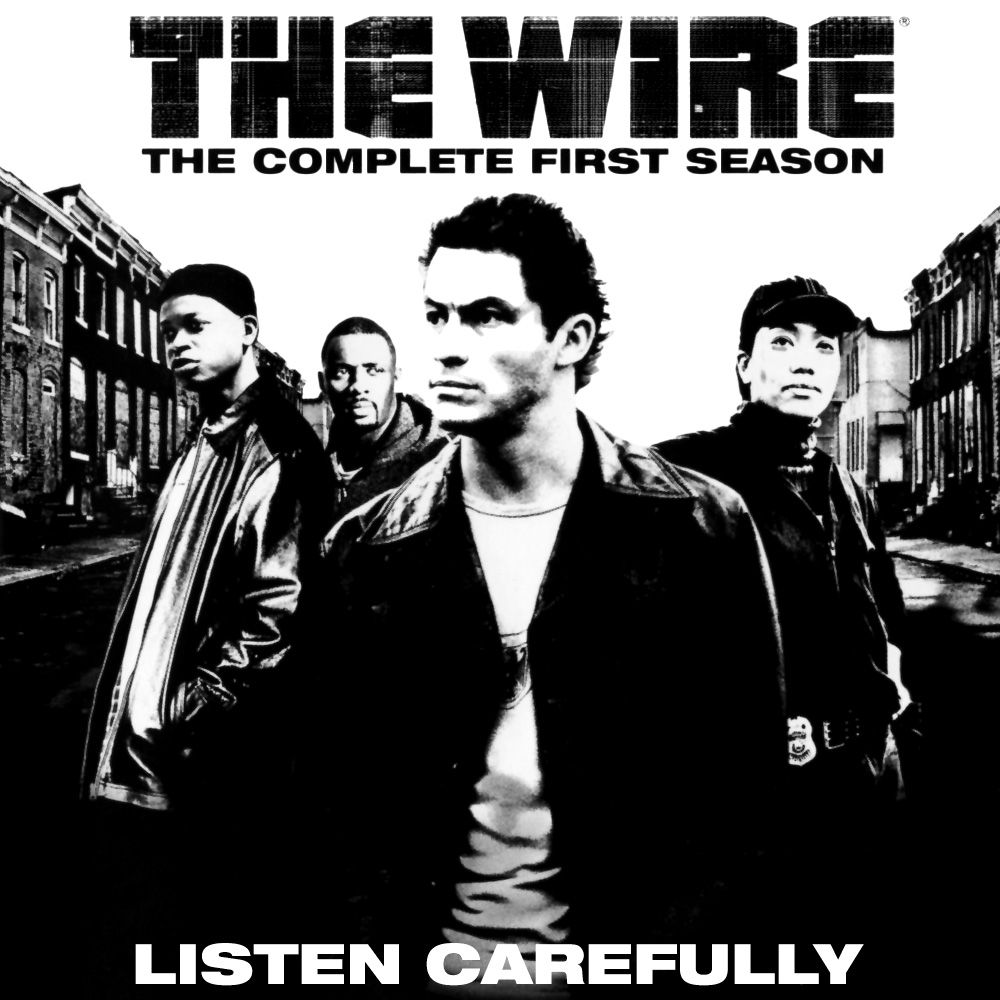
I made a post to this effect at about this time last year. The trend continues: I’ve been watching television. (I still don’t own a television, but technology has allowed me to become a TV-viewer on my little laptop; wonders never cease.) I still find this so strange. And I struggle somewhat with the stigma I was taught as a kid: that is, that television is tooth-rotting junk food, while books are healthy and nourishing. Well, there may be something more passive about watching, while reading requires a bit more reader participation. There’s no coincidence in this compliment to one of my favorite shows: “They required a level of attention from viewers of The Wire not normally demanded by television shows… but a level of attention a step closer to the level you might have to apply to reading a book.”* But also, as Liz points out (I paraphrase): “Television was junk when you were a kid. But in the last 15 years or so, they’ve figured out how to make some really good television. And you’ve been watching good television.” And you know what? I have been. There is some astonishingly good television out there.

It’s not normal for me to feel this involved with a television show. But on the other hand, it’s not all that unusual for me to feel really involved with a fictional world, with plot and characters invented by impressive creative minds. And it’s been really exciting to discover a whole new medium for exploring story and character. Not that I entirely had all the craft elements of writing under control! but there’s so much more to watch out for, no pun intended, on the screen. The pure writing alone, from plot construction to lines of dialog to stage direction, is a whole course of study; then there’s the acting, the sound and scenery, and the cinematography. I’m sort of reeling at all of this. I’m a little tempted to sign up for another graduate degree in how to pick apart a television show. (Not really. Maybe a little.)

I’m not sure what’s led me in this direction, toward the screen. I definitely think the pandemic and shutdown and isolation and increasingly depressive news of the world have played a role, but again, I started watching last year. The bad world out there has just pushed me further. I’ve also noticed that in my reading, I crave lightness and fiction to leaven the important but unpleasant reality I take in. But when my favorite novels of the year include Sun a Fun Age, Leave the World Behind and The Prettiest Star, maybe I don’t skew as ‘light’ as I claim to. Maybe it’s just that I’ve finally found a new-to-me medium, and I was ready for it. At any rate, there are whole worlds out there. When television is done well, those worlds are thrilling and enthralling and worthy of all the time and attention I have to offer.

Case in point is definitely The Wire, a piece of creative work I can scarcely wrap my head around after two full viewings – thanks as always to Liz, who not only told me to watch it in the first place, but then sent along a great piece of criticism. The above *quotation comes from “Why The Wire is one of the Most Brilliant TV Shows Ever,” which is spoiler-free, and a better review than I feel able to write. I will say that this show is not only visually appealing, extremely witty and funny, but also very very smart, and tackles the kinds of Big Issues that I like to see tackled in fiction. I’ll watch it again.

My television obsession of the year is Shameless (the US version). Early in pandemic shutdown, I started watching this show and got hooked. This scrappy, resourceful, problematic, crazy-but-real family just got inside my head and my heart, with their struggles and their relationships which are both strong and messy, and their colorful southside Chicago setting. It’s absolutely a comedy and absolutely a heart-rending drama, and it runs for ten seasons, with season 11 delayed by the pandemic but now filming, and set to be the last. I am most in love with the relationship between Ian and Mickey, but many characters’ arcs strike me as nuanced and engrossing. This is less a perfect show than The Wire; there are errors and inconsistencies, but I still find it completely compelling. And while it’s less serious, too, there is no shortage of Big Issues – mental illness, addiction, sexual assault, poverty, tolerance, love – which are here presented as simply the backdrop facts of life, rather than problems to be solved as on The Wire. This is another show I’d take a master course on.

My love for Shameless character Mickey Milkovich led me to seek more work by the actor who portrays him, Noel Fisher, which led me to other shows and movies, many of them good – The Booth at the End, The Riches, The Long Road Home – but most remarkably, The Red Line. This series of just eight episodes begins with the shooting of an unarmed Black man by a white cop, and just keeps adding in the Big Issues from there. It’s jam-packed with them, in fact, which could be seen as a liability, especially in less capable hands (these are very capable hands – Ava DuVernay is a producer); but I decided it felt rather like life, in which we are indeed surrounded by Big Issues that we don’t get to fully untangle. (I was also charmed by a matter-of-fact background element: one of our protagonists has a BFF who is non-binary in their gender identity and uses the pronouns they/them. I expected this would become another Issue but no, it’s just a fact of life. Which is part of what representation means. Hat tip.) A little more time would have been great, to see these stories more deeply explored, but I’m very impressed by what is here.

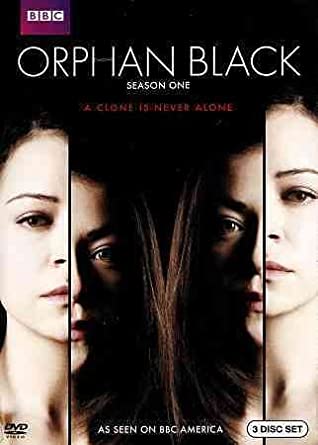
Finally, Orphan Black is a mind-blowing story and set of characters, including some of those loving, messy, built-family relationships I love as in Shameless. It’s addictive in many ways, but what I can’t miss mentioning is that a whole slew of characters are played by a single actor. Some of these characters then play each other within the show, so that the completely masterful superstar Tatiana Maslany not only plays Sarah and Allison (and others) but also Allison pretending to be Sarah, etc. It’s the big bad world against our heroine, iconoclastic rebel Sarah Manning; episodes and seasons keep twisting and riffing on that basic plot structure in a way that might be tiresome, if there weren’t so much imagination in the twists and riffs, and humor and love (and completely genius secondary characters like Sarah’s sidekick Felix). I was bereft when I finished the final season.

Liz tells me there’s plenty more great television for me to catch up on. What a world. I wouldn’t say Noel Fisher’s body of work makes up for what’s going on out there in the real world, but it’s pretty thrilling to continue to discover works of creativity that change the way I think and feel. Thank goodness. Keep ’em coming.

My Life as a Villainess: Essays by Laura Lippman

I entered this collection at the end, because Liz recommended to me the final essay, “Men Explain The Wire to Me.” (My post about a few favorite television shows is forthcoming.) I liked it, so she recommended a few more which I also liked, and then I went back to the beginning and read the collection cover to cover. It’s not a perfect book; the best essays are very good and the less compelling ones are not very good, which was maybe Liz’s point. But I’m left feeling close to the author in a way that’s rare for me, and full credit for that.

I guess I would say that there’s nothing earth-shattering about the writing itself. But Lippman’s experiences, the conclusions she draws from them, and her sharing of all of it is very appealing to me. To call someone’s writing ‘relatable’ in a workshop isn’t always seen as meaningful praise, but I’m not sure why; I think getting the reader to relate is a pretty important goal, not necessarily easily accomplished. I say these essays are relatable as hell, and I mean that as a compliment. I think that Lippman is correct that loving one’s own face and body, as a woman in this culture (let alone as a sixty-year-old woman), is indeed a radical act. I appreciate her observations about gender and power and privilege, and work and parenting. I appreciate that she concedes her own villainy without wallowing in it; she remains more or less a good girl, even while pissing some people off.

Some of these essays can feel a little pat, a little neat in their concluding lines, like there is a trick at work in the writing and the trick shows through the weave of it. But the heart is good, and the observations and philosophies are real and of value. I want to be friends with the woman who wrote these essays; I feel like we could be friends; I feel a little bit like we are friends, which is pretty unusual for me and totally weird but comforting. (Perhaps if her writing were transcendent I wouldn’t be able to feel this. To every cloud, a lining.) This is plenty good enough for me.

If you’re interested in dipping in slowly like I did, here are the essays Liz especially recommended to me: “The Art of Losing Friends and Alienating People,” “My Father’s Bar,” “The Waco Kid” (about moving to Texas for work), and of course that finisher which is where I started, “Men Explain The Wire to Me.” I agree with these recommendations, although I think I’ll add “A Fine Bromance” and “Saving Mrs. Banks.” I’d read more essays by Laura Lippman.


Rating: 7 tennis volleys.

Pachinko by Min Jin Lee

Recommended by Liz to help break my reading slump. I picked up Pachinko as an e-book from my local library, and saw the descriptors ‘multigenerational epic,’ among others, go by as I opened it. Now, normally ‘multigenerational’ and ‘epic’ are both turnoffs for me, but I trust Liz entirely. And it’s a great book – maybe I should consider more multigenerational epics.

The cultural backdrop was fascinating to me, and almost entirely new. Pachinko is set in Korea and Japan, following a family of Koreans who become Korean Japanese, across most of the twentieth century. The cultural implications – the perceptions of Koreans in Japan – were a big part of the appeal, and the point, of this novel. I learned a lot. And as far as that (potential) ‘multigenerational epic’ problem, any hesitations I might have felt were well taken care of by Min Jin Lee’s excellent handling of a large cast of characters over time. I didn’t have any trouble keeping track of them, because each was well-developed and clearly delineated. I lived so thoroughly with these people that I still feel myself a little bit with them, even now it’s been a few days since I finished reading.

The first line of the book reads: “History has failed us, but no matter.” In 1910, in a little Korean fishing village, an old fisherman and his wife have a single son, Hoonie. Given his cleft palate and club foot, he considers himself lucky to marry at all. With his wife Yangjin he has a single surviving daughter, Sunja. She becomes pregnant as a young woman by an older, wealthy, married man. Therefore she also considers herself lucky to marry Izak, a young minister who considers it a charitable act to give her child legitimacy. Izak and Sunja go to live in Osaka, in Japan, with Izak’s brother and sister-in-law. Sunja’s first son is Noa; her second, with Izak, is Mozasu.

Sunja is surprised to find how poorly Koreans are treated in Japan. Back home her family was poor; here they are poor and abused. Circumstances are harder still during World War II, until Sunja’s first lover Hansu – Noa’s biological father – resurfaces to help the family. It turns out he’s been helping behind the scenes all along, which is not equally appreciated by all. When Noa learns the truth, he cuts all ties, and establishes a new life for himself in another city, where he represents himself as full Japanese. Both brothers wind up working in pachinko parlors, in different parts of the country and in different contexts.

Sunja and her dearly loved sister-in-law support the household, now including elderly Yangjin as well. Mozasu’s wife dies young. They have one son, Solomo, who attends college in New York, then returns to Japan with his Korean-American girlfriend. But even in 1989, Korean Japanese occupy a special sort of cultural no-man’s-land, unable to return to a national home that no longer exists (Korea in its pre-war form), and not accepted in Japan despite having been there, in many cases, for four and five generations.

The book’s central themes include cultural dislocation and (the myth of) racial difference; home, identity, and belonging; gender (there is a refrain that “a woman’s lot is to suffer”), class, and the stereotypes about pachinko (a totally legal, highly profitable and enormously powerful industry, but with continuing perceptions of criminality). It is a gorgeously rendered novel, rich with details and with food (which I love), and with wonderfully wrought characters: complex, complete, sympathetic but flawed. I loved the, yes, epic sense of time and scope, everything that Hoonie’s generation and Solomon’s do and do not have in common. I noted that when Sunja got pregnant out of wedlock, her mother did not shame her; she seemed sorry that her daughter would have a hard road to walk, but she never called her any names. Yoseb and Kyunghee take her in and ignore the elephant in the room. It is only when Hansu returns to their lives that there is a sense of shame. “A woman’s lot is to suffer”: if she has a baby out of wedlock, certainly; if her brother-in-law won’t let her work for a living; if her son finds out she’d been pregnant out of wedlock; because she must work long and hard from childhood until old age ends her life; because she must bow to the wishes of the men in her life. But also, a Korean’s lot in Japan is to suffer; and they will remain “Korean” even when it’s been several generations since anyone in the family saw Korean soil. That sense of cultural homelessness touched me deeply.

My ebook came with an interview with the author. Lee indicates that it was indeed the cultural situation of Korean Japanese that she wanted to explore with this novel. “Although the history of kings and rulers is unequivocally fascinating, I think that we are also hungry for the narrative history of ordinary people, who lack connections and material resources,” Lee says, and I couldn’t agree more: the narrative history of ordinary people is endlessly appealing to me, and beautifully accomplished here.

This is an absorbing novel of a world quite far from the one I know, but with people I easily recognized and related to. I could spend more time lost in Lee’s remarkable writing and characters. Definitely recommended.


Rating: 8 cups of kimchi.

movie: The Pieces I Am (2019)

Transcendent, not that I’m surprised.

This documentary of the life of Toni Morrison was released shortly before her death, which has helped it make an even bigger splash, although it was doing fine anyway. My dear friend Liz told me I needed to see it, which pushed me further (I was already interested). I was so glad to get a chance to see it locally at a micro-theatre here in Buckhannon, West Virginia.

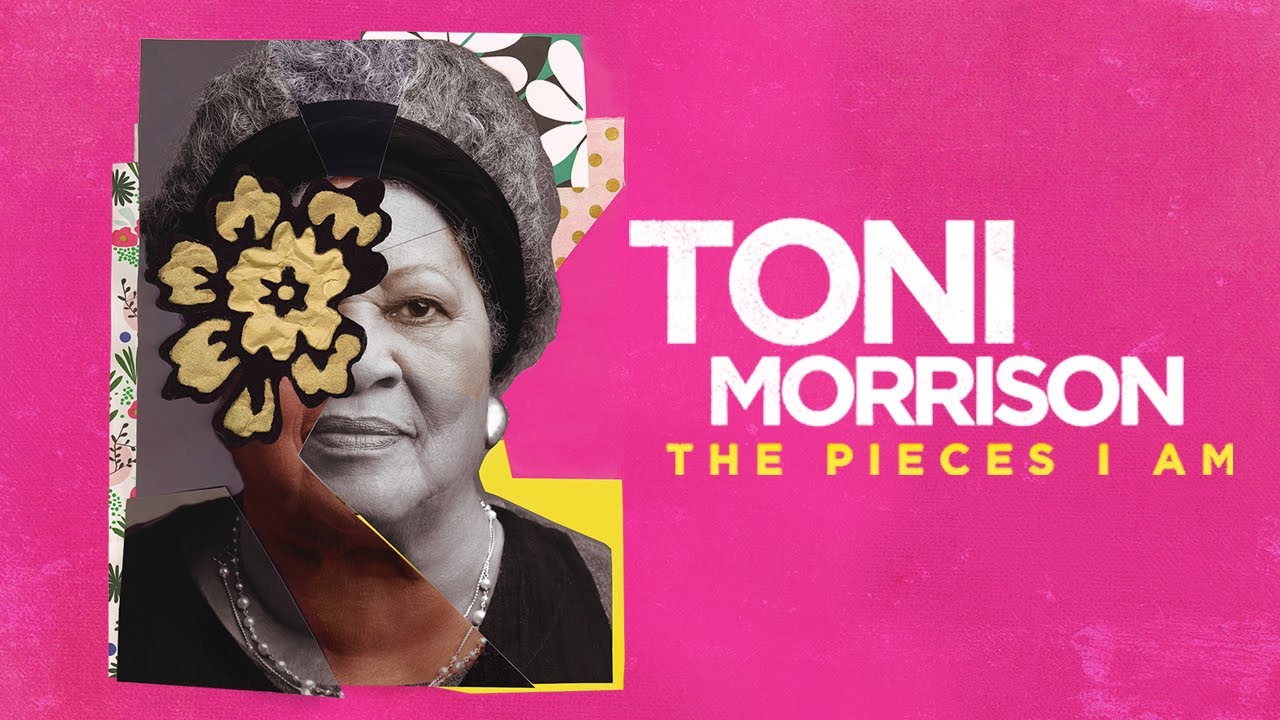
For starters, check out that image above. The collage of Toni’s face is built up in an opening sequence that shows many faces of Toni Morrison as she ages, and as a portrayal of the creative process I found it moving and thought-provoking. The rest of the movie followed suit. I loved that they mostly let Toni speak for herself. A “present” Toni sits against a blank backdrop and speaks directly into the camera throughout the film. She is dressed in black, white, and gray, highlighting her beautiful gray hair. She speaks with humor and wisdom, and as she talks, we see images and film clips from her life. Friends and contemporaries including celebrities (Angela Davis, Oprah Winfrey), other artists (Sonia Sanchez, Walter Mosley), and college professors (Farah Griffin, David Carrasco) also speak to the camera; a voiceover reads from a few articles, like nasty racist criticisms of Morrison’s early work. But mostly it is Toni’s own voice that tells of her life, from the melting-pot steel town on Lake Erie where she was raised (Lorain, Ohio) to Howard University to Cornell, to teaching, marriage and divorce, raising two boys, and her influential career as an editor at Random House… and of course writing 11 world-changing novels in 45 years, along with children’s books, short fiction, drama, nonfiction, and an introduction to The Oxford Mark Twain‘s edition of The Adventures of Huckleberry Finn that I’d love to see.

The impression of Toni Morrison that I take away from this film is an entirely take-no-shit, strong woman who we might describe as brave, but I think her own view would be that she was not so much a brave woman as just doing what needed to be done, and what was right, without thinking twice about it. Of course that is brave, but it seems to have just come so naturally to her.

It was nice to see her celebrated not only as an earth-shatteringly talented, singular artist, but also as an incisive, gifted editor, who dragged Angela Davis’s memoir out of her and put Muhammad Ali in his place during the editing of his. I enjoyed the story of her Nobel Prize and the delightful party she so enjoyed in Sweden. In short, I found a rich and rounder portrait here than I think I’d seen of Toni before now.

Although I knew it before, I feel again what a loss we suffered this year when she died, and I feel how lucky we are to have her work in the world. I’m so glad I saw this movie. Don’t miss it. There are lots of ways to watch at home, so you’ve no excuse.


Rating: 9 dolls.

notes on podcasts & a DNF

I’ve started a new job, part-time on the weekends, serving beer in the taproom of a craft brewery a few towns over. It’s great! but I have a good bit of a commute again now. I haven’t listened to an audiobook since school started in January, because I haven’t wanted to crowd my brain any more than it already is (or get my stories crossed). So Liz has recommended a few podcasts for me. She is super into the podcasts, so I know she restrained herself, by starting me off with just six. On my last few drives to and from the brewery, I have really enjoyed listening. I’m going to try to stick to just a few sentences per story here…

Another Round, Episode 85: The Same Stuff as Stars (with Amanda Nguyen).

Heben Nigatu and Tracy Clayton discuss rape culture and outer space with Amanda Nguyen, a college student who has founded an advocacy organization for rape survivors, written new legislation and gotten it passed in Massachusetts, and is studying to be an astronaut (wow). All three women have engaging voices & personalities here, and the story is obviously layered and impactful.

Criminal, Episode 63: Rochester, 1991.

Kim Dadou served 17 years for the murder of her boyfriend, who beat her within an inch of her life, which life she was defending when he died; now she’s an advocate for domestic assault victims. Excellent intimate tone and a narrative that is horrific but compelling. Listener is left rooting for Kim, naturally.

Death, Sex & Money, I Was Your Father, Until I Wasn’t.

When a woman he’d slept with called to say she was pregnant, Tony became a father to a little girl he loved deeply–until he found out she wasn’t his after all. He and the biological father discuss their experiences. They are disarming, honest, vulnerable.

Embedded, Police Videos: Flagstaff.

A 2014 video shot from a police officer’s eyeglasses shows his death by shooting, perhaps the first of its kind and a major internet sensation. Kelly McEvers delves into this video and its meaning to various viewers, in particular the families of the officer and the shooter. I appreciate Kelly’s personal approach–sharing her own reactions–and the variety of perspectives she finds.

Death, Sex & Money, Live from the Internet: Jason Isbell, Amanda Shires & You.

(This is the podcast that got Liz & I started on this exchange, because I’m an Isbell fan. I remember listening to the first Death, Sex and Money show with Isbell back in 2014.) Live-recorded call-in show with Anna Sales taking questions for Jason & Amanda about addiction, relationships, and their art. These are two wise, thoughtful, compassionate and smart individuals, and I could listen to them all day (and have).

Other Liz-recommended podcasts I’ve got queued up include Revisionist History, Planet Money, and Radiolab, so stay tuned. And, this one did not come from Liz, but about a year ago I really enjoyed Love + Radio‘s Choir Boy, an interview with a bike-racer-turned-bank-robber. What a weird story, truly stranger than fiction.

In other news, briefly: I had a strong negative reaction to Donald Revell’s The Art of Attention (from Graywolf’s The Art of series). I guess the good news is this book seems to be aimed exclusively at poets, and I am not one. Revell seems to me to be more interested in showing off his vocabulary and convoluted constructions than communicating; I found him deliberately opaque; and a central thesis seems to be that the “craft” of writing is neither teachable nor worthy of teaching—so why this book? Anyway, moving on.

Emily St. John Mandel

1. I am charmed and seduced by her most recent novel, Station Eleven. It is hypnotic.

2. She has five different people available for contact on her website (for representation; speaking; and publicity in the US, Canada and the UK). They are named Kelsey, Katherine, Kate, Kate, and Kate. Surely she had to have done that on purpose??

3. The title line for her short bio piece on the same website is: “St. John’s my middle name. The books go under M.” She has a sense of humor and c’mon, librarians and booksellers.


Dear Emily St. John Mandel,

I have a dear friend named Liz, and she is who recommended that I read your latest book. Liz is still batting 1000 with her recommendations to me, which is unprecedented and very impressive; nowadays her recommendations often move straight to the top of my very long list. She recommended I listen to the audiobook of Station Eleven, and so I am.

I am entranced by this world you’ve created, which is so closely related to but also so far apart from our own. I love the world within the world, of Station Eleven; I love that we meet the artist behind that world just a step behind entering it ourselves. I really appreciated the detail of the doctor calling from the emergency room near the beginning of the book. Dahlia is outstanding, and her speech got me thinking just as it did Clark. I was fascinated by Jeevan’s story at the start and, at nearly halfway through, I am anxious to know: will we go back to check in on him and find out his fate? When I checked in with Liz, I found that both she and her partner Steph had the same reaction: they wanted to hear more about Jeevan.

I haven’t even finished your book yet, but I know it has to end. And Liz says she doesn’t feel that this should be the end of the world you’ve imagined; she wants you to write more. Because I trust Liz, and because I love the first almost-half of this novel and know I will feel the same way, I want to say: please keep going. I know you have three earlier novels for me to go back and discover, but I’m not sure that’s enough.

Keep up the good work.

Thanks, and all my best,

Julia

“Total Eclipse” by Annie Dillard (from Teaching a Stone to Talk)

I began by thinking I could review this essay, but I can’t. Annie Dillard and the force of these words here are too much for my limited powers of communication. Read this and wonder.


(As usual from that excellent source of excellent things, Liz.)

We Are All Completely Beside Ourselves by Karen Joy Fowler (audio)

**AVOID SPOILERS!** (There are none below.) As a commenter pointed out, there may be spoilers even on the dust jacket or other coverings for the book or audiobook itself. Proceed cautiously. Just trust me and read the book itself.


beside

This is one of those with a big reveal to it that *makes* the book. For the love of whatever you love, please, avoid all discussion of We Are All Completely Beside Ourselves until you read it. Excepting this review, of course, which promises to be spoiler-free and is therefore safe, and brief.

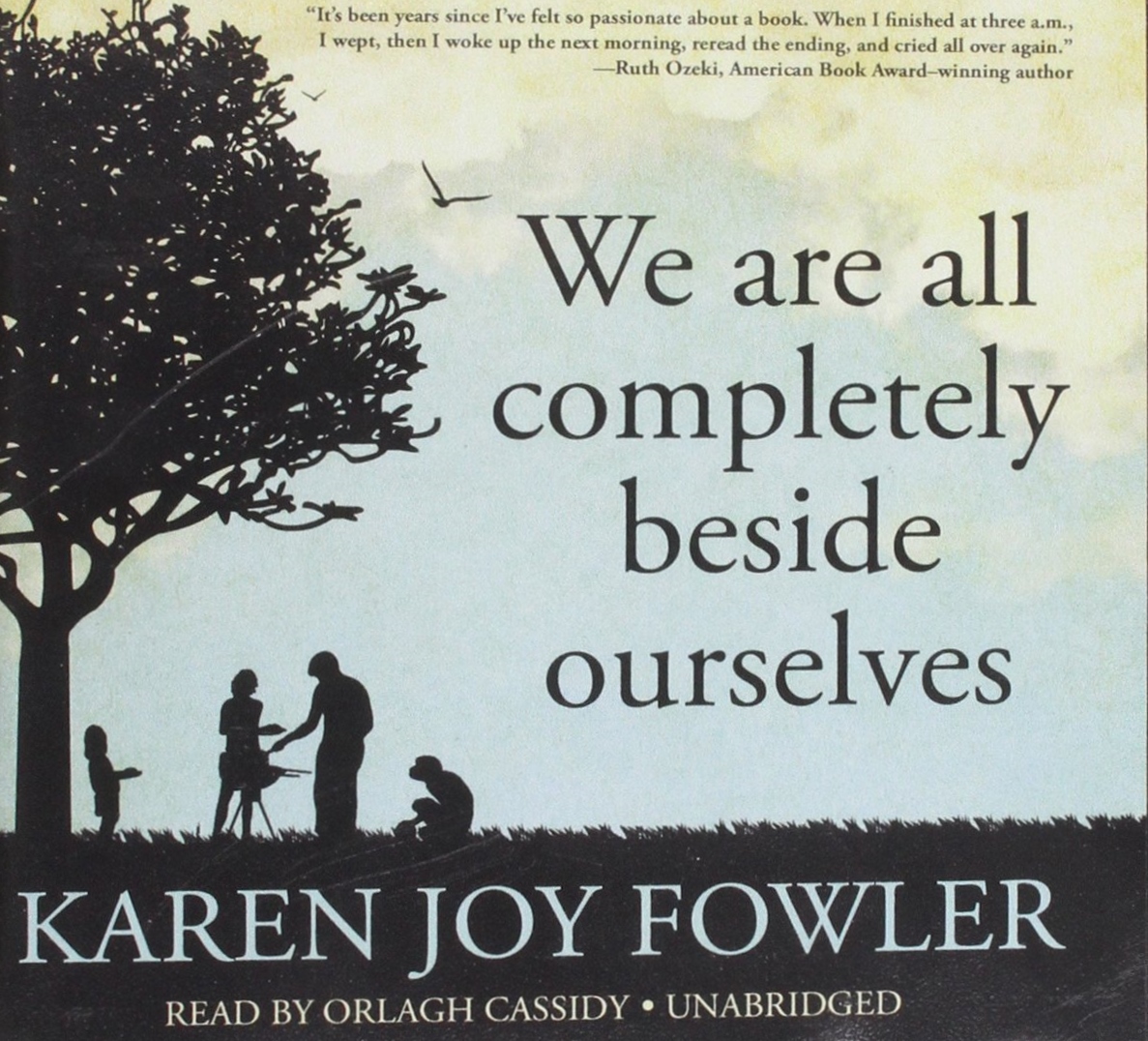
I’m glad Liz recommended this one to me, on audio specifically, and I shall do the same. Get the audiobook, which is beautifully and feelingly narrated by Orlagh Cassidy. Our young female protagonist/narrator Rosemary is a little troubled, but likeable right from the start. She uses the unusual second-person voice, breaking down the fourth wall to talk directly to her audience: “you may have the impression from what I’ve just said, that… but here’s another thing I’d like you to know…” Her story is compelling from the beginning, and involves a number of different threads and an occasionally disjointed timeline. I don’t know what else I can tell you without giving it all away. It’s about family, self-determination, the nature of memory. Life. You will laugh and be amazed. Go out and get this book now, and don’t let anybody tell you anything about it. Oh – a little bird told me Karen Joy Fowler gave away the big secret in a book talk somewhere. She is an outstanding writer, but apparently a potentially disastrous speaker. Avoid her talks til you’ve read the book. Go read the book. That’s all.


Rating: 8 studies quoted.

from the New Republic: on books

Thanks, again, to Liz for sending this along. The New Republic‘s issue of October 21, 2013 featured a cover focus on books and publishing, with five articles included. They range from a one-page infographic to 3 pages long; no serious time commitment here, although you will have to find them. I accessed these stories through a database (Ebsco, if you’re curious) through my employer; you may have similar access through your local public library, for example. I know that on Houston Public Library’s page you can go to “research databases” and search for the publication you want (New Republic), and then you’ll need to put in your library card number to see the articles. Contact your local librarian if you want to get in and you need some help; she or he will be happy to assist. Or, there’s always the print edition, if you subscribe or know of a decent newsstand!

I found these articles interesting (obviously) and wanted to share just a few thoughts. In the order I read them (I have no idea how this relates to the print magazine):

  • “Books Don’t Want to Be Free: how publishing has escaped the cruel fate of the other culture industries” by Evan Hughes examines the fact that books have avoided the way music and movies have become open to pirating and price drops. Those industries are struggling, Hughes writes, in ways that the book publishing industry isn’t. (And don’t even get started on print magazines and newspapers…) This article is optimistic and thus refreshing. It touches on the recent price-fixing court case between a group of major publishers, and Amazon. It also speaks to pricing differences between e-books and traditional print, which is addressed in the next item:
  • “The Words Business, In Numbers,” an infographic (sort of) identifying trends in revenue (e-books vs. print), reader trends, and foreign readership. In a word, “e-books are growing the pie.”
  • “The Dastardly Defender of Letters” by Laura Bennett is an article about and interview with Andrew Wylie, “who still makes millions off highbrow.” He is an infamous agent for clients including – I shamelessly reproduce those listed in the article – Amis, Nabokov, Bellow, Rushdie, Roth, and more in that vein. He is delightfully curmudgeonly, snobbish about the lowbrow, and defending books as they should be made (says he, and I largely agree). This was the most fun piece to read. His apparent serene calm regarding the future of traditional books was heartening.
  • “I Hope They Read Books in Hell” by Norene Malone, on the other hand, touches on the opposite end of the spectrum. Malone visits with the editor, Ruby-Strauss, and agent, Leavell, of Tucker Max, author of I Hope They Serve Beer in Hell.” Max’s cache, if you didn’t know, is being 1) internet-born and 2) offensive as all get-out. Ruby-Strauss and Leavell work with others in the same vein: Snooki from Jersey Shore, that University of Maryland student who wrote that bitchy email, Shit My Dad Says (whose twittering I like, btw). It was interesting to consider that counterpoint, the lowbrow, which (it is argued) helps finance the highbrow.
  • Finally, “The Rancid Smell of Success” was written by Lionel Shriver, author of a good number of novels, most famously We Need to Talk About Kevin, which became a major motion picture. She laments the changed life of a successful novelist: from the scary, financially insecure obscurity of an undiscovered writer to the publicity-exhausted successful author – who is still financially insecure and has to immediately begin work on the next book, but can’t because of all the promotional demands of the current one. It’s a beautifully written article, and she acknowledges the problem with her complaints about the literary festival she has to attend in Bali; but she justifies her complaints, too. It’s a thoughtful piece.

On the subject of e-books versus print – and the question of the future of the traditional book (“is it dead?!” they ask hysterically) – others have said it better before me, but I’ll briefly file my position. The birth or the rise of the e-book does not signal the death of the book, any more than the birth or the rise of television sounded a death knoll for radio. Radio has changed over the decades, but we still have a recognizable semblance of what it was when the television was born. There’s room for both e- and print books in this world, and both have their uses, their pros and cons, their seasons if you will; and both have their fans. Those of us who prefer print (even if we occasionally read electronically!) will continue to buy and borrow real books. Everybody calm down, is my concise message. And please, read books – any kinda way.