Maximum Shelf: Tracy Flick Can’t Win by Tom Perrotta

Maximum Shelf is the weekly Shelf Awareness feature focusing on an upcoming title we love and believe will be a great handselling opportunity for booksellers everywhere. The features are written by our editors and reviewers and the publisher has helped support the issue.

This review was published by Shelf Awareness on March 22, 2022.
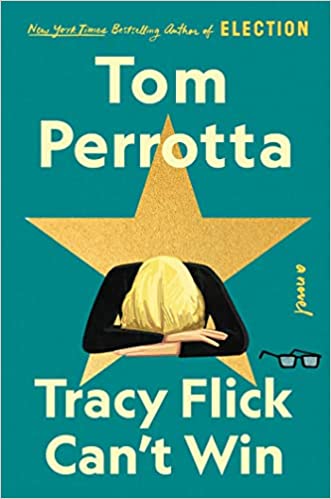

Tracy Flick, the ambitious but unlucky protagonist of Tom Perrotta’s 1998 novel Election (and the 1999 movie adaptation starring Reese Witherspoon), is back and still striving in Tracy Flick Can’t Win. Familiarity with Election can’t hurt, but isn’t necessary to follow this next installment. Perrotta (The Leftovers; Little Children) serves up his signature black comedy and shrewd wit in an expertly paced novel of great cleverness and charm. The title character is now 40-ish and working as assistant principal at Green Meadow High School, in a shabby-idyllic New Jersey suburb. Life hasn’t turned out as Tracy had hoped. She left law school to care for her beloved mother, whose death 10 years ago still leaves a gaping hole. Instead of being a high-powered attorney on a rocket-like political trajectory, she serves as the hardworking second-in-command at an unremarkable public school whose football team disappoints everyone in town (except Tracy, who couldn’t care less). Then Principal Jack Weede announces his pending retirement, and it might finally be Tracy’s time to shine. But of course, nothing’s ever easy.

Kyle Dorfman, one of the town’s most successful alumni (he got rich off a virtual pet app) returns with the idea of putting together a Green Meadow High School Hall of Fame. He is also the new school board president, and therefore someone Tracy needs in her corner, but it’s not clear where his loyalties really lie (aside from with Kyle). The first meeting of the Hall of Fame selection committee immediately turns sour: the obvious candidate turns out to be a former star quarterback, and Tracy’s seen this routine before.

Tracy Flick Can’t Win is timely. It opens with a review of the #metoo era and headlines filled with “one powerful man after another toppled from his pedestal, exposed as a sexual predator,” which gives Tracy unpleasant memories of high school: “It was ancient history, a brief misguided affair–that’s the wrong word, I know, but it’s the one I’ve always used–with my sophomore English teacher, a few regrettable weeks of my teenage life.” Tracy sees the world changing around her but hasn’t entirely figured out her own version of it yet.

This adult Tracy Flick is vulnerable, socially awkward, frustrated and disillusioned. “My mother had been wrong: fame wasn’t a reward for your hard work. It was a lottery, pure dumb luck, and it didn’t matter anyway, not in the long run.” She’s still ambitious but worried it may be too late for her; she’s been passed over for promotions, and not completing law school still smarts. Her romantic life becomes needlessly complicated when her supposed catch of a surgeon boyfriend turns clingy. Baking a cake for her daughter’s 11th birthday gives her a chance to reflect on their mother-daughter relationship, which disappoints her, by contrast to her very close bond with her own late mother. The maturing Tracy has taken up a meditation practice for her blood pressure, and is working to navigate the nuances and challenges of a life less sparkly and more complicated than the one she’d intended to lead.

One of Perrotta’s talents is obviously forming character. Tracy is delightfully complex; Principal Weede has secrets of his own, and a touching vulnerability as well as some less admirable qualities. Kyle is not well liked, but his attempts to compensate offer comic opportunities. The aging star quarterback nominated for the Hall of Fame, Vito Falcone, is now a recovering alcoholic working on making amends, his process by turns pitiful and hilarious. And the high school’s much-loved, longtime front desk lady, Diane, is perhaps the novel’s most rewarding surprise.

Chapters shift in perspective, mainly between Tracy Flick, Jack Weede and Kyle Dorfman, whose first-person voices are joined by those of the two students who serve on the selection committee. (It’s déjà vu for Tracy when these are an overachieving but under-recognized girl and an affable but less impressive boy who’d beaten her out for Student Council president.) Third-person chapters feature a few other characters, like Vito Falcone and Front Desk Diane. In contrast to Tracy’s justified bitterness, we get other perspectives: “The truth is, we’re all prisoners of our historical context. Anybody who says morality is absolute, that right and wrong don’t change over time, you know what? They just haven’t lived long enough.” These points of view paint Green Meadow–and Tracy–in different lights, and allow Perrotta’s comedic zings to shine. Tracy Flick Can’t Win is many things: of-the-moment cultural criticism, a darkly comic drama of human relationships in suburbia, a moving sendup and a novel of racing momentum. By its end, Tracy is headed either for the triumph she’s been seeking since she was a high school student, or a meltdown the likes of which Green Meadow has never seen–or maybe both.

Perrotta’s classic combination of insight, humor and empathy is perhaps perfected in Tracy Flick Can’t Win. This novel has something for both the reader with a gimlet eye on the real world and the reader seeking an escape from it.


Rating: 7 bigger and better things.

Come back Friday for my interview with Perrotta.

Pandora’s Jar: Women in the Greek Myths by Natalie Haynes

This classicist’s reconsideration of famous Greek myths from various female perspectives combines cultural and literary criticism, humor and wit.

Classicist Natalie Haynes (The Furies; A Thousand Ships) brings her prodigious expertise to Pandora’s Jar: Women in the Greek Myths, a thorough consideration of the perspectives, reputations and visibility of some of ancient Greece’s most famous female characters. The title refers to the first correction Haynes offers: rather than the mythic Pandora’s box, Pandora in the original Greek opened a jar, which is only the first of several misconceptions. Not that there will ever be an authoritative version: even Homer, Haynes reminds us, drew on earlier sources. Myths “operate in at least two timelines: the one in which they are ostensibly set, and the one in which any particular version is written,” and Haynes has a firm grasp of numerous iterations. In her capable hands, Pandora and others appear as multifaceted, complex characters, even across conflicting accounts. Best of all, despite its impressive depth of research, Pandora’s Jar is never dry, and frequently great fun.

After the opening chapter’s title character, Haynes introduces readers to Jocasta, Helen, Medusa, the Amazons, Clytemnestra, Eurydice, Phaedra, Medea and finally Penelope. Readers unfamiliar with their stories are guided through the relevant versions. These myths involve traumas of marriage, motherhood, rape and betrayal; their themes are serious and unforgiving. Perhaps surprisingly, some of the misogyny and erasure that Pandora, the Amazons, Eurydice and others have experienced have surprisingly modern origins. “Not for the first time, we see that an accurate translation has been sacrificed in the pursuit of making women less alarming (and less impressive) in English than they were in Greek.” Among Haynes’s subjects, “some have been painted as villains (Clytemnestra, Medea), some as victims (Eurydice, Penelope), some have been literally monstered (Medusa),” but each contains depths: “Medusa is–and always has been–the monster who would save us.”

Haynes’s authorial voice is remarkable: expressive, nuanced, impassioned. Her tone is absolutely accessible, even conversational, and often laugh-out-loud hilarious. Haynes (also a stand-up comic) is as well versed in the modern world and its concerns as in the ancients. The book opens with 1981’s Clash of the Titans, and refers to Beyonce and Wonder Woman with the same ease and mastery as it does Homer, Ovid, Euripides, Aristotle, Aeschylus and many more ancients and more recent writers. Haynes’s assessments of the visual arts (from ancient pottery through Renaissance paintings to modern television and movies) offer another dimension in this meticulous study.

The classics are as relevant, subversive and entertaining as ever in this brilliant piece of work. Clever, moving, expert, Pandora’s Jar is a gem, equally for the serious fan or scholar of Greek myth, for the feminist or for the reader simply absorbed by fine storytelling across time and geography.


This review originally ran in the January 18, 2022 issue of Shelf Awareness for the Book Trade. To subscribe, click here.


Rating: 9 gazes.

The World’s Wife: Poems by Carol Ann Duffy

I got this title out of Pandora’s Jar (review still forthcoming!), and it’s every bit as good as I’d hoped. These are the women’s stories, from myths and classics and fairy tales, reconfigured. Many of these women are new to their tales, like Mrs. Aesop, Mrs. Sisyphus, Queen Kong, Frau Freud, and Pope Joan. Others already had their own myths before Duffy arrived to rewrite them: Penelope, Demeter, Circe, Salome. The book begins, for example, with “Little Red-Cap,” whose relationship to the Big Bad Wolf takes a different angle. A few of my very favorites are “Mrs. Midas” and “Mrs. Darwin,” although I’m also captivated by Duffy’s Eurydice, who was so relieved at the quiet of the Underworld and so sorry to see that damned Orpheus again. Clever, clever, cynical Eurydice.

I am pretty confident in calling these persona poems: each takes the first-person perspective of a female hero we’ve not heard enough of until now. Each has its charms and its surprises; I have been slow in writing this review over more than a week–unusual, and a bad hole to fall into usually, but they haven’t left the top of my mind in that time. I think Duffy was the perfect author to do this job, the new highlighting of both familiar traits and of delightful surprises. (Guess what body part Frau Freud assigns no fewer than 31 nicknames to in fifteen lines.) These poems are often funny, often fraught and moving, and always lovely. See these images: “a thousand windows, each with its modest peep-show / of boredom or pain, of drama, consolation, remorse.” And these judgments: “The Devil was evil, mad, but I was the Devil’s wife / which made me worse.” What else has Duffy written? I would read more poetry if it all worked like this: easy to access but inviting lots of processing time, deep and rich and wide.


Rating: 8 teeth of the rich.

A Spindle Splintered by Alix E. Harrow

This delightful little book brought to us once again by Liz. In this, the first in the Fractured Fables series, Alix E. Harrow retells the story of Sleeping Beauty in winning fashion, set in a recognizable modern Ohio but with a portal into magical realms, featuring various strong female and queer characters and general reclamation. It’s dedicated to “everyone who deserves a better story than the one they have,” and feels like a perfect response to the Toni Morrison quotation: “if there’s a book that you want to read, but it hasn’t been written yet, then you must write it.” A Spindle Splintered is just a novella at a hair over 100 pages, and I’m thoroughly entranced; I’ve already preordered book 2 in the series (A Mirror Mended), which should ship to me in June from Gaslight Books.

Sleeping Beauty is pretty much the worst fairy tale, any way you slice it.

It’s aimless and amoral and chauvinist as shit. It’s the fairy tale that feminist scholars cite when they want to talk about women’s passivity in historical narratives. (“She literally sleeps through her own climax,” as my favorite gender studies professor used to say. “Double entendre fully intended.”)…

Even among the other nerds who majored in folklore, Sleeping Beauty is nobody’s favorite. Romantic girls like Beauty and the Beast; vanilla girls like Cinderella; goth girls like Snow White.

Only dying girls like Sleeping Beauty.

In the first page, we learn these things about our narrator, Zinnia Gray: that she’s a nerd who majored in folklore. That she’s dying – has been dying all her life. That she loves Sleeping Beauty even though she knows it’s problematic as hell. In fact, Sleeping Beauty has been one of her life’s great obsessions. The action begins on Zinnia’s twenty-first birthday, when her best friend Charmaine Baldwin (Charm) throws her a Sleeping-Beauty-themed birthday party, in a tower and with an ancient spinning wheel, no less. Charm is a badass lesbian science major and Zinnia’s absolute champion. This twenty-first birthday is especially heavy, because no sufferer of Zinnia’s very rare disease (caused by environmental pollutants) has ever lived to twenty-two. Zin manages to prick her finger on the spindle of Charm’s birthday party prop – no small thing, as it’s quite dull, but she is a determined dying girl – “and then something happens, after all.”

Zin has an adventure in another world, side-by-side a plucky princess named Primrose. They aim to avoid not only the spindle of a spinning wheel but an unwanted marriage; they travel to take on a wicked fairy who is not who she seems; and they learn that they are but two in a whole galaxy of doomed or cursed or dying princesses or girls or women, who would all like the chance to rewrite their own stories. This is not “one of those soft, G-rated fairy tales, stripped of medieval horrors,” but rather “the kind of tale where prices are paid and blood is spilled.” Except it’s also a tale of empowerment and badass womanhood, of female friendships and love, and it ends in a joyful go-forth sort of moment. And it’s hilarious: Zinnia as narrator is wry, sarcastic, vulnerable, irreverent, just someone I’d love to know. (Dying girls sometimes use humor as a shield. “I personally feel that accepting my own imminent mortality is enough work without also having a healthy attitude about it.” And what of it?)

I am extremely excited about the next installment – I was afraid A Mirror Mended might take on another standalone fairy tale rewrite, but this is indeed the continued adventures of Zinna Gray, “professional fairy-tale fixer and lapsed Sleeping Beauty,” and I can’t wait.


Rating: 8 stones slick and dark with blood.

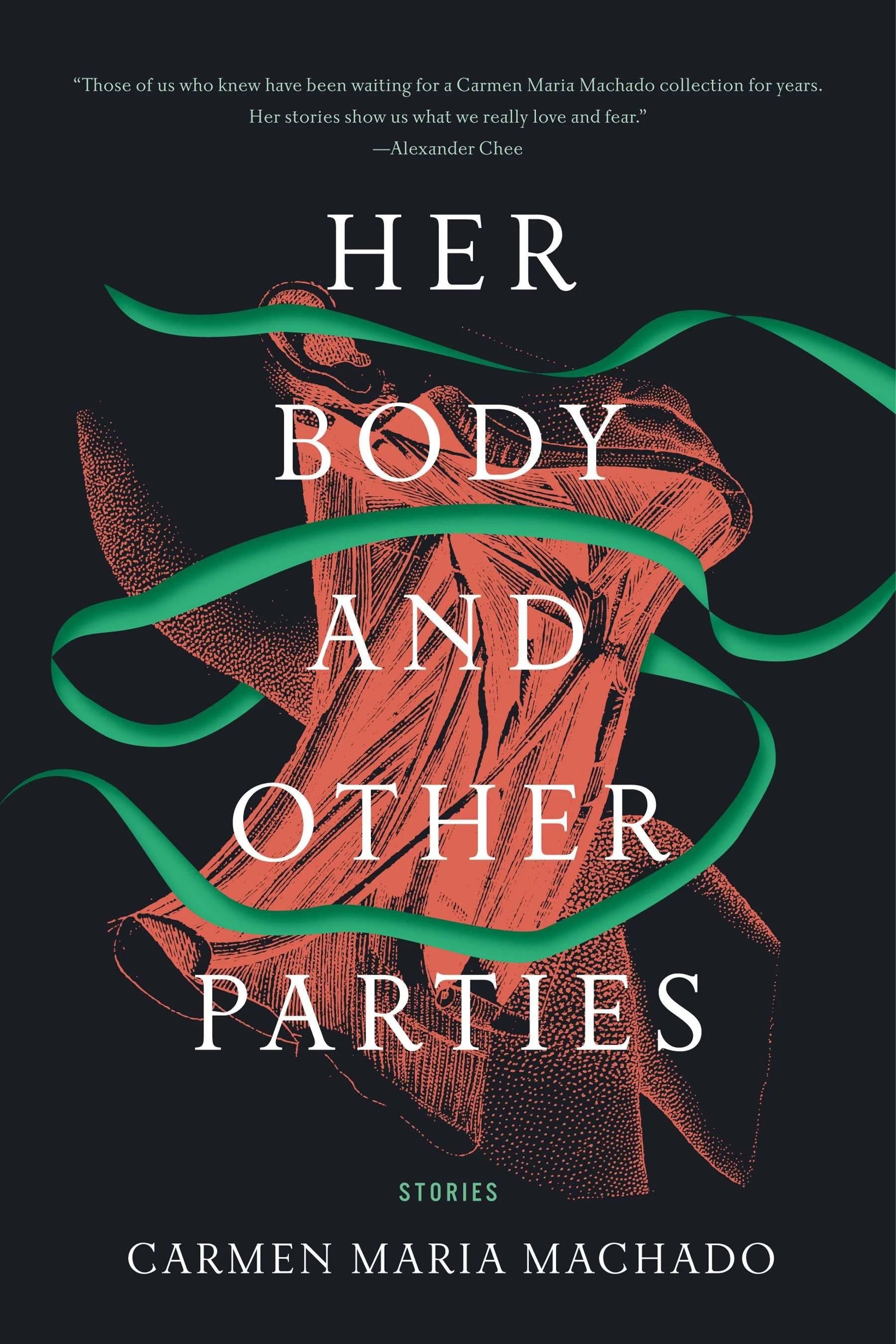
Her Body and Other Parties by Carmen Maria Machado

The stories in Carmen Maria Machado’s debut Her Body and Other Parties are both highly varied – in length, form, and style – and also absolutely related. They each handle gender in our real world, including issues of body image, sexuality, violence, lust, and family structures, but frequently do so by calling in supernatural forces, post-apocalypses, fairy tales or other fictional reference points. These are narratives to get completely lost and absorbed in, not necessarily pleasant reading, but compelling.

“The Husband Stitch” starts the collection off, and is why I own it: my friend Vince teaches it and I’ve heard him talk about it several times. It is a quite discomfiting story of a woman’s life from girlhood on, including her marriage and motherhood to a boy. It’s about gender expectations, and it feels true to our world, which is why it’s so uncomfortable. It also makes reference to the classic urban myth/horror story about the girl with the green ribbon around her neck – remember that one?

“Inventory” lists the narrator’s partners, of different genders, over the years, until the reader understands that in her world there has been a global pandemic that has all but wiped out the human population. (This was published in 2017, but yes, it feels creepily familiar, like The Stand.) I think it counts as what Suzanne Paola calls a life-rolled-up. I like it very much, in this case, the spooky outer world that it shows at an off-angle while ostensibly focusing on sexual/romantic relationships.

“Mothers” sees a woman showing up on her former lover’s doorstep with a baby, which she deposits, saying “She’s yours.” The trick is that the partner is also a woman, who has imagined their life together as mothers many times, but simultaneously comforted herself that it wasn’t possible for them to make a baby. This central riddle is never solved; by the end, it doesn’t feel like it matters. It’s an interesting thought experiment. The passage about “the major and minor arcana of our little religion” pleased me greatly.

“Especially Heinous,” the longest story in this collection, I felt was the weakest of the collection. I like both the form and the frame: subtitled “272 Views of Law & Order: SVU,” it offers very short synopses of 272 episodes of that show, seasons 1-12. I have watched this show some; as a person mostly ignorant of pop culture references like this, it was gratifying to know the subtext. But it didn’t really work out for me. This alternate version of Benson and Stabler have themselves an alternate version, Henson and Abler, sort of evil doppelgängers who muck up their cases and relationships. It’s otherworldly, paranormal, and weird (none of which I shy away from!) but somehow didn’t come together. Maybe the large number of short pieces didn’t hold together for this many pages. I definitely got bogged down here and reading became a bit of a task.

But then things came right back together again. “Real Women Have Bodies” sees a world with another, different epidemic, in which women sort of… fade out, and become invisible. But where do they go? Our female protagonist works in a high-end dress shop, and finds herself in a relationship with another woman, and both wind up in a position to witness the ways in which women change and are disregarded. (No metaphor here, I’m sure.) It’s lovely and haunting, which could be said about the whole collection.

“Eight Bites” is another perfectly apt observation of the world, in which a woman gets gastric bypass surgery – the last of her sisters to do so – and thereby horrifies and enrages her daughter, who rejects the societal bullying that gets us here in the first place.

“The Resident” features a writer heading to an artists’ residency where she struggles to relate to others, eventually finding herself humiliated – again. This story has a neat trick at its conclusion.

And finally, “Difficult at Parties” (a phrase that echoes from an earlier story) depicts the aftermath of a trauma. Not for the first time, this story is so realistic and painful that it is hard to read, but also spellbinding and crystalline.

NPR‘s Annalisa Quinn states that this book is “full of outlandish myths that somehow catch at familiar, unspoken truths about being women in the world that more straightforward or realist writing wouldn’t.” I’m glad I read that line; it helps me to think about this kind of writing – fabulist realism, perhaps – as defamiliarization. Making our very own familiar world strange helps us to see it more clearly.

I’ll be thinking about these stories for some time. Machado has a gift. Keep your eyes open for her later memoir, In the Dream House. Also, thanks Vince for the recommendation.


Rating: 8 dresses.

Maximum Shelf: Vladímír by Julia May Jonas

Maximum Shelf is the weekly Shelf Awareness feature focusing on an upcoming title we love and believe will be a great handselling opportunity for booksellers everywhere. The features are written by our editors and reviewers and the publisher has helped support the issue.

This review was published by Shelf Awareness on October 18, 2021.


Julia May Jonas’s Vladímír is a compelling debut, discomfiting and riveting, and timely in its themes. With dark humor, pathos and sly references to art and literature, this smart, edgy novel challenges assumptions and forces fresh perspectives.

In small-town upstate New York, an unnamed narrator teaches English at a small college. She lives an easy enough life, reading, writing, teaching, exuding “Big Mom Energy” and enjoying the admiration of her students, whose earnest eagerness for improving the world she appreciates. Then a scandal erupts: her husband, John, chair of the English Department, is revealed to have had sexual relationships with a number of his former students. The narrator herself is quick to point out that these all took place before such relationships were explicitly forbidden. She and John had always had an understanding about their extramarital activities. She is surprised to find that her colleagues and students disapprove not only of John but of the narrator as well, and finds herself increasingly resentful: of John, of the academic machine, of her students and of herself.

Into this upheaval comes Vladimir Vladinski, newly hired junior professor and up-and-coming experimental novelist. Vladimir is 20 years or so the narrator’s junior, sexy, flirtatious and married. The narrator is quickly captivated, then obsessed. A two-time novelist with generally disappointing reviews, she has largely turned to literary criticism and book reviews, but now feels inspired to write fiction again. For the first time she feels the work flowing from her effortlessly, and credits Vladimir as her muse. “There was a burning in my body, an extra level of excitement keeping part of me fed and running that required no sustenance. It was longing for the love of Vladimir.” She writes, masturbates and surreptitiously follows Vladimir one day and her beleaguered husband the next, and then even Vladimir’s wife–beautiful, traumatized, a masterful writer herself. Sexual, romantic, literary and workplace jealousies overlap. Things fall apart: John’s hearing (people keep calling it a trial) at the college looms as their already distant and fractured relationship continues to crumble. Their adult daughter moves back home, in dual personal and professional crises of her own, which throws the narrator into new light as a mother. She neglects her work, becoming increasingly reckless until, consumed by her fantasies, she finally commits a shocking act that precipitates a life-changing event for all involved.

That this narrator is a 58-year-old woman is significant, and provides opportunities to consider issues of gender, age, societal and literary expectations and subversions. Her troubled body image provides an undertone from the very first pages, with near-constant references to weight control and her evening skin care regimen. “I prefer to conceal my neck,” she confides, as she compulsively grooms and criticizes her body before each meeting with Vladimir. “A man could always make me feel worse than anything a woman could ever say to me,” she reflects, as she struggles to align her own sexual revolution with the values of her students. Vladímír questions gender and generational tensions, and the intersection of art and morality within the bubble of academia. In the family, household and larger social realms, it addresses every permutation of human relationship and the relationship between power and desire, while also carrying a strong thread of disturbed body image and issues around aging. In other words, this novel is as varied and harried as life.

As a novel so rooted in English departmental affairs should be, Vladímír is also jam-packed with literary references. Vladimir is compared to Jay Gatsby. “Enraged at my vapidity,” the narrator laments, “I forced myself to sit down and read several articles in the latest issue of the New York Review of Books.” Insisting she’s not jealous or bitter about her own novels’ failure to impress, she notes however that “Margaret Atwood wrote exciting books that practically lived inside of a uterus.” Vladimir’s wife says of her own mental health struggles, that her story is “like Nurse Ratched, like Girl, Interrupted, like The Bell F**king Jar.”

Jonas’s narrator has a strong, assured voice, incisively thinking through her decisions and the surrounding issues while simultaneously–and with self-awareness–mucking up her life. The narrator and the novel take on any number of thorny topics. Were the college students who slept with John seizing agency and free love in an empowered, feminist stance? Or were they taken advantage of by an older man with the power structure on his side? What are the pros and cons of an open marriage? Is our cultural hang-up about intergenerational affairs perhaps a little overblown? Some of these questions and perspectives are decidedly uncomfortable, but Jonas consistently pushes those edges, leaning always away from easy answers and toward nuance. Vladímír‘s central characters are rarely likable but they are always captivating; this story harnesses formidable momentum to pull readers through even its most uncomfortable moments. It is a rare victory in a novel to wrestle with such prickly issues and yet be as entertaining as this. Jonas’s prose is clear, forceful and unflinching, and highly sensual: food, drink and sex are ever-present and frankly, complexly evoked.

The narrator writes of Vladimir’s own debut: “The book was funny, clear, awake, vivid. The prose was spare but the voice was not sacrificed in his exact word choice. It felt both like life and beyond life.” The same comments might be made of Vladímír, a clear-eyed treatment of academia and the human condition.


Rating: 7 caipirinhas.

Come back Friday for my interview with Jonas.

Valentine by Elizabeth Wetmore (audio)

This audiobook, also part of my cross-country travels, was a birthday gift from my mom. Thanks, Mom!

Valentine is a powerful novel. It’s set in Odessa, Texas in 1976: a central West Texas oil town in a harsh environment filled with hard-edged, struggling people. The setting is definitely part of the appeal, as I know Odessa a little and its region a little better, and Elizabeth Wetmore’s striking writing about place I found very affecting and authentic. Mostly, this place comes across as rough, stark, unbeautiful; but a close read will reveal appreciation for the natural world and the people who find something to love in it. These characters are really well done, too. Chapters shift between the points of view of a number of them, with a firmer focus on three or four. All are women: men are only viewed through their eyes. As a woman, in a world of books historically over-focused on men, I appreciated this, too.

Let me get in a content warning before we go too much further: the event the book opens with, which is also the event that the entire narrative centers around, is a brutal and violent rape. It’s described in what I’d call moderate detail, which is plenty disturbing. Readers for whom this may present a problem should avoid the whole thing.

This rape and its aftermath affects all our characters in various ways. Even those who are initially unsympathetic become three-dimensional and complicated when they get their own chapters, in that way that I love: all people are complex, no one all good or bad, no perfect heroes or villains. I love a complication like nothing else. There is even a brief – failed – attempt to understand the perpetrator of the rape; that impulse and its failure both feel real and right to me.

Gloria, or Glory, Ramirez rightfully opens and closes the book. Fourteen years old, the US-born child of an undocumented Mexican immigrant mother, Glory’s life brings race and racism into the story. Valentine is centrally concerned with women’s lives and violence against women, but this layer is important and (of course) related. Then there is Mary Rose Whitehead, young mother of a young daughter, drawn into Glory’s life by circumstance. She rebels against many of the structures of the world around her, in ways that we applaud, but this is no fairy tale, so she will not necessarily triumph. Next comes Corrine Shepard, an older woman, recently widowed and handling her grief with booze, cigarettes and not giving two sh*ts what you think about any of it, which serves her well, to a point. I think of these three women as the core, although there are probably other interpretations – I haven’t counted chapters. Again, there are others who get less spotlight but make important contributions: I’m thinking of the bartender/babysitter/waitress we get to hear from near the very end.

This book covers so much. Race and racism and immigration, women’s lives and violence against women, economics patterns and the dire straits it puts all kinds of people in; the cultural and ecological milieu of a particular place, in a particular time, including what it looks like for an oil boom to hit a town like Odessa, which my friends who live in the region today tell me about: it sounds like it looks awfully the same after more than 40 years. Valentine‘s contents contain a lot of ugliness, brutality, violence, hate, tragedy: beware. But it’s also a beautifully rendered novel. And I appreciate its glimpses of beauty even in Odessa in 1976. It’s masterful, in other words. I’m very impressed, and I’ll be thinking about these characters for a long time.

Thanks again, Mom. Good pick.


Rating: 8 pistols in purses.

In the Field by Rachel Pastan

A Nobel-winning scientist holds the focus of this lovely, contemplative, completely absorbing novel.

“What if Cinderella had asked her mother’s tree to give her a microscope instead of a ballgown?” With In the Field, Rachel Pastan (Alena) offers a compassionate, clear-eyed story of self-determination, love and science. The novel begins in 1982, when Dr. Kate Croft receives a phone call from the Nobel committee, then rewinds to 1923, when Kate is a first-year student at Cornell University, to the disapproval of her family, male professors and classmates.

Kate is entranced by biology, if not obsessed: “The cell was an uncharted country, and she was an explorer newly landed on shore… that was part of the joy of it: the promise of richness that lay ahead. The sense she had of undreamed-of discoveries–unimagined systems and structures–waiting there in the dark to be found.” Socially challenged and estranged from her family, she grows up with a single-minded devotion to her work, despite the struggles of being a woman in a male-dominated field and her difficulties in love.

An author’s note acknowledges that Kate Croft is based on Barbara McClintock, but Pastan makes clear that this is a heavily fictionalized account of the geneticist’s personal life, while remaining accurate to the science. Kate is a “corn man,” in the parlance of the day, studying maize genes at Cornell’s College of Agriculture. Her colleagues accept and respect her to varying degrees: one reports, “People say either you’re a genius, or else you’re off your rocker.” Kate’s greatest joy is in carefully tending her corn, her slides and her data. Other scientists profit off her discoveries (she is a gifted researcher) and deny her credit; she has difficulty accepting help. Meanwhile, she wrestles with her secret love affair with a woman, and maintains a lifelong friendship with a fellow corn man.

The curiosity that drives Kate’s research fuels her love for humanity, too. “Couldn’t people change their natures? Couldn’t they change, the way her corn had changed in the middle of the growing season, suddenly producing leaves with different frequencies of streaks? Something switched on, something else switched off, deep inside the cells.” These questions of free will are as important as those of heredity or meiosis. In the Field excels in its multifaceted view of a complex woman: scientist, lover, friend, student of life in both biology and philosophy. Readers will be better for time spent with this patient, tender, loving examination of a life devoted to examination of life. Kate will stay with readers for a long time.


This review originally ran in the July 15, 2021 issue of Shelf Awareness for the Book Trade. To subscribe, click here.


Rating: 8 chocolate walnut cookies.

Ring Shout by P. Djèlí Clark

Ring Shout is a most interesting, slim, swashbuckling adventure story about hunting and fighting the monsters of the Ku Klux Klan. Here, those monsters are literal: ‘regular’ (human) Klan members are called simply Klans by our narrator Maryse, while those who have ‘turned’ are Ku Kluxes, horrifying beasts who love dog meat and wear human skins but are visible to those – like Maryse and her friends – with ‘the sight.’ What we learn alongside Maryse in the course of this story is that Ku Kluxes are not the only, nor even the worst, monsters in this world.

Ring Shout is set in 1922 and begins on the Fourth of July in Macon, Georgia, where Maryse, Sadie and Chef have set up a trap for the demonstrating Klan: a stinking dog carcass laced with explosives. We begin mid-scene and then slowly get to know our heroines. Sadie is an ace with her Winnie (Winchester 1895), and Chef carries a German trench knife, taken off the enemy when she fought in World War I; but she’s earned her nickname through her expertise with bombs. Maryse Boudreaux is from just outside Memphis, where she experienced a trauma as a young girl that has set her on the path she walks now: she hunts monsters. Maryse, Sadie and Chef are backed up by other talented and badass women at a cabin in the woods outside Macon: Nana Jean is an old Gullah woman with powers of prophecy and root magic; Molly is a Choctaw scientist experimenting on the body parts of Ku Kluxes that the hunters bring her; the German widow Emma Krauss is a folklorist and ardent socialist. It is a motley and formidable crew, backed up by a few male allies who mostly serve as helpers and sexual partners but lack the sight. (This novel attacks racism head-on, while its feminism is inarguable but resides in the background. I love it.)

My editor & buddy Dave didn’t love this book, reporting, “It felt like much more of the action-packed, wise-cracking, zombie-slaying kind of horror story than I’d hoped for. I like my menace to be a bit more subtle.” And I think his description is accurate, but it worked for me. Subtlety is not the language of Maryse or her friends; they are in-your-face angry, foul-mouthed, and unapologetic about their rage, passions, and needs.

Chapters are often preceded by ‘notations’ referring to the Shouts that give the book its title. (“A shout or ring shout is an ecstatic, transcendent religious ritual, first practiced by African slaves in the West Indies and the United States, in which worshipers move in a circle while shuffling and stomping their feet and clapping their hands,” says Wikipedia.) These notations are credited as transliterated by Emma Kraus – differently spelled but the same name as the character in the book. I was fascinated, when I looked up the author P. Djèlí Clark, to find that “Phenderson Djèlí Clark or P. Djèlí Clark is the nom de plume of American science fiction writer and historian Dexter Gabriel; he chose to publish his fiction and his nonfiction under separate names so that readers of one would not be disappointed or confused by the other.” (That’s Wiki again.) This leaves me moderately confident that Kraus and her notations are historical truths, but I can’t confirm that with anything I’ve found between the pages of this book.

Clark’s Acknowledgements paint an intriguing picture of his influences for this story, citing

The 1930s ex-slave narratives of the WPA. Gullah-Geechee culture. Folktales of haints and root magic. A few Beyoncé videos. Some Toni Morrison. Juke (Jook) joints. Childhood memories of reading Madeline L’Engle under the shade of a cypress. Juneteenth picnics. New Orleans Bounce. A little DJ Screw. H-town that raised me…

and more. (Yes, the Screw and H-Town shout-outs please me immensely.) I added one book and one album to my list, and went looking for a book I remember from childhood that plays a role in this story. In other words, Ring Shout ranges widely. It is indeed a rollicking mad adventure story, and in that sense easy to read – under 200 pages and action-packed. Entertaining and horrifying. It is a tale of the memory of slavery and of the Klan and violence. It is quietly feminist. (It is also being made into a television series.) I think I’ll be looking for more by this author.


Rating: 7 juleps.

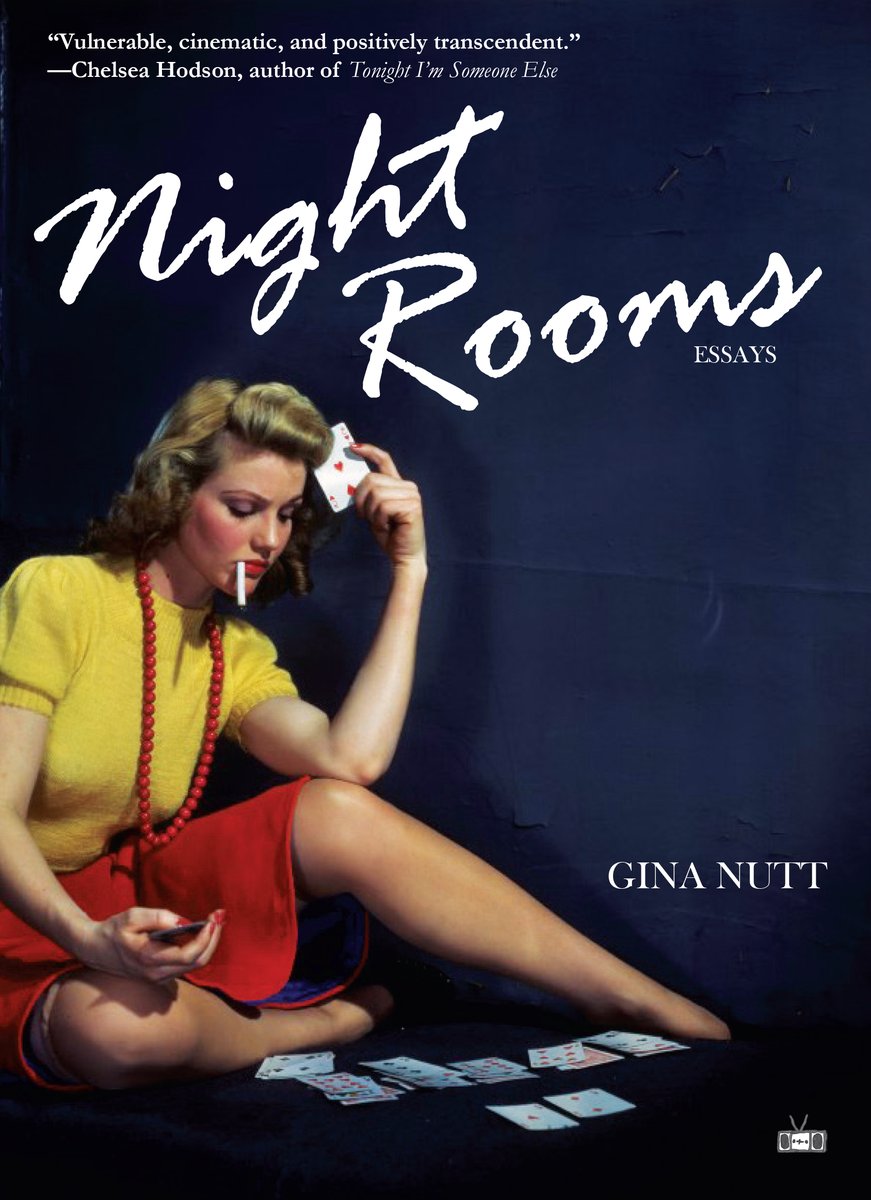
Night Rooms: Essays by Gina Nutt

These 18 essays about gender, horror, grief and much more are thought-provoking, discomfiting and lovely.

Gina Nutt’s Night Rooms is a startling collection of 18 essays ruminating on life experiences, cultural tropes and horror films, examining questions of gender, fear and grief. Fragmented in form, but firmly interconnected, these essays refuse to look away. Nutt’s prose is lyrical, provocative, intimate and intelligent.

“I used to imagine wanting someone alive would revive them, if caught right after dying.” This opening line establishes one of Nutt’s main subjects: the deaths of loved ones and how people do (or don’t) handle them. She wants to find “a balance between mourning and moving on. How does it look to not be so enamored with the image of the final girl–the one who survives–that we forget, or disavow, our dead (selves).” That final girl of horror movies is objectified: a symbol, a survivor, part of a lineage.

Nutt (Wilderness Champion) is also a poet, and has a way with a simple line in brief scenes and observations: in grief or depression, “time pulls thick, opaque as taffy.” “I am making this [darkness] a buoy.” Her voice is vulnerable and frank. Repeatedly she describes a cultural artifact rather than naming it, so it is recognizable to most readers, but made unfamiliar: “the cartoon mouse dressed in a red sorcerer’s cloak and a pointy violet hat with white stars on it.” Quoted sources are named in footnotes, but those only paraphrased are not, so that different readers will find themselves involved to different degrees–as is true with the cultural artifacts themselves.

Haunted houses, horror flicks with sharks in them, ghost stories and slasher films meet beauty pageants, ballet lessons, sexual explorations and home décor to question what it is about the macabre that fascinates. Although subtitled as “essays,” Night Rooms feels more like it contains chapters, which make reference to one another as much as within themselves. The deaths that occupy the narrator in the book’s beginning are relevant again at its close. Indeed, while these essays are fragmented, cinematic in flashes of image, sound and feeling, they are equally fragments of the whole. Together, these pieces form an experience that is sensory, intellectual and emotional, illuminating difficult and even uncomfortable truths.

Part personal reflection and part cultural study, this unusual collection will haunt readers, in the best ways.


This review originally ran in the March 15, 2021 issue of Shelf Awareness for the Book Trade. To subscribe, click here.


Rating: 7 insects framed in flight.