Maximum Shelf author interview: Sue Monk Kidd

Following yesterday’s review of The Invention of Wings, then, here’s the gracious Sue Monk Kidd!


Sue Monk Kidd: Inhabiting the Past

Sue Monk Kidd was born and raised in Georgia and now lives in Southwest Florida with her husband, Sandy, and their black lab, Lily. Since her first publication in 1988, she has written fiction, nonfiction and memoir; The Invention of Wings is her first work of historical fiction. Kidd’s bestselling books include The Secret Life of Bees, The Mermaid Chair and, as co-author with her daughter Ann Kidd Taylor, Traveling with Pomegranates. Kidd is very active on Twitter.

photo: Roland Scarpa

photo: Roland Scarpa


How much research did you do on the real Grimké sisters?

Well, I began reading about the Grimké sisters and I could hardly stop. I was inspired to write the novel because I discovered them at Judy Chicago’s Dinner Party exhibit in New York, and I came home very excited and began to read about their lives. And that went on for months. I suppose I did full-time research for about six months before I began writing, and then I wrote for three and a half years, during which I was still doing a lot of research. I would sit in front of the computer, inventing and writing, and suddenly I would have to get up and figure out what kind of mourning dress widows wore in 1819. Or what were the emancipation laws in South Carolina at that time. It was constant, ongoing research. And it wasn’t just reading books; I made trips to the Library of Congress, the Smithsonian, the New York Historical Society–and of course a lot of places in Charleston. That was a primary site for me, and a lot of organizations were helpful.

Did you enjoy that research?

I loved it so much that I had to make myself stop and start writing. I think a writer can get lost in her research if she’s not careful! There’s a point where you just have to put it aside and begin writing. I was very concerned that I get that era right. I wanted it to be as authentic as I could make it, rich with details, and I wanted the reader to be plunged into a real world. So I needed to gather a lot of information, and I really had fun doing it.

How important is historical accuracy in fiction, and how faithfully does this novel stick to the historical record?

That is such a large question for any author of historical fiction. In this case, I was not only writing about a time and place that existed, but I decided to populate the book with real historical figures. As this was my first book of historical fiction, it was a learning curve for me. I started off so enamored with Sarah Grimké’s history, just in reverence for her life and her history and that of her sister, too, that it was very hard to deviate from that historical script. It took me a long time to come to a place where I understood that there was Sarah Grimké, the historical figure, and then there was Sarah Grimké, my character. And I’m not a biographer, and I’m not a historian; I’m a novelist. I had to come home to that again, because I was so caught by her history. I would say that I wrote the truth of Sarah’s life as much as I possibly could, and I think that anyone who reads the novel will find her life rendered there pretty closely. But my goal, I realized, was to serve the story itself, and that meant that I had to deviate some. It meant that I had to invent; it meant that I had to find Sarah in my own imagination as well as in history, and that was really crucial. The moment that I was able to let go and do that, she became alive for me in this book.

How did you make the decision to write this story in two voices?

When I began I was inspired to write the story of Sarah Grimké, and that was as far as I got. I knew I wanted to write her story in first person, because I love the intimacy of that first-person voice. I feel like I can inhabit her and her mind and her heart, and I love seeing the world through her eyes. I love the closeness of that and what it allows me to do, to get into her inner life. But as I began reading about the history, it became very quickly apparent to me that I could not just tell her story without telling the story of an enslaved character. It seemed that in order for this whole time and place to be fully fleshed out, I needed to enter the lives of two characters. So as I was reading about Sarah’s childhood I discovered she had been given what she called a waiting maid, when she was somewhere around 11 years old. This waiting maid was named Hetty, and Sarah taught Hetty to read, and then Hetty died soon after that, as a young person. That’s everything I knew about her life. But the moment I read about her I knew that this was the character, and that I could have this close relationship between them that’s also a complicated, difficult relationship, and I could talk about both worlds. Now, it was daunting to me to do this, to be honest, because writing first person from the standpoint of an enslaved female character is pretty far flung for me. So that was sort of my literary sky dive, I guess! But it was apparent to me that that’s what I needed to do, to tell both stories.

Sarah left plenty of detail to history, including many writings in her own voice, while Hetty barely existed at all on the record. Was it freeing to write Hetty, in comparison?

It was absolutely freeing. Maybe the biggest surprise in writing this novel for me was that Hetty’s voice was more accessible, that it came to me more easily. This I did not expect. I thought it might be the opposite, actually. I think it was because Sarah came with this big historical script, and we knew basically nothing about Hetty. So I had this broad imaginary canvas to fill in. It freed me, I think, just to be able to explore and to just let her talk–and she would talk! I mean she would just talk, talk, talk to me.

Hetty’s mother, Charlotte, is a rich personality who keeps her secrets. Does she have a historical counterpart? Where did you find her?

There was a little seed of something that kind of helped me to create her character. When I was reading the slave narratives I came upon one sort of secondhand story: one woman was speaking about her time in slavery, and referred to someone named Sukie, who was apparently a very defiant, unusual woman. She told a story about how Sukie resisted her master’s advances and pushed him into–I think it was a hot pot of lye soap or something like that–and he was burned, and for that she was sold. And she remained very defiant to the very end. Something about that ignited this idea in me, and I wanted to be sure that Charlotte was someone who could protest and resist and who was concerned about her own self-possession, who had this spirit of insurrection and even subversion. I think it’s important to offer images of enslaved women who are not just victims. We’ve had far too much of that, I think. I wanted to show women who were not just victims, certainly not in their minds. They were in a struggle to be human, self-possessed, to fight back and to show this kind of defiance and resistance. In that regard, the slave narratives were evocative for me of the kind of character that I tried to bring to Charlotte.

Do you have a favorite character? Or one with whom you especially identify?

Oh, it’s always hard for an author to say which character is her favorite! It’s like picking between your children! As a writer, I feel like you have to love all your characters, even the so-called misbehaving ones. But having said that, it’s true, your heart gravitates to your characters in special ways. I remember reading something Alice Walker said that I referenced recently. She spoke about writing about her mother in literature, and she said, my mother was all over my heart, so why shouldn’t she be in literature? And I just loved that line! I thought, that’s how I feel about Handful. She’s just all over my heart. And every day that I wrote, I had this very special feeling about her. I love Handful’s great hope, and the way she used irony and wit to deal with things.

Sarah’s big struggle, at least in my novel, was to find her voice. I literally gave her a speech impediment, which the historical records say she did not have, but I have this idea that writing a novel is really about taking a bad situation and making it worse! Sarah had difficulty speaking in public, but she didn’t have an impediment, so I sort of enhanced it and made it a little worse. That’s one example of how I deviated from the record to serve the story. Her journey was to find her inner voice and to be able to articulate her truth in the world, and I identify with that–I think many people identify with that.

What have you read and loved lately?

Well, I just made this long transatlantic flight, and I hauled books on board instead of my iPad! I don’t know what that says about me. I read three Edith Wharton novels that I had not read before, and I hate to admit that I hadn’t read these; but I guess we all have classics that we’ve not read and we’re ashamed to admit we’ve not read until we finally do! Those were The House of Mirth, The Custom of the Country and The Age of Innocence, and I thought–what took me so long? And then I read Delia Ephron’s Sister Mother Husband Dog: Etc., which I just loved. The other book I read recently was Dear Life by Alice Munro. All wonderful books. There are so many and so little time! That’s what’s so great about a nine-hour flight, you know.


This interview originally ran on December 18, 2013 as a Shelf Awareness special issue. To subscribe, click here, and you’ll receive two issues per week of book reviews and other bookish fun!

Maximum Shelf: The Invention of Wings by Sue Monk Kidd

Maximum Shelf is the weekly Shelf Awareness feature focusing on an upcoming title we love and believe will be a great handselling opportunity for booksellers everywhere. The features are written by our editors and reviewers and the publisher has helped support the issue.

This review was published by Shelf Awareness on December 18, 2013.


invention of wings
The Invention of Wings opens in 1803, on Sarah Grimké’s 11th birthday. To mark the occasion, her mother gives her an unwanted birthday gift: the awkwardly beribboned 10-year-old Hetty Grimké–Sarah’s very own slave. Sarah is repulsed and tries to free Hetty that very night with a document she draws up herself, but it isn’t that easy for the child of one of Charleston, S.C.’s first families. The two girls grow into womanhood bound together but separated by the chasm of their very different circumstances.

Sue Monk Kidd, author of The Secret Life of Bees and co-author of Traveling with Pomegranates, chooses to tell this story in first person and to alternate between the voices of Hetty and Sarah–one of many masterful choices that make The Invention of Wings a remarkable read. The name “Hetty” was given by her owners; Hetty is called Handful by her mother, Charlotte, to whom she is devoted. One of the novel’s richest characters, Charlotte tells her daughter only parts of her own past: stories of Handful’s father, who never saw his daughter’s face, and of Charlotte’s own mother, who was brought to Charleston and slavery from Africa when she was a small girl. Charlotte teaches Handful to sew, to make very fine clothes and quilts. This artistry earns them both a relatively privileged place in the household and, importantly, provides a means of recording stories among slaves, for whom literacy was illegal. Charlotte sews her daughter a story quilt, appliqueing squares that tell of her life’s greatest events. This rich storytelling tradition is described in Handful’s passionate voice, which both contrasts with and matches Sarah’s, also passionate, as she experiences limitations of a different sort. An intelligent child encouraged by a father and brother to read books, she harbors dreams of becoming a barrister, which are inevitably dashed against Charleston’s expectations of a young lady. Her inclination to teach slave children to read is likewise reviled, although she succeeds in secret with Handful. Over the years, the two girls share confidences across a wary divide, but guilt and resentment present obstacles to their friendship.

When the girls are still very young, Charlotte extracts a promise from Sarah: that she will free Handful one day. This promise haunts Sarah, who will eventually journey north to escape her stifling family and the peculiar institution she despises. She meets a Quaker man, whose own peculiar religion at first repels her but comes to fascinate and draw her in; this new alliance shapes Sarah’s more independent adult life, and distances her from Handful, who necessarily remains in Charleston. Along with her indubitable younger sister, Nina, Sarah will finally become a renowned (and infamous) activist for abolition and women’s rights. Overcoming a speech impediment that is a literal portrayal of her difficulty articulating her desires, she will slowly, painfully create the independent existence she has always craved. Handful’s fate will, of course, be rather different.

The Invention of Wings is a novel based on fact: the Grimké sisters were real-life abolitionists, and are joined in the historical record by a number of other characters in this novel, including Denmark Vesey, a free black man executed for planning a slave uprising; Lucretia Mott, a Quaker activist for women’s rights and abolition; and Sarah Mapps Douglass, a free black activist and educator. Hetty Grimké, however, left tantalizingly scarce facts: she was given as a gift to Sarah, but disappears shortly thereafter from the historical record. And Charlotte is entirely Kidd’s creation, an intriguing and complex character who tempts the worst of slavery’s brutalities in her search for something better for herself and her family.

Sue Monk Kidd portrays the parallel lives of her two protagonists in sensitive and touching sketches. Readers of her earlier work will recognize strong, sympathetic characters and deft use of nuance. The heart-wrenching nature of Sarah and Handful’s stories lies in the complexity of their relationship: they tend toward friendship, but Sarah’s guilt and Handful’s natural resentment–as when Sarah claims to know how she feels–may prove too wide a gap to bridge. And slave traditions such as the story quilt add a layer of detail informed by Kidd’s extensive research, as well as an emotional depth for Handful and Charlotte.

The Invention of Wings ambitiously tackles a swath of issues, including feminism, abolition, religion, activism and relationships between races and genders. This subject matter might be heavy under another hand, but the historical record of Sarah Grimké’s remarkable life and Kidd’s strengths in narrative and in rendering relationships make for a story that is both thought-provoking and engrossing. Strong female characters, solid roots in history, and the compelling lives of two women the reader deeply cares about make The Invention of Wings a thoughtful, moving tale that ends on a hopeful note.


Rating: 7 squares.

The Invention of Wings was just chosen as Oprah’s new Book Club 2.0 pick. Kidd commented: “I’m thrilled and honored that Oprah Winfrey chose my novel as her new book club selection. After researching and writing The Invention of Wings for the past four years, I can’t tell you how exciting it is to launch the novel with Oprah’s Book Club 2.0.”

Come back tomorrow for my interview with Sue!

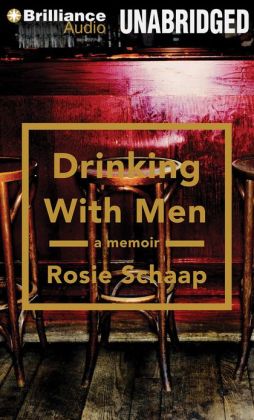
Drinking with Men by Rosie Schaap (audio)

drinking with menI picked up this memoir for what I’m sure are obvious reasons. The title alone appeals to me: I am, ahem, a drinker, and a tomboy who’s been most commonly and comfortably in the company of men. Read a blurb, and find out further that Rosie Schaap is a fan of hanging out in bars, which puts her generally in male society; I’m right there with her.

And I was immediately charmed at this audiobook, read by the author in her somewhat gravelly (drinker’s, smoker’s) voice. She opens the introduction by calling herself a serial monogamist when it comes to bars: she becomes a regular at one for a year or years, then moves to another to which she will also be faithful for the medium-long-term. This memoir is organized by bars where she achieved “regularhood” (a status that she points out is even more overwhelmingly male-dominated than bar-drinker-hood generally), and covers the rest of her life – relationships, school, careers, living arrangements – as it relates to the bar, mostly. Her brother, parents, and husband get sketched rather more lightly than do her drinking buddies, for example. Her bars are located in New York City, small-town Vermont, Dublin and Montreal – but mostly New York City, her hometown and persistent home.

As expected, and as her first few lines indicated, I felt a real connection with Rosie. (I consider us to be on a first-name basis, as we would be on our barstools.) Her inexplicable (to some) comfort going to bars alone as a woman struck a note with me: I share that comfort (at the right bar, of course), and confirm her observation that this is rare behavior. I certainly agree that the definition of the best sort of bar is where one can go alone while female – and even read a book, or carry a conversation without shouting. (See here.) I also agree that these bars can come in different shapes and sizes (well, small is the ideal size), and that they overlap, but not entirely coincide, with dive bars. I often felt as if she were speaking right to me – like this is a long-lost sister I’m listening to. How lovely. We should get a drink sometime.

She did lose me for a little while mid-way, when she got enthused about religion and becoming a minister. I couldn’t follow her there; we got separated; and I worried that we had taken permanently distinct roads. But she sort of let that part of her story lapse; I don’t know if that part of her life lapsed, too, but I was certainly okay with the book taking that turn. Personal preference, there.

Rosie’s life has taken a few turns that I think will be familiar to many of us: youthful rebellion, difficulty determining What She Would Do With Her Life, and a troubled marriage. She experience 9/11 as a New Yorker, and lost her father the same season. She moved away a few times, and returned. And she has had some very cool relationships with some very cool bars. I felt very close to her as I experienced what she had written, and as she read it aloud for me. I think that has to be one of the aims of memoir.

As an aside, I had a fun “aha!” moment: as Rosie talked to me, I had a niggling feeling of deja vu. I recalled a story I’d read somewhere, about a young woman in a bar wearing an ugly hat, who was approached by an intimidating biker who wanted to buy her hat for his friend. It was a good story, and I was reminded of it. Sure enough, just as I was wondering, she told it. I figured out that I’d read it in the New York Times Magazine, courtesy of my mother. (You can read it here.)

Schaap’s writing style sort of disappeared for me, which I mean in a good way: that is, that there was no discernible style. It just felt like she was telling her story. I would have enjoyed ten times this length of the same – although on the other hand, she seems to have shared exactly the right amount.

If you’re at all interested in bar culture or women in a men’s world – I recommend Rosie’s story told in her own voice.


Rating: 9 pints.

The Book of Jezebel: An Illustrated Encyclopedia of Lady Things by Anna Holmes

A colorful and clever reference guide to life as a woman that readers can enjoy straight through, cover to cover.

jezebel

The Book of Jezebel, edited by the creator of the popular feminist website with contributions from many of its writers, is an illustrated encyclopedia of “lady things.” The Jezebel definition of lady things includes body parts, clothing, historical and contemporary women in pop culture, literature and politics–and women’s issues related to feminism, reproductive rights and relationships. It also contains an “ode to female friendship,” (mostly) humorous attacks on certain public figures and plenty of photographs and illustrations that add to the book’s informational value and its hilarity.

Although often funny, The Book of Jezebel is serious in its underlying intent, aspiring to balance empowerment with femininity. It’s not just for women, but for men who love them as well.


This review originally ran in the November 29, 2013 issue of Shelf Awareness for Readers. To subscribe, click here, and you’ll receive two issues per week of book reviews and other bookish fun!


Rating: 8 steps.

Z: A Novel of Zelda Fitzgerald by Therese Anne Fowler (audio)

zThis is a fictionalization of the life of Zelda Fitzgerald, wife to F. Scott Fitzgerald. The main events of their lives are fairly well-known: married in 1920, Fitzgerald was a professional writer who never saw the success in his own lifetime that his friend Hemingway did; the couple lived back-and-forth in France and the US; Zelda was “the first flapper” according to Scott; they were famously wild partiers, alcoholics, and rather nut jobs; Zelda was eventually institutionalized, and died in a mental hospital. They had one daughter. These main events are followed in the novel, which is told first-person by Zelda herself.

It started well. I really did love Zelda’s voice – as written by Fowler, and as read by Jenna Lamia. She’s spunky and irreverent, and likeable. She reminded me of Scarlett O’Hara from the very beginning, which is both a compliment and a caution: is she entirely original? I enjoyed what Fowler created in her fictionalized Zelda Fitzgerald, but I worried that she was overly informed by hindsight. Scott talks like he writes; Zelda speaks as if aware of her audience, aware of the legacy she’ll leave behind – which she wouldn’t have been, regardless of her faith in her husband, because his fame as we know it today came largely after both their deaths.

Ernest Hemingway likewise speaks in a caricatured version of one of his own heroes. This is a common technique when writing Hemingway into fiction: I recognize it from Midnight in Paris. I’m comfortable with people criticizing, even despising Hemingway; he’s my hero, but I certainly see his flaws. But I wish they wouldn’t make him into a cartoon, because that, I think, he wasn’t. He could be ridiculous, and he definitely overdid the machismo, but he was a complex human being, troubled, tortured, insecure, boastful and antagonistic; wouldn’t it be more fun, and more satisfying for a novelist, to write him as a full person than as a cartoon version of his own fiction? Ah well.

Expand this concept to apply to Scott Fitzgerald, too. I’m less qualified to speak about his life, having read much less about him than I have about Hemingway. However, I feel confident that neither Scott nor Zelda could have been as black-and-white as Fowler’s fictional characters are here. Scott Fitzgerald is a monster in this novel! Despicable, horrendous, a nightmare. I suspect that in life, he was, like Hemingway, capable of monstrosities, but also a full human being, with likeable bits alongside the flaws. Such a well-loved and artistically accomplished alcoholic would seem to have to be conflicted, ambiguous, and – importantly – multi-facted. Fowler’s characters lack facets. Similarly, though I have read still less about Zelda, my general understanding of her was that her dissipated party-girl period lasted well out of her early 20’s. The fictional Zelda we meet here becomes rather saintly after giving birth to her daughter. She is the squeaky-clean foil to Scott’s ogre; and I suspect that the one is as realistic as the other.

In contrast to this novel, I am simultaneously reading the yet-to-be-published The Trip to Echo Spring: On Writers and Drinking by Olivia Laing. Z suffers by comparison; Laing’s (nonfiction) work is very well researched, beautifully written (although I’ll try not to turn this into a review of her book!), and, to my point here, respects the dueling forces for good and evil in her subjects, including F. Scott Fitzgerald. (And Hemingway.) Possibly I would have appreciated Z more if it were presented not as historical fiction but as alternate history, since I am increasingly concerned that it’s not true to the history of the Fitzgeralds as we know it. Even then, however, fully developed characters should have complexity rather than read as saints and devils, so my concern remains.

The net effect of having read this book in the end is that I feel the need to go read up on Zelda a little more thoroughly; I’ll be looking for a biography next. She always struck me peripherally as a colorful, conflicted character: just the kind I like, that is. I’m always most interested in those individuals who offer both sympathetic and distasteful qualities in the same package; they’re so engrossing that way. One of Fowler’s major flaws, then, would be in having omitted my favorite character feature: ambiguity.

I began by enjoying this book, and Zelda’s voice and personality. Much of the middle troubled me, as the black-and-whiteness of the characters emerged. Scott was such a terrible husband that I was just frustrated and angry with him; and while these can be useful emotions to evoke in your reader, Fowler didn’t take me anywhere interesting or cathartic or instructive with them. Zelda briefly considers leaving Scott (because she is, after all, a saint and a martyr) and then realizes she can’t afford to support herself as a single woman, so she decides to stay. Very cut and dried, you see. Towards the end, when the couple is separated by Zelda’s incarceration in various mental institutions, I liked it a little better again; maybe removing the hateful Scott cheered me. But then it was disappointing to end with Scott’s death – Zelda lived another 8 years! but those years are handled only in an epilogue. Why couldn’t she have continued to speak in her own voice until she died? Perhaps this novel should have been called Z: A Novel of F. Scott Fitzgerald told through the eyes of Zelda. Hmph.

In closing, clearly, my concerns were many. I credit Fowler for entertaining me (at least early and late) with a likeable Zelda in a spunky Southern drawl, well read by narrator Lamia. But I was dissatisfied with many aspects of the art of the novel as executed here. Subjects like the Fitzgeralds offered so much opportunity for nuance, and catharsis, and analysis, that was not undertaken. Complex characters were flattened into single dimensions. And my limited knowledge of their lives makes me hesitant, but I worry about the historical accuracy, and I wish more information were given to indicate where the fiction begins. Several letters from Zelda to Scott and other friends are quoted; are these real letters? I don’t know; and I’d like to know. Credit Fowler with inspiring some further reading; but this experience in itself was less than satisfying. I can’t recommend that you spend your time on this book. There are lots of books written about the Fitzgeralds; start elsewhere. Me, I’m considering Tennessee Williams’s play, Clothes for a Summer Hotel.


Rating: 4 fingers.

Weeds: A Farm Daughter’s Lament by Evelyn Funda

A memoir about the loss of the family farm, and everything it means to the child of immigrant farmers–and to us all.
weeds
Evelyn Funda’s mother escaped Nazi-occupied Czechoslovakia in a wine barrel, eventually landing in the United States. Her father was the son of Czech immigrants, early homesteaders who sought to make farmland of the Idaho desert. The family farm never felt like it would be Evelyn’s: this “farm daughter,” unwelcome among the tractors and irrigation pipes, would leave to become a college professor. Her musing memoir opens in the fall of 2001 with a triple tragedy: the sale of the family farm; her father’s cancer diagnosis; and her mother’s death, closely followed by her father’s.

Weeds is an elegy, an academic’s personal tale of research and disillusionment, and Evelyn’s own story–with hints of a botanist’s or social historian’s study. (The chapters are named for weeds, beginning with dodder, which she long misheard as “daughter,” when her father cursed the unwelcome growth.) The pursuit of her mother’s joyful youth in a series of cities and countries, of the truth of her grandfather’s apocryphal tales, of her parents’ romance and of the history of her own hometown takes Evelyn to dusty library stacks and to small Czech villages, where she meets dozens of cousins and examines old bones.

Meditative and lyrical, Weeds smoothly braids weeds with family. Funda is sometimes frustrated along the way, but finally satisfied with the personal history she builds for herself–and the conclusion that, even in exile, one can find a sense of place and of belonging.


This review originally ran in the September 6, 2013 issue of Shelf Awareness for Readers. To subscribe, click here, and you’ll receive two issues per week of book reviews and other bookish fun!


Rating: 7 kolaches.

The Other Typist by Suzanne Rindell (audio)

typistThis book reminds me very much of Rules of Civility by Amor Towles, with similarities extending to the audio narration, as well. And considering how much I loved that book, and narration, this is a high compliment. They share a setting in New York City early in the 20th century (in this case, Prohibition era), a concentration on class differences, a slinky sensual tone, and an appreciation for the finer things in life. The final shared characteristic is a major plot twist late in the book, here subtly foreshadowed from early on. And that is where I struggle a little with this review: I don’t want to spoil the surprise for you, because it makes the book. Read on safely; I’ll be careful.

Meet Rose Baker, our narrator. She was raised in a Catholic orphanage and now works as a typist in a precinct office of the New York Police Department. The book opens with a discussion of the controversy surrounding young women working as typists at all, let alone in the “rough” environs Rose inhabits: she frequently witnesses and transcribes the confessions of murderers and rapists (gasp). That opening passage helps establish the setting, along with a following reference to the Volstead Act (which prohibited alcohol in the United States).

And now, meet Odalie Lazare, the “other typist.” There were already two typists besides Rose at the precinct, but Odalie is a different sort. Glamorous, seductive, and strangely well-off for someone who would work as a police department typist, Rose is bewitched from the first. The two become “bosom friends,” and Rose becomes… devoted? obsessed? It all depends upon your definitions, of course.

Suzanne Rindell’s construction and development of Rose Baker as an unreliable narrator is delicious. We know Rose for a great many pages as a sober, morally upright young lady and professional; she describes Odalie’s entrance into her life with a sense of foreboding, but with no clue as to what has happened between them. And then there is the first, very brief, reference to Rose’s doctor. Later, there is another flashing reference to the “incident.” Thus, our sober and reliable narrator is undermined, but just so swiftly and for just a moment – did we even see it at all? And I’m left, as the reader, wondering about this incident and why Rose needs a doctor; and then I’m back in Rose’s story, seeing her as the responsible character again. It is a masterful building of tension and questions; I ate it up.

One of the many strengths of this story is in its strong sense of time and place. Prohibition New York is colorful; one can hear and smell and taste its flavors. I will have to leave it to another, older reader to speak to its authenticity, but I am certainly convinced. The writing style, and Gretchen Mol’s reading style, contribute to the feel of an earlier time; sentences are a little long and formal, in a way that just creates more atmosphere.

Rindell’s fine sense of pacing, the doling out of detail and prolepsis, is adept. It is not everyday that I am this drawn in and enchanted by a story; I couldn’t wait to hear what would happen next; I was guessing and second-guessing. As a thriller, The Other Typist evoked some of Tana French’s best work (as here).

Although I was captivated by the swirling mists of speakeasies and Odalie’s wily ways as the femme fatale, I think my favorite part of this experience was the buildup to the big reveal, and the mystery left therein. The Other Typist was a pleasurable rush and romp, and has left me wanting more of Suzanne Rindell’s magic. Reader Gretchen Mol was perfect and not to be missed: do find this one on audio if you can.


Rating: 8 champagne cocktails.

Teaser Tuesdays: The Other Typist by Suzanne Rindell

Teaser Tuesdays is a weekly bookish meme, hosted by MizB of Should Be Reading. The idea is to open your current read to a random page and share a few sentences. And try not to include spoilers!

typist

I have discovered an awesome new book on audio that I want you to know about. Set in 1920’s New York City, The Other Typist‘s first-person narrator is Rose Baker, an orphan employed as (yes) a typist at a precinct police department. She is entranced by a new hire named Odalie, who exerts a magnetic pull on everyone, it seems, but most especially Rose herself. Here’s your teaser:

She was never once rebuffed, and the man – I say man here generically, because there were several – invariably introduced himself and reached into his pocket to fish out a lighter and a replacement cigarette, while Odalie puffed on her pilfered prize and regarded the gentleman with a sly, delighted expression, as if to suggest nothing he could pull out of his pocket could sufficiently replace the unique and spectacular treasure she had just stolen.

I just love this line, read masterfully by Gretchen Mol, with its subtly suggestive reference to what a generic man might pull out of his pocket to impress Odalie. She, the other typist, is a classic, manipulative femme fatale; but then again, there are some unanswered questions to ask about our narrator Rose, too. And that’s the kind of set-up I like. Stay tuned…

Dirt Work: An Education in the Woods by Christine Byl

dirt workChristine Byl opens her memoir with the pleasant scene of herself and three fellow crew members, crusty and dirty, having a post-hitch beer at a small-town Montana bar. A young woman approaches and asks how she keeps up with the boys, one of whom volunteers that it’s all they can do to keep up with her.

She then backs up and tells the story of how she got there. Like many young women in our culture, Christine was expected and expecting to go to college, to do cerebral work and keep her hands (literally) clean; but a summer gig held her, and she reveled in physical challenges, in learning new things, in the mechanical world. Eventually she reveled in her hardening muscles and her expertise, in surprising men with her ax-work and in mentoring other young women coming up in the “matriarchy” of trail work (still predominately male) within Glacier National Park.

After six seasons in Glacier, alongside boyfriend and eventual husband Gabe (a delightful character: mostly off screen, but clearly a capable young man in his own right, and clearly happy to stay lovingly out of Christine’s way), she does return to graduate school, in Alaska. But during the summers she still works on building and maintaining trails, this time in Denali. Christine and Gabe come to love Alaska – yes, even the winters: there is a delightful passage arguing that the light summers are in some ways harder than the dark winters, and I made both my parents (recently moved from the Mexican to the Canadian border) read it. They settle a few miles outside the borders of Denali National Park, and Christine finds a balance between the cerebral – she gets an MFA in fiction, and writes this beautiful book; and the physical – she and Gabe now run their own independent trail-building company.

So many things to love in this book; where to begin? As a sometimes volunteer trailworker myself, I don’t pretend to know 2% of what Christine does; but I might know just enough to appreciate what she loves about it, and what a challenge it can be. I still haven’t mastered the efficient, all-day ax swing myself, but I’d like to. Also, I have a friend named Susan who I’ve written about before, who has a great deal in common with this author. (I briefly wondered if “Christine Byl” was a pseudonym.) Susan, like Christine and apparently like many trail workers, has an advanced degree but chooses to labor for a living; she’s a woman in what is clearly a man’s world, and is half of an independent trailbuilding company. I get the impression that while it’s hard work, Susan and her husband Ryan wouldn’t do anything different.

Christine writes beautifully about the phenomenon of choosing to do physical work when she could be keeping her hands soft. She writes about the well-intentioned questions her family asked, about when she was going to get a “real job”: she says that they have confused happiness with orthodoxy. (I can only imagine how many of us can sympathize with that concept!) She writes about the “sorority” of men in trailwork, and the way that pulls women together; she writes about the pride she feels when upending male expectations of her blonde head and small frame. As a writer, and clearly a gifted one, she structures this book as solidly as she would a bridge or retaining wall. Each of 6 chapters is represented by a tool (axe, rock bar, chainsaw, boat, skid steer, shovel), a location (North Fork, Sperry, Middle Fork, Cordova, Denali twice) and a locale (river, alpine, forest, coast, park, home). Within those chapters she roves and rambles, musing on natural phenomena, social relations, her own body and personality, strengths and shortcomings, and then returns to tool and place to ground herself. The structure of this book, then, is both well-anchored and floating, and I found that it worked very well.

I was charmed by Christine Byl’s honesty; her love of place; her range of experiences and understanding of two worlds, that of universities and that of woods; and of course her lovely writing. She’s hard as nails, with two hernia surgeries and a preference for outhouse over indoor plumbing. She’s brash and can tend towards a loud and dirty mouth (that makes two of us), but she’s got a soft core. I like her; I’d like to be her friend, and of course I’d really love to learn from her.


Rating: 10 pulaskis (my personal favorite trailwork tool).

I fear I’m getting out of control with the perfect-10 ratings, friends, but what can I say: it’s been a great year for reading. I will take a little of the credit, in that I think I’m getting better at picking what I’ll like, and not wasting time on what I won’t. But mostly, wow, there are some amazing books out there!

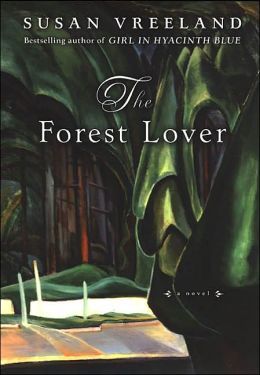
The Forest Lover by Susan Vreeland

forestloverWhat a lovely book. I recently read and enjoyed Scott Elliot’s Temple Grove enough that I attended to his “Note on Sources,” and requested several from my local library. This was one of those – aided by my enjoyment of Vreeland’s Girl in Hyacinth Blue and Clara and Mr. Tiffany.

Like those two of her books, this is historical fiction dealing with a female artist. [Also think of Tracy Chevalier’s Girl With a Pearl Earring.] The three historical periods, geographic locations, and women in question are quite diverse, but there is a very clear thread connecting them all as female, artists, and historical; I appreciate that showing of diversity in her subjects and also of a singleminded interest. I am safely a Vreeland fan now. Fairly naturally, considering that they deal with female artists of earlier times, her books also address women’s struggle for independence.

Emily Carr, like the subject of Clara and Mr. Tiffany, is a real-life historical figure about whom we don’t know everything; this is a fictionalization of her life. She was born in British Columbia in 1871 to British parents. She showed an inclination for sketching and painting early on, which hobby was encouraged by her father at first, but he expected her to grow out of it in favor of more womanly pursuits (like marriage), and she didn’t. We meet Emily or “Millie” when she’s struggling to make ends meet and trying not to depend too much on the trust fund she shares with 4 sisters, teaching art for a living and befriending local Native Canadian Indians. The sisters mostly do not approve this association. Her favorite subjects are natural scenery and native people and their lifestyles; she travels to islands and outposts for these subjects; again, this is not appreciated by her family. She does enjoy some good female companionship, though: Sophie is an Indian woman and fellow artist (a basketmaker) who befriends her in broken English; Jessica is a less adept painter but rather saucy lady friend; Alice is her “good” and friendly sister; and after Emily musters the courage to travel to Paris to study the “new” art (see below), she meets fellow painter Fanny, a New Zealander and kindred soul.

To give you an idea of the Paris of Emily’s experience, as a moment in time, I share these lines.

“Van Gogh’s been in his grave for twenty years, Cezanne for four, yet art collectors still don’t buy them, and despise what’s new now.”

“What is new now?”

“Their offspring. Léger, Picasso, Braque, Matisse, Modigliani, Derain, Rouault. Many directions.”

Momentous times, then!

Back in Canada, Emily ages as we watch her struggle with art and life. She wants desperately to represent the native people’s lives and art, and the powerful forest surrounding her. Or, as she comes to learn, she wants to more than represent or copy: she wants to communicate what these things make her feel. Her study in Paris under various teachers advances her practice, but still doesn’t get her there. We follow Emily through a series of lifestyles and decisions that form a crooked path but ultimately continue to move her toward a higher form of the art and communication she desires.

There is one man who begins to be a love interest for Emily; but as the title implies, she finds herself unable (for various reasons) to participate in physical, person-to-person, romantic or sexual love with this man. She is not the forest’s lover in a carnal sense – this book is not that weird. And Emily does continue to relate to people. Jessica and her sisters, and most importantly Sophie, retain a hold on her heart; and she forms a new (platonic) relationship with a damaged white man who understands Indians better than whites. But in a very real way, her relationship with the natural world is the most magnetic in her life.

I often observe that I like an author’s earlier (or lesser known) work better than the later. (I hope this is not just me being contrary. I don’t think I do it on purpose.) In this case, though, I think my favorite of her books is still her most recent, Clara and Mr. Tiffany. The earlier two I’ve read are both wonderful; but I sometimes felt this showed its earlier origins. It is occasionally less graceful. While she is mostly “on,” there are some awkward phrases, too. Observe these two single sentences, on two facing pages. I find one smoothly appealing, and the other a bit effortful.

Emily felt as if smelly white scum had eked out her pores.

versus

A breeze shifted the ends of foliage, like the tips of fingers moving.

Do you make the same observation I do? (Which one is which?)

Criticisms aside, though, this novel is far more graceful than not; and while I could pick apart lines like the one above, the sum of its parts is glorious. Vreeland’s greatest strengths are those I recognize from her other books. She understands art, and the artist’s struggle to get it just right. She addresses women’s issues compassionately as a natural part of the story of one woman in history. And unique to this work, the natural world and its beauty, value, power, importance, and scale play a deservingly large role.

Another success for Susan Vreeland.


Rating: 8 smears of viridian.