Teaser Tuesdays: Spinster: Making a Life of One’s Own by Kate Bolick

Teaser Tuesdays is a weekly bookish meme, hosted by MizB of Should Be Reading.

spinster

There is a lot to love about this book, in which a fun, intelligent woman discusses singledom and the arguments in favor, while exploring the lives & writing of those who’ve gone before her. A Maximum Shelf is coming. For now, I wanted to share these charming lines.

Because I’d started contributing to magazines and newspapers as a graduate student, the transition was seamless enough, save for the fact that reviewing books makes it very easy to never go outside.

I certainly identify, Kate. Here’s to continuing to make an effort to go outside (& also loving what we do).

This quotation comes from an uncorrected advance proof and is subject to change.

movie: She’s Beautiful When She’s Angry (2014)


I’m really pleased to have gone to see this movie locally with my dad. It was so good that I went back a few days later to see it again with my mom, so now it’s a family affair (as these things should be). She’s Beautiful When She’s Angry is a recently produced history of the women’s movement of the 1960’s and 70’s. It was nice to see it with my parents, who were there, and involved.

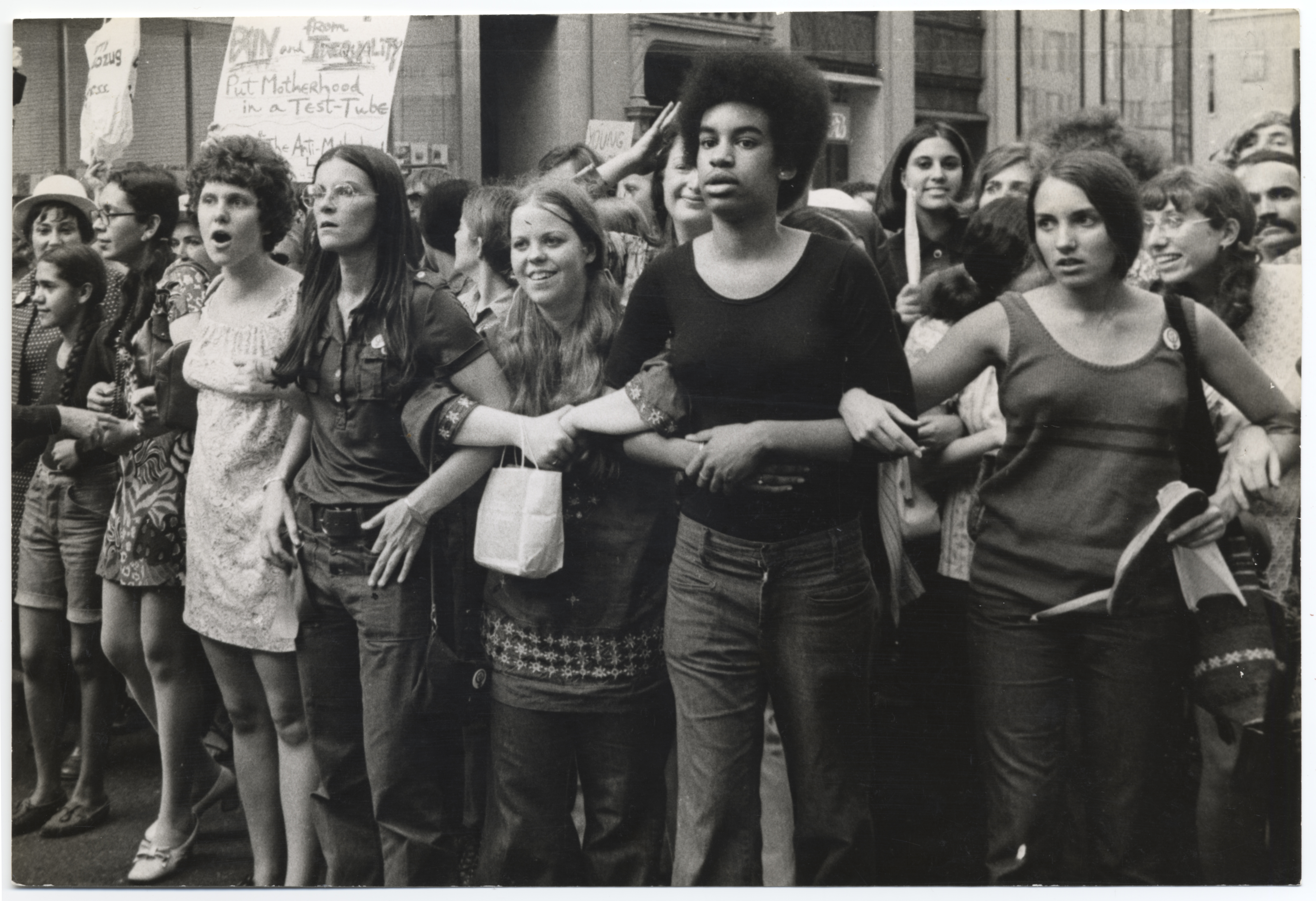
The movie includes historical footage of protests, speeches, news media, and interviews; contemporary interviews of activists who were involved in that history; the odd performances by actors; and reenactments. So many things struck me, and I’d like to point out that while I was often shocked by the horror, and the bravery, I was not surprised. Does that make sense? For example, the divisiveness of the movements – civil rights, women’s rights, peace – is unsurprising but will shock and dismay me every time. When a woman leader got up to speak in front of a crowd of “New Left” men, and they booed and catcalled her, I was (sadly) unsurprised, but astounded nonetheless. When the women’s movement ostracized its lesbian members, likewise.

"Lavender Menace," photo credit: Diana Davies, accessed here

“Lavender Menace,” photo credit: Diana Davies, accessed here

I enjoyed learning for the first time about the “Lavender Menace” action at the Second Congress to Unite Women in New York City on May 1, 1970. The need was unfortunate, but the demonstration was great fun, gave me joy. For that matter, another of the revelations of this film, for me, was the sense of fun associated with certain direct actions throughout the movement: that’s a part of the story that I hadn’t heard before, I don’t think. I also didn’t know how close we had gotten to having legislation passed supporting universal child care (thank you Nixon for this among other criminal shortcomings).

The first night I saw the movie, it was followed by a panel discussion with faculty members from local Western Washington University. These women were younger than I’d expected, in their thirties and forties, and the theatre was sold out – all good signs. We touched on the movie’s title: a criticism of the patronizing statement that we’re cute when we’re mad? or a sincere celebration of every woman’s beauty as she pursues right? (I think it’s both.)

I’m glad to have been reminded of that slogan of the women’s movement, that “the personal is political.” I’ve used some variation on this myself, because it makes so much sense: when politicians talk about forcing ultrasounds, we are quite literally talking about the inside of my reproductive organs; what could possibly be more personal? And I’m sure I knew on some level that I was citing my parents and their fellows, but I’m glad to have been reminded.

I cried when the movie got to present-day Texas, all those women in the capital protesting Senate Bill 5. I’m sorry I wasn’t there; I should have been there. Other interesting or affecting points in the film: the portrayal of our rage as a good thing (when emotion has come to be something we’re supposed to be ashamed of); and the excellent statement that the United States doesn’t like to credit radical movements with positive change in our history. Of course this only makes sense: it doesn’t behoove the powers to acknowledge that protest and civil disobedience do good. But revision of our history is a vile and insidious weapon being used all around us, and it bears noting (over and over again). Another statement of the film – I forget who made it – is that merely speaking truth aloud is a revolutionary and powerful act. Let’s not forget it.

"8-26-1970 March," photo credit: Diana Davies, accessed here

“8-26-1970 March,” photo credit: Diana Davies, accessed here


Thanks, ladies. I owe you.


Rating: 9 consciousness-raising groups.

Older, Faster, Stronger: What Women Runners Can Teach Us All About Living Younger, Longer by Margaret Webb

An amiable and instructive memoir about achieving and maintaining competitive fitness at any age.

older

Margaret Webb (Apples to Oysters) was a successful young athlete and an active adult, but never suspected she might be a marathoner. Staring down her 50th birthday, she became curious about what she could accomplish. She knew there were competitive women runners several decades her senior; could she join their ranks? Older, Faster, Stronger covers what Webb calls her “super-fit year.” And as her subtitle states, the lessons she shares are valuable for men and women of all ages, in any sport.

With the luxury of being able to devote her time and energy primarily to training, Webb engages expert nutritionists, personal trainers, coaches, sports psychologists, aging specialists, physiologists and laboratory researchers. She has her maximal oxygen consumption tested (twice); adds cross-training, gym time and track workouts to her running schedule; travels; and brunches with world champion septua-, octo- and nonagenarian women. She sets goals: to qualify for the Boston Marathon under the fastest women’s standard (the qualifying time for 18-to-34-year-old women) and to be competitive in the half-marathon at the World Masters Games.

Webb is meticulous in applying her results stringently to her own life and documenting them for her readers. Her research appears thorough, although the more fastidious reader may be frustrated by the absence of citations. Older, Faster, Stronger is packed with statistics and studies, but is well explained, so the reader will find the science easily digestible. Athletes of any sex, age and discipline can benefit from–and be entertained by–Webb’s approachable investigation of becoming faster and stronger into advance age.


This review originally ran in the October 10, 2014 issue of Shelf Awareness for Readers. To subscribe, click here, and you’ll receive two issues per week of book reviews and other bookish fun!


Rating: 8 minutes.

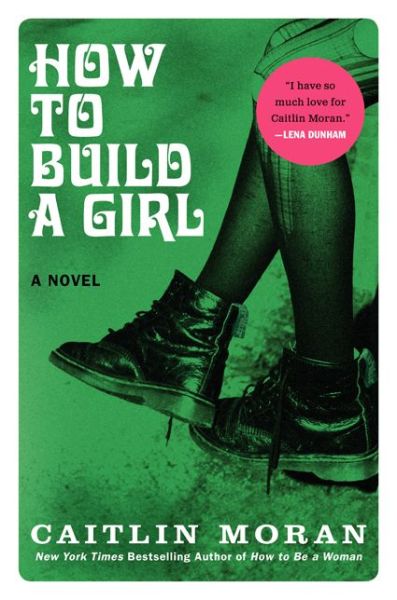
How to Build a Girl by Caitlin Moran

The self-made girl of Caitlin Moran’s debut novel is irreverent, painfully self-conscious, triumphant and very funny.

moran
The wise and hilarious Caitlin Moran (How to Be a Woman; Moranthology) makes her first foray into fiction with How to Build a Girl, and this novel is everything her fans will expect it to be.

It is the early 1990s. Johanna Morrigan is 14 years old and lives in Wolverhampton, England, with her parents and four siblings: an older brother, a younger brother and two babies without names (known long-term as the Unexpected Twins). They are all on government assistance, or benefits. Her mother is depressed and her father is still distributing the demo tapes of his youth, sure that one day he’ll be a rock star. Johanna is desperate to leave behind Wolverhampton, benefits and her virginity.

Her big chance comes when she scores a television appearance during which she will read aloud her prize-winning poem on the theme of “Friendship.” However, she fails to make her family proud, instead surprising even herself with a shameful impromptu Scooby-Doo impression. Deciding that being Johanna Morrigan is a losing proposition, she sets about methodically building the girl she wants to be: she christens herself Dolly Wilde (after Oscar’s niece), and decides to become a music critic. With no money to acquire the latest albums, however, she is resigned to ordering them through the local library.

Dolly Wilde is constructed on the music of Hole, Bikini Kill, David Bowie and Kate Bush; the writing of Dorothy Parker, Orwell and Kerouac; and a blind ambition to reach London. She sends in one album review per day for 27 days until, amazingly, she is hired to review albums and performances for Disc and Music Echo. From Dolly’s very first encounter with live music, this gig ushers in an era of drink, sex and eventually drugs; she happily pursues the lifestyle of the rock stars she admires, but is challenged to reconcile this new life with her household of seven back at home in Wolverhampton.

In order to fall in love with the clumsily charming and often heartbreaking Johanna, readers will want to check their inhibitions regarding four-letter words and copious masturbation. Puzzles as stale as the difference between love and a casual hookup become fresh in this young woman’s vigorous, enthusiastic and ever-misguided perspective. Moran is cheeky, intelligent, thought-provoking and laugh-out-loud funny, and reminds us that we are always learning and rebuilding, no matter our origins.


This review originally ran in the September 9, 2014 issue of Shelf Awareness for the Book Trade. To subscribe, click here.


Rating: 9 cigarettes.

book beginnings on Friday: Older, Faster, Stronger by Margaret Webb

Thanks to Rose City Reader for hosting this meme. To participate, share the first line or two of the book you are currently reading and, if you feel so moved, let us know what your first impressions were based on that first line.

older

I am well pleased with this current read, and want to share.

A year ago, at age 50, I set out on a journey to run my way into a younger self. Just as Henry David Thoreau set off for the wilds of Walden Pond to enter a solitary relationship with nature and understand how to live well, I wanted to enter a deeper relationship with my body and understand how to train it well.

These first two lines tell you what the book is about. This lucky woman spends a year studying on how to be the best marathon runner she can be, with all sorts of science & experts to back her up, and shares with her reader what she has learned. Stay tuned; I like it.

This quotation comes from an uncorrected advance proof and is subject to change.

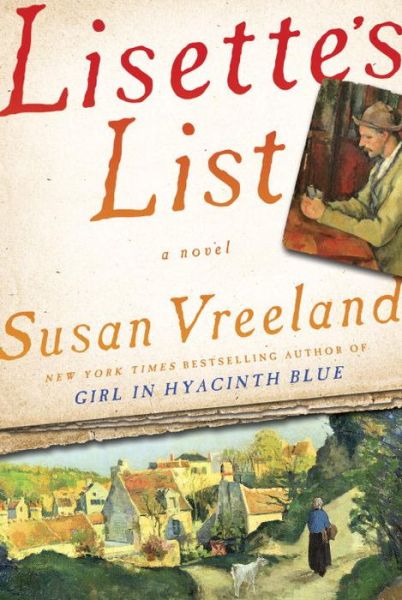
Lisette’s List by Susan Vreeland

Like Vreeland’s previous novels about women in history and art, Lisette’s List is heartfelt, loving and lovely, and asks difficult questions beautifully.

lisette

In Lisette’s List, Susan Vreeland (Clara and Mr. Tiffany; Girl in Hyacinth Blue) lovingly portrays Impressionist, Post-Impressionist and Modernist French art by way of a modest fictional character in Provence.

In 1937, newlyweds Andre and Lisette Roux move from France’s vibrant capital to the pastoral southeastern town of Roussillon to care for his grandfather, Pascal, who has written that he is dying. A passionate Parisian, Lisette is at first miserable in the backwater town, and infuriated when Pascal turns out to be healthier than he let on: he simply wanted their company, and to share what he remembers about the famous French artists he has known.

But Lisette is as fervent about art as she is about Paris, and Andre has trained in his grandfather’s trade of carving fine frames for fine paintings. She is captivated by Pascal’s collection of seven paintings: by Cézanne and Pissarro, and one possibly by Picasso. As a miner in the nearby ochre mines and later a pigment salesman, Pascal made the most of his access to these men, and now shares his recollections with the rapt Lisette–as well as his wisdom about life and love.

By the time Pascal eventually dies, Lisette has made a home of sorts in Roussillon; her love for the paintings further compels her to stay in Provence when Andre hides them (for fear of their destruction or seizure by German troops), not telling even Lisette where they’re stowed. Andre then enlists to fight for France, and Lisette is left alone, waiting for both the safe return of her husband and a reunion with the artwork.

Over the next decade and more, Lisette keeps a list of “Lisette’s Hungers and Vows.” Inspired by Pascal and his paintings, Andre’s love and the quiet strength and beauty of the Provençal surroundings, she pledges to “learn what makes a painting great,” “learn how to be self-sufficient” and “love without reservation.” She meets Marc Chagall and his wife, Bella, who are hiding in a nearby town. Upon receiving a gift painted specially for her by Chagall, she begins her own art collection and narrative. But war necessarily brings tragedy as well as new beginnings. Lisette will experience love and loss, joy and deep pain; learn animal husbandry as well as art history; and parse the moral questions raised under Vichy French rule, as the years go by. She finds new friends, undertakes small favors and large sacrifices, all in times of war and recovery, amid the paintings she loves so. Readers will likely rush through the lovely Lisette’s List, only to be bereaved when the final stroke is painted and the portrait is complete.


This review originally ran in the August 4, 2014 issue of Shelf Awareness for the Book Trade. To subscribe, click here.


Rating: 8 pieces of marzipan.

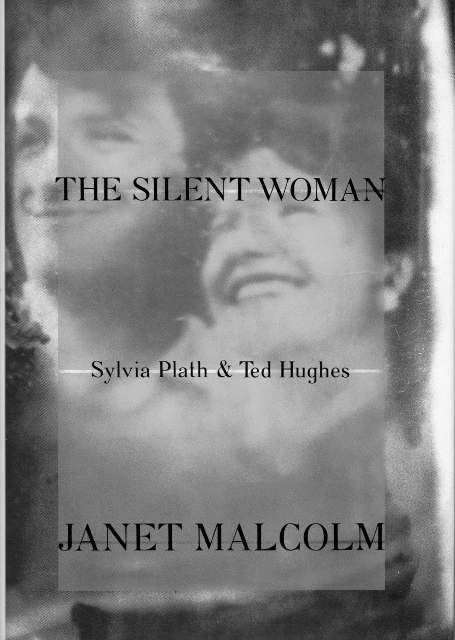
The Silent Woman: Sylvia Plath and Ted Hughes by Janet Malcolm

silentThis was a very interesting read, and not exactly what I’d expected; but it is in line with my own previous Janet Malcolm read, Iphigenia in Forest Hills. As I said on Tuesday, this is not a biography as I thought; it is rather an examination, if not an excoriation, of biographies generally. The life of Sylvia Plath is chosen as a vehicle for Malcolm’s argument, her journey and study toward developing that argument, and she does make an appropriate vehicle. She is a sensation, what with her suicide and all; she has living family members (notably her husband, sister–in-law, and her mother; she also has children, but they are only referred to by others, and don’t show their own faces) to be hurt by biographical portrayals which naturally handle their lives as well, often less than gently; and the biographies that have been written of her have tended to viscerally choose sides. Some are in the pro-Plath camp: she was a fine talent, tormented and abused by her evil husband Ted Hughes and her mother; others are pro-Hughes: he was a saint, she was a terror.

[Here is where I want to point out that this book was published in 1994, so the living relatives Malcolm writes about and that I’m referring to were living then. Plath’s mother Aurelia died in 1994; but in the present tense of this book, she is alive. Hughes died in 1998. I can’t confirm Olwyn Hughes’s status; I am therefore tempted to presume she is going strong.]

Very briefly: you know Sylvia Plath? Troubled poet, author of The Bell Jar? She was married to poet Ted Hughes, had two children, and was separated from him when she made her second suicide attempt, which was successful, by putting her head in an oven and gassing herself. Ted and his sister Olwyn have controlled her literary estate, with Olwyn playing the active role and ferociously defending his reputation.

Janet Malcolm traveled in 1991 to England to meet with Olwyn Hughes, and several Plath biographers, to talk about the Plath legacy and the ways in which it has been mismanaged. While the various parties differ on how, why, and when, I think they will all agree that it has been mismanaged. The biographical processes and products have been fraught with bitterness and poisonous resentments and failures of compassion, of put-yourself-in-someone-else’s-shoes. I am undecided as to what side I’m on, and Malcolm has something to say about this failure to choose sides.

The writer, like the murderer, needs a motive. Rose’s book is fuelled [sic] by a bracing hostility toward Ted and Olwyn Hughes. It derives its verve and forward thrust from the cool certainty with which… she presents her case against the Hugheses… If it had been impossible for Rose to take a side, her book would not have been written; it would not have been worth taking the trouble to write. Writing cannot be done in a state of desirelessness. The pose of fairmindedness, the charade of evenhandedness, the striking of an attitude of detachment can never be more than rhetorical ruses; if they were genuine, if the writer actually didn’t care one way or the other how things came out, he would not bestir himself to represent them.

(The male pronouns, present throughout, strike me as quite a shame. C’mon, Malcolm, you yourself are a writer who is not a “he” – can you not represent that possibility in your writing?)

Okay, so, point taken; but I didn’t get much of a feel for either Plath’s or Hughes’s point of view, honestly, from what I read in this book, and I’ve read none of the biographies. (Ironically, I was trusting to Malcolm to do that job for me; clearly that was a no-go, although what I received instead was worthwhile.)

Malcolm talks with the pro-Plath biographers and the Pro-Hughes biographers; they run a gamut from academic intellectuals through standers-by, friends and neighbors, and frankly (though Malcolm doesn’t use these words) some who strike me as tabloid-mongers. She reads letters and journals – the published ones, and the ones in archives. She reads manuscripts. She is most interested in the conflicts, the ethical questions, the difficulties – of biography generally (again see this week’s Teaser Tuesday for a perfect expression of this problem), and even more so, the difficulties of biography of a living person or one, like Plath, whose supporting cast is still living. (Or, again, was at the time of this book’s publication.)

It is all very interesting: Malcolm’s arguments, the people she meets – and her interview subjects get some excellent characterization. Considering The Silent Woman as a work of literature in itself, these characterizations are by far Malcolm’s strongest moments. I appreciate the criticisms she makes of biography, and of the delicate situation involved with still-living subjects; a person could almost be convinced that we should wait for everyone to have died before we write up their nasty secrets… but not quite.

Malcolm’s style is decidedly cerebral, classical, academic. She goes heavy on the allusions. This is not necessarily a compliment or a criticism, but read these lines:

The framework of deconstructive, psychoanalytic, and feminist ideology on which Rose has mounted her polemic against the Hugheses gives the work a high intellectual shimmer. There are close to eight hundred footnotes.

I’m afraid we have applied the wrong standard here! I certainly hope we’re not down to counting footnotes… of which, by the way, there are none in this book. There is nonetheless a great deal of theory, and it could get a little trying if that was not what you were there for. Just a head’s up.

Also, this:

In a work of nonfiction we almost never know the truth of what happened. The ideal of unmediated reporting is regularly achieved only in fiction, where the writer faithfully reports on what is going on in his imagination… We must always take the novelist’s and the playwright’s and the poet’s word, just as we are almost always free to doubt the biographer’s or the autobiographer’s or the historian’s or the journalist’s. In imaginative literature we are constrained from considering alternative scenarios – there are none. This is the way is is. Only in nonfiction does the question of what happened and how people thought and felt remain open.

This is off-topic and perhaps not highly relevant to the arguments we’re working on here, but I couldn’t let it pass by. Hello, unreliable narrators?? I guess Malcolm’s area of expertise lies in nonfiction, journalism, rather than literary criticism or *novels* – but really! I was surprised that she would make such a blanket statement that “fiction is true”. Just a few example of classic unreliable narrators that I have read might include Humbert Humbert of Lolita (she wanted it, right?), Chief Bromden in One Flew Over the Cuckoo’s Nest, Nick in The Great Gatsby, that guy from Fight Club, Lockwood from my old favorite Wuthering Heights, and (famously, recently, and for me, unreadably) the two narrators of Gone Girl.

I fear that I’ve been rambling. I find Janet Malcolm’s mind-workings fascinating and thought-provoking, and intelligent; I appreciate all the research she made me do in her vocabulary and allusions (you will see a vocabulary lessons post coming soon). Despite The Silent Woman not being what I’d expected, it was well worth my time; and it did take time, being rather dense. She is not a light read, be aware. I’m still on board for Two Lives, though.


Rating: 6 dictionaries.

Teaser Tuesdays: The Silent Woman: Sylvia Plath and Ted Hughes by Janet Malcolm

Teaser Tuesdays is a weekly bookish meme, hosted by MizB of Should Be Reading.

silent

Having been impressed by Janet Malcolm’s Iphigenia in Forest Hills, I knew I wanted to read what I thought was her biography of Sylvia Plath (and, secondarily, husband Ted Hughes). I am not a great scholar of Plath, but I’ve read The Bell Jar twice, and some of her poetry, and I thought the combination of subject and biographer sounded very promising.

I was wrong, though; this isn’t a biography of Plath, but rather an examination (even an exposé) of biography as a genre, using Plath as an example. How interesting! I was still on board, having been interested in some of the problems of biography (and autobiography, and especially, memoir) for some time. Also, I just finished Alison Bechdel’s Are You My Mother?, as you know, and she muses (and her mother muses) on some of the problems of memoir, too. So this is all welcome.

I’ll just share an example from Malcolm’s opening pages that struck me, and that helps to define her understanding of the problem.

The transgressive nature of biography is rarely acknowledged, but it is the only explanation for biography’s status as a popular genre. The reader’s amazing tolerance (which he would extend to no novel written half as badly as most biographies) makes sense only when seen as a kind of collusion between him and the biographer in an excitingly forbidden undertaking: tiptoeing down the corridor together, to stand in front of the bedroom door and try to peep through the keyhole.

Putting aside Malcolm’s use of the male pronoun (shame on you!)…

Part of me, of course, wants to protest on behalf of the Truly Good Biographies out there; but I know exactly what she means. So on the one hand: we read history for some lofty purposes, don’t we? And history includes biographying certain history characters, doesn’t it? Need we be voyeuristic to want to learn about Susan B. Anthony or Major Taylor? I say, no. But oh, then there was my reading of Jaycee Dugard’s book, which made me feel just dirty. And I get the point with someone like Plath, too: she is a literary figure, but admittedly, a certain part (probably a large part) of her fame relates to the lurid details of her failed marriage and her suicide. We’re fascinated with these things. And, as Malcolm will go on to outline, another defining aspect of Plath’s case – and what makes her different from Susan B. Anthony or Major Taylor (and like Jaycee Dugard) – is that the other players in her story are still alive (or were when this book was published). They are still vulnerable to injury from the conclusions a biographer might draw, about Who To Blame; and naturally conclusions of this sort will be drawn, in such a tale of suicide and woe. Point taken, then.

Stay tuned for what looks like a stimulating read.

The Last Runaway by Tracy Chevalier (audio)

runawayFrom the author of Girl with a Pearl Earring (which I read pre-blog, and loved), another historical novel of women’s lives. I recently tried reading Chevalier’s The Lady and the Unicorn, but I found I couldn’t appreciate it. No such problem with The Last Runaway.

Honor Bright is a small-town British Quaker in 1850, a young woman recently abandoned by her fiance, her future uncertain. Her sister Grace will soon be departing for the New World to marry; Honor decides, somewhat impetuously, to accompany her and find a different life. She can always come back home, right? But the sea voyage – heralded as the shortest and easiest passage possible – nearly kills her, she is so seasick. When she finally sets foot in America, she knows that, no, she can never go home.

On the overland trip to Ohio (by coach – their plan to take riverboats being prevented by Honor’s seasickness), where Grace’s fiance awaits, Grace falls sick and dies. Honor will arrive alone, and ahead of the letter announcing her coming, so that the fiance, Adam, expects one sister but finds another. His brother has likewise died, leaving him now with a widowed sister-in-law as well as this almost-sister-in-law. Honor’s place is decidedly uncertain, and uncomfortable. The new Ohio Quaker community of Faithwell does not look approvingly upon Adam’s strange household. The pressure is on, therefore, for Honor to find herself a husband; but she is without even a friend in her new hometown.

She does have a friend a day trip away, however, in Wellington: Belle Mills, of Mills Millinery, who nursed Honor through an illness and sheltered her, and gave her work. Honor is a gifted seamstress and quilter, and her skills were appreciated in Belle’s shop. Quakers can’t wear colorful or decorative hats, but Honor enjoyed making them for others; and Honor got along with Belle, although the non-Quaker’s coarse speech and whiskey drinking were new to Honor. (Honor’s sewing and quilting are a strong framing element throughout the story: quilts in the English and the new American styles are described, and provide examples of Honor’s homesickness, and her new community’s intolerance of her English traditions. I thought of my mother, the quilter, who I think would appreciate these details.) Also simultaneously fascinating and disturbing is Belle’s brother, Donovan, a slave-hunter; and this is where the conflict of the novel begins.

As a Quaker and as a moral being, Honor is naturally repelled by slavery; but it is easier to abhor the peculiar institution from England, where it is distant and (forgive the phrase) black-and-white. In Ohio, Honor sees black people for almost the first time, and encounters runaway slaves who she is naturally inclined to help; she also sees Donovan working to re-enslave them. When she does marry local dairy farmer Jack Haymaker, Honor finds not a soulmate or even companion; but she does find a nasty mother-in-law and sister-in-law. When they discover that Honor has been offering minor assistance to runaways – food, water, directions to the next stop on the Underground Railroad, in Oberlin – they forbid her to help further.

The issue, then, is between obedience to her new (if unlikeable) family, versus her feelings about slavery. Honor will grow as she has to form new relationships, and not always easy ones: alliances with a black woman in Oberlin named Mrs. Reed, and with the colorful Belle Mills; and she has to find a way to relate to her new husband and in-laws that will work for each of them.

I noticed I was approaching the end of this audiobook and things felt so up in the air I couldn’t believe they’d be wrapped up in time. And indeed, the reader would appreciate a sequel to find out what finally becomes of Honor’s new family; but they are sent on their way in good time, with no loose ends, at least. Honor’s character sees a satisfactory arc: she grows, expands, speaks up for herself, considers different positions and stakes her own. And her new life is indeed established in the end.

I thought the Underground Railroad was ably portrayed, if only simplistically; the runaway slaves have some personality, and Belle Mills is a great hit. The quilting element, as I said, was an added appeal as well. But it’s Honor herself who stars, rightfully. I think Tracy Chevalier still has it here, and would recommend this novel. It’s somewhat lightweight in the issues it addresses, perhaps, but it makes its points, and is more accessible than novels on this subject sometimes are, so it will appeal to the popular reader.

The audio performance by Kate Reading (great name, that!) is fine as well. I liked the different accents she used; they provided real color and personality. I would happily recommend this format.


Rating: 7 tin cups.

The Falling Sky by Pippa Goldschmidt

My father also reviewed this book here.


An astronomer’s professional and personal journey, both eased and challenged by her scientific mind.

falling sky

Pippa Goldschmidt’s The Falling Sky revolves around Jeanette, a young astronomer deeply dedicated to her work but uninspired by the competitive bureaucracy of postdoctoral research. The stars and galaxies make sense to her in a way that people do not; she is a talented and intelligent scientist whose rational lens often fails her in navigating the world of human relationships. In a Chilean observatory, she makes a discovery that could turn the scientific world on its head; what she will do with this new and disruptive evidence will similarly upend her personal life. Amid the commotion, a new love affair with an old friend and the disorder of her professional ambitions combine to reawaken a childhood trauma, a tragedy from which her family has never recovered.

The Falling Sky incorporates hard science (Goldschmidt is an astronomer as well as an accomplished writer) with the story of a young woman struggling to find and establish her own place in the world. Artists, romantics, philosophers, mystics, feminists, photographers and scientists will all identify with aspects of Jeanette’s journey. Those familiar with the Edinburgh setting will be pleased by its evocation. But perhaps the most remarkable and unusual element of Goldschmidt’s striking debut novel is Jeanette’s perspective: the reader sees her world as she does, with an emphasis on objectivity, data points, the relativity of time and space, and the search for connections between distant galaxies. As Jeanette sighs, “the lack of information is appalling,” but her story comes around to a satisfying conclusion nonetheless.


This review originally ran in the May 20, 2014 issue of Shelf Awareness for Readers. To subscribe, click here, and you’ll receive two issues per week of book reviews and other bookish fun!


Rating: 6 connections.