short pieces: Walker, Tolkein, Stegner and more

Ah, the irony: I said just the other day that I was done with Faulkner, and yet here we are. In a continuation of going through those pages that have been piling up, I’ve read a few essays and short stories – including one by Faulkner.

A Rose for Emily” by William Faulkner: This may be the format for him & me, because I found him perfectly comprehensible and amusing in this short form. It seamlessly evokes a small Southern town with its prejudices and whisperings and feelings of rectitude; it has atmosphere. It also has an engrossing, entertaining, and fully-formed story in it. And I think this is a mark of the master of the short story: that it can feel complete. Those less adept at it leave us feeling like we missed out on something. Not so here. I won’t say any more about the story itself, except that yes, Faulkner can be enjoyable; and if you’ve balked before, as I have firmly balked, you might consider giving this one a try. If you hate it, it’s only six pages long.

An interview with Terry Tempest Williams from YES! magazine: “Survival Becomes a Spiritual Practice.” I still love Terry Tempest Williams. She is wise, even when she can be kind of gauzy and dreamy, as here. I like that this interview addresses two “places” that “we” are in just now: a state of the world, as well as her own geographical placement, moving back and forth between Vermont (where she teaches part of the year at Dartmouth) and her home in the Utah desert.

The Sense of Place” by Wallace Stegner: If I ever get my hands on an audio-cassette player, I have a whole collection of “sense of place” essays by Stegner, read aloud by the man himself, and I cannot wait to hear them. Send me a tape player, somebody.

This essay rounds out that inaccessible collection, as I understand it. Stegner describes us as being defined by place as well as defining place. He presents a possibly controversial idea, that

at least to human perception, a pace is not a place until people have been born in it, have grown up in it, lived in it, known it, died in it – have both experienced and shaped it, as individuals, families, neighborhoods, and communities, over more than one generation.

A few lines earlier:

The deep ecologists warn us not to be anthropocentric, but I know no way to look at the world, settled or wild, except through my own human eyes.

I like this honesty, because I acknowledge and respect the caution not to be anthropocentric; but Stegner makes a true point that we can only know the one perspective, really. (I guess I would counter that being less anthropocentric should simply involve acknowledging that there are other perspectives. I think Stegner gets that, though.) He gives equal airtime to those who have, perhaps, grown up nowhere, too.

If the rest of this essay collection continues on this path – of exploring what we mean to our places and vice versa, how we define one another – I need to hurry up and find that tape recorder.

Leaf by Niggle” by John Ronald Reuel Tolkien (because that is how his name is spelled out at this link. Funny, I never knew what J.R.R. stood for, I don’t guess). What an enchanting story! Niggle is a “little man… who had a long journey to make.” He doesn’t want to take his trip, but he knows he has to. He’d rather finishing this painting first: a painting of trees and countryside. He wants it to be perfect. But there are other pulls on his time, and he ends up being forced to go on his journey without perfecting his work. In fact, he’s so rushed he does not even pack a bag. I won’t tell you the rest…

I wondered throughout if this was a big beautiful allegory for art, for the making of art – Tolkien’s own writing, or any of ours. There are some lovely images and moments:

He had a number of pictures on hand; most of them were too large and ambitious for his skill. He was the sort of painter who can paint leaves better than trees.

And,

There was one picture in particular which bothered him. It had begun with a leaf caught in the wind, and it became a tree; and the tree grew, sending out innumerable branches, and thrusting out the most fantastic roots. Strange birds came and settled on the twigs and had to be attended to. Then all round the Tree, and behind it, through the gaps in the leaves and boughs, a country began to open out; and there were glimpses of a forest marching over the land, and of mountains tipped with snow. Niggle lost interest in his other pictures; or else he took them and tacked them on to the edges of his great picture. Soon the canvas became so large that he had to get a ladder…

Can’t you just see Middle Earth developing, demanding that Tolkien attend to it, in the same way?

“My picture!” exclaimed Niggle.

“I dare say it is,” said the Inspector. “But houses come first. That is the law.”

Ah, and there’s the rub.

This story can be said to comment on religion, the value of art, the question of what we owe our neighbors; it indicates some of Orwell’s 1984; there is a great deal in this short story (nine pages). Strange and fanciful and lovely, like all of Tolkien’s work.

My Father’s Country is the Poor” by Alice Walker, 1977, The New York Times. In a short two and a half pages, Alice Walker paints beautiful, heartbreaking pictures: of her father and her own life, of a visit to Cuba, of the difficulties of race, culture, class, and their inextricability. She tells us “what poverty engenders… what injustice means.” Only Alice Walker, and even in 1977, so much that we should attend to. I don’t want to comment too much on this; better that you go read her words, which are few and flawless.

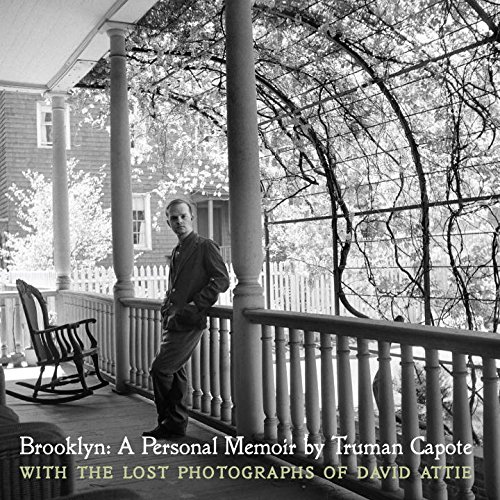
Brooklyn: A Personal Memoir: With the lost photographs of David Attie by Truman Capote

A superb Capote essay with never-before-seen photographs originally commissioned to accompany it make an ideal match–and a great story.

brooklyn

Truman Capote’s essay about Brooklyn Heights, N.Y., filled with clever observations in his familiar style, was first published by Holiday magazine in the 1950s. It was reprinted in 2001, with a foreword by George Plimpton, which is included here. However, the singular contribution of Brooklyn: A Personal Memoir: With the Lost Photographs of David Attie is those photographs, discovered in 2014 by the late photographer’s son in dusty wooden boxes. The story Eli Attie tells in his afterword is as compelling as Capote’s witty and winning portrait of Brooklyn. Capote’s career was distinctly tied to Attie’s when the latter was hired to photo-illustrate Breakfast at Tiffany’s for its scheduled appearance in Harper’s Bazaar, which Eli learned only decades after his father’s death.

Capote’s essay is of course brilliant in its scenes, characters and language. “Sunstruck scraps of reflected river-shine” and the lovely alliteration of “plenipotentiaries from the pearl-floored palace of Poseidon or mariners merely” exhibit his decorative, evocative way with words. The historic contribution of this glimpse at a place in time is significant; and the same must be said of Attie’s documentary photographs, which perfectly complement Capote’s text. Since Harper’s Bazaar ultimately cut the novella, the included images went unpublished, including several of a young Capote, framed against the “beautiful staircase floating upward in white, swan-simple curves to a skylight of sunny amber-gold glass” in the house where Capote lived (in the basement).

This marriage of Capote’s glimmering words with Attie’s harmonizing photographs is perfected by the younger Attie’s narrative, in this unparalleled addition to the Capote canon.


This review originally ran in the November 17, 2015 issue of Shelf Awareness for Readers. To subscribe, click here, and you’ll receive two issues per week of book reviews and other bookish fun!


Rating: 8 local institutions.

reread: Pieces of White Shell by Terry Tempest Williams

pieces of white shellThis memory from my childhood was every bit as good this time around. Terry Tempest Williams is a curator at the Utah Museum of Natural History in the early 1980’s, and in encountering Navajo people and their stories, she begins to learn her own natural history, her own and her (Mormon) culture’s connections to the earth, and how to find and tell stories herself. The tone is fanciful, but also grounded in the literal ground of her local environment in the Utah desert. In her first chapter, she shakes a small leather pouch out onto her desk and finds a sprig of sage; rocks, sand, and seeds; turquoise, obsidian, coral; pieces of white shell; yucca; a bouquet of feathers bound by yarn; coyote fur; a bone from Black Mountain; deerskin; wool; a potshard and some corn pollen; and the Storyteller, a clay figurine from Jemez. These objects, collected during her communion with people and place, form the chapters of her book. I’m not sure whether to call these stories or essays; they are both. There is an element of dreaminess: she is sure she heard the drums of the Anasazi, and tells of transforming into Flea to hide out and listen to the stories the animals tell on Black Mountain. These are not literal truths in the scientific world as we understand it. Does that make these stories fiction? Allegory? Spiritual journeys? I’ll leave it to you. I am not a spiritual person by any standard definition, but Terry Tempest Williams holds me in thrall. This book is still the one of hers that touches me most deeply.

I don’t know how many times I read this book as a child, but it clearly made a deep impression on me. Several lines echoed like I just read them yesterday, or like I’d copied them into countless margins and scrawled them in notebooks over the years. “How could I tell him the mind creates those things that exist. I couldn’t, and so I concentrated on birdlife to avoid a confrontation.” “No one culture has dominion over birdsong. We all share the same sky.” “If we all live, and continue to increase as we have done, the earth will soon be too small to hold us, and there will be no room for the cornfields” (says Coyote in one of the Navajo stories). And new lines jumped out at me on this reading. Because I’m working on processing my relationship with place: “Sometimes you have to disclaim your country and inhabit another before you can return to your own.” “Each of us harbors a homeland. The stories that are rooted there push themselves up like native grasses and crack the sidewalks.” Like all the best books, then, I’m continuing to discover it.

The stories Williams tells in each chapter of this book are from her life, living and working at the very four corners of the four corners states. A Utah Mormon, she gets to know the Navajo and their stories, and sees certain similarities between these two cultures which share a place. She explores Navajo stories and the storytelling tradition, the animals and plants and places they interact with, and uses these to map her own life; she explores story as tool for communication, history-building, and wise and respectful relationships with our earth, and its human and nonhuman inhabitants. In reading these stories, as a child, I was enchanted by the stories of animals like Coyote, Bear, and Badger, and characters like Monster Slayer and Child-of-the-Waters, who were twin sons born to Sun and Changing Woman. I learned about the flora and fauna of New Mexico and Utah deserts (quite exotic to me then, and now). In rereading the same stories as an adult, I get more of Williams’s search for answers about the world, about her family, her homeland, its significance, and her spiritual and cross-cultural questions. It is a rich experience.

My mother asks if this is a children’s book. I did first find it as a child and loved it then, in elementary school. Its origins in my family are unknown; I feel like it just appeared on a bookshelf. Someone must have bought it – for me specifically, it seems likely. I am an only child. But we don’t know. Neither of my parents remembers it. As it turns out, Pieces of White Shell is not marketed as a children’s book. But Williams worked with children (as well as adults) when she wrote it, and in the stories she tells. It is certainly accessible to a child, in its tone of wonderment and simple joy and careful observation.

This was published in 1984, and Refuge in 1991, and I can see some of the evolution. In Pieces of White Shell, Williams is still getting to know her world; in the later work, she more confidently moves in it and speaks of it, although she has retained her capacity for wonder (still alive and well in her recent retelling, The Story of My Heart). Refuge is also necessarily much sadder, as it studies personal loss while Pieces of White Shell takes pleasure in discovery.

Terry Tempest Williams was and is a remarkable, completely singular voice. “You always hear wings,” her family tells her in an anecdote in her prologue. I marvel, and I continue to learn from this deceptively simple grouping of stories. She is better known for other works but this is still my gold standard.


Rating: 9 coyotes.

Things That Are by Amy Leach

Warning: raving follows. This is the best book.

THINGS THAT ARE by Amy Leach.Amy Leach’s Things That Are is a collection of essays that address creatures and natural phenomena, philosophy and the stars; they are as fanciful and wondrous and wondering as anything I’ve ever read, delightfully imaginative and fun to read, and illuminating. I learned facts and was made to consider concepts, and the package was unbelievably beautiful.

Amy Leach introduces her reader to beavers that “affably yield not”; music that sweeps you “juggled into its furious torrents, jostled into into its foamy jokes, assuming its sparklyblue or greenweedy or brownmuddy tinges”; peas that grow too tall to support themselves and must “grow madly wending tendrils, to sweep the air for lattices – just as teetery marionettes will grow marionette cords to sweep the air for marionetteers.” I marked many such quotations to share with you for their whimsy, their unique perspective, or their lingual tricks. Sometimes I failed and just noted that the whole essay should be studied and loved, as with “Talent” and “Warbler Delight” and “The Safari” and oh, the essay called “Pea Madness”…

Leach describes peas, which are self-contained until they grow tall enough that they must reach for external support. At this point she describes their tendrils, their reaching: your yearning, she writes, “can horse or unhorse you.” If you yearn for lattice and find one, you have won; if you reach not at all, you will lose; if you reach and find nothing, “your looking apparatus topples you over.” And some of us may have a lattice standing nearby, “installed with you in mind,” that we never find, although we come within an inch. The pathos! She writes that the yearning of peas is extrasensory: they do not know for what they reach; and

lattices are not the only things that are extrasensory. When you cast your small, questioning arms into the opaque universe, you may find a trellis to tether yourself to; or you may find a tree sticky with birdlime; or a snuffling piglet; or a trapeze artist swinging by who takes you for an aerialist and collects you – then alas, unless you have excellent timing and a leotard, you will be a lost cause.

This writing is funny and approaches our known world from a wholly unique angle; and its message is so powerful that I am nearly immobilized.

In “Silly Lilies,” Leach teaches us about gravitropic mutants, who send their shoots into the ground and their roots into the air, “like a demented boat that insists on sailing upside down, draggling underwater its silky sail.” (Yes, she wrote ‘draggling.’ Also ‘circumgallop,’ and ‘vasty,’ which she defines in her Glossary: “Has approximately the same meaning as ‘biggy,’ ‘hugey,’ and ‘giganticky.’ Do not let anyone tell you these words are not words; all words are words.” I think this is part of why she is compared to Lewis Carroll.) To describe lotuses in a windstorm, she evokes an image of slam-dancing hula girls. This is outrageous stuff. “Bluebirds defect, like bubbles and luck.” “Stars, like thoughts, are not inevitable.” I could go on. In “Twinkle Twinkle,” an essay from the section on “Things of Heaven,” she writes: “The incandescent cauliflower-ballerina is made of dust plus deep light; take away either ingredient and you have no celestial vegetables tripping the light fantastic in a laser tutu.” And I promise, in the context of the whole essay, this sentence makes perfect sense. It would take such a long quotation to illuminate to you that I would fear copyright violations; you should just go get a copy of this book yourself, and learn.

With all these playful poetics, I hope I haven’t given you the impression that Leach is only a whacky fun manipulator of language – because she is that, but she is much more than that. These essays examine and interrogate concepts larger than the ones we meet in everyday life. She forces her reader to question, and I have marked several of her passages to come back and continue to reflect upon.

I am smitten, you see. I found both the writing and the content perfectly formed and singular. Oh, and there are illustrations. I enjoyed the illustrator’s story of The Evolution of the Cover, and then, of course, this interview with Leach herself. And as my final bid to make you buy this book, listen to this lovely piece of work, in which Leach reads her essay “God” to a bluegrass accompaniment.

Best book of 2015, obviously.


Rating: 10 fireflakes.

book beginnings on Friday: Things That Are by Amy Leach

Thanks to Rose City Reader for hosting this meme. To participate, share the first line or two of the book you are currently reading and, if you feel so moved, let us know what your first impressions were based on that first line.

I am fairly certain that it was Hali Felt, author of the outstanding Soundings, that recommended this book. I’ve had it on my shelf for years, and am so glad now that I have finally gotten around to reading it.

THINGS THAT ARE by Amy Leach.Things That Are is already sort of blowing my mind, and feels right up my alley: fanciful, dreamy, but also very rooted in the real world; whimsically lovely writing. I’ve only just begun, so stay tuned for the review: we’ll see if it sticks. But for now, wow. It begins with a chapter called Donkey Derby:

Usually all we have to do when we go a-conquering is build a boat, find a benefactress, recruit a ribald crew, and wear radiant glinting helmets. With these four easy steps my kind has conquered far-away lands, and seas and moons and molecules.

And I have the impression she will mine all those fields, that is, far-away lands, seas, moons and molecules (and maybe some of the implications of going a-conquering, too). Let us hope.

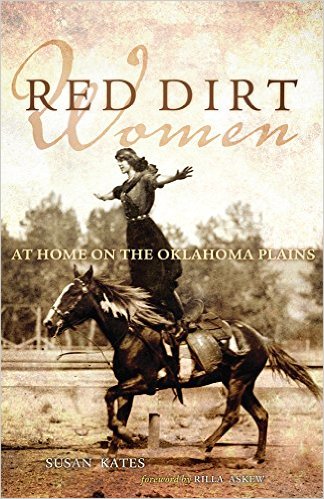
Red Dirt Women: At Home on the Oklahoma Plains by Susan Kates

The reasons so many pioneer women did not desert Oklahoma’s Dust Bowl days are the same reasons Kates was able to find an unlikely peace there, and cannot be succinctly rationalized or explained–except perhaps in this collection of sensitive, thoughtful, grounded musings.

red dirt women

Red Dirt Women is a collection of essays examining the Oklahoma plains and its people, particularly its women, by a transplant who has found home there. Susan Kates is an Ohio native, and professor at the University of Oklahoma. As she relates in these stories, her transition to a dusty otherworld was not always smooth, but over time the Oklahoma landscape and population opened up to her. One message of her collection as a whole is that this place and people are richer than the stereotypes of bonnets and cowboy hats suggest. Kates’s essays vary slightly in their form, but run toward profiles of people and culture. The women she describes include barrel racers, a Vietnamese jeweler, a hippie preschool teacher, gamblers, a birdwatcher, and roller derby players. A brief foreword by Rilla Askew recommends the journey Kates portrays within.

This is just a stub: my full review of Red Dirt Women was published in the fall issue of Concho River Review. You can subscribe or purchase a single issue by clicking that link. Or, don’t hesitate to run out to find a copy of the book itself: I recommend it.


Rating: 8 Queens.

Creative Nonfiction, issue 57: Making a Living (fall 2015)

I had a dream that the next issue came and I had not yet reviewed this one. It was stressful. So, I’d better get to it…

CNF-57-Cover-WebcropThe “Making a Living”-themed issue of Creative Nonfiction is as good as ever. (You can read my review of the previous issue here.) And as ever, I have a few favorites. First of all, Ned Stuckey-French’s opening essay “Required Reading” tells of his reliance on Studs Terkel’s Working to inform his work as a union organizer: a communist college graduate, he’d faked a resume that made him look like an appropriate hire as a hospital janitor, leaving off his studies at Harvard and Brown. Terkel’s interviews with “real” working people helped the young activist place himself somewhat within a world of blue-collar workers, where he didn’t really belong. It’s an essay about disillusionment, the value of reading & writing, and yes, work.

Jennifer Niesslein explores why we write for free (some of us; many of us) in “The Price of Writing.” This is a complicated one, of course, and I think it’s important to note that the ability to write for free is a luxury afforded by some financial security. The writer she quotes as saying “I don’t need the exposure. What I need is to pay my fucking rent” (Nate Thayer, in New York magazine) has a fine point. Niesslein responds that “it can’t be about the money, at least not entirely.” I guess the implication is that if it’s going to be entirely about the money, then you need a day job.

But those are just the introductory pieces, responding to the theme in their own ways. Of the essays about making a living, I think my favorite has to be Kevin Haworth’s “Vivaldi,” which links the musicians who played in the orchestras at Auschwitz to the writer’s son, a passionate budding violinist for whom, happily, music will not be a matter of life and death. It is a powerful piece because of the high stakes of the historical thread, and the emotions in the current one, not to mention the larger issues that will continue to link the two. I also really appreciated Beth Tillman’s “Unleaving,” in which she discusses her career as an estate planning attorney, chosen because of her lifelong anxiety about death. I like the slightly different format she uses, and I empathize with her interest in end-of-life issues, and the day-to-day difficulties she relates.

I also continue to be distracted by both the story and the style of “No Exit,” by Karen Gentry. I will just share what Lee Gutkind wrote in his “What’s the Story?” editor’s column:

…Karen Gentry takes a temp job at a company that helps fired executives find new jobs. Part of her job involves giving Meyers-Briggs tests, and the story tells us a great deal about the corporate world and the way people in it can be reduced to types. But that’s also not at all what the story is about. (To tell you more would be to ruin it.)

I’ll leave it at that, as he did. It is a very fine essay.

Finally, “Tiny Truths” is always a treat: tweets using the tag #cnftweet will be considered for this ongoing contest, which features the best 140-character true stories on a revolving basis. I like that they choose not the flowery, poetic ones – that attempt too much language – but the ones that tell devastating or funny stories very, very simply.

Creative Nonfiction is always filled with greatness. You can read some of the content, or better yet, buy this issue here – or by all means consider a subscription. I don’t do much magazine reading because I’m so busy with BOOKS but this one is always worth my time, a gift in the mailbox.

Norman Maclean (American Author Series), edited by Ron McFarland and Hugh Nichols

norman macleanI believe Norman Maclean is the finest writer I know of. This book helped me to recall & develop that idea. It is one of the best books I’ve read this year, and highly recommended, but with one qualification: I advice any reader to start with Maclean’s masterpieces, A River Runs Through It and Other Stories and Young Men and Fire. This collection makes sense with those works as background, and most appeals to readers whose appreciation has been developed by enjoying them.

Norman Maclean includes 10 short pieces by Maclean himself (essays, and texts of talks given), two “interviews” (one really a profile piece), and 7 critical essays about his work. Maclean is as good as ever. As I said when I read The Norman Maclean Reader, “Retrievers Good and Bad” is still a delight. I liked his discussions of his own work, which a person might find slightly self-congratulatory if we weren’t talking about A River Runs Through It, a story entirely deserving of all praise. His comments about college students – how they seem to want to be coddled, but really need their professors to be tough with them – sound absolutely contemporary today. His favorite phrases begin to echo in refrain as I read (& sometimes reread) his collected works; but they do not lessen by repetition. As driven home in some of the writings about his writing, Maclean’s art was meticulous on every level, including (as he points out himself) in the rhythms of his language. “Teaching and Storytelling” is a real gem; I loved the extended metaphor coming from his youth, “playing games with garbage cans, although in the morning they have to be fished out of the creek.”

And then I got to the section of “essays in appreciation and criticism,” and confess I sighed a moment, because Maclean’s voice would now be silent and others would speak; but the first essay was by Wallace Stegner, and if someone has to follow Maclean it should be Stegner. Actually, that is to skip over Pete Dexter’s preceding essay, “The Old Man and the River,” which is the one I mentioned, listed under interviews but really more of a personal profile piece, and is lovely: it captures the feeling of admiration that I feel in a tone of some humor, and evokes Maclean perhaps more even than his own voice does. This is Maclean the man, which is often a little less visible when Maclean the writer is present, even though so much of his writing is autobiographical.

Some of the critical essays approach from the decidedly academic side, and these were sometimes a little dry and effortful reading, but they also enlightened me and expanded my appreciation. Both of these points are true, for example, of Harold P. Simonson’s essay “Norman Maclean’s Big Two-Hearted River”, which examines A River Runs Through It in theological terms – a very rational lens, and one invited by Maclean, but not one I was well-prepared for, so I had a lot to learn.

It occurred to me on this reading of Maclean that one thing that distinguishes him from other extraordinary writers like Hemingway is that he refuses to be cynical. He can be humorous, but not cynical; he retains a sense of wonder and awe that Hemingway, for example, did not always manage to retain. (Contrast the narrator of A River Runs Through It with Jake’s answer to Lady Brett Ashley, “Isn’t it pretty to think so.”) I have thought before, in other contexts, that we often confuse an absence of cynicism with a lack of sophistication, but that this is sometimes a mistake. There is much made throughout this lovely collection of the beautiful, the sublime, and of grace. Maclean writes of a “slowness of movement that turned out not to be slowness but the shortest distance between two points, which is one definition of grace.” For me, another definition will be his continuing sense of wonder.

Norman Maclean is a new favorite, and will certainly be one of the best of this year. Again, please take my recommendation with the understanding that you should read his two masterpieces first, before continuing to appreciate him here.


Rating: 10 timeless raindrops.

Teaser Tuesdays: Norman Maclean, edited by Ron McFarland and Hugh Nichols

Teaser Tuesdays is a weekly bookish meme, hosted by MizB of Should Be Reading.

Returning to Norman Maclean has been an epiphany, all over again: his writing may well be perfect. I’m not sure I’ve read anyone better.

norman maclean

This edition in the “American Author Series” includes essays by Maclean (some developed from talks he gave), two interviews with him, and essays in appreciation and criticism of his work. There are no sizable excerpts from A River Runs Through It or its accompanying stories, because as the editors rightfully point out, we already have access to those; their goal here (among others) is to bring us Maclean works that are less accessible.

Nevertheless, I had read some of these pieces before – I could not say where – but nevertheless they are so good I am boggled every time I read them.

Today’s teaser comes from “Retrievers Good and Bad”, which is among other things a catalog of duck dogs in Maclean’s family.

The Missouri is one of the main flyways for ducks in America, and when the autumn storms begin in the north, the ducks come whistling out of Canada, hit the Missouri River, follow it to the Mississippi and coast the rest of the way to Louisiana. When they go around those big bends on the upper Missouri, the air is left hurt and shaking, and if you are a duck hunter, the place to be is behind a rock on the cliffside of the bends, because the ducks’ speed on the turns almost drives them into the cliffs and into your bun barrel. That is just where my father and I were.

Of course “the air left hurt and shaking” is an extraordinary phrase, but there is a rhythm to the whole, and an awareness of scope and scale; and then it finishes with family and immediacy. To me, this simple couple of sentences is a fine example of what Maclean can do with words.

Dear Mister Essay Writer Guy: Advice and Confessions on Writing, Love, and Cannibals by Dinty W. Moore

Finely crafted short essays masquerading as self-effacing jokes about writers and writing, in q&a form.

dear mister essay writer guy

Dinty W. Moore (Between Panic and Desire), the editor of Brevity, solicited respected contemporary essayists for questions regarding the form, so he could answer them in Dear Mister Essay Writer Guy: Advice and Confessions on Writing, Love, and Cannibals. An essay riffing on the question at hand accompanies each q&a. The resulting collection of self-deprecating humor includes bits of writing advice as a bonus.

Cheryl Strayed has concerns about her predilection for the em dash: Moore assures her that “em dashes can replace commas, semicolons, colons, the large intestine, and parentheses.” Brenda Miller worries that Facebook “is like one big communal personal essay”; Moore answers with a selection of his status updates over a period of months, which are as sage and instructive as they are hilarious. Roxane Gay wonders about the value of writers writing about writing. Other seekers of wisdom include Judith Kitchen, Phillip Lopate, Brian Doyle and Lee Gutkind. Moore makes room to share a “found essay” left on his voicemail by Mike the Tree Guy, and to list the side effects of memoir, including “nausea, sleep problems, constipation, gas, and swelling of the navel.”

Moore is rarely serious and keeps his tongue in his cheek throughout, but the result is enlightening as well as entertaining. With fewer than 200 pages, Dear Mister Essay Writer Guy is a quick and enjoyable read, to be taken in pieces as small as the reader prefers. Its witty, modest tone belies the artistry of the essays contained, which are exemplars of the short form.


This review originally ran as a *starred review* in the August 28, 2015 issue of Shelf Awareness for Readers. To subscribe, click here, and you’ll receive two issues per week of book reviews and other bookish fun!


Rating: 7 polar bears, naturally.