the best of scientific nonfiction

In yesterday’s post, Pops shared with me a list of good fiction-about-science, as presented by author Kirk Smith. As part of that same conversation, Pops asked for my favorite scientific fiction – with “good” science being part of the criteria. Well, unsurprisingly, I didn’t have a lot to offer in that regard. I haven’t tended towards scientific fiction much (nor traditional sci fi); my fiction tends to be mysteries, historical fiction, literary fiction, or increasingly, fantasy; there is always a variety, but I’ve been short on science. I did come up with a few. But I did far better in recommending some really great nonfiction that is scientific in nature: both “good” science, and well written, enjoyable, accessible, good reading. He asked for those two lists, so I’m happy to share them here.

Some great fiction about science:

By Lisa Genova: Love Anthony and Left Neglected, but especially Still Alice. Genova has degrees in biopsychology and neuroscience (the latter a PhD from Harvard, ahem), so one expects that her novels about women and families, in which someone in the family (usually the woman) suffers a neurological disorder or disease, are scientifically accurate. I love that they are scientifically detailed and yet extraordinarily enjoyable novels, too.

Flight Behavior by Barbara Kingsolver: you can read my review, and also note that Kirk Smith and I both recommend this one; in a nutshell, Kingsolver teaches science in the most charmingly accessible of packages, the one and only Dr. Ovid Byron. You must read this; or better, you must hear the audio, because the accents are amazing. (Read by the author, a woman of many talents.)

Madeline L’Engle’s series: A Wrinkle In Time, A Wind in the Door, etc. I hesitate here, because the science begins in reality and then moves outside it (see: farandolae), so I’m not sure it qualifies. But kids’ books – about science – with a female protagonist. Good stuff.

Some great nonfiction about science:

My review hasn’t published yet, but it will any day now, and I’ll come back and edit this post: A Garden of Marvels by Ruth Kassinger is an outstanding, fun, and informative look at the history of botany, really from the birth of botany as a science (relatively recent, since we didn’t think plants were all that important as a subject of study for many centuries). It’s extremely accessible and well written, even funny. One of my recent favorites!

On a Farther Shore, William Souder’s recent biography of Rachel Carson, is for me a classic example of science made reader-friendly and socially important. It doesn’t hurt that I find Carson a fascinating & important figure, and admittedly, this is more biography than science; but I think it qualifies for this list, especially considering Pops’s comments yesterday about the representation of women in literature & science (and literature about science).

Einstein, the biography by Walter Isaacson, was mentioned in Kirk Smith’s talk apparently as being “challenging,” and I wouldn’t disagree entirely, but no knowledge of physics is prerequisite – and I didn’t get all the physics Isaacson described, either, but that was no requirement for enjoying Einstein’s story.

Unfortunately, I read The Immortal Life of Henrietta Lacks by Rebecca Skloot before I really began blogging. (I made a few posts on it early on: here, here, and here, but none qualify as a review.) So I can only say, looking back, that as with On a Farther Shore, science is made not only comprehensible, but oh so important and relevant for our past, present and future; not to mention the glaring & compelling social commentary. This is a great book (and one I gave away for World Book Night a few years ago).

Pilgrim at Tinker Creek by Annie Dillard (my review in parts one and two) is fascinating, varied, lyrical, fun, and whimsical. Both poetry and science. And the oddest chunks of science, too. Do check out some here and here.

River in Ruin by Ray A. March is a loving, informed but readable discussion of exactly what the title says.

Also pre-blog, I read My Stroke of Insight by Jill Bolte Taylor, and it made a major impact on me. I had only recently recovered from a brain injury (from a bike wreck and yes I was wearing my helmet), and reading this book by a neuroanatomist about her stroke & recovery helped me understand my own brain better. She’s a scientist, so she has the “good” science, but she’s also a human being with a personal story to tell, and she tells it well.

When we talk about science writing, though, **the grand prize** has to go to Hali Felt for Soundings. How did I rate that book only a 9? In my memory, it should be a 10. Again with the added benefit of handling women in science and the special challenges they face, Felt tells the story of Marie Tharp’s life and scientific breakthroughs with sensitivity, insight, and yes, science.

Bonus: just the other day this review posted at Shelf Awareness (by my friend Katie at Cakes, Tea and Dreams). I haven’t read the book, but I think it sounds delightful: Trespassing on Einstein’s Lawn: A Father, a Daughter, the Meaning of Nothing, and the Beginning of Everything, by Amanda Gefter.


That’s all I have today, Pops, but it ought to get you started! I’m pretty sure you’d put McKibben on this list; any others to share? Anybody?

the best of scientific fiction, from Pops

Not to be confused with traditional science fiction (although I have something for you on that topic, as well) – today’s is a quasi-guest post from Pops, who is excited to share about a recent author talk event he attended. The presenter was Kirk Smith, speaking on Lab Lit: Putting Real Science Into Fiction. Pops’s report:

I attended the Lab Lit program tonight. And I signed you up to review a book. Well, sorta. We should talk.

So, to review: Kirk Smith is an old-guy Seattle author with a passion for fiction about “realistic scientists doing realistic science” – ideally where the science is the central story, not ancillary. He has high standards for credibility and likes writers who can really “get inside the head” of scientist-protagonists. Eventually he became frustrated that satisfying examples were so rare, and resolved to write his own version.

This is sort of a special interest of my father’s. He’s been interested in several scientific issues over the last few years, and often disappointed in their presentation by the finest minds in the field – scientific minds being, unfortunately, often unable to communicate what they know clearly to the rest of us. The big exception being Bill McKibben (who I reviewed recently: Oil and Honey). This is a paraphrase of my father – hope I got that about right, Pops.

It was interesting; simply an avid, insightful reader sharing a niche passion; nothing topical like climate change & how to communicate science, though I would have enjoyed that too.

He spent 45 minutes talking knowledgeably about all the books on the attached handout [see below], and 15 minutes reading from & talking about his book (an ode to Einstein, with a female character). He lauded Isaacson’s Einstein, the only overlap I detect with your reviews (you get credit for enjoying a “challenging read!”). He recommends Einstein in Love.

Not true, Pops! I reviewed not only Einstein but also Flight Behavior, which I loved.

[His passion for this niche reminds me of my own for running fiction; of course he reads other forms! I get it.]

You are onto something here. As you said in your first paragraph, Smith “likes writers who can really ‘get inside the head’ of scientist-protagonists,” and I think that’s exactly what you like about running books: sharing an experience with the protagonist, recognizing the unique and awesome thing that is being a runner – or a scientist. Or (to digress), I suspect that Susan Vreeland gets accurately inside the head of an artist, in her Clara and Mr. Tiffany or The Forest Lover, both of which I loved. However, not being much of an artist, I can’t entirely attest.

You’ll see he covered non-fiction and biographies as well as other forms; he also has his own web site where he blogs & reviews, and recommends the LabLit site (by one of the authors) that inspired the terminology. He has corresponded with several of the authors on the list.

I came home with a free UK-only-available copy of The Falling Sky by Pippa Goldschmidt. One of us is committed to reviewing it by Feb 15, before its spring USA release. Call me.

Of course by the time I called, he had already started reading this book, which is fine because I have plenty of deadlines in the next two weeks without this one (!), which would require cross-country shipping to get to me, too! But I’m next in line for it when he’s done (so I have a more relaxed schedule to read it on), and his review will be cross-posted here when complete. Hooray! Guest reviews!

And for those who are curious about Smith’s reading list – I know I was! I’m sharing here the handout he shared at this book event, with Pops’s annotations on it (how lucky we are), and hoping that the wise and magnanimous Kirk Smith will not consider this a copyright violation too egregious. :-/ Seriously, thank you Kirk for the info; and readers, do check out his website here.

(click to enlarge)

(click to enlarge)


An addendum from Pops:

First, I noticed his top three fictions are all by female authors with female protagonists; then he eventually acknowledged the fact himself, in passing; then his reading (of his own novel) revealed the female protagonist in his own novel; and in response to a question explained (superficially I thought) why she is his stand-in for a fictional Einstein; and with a follow up question, finally spoke briefly but incisively about the challenge for girls & women in math & science fields to gain grudging credibility & respect.

So, one wonders: are the women appearing in his list (authors & characters both) a factor of his own selection, or if one did an “objective” survey of the landscape, would we see the same? An outbreak of women expressing a new voice? (In literature, or science, or both?)

Such fodder for future expression!

Such fodder indeed! I have no idea how to answer your questions, of course – possibly Smith could speak to these? (It would have been a great line of questioning to pursue on the spot with the audience! It sounds like he wasn’t anxious to head in this direction – of social commentary – on his own. But I understand how it took a day or two to get these thoughts, and thus this line of questioning, straightened out in your own head.) The pessimist (or realist?) in me doubts that there is a general and widespread trend toward a women’s majority in science & literature! Although for the most part we are increasingly represented, hm? That’s just a guess from me, though.

best of 2013: year’s end

My year-in-review post is coming, but first, as the year ends, let’s take a look at the very BEST books I read in 2013. Not necessarily published in 2013, you understand, although several were that, as well. Others were quite old. And while we’re at it, do check out Shelf Awareness’s best-of list, which has three books in common with mine. The Shelf and I, we continue simpatico.

Those that received a rating of 10:

Those that received a rating of 9:

There were lots of 8s, too – it’s been a great year. For example, late in the year I’ve discovered a love for Stephen King’s Dark Tower series, which hasn’t gotten a 9 on an individual book lately – but I wonder why, because I’m certainly enjoying the series that much! My, I’ve read so many books that it’s difficult to think back this far; but this list helps me remember the very best of my reading year.

What did YOU read this year that’s blown you away?

the books I’ve listened to that simply must be audio

It has taken me weeks to post this – sorry! But I did have some interest, in the comments on a past post, in those books I’ve listened to that I feel really must be experienced as audiobooks. Here’s a briefly annotated list.

  • Bossypants by Tina Fey, and read by the author: surely this will be obvious? Tina Fey is hilarious and you should let her tell you her story. Qualification: there are images in the book that you miss on the audio version.
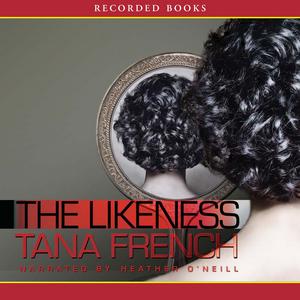
  • The Likeness by Tana French: I’ve enjoyed some of hers in print and in audio, but this is my favorite and I feel strongly about the audio. For one thing, they’re set in Dublin and the Irish accents are amazing. For another, the plot of this novel involves faking someone else’s identity, and to hear how her voice changes when she’s in character is really something. Well done, narrator Heather O’Neill.
  • The Lacuna by Barbara Kingsolver: also read by the author, and what an amazing feat, for her to be such an artist both of literature and of voice acting! Characters include Russians, Mexicans (of different social castes), a New York Jew, back-woods Appalachians, and a young man raised in between cultures; the importance of all those accents couldn’t be overstated, and Kingsolver executes them beautifully. It’s a magical audiobook and I wouldn’t let anybody I liked read this in print.
  • Let’s Pretend This Never Happened by Jenny Lawson: a memoir, read by the author, and she sings her chapter titles, operatically. That should be all I have to say.
  • The Wind Through the Keyhole by Stephen King: also read by the author, as it happens, and I enjoyed knowing that I was hearing King’s own impression of things. He does a great job. (If you’re noting how many on this list are author-read: I’m as surprised as you are.)
  • Ines of My Soul by Isabel Allende: this is a historical novel of the founding of Chile, and thus another one with accents done gorgeously by narrator Blair Brown.
  • all of the P.G. Wodehouse novels read by Jonathan Cecil: I love Cecil’s voices for the very very silly Bertie Wooster and all the rest; I now am opposed to the print versions, and wary of the non-Cecil-narrated audio version. What can I say, I’ve found the Wooster I like.
  • The Dorothy Parker Audio Collection: a collection of stories and articles read by a handful of different women, who more than narrate; they act out Parker’s caustic wit.
  • all the Lee Child books read by Dick Hill: I really like Hill’s expression of Jack Reacher. (He also narrates a few of Michael Connelly’s Harry Bosch books, which I also recommend. In other words, I like Dick Hill.)
  • bonus: I have it on good authority – although I have not listened yet (it’s in line!) – that the audio version of the new novel Z: A Novel of Zelda Fitzgerald is not to be missed, for the southern accents.

Further, I would recommend the following books in their audio format, although I would stop short of saying they must by heard rather than read.

  • Rules of Civility by Amor Towles: New York of the 1930’s and 40’s perfectly evoked via Rebecca Lowman’s lovely narration.
  • Crossing the Borders of Time by Leslie Maitland: the author reads this work of nonfiction herself, and because it’s the story of her own family, I think that’s important (and it is well done). Her voice is warm, she clearly cares for her subject, and she executes the French and German accents (and words) well.
  • The Warmth of Other Suns by Isabel Wilkerson: Robin Miles narrates this work of history in a beautiful, warm voice that I found helpful to the subject.
  • The Perfect Storm by Sebastian Junger: read by Richard M. Davidson, it has all the taut, tense action it needs without ever feeling over-dramatized. Bonus: at the end, it includes a recording of the author speaking about the making of the book, which was awesome.
  • Loving Frank by Nancy Horan: Joyce Bean’s narration immersed me in a time and place and helped me learn to care very much about the characters.
  • Touch by Alexi Zentner: a magical, otherworldly, immersive feel to this novel is helped along by Norman Dietz’s wondering performance.
  • Left Neglected by Lisa Genova: I felt intimately close to the female lead character in this story thanks to Sarah Paulson’s reading.

I’m sure there are more out there, and I can’t wait to discover them! Do share – are there any books you’ve listened to that you would say have to be heard?

best of 2012: year’s end

My year-in-review post is coming, but first, let’s take a look at the very BEST books I read in 2012. Not published in 2012, you understand – although several were that, as well. I was able to narrow it down to a list of 14 books and 1 short story; and I’m hoping you’ll forgive me for such a long list because 1) I read 126 books in 2012, and 2) I’ve broken them out into categories for you. 🙂

Best print nonfiction of 2012:

Best print fiction of 2012:

Best audio nonfiction of 2012:

Best audio fiction of 2012:

Many thanks to my editor at Shelf Awareness who sent me 4 of the 5 books in that first category to review! You’re doing a great job, Marilyn! And, bonus: Shelf Awareness just the other day published an issue entirely devoted to the best books of 2012. Their list includes two of my best of the year; one I really wanted to read but didn’t get around to (Robert MacFarlane’s The Old Ways); one I reviewed; and one that I would totally rate a runner-up for audio nonfiction (Jenny Lawson’s Let’s Pretend This Never Happened). Not to mention, a whole bunch I never heard of, so there you are! Always more to read!

What did YOU read this year that’s blown you away?

best of 2012 to date: second quarter

As we enter the sixth month of the year, I want to share with you my favorite books of 2012 so far. Consider these my strong recommendations. I review a lot of books here at pagesofjulia (I’ve read 61 books so far this year! although some of those reviews are yet to come, they will all be reviewed), but I do not recommend all of them, as you know.

Two sections here: first, I have four books that I’ve loved and encourage you to check out. And then, some general notes about what I’m enjoying, in broad categories.

The four best books of 2012 so far come in an even mix. Two audiobooks, two in print; two brand-new, two a few years old. (None older than ten years here, but see the second section below.) Three fiction, one non. In the order I discovered them:

  • A Difficult Woman, a new (April 2012) biography of Lillian Hellman by Alice Kessler-Harris. Hellman was a controversial and contradictory figure, multi-faceted and fascinating, and I love Kessler-Harris’s handling of her complicated life, which touched upon so many areas of politics and art; K-H presents H as a sort of representation of the United States in the twentieth century. This book made me want to do huge amounts of further reading!
  • The Likeness (two-part review) was Tana French’s first novel, and my favorite of her three (though I enjoyed them all). Cassie Maddox, a Dublin detective, goes undercover as a dead girl, who was posing as a fictional person, one of Cassie’s earlier undercover personas, to try to catch this mystery girl’s killer. She infiltrates an incredibly close group of cohabitating students, almost a family, and fuses into their world alarmingly well. I listened to the audio version and adored all the accents.
  • The Lacuna I listened to as an audiobook, read by the author, Barbara Kingsolver, and I recommend this format as well as the book itself. It is the (fictional) story of a man who is raised back-and-forth between the United States (where his father lives) and Mexico (where his mother is from), spending his formative years in Mexico City employed by the household of Diego Rivera, Frida Kahlo, and for a time, Leon Trotsky. This is a fascinating book about people, some famous, some not, and the McCarthyist period in the US. Kingsolver performs the voices and accents beautifully.
  • The Song of Achilles is Madeline Miller’s first novel, and what a feat! This is the story of Patroclus, a minor character in Homer’s Iliad. Here he becomes protagonist and narrator, telling the story of his upbringing and lifelong close friendship with Achilles (eventually his lover), and the ten years they spend at Troy making war. Very moving.

EDIT: Check out last night’s announcement of this year’s Orange Prize winner: Madeline Miller, for The Song of Achilles! I have good taste. 🙂 If you look closely at past years’ winners, you will see another of my top four as well!


SECOND EDIT: Also check out my interview with Madeline Miller, which was such fun!


Section the second:

After choosing the above four individual books (no difficulty really, as each jumped out at me decisively), I wanted to share a few areas I’ve been reading in with great enjoyment. For one thing, you have probably noticed (if you follow me) that I’ve recently (re)discovered Edward Abbey and other nature writers. I can’t choose one book by Ed Abbey to especially recommend. So far in 2012, I have loved all of his that I’ve read, and the two “further reading” books he’s inspired. They are:

  • Fire on the Mountain, a lovely novel (based on history) by EA about an old man holding out when the government tries to take his ranch from him to use as a missile range, and the grandson who stays to fight it out with him.
  • The Journey Home is a collection of EA’s essays and journalism, every single one a gem, and similar to
  • Down the River, another collection, with a river theme.
  • The Monkey Wrench Gang is EA’s best-known novel, about a gang of social misfits practicing sabotage against industry & government when they threaten nature. Wild and wacky.
  • Edward Abbey: A Life is a biography of EA by James Cahalan, and I found it well-done, on top of the obvious attraction of its subject being totally engrossing.
  • Walking It Off is a memoir by Doug Peacock (EA’s close friend, and inspiration for the hero of The Monkey-Wrench Gang) of his life as a war veteran and untamed eco-defender, and as EA’s buddy.

Along these sames lines, I found Aldo Leopold’s A Sand County Almanac lovely, beautiful, inspirational, educational, and an important part of my study of Abbey and his ilk.

And finally, I have to mention my consistent favorite guy, Ernest Hemingway. In this case, the standout book is by his son Gregory. Papa: A Personal Memoir, is heartrending and sensitive, and a uniquely loving portrait of EH.

I have been long-winded as usual. In a nutshell: the four titles up top, and any Edward Abbey or Ernest Hemingway (or select related readings), deserve your attention this year!

What have YOU read so far in 2012 that has blown you away?

best of 2012 to date: first quarter

Hey friends, I just couldn’t resist sharing this with you, even though neither review is up yet (!) and one book isn’t even published yet (!!) – I have just finished reading two amazing books, one fiction, one nonfiction, and they’re definitely the best two of the year so far. You know how I know? When I can’t stop talking about them to anyone who will listen, even when they are suspected of being not interested. (Husband is so patient with me!) So what are they? …

Fiction choice of the first quarter of 2012:

Tana French’s The Likeness. I listened to the audio version, narrated by Heather O’Neill, and highly recommend it. My early review has actually posted already, here. The final review will come this week.

Nonfiction choice of the first quarter of 2012:

Alice Kessler-Harris’s A Difficult Woman: The Challenging Life and Times of Lillian Hellman. I read an advanced review copy; the publication date is April 24, so get ready! My review will be published just about then, at Shelf Awareness, and of course I’ll share it here when it is. It was a really engrossing biography of a truly fascinating, contradictory woman, who inspired a full continuum of strong reactions amongst everyone who knew her, and Kessler-Harris presents her so thoroughly with such full context that she had me enthralled – and looking for further reading.

That’s it: my two big recommendations of the year to date.

What have you read this year that’s amazing?

The Absolute #1 Best Book of 2011

Ahem. Did I not make a point of choosing an overall favorite when I did that year-end post the other day? Shame on me. Sorry. I shall keep this brief. I just want to say that the best book I read in 2011 was…

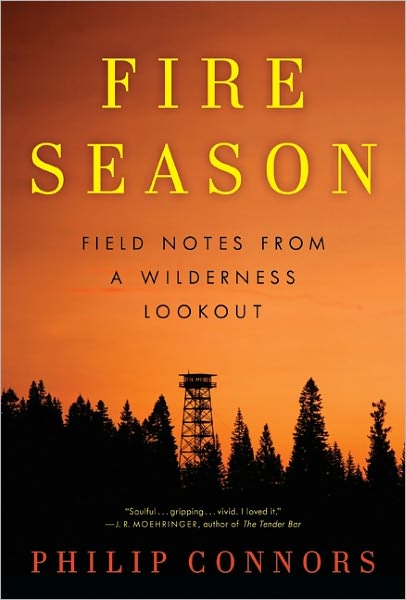
Fire Season by Philip Connors.

If you’re interested, you can read my review; read my father’s review; or read about how Fire Season inspired my father and eventually me into some further reading.

It doesn’t hurt, of course, that this talented author whose book touched my life so much back in May, ended up contacting me and has been a pleasant correspondent ever since! But no, it’s not a popularity contest; Fire Season wins for what’s in between its pages, alone. Thanks Phil for writing, though. 🙂

Honorable mention goes to Dorothy Canfield’s The Home-Maker.

2011: A Year in Review

Well! I have tended to appreciate other bloggers’ wrap-up posts, so I thought I’d join in. This was my first full calendar year of blogging (I began in October 2010) and I definitely read more books this year than I have in a number of years, maybe ever. Although I’ve always been a big reader, this year was exceptional for several reasons: working in a library filled with tempting books; blogging about them; discovering audiobooks for my commute; and taking on a book review gig with Shelf Awareness, to name a few. (See some of my SA book reviews here.) I read 139 books this year.

Here are a few statistics…

  • 17% were nonfiction
  • 46% were by female authors
  • a whopping 63 of the 115 novels I read were mysteries; 10 were historical fiction and 11 were classics, the rest a smattering of short stories, drama, poetry, romance, fantasy, and “other.”
  • 38 were 100-300 pages; 80 were 300-500; 15 were over 500 pages, and 6 were under 100. Husband asked how many pages I read this year, so for his sake we’ll estimate, using the midpoint of the ranges (which may throw us way off but what the heck), and say I “read” some 50,580 pages this year! (keeping in mind that some were listened to and not read…)
  • 31 books, or 22%, were audiobooks – look what good use I made of my commute/driving/gym time!
  • 60% of the books I read came from the library! the vast majority came from the library where I work, with just a few coming from the Houston Public Library. another 24% came from publishers for review, leaving only a combined 22 books that came from my personal collection, books I was loaned, books I purchased, or (those treasured few) books I was given as gifts.

What fun.

Of these, I did of course have favorites… you can refer back to my premature Best of 2011 post of December 1, to which I’ve since added 11/22/63 and The Home-Maker, for an unwieldy list of 22 (!) books I loved this year. What can I say, I’m full of gushings. In honor of this Year in Review post, I have culled it down (painfully) to my Favorite 11 Books of 2011 (thanks Thomas for the idea, and for sending me two (!) of the books on the list*):

Whew! That’s a year! I see other bloggers discussing reading goals for 2012, and I don’t really have any to contribute… I think I’m going to pass on reading challenges this year. (You may recall that of the three I signed up for in 2011, I completed two and quit the third. I also participated in several readalongs: the Maisie Dobbs series, Gone With the Wind, and Their Eyes Were Watching God.) If anything, I’m most tempted by the TBR Double Dare (to read only books already on my TBR shelves from now til April 1…!), because my house is so full of books I want to read that I feel like I’ll never get to them all! But even if I didn’t encounter new books through my job that I want to read and probably should so I can talk with patrons about them, there’s my book review gig, which I love. So. No challenges. If anything, I’d like to make a dent in my TBR shelves at home; and part of that dent-making may come in the form of giving books away unread. Sigh.

My real reading goal in 2012 is to continue to read a diverse selection of new and old books; to continue blogging; and most importantly of all, to continue enjoying it. The day that reading feels like work will be a sad day, and the day I need to take a break; here’s to not finding that day in 2012!

Do you have reading goals this year? What challenges have you signed up for? (Don’t twist my arm…!) Did you do a year-end post that I may have missed? Please do share!

best of 2011: year’s end

Yes, I know there’s some time left. Perhaps I will add to this if the final weeks change anything, but I wanted to get this up with some time to spare, and maybe inspire you to share YOUR best books of the year! In no particular order, I give you the best books I read in 2011.

Those published in 2011:

Those published previous to 2011:

I’m so glad to know such great recommenders!! Thomas sent me a copy of Some Tame Gazelle as a prize for having cute dogs, and Simon recommended Who Was Changed and Who Was Dead. My editor at Shelf Awareness, Marilyn, assigned me Hemingway’s Boat and The Barbarian Nurseries. Raych doesn’t know it but she inspired me to read Rebecca, and a series of blogs influenced me to finally get around to In Cold Blood and We Have Always Lived in the Castle (I’m sorry I can’t remember who you all are… but you made a difference!). And finally, Amy has recommended several great books to me this year, most notably Kushiel’s Dart. Thank you all so much; you make it all worthwhile!

So how about it? Please tell me you have a best-of post to come, hmmm? Post a link here so we can all share around. And thanks for the recommendations! 🙂