The Black Count by Tom Reiss

blackcountThis poor book got picked up and put down repeatedly as I dealt with other reading deadlines. It took me two and a half months to read! But I kept coming back. The Black Count came recommended by The World’s Strongest Librarian, and I bought it at Elliot Bay Books in Seattle when I got to finally meet in person my awesome editor at Shelf Awareness, Marilyn. So good vibrations unite in this read.

The “black count” is the father of Alexandre Dumas, author of The Three Musketeers and The Count of Monte Cristo. Much of Dumas’s work, it seems, was based on his father’s life and unique and outlandish experiences. I had not known that; I suspect many readers don’t. Tom Reiss’s work is a biography of Alex Dumas (the father: I will call him Dumas throughout), with an eye to the legacy expressed by the novelist (son: I will call him the novelist), and some background on the French Revolution. Napoleon figures rather heavily in Dumas’s later story and military career.

Dumas was born in Saint-Domingue, which is modern day Haiti, to a black slave mother and a white French father. His father went back and forth somewhat on Dumas’s place in the world, at one point selling his son into slavery but eventually giving him a good education, fancy clothes, and place in French society. He is a physical prodigy early on, adept at horseback riding and fencing, and his military career is illustrious from the beginning. Dumas is an ardent republican, enthusiastic about the revolution, not least because – and here I learned something I probably should have known – the French Revolution was decidedly liberal on its attitude towards black citizens, giving them near-equal or equal rights, privileges and access – at least for a time. Slavery was abolished in France, although the extent to which abolition applied to the colonies varied. And unfortunately, this egalitarianism was short-lived.

The dark-skinned soldier worked his way remarkably quickly up to general of a division, and gave admirable performances in actual hand-to-hand combat: something, then as now, that high-ranking officers often avoid. His feats are literally the stuff of legend, and those military stories are some of Reiss’s stronger moments, naturally. If history is to be believed, Dumas was absolutely worthy of the tales that his novelist son would spin. [Is history to be believed? Reiss did his own research and looked at all the ancient scraps of paper from the time; accounts tend not to vary; the case looks good. But from this historical distance, I think there must always be a question.]

Dumas married for love and had three children, the first of whom died in childhood. His star was rising when Napoleon came to power. Napoleon is the villain of this story, as he is encapsulated in the villain of The Count of Monte Cristo: he rolled back and reversed the Revolution’s racial equity advances, and considered Dumas a formidable rival, apparently because of Dumas’s great accomplishments; the latter seems to have done nothing actually wrong. Dumas is taken as a prisoner of war in Italy and has a miserable time there, which again plays into The Count of Monte Cristo. (Look for enjoyable, comical descriptions of Dumas’s highly formal correspondence with one of his jailers.) It does not appear that Napoleon is actually to blame for this period in Dumas’s life, although possibly he could have done more to get him freed sooner. Following his POW imprisonment, Dumas’s health never recovers; he loses his commission under Napoleon’s racist regime; and he dies when his youngest child, the novelist, is only four years old. The novelist’s glorified view of the father he remembers as Herculean will never be moderated.

As a historian, Reiss is perhaps a bit credulous of Dumas’s perfection. In a description of the soldier’s last hours, there is a priest called, which the novelist is careful to point out could not have been for confession, as his father had never committed even a single regrettable act in his lifetime. This seems like too extreme a statement to stand unquestioned – haven’t we all done something regrettable? …Especially those of us whose career was based on killing people? Dumas had a reputation for humane victory and protection of the defeated from looting, which is admirable. But I have a little trouble stomaching this unqualified hero-worship.

Reiss also unfortunately descends into dryness rather regularly. I several times considered giving up the book; but then I’d give it another go and eventually be mesmerized again by the narrative. He’s at his best when he lets his own story, of researching the book, creep onto the page; or lacking that, when he lets a primary source or Dumas-the-novelist pen a few lines. I should also note that my very slow, stop/start method of reading this book (almost unheard of for me) almost certainly made the story move a little more slowly and more disjointedly. I regret that, and it might have gone a little better otherwise. But I think it’s worth stating that things can get a little slow in the middle. Also, Reiss is happy to go quite a few pages without telling us who one of his characters is, and expect us to remember him. Again, better if you read it all straight through quickly. If you aren’t doing it that way, beware this small problem.

All in all, though, I did find myself motivated to finish the book, and I was rewarded. The Black Count is a good primer on the French Revolution and on Napoleon as well, and the sections that portray exploits in battle are lively. Readers looking for a great deal of insight into Dumas-the-novelist’s work will be at least a little disappointed; but I am definitely putting this book down with a renewed interest in rereading The Count of Monte Cristo, which I loved in high school.

A little dry in the middle, but a mostly-accessible history of the French Revolution and one of its forgotten heroes, with a nod to a very fine novelist who adored his father.


Rating: 5 trees of liberty.

The Trip to Echo Spring: On Writers and Drinking by Olivia Laing

Laing’s poetic ruminations on the alcoholism of six authors will charm readers of travel writing, biography and literary criticism.

echo spring
Olivia Laing’s The Trip to Echo Spring studies six authors whose lives meet at the juncture of creativity and alcoholism. While Laing (who walked along the river where Virginia Woolf killed herself for her previous book, To the River) acknowledges she had many alcoholic writers to choose from, the half dozen she selected justify and reward her nuanced attentions. Though F. Scott Fitzgerald, Ernest Hemingway and Tennessee Williams have been studied to the point of exhaustion, John Cheever, Raymond Carver and John Berryman have been less comprehensively examined.

Laing’s exploration of these extraordinary men’s lives has many facets. The Trip to Echo Spring, named for the bourbon favored by the maudlin Brick in Williams’ Cat on a Hot Tin Roof, is partly literary criticism–and no lightweight in that department, showing serious attention to her subjects’ works. Meanwhile, the level of biographical detail reveals Laing’s interest in their intersections with one another in life as well as literature. There are hints of travelogue as well, as Laing crisscrosses North America to visit the crucial locations in these writers’ lives, from Hemingway’s Key West to Fitzgerald and Berryman’s St. Paul, Minn., to Port Angeles, Wash., where Raymond Carver finished his life.

The common themes Laing finds in the cities and the bars where these men drank themselves into misery, death, and art include swimming, fluidity and the cleansing properties of sea and stream. She delves into the biology and psychology of of alcoholism, with several forays into Alcoholics Anonymous, and finally touches on her own upbringing as the child of alcoholics. While she focuses on the relationship between writing and drinking, another key part of her journey is personal–but her own history with drunks is only gradually revealed and never takes center stage.

These disparate elements come together elegantly in Laing’s quietly contemplative prose. She is sensitive to the struggles of these tortured men (among them several suicides) and deeply appreciative of their accomplishments, but also clear-headed about their shortcomings and their abusive treatment of others as well as themselves. A lovely piece of writing in its own right, The Trip to Echo Spring is a fine tribute to artists as well as a lament for their addiction.


This review originally ran in the November 20, 2013 issue of Shelf Awareness for the Book Trade. To subscribe, click here.


Rating: 8 bottles.

A Little History of Literature by John Sutherland

An easily grasped primer on our finest wordsmiths, from Homer through the Bröntes, Proust and Kafka.

literature

John Sutherland (Lives of the Novelists) tackles an impressively broad subject in A Little History of Literature. Beginning with Homer and The Epic of Gilgamesh, Chaucer and Shakespeare, he hopes to instruct his reader in literature–what it is, where it’s been and where it might be headed.

Sutherland takes us from a childhood of “reading… under the blanket, with a torch, after lights out,” and the genesis of children’s literature, through the modern developments that brought us Fifty Shades of Grey and genre divisions. Even as he recounts the historical details behind Beowulf or the birth of the King James Bible, he skips forward to reference current trends, markets and buying habits, relating them to centuries-old forces. Major works from many centuries are joined by digressions into the history of printing, of copyright and of books themselves.

Sutherland presupposes a certain background among his readers: “much of what many of us know about science comes from reading science fiction,” for example, or his description of “many” or “most” children growing up reading at home. He also focuses, with few exceptions, on Western literature, although he does make a conscious effort to call attention to the role of women writers within that tradition. These issues aside, this slim book makes for a necessarily cursory review of literature’s greats–and the loving treatment by an expert, presented in easily understood terms, will please both novices and established readers looking to dip back into well-loved works.


This review originally ran in the November 19, 2013 issue of Shelf Awareness for Readers. To subscribe, click here, and you’ll receive two issues per week of book reviews and other bookish fun!


Rating: 6 historical trends.

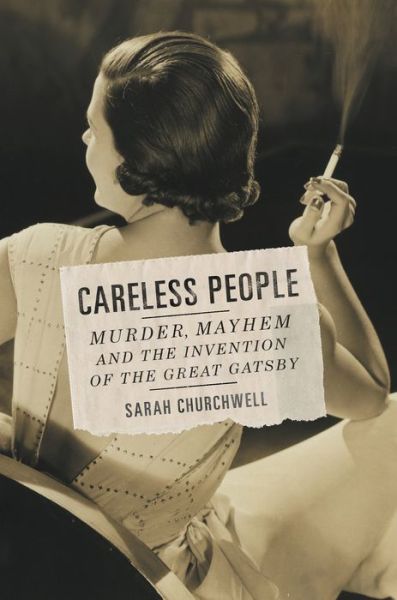
Teaser Tuesdays: Careless People by Sarah Churchwell

Teaser Tuesdays is a weekly bookish meme, hosted by MizB of Should Be Reading.

carelesspeople

I am very excited about this book, which studies The Great Gatsby in terms of the world Fitzgerald inhabited when he wrote it, and in terms of the landmark year (literarily and otherwise) of 1922 in which he set this, his best-known work. I am trying not to say too much for now, but it is enjoyable. I’ll share a tidbit.

At the end of Chapter Six, Nick and Jay Gatsby walk out among the debris, a “desolate path” of fruit rinds and discarded party favors and crushed flowers, exposing the waste and decay. Gatsby admits that Daisy didn’t enjoy herself and Nick warns him against asking too much of her. “You can’t repeat the past,” he tells Gatsby. “Can’t repeat the past?” Gatsby cries incredulously. “Why of course you can!”

…which I think evokes the mood of The Great Gatsby quite well. Stay tuned.

This quotation comes from an uncorrected advance proof and is subject to change.

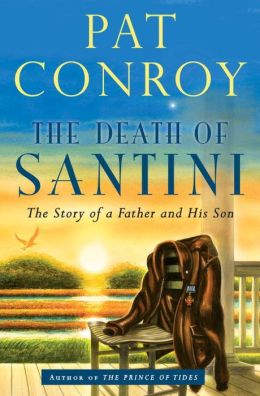
The Death of Santini by Pat Conroy

A remarkable ode to the real-life inspiration behind one of the most hated fathers of American literature and film.

deathsantini

With The Death of Santini, Pat Conroy returns to the autobiographical roots of one of his first successes, the 1976 novel The Great Santini. In this memoir, he recalls his father, a larger-than-life Marine hero who was an abusive monster to his family, from the perspective of decades passed. This is, he promises, the last story he’ll tell of his father–and of his mother, the beautiful false Southern belle.

Conroy’s style and ability to portray time and place are as mesmerizing and evocative as ever; the painful, neurotic (or, as he frequently says, “f-ed up”) family dynamics among the seven Conroy children and their mythically proportioned parents are peppered with humor. After his brother Tom’s suicide, for example, the family is at first shocked to realize that the funeral cards list the information for another brother, Tim, but then they razz him mercilessly. Another sibling notices the animosity their sister has for Conroy and reflects how hard it must be to hated so much. “No, I hate all you guys that much,” Tim says, to which brother Jim replies, “Shut up, Tim. You’re dead.”

As Conroy takes us through his convoluted relationship with a man he hated and feared, but eventually loved and felt close to (more or less), his gift for storytelling makes his story perfectly understandable and sympathetic. Don Conroy never ceased denying that he was falsely accused, but he softened over time and, it seems, in his dying years finally learned how to be a father.


This review originally ran in the November 5, 2013 issue of Shelf Awareness for Readers. To subscribe, click here, and you’ll receive two issues per week of book reviews and other bookish fun!


Rating: 8 poems.

Joe Hill

Following my experience with Joe Hill’s outstanding NOS4A2, I have been considering the relationship of Hill’s writing to his father’s.

Joe Hill

Joe Hill

A little background: as we all know by now, Joe Hillstrom King is the oldest son of Stephen King. Those being prodigiously large shoes to fill, he began his career as a novelist using Joe Hill as his pen name, not wanting to be associated with Dad – one can imagine the admiration or scrutiny that might have brought. More to the point, I imagine he would have been unable to fully appreciate any success gained as Stephen King’s son, unsure if he could take full credit for it. However, a few books in, it appears he’s now confident in his own career and independence; he “came out” as King’s son in 2007, partly because his public was getting suspicious. (He does awfully resemble his father.) I sympathize with Hill’s need to separate himself early in his career.

Stephen King

Stephen King


[As an aside, I sympathize still more with novelist Kelly Braffet, a lifelong King fan who has ended up his daughter-in-law. As I learned in that article that I recently shared with you, she began her relationship with King’s second son Owen terrified of speaking to her hero. This would indeed be terrifying – I can only imagine! I mean, if I were to date the son of a still-living Hemingway, at least I could rely on the fact that Hem is a bully and a blusterer, which I know how to handle; but King is apparently just a terrifically nice guy. And that’s so much scarier! Speaking of which, I loved the world’s strongest librarian‘s recent blog post about meeting Stephen King.]

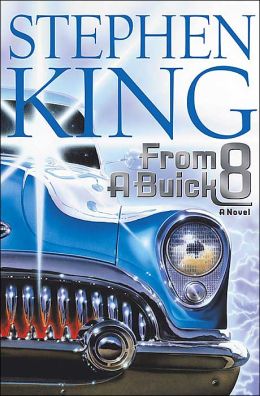
I respect Hill’s decision to hide his family background early on, and I respect his decision to stop hiding it. But I wonder what effect my knowledge has had on my reading of his work, because here’s the thing: NOS4A2 has a hell of a lot of Stephen King in it. I mean this in the best possible way – I love King, and I love NOS4A2. buick8

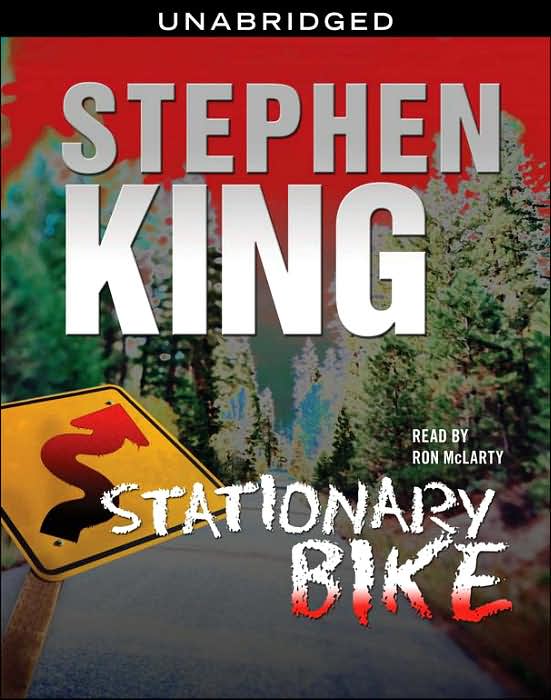
For one thing, there are plot points: a car with a will of its own is straight out of the very first Stephen King novel I ever read, From a Buick 8. A bicycle that takes its rider otherworldly places played a central role in Stationary Bike. I don’t mean to call Hill statbikederivative – he’s not – but it’s interesting to see these parallels, and it makes me wonder: if your father was Stephen King, would you consciously pull from his novels? Unconsciously? That would seem to be unavoidable.

Stylistically, too, I recognized a King-like realism and heightened awareness of pop culture and strongly recognizable settings; mixed with expert worldbuilding, the result felt inextricably related (no pun intended) to King’s strongest work. But that suggests a question, too. Would I have made these comparisons and found these similarities if I hadn’t known about the familial connection between the two authors? And that question is really the point of this blog post. I feel confident that I would have seen these connections, because they appear so striking. But we’ll never know, because I didn’t get to go into this reading blind. For that matter, I picked this book up because of the Hill’s relationship to King. And the point of that statement is that Joe Hill was so very right to begin his career under cloak of pseudonym. Now, though, it needn’t matter, because he’s a kick-ass author in his own right. Bring on Heart-Shaped Box.

At the end of the audio version of NOS4A2 that I listened to, there was included an author interview with Joe Hill. (That is, there are no questions, just Hill speaking, but it reads like an interview; I imagine the questions were asked off-stage.) This was an enjoyable way to hear him in his own voice, and I loved some of what he had to say about audiobooks in particular. He cites Harold Bloom, eminent literary critic, saying that audio is simply not the same – is not “literature” – and that listening is not reading (well, duh). Hill refutes this idea, pointing out that listening to literature is yes, different, but is its own important thing. He uses as an example a certain blind author of noted “literature”; I would also point out Homer, who was both blind and pre-written-history, who lived back when the oral tradition was the only way to share stories. At any rate, Hill’s celebration of audiobooks was nice to hear. (And unsurprising, considering his upbringing.)

Finally, in the same interview/monologue, Hill says that “imagination is as powerful as physical law.” I want to leave you with that: a very apt point from Hill, as an author and as a product of the King household.

beer and books

Well. This is about as easy as it gets: 13 of the Best Literary Quotes About Beer were clearly compiled with me specifically in mind. From beer brewed by “noble twins… in their divine alevats, cunning as the sons of deathless Leda,” to “a great pot, filled with some very fragrant compound, which sent forth a grateful steam,” these lines will make you… thirsty.

I can’t quite decide about Ray Bradbury’s statement that “Beer’s intellectual. What a shame so many idiots drink it.” (Maybe I’m afraid he’s talking about me?) And I rather disagree, respectfully, with Haruki Murakami’s preferences as to temperature, although I concur with his feelings about the progression of temperature as one drinks.

Edgar Allen Poe’s lines are among my very favorite:

Fill with mingled cream and amber,
I will drain that glass again.
Such hilarious visions clamber
Through the chambers of my brain.
Quaintest thoughts — queerest fancies,
Come to life and fade away:
What care I how time advances?
I am drinking ale today.

I am a little saddened by Hemingway’s lines. On the one hand they are a fine example of what I love about his writing: Papa’s descriptions of food and drink are in fact some of the best things he does, and I can’t read those passages without watering mouth. But that this example comes from an ad cheapens it.

And as for the best final line… it had to be the Bard: “a quart of Ale is a dish for a king.” Indeed, sir.

Here’s a tip: ale will make a fine accompaniment to your reading pleasure, too.

thought for the day

Briefly, I felt compelled to share this line with you from my A.Word.A.Day email.

What I like in a good author isn’t what he says, but what he whispers.

–Logan Pearsall Smith, essayist (1865-1946)

Isn’t that well said. I don’t know this Mr. Smith but I am impressed. I’m sure I’ll feel the need to refer back to this concept in a book review one of these days…

art and dirt

[I recently read Theo Pauline Nestor’s Writing Is My Drink, but my review won’t be published at Shelf Awareness for another week or two.]

I remember from Natalie Goldberg this thing that I also recognize in Theo Pauline Nestor: an aversion to the outdoors, a lack of appreciation for nature. It is apparently something to be avoided, cleaned off your shoes if you accidentally step in it, and this is every bit as disturbing to me as the people who react to the idea of exercise by saying that they “don’t like to sweat.” What!! What a bizarre concept, to not like to sweat. Sweat is not the first or primary goal of exercise, I want to tell them, any more than getting dirty is the primary goal of going outside; but both results (and they cross over quite a bit) feel good because they are of the nature of their parent: exercise, and the outdoors.

Nestor writes, of camping: “life’s hard enough; why turn it into a three-ring circus by trying to rub sticks together just so you can boil water for morning coffee?” And then later, in praise of her medium: “writing comes from the wild place, from the home of the undomesticated, the untamed, the feral.” As if that is a good thing. How can the undomesticated, the untamed, the feral, the wild place, be a good thing if camping is a bad thing? And oh how simplistic (and ill-informed) her picture of camping: that it involves rubbing sticks together, for chrissakes, to make coffee!

Why the disconnect? Why does art have to take place in clean and civilized environs? Don’t get me wrong, I like a good coffeeshop too; but I worry that there’s something missing from a person who appreciates art and beauty and yet thinks camping is an unnecessary complication. Some of us feel that camping is a necessary reduction in complications, in fact: think on that for a moment. You can even forgo the coffee and use trees and sky as your stimulant! I want to be clear that I very much enjoyed Goldberg’s Writing Down the Bones and Nestor’s Writing Is My Drink, and I found both useful. But I think I’m bound to identify better with Philip Connors and Christine Byl, artists unafraid to get dirty.

Farewell, Dorothy Parker by Ellen Meister (audio)

farewellI “like” the Dorothy Parker facebook page, available here, which is run by Ellen Meister and posts Parker quotes and anecdotes regularly. This is how I became aware of Meister’s new book, a nod in novel form to the feisty one.

In wrapping up this audiobook experience I am a little conflicted. I was alternately spellbound and greatly entertained, and exasperated, with the novel’s protagonist, Violet Epps. Violet is a movie critic in present-day New York, and her verbal wit on the page is razor-sharp (as they say), in the spirit of her acknowledged hero, Dorothy Parker. But in real life, she’s petrified of everything, rarely finding the voice to ask for a seat at a restaurant; in the opening scenes (quite frustrating) she is trying to break up with a dirtbag loser boyfriend but can’t. And then she obtains a book signed by Dorothy Parker, and discovers – gasp – that she can summon the dead writer at will. This changes Violet’s life enormously.

Violet needs a helping hand in several areas of her life: dumping the boyfriend and fielding a new one; dealing with a horrible bratty new underling at work; and fighting a custody battle for her recently orphaned niece. Mrs. Parker (as she insists on being called) is a great help – or sometimes a great interferer – in these matters, giving Ms. Epps (as she insists on calling her) the backbone she needs. Sometimes this takes the form of encouragement (or even feeding her lines); but Mrs. Parker also has the ability to enter Violet and take charge of her body, which can be messy. There is always the questions of where to give credit (or blame) – how much is Violet in control of herself? She is apt to give Dorothy Parker the credit, but she’ll have to learn how to stand up for herself by herself in the end, of course. The satisfying flip side to Violet’s growth is that she has something to offer Mrs. Parker, as well.

On the one hand, Meister’s characters were well-developed and believable (with the possible exception of a rather ogre-ish grandmother), and I cared about them. Dorothy Parker was wonderful, everything you’d want her to be, realistic, heroic but humanly flawed. I was honestly desperate to get back to this audiobook when I had to shut it off. I needed to know what was going to happen next; I was excited or anxious for Violet, who I liked.

On the other hand, Violet’s behavior was often infuriating. She was so slow to learn, so allergic to speaking up for herself in even the most obvious of needs, that I wanted to shake her. We spent what felt like eons in situations where she should have just done something. Now, I’m not a person who typically struggles to speak up for herself; I don’t suffer from social anxiety except in the most exceptional of circumstances. Perhaps I should be tolerant of this portrayal because perhaps it is entirely realistic for people who truly fight these issues. [Although, the explanation for Violet’s social anxiety – a trauma involving her recently-deceased sister when they were small – I found rather trite.] But even if this was a realistic portrayal, I found it tiresome.

Similarly, perhaps I should give allowances for this part because I’m not a romance fan – but in the thread of this story that was a romance novel, there occurs that maddening trope wherein the woman wants the man but pushes him away, and it takes far too long for them to reconcile their totally obvious mutual desire. My patience was tested. But, romance fans, you should like that part.

I know I sound harsh here, but I point out again, the plot’s action had me riveted and I am going to miss Violet Epps (and Dorothy Parker!) very much now that this book is finished. I just want to communicate that I had conflicting moments throughout.

And in the end, I was silly putty in this book’s hands. I was so pleased for the happy endings and for all the characters that I forgot my earlier quibbles. Had I been I overreacting? Or did the later success of this novel simply wash away the memories of my frustration? Whatever it was, my patience with this book was rewarded and I’m won over. Three cheers for Violet and Dorothy, both.


Rating: 6 edits.