Caliban’s War by James S. A. Corey (audio)

I raced through book two of this series (book one here). Boy, that last one was a long review, wasn’t it? I’ll try and be more brief this time. To start with: I’m definitely hooked on The Expanse.

Caliban’s War keeps Holden and his deeply likeable crew at its center, while Detective Miller is nearly absent, having flown off to Venus with the protomolecule version of Julie Mao. Tor.com’s article on this volume (which, again, I found an excellent guide) says that “Holden is the through line, but only in a way that centers things for the reader. He’s really a vehicle for everyone else,” which I think is nicely put. A few new characters enter the spotlight. Prax, or Dr. Praxidike Meng, whose daughter has been kidnapped, is a meek botanist big on brains and short on street smarts. I occasionally found him maddening, but he makes an interesting contribution to the little family that is Holden’s crew. He also, through the crisis of his missing child and her link to the protomolecule, provides the novel its central one-off storyline. Chrisjen Avasarala is a UN (Earth) politician, and a delightfully nuanced character with all the backstory required to make her interesting and believable; she could carry a whole book on her own. And Sergeant Bobbie Draper of Mars is like a female Jack Reacher: huge, badass, clever and loveable (as long as she’s on your side). Avasarala recruits Bobbie, and the two of them work together to try and avert disaster in the tenuous cold war between Earth, Mars and the Outer Belt following the events of book one.

Whew.

Although Wikipedia calls Holden, Prax, Avasarala, and Bobbie the four main characters of this book, I think that sells Holden’s crew short. His love affair with Naomi is progressing, with its issues. Alex is offscreen for part of the story, and receives somewhat less character development, but Amos is coming right along. The friend who turned me on to this series calls him a psychopath, but I think that’s not the least bit fair. He cries for children in danger. I love Amos. And the family togetherness of the crew of the Rocinante (Holden named it) is a sweet point – approaching saccharine, actually, but I seem to have a high tolerance for that, once I’ve bought in. And I’ve definitely bought in here.

My endorsement of this series continues. It’s sci fi for people who care more about people than the science. It’s right up my alley, action-packed but also all about character development and human conflict and feelings. On to the next one.


Rating: 8 children.

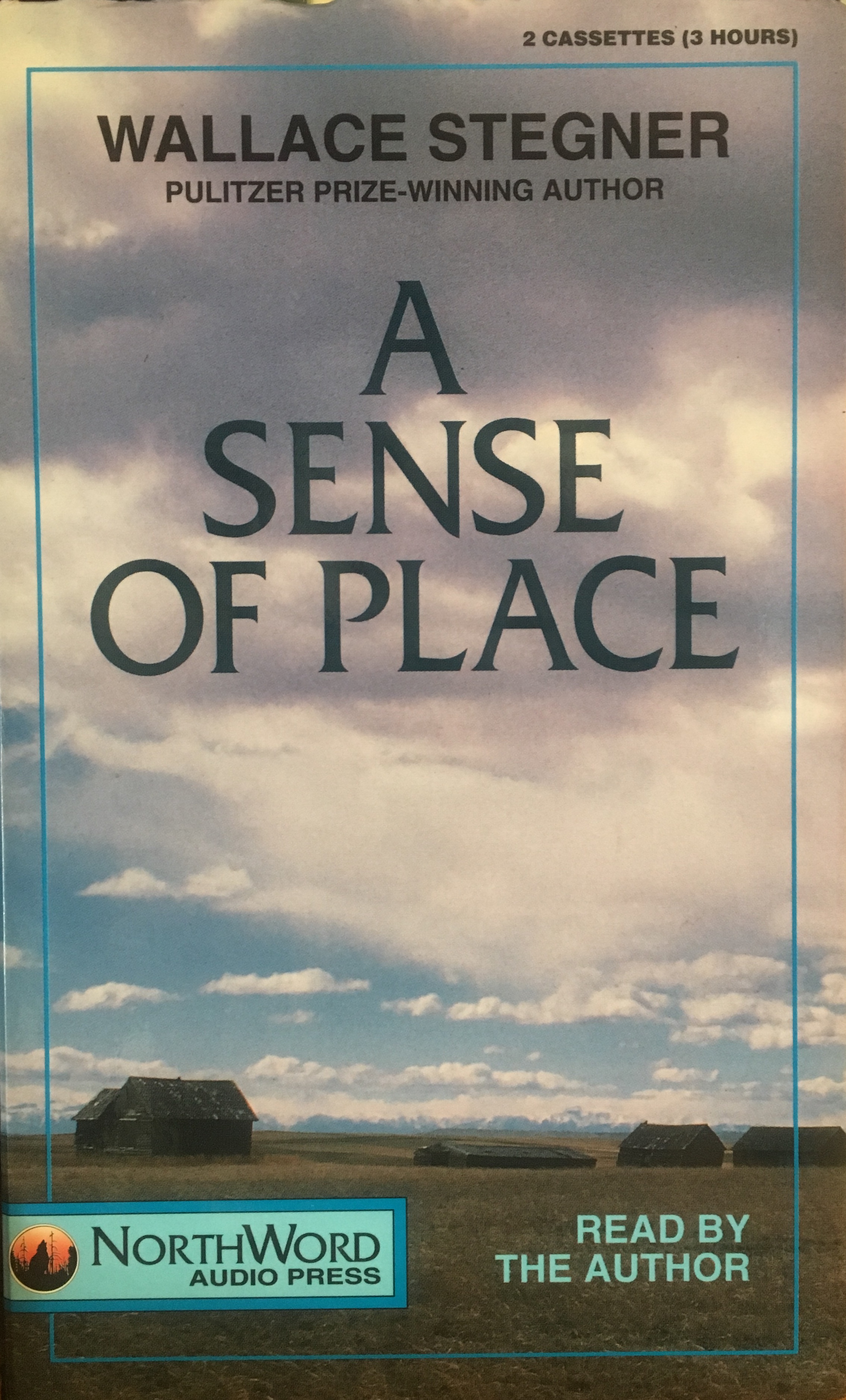
A Sense of Place by Wallace Stegner (audio)

To write about this essay collection, I must first tell you about the format.

From my research, it looks to me like the collection exists only on audio, and only on audiocassette. I bought the set of two cassette tapes some years ago, and have had them all this time, waiting for a way to listen to them. The only cassette player I could locate in my friends-and-family circle was a desktop item my father dug out of the attic for me; but its volume only goes so high, and Stegner came out of the machine so low that I could only hear him if I pressed my ear against the tape player, which I quickly tired of. (Thanks anyway, though, Pops.)

Then finally a friend bought me this outstanding gift: a cassette-to-MP3 converter! Who knew! Thank you so much, Margaret; it was a shame to use it for just the two tapes, but hopefully the guy I passed it on to gets some use out of it with his old rock tapes. Anyway, I was finally, after years of ownership, ready to listen to my Stegner as I drove north across west Texas.

And it is Stegner himself reading, which I think is a nice bonus, although he does have a bit of a somnolent monotone. The essays are not titled; he simply rolls from one into another, so that I was rarely clear on when one ended and another began, although changes of subject serve as loose guides. It’s an intriguing problem, the format of these essays and their absence from the world otherwise. I am a bit interested in transcribing them myself for posterity, if I could find the appropriate person to work with on that project. Hmm.

Now on to the essays, yes? I enjoyed listening. Stegner has a lot to offer: he has known several corners of this country very well at several times in particular, and he specializes in detail and color (literally and figuratively, as in “local color”). He can be relied upon for commentary about conservation issues, and although his positions sound a little obvious in 2019, coming from 1989. His storytelling style is soothing, especially read aloud in that drowsy voice of his. I do wish I had these on paper to read and look at; as it was, I had to let the stories and reflections wash over me, which was pleasurable, but leaves me with less to say for this review.

I made a few short recordings of lines that appealed to me. I have no idea what essays they are from.

The Wasatch in Utah… taught me the feel of safety… A man can tuck back in against mountains, the way Hemingway used to tuck back into the corner stool at Sloppy Joe’s, his back covered and all danger in front of him.

(Guess why I like that one. That would be Sloppy Joe’s in Key West; I’ve been there.)

We manage to breed saints, brutes, barbarians, and mudheads in all sorts of topographies and climates, but what country does to our way of seeing is another matter, at least for me. By and larger I do not know what I like, I like what I know.

I wish I had the line that came just before, too: his point was that topographies and climates don’t make people who are smart or stupid, moral or evil. It’s a point that’s important to me. People judged for their geographies is becoming a pet peeve of mine. And that last line: “I do not know what I like but I like what I know.” It makes sense somehow.

Every night in season [the frogs] conducted love concerts that could drown out conversation even inside the house. Stamp on the patio bricks and they fell silent so suddenly from such a crescendo of noise that the silence rang like quinine in the ears, the sort of silence I’ve heard nowhere else except in the middle of the Amazon jungle.

Silence rang like quinine! What an unexpected simile; and I’m not sure exactly what it means, not knowing what quinine sounds like in one’s ears; this is a line that I think would get picked apart by certain creative writing professors I’ve known, but I appreciate it. I don’t know what quinine rings like, but the surprise pleases me, and I’m willing to take it on faith that that was some silence, whew. Now, the Amazon jungle as a place of silence I trust a little less: I imagine a jungle being rather a noisy place, what with all the life going on there, the peeps and rustles and dripping that surely must be going on. But perhaps Stegner has been to the Amazon. I have not.

There were other startling lines, and worthwhile observations. I wish I could share the text of these essays with you. Barring that, take my word for it, unless you have a tape deck and $16.48 (which will buy you the tapes right now on that other Amazon; more from AbeBooks).

Even with all the hassles it took me to listen to A Sense of Place: worth it.


Rating: 7 names.

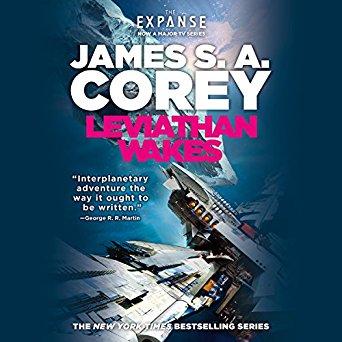
Leviathan Wakes by James S. A. Corey (audio)

This was a definite departure from my usual reading, in part because it was listening and not reading. Two life changes contribute: one, that I live in a van now, and do a fair amount of driving, therefore time to listen. And two, I graduated! and have far fewer reading commitments, so I thought I might have brain-room for audiobooks again. Yay!

This was also a genre departure. A friend set me up with The Expanse series on audio, highly recommended. He calls these books “hard-boiled film noir in space,” which all rings true, although I would have said sci fi as a first-level categorization.

I did a little research and reading around as I wrote this review, which is fairly unusual, but I’m so unfamiliar with the genre that I felt at a loss. I am glad I poked around like I did. I learned, in this article from Tor.com, about the “space western” sub-genre, which made instant sense for Leviathan Wakes even before I read the full description of that genre distinction. On the other hand, it was interesting to note in that article that its author found Miller a trying character and was always anxious to get back to Holden. While I can’t say the opposite – I certainly found Holden compelling – I did feel Miller was sympathetic and genuine. Some people really are that depressed, depressing, and self-sabotaging. Or maybe it’s just that I love noir mysteries, with their disturbed PIs.

But I’m getting ahead of myself. Leviathan Wakes takes place in a future in which humans have colonized Mars and a good chunk of the solar system. The major political players in this world are Earth and Mars, with an outer asteroid belt roiling and muttering rebellion under the name OPA (Outer Planets Alliance), which has been labelled a terrorist organization by the major powers. In this setting, we have a handful of protagonists, chiefly two men: James Holden, Earthborn captain of a commercial ship and former officer in the United Nations Navy, and Joe Miller, a rundown Beltborn detective and classic noir figure (his wife left him, he drinks too much, he’s dysfunctional but still has a good heart). There’s also Holden’s crew, Naomi, Amos, and Alex; and Julie Mao, rich girl turned OPA fighter, who we meet only briefly at the beginning of the book. She becomes a missing person and Miller is assigned (by nontraditional means) to find her. He becomes obsessed.

This is a hard plot to summarize because a lot happens (the paperback is some 600 pages, the audiobook 21 hours). If you want more, the Wikipedia page does a pretty good job of summary, but beware spoilers there. I’ll turn to another’s words again: Aidan Moher, the writer at Tor.com, praises this book “for being open and approachable for anyone with even a remote interest in science fiction, but specifically for those who are intimidated by the hard science that often forms the backbone Space Opera. It focuses instead on the intricacies of the human machine — relationships, anxieties, dreams, loss, redemption, acceptance.” Well put, and explains why I was able to enter so easily into this world. Human relationships, etc., are definitely my main interest in literature.

I had a great time listening to this one. I felt pulled in by the momentum of both character development and plot; it stayed entertaining always. There were a few elements I let slide by me: the tech (and anything I missed was not a problem), and also the lovely patois spoken by Belters, which mixes a few languages (English, Spanish, Hindi, and more: there’s a great page here). That pidgin language offered great color and I felt like I understood enough to get along. (I’m often a fan of foreign languages used in English writings, where context clues or cognates give me enough to get by, and I’m generally able to trust the author that what I miss is unnecessary to my understanding of the larger work.) In other words, I thoroughly agree with Moher: this was an easily accessible sci fi novel that I loved for its human elements. Despite being a longish book, pacing was snappy, and the alternating viewpoints of Holden and Miller kept things lively as well. I am absolutely looking forward to the next book in the series, which is Caliban’s War. Stand by: I’m going to switch gears in a big way and listen to some Stegner next, and then back to the old space western. My friend who has given me the series tells me this one will be “more horror and psych thriller,” with which I am right on board.

Thanks for the hook-up, Paul.


Rating: 8 vomit zombies.

reread: Never Go Back by Lee Child (audio)

In my defense, it’s been more than four years since I listened to this audiobook for the first time (and reviewed it here): I had forgotten what happened, and got to find it new again. I seem to have reached the stage of forgetfulness in which I can enjoy a thriller/murder mystery novel a second time, with the same fresh eyes. Hooray! That always looked like one of the best features of aging. (Perhaps my brain’s just saturated.)

I recently took a road trip with a friend, and he wanted to listen to a book, and I figured Reacher would work for him, so here we are with an unplanned reread. I’ll keep this brief, because I think my earlier comments remain true. I was deeply concerned this time around with the erroneous use of the 50/50 coin toss idea. Reacher (and therefore Child) is usually so smart! But the many scenarios where the coin toss idea is used here are all binary choices, having two options; rarely do they hold even odds. Ugh.

On the other hand, I still love the sexiness, the cleverness, and the depth of the Susan Turner character (Reacher’s romantic alliance in this episode). I still love the formula, and formula it most certainly is; but having acknowledged that, what’s the problem? It works for me every time.

The extent to which I’d forgotten this plot excites me. It’s got me thinking about all the Martha Grimes books I enjoyed in my teens and early 20s: those should all be new to me now, too!

On that note, Happy Friday, y’all. I hope you have a weekend as awesome as a Lee Child novel (but with less violence).


Rating: I’ll stick with those 7 cars.

notes on podcasts & a DNF

I’ve started a new job, part-time on the weekends, serving beer in the taproom of a craft brewery a few towns over. It’s great! but I have a good bit of a commute again now. I haven’t listened to an audiobook since school started in January, because I haven’t wanted to crowd my brain any more than it already is (or get my stories crossed). So Liz has recommended a few podcasts for me. She is super into the podcasts, so I know she restrained herself, by starting me off with just six. On my last few drives to and from the brewery, I have really enjoyed listening. I’m going to try to stick to just a few sentences per story here…

Another Round, Episode 85: The Same Stuff as Stars (with Amanda Nguyen).

Heben Nigatu and Tracy Clayton discuss rape culture and outer space with Amanda Nguyen, a college student who has founded an advocacy organization for rape survivors, written new legislation and gotten it passed in Massachusetts, and is studying to be an astronaut (wow). All three women have engaging voices & personalities here, and the story is obviously layered and impactful.

Criminal, Episode 63: Rochester, 1991.

Kim Dadou served 17 years for the murder of her boyfriend, who beat her within an inch of her life, which life she was defending when he died; now she’s an advocate for domestic assault victims. Excellent intimate tone and a narrative that is horrific but compelling. Listener is left rooting for Kim, naturally.

Death, Sex & Money, I Was Your Father, Until I Wasn’t.

When a woman he’d slept with called to say she was pregnant, Tony became a father to a little girl he loved deeply–until he found out she wasn’t his after all. He and the biological father discuss their experiences. They are disarming, honest, vulnerable.

Embedded, Police Videos: Flagstaff.

A 2014 video shot from a police officer’s eyeglasses shows his death by shooting, perhaps the first of its kind and a major internet sensation. Kelly McEvers delves into this video and its meaning to various viewers, in particular the families of the officer and the shooter. I appreciate Kelly’s personal approach–sharing her own reactions–and the variety of perspectives she finds.

Death, Sex & Money, Live from the Internet: Jason Isbell, Amanda Shires & You.

(This is the podcast that got Liz & I started on this exchange, because I’m an Isbell fan. I remember listening to the first Death, Sex and Money show with Isbell back in 2014.) Live-recorded call-in show with Anna Sales taking questions for Jason & Amanda about addiction, relationships, and their art. These are two wise, thoughtful, compassionate and smart individuals, and I could listen to them all day (and have).

Other Liz-recommended podcasts I’ve got queued up include Revisionist History, Planet Money, and Radiolab, so stay tuned. And, this one did not come from Liz, but about a year ago I really enjoyed Love + Radio‘s Choir Boy, an interview with a bike-racer-turned-bank-robber. What a weird story, truly stranger than fiction.

In other news, briefly: I had a strong negative reaction to Donald Revell’s The Art of Attention (from Graywolf’s The Art of series). I guess the good news is this book seems to be aimed exclusively at poets, and I am not one. Revell seems to me to be more interested in showing off his vocabulary and convoluted constructions than communicating; I found him deliberately opaque; and a central thesis seems to be that the “craft” of writing is neither teachable nor worthy of teaching—so why this book? Anyway, moving on.

The Stand by Stephen King (audio)

the-standStephen King’s long, juicy novels often leave me a little tongue-tied when it comes time to write a review. There is so much to say. The Stand is a long one: this updated version (with King’s “Preface in Two Parts” and some 400 pages of added text left out of the original publication) runs around 1200 pages. Or, as iTunes informed me, 1.9 days of audiobook. Briefly I will say it was all worth it.

It is 1990, and a “superflu” has just wiped out the overwhelming majority of human life on the planet. This superflu was a biological weapon worked up by the United States military that, oops, wandered out of the lab. There are some weeks of totally creepy information control by the military & government, as they try and keep citizens from suspecting the reality that life as we know it is gone. Eventually we are left with a handful of people who stumble around an empty world and find each other. Put very simply, the good and virtuous people dream of a good woman–sort of a wise crone, feminine divine figure–and of a frightening dark man. The remaining people with basically good natures gather around Mother Abigail, and the remaining people with evil impulses gather around the bad man, who we recognize from other King novels by the name Randall Flagg. What follows is part good-vs-evil battle for the control of a near-empty world; but the far more compelling part is a story of human beings and their personalities, and personal struggles with the good and evil within all of us. Plus the practical difficulties of a high Colorado winter without piped-in heat.

This overly simple description doesn’t do it justice, of course. While there is an overarching good-vs-evil plot, that makes the story sound too pat and frankly boring: I wouldn’t read that. These characters are the masterpiece, as is so often true with King. The individuals and their nuances, and the challenges of the day-to-day, are creative, realistic, whimsical, hilarious, riddled with pathos and endlessly interesting. This is why I read Stephen King. Beyond that, this story makes for an intriguing sociological study (and he goes ahead and gives us a surviving sociology professor to help us along). Reading (listening to) this in 2016-17 calls to mind an obvious parallel to my favorite TV show, The Walking Dead. Both, for me, are studies in what the end of the world might look like for a few remaining survivors. Spoiler alert: we humans are the greatest threat, before and after.

I loved this reading by Grover Gardner; he did all the characters justice, which is no small feat. I loved the accents, especially on the character sometimes called “East Texas.”

For the serious King fan, there are the usual Easter eggs and references across novels. I’m not sure I qualify as a superfan yet–I’m only a small way into this man’s prodigious stack of published works–but I saw enough to tickle me.

What can I say? I’m adding nothing new to the world’s wisdom on Stephen King; I can only add my voice to a chorus: this man does some of the best world-building since Tolkien but is firmly rooted in our messy world, too. There are enough unexpected metaphors to please a poet, enough gimlet-eyed reality to please a realist, and enough fun to please the most loyal of genre readers. I can’t get enough.


Rating: 8 chocolate Payday bars.

Teaser Tuesdays: The Stand by Stephen King (audio)

Teaser Tuesdays is a weekly bookish meme, hosted by MizB of Books and a Beat.

Teaser

I know I already teased you from The Stand once, but I couldn’t help but share this single sentence.

It sort of bemuses me still that King is considered fluffy or genre-specific. He definitely has his chosen genres (horror, fantasy), and outside those genres has given inspiration to movies scripts (Stand by Me, The Green Mile, The Shawshank Redemption), which can be considered fluffy as well. I thought 11/22/63 was a monstrously successful work of imaginative historical fiction, outside of King’s better-known genres. And just because The Shining or It are horror novels shouldn’t take away from their extraordinary power; don’t get me started on the Dark Tower series

I digress.

the-stand
When I heard this sentence spoken aloud on this audiobook, I wished I’d written it.

The stars seemed close enough to reach up and touch; it seemed you could just pick them off the sky and pop them into a jar, like fireflies.

This is an image that is imaginative, visual and tactile, unexpected and yet perfectly understandable. Pick them off the sky and pop them into a jar, like fireflies. This is why I read Stephen King. This, and so many other reasons – his characters, his worldbuilding, his humor – but also for simple, gemlike lines like this one.

two listening opportunities

Scott Russell Sanders (photo credit)

Scott Russell Sanders (photo credit)

One of my favorite things I’ve read for the start of school coming up is an essay by Scott Russell Sanders titled “Buckeye.” Terrain.org offers a full-text version here, and I hope you’ll go read it and enjoy it, too. It’s short. Or, perhaps even better: on that same page, you can click to hear Sanders himself read it aloud for you. It’s a little under 20 minutes that way.

I am also still a little entranced over his essay “The Inheritance of Tools,” which I have not been able to find in a free full-text form that is not cluttered with one professor or another’s question-and-answer. (Best not to color your first reading, you know.) If you can track it down, do. I guess I might be in the market for one of his collections one of these days.

Amy Leach (photo credit)

Amy Leach (photo credit)

While I’m thinking of excellent essays read aloud by the author, I can’t help but mention Amy Leach, again. You recall that I loved her book Things That Are. I’ll just remind you again that you can hear her read “God” to a bluegrass accompaniment here. Under 5 minutes, that one.

Enjoy.

And while we’re here: any read-by-the-author clips you love and would like to share? Reading one’s work is such a different skill, I think, than writing it. I think immediately of Barbara Kingsolver, whose Flight Behavior and The Lacuna were such breathtaking performances, completely aside from the excellent books.

Teaser Tuesdays: The Stand by Stephen King (audio)

Teaser Tuesdays is a weekly bookish meme, hosted by MizB of Books and a Beat.

Teaser

Yes, it’s true. In the middle of new work for graduate school and all, I have begun a new audiobook, and it is (of course) a whopping Stephen King novel, my buddy Jack’s favorite of all the Kings. (My iTunes usually tells me how long a book is in hours. This one it says is 1.9 days long.) So here we are. I’ve chosen a teaser for you that I especially enjoyed.

the-stand

Dr. Emmanual Ezwick still lay dead on the floor, but the centrifuge had stopped. At 1940 hours last night, the centrifuge had begun to emit fine tendrils of smoke. At 1945 hours, the sound pickups in Ezwick’s lab had transmitted a whunga-whunga-whunga sort of sound that deepened into a fuller, richer and more satisfying ronk! ronk! ronk! At 2107 hours, the centrifuge had ronked its last ronk and had slowly come to rest. Was it Newton who had said that somewhere, beyond the farthest star, there may be a body perfectly at rest? Newton had been right about everything but the distance, Starkey thought.

I liked these lines for the awesome use of onomatopoeia (a word I never spell without help) and sense of plain fun that King inserts into even the direst or goriest of situations. I love this guy.

Stick around, and maybe I’ll be ready to review this mammoth in a month or three.

Jesus Out to Sea by James Lee Burke (audio)

Disclosure: James Lee Burke has said some nice things about me. I appreciate that, deeply. But he couldn’t buy my good review that way. Not all of his books are equally excellent. This one is excellent.


jesus-out-to-seaOn our drive south, Husband and I listened to this collection of James Lee Burke short stories on audio. I found it deeply powerful. The stories range widely: geographically, they are set in Gulf Coast south Texas, Louisiana and Mississippi, and Montana. In time, they are set in the 1940s and 50s through 2005’s Hurricane Katrina. Protagonists are oil rig workers, children, jazz musicians and retired professors of literature and creative writing. What they all have in common, though–characters and stories both–is their focus on society’s outcasts and castaways, the downtrodden and unlucky, the poor; and on the evil that lurks in the hearts of men (and women). In other words: classic James Lee Burke.

The opening story, “Winter Light,” stars a retired academic who opposes hunters and doesn’t let them on his land. His refusal to back down in this and other just causes* precipitates ugly events. “The Village” is a short, stream-of-consciousness first-person narrative by a military man involved in a massacre in Vietnam. Its style, if not its tone, is different enough from the Burke I know to startle me; I am impressed. “The Night Johnny Ace Died” tracks musicians through love triangles and organized crime in 1950s Louisiana. “Water People” sees base conflicts and suppressed traumas among Gulf Coast oil drill workers in the same era. “Texas City, 1947” references a real-life major catastrophe of that year (look it up), but that big event is only one piece of a puzzle starring an abused child and a number of sad and sordid crimes, as well as a sympathetic nun who (sadly) Husband didn’t find terribly realistic. My impression from hearing these stories read aloud is that this was one of the longer ones. If that’s incorrect, at least it was one of the more impactful for me, and contained lots of familiar geographic markers.

“Mist” featured a young woman attending AA meetings and trying to be sober. Her past traumas include the death of her husband in Iraq and events during Hurricane Katrina that go unnamed for most of the story. I suppose this is a personal reaction, but I found the particular uglinesses of this story harder than most of the others. But beautifully done, and not exploitative.

“A Season of Regret” reprises the opening story: a different retired academic on his own chunk of land makes a stand for a different set of just issues. I enjoyed the new version of a familiar concept. These are two different characters and two different sets of challenges, but the emotional tone is the same. Next come a trio of stories told by the same narrator, a child named Charlie growing up in 1950s Houston. These have their higher and lower moments in terms of holding interest, but I found the characters–Charlie, his best friend Nick, Charlie’s father, and the family of neighborhood bullies–compelling. And there’s nothing like hearing the specific history of my hometown extracted and mulled upon in its details: it feels like coming home.

The final, titular story is the clear tour de force of this collection, in my opinion. “Jesus Out to Sea” is narrated by a man from New Orleans, who grew up on Magazine Street with two best friends who were brothers. The three go to Vietnam; one is broken by the experience and ends up a gangster; the narrator and the other brother become modestly accomplished jazz musicians who decline into hard drug use before the gangster helps them get clean. The story culminates with a storm that need not be named. While Burke’s writing throughout this collection is as lyrical, startling and shockingly beautiful as ever, this story showcases those talents the best, in its repeated use of bougainvilleas as the blood of Christ, or the blood of any of us, among other things. This story is music and poetry and oh, the tragedy. I admit to being especially affected by Katrina stories. But this one evokes all the unnecessary pain and wrongness of it, as well as the simple natural forces that those of us from hurricane country are familiar with, and the ways in which this storm was different. As we listened to “Jesus Out to Sea,” Husband was driving south across Utah, and we missed a turn by 20 miles or so because our navigator (ahem) was so distracted. It’s powerful stuff, this.

Sharing a book with Husband is a rare treat for me, so I want to give voice to some of his reactions. Overall, he gave this collection a 7, and complained of abrupt endings that didn’t wrap everything up neatly: he wanted to understand clearly what happened to everybody, which is a privilege not always afforded. He wanted a little more justice, to see revenge gained. But we know we don’t always get that from Burke.

He loved the nostalgia of hearing about places and cultural and historical markers we know intimately, though, and I have long found this to be one of the easiest ways to win a reader’s heart: shared landmarks, especially geographic ones (at least for those of us tied to place), and especially little-known ones, so we feel like we’re in on a secret. The classic example in this case was the Alabama Ice House, where young Charlie goes to fetch his dad home for dinner in the 1950s, and where they sometimes get hot dogs: Husband said, “they still serve hot dogs there!” excitedly, and I shared his enthusiasm for a place we know and love. For Husband (not for me), one young protagonist’s experiences in Catholic school also rang a bell.

Husband struggled to find certain details of some stories realistic. But my reaction was very different. I guess I’m more inclined to trust Burke to know better than I do how some things work; or to trust that some unrevealed detail could explain the unlikely event. In the case of a famous gangster showing an interest in learning yo-yo tricks from a couple of kids–maybe I was just too charmed by the whimsical and oh-so-human oddity to complain. Husband did praise the descriptions and scenes overall, said he could visualize what was described; and I think what he’s referring to is the fullness of sensory detail, the evocation of fully-formed worlds.

I also want to mention the repeated images and phrases that showed up in this collection. Several characters, when startled or distracted, looked as if flashbulbs had just gone off in their faces. Several suffer from noises in their heads that recall the thropping of helicopter blades or the banging of people trapped in their attics in rising water. Husband noticed these, too, and again we had different reactions. I have the impression that some of these come from a Burke habit, a way of seeing and describing things. Others–the thropping of the helicopter in a troubled character’s head–I think might serve as a wise and artful linking device. These stories are held together in several ways: the attention they pay to underclasses and injustices, a way of looking at the world, and a sense of the Louisiana Gulf Coast as the center of a personal world. They are also held together by poetry, bloody bougainvilleas, the smell of fish spawning, and torment; and if that torment recurs as a series of thumping sounds, it only helps us follow Burke’s special genius.


Rating: 8 bougainvilleas.

*For the record, whatever your position on hunting, I think this character has a right to control his own property.