Will My Cat Eat My Eyeballs? Big Questions from Tiny Mortals About Death by Caitlin Doughty

The heavy questions about death and dead bodies are answered with honesty and hilarity by the creator of the webseries “Ask a Mortician,” for children and adults.

Caitlin Doughty wrote Smoke Gets in Your Eyes to share what she’s learned about the mortuary business and, more importantly, about death, with adult readers. Will My Cat Eat My Eyeballs?: Big Questions from Tiny Mortals About Death is a delightful follow-up and expansion on that project, aimed at younger readers but absolutely for adults as well. Doughty’s continuing experience in the business (from crematory operator to mortuary owner, with a degree in mortuary science) means her expertise has grown. Her sense of humor and fun when approaching topics often considered morbid, however, is her most valuable contribution.

“Every question in this book is 100 percent ethically sourced (free range organic) from a real live child.” And children do ask “the most distinctive, delightful questions”: We eat dead chickens, why not dead people? Can we give Grandma a Viking funeral? What would happen if you died on a plane?

Doughty’s answers are as delightful and distinctive as the questions. She blends humor with respect for the dead, joking around but repeatedly reminding her readers that it’s never okay to do something with a person’s remains that they wouldn’t have liked. (“Did Grandma want a Viking funeral?”) Her investigations of ritual, custom, law and science are thorough, and she doesn’t shy from naming the parts of Grandma’s body that might leak after she is gone. She uses big words sometimes, but explains what they mean; she keeps her explanations simple enough for younger readers, but there are asides for grown-ups, too, including references to Justin Timberlake and vinyl records that she winkingly tells the kids to ignore.

Can I preserve my dead body in amber like a prehistoric insect? First of all, Doughty is on to us: she knows this is really a question about being brought back to life, à la Jurassic Park, and she informs the reader that a second species will be required to graft that DNA onto. “Hybrid panther humans of the future! (This is made up, it’s not going to happen–don’t listen to me, I’m just a mortician.)” As for the title question, Doughty begins: “No, your cat won’t eat your eyeballs. Not right away, at least.” (Spoiler alert: “Snickers is more likely to go for the tongue,” but only out of necessity, or maybe because he’s trying to wake you up.) Will I poop when I die? “You might poop when you die. Fun, right?” This irreverent voice is winning, and pitch-perfect for her younger audience, but, honestly, adults need a little humor as well when considering “postmortem poo.”

Dianné Ruz’s accompanying images keep the same tone of playful but plainspoken discussion. “Don’t let anyone tell you your curiosity about death is ‘morbid’ or ‘weird,’ ” Doughty reminds readers. If they try to say so, “it’s likely they’re scared of the topic themselves.” This informative, forthright, comical guide to bodies after death is just the antidote–and surprisingly great fun as well.


This review originally ran in the August 12, 2019 issue of Shelf Awareness for the Book Trade. To subscribe, click here.


Rating: 7 gallons of unpopped popcorn.

Homesick by Jennifer Croft

This stunning memoir with photos is a love letter from one sister to another, a celebration of language and a story of devotion and disaster.

Jennifer Croft’s Homesick is a startling memoir, stylistically as well as in its content and in the unusual mind it reveals.

Amy and Zoe are very close. This is the defining feature of their young childhood and arguably beyond. The sisters grow up in Tulsa, Okla., where their mother worries over all the possible disasters in the world and their father teaches college. Then the younger sister, Zoe, has her first seizure, and their lives become dominated by seizures, hospitals, surgeries; the girls are both home-schooled from then on. A tutor, Sasha, comes in the afternoons to teach Zoe Ukrainian and Amy Russian–the girls’ choices. Amy loves numbers and letters; she is entranced by the Cyrillic alphabet. Partly out of devotion to Sasha, she throws herself into this study with all her considerable will.

Zoe’s health continues up and down, while Amy’s academic achievements soar. She enters college at age 15, moving into the Honors House dorm, and this separation from her sister is both catastrophic and necessary. “Something new has begun to be erected between them, something like a wall, and on Zoe’s side it must stay safe, and on Amy’s side it can’t. Amy is responsible for repelling her sister as her sister tries to scale this wall.”

This memoir is told in a close third person from Amy’s perspective–that of Croft’s persona–and interspliced with photographs captioned by an ongoing direct address, apparently from Amy to Zoe in a later time. The snippets of text under these photographs offer meditations on words, clearly one of Amy’s passions: “For dozens of centuries, the word leave meant stay…. And a scruple was at first a pebble you couldn’t quite shake from your shoe.” The words accompanying the photos form a separate narrative thread, so that the book can be read cover to cover, or as two discrete stories. Amy is a photographer from a young age, and her younger sister is her chief subject, in ways that Amy does not yet understand.

Disjointed, sometimes heavy with foreshadowing, lush with a love for words and language, the dual narrative of Amy and Zoe’s intertwined lives and shared pain seems the right artistic choice for this twisting dual story. Among other threads or themes is the difficulty of translation, in its literal and more metaphoric meanings. “When you consider the plenitude of any word’s experience you might think all words are untranslatable.”

Homesick is astonishing in its emotional reach, its evocation of a child’s discovery and a young adult’s suffering and all the wonder of words. What is translatable is perfectly communicated here.


This review originally ran in the August 8, 2019 issue of Shelf Awareness for the Book Trade. To subscribe, click here.


Rating: 9 letters.

The Starlet and the Spy by Ji-Min Lee, trans. by Chi-Young Kim

In 1954 Seoul, a war-weary young Korean woman and Marilyn Monroe share a brief but crucial sojourn, and learn they have more in common than they thought.

“I go to work thinking of death. Hardly anyone in Seoul is happy during the morning commute, but I’m certain I’m one of the most miserable.”

At the opening of Ji-Min Lee’s The Starlet and the Spy, Alice J. Kim works as a translator for the American forces a year after the armistice and ceasefire. Her life and outlook are as dour as these introductory lines represent: the traumas of the war have left her hopeless and joyless, taking her day-to-day life as a series of tasks to be completed. When her boss tells her about an upcoming assignment, he expects she’ll feel excited and honored to serve as escort, interpreter and handler for Marilyn Monroe, on a tour to entertain American troops. Alice is unmoved–what does she care for an American movie star?

During the course of four days with the bombshell, however, Alice will be forced to broaden her perspective on her own life and options. Her two former lovers both reappear, shaking her understanding of what exactly happened during the war. There seems the hint of a chance that she will find someone she’s lost. As Alice struggles with her will to live, the American beauty surprises her. Stunning, sexy, charismatic, yes; but Monroe is also unexpectedly approachable. And she will make a small but essential difference in the life of the less famous woman.

Lee’s novel is rooted in historical fact and inspired by two photographs: one of Monroe performing for American troops, in a slinky dress, in the snow; the other of an unknown female Korean interpreter. It is the intersection of these two lives that interests her. Two women, one famous, the other a novelist’s blank slate. What if they had met?

The Starlet and the Spy is bleak but whimsical and, yes, hopeful. Seoul has been beaten down; food is scarce and orphanages overflow. Alice dyes her hair with beer and steals pornography from work to sell to her landlady. A former artist, she doesn’t draw anymore; being forced to create endless portraits of Stalin during the war has dulled her passion, another loss that it seems she will not recover from. But she may have more friends than she thinks she does. Chi-Young Kim’s translation is both spare and emotionally evocative, suiting a narrator who is simultaneously desolate and childishly yearning.

Born of a curiosity about human relationships in unusual times, The Starlet and the Spy asks the questions: What if we met across a divide? What if a despairing young Korean woman reached into Marilyn Monroe’s makeup bag for a lipstick, or a way out? In a decidedly optimistic turn, Lee leaves her ending open, and her reader free to wonder what might be next for Alice.


This review originally ran in the August 5, 2019 issue of Shelf Awareness for the Book Trade. To subscribe, click here.


Rating: 7 propaganda fliers.

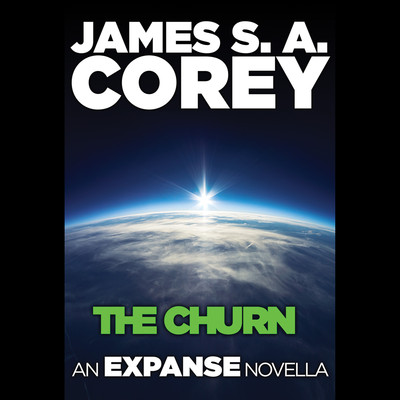
Strange Dogs by James S. A. Corey (audio)

The Expanse series: Leviathan Wakes, Caliban’s War, Abaddon’s Gate, Cibola Burn, Nemesis Games, Babylon’s Ashes. Then there was The Vital Abyss, an extra novella, like this one. Strange Dogs falls between Babylon’s Ashes and Persepolis Rising.

The day after the stick moons appeared, Cara killed a bird.

And a strange one it is. Like The Vital Abyss, this installation stars different characters and takes place in a different setting than the main thread of The Expanse, but in the same general world (in the sense of worldbuilding, universe, galaxy, although none of these are accurate terms in the “world” of The Expanse). These extra novellas are digressions from the central storyline, but in the same way that each novel also enters new subplots and introduces new characters; the difference there is that the novel then returns to Holden et al, where these novellas live and die in the otherworld.

Here we are on Laconia, one of the “new worlds” opened by the ring gates, and we center on a young girl named Cara. I believe she is eight year old. She was born on Earth but taken by her parents to Laconia as an infant; it’s the only world she’s ever known. While this novella forgoes the first person perspective taken by The Vital Abyss, its close third person means that we see Laconia through her eyes, which I think is a useful way to learn about both the planet and the girl, and the blind spots and confusions natural to her experience: her misunderstandings of Earth and the two worlds’ differences, for example.

In a nutshell, this is a retelling of Pet Sematary. While spending a day down at the pond like she likes to, Cara encounters some (yes) strange dogs she’s never seen before; but when she tells them to leave, they do so. She offers bread to a sunbird (something like a duck), because she saw a woman do just this in a book, from Earth. (Please note: bread is bad for ducks on Earth, too!) This kills the bird. Cara is distressed. Against her mother’s wishes, she then steals the family drone to try and save the ducklings she has orphaned. Cara accidentally breaks the drone as well: Mama Bird and drone, both broken. But lo, the strange dogs return and bring Mama Bird back to life, and they fix the drone as well. When Cara’s little brother is hit by a car and killed, guess what she thinks to do with him.

I find it a little odd how closely this book rips off Stephen King, but I’m not upset about it; there’s nothing new under the sun. Picasso said “good artists copy; great artists steal.” And if you’re going to steal, by all means King is a great source. There’s only so much mystery, for me, involved in the outcome of bringing little brother back to life; but the events that follow do leave some questions, and the novella ends with these questions unresolved. I’m curious; I hope we’ll learn more in future books, and it sounds like we will. (I spent a little time reading reviews on Goodreads, and reactions vary widely, of course. In fact, a better discussion lives here.)

If this book is an obvious rip-off of Pet Sematary, that doesn’t mean it’s not a creative retelling, well constructed and imaginative. Recall the adage, again, that there are only two stories in the world: a person goes on a journey, or a stranger comes to town. (Other versions have a few more stories in the world, but the point is their finite number.) If there are only a few stories, it’s about how we tell and retell them, right? Corey engaged me with this one. Cara’s difficulty parsing the two worlds – the one she knows, and the one her parents come from – is an intriguing problem. The foreign flora and fauna of Laconia are at the heart of this book’s conflict, and raise concerns that later books (I’m sure) will continue to deal with. We are reminded of the “new world” problems of Cibola Burn. And the ending, which some reviewers have taken issue with, I found thought-provoking and appropriately teasing.

Ready for more, always!


Rating: 8 complexly jointed legs.

Ramp Hollow: The Ordeal of Appalachia by Steven Stoll

I read this socio-historical study of Appalachia in part to investigate my new homeplace (however temporary) in central West Virginia.

It is quite good. Steven Stoll takes a wide-angle view of “the ordeal of Appalachia” (centering on West Virginia), which he sees as a social, political, economic, ideological problem that fits into global patterns. He compares the experiences of Appalachians with those of other groups across time and place: in particular, English peasants in the 1600s, American Indians in the early 1800s, and Malian smallholders in the 2000s. As he draws these comparisons, he is careful to note that “no two dispossessions are the same.” On the other hand, “historians emphasize the distinctness of the stories they tell. They tend to make few observations across places and times,” and Stoll I think does us a service by making those observations. For one thing, I find it makes each story clearer to have analogies to draw from. For another, as he shows in these pages, the story of Appalachia has been told in a way that oversimplifies, and blames the poorest people with the fewest options for their own situation. To contextualize those experiences within world history and within patterns makes it clear that this is a story about humans and their systems and about capitalism, not about a specific race of holler dwellers.

At the risk of simplifying, again, what has been well communicated in nearly 300 pages here… Stoll argues that what has gone wrong in Appalachia, what has resulted in devastating extractive industries, wealth flowing only outward, the impoverishment and degradation of local residents, environmental destruction, and damage to a culture, is about the forced movement from makeshift agrarian economies to capitalism and industrial scales. (The term ‘makeshift’ for household economies is not intended to be disparaging. Stoll spends time with this. What he refers to we might call subsistence living: a combination of small-scale agriculture and husbandry, hunting and gathering, and local and regional trade that yields a sufficient or comfortable living with no stockpiled profit. It does not indicate an absence of currency.)

The enclosure of the commons is a central element in this shift. The ecological base that used to be used in common by all for timber, hunting and gathering, fodder for livestock, and rotation of small garden plots was enclosed and divvied up as private property following the American Revolution, largely to absentee landowners. Later lumber and coal mining industries robbed that land of the richness that had once provided, so that now if we were to return to the commons model (something Stoll cautiously recommends, with a drafted piece of legislation late in the book) that base will not yield what it used to. Part of that shift as well involves a shift from makeshift or subsistence economies – I make what I need, plus enough surplus to feel secure – to growth-at-all-costs capitalism – make as much as you can and then make more by any means possible; seek efficiencies; clearcut. And part of that is a move from largely self-sufficient households to currency-based wage-earning ones. (Again, Stoll is careful to point out that there never was a makeshift household that provided all its needs – trade was always a component of any system – and that currency is not in fact absent from, for example, barter economies.) Well, these 300 pages do a better job of it than this paragraph does. But it’s a gist.

I appreciated the breadth of history, sociology, politics, economic theory, and more that Stoll employs to teach these lessons. It’s a broad and rich book. And I appreciate as well that he consults so many outside sources, and not just academic ones. While the tone and style of this book is still rather dry and textbook-y, its reference points include fiction and the visual arts as well as primary sources, journalism, and fellow academics. I dig the interdisciplinary result: that one can see policy unfold alongside environmental change, social history and the arts. The writing style is no-nonsense informational, lacking the personal perspective that I prefer, and with no especial sense of fun. It’s better than the classic history text in style. But it still took me longer to read, in smaller pieces, than my usual fare.

I regret that Stoll doesn’t appear to have invited local opinion or sought specifically Appalachian experts. His back-of-book blurbs are all from professors at either Columbia or Yale. And one characteristic of this region, one of its challenges, is the tendency of outsiders to judge; Appalachia, in my observation, is sensitive about that. I wish Stoll had sought a blurber from within the region! It’s not like there aren’t academics from Appalachia, and I know it would have earned him credibility in these parts. I guess that wasn’t a priority; I don’t think he’s writing for a specifically Appalachian audience, and that’s fine, but this oversight I fear means he’s written for an audience from everywhere but Appalachia. [Please note that I make these observations as an outsider, myself; these opinions are my own and do not reflect those of etc. etc.]

On these lines, a very brief section of this book is likely (again, from what I’ve seen) to raise hackles here: he devotes about a page to J.D. Vance’s Hillbilly Elegy, mostly nodding in agreement, although he does acknowledge that “it might be construed as saying that the tragedy of Appalachia is the sum of its individual failings or the insularity of its families.” Here’s a tip: praising Vance within Appalachia will make you no friends.

I also note that Stoll doesn’t address the nonhuman community that Brian Doyle and Terry Tempest Williams and my father and I recognize: he worries for the fate of people, chiefly, and I appreciate that he wants better for a disadvantaged population which has been taken advantage of. He seems concerned as well for the rich and biologically diverse hills and mountains of a unique geographical area, but I think this concern is chiefly for what that land could offer people. I would personally rather he also cared for rivers and cougars and mushrooms for their own sake, but his is the majority perspective, that’s for sure.

While I wanted to note these issues I found with Ramp Hollow, I admire it and I learned a lot and I do recommend it as a way to put “the ordeal of Appalachia” into a larger context and understand some of what’s challenging here, and why it’s not the fault of the people here who are unfortunately characterized as lazy, backwards, or primitive. This book is well researched, with over 50 pages of notes and a thorough bibliography. I consider it a great introduction to a lengthy and complicated history, and I’m so glad I read it. Thank you, Doug, for my copy.


Rating: 7 morels.

Things We Didn’t Talk About When I Was a Girl by Jeannie Vanasco

Jeannie Vanasco’s reckoning with her rapist of 14 years earlier–once a close friend–is distressing, brave and crucial.

Mark was one of Jeannie’s best friends in high school and early college–until the night when she got drunk for the first time and he sexually assaulted her. By the definition of the times, that’s what it was called: sexual assault. Under the FBI’s legal definition as of 2013, it is called rape.

Words matter. And so Jeannie Vanasco (The Glass Eye) delivers Things We Didn’t Talk About When I Was a Girl, a thoughtful, conflicted, harrowing examination of what Mark did–with his words alongside her own.

From the outset, she worries about the fallout from her choice to include Mark: she feels she should hate him, and she doesn’t want to be a bad feminist. As a writing teacher, “I’d never tell a student that her personal essay about sexual assault would be more interesting with the perpetrator’s perspective.” But Mark was such a good friend; many of her memories of him remain positive ones. “I doubt I’m the only woman sexually assaulted by a friend and confused about her feelings.” Like her first book, Things We Didn’t Talk About When I Was a Girl is aware of itself, frequently commenting on process and prospective readership. This kind of self-regard is difficult to pull off, but it is clearly Vanasco’s natural style, and she wields it expertly.

The memoir alternates between transcriptions of recorded conversations between Jeannie and Mark, and Vanasco’s reactions to those recordings. She discusses everything with her partner, her therapist and her female friends, nearly all writers or academics. Their discussions involve craft (“As a reader, Nina says, I would want to know…”) and sociology (repeated “performance[s] of gender”) as well as emotional support. Vanasco is very alert to the times, feeling prompted by #MeToo, Trump’s presidency and her creative writing students’ disclosures of sexual assaults. She is very alert, in general–it seems a personality trait–and one of the most intriguing artistic qualities of this book is its vigilant self-awareness.

Clearly this is an important and timely book. Even in a world that can seem brimming with stories similar to Vanasco’s, hers stands out. She feels the need to write “because so many perpetrators of sexual assault are regular guys, and I want to show that.” That mission is well accomplished: Mark is nothing if not alarmingly regular. Perhaps the creepiest element of the whole story is the seemingly easy slide from good friend to rapist and back again. “He smiles, and I see where a friend once was.”

Some of Vanasco’s brave and difficult work here is to consider the line between good and bad people, and good and bad actions. Is it possible for a good person to do a very bad thing? What are our responsibilities to one another, especially after such bad things happen? This narrator is tough, vulnerable and meticulous; the resulting memoir is heartfelt, painful and essential.


This review originally ran in the August 2, 2019 issue of Shelf Awareness for the Book Trade. To subscribe, click here.


Rating: 8 apologies.

The Vital Abyss by James S. A. Corey (audio)

The Expanse series: Leviathan Wakes, Caliban’s War, Abaddon’s Gate, Cibola Burn, Nemesis Games, Babylon’s Ashes. This novella falls between Abaddon’s Gate and Cibola Burn.

Just a quickie, this novella takes places entirely within a prison of sorts, a single large room accommodating about three dozen of the research scientists from Thoth Station – the ones who helped orchestrate the massacre at Eros starring the Protomolecule. It’s told in the first-person perspective of a Dr. Cortazar, a nanoinformatics researcher who agreed to undergo a ‘procedure’ which, let’s say, burned away his compassion and empathy and allowed him to undertake this genocidal work. In the present-tense of the novella, we’re between Abaddon’s Gate and Cibola Burn, as I’ve said; but Cortazar’s flashbacks take us through the development and the events at Eros themselves, too, from a perspective we haven’t seen before.

It’s a hell of an interesting ambition, this little book, in several ways. For one thing, the protagonist is not going to be a sympathetic character; he’s part of a massive mass murder, and feels not the least guilt. For another, the present of the story mostly takes place in this single large room, with the petty dramas and extreme boredom of the captives. It’s a story in which not much happens, in the present at least – more happens in flashbacks, but even the Eros events are rather offscreen. Cortazar’s background previous to these events is the more interesting episode, in my opinion.

This novella will engage the series fan, not least with the familiar voice of Jefferson Mays. I think its greatest contribution to the larger body of work is in the curious sociopathy of Cortazar and his fellow researchers (this is the note on which it ends, which is not giving away much). I enjoyed seeing the worldbuilding minds of Corey applied to a new storyline: that of Cortazar as a youngster, his mother’s illness and his own academic studies, and so on. It’s more of the same good stuff. It’s a minor offshoot of the series as a whole, with I think minimal impact on the whole, but it was entertaining and absorbing. And who knows? Maybe Cortazar will return as a player and I’ll be wrong about the minimal impact here.

Well worth the time.


Rating: 7 pills.

reread: Mink River by Brian Doyle (audio)

My father was right to recommend this reread (re-listen) after finishing The Plover. I didn’t even necessarily remember Declan, hero of the latter novel, from Mink River. And while he was definitely present here, and a colorful character, and recognizable from his later role, I was struck by the knowledge that there were many such colorful characters, whose lives might have been pursued in a sequel. And I was struck with grief all over again that we have lost the brilliant, generous, loving, exuberant voice of Brian Doyle too soon from this world. I wanted him to write so many more books.

He was still living when I read (listened to) this book the first time. This time, I felt saddened at many turns, ironically, in appreciating the delightful high spirits and joy and wisdom in his every line. Gosh, but I’m devastated at this loss, all over again and over and over.

But the book itself: still a wonder and a joy to experience. I fell in again with the inhabitants of Neawanaka, particularly the families of Worried Man and Maplehead and Cedar, No Horses and Owen and Daniel; Declan and Grace, of course; and others: Nicholas, Michael and Sarah, and the budding romance (as I see it) between Stella and the doctor. I ached for Moses the crow and the nun, his rescuer and dear friend. I remember listening to this novel for the first time, working out at the YMCA in Bellingham, Washington. It’s funny how memory can transport us into the past. People talk about smell being such a powerful mnemonic, but for me it’s never been as strong as songs and stories, the listened-to. Hearing Worried Man and Cedar share a beer at lunch again took me back to the abductor and adductor machines and sweat, just like that.

As for writing about the book itself, I think I did a pretty good job the first time around, and will let that stand. I will say, about the audio version, it was outstanding a second time; but I wish I had the words in front of me to consult and quote from. So I’ll be finding myself a print copy as well. Consider that the highest of praise.

We miss you, Brian.


Rating: still those 8 bottles.

did not finish: Erosion: Essays of Undoing by Terry Tempest Williams

I stopped at page 238 of 314, in my galley copy, but that’s three quarters of the book, and I feel warranted to share my reactions. This was to have been a Shelf Awareness review, but I had too many concerns about this book. And you must know how it pains me to criticize a writer I love; but I have to say honestly that this book does not live up to her best work.

Erosion: Essays of Undoing is a collection of Williams’s work in the last few years, in the disturbing times of Trump, concerned in particular with the decimation of Bears Ears and Grand Staircase-Escalante National Monuments (but of course all of the disturbing trends we’re seeing). In the spirit and style of Williams as many of us have come to know and love her, she reacts: with pain, with home, with spirituality, with connection, with often lovely writing. But in many ways, Erosion falls short.

For one thing, there are several ways to put together an essay collection, and this one feels clearly like a gathering up of published work of the last several years, putting them into a certain order and stapling them at the corners. There is an enormous amount of redundant information here: in particular, the signing of the two National Monuments into existence by Obama and their undoing by Trump are explicated a number of times in very few pages, and in similar wording. This feels really lazy. I just recently put together my MFA thesis, sort of a memoir-in-essays, and those essays started out with quite a bit of redundancy; I spent months reworking them to be sure they flowed smoothly and didn’t restate; my thesis advisor worked me pretty hard, because we had high standards for that product, which is just a little ol’ MFA thesis that maybe no one will ever read. I certainly intend to hold Williams to the same standard. I think it shows a lack of respect for her readership to throw this collection together like this. The inclusion of several poems, and an interview with Tim DeChristopher, could certainly have worked in a more carefully put together book, but here they feel haphazardly inserted, as if trying to make a certain page count.

The Williams style can be a little vague and mystical; I have a lower tolerance for (shall we say) the woo-woo than some readers, but in the past she’s made it work for me – beautifully, in fact – in the right proportions and with the right subject matter. In those successful books, she earns it with a careful attention to her surroundings, a quiet, humble voice that I read as an authority on her subjects. Here, that signature style failed to perform. I think it’s in part because this book is much more polemic, timely, policy-related; the vagueness doesn’t resonate as wisdom but rather feels like a shortcoming. I marked the line “Scientists credit the ESA for saving 227 species from going extinct,” wondering which scientists and when they said it; but with no bibliography or footnotes, I regret that this author loses some credibility.

An essay about her losing her job was revealing in a few ways. To sum up: in an act of civil disobedience, Williams purchased at auction the oil and gas leasing rights to a plot of public land. Shortly thereafter she was fired from her longtime position at the University of Utah, which she feels was politically motivated (and it makes a lot of sense to me that it was), although that is denied. The university, she says, claims “I was making too much money for doing too little compared to teaching fellows who were teaching several classes a semester, something like that.” It’s the “something like that” that got under my skin; it felt dismissive of the teaching fellows, and dismissive of the concern that the university may need to spend its limited funds (or didn’t you know that education funding is decimated these days, Terry?) on teaching hours rather than the author’s pet project (which I’m sure is a fine one, certainly). She goes on to claim that being asked to teach out of a classroom with four walls, and have field trips approved rather than happen at her whim, felt like a “straitjacket.” This strikes me as a bit shrill, and feels like the voice of privilege: a longstanding professor who is used to going outside the rulebook is appalled that she is being asked to at least start from a classroom. It’s a the-rules-don’t-apply-to-me sort of attitude which I think makes her case much less sympathetic.

From here we learn that, having lost her job, the narrator is interested in selling more articles and essays for publication to make a little income while she figures things out; and this was an aha! moment for me. Aha! Terry Tempest Williams sees that, with her name, she can sell a book of collected essays, a few poems, and an interview, many (all?) of them previously published, without massaging them into place or editing them at all. I see the book in my hands taking shape.

I can see now that Williams’s oldest books have worked best for me, and more recently they fall a little short. You know that my admiration for Pieces of White Shell continues. I had begun to think that maybe my criticism of this book came from my recent time in a writing program, that I was too quick to see where sentences, paragraphs, whole essays needed further editing. But I taught from Pieces of White Shell within the last year, and I’ve read and admired other books recently; it’s not like I’m impossible to please. I’m even forgiving of a few weak lines here and there, because none of us is perfect (although not all of us have access to the editing teams at FSG’s Sarah Crichton Books, either).

There’s something else I noted here that I don’t think counts as a vote against Williams, but it’s something I want to remember for clarification’s sake: I (and perhaps others) had been thinking of Williams as an environmental writer for the U.S., but that’s not right. She’s really about her own region, and not the rest of the country. I think this accounts for part of my concern with The Hour of Land, that she was so hard on Gettysburg and mostly stuck to the west. It’s normal, I believe, for us to have regional loyalties; no one can know a place as big as this country as well as they can know their own backyard. But be clear: Williams is not here for the Pacific Northwest, or Appalachia, or the Midwest or the South or, or – she’s here for the desert Southwest, her homeland and her love. Nothing wrong with that. But I need to remember it and not get confused.

I know I’ve been harsh here. Maybe it’s hard to be let down by an author I’ve admired; maybe I’m harder on her than a new reader would be, because I’m holding her to the high standard of her earlier work as it affected me. It’s hard to see our heroes fall. But this book struck me as lazy, and Williams’s narrative voice as increasingly self-referential and unaware of privilege. I’m disappointed.

On the other hand, of course, her heart is still very much in the right place as far as I’m concerned (although our regional focuses are different), and I have a sense of nostalgia for a voice I recognize. I only wish I didn’t feel like she were phoning it in.


Rating: 5 pronghorns.

movie: Matewan (1987)

Having recently visited the museum, I knew I had to track down this movie, which was not easy – thanks Barrett for your help!

Matewan is the retelling of the story of Bloody Mingo County and the Battle of Matewan, where the humble coal miners stood up to the bosses and lives were lost. It’s an iconic story in American labor rights history, and it’s movingly told here.

We begin with Joe Kenehan (Chris Cooper, in his film debut) arriving in the town of Matewan, West Virginia as a union organizer sent to help the locals with their ongoing strike. (I was immediately reminded of the adage that there are only two stories in the world: a person goes on a journey, or a stranger comes to town.) On the same train that brings Kenehan are a group of Black miners from Alabama who are being brought in as strike-breakers; the local miners attack these men before they even reach Matewan, presaging racism and violence that will plague organizing efforts. Kenehan exhorts the locals, however, telling them that it’s workers against bosses, not white against Black or anybody else (there is a recently arrived group of Italian miners in town, too).

It’s uphill work getting the white WV miners to let Blacks and Italians into the union, just as it’s uphill work getting the latter groups to strike, but Kenehan’s speeches, and the poor conditions and disrespect of the mine bosses, do achieve this. Everyone puts down their tools; the miners and their families construct a tent city on the edge of town (as their housing is all company-owned), and the workers bumpily navigate their union. Meanwhile, hired guns with the Baldwin-Felts Detective Agency try repeatedly to do the work of intimidation: evictions, repossession of food and furnishings, and general pressure and violence. They are repeatedly thwarted by the town’s major and sheriff, and once by armed “hill people” from outside of town. For a time, it looks like the ragtag union bunch are well-positioned to win their fight, because of the tight local community. But hanging over this impression is knowledge that the company, and Baldwin-Felts, has only to bring in more and bigger guns, and eventually the town will be outnumbered.

The action of Matewan proceeds from Kenehan’s arrival through organizing and early conflicts and concludes just after the Battle of Matewan, the shootout where the mayor and Kenehan, and seven Baldwin-Felts guys, are killed. Voiceover by Danny from a later date (he is now a grown man, and still a coal miner) indicates that the union was eventually defeated in the West Virginia Mine Wars by the US military, and that conditions have more or less returned to their starting point.

Remarkable characters include the boarding-house proprietress who initially puts Kenehan up – a miner’s widow – and her teenage son Danny, a coal miner, budding Baptist preacher, and passionate union man; Few Clothes (delightfully played here by James Earl Jones), leader of the Black contingent; a flirtatious widow with a role to play; and two miners’ wives in the camp, one West Virginian and one Italian, who begin as antagonists but forge a friendship even without benefit of a common language. Several miners, union men and Baldwin-Felts thugs play individual roles, as well, but these are less developed personalities. While there is no question that this is a film with a message and that takes a side, these flawed human characters make it something more and better than propaganda.

While Few Clothes, the sheriff and mayor, and several union men and Baldwin-Felts guys were true historical characters, Kenehan and Danny are both inventions for the purpose of this film. On the one hand, I find they work very well as central characters to focus our sympathies and make the story come alive. On the other hand, I regret that it took fictional characters to do this work, and I wonder if the same emotional results could have been achieved using only true figures. I believe so; but I guess it would have been harder to focus it, with a larger cast and no one central hero like Kenehan. But isn’t that a beautiful fact of the union, that there is no one, single hero?

True events are also compressed, and sometimes conflated. I feel more forgiving of this move; this being not history, but a stylized version thereof, it’s okay with me that we made the storyline a little tighter and easier to follow, and more dramatic for its brevity. Inserting a fictional central hero feels less faithful to me that compressing a timeline. Maybe that’s just me? At any rate, if you’re learning the history of Matewan and West Virginia’s Mine Wars, do look further than this film, excellent though it is. (This should go without saying and applies to all historical fiction.)

Although a sad story and therefore hard to watch, I found this movie also beautiful and well done. I appreciated the cinematography, darkness and shadow moving, the feelings of tragedy and betrayal; it made me cry. I highly recommend it, if you can find it. Know your history, friends.


Rating: 7 rabbits.