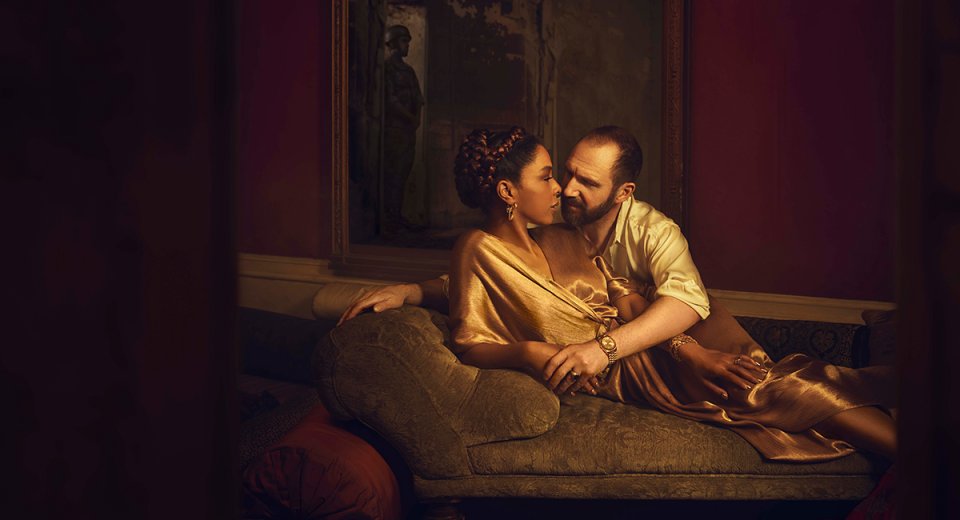
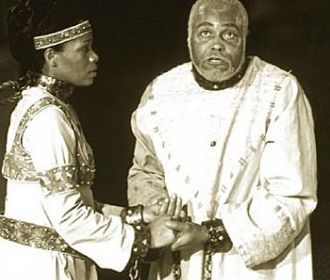
WVWC Dept. of Theatre and Dance presents Fool For Love (2019)

Written by Sam Shepard in the ’80s, this one-act play features just four actors/characters; this production was student-directed, and one of the lead roles was played by one of my students. (I was going to go anyway, but was extra excited when I heard that.) It was phenomenal; I’m so glad I went.

The whole thing takes place in a hotel room in a desert, where May is staying. She has just received an unexpected guest, Eddie, who appears to be a former lover. He wants to take her away to live in a trailer; she doesn’t want to go. They argue and argue and argue… she says she’s expecting a date, but Eddie isn’t sure he believes her. A strange man sits in one corner of the room, only occasionally interacting with the two main characters. Eventually Martin, the new date, does show up, and the three continue a confrontation of sorts. The story of Eddie and May, their past and their relationship, eventually becomes clear. The actual, present-tense action is fairly sparse; the plot is formed more by the backstory related in dialog than by the events within the play itself, although there are some small but significant developments there, too.

The strengths of the play as written are all about tone and atmosphere, black humor, and the kind of frustration and quiet desperation that marks Shepard’s work (and reminds me of Tennessee Williams too). It’s a hell of a play; but I’m perhaps even more impressed at how well these college kids knocked it out of the park. (I guess I expected more from Shepard than I did from them, I confess. I saw a play at the college earlier in the semester that was so bad I didn’t bother to write about it here.) That is, the two lead roles (Eddie and May) were both played by college kids–both freshmen, no less!–while the old man was played by a member of staff, and Martin was played by I think an alumnus. Still.

They knew their lines; they delivered them powerfully; I was able to lose myself in the play and forget that it was a play at all (and saw my student in a whole new light), which is the highest achievement, I think. I came home that night in a glow of appreciation. Thanks, young people. Keep up the excellent work. I look forward to seeing Steel Magnolias in the spring!


Rating: 9 glasses.

movie: We Have Always Lived in the Castle (2019)

There’s a movie version out of We Have Always Lived in the Castle! Boy, rereading that review was interesting. This blog was still pretty young back in 2011. I cringe a bit at the thought that I didn’t know the book yet, and didn’t make the Shirley Jackson connection; but that’s what life is, is a learning process. Everything you ever know, you at one time didn’t know yet! (Don’t make fun of beginners!) Also, it’s interesting to note that now the big Shirley Jackson reference is not “The Lottery” but The Haunting of Hill House, since it’s recently been made into a successful TV series. My students this coming semester will be reading “The Lottery,” of course.

First note: the movie is scarier than the book was. I recall (and it seems from my review) that the book was more spooky or creepy than outright frightening. Well, the movie is not straight horror, in the sense that there are no jump scares; but I was more upset by the things that lurk in the night. For one thing (spoiler follows here in white text, highlight to read): Cousin Charles reads as physically threatening, as in he assaults each sister in turn in what might be a sexual fashion, which I don’t recall happening in the book.

Reviews are mixed. Some reviewers found the tone of the movie off; others felt there wasn’t enough substance, or something like that. I found it to be quite a successful adaptation, and wonder if some of the criticisms aren’t missing the point, or if things I’m calling positive were what most bothered those reviewers. For example, it’s true that the aesthetic of the movie is bright and colorful – not at all matching its content. Constance is forcefully cheerful, with a bright Stepford smile; she almost seems drugged (and her pupils are dilated – how’d they do that? give her eye drops?). This contributes to a weirdly upbeat vibe, even though it’s patently faked, and often in extreme contrast to the conflicts taking places around Constance. It’s odd, but not I think by accident. Each character – weirdo Merrikat; forced-chipper, porcelain-beautiful Constance; increasingly angry Charles; and poor unbalanced Uncle Julian – delivers their own lines in varying forms of deadpan; each believes their own reality. It’s most disturbing, and that is absolutely the point.

There is a trailer here, which on the one hand gives a good impression of visuals and atmosphere, but on the other hand maybe you should go in without having seen so much of it? Maybe the latter; I’m glad I went in more or less blind.

It has been eight years since I read the book, which undoubtedly helps, but I’m inclined to say that as far as book-to-movie adaptations go, this one was quite good and less likely to frustrate the book’s fans than most. Full credit for capturing the feel of the original; great visuals and a hair-raising effect, even without your traditional horror movie’s jump scares. I’m looking forward to reading “The Lottery” with my undergrads now.


Rating: 7 pies.

guest review: The Living Mountain: A Celebration of the Cairngorm Mountains of Scotland by Nan Shepherd (introduction by Robert Macfarlane), from Pops

Months ago, back in August, my father came to visit me in my new home in West Virginia. One of our evenings was spent with my friends Doug and Melissa, down at the little brewery in their town, sharing stories and pints and a pizza. Among many other things, various author names were thrown about. Robert Macfarlane forms a meeting point for Pops and Doug. We finished up at their home, with a little casual live music from our host, and a book recommendation. My father returned home to Washington state and acted quickly. I received this email from him just a week or two later.

On Doug’s recommendation, I received this WWII-era book, lost and only first published in 1977: The Living Mountain, by a UK publisher, from Pacific Northwest provider ThriftBooks. This used copy is the 2011 edition with a 26-page introduction by Robert Macfarlane. Shepherd’s subject-homeland is the Cairngorm Mountains in Scotland, one of my favorite places from our visit, where we stayed a few days so I could take several mountain hikes, view Scots Pine recovery efforts and drink Cairngorm Brewery’s Black Gold Ale at the local pub with a view.

In 1977, The Guardian called it “the finest book ever written on nature and landscape in Britain.” Their 2011 review says “This is sublime, in the 18th-century sense, when landscapes like these were terrifying. And she achieves it in language that is almost incantatory, like a spell…” I can’t wait.

Scots pines. photo credit: Pops.

Black Gold. photo credit: Pops.

Some three months later, I received this review.

The introduction here is by Robert Macfarlane, who nearly singlehandedly has led a revival of her works of poetry, fiction and this book. And today the Scottish 5-pound note displays her image, with a quotation.

As Macfarlane says, this is “a formidably difficult book to describe.” Shepherd’s subject here is the Cairngorms: a massif, a group of peaks, a plateau – all those things, which she habitually refers to as the Mountain: an organism, an ecosystem, full of life, all its pieces intricately and inextricably linked. This place comprised her true life-long home, even as she traveled widely. She was obviously a committed and ambitious walker, in all weather; hers were no casual visits to the Mountain, and she often stayed overnight.

The Scottish author quietly lectured in English for Aberdeen College for most of her career. Eight years after writing four books in a burst, she wrote (and shelved) this one in 1945 at age 52. It was only published in 1977, inexplicably (although: Macfarlane notes the same year saw four other similar classics; again, a mystery). She died four years later.

Her language is simple, florid, passionate, and so unending it leaves one nearly breathless even if reading in silence, creating a sense of stream-of-consciousness in spite of typical narrative form. I was immediately deterred from any highlighting or marginalia; the prose is simply too dense with compelling description and notions. It is no surprise to learn she was a close reader of Buddhism; her sense of being one with the Mountain is complete: spiritually, physically, emotionally. Her ability to convey a deep and personal devotion to place challenges many others who embrace the same sense, and work hard at molding language to the task of saying so: Berry, Doyle, Sanders, Kingsnorth come to mind. Yet, reportedly, she never felt that task complete.

I was reassured all along knowing we have Macfarlane’s introduction to rely on; it’s an artful and meaningful essay in itself, and does justice to her work. He reports reading the book “perhaps a dozen times,” and his always capable language is informed by his own early-life passion for the same place, which I briefly visited as well. I only wish I had carried her slim, small volume with me when I was there, as both guide and inspiration.

What a lovely review, and strong endorsement! Thanks, Pops.

And for a postscript: Macfarlane’s 2013 Guardian article (with slideshow) about his recent visit to the Mountain, Shepherd always in mind, provides ample evidence of the magic.

The Magical Language of Others by E. J. Koh

Letters from mother to daughter shed glimmering light on reunions, reconciliation, immigration, heritage and familial love.

Poet and translator E.J. Koh grew up in California’s Bay Area, the daughter of Korean immigrants. Her parents moved back to Korea when she was 15, leaving her to live with her angry, taciturn 19-year-old brother. By the time her parents returned to the United States, Koh was off to graduate school in New York City. During those years of separation, a flurry of letters from mother to daughter sketched a yearning over distance.

The Magical Language of Others revolves around these letters, translated from occasionally English-spattered Korean. Koh read them as arrived, but it wasn’t until much later, in their rediscovery, that she came to understand what they offered. In a small box she has kept for years, Koh finds exactly 49 letters: “In Buddhist tradition, forty-nine is the number of days a soul wanders the earth for answers before the afterlife.”

As Koh studies Korean and Japanese, and eventually adds a graduate degree in Korean translation to her graduate poetry studies, she works as well to translate the love, longing and abandonment of generations of women. Her paternal grandmother’s memories of Jeju Island are first idyllic and then filled with trauma from the massacre in 1948. Koh’s privileged but heartbroken maternal grandmother, after several suicide attempts, left her cheating husband in Daejeon and took an apartment in Seoul. She loved it there, but eventually relented and moved back home to a family that begged for her return. “Coming to one home, she had abandoned another.”

Meanwhile, in Koh’s own lifetime, she deals with young adulthood with her antagonistic brother. She makes frequent trips to see their parents in Korea, where she shops and visits the bathhouse with her mother, formally studies languages and informally studies people. “He waved not a hand but a blank page, and I knew it was gestures like this one that meant nothing.” Such luminous prose is evidence of an unusual mind.

This slim book is a memoir–of the years Koh spent quasi-orphaned in California; her visits to Korea; finally sharing a continent and eventually a home with her parents again in adulthood. It is also a study of generations of women before her. Koh considers how people make poetry out of imperfect lives, and how they interpret and generate love. In startling, lyrical, imaginative prose, Koh wrestles with the meanings of devotion and duty, and with the challenges of language and translation. Her final lines are as heartbreakingly beautiful as the entire book deserves. The Magical Language of Others is a masterpiece, a love letter to mothers and daughters everywhere.


This review originally ran in the November 25, 2019 issue of Shelf Awareness for the Book Trade. To subscribe, click here.


Rating: 7 parentheses.

movie: Hellfighters (1968)

Well this was a fairly silly but also awesome film. Extra points for vintage Houston footage, and a most interesting look at how they (used to) put out oil well fires. A little family drama and a bunch of feel-good, handshakin’ male friendship make for an all around warm-and-fuzzy (although seriously dated) John Wayne movie about firefighting and love.

IMDB calls this “disaster/action/adventure,” but it’s at least as much soap opera as it is any of that. Chance Buckman (John Wayne) is the best in the world at what he does: puts out oil well fires, “around the clock, around the world,” as says the slogan of The Buckman Company. He split with his ex-wife Madelyn because she can’t take the stress of his highly dangerous work, but they still love each other. When Chance is badly injured on the job, his assistant Greg fetches his daughter Tish to visit him in the hospital (against Chance’s wishes). Lickety-split, Greg and Tish are married, and the new generation gets their own chance (no pun intended) to navigate matrimony against a fiery backdrop. The final action takes place at a five-well fire in Venezuela, choppers chopping and bullets whining overhead, as both Tish and Madelyn show up to spectate.

I’d like to give some credit for these women being treated less as delicate flowers in need of protecting than I’d expected from 1968. It’s not modern, but it’s better than I’d have thought. Also, these people have phones in their cars and on airplanes! I understand 1968 less well than I thought I did, all-around.

It’s silly – I wonder how seriously the filmmakers took themselves – but pretty fun, too. The brawl between the Americans and some Australian firefighters in a gambling parlor in Malaya was fine slapstick. It’s got a 14% rating on Rotten Tomatoes, and I fell asleep once. But I had good fun with it, in the end. Keep your expectations low and have a good time.


Rating: 7 delays with the nitro.

Short Fiction

I thought it would be fun to share with you some of the reading I’ll be doing this semester, for an other-than-usual reason: I am teaching the undergraduate lit course Short Fiction (ENGL 165) to a mix of freshmen, sophomores, juniors, and seniors, and I’m very excited about it. My students will read something like 50 stories this semester, and we’ll discuss elements of fiction (like plot, setting, character, point of view, style, and theme) in context of those stories. I cannot imagine that I’ll be writing about each one for you all here! (Although I suppose it’s possible that I’ll be moved to write about a few standouts. And some are already covered, of course.) But I thought at least you might appreciate a list of what stories I have in mind.

I’m using an anthology as a textbook: The Story and Its Writer, which also includes pretty good text on those elements of fiction, and supplementary materials such as analyses and author commentaries. I’ll also use Jon Corcoran’s The Rope Swing – we’ll discuss how it functions as a whole as well as in each individual story. And there will be a few “extra” stories that I’ll scan for my students. So, the list – in no particular order for now.

  • “I Stand Here Ironing,” Tillie Olsen
  • “Crazy They Call Me,” Zadie Smith
  • “A White Heron,” Sarah Orne Jewett
  • “Sonny’s Blues,” James Baldwin
  • “Interpreter of Maladies,” Jhumpa Lahiri
  • “Desiree’s Baby,” Kate Chopin
  • “Samuel,” Grace Paley
  • “The House on Mango Street,” Sandra Cisneros
  • “The Blood Bay,” Annie Proulx
  • “The Yellow Wallpaper,” Charlotte Perkins Gilman
  • “Everyday Use,” Alice Walker
  • “The Man Who Was Almost a Man,” Richard Wright
  • “Yellow Woman,” Leslie Marmon Silko
  • “Girl,” Jamaica Kincaid
  • “The Ones Who Walk Away from Omelas,” Ursula K. Le Guin
  • “A Brief Encounter with the Enemy,” Saïd Sayrafiezadeh
  • “Harrison Bergeron,” Kurt Vonnegut
  • “The Grasshopper and the Bell Cricket,” Yasunari Kawabata
  • “Journey to the Seed,” Alejo Carpentier
  • “Prisoner on the Hell Planet: A Case History,” Art Spiegelman
  • “The Shawl,” Cynthia Ozick
  • “A Continuity of Parks,” Julio Cortázar
  • “Looking for a Rain-God,” Bessie Head
  • “Cathedral,” Raymond Carver
  • excerpt from Persepolis: “The Veil,” Marjane Satrapi
  • “The Moths,” Helena María Viramontes
  • “Dimensions,” Alice Munro
  • “Brownies,” ZZ Packer
  • excerpt from Palestine: “Refugeeland,” Joe Sacco
  • “Vision Out of the Corner of One Eye,” Luisa Valenzuela
  • “The Colonel,” Carolyn Forché
  • “The Fellowship,” Alison Bechdel
  • “The Swimmer,” John Cheever
  • “Barbie-Q,” Sandra Cisneros
  • excerpt from Barefoot Gen, Keiji Nakazawa
  • “The Things They Carried,” Tim O’Brien
  • “Appalachian Swan Song,” Jonathan Corcoran, from The Rope Swing (RS)
  • “The Rope Swing” (RS)
  • “Pauly’s Girl” (RS)
  • “Through the Still Hours” (RS)
  • “Felicitations” (RS)
  • “Corporeal” (RS)
  • “Hank the King” (RS)
  • “Excavation” (RS)
  • “Brooklyn, 4 a.m.” (RS)
  • “A Touch” (RS)
  • “Pea Madness,” Amy Leach, from Things That Are
  • “Four Boston Basketball Stories,” Brian Doyle, from The Mighty Currawongs
  • “The Pull,” Lidia Yuknavitch, from Verge
  • Any Other,” Jac Jemc
  • The Little Mermaid,” (Daniel) Mallory Ortberg
  • Who Will Greet You At Home,” Lesley Nneka Arimah

This list includes writers of various ethnicities and national backgrounds, gay and trans writers, Westerners and non-Westerners, graphic stories, recent and historic ones. It is probably a few stories too long – definitely subject to some change, but not much. I meet my students in just a few days, and I want us to more or less have a plan.

What do you think? A class you’d be interested in??

2019: A Year in Review

Happy New Year, friends! The other day you saw my best of the year post, and here we are today with another traditional annual post. (You can see my past years in review here: 2018; 2017; 2016; 2015; 2014; 2013; 2012; 2011.) I’m always glad to put these numbers together and see what’s changed, and in writing this post, I knew the numbers would be very different. I finished 2018 by finishing an MFA program; I spent the bulk of 2019 living in a van, with no day job except the book reviews.

In 2019, I read 88 books, compared to 66 in 2018. While not up to my good-old-days numbers nearing 150 books per year, this increase definitely reflects some change. A season for all things…

Of the books I read this year:

  • 55% were nonfiction (last year I read 70% nonfiction).
  • 41% were written by female authors (53% last year); 59% were by men (41% last year), with the remainder being collections by multiple authors, or variously unidentifiable, or “other” – this was a negligible category this year, although it made a larger proportion in 2018.
  • Of the fiction I read, 25% were contemporary (a growing number), 22% historical, 18% mysteries, and a whopping 23% were sci fi (that would all be The Expanse). Last year I mostly read fiction I was categorizing as “misc,” which seems to indicate I need better categories, although I didn’t so much change my classification scheme as read more in the categories I’d already established (like sci fi!).
  • In perhaps the most notable (and most predictable) change this year, nearly 20% of what I “read” I listened to as audiobooks. This is all about the van travel, of course. In 2018 I listened to just one audiobook, although in previous years I’ve been as high as 25%, back when I was a commuter.
  • Another big and predictable change: reading for school. Combined reading as student and as teacher this year amounted to just 6% of the books I read; while I was an MFA student my years were 49-70% schoolwork. Happily, 36% of my reading was purely for pleasure, plus a handful marked with the reason “travel” (which can be counted as pleasure: researching places I was headed). 51% were read for reviews. I think I need to make it a life goal to get out from under that majority, much as I love my work.
  • I was sent 54% of my reading by authors and organizations seeking reviews (which means I marked several as read for pleasure; sorry if that’s confusing). Another 24% I purchased (down from 64% last year!), and the remaining 22% were gifts, loans, or library books – sources not much in evidence these last few years.
  • I found time to reread three books this year. I thought it was more than that! With just one in 2018, this remains a negligible category, but I’m glad for each and every one (hello, Brian Doyle).

Some of these numbers changed less than I thought they would – total books read, and rereads, for example. Overall, I’m pleased to see the increased variety in what I read. I’m very grateful to the Shelf for being so flexible with me while I’m on the road, and for being my only employer for most of the year; but I confess I wish I were choosing a few more books for myself and purely for pleasure. (It’s true that the Shelf sent me almost every favorite book of the year. But you know, there’s so much more out there, too…) And now heading into 2020, I can just imagine that we’ll have another drastically different year, with teaching a literature course – surely this will suck up much of my reading time? – and the at-present-total-unknown second half of that year… All I can say is stick around and we’ll all find out together what the heck I’m doing. Thanks for bearing with me through all the surprises!!

How did 2019 treat you as readers? What do you hope the new year – and decade – holds?

best of 2019: year’s end

My year-in-review post will be up Wednesday, as per usual. But first, also as usual, I want to share the list of my favorite things I read this year. (You can see past years’ best-of lists at this tag.)

The short best-of-the-best list:

Honorable mentions:

Note that these are overwhelmingly new releases, which bodes well for the publishing industry in general (and probably reflects my reading habits) (and credit to my lovely editor Dave who sends me such great books to review).

Bonus: Shelf Awareness’s Best Books of the Year is available at that link. It includes none of my choices but that’s okay – more to choose from! Bonus-bonus: their Best Children’s and Teen Books.

Hooray for good books always! What are some of the best things you read this year?

Come back Wednesday to see a further breakdown of my reading habits in 2019.

Between the World and Me by Ta-Nehisi Coates

between the worldFinal review of the year, and the book is a great one. Pops reviewed it first, and I knew it was one I needed, but it just took me a while to get to it. The reason I finally prioritized it now is because I suspected a student needed it – actually, that was Pops’s suggestion, too – and so I needed to read it first, to know, and to be able to recommend it to her. So I have that student to thank for my own education, which is often how it works.

Coates speaks painful truths about our society and the legacy of slavery and ongoing racism in this country. He speaks with specificity and detail of his upbringing in a Baltimore that was worlds away from what he saw on TV growing up, the world where “there were little white boys with complete collections of football cards, and their only want was a popular girlfriend and their only worry was poison oak.” I think of his narrative as accomplishing three things: a review of the evils of racism in this country since its founding and continuing today; a memoir of the experiences of one man, his coming-of-age and coming to realize the above, and of growing up in Baltimore; and a review of the writings and philosophies of Black American thinking and activism. Coates has an inquisitive mind from a young age. In this book, he actively investigates the nature of education, and who gets to define the value of a civilization. I loved the part where we learn that his mother used to have him, as a child, write essays about his own mistakes. This taught him to question, and that the question itself, not any purportive answer, is the point. This lesson has got to be the most important lesson anyone can offer a young person. This is the concept behind the classic liberal arts education, right: critical thinking?

Coates assigns his son the same essays in response to his own transgressions.

I gave [these assignments] to you not because I thought they would curb your havior–they certainly did not curb mine–but because these were the earliest acts of iterrogation, of drawing myself into consciousness. Your grandmother was not teaching me how to behave in class. She was teaching me how to ruthlessly interrogate the subject that elicited the most sympathy and rationalizing–myself.

Oh, that I could teach one or two of my own students the same.

I have tried to write more about this book and what it accomplishes, both artistically/stylistically and in its content, but I keep observing that my dad did it better. (I especially like his work with what he calls metaphorical coding, and the Richard Wright poem that gives this book its title and a refrain.) His book review says everything I’d like to say about this book, and says it beautifully, so let me again try to send you back to it. Thanks, Pops.


Rating: 9 open, easy smiles.

reread: Martin Marten by Brian Doyle (audio)

By coincidence, this book review was next in line when today’s date came up. But it feels perfectly appropriate for this gift-giving holiday, because Brian Doyle is a gift, and I think this novel is my favorite of his.

I have returned to my very first Brian Doyle experience with Martin Marten (originally reviewed here), because I miss him and love his work. Having enjoyed a few other audiobooks of his, I thought I’d try Travis Baldree’s narration.

It’s very good; I enjoyed the different voices for each character, from Maria to Dave to each of Dave’s parents, to Moon and Emma Jackson and Miss Moss and Mr. Douglas the trapper. I thought he preserved the sense of wonder and boundlessness that characterizes Doyle’s work. I found myself not thinking of the narration much, actually, and just living in the world of Martin Marten, and I think the disappearance of an art form’s container is often the highest compliment.

And the book is everything I remembered. As is said early in The Princess Bride, this book has everything it. “Fencing, fighting, torture, revenge, giants, monsters, chases, escapes, true love, miracles…” Well, there’s no fencing here, but there is death and birth and love and fighting and beginnings and endings and the easy connection of the two, and an un-wedding, and blizzards and springtimes and basketball and running and maps and trees and all the animals and plants and beings… Brian Doyle inspires lists like these; he writes in lists like these. He is all-encompassing, in the best and least pretentious way. For example, here is a paragraph that caught my eye this time around.

And deep mysteries too, things that no one could ever explain and in most cases no one ever knew or apprehended or discovered–a new species of snow flea mutating in a dark crevasse on Joel Palmer’s glacier; a blue bear born to two black ones but alive only for a day; a place where trees and bushes and ferns decided to intertwine and make a small green cottage complete with walls and a roof and a door; a cave with the bones of a creature eight feet tall inside; a pencil lost by Joel Palmer at nine thousand feet of elevation on the south side of the mountain, long ago encased in ice and now some twenty feet beneath the surface, waiting to be found in the year 2109 by a young woman named Yvon, who would be amazed that the pencil never wore out no matter how much she used it, as if it had patiently stored up words for two centuries; and much else, more than we could account even if this book never ended and its pages and pulses went on forever, and it was the longest book in the history of the world. Even then, it couldn’t catch more than scraps and shards of the uncountable stories on the mountain, of bird and beast, tree and thicket, fish and flea, biome and zygote. And this is not even to consider the ancient slow stories of the rocks and their long argument with the lava inside the mountain and the seething and roiling miles beneath the mountain, all the way to the innermost core of the sphere, which might be a story of metallic heat so intense that to perceive it would be your final act in this form; another mystery.

A dear friend of mine, nearing the end of her MFA study, read this book on my recommendation and sent me a message that said simply, “my prose is lifeless.” Well, it’s not, but I know what she meant: Doyle’s just jangles with life. I know he is not for everyone. The above paragraph includes a single sentence fragment that is 198 words long. He gushes. But for those of us it works for, I think it works very well.

I wish I could go to live in one of Brian Doyle’s fictional towns. Although it does snow a lot there.

If you love the natural world and are charmed by the idea of not privileging any one species (ahem, humans) over all the rest; if you are excited by the many possibilities for joy in the world, big and small; if you love life, words, all kinds of critters, and even humans; if knowledge for its own sake thrills you; if you are prone to being pleased by lists and wonder–do give the novels of Brian Doyle a try. He has made this world a far better place.


Rating: there is no reason to amend my original 10 tomatoes.